Two Young Art Activists, Herschelle Benjamin and Jeremeo Le Cordeur, Shine their Creative Light with Flair

Pictures: Jeremeo Le Cordeur
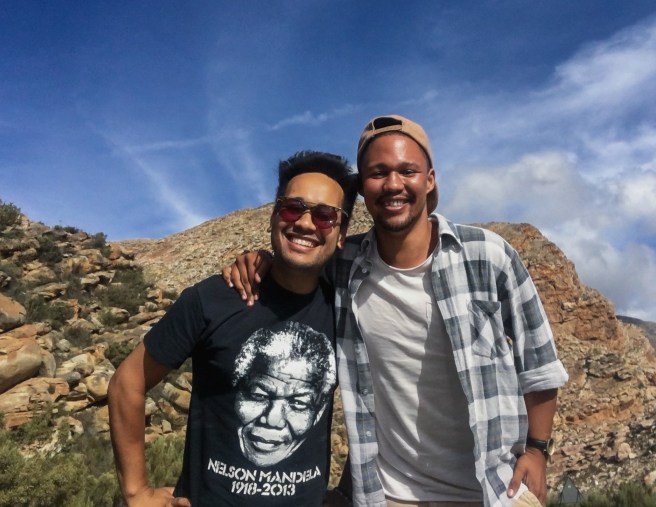
 

Jeremeo and Herschelle
Jeremeo Le Cordeur and Herschelle Benjamin

In a world where the arts are no longer a priority, two young art activists caught DIANE DE BEER’S eye in the way they were forging ahead and establishing their careers in a space which would nourish their own creativity but where they also wanted to promote that of others:


Two young Capetonians Herschelle Benjamin and Jeremeo Le Cordeur are proof that artists often don’t have a choice. Once those creative genes kick in, they have to listen.

Benjamin, an only child, when choosing a career knew that law would be a wiser bet, but he enrolled for that as well as a drama degree – just to make sure.

“After one week of depressing law lectures, knowing that I will fail because I had no real interest or passion for it and seeing all of my drama friends at the library or at the drama department living their dreams, I changed courses without consulting my parents.”

With bursaries for Stellenbosch University studies, when switching lanes he knew he had to succeed and show his parents that he would still be a star pupil.
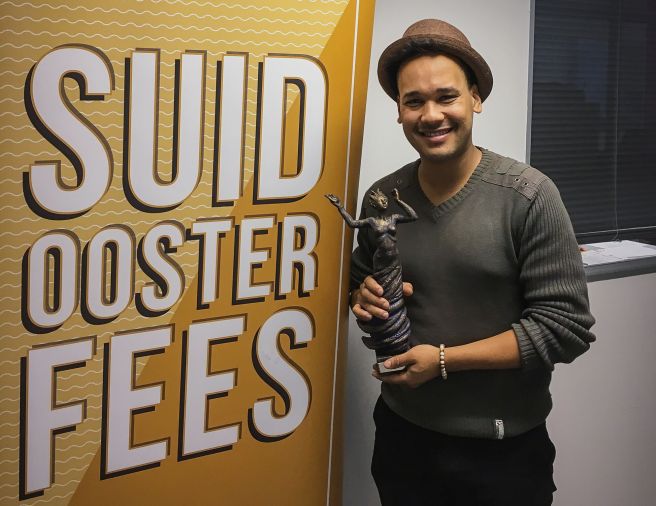
Jeremeo Le Cordeur
Jeremeo Le Cordeur with his award from the Suidoosterfees

Independently, Jeremeo Le Cordeur who describes himself as a creative soul, is a performer, theatre-maker and arts photographer who graduated from City Varsity, a school of media and creative arts in 2008.

Since then he has been working the arts in any way he knew how. In 2009, he joined Fresh Theatre Company, a community theatre group specialising in musical theatre, where he performed in musicals such as, Life is Rock N Roll, Love in Cyberspace, and Pinocchio.

In the following year, he created Vulture Productions, a platform to support and create new work. Since then, he has been at the helm of many successful productions such as Pizza’s Here (2011), I Know How You Screamed Last Scary Movie (2011), and Risk for the 2012 and 2013 National Arts Fringe Festival in Grahamstown and in 2013, he directed a play at Artscape titled, February 14th, which received excellent reviews.

In 2014, he directed Tannie Dora Goes Bos, which was included as part of Artscape’s 8th Women’s Humanity Arts Festival. The following year he directed John, which explored the controversial world of sex workers, working alongside SWEAT (Sex Workers Education & Advocacy Taskforce).

In the meantime, in 2016, a photography project was introduced to Vulture Productions. It was aimed at showcasing the work of South African theatre practitioners through arts journalism. In 2018, he was selected to represent Artscape Theatre in an arts-residency program called EVS (European Volunteer Service), based in Liverpool in the UK – which led to the creation of Mama, with performances at The Unity Theatre, Woordfees and Artscape.
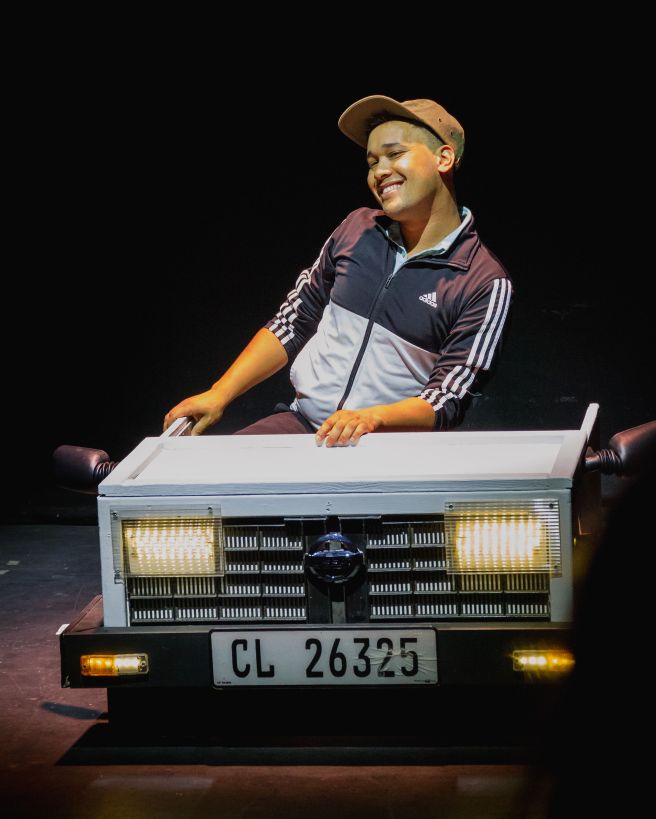
Jeremeopic
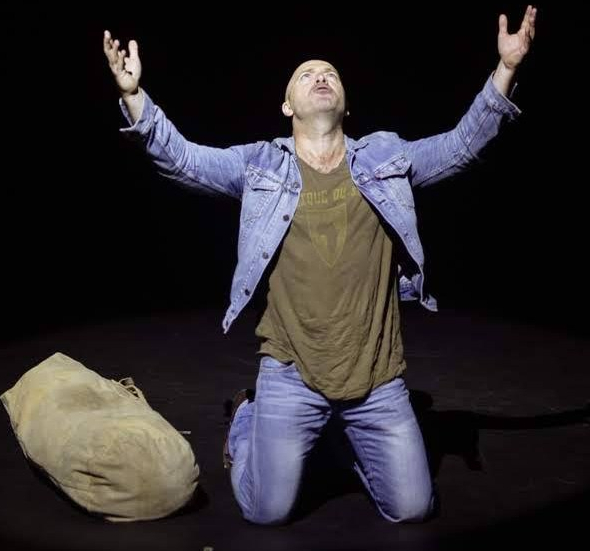
Jeremeo Le Cordeur starring in his own production Dude, Wa’s My Bakkie? Picture: Warren Meyer

And this year, he wrote and performed in two mono-dramas and collaborated with directors Ian van der Westhuizen and Dan van der Ventel to present Jerry An Unconventional Hero and Dude, Wa’s My Bakkie? (A Double Feature). These productions performed at Alexander Bar, Woordfees Fringe and Suidoosterfees, where he was the recipient of the NATi (Nationale Afrikanse Teater-inisiatief) Rising Star award for his vibrant storytelling.

As a youngster, Benjamin’s mom would tell him that a “pencil should never be left untouched”. “I didn’t think I was the best artist or writer but was forced to become friends with pencils, pens, paper and books. They were always there. Through all the phases and changes, my relationship to words and language is one constant one that has helped me in some of the darkest times of my life,” he explains.

The writing became more frequent and across different mediums. “Poetry still remains my secret love, dramas entice and challenge me, journalism makes me feel I don’t know enough and that I want to know more… It’s not the medium or genre that resonates but the power or ability of words, the imagination and the truth always being at the forefront of it all.”

Completing his initial studies, he received an internship at Media24 as an arts journalist. He also won the international Elizabeth McLennan Scholarship for Theatre & Performance from the Scottish Universities’ International Summerschool in Edinburgh. “This year, I’m going back after being picked as the first student host/tutor from Africa to the summer school.”
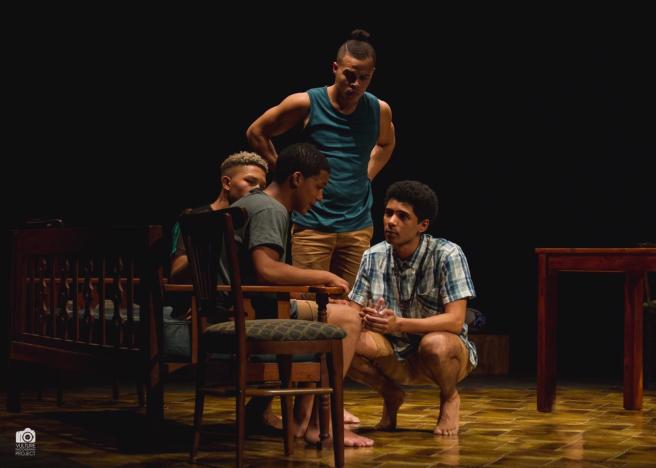
Slavenhuis 39
Herschelle Benjamin’s Slavenhuis 39 performed at the US Woordfees

Last year he won the Teksmark Writers Bursary, was also picked as one of Artscape’s New Voices and had a play produced and performed in the Arena Theatre under direction of Sandra Temmingh. Another play, In Slavenhuis 39, was also produced this year for the US Woordfees where it was well received and won the award for Best Upcoming Artist(s).

“I’ve written pieces for the Die Student on Netwerk24 and the new Vrye Weekblad. I am also working on my M degree. And I’m partnering on a few other projects for the future.”

Just a glance at their work and one can see these two artists were destined to meet. “We first met at Teksmark in 2017 and started working together,” explains Le Cordeur.

“He told me about his media production company, Vulture Productions, and that he needed a writer for the US Woordfees, because the company was invited as media. I was busy with my Honours degree and had time to help him during the festival. The rest is history…”
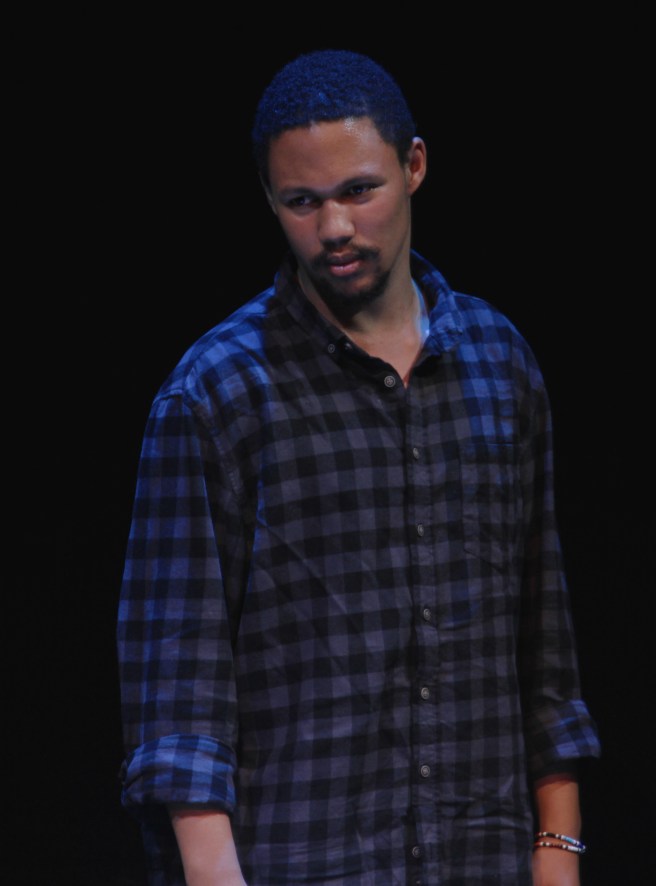
Herschelle
Herschelle Benjamin

“With Herschelle’s creative writing and my arts photography, we reported on many productions in Cape Town and at the Stellenbosch Woordfees. Our work was later recognized by Hugo Theart, artistic director of KKNK, who invited us to join Kritiek, a critical writing project to nurture new arts writers in 2018.”

This year they moved into the marketing departments at arts festivals. At the US Woordfees Benjamin ran the social media for the festival and at the KKNK, Vulture Productions were represented by the two of them as part of the social media marketing team.

“It’s all about building our industry, becoming well-rounded business-like artists and creating a career that span decades,” explains Benjamin.

Le Cordeur believes that Vulture Productions has shown the importance and value of support within the arts. “It’s provided opportunities for myself and so many others and it continues to have a significant impact on my own artistic development. I would love to have an exhibition of my photographs in the future,” he concludes.

As a performer, he’d like to sink his teeth into as many characters as he can, which is exactly why he collaborated with two directors to bring his own creations to life. He was rewarded richly for the effort. He will also be presenting three plays at the Free State arts festival from July 1 to 7.

Watching them operate at festivals is hectic, but these two youngsters understand that they have to grab every opportunity to make their way – especially in these early days. From reporting on and photographing the arts, to writing, performing and directing usually their own material, they have individually and collectively created a brand.

They deliver, are often over-used to a point of exhaustion because of the quality of their work, but this is their way of becoming fully fledged artists. Who says it’s easy? But if you’re Jeremeo Le Cordeur and Herschelle Benjamin, you have found a way. It’s hard work, but that’s how they keep those creative juices pumping – for themselves and their community.

For more information visit www.vulture-productions.com
Storytelling for a Novel Congregation

Jobe2
Muzi Mthabela as Jobe

As it became more and more difficult to produce theatre, director/playwright Josias Dos Moleele decided to combine all his passions. He speaks to DIANE DE BEER about his latest production Jobe, which plays at Sandton’s Theatre on the Square from May 29 until June 15:


Josias Moleele looked around at the theatre landscape he believed was diminishing, and decided he would take theatre and the church and bring the two together.

As the son of a pastor, when he was younger, there were expectations for him to follow in his father’s footsteps, but he had different plans. He wanted a career on the stage, whether it was performing in a production like Five Guys Named Mo or writing and directing his most popular play Call Me Crazy (which will have yet another run at Sandton’s  Auto & General Theatre on the Square later this year), or my personal favourite, Sarafina in Black and White which he did a few years back with the TUT students.

And to this day, he still lectures at both TUT and the University of Pretoria’s drama departments.

Josias Dos Moleele
Director/playwright Josias Dos Moleele

But writing and staging his own productions is his calling and when he thought about the tradition in local churches to dramatize stories from the bible, he knew this was where he wanted to go.

He knew that there were more than enough ministries in Gauteng, that he would be able to put together professional productions and that he would have an inbuilt audience. His model was a simple one. While he would be doing training for free, people would have to pay for the production, which included the actors and everyone who worked on it.

Once his ideas were aired, a young aspirant playwright came to him with the story of Job which he knew would be inspiring. He knew there was something there and together he and Teboho Sengoai started reworking the original text to take it to a different level.

Once they had played it at different ministries, Moleele wanted to test the professional stage and they did a run at the Joburg Theatre in 2017. “There’s a new audience emerging,” he says as he explains that churchgoers enjoy seeing a familiar story reinterpreted in a modern setting. And this is when he decided to contact Daphne Kuhn at Sandton’s  Auto & General Theatre on the Square for a season with the hope of testing his theories positively.

Jobe4
Mogau Motlhatswi as Princess and Muzi Mthabela as Jobe

Jobe is the story of a man who goes through adversity and pain, and longs for an explanation and counsel as to why his world has been turned upside down. Why do bad things happen to good people? When life is going smoothly, faith is easy. The test of faith always comes when life stops making sense.

According to the biblical tale, counsel is revealed in a dramatic life changing dream and vision that hits his beliefs to the core and those of his friends and his wife.

“It’s a universal story set in a modern time,” says Moleele.

What interests him is also the mixed audience that will hopefully see the play. In his diverse working life, he has produced documentaries for a Jewish audience, and with Jobe based on an old testament story, he believes that in discussion sessions following the performances, interesting conversations could emerge.

It’s the different congregations present at the theatre that Moleele finds intriguing and hopes will instigate probing conversations.

“I feel theatre isn’t speaking boldly at the moment and because I kept on facing rejection, I had to redirect my own intentions and passions.”

Jobe1
The cast of Jobe with Muzi Mthabela (centre,) questioning his conscience.

He was determined to do it professionally with a cast that includes the following:

Muzi Mthabela (Jobe) who aside from his role on Isibaya, is a regular on TV including Jacob’s Cross, Dream World, The Road and more. Mogau Motlhatswi (Princess, Jobe’s wife)

is best known for her role as Mapitsi in Skeem Saam. This is her debut stage role.

Titus Mekgwe (Lebese Titus) started his career professionally in 2010 and is both actor and director. He has also worked on film. Simpho Mathenjwa (Jwara) has a BA deg in the arts (Wits) and has done mainly industrial theatre and television while Teboho Sengoai (Professor) who wrote the initial play which he reworked with Moleele, completes the cast.

Following his work with the different ministries, Moleele has also established his own ministry in Atteridgeville Faith Acts Ministries (FAM where he hopes to do things a little differently with all the focus on the congregation. His work around theatre will continue as he keeps training actors through his Graduate Arts Project (GAP) as a feeder programmed to community theatre groups. and everyone involved with the production from the different congregations he works with.

He wants to keep it as professional as possible and has joined a Chamber of Business to help guide him in this world.

Having found a way to feed his different passions, Moleele is determined to navigate his way through all the teething problems. Like many others before him (and many to come), his choice of career(s) is more of a calling which makes it tough to turn his back on any of this.

He knows he is probably a trailblazer but with so many disruptors in this time, it is those who can be innovative who will find new ways to follow their dreams.

In the meantime, this novice preacher is determined to keep telling stories and to find different ways of finding a captive audience. He wants to keep it exciting and with our diverse audiences, reverting to age-old stories familiar to many in different guises, he hopes to get the conversations up and running.


The Arts Show Us The Way – Joyously

voice-sa-with-riana-nel-ricky-rick-lira-and-francois-van-coke.jpg
The Voice SA with Riana Nel, Ricky Rick, Lira and Francois van Coke.

There is so much to celebrate when we consider our country and our people and the arts have a huge role to play says DIANE DE BEER:


Watching the first season of The Voice SA some time back, the overwhelming feeling was surprise at how specifically the format impacted this country.

It wasn’t that race or colour was an issue, it was precisely because it was taken out of the equation, with the judges turning their backs on singers vying for contestant status, that the magic happened and just kept rolling in.

With this current season and a change of judges with an unexpected dynamic, the impact seems even more emotionally driven. Lira is the only one from the first round and she is joined by Ricky Rick, Riana Nel and Francois van Coke. The fact that she speaks Afrikaans adds another dimension, but it could just as well have been Riana speaking Zulu, a similar impact would have occurred. As South Africans we know these cross-cultural exchanges are still too rare and always hugely appreciated and acknowledged.

The audience shows that all the time and just seeing South Africans come together with such gusto is such a treat – especially now. It’s a reminder of who we are which isn’t always the message out there.

I haven’t calculated or counted but it feels as if the majority of contestants are either of colour or Afrikaans-speaking and that also makes for some fascinating stereotypes biting the dust. And the reaction of the judges as well as the audience which is as mixed as it should be, reflects the importance of reconciliation – still.

There’s huge reaction when a black contestant for example translates a popular Afrikaans song into Zulu because she loved the song but didn’t understand the lyrics, or when a prospective contestant chooses a judge and that choice seems at odds with their race. When someone singing in Afrikaans for example, goes for Ricky who doesn’t understand their home language, it is powerful in the context of our country. And then Francois van Coke remarks on the lyrics of a Zulu song obviously understanding the language. It’s lekker!

Mentioned in any other context, all of this would be difficult to understand, but in a country with our past, small gestures still have massive impact and what should be expected is still unexpected. Yet the goodwill is overwhelming and in our current climate of political chaos and upheaval, like a breath of fresh air on a Sunday night.

When people are in a creative space and left to their own devices, it seems to result in only good things even when there’s a competitive edge. Especially in this country where the arts had such impact during the struggle years, we should not be surprised by the healing impact that is possible even in these random spaces.

Hugh Masekela used to say that white people were also deprived during the apartheid years because they were cut off from the creativity of most of their countrymen and when you listen to the music and how it is interpreted by different language groups and the impact that has on everyone, it reinforces the strength of diversity. Music in all its different forms (like sport) is a universal language which is again so clear as this one plays out.

It’s such a neutral space for people to come together to play and that’s where South Africans show how their diversity comes together powerfully and why people are truly the strength of this country. When we get together and embrace, we can truly be proudly South African – and are.

The arts are in dire straits in this country because funding has been impossible in these dire times. Yet even with these odds, artists will find a way to perform and get the message out there. That’s also in spite of arts coverage which has dwindled disastrously in traditional media. So strange that because I would have thought especially die-hard newspaper readers would want more of that.

Rooilug picture Retha Ferguson
Rooilug with Jefferson Dirks-Korkee Picture: Retha Ferguson

Watching two recent performances from two young coloured men at consecutive Afrikaans art festivals, both dealing with what felt like very personal stories if not of them individually, from the community or perhaps both, the power of storytelling and eventual healing for both performer and audiences was rewarding.

Both Jefferson J Dirks-Korkee with his luminous Rooilug at the US Woordfees and Carlo Daniels with the innovative Klippies van die Grond at the Klein Karoo National Arts Festival (KKNK) announced their strong presence in this artistic space with stories that were self-written or with some help.

The talent though was evident in these two young men who entered a world outside their comfort zone, though one that had flung open its arms to encourage new voices from a wider South African community to tell their stories. This is how we get to know and understand one another. That’s always been the most positive strength of the arts in this country.

It is in our stories that we find common ground and empathy for the other’s circumstances. That’s what especially these Afrikaans festivals have done almost unwittingly. Because there’s a real desire (growing stronger in this past decade) to be inclusive, people get to hear from one another and more often than not, it is the similarities rather than the differences that come into play. But it is also the chance to acknowledge the humanity in us all that adds to the insight.

Living in a country so fraught with racial inequality – still – where one group remains empowered to a much greater degree than another, it is in the arts where we can stand still, tell our stories, reach out and start understanding and embracing the lives of others.

Embracing diversity is not encouraged in our world today, but our past has handed us some insight and the gift of understanding how easy it is to turn our backs but how rewarding it is to celebrate the diversity.

With yet another Freedom Day on the horizon, it’s about time.

Viva the Arts Viva!


Royal rewards for Koningin Lear led by Marthinus Basson at 25th KKNK Festival

PICTURES: Hans van der Veen

Koningin Lear with cast
The cast led by Antoinette Kellermann in Koningin Lear

With Koningin Lear rewarded in all the categories they were nominated for at the Klein Karoo National Arts Kanna Awards – eight of them – it was an extraordinary year for theatre. DIANE DE BEER reviews the spectacular 25th anniversary of the KKNK and the way festivals have changed hearts and minds. (See full list of winners below.):


While waiting for a show to begin, a festival goer went up to actress Cintaine Schutte and thanked her for the kind of work they were doing. She was referring to Huishou, a play that spotlights a same-sex couple.

What was more interesting was her age (approximately 70 plus) and that she was an inhabitant of Oudtshoorn and she was waiting to see Rokkie with Charlton George telling a transgender story. “I don’t know about these worlds,” she explained and that’s why she specifically chose these two particular plays, to broaden her scope.

That’s what an arts festival can mean to a rural community and its people. Through the 25 years of its existence, those of us who have been attending and reporting on the festival for all those years have noticed the audiences mature in their appreciation of a world that they might not always recognise or be familiar with and embrace it in all its diversity.

In the process of writing this, I watched a BBC arts programme Front Row discussing censorship and the anxiety amongst the public in both Britain and Brazil about a play dealing with a transgender Jesus written and performed by Jo Clifford.

Lovers, dogs and rainbows
Rudi van der Merwe and Oyama Mbopa (right) in Lovers, Dogs and Rainbows.

To even see a production like Rudi van der Merwe’s Lovers, Dogs and Rainbows supported by Pro Helvetia Swiss Arts Council would not have happened a decade ago without a fuss. This is the kind of innovation that all arts festivals long for – worldwide.

It’s an agonising balancing act for the artistic directors to serve the widest possible community while creating an identity for the festival which will appeal to newcomers but also those searching for the extraordinary.

Van der Merwe’s physical theatre piece told a story of almost excruciating emotional transformation as the young boy tried to establish his identity in the small rural town of Calvinia. Now based in Geneva, he interrogates his past with a documentary shot in the town of his youth in 2017 and played as a backdrop (yet centre stage) while Van der Merwe and Oyama Mbopa move from the shadows into the light simply to disappear again in a physical drama all its own.

Marginalised places and people dominate his playground as the camera lingers on the coloured and the LGBTQ community, as among the most displaced in this world, where the shock of apartheid still lingers and people and livestock from cattle to dogs are all treated harshly as if that is the way of the world.

Van der Merwe and Mbopa move in and out of elaborate scenes dressing up while moving from darkness to spotlight – often in chains as their lives must have felt to them in this isolated world where people are all trying to survive. Living on the edge wasn’t even part of that equation.

In conclusion it is in a spoken/printed letter to his father in his new home language – French screened as part of the documentary that he breaks out of any prescribed mould, any pretense of who he is emotionally and physically and yet his message is shrouded in a kind of secrecy as if he still cannot shout too loudly. Or might he be in a place where it doesn’t matter?

Not all of the translation of the letter is visible all of the time, so one snatches at something here and there.  I thought that in a show planned in minute detail, there’s a message, perhaps a warning here, that everything is not as it should be even if he has embraced his new world, who he is and how he wants to tell his story. But he corrected this blurring of the message after two shows by moving to the side.

It is the approach and the execution, the content and the substance that all contribute to this extraordinary performance that grabs one by the throat and doesn’t let go for the longest time.

Antoinette Kellerman in Koningin Lear
The phenomenal Antoinette Kellermann in Koningin Lear

On the other end of the spectrum, there’s the magnificent troika of playwright Tom Lanoye, translator Antjie Krog and director Marthinus Basson. Koningin Lear is a majestic production worthy of the 25th anniversary of the KKNK with Antoinette Kellermann in the role of a lifetime (and her career as we all know, is not a shabby one).

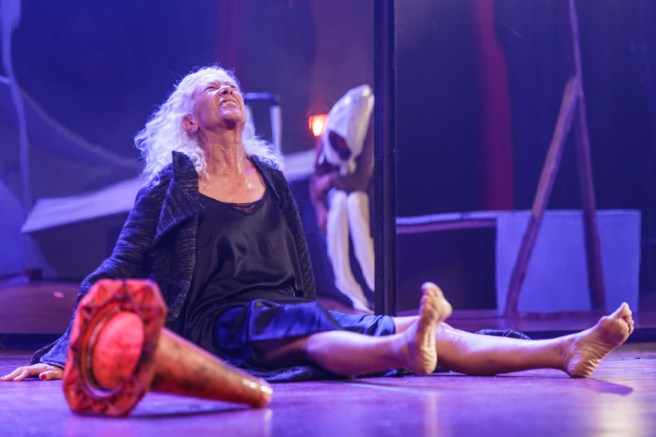
But Lanoye, having said that the role was created with her in mind, has written a part for the ages, on a scale that not many women get the chance to play. From the moment she enters the stage and grabs the attention, dressed to kill, until she collapses in a bundle of bones in a shabby slip of a petticoat with her darling son dead in her arms, she is allowed to tower above them all with a might that obliterates, until it turns on her in similarly cruel fashion.

With a script that would have many on their knees, but that Kellermann masters powerfully, her queen of the business world storms majestically but stumbles as disastrously as she demands that her three sons vie for the family riches by declaring their undying love.

It’s in the shading of her character and her speech that Kellermann astounds in this almost three hour play as she paints a picture of a woman fading both mentally and physically as she is ravaged by the worlds she was seen to have conquered yet is ready to relinquish – or so she thinks. It’s about grandeur and grandiosity which falters as greed in every sphere becomes the overwhelming motivator.

Not only does Kellermann command the stage and the character physically, emotionally she gives it all in a role which demands this kind of effort. The work isn’t visible, and the results are riveting.

A New York Times quotation published in the book of the translated play from a review written by Paul Krugman of  Thomas Piketty’s Capital of the Twenty First Century captures the intent of this Lanoye flirtation with King Lear: We haven’t just gone back to the nineteenth-century levels of income inequality, we’re also on a path back to “patrimonial capitalism”, in which the commanding heights of the economy are controlled not by talented individuals but by family dynasties”.

And this dynastic aspect is glaringly explored and exploited in the three sons: Gregory (Neels van Jaarsveld playing the bully with brawn), Hendrik (Wilhelm van der Walt portraying his character’s smarmy self-serving mode) and Cornald (Edwin van der Walt as the gentler more caring sibling and in a contrasting scene-stealing junkie performance).

The eldest two brothers are supported by their differently conniving wives, Connie (a brilliant Anna-Mart van der Merwe as the flamboyantly brassy broad) and Alma (Ronalda Marais as the silent usurper whose roots tug at her better self but loses the battle).

A business-like André Roothman as the somewhat bewildered Kent and Matthew Stuurman as the carer and moral compass, Oleg, complete a cast that contributes and brilliantly balances the whole.

With all his design and directing flair on display, Basson began with clever casting because with a storming Kellermann in the lead of a play titled Koningin Lear, it could have been a lopsided production and it needed all the pieces to fit together.

None of this would have been possible without Antjie Krog’s staggering translation of Tom Lanoye’s Flemish text. She has such command of what she wants to say and how she says it that it gives a specific context, a gravitas as well as playfulness, all of which combine to make it such an exciting and textured work to both watch and listen to. It also allows the actors to spread their wings and with a director of Basson’s stature and vision, the guidance to make this one fly.

It deserves to be seen and theatre goers who understand the language should not let this one pass if there’s another opportunity. Many flew in specially and they were rewarded royally. (Presently a run is planned at The Baxter later this year and perhaps there’s a possibility at the final of the Afrikaans festivals in Potchefstroom).

Other notable artists include Sima Mashazi with her Miriam Makeba Story, a musical performance with the singer sharing a personal connection with the iconic songbird. Supported by the excellent jazz pianist Ramon Alexander, it was a simple yet compelling performance which allowed the music to shine as it should.

johnny-boskak-pictured-by-retha-ferguson-e1552917383453.jpg
Johnny Boskak with Craig Morris Picture: Retha Ferguson

Craig Morris travelled from the Woordfees with Johnny Boskak but this time he played in both English and Afrikaans. He says that the languages and their specific rhythms have interesting effects on the character, and it was fascinating to see it performed in Afrikaans with a smart translation. It’s a piece that has withstood the test of time driven by Morris’s physical approach to the role which takes audiences on a wild ride reminiscent for me of a film like Who Framed Roger Rabbit?

And for the sheer joy of it, the delightful Springtime in which Hendrick-Jan de Stuntman meets Merel Kamp (Jos van Wees and Merel Kamp). Presented on an outside stage in front of the ABSA Auditorium for everyone to watch, the two actor/mime artistes were each hooked to a swing furnished with very lively springs which meant that their love story was told with a jaunty air and a jolliness that was mesmerising – entertainment supreme.

Naturally there was more, but if I had to put a few perfect shows together to make or break an arts festival, this would be it. A bouquet that incorporates something larger than life, something that pushes the gender boundaries, someone who captivates musically, a motormouth in motion and a buoyant romance of the sweetest kind.

JAKKALS EN WOLF ONBEPERKDEBUUT Gesinsvermaak ’n Kunste Onbepe
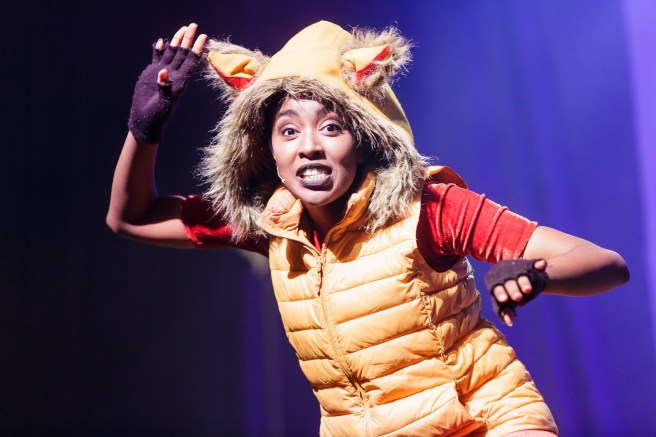
Devonecia Swartz as Best Newcomer in Jakkals en Wolf Onbeperk

The Kanna Awards:

Best literary contribution for her translation: Antjie Krog for Koningin Lear.

Best Production and Best Debut Production: Koningin Lear.

Best Actress: Antoinette Kellermann in Koningin Lear.

Best Actor: Craig Morris in Johnny Boskak voel ‘n bietjie…

Best Supporting Actress: Anna-Mart van der Merwe in Koningin Lear.

Best Sopporting Actor: Edwin van der Walt in Koningin Lear.

Best Director as well as Best Design: Marthinus Basson for Koningin Lear.

Best Musical contribution: Sima Mashazi for My Miriam Makeba Story

Best Newcomer: Devonecia Swartz in Jakkals en Wolf Onbeperk.

Herrie Prize for innovation: Rudi van der Merwe for Lovers, Dogs and Rainbows 

Best Visual Art: Ugandan Donald Wasswa and Kenyan Onyis Martin and their collective exhibition Imagining Tomorrow.

Best Technical contribution: Jaco Conradie

Special Service Kanna: Daleen Witbooi


2019 US Woordfees Meets Expectation with Excitement and Exploration

Samson picture by Nardus Engelbrecht
Brett Bailey’s spectacular Samson Picture: Nardus Engelbrecht

DIANE DE BEER


When a festival in these lean times boasts two productions the scale of the Marthinus Basson-directed MI(SA) and Brett Bailey’s Samson, there’s a certain expectation and excitement attached to the execution.

And the performances were no let-down. But it’ s also the magnitude of the input from many and on different levels to produce these shows that’s humbling.

Economics prohibit more work on this scale, especially as many of these shows don’t have a future because of costs, which makes a Bailey production, the first time at the Woordfees, so extraordinary.

MI(SA)4
Marthinus Basson’s luminous MI(SA) Picture: Retha Ferguson

MI(SA), for example, was the brainchild of the CEO of the National Afrikaans Theatre Initiative (NATi) Cornelia Faasen, who initiated (and sponsored with Woordfees and Suidoosterfees) the production, which included the Democratic Republic of the Congo’s Missa Luba, the Argentinean Misa Criolla and a new work by South African composer Antoni Schonken with a text Die Nuwe Verbond – ‘n misorde vir die universum by Antjie Krog.

That’s quite a mouthful, also to watch and experience, but so beautifully conceived and executed with a brilliant creative team from design to choreography to a choir who worked tirelessly to perform not only one but three different compositions in the same concert – which is what turned this into such a special encounter.

The nature of an arts festival isn’t always ideal for spectacle or pieces that ask much, but without them, it would disintegrate into a popcorn affair which would leave many dissatisfied. One simply has to bite the bullet to reap the rewards. And this was how I experienced this one.

I am a music lover rather than someone with the knowledge to review/critique but often in these instances, I think it adds rather than detracts from the experience. Listening to those who know their music discuss the merits of the production, there was both apprehension and certainty in equal measure, but I wallowed in the three different approaches, the rhythms, the instruments, the choreography by Ina Wichterich and Sifiso Kweyama (including a contortionist telling a compelling visual story in a completely different medium), Amanda Strydom who has done the Criolla before and with her distinctive tones could also recite Krog’s inventive text, the courageous choir, the soulful soloists and the splendid orchestra, who all contributed to something special.

I would have liked a second viewing, once was perhaps just too expansive to take it all in, but what was there to be absorbed was the perfect start to an arts festival. It will be performed again at the Suidoosterfees on April 28 at 2pm at Artscape.

And with Brett Bailey the conclusion, who could have asked for more. In typical fashion while describing the whole process in the festival paper, he also said in a discussion after the first show that he settled on Samson as the story because of the Pointer Sisters’ song Fire and he starts singing Well, Romeo and Juliet, Samson and Delilah…

But that’s Bailey who puts on a show with such fire that at first viewing one can’t help burning up. It took a second viewing, a luxury at an arts festival, to take in the full scale of this massive production. It can be overwhelming but once you sit back and allow the story to unfold with everything available; a compelling narrator, a brilliantly animated backdrop, actors/dancers/singers, music and musicians, in typical Bailey fashion, it’s all there as  he deals with a dysfunctional and destructive world in a way that tears at your heart.

It’s going to the National Arts Festival where most of his works have been shown locally. If you’re going feel blessed and book now.

Stof picture Retha Ferguson
Stof with James Cairns Picture: Retha Ferguson

Apart from these two superstars, Basson and Bailey, the festival also showcased some feverish solo productions from both experienced and young performers; James Cairns cleverly translating his Nick Warren text Dirt to Stof and thus finding a new audience in his faultless Afrikaans, directed by the innovative Jenine Collocott who also guided the bubbly Babbelagtig;

C
Johnny Boskak with Craig Morris Picture: Retha Ferguson

Craig Morris who returned with old favourite Johnny Boskak (which he has also translated into Afrikaans for Oudtshoorn’s KKNK this week) and proves that a good performance will make a play last forever;

Rooilug picture Retha Ferguson
Rooilug with Jefferson Dirks-Korkee Picture: Retha Ferguson

and a new voice from Jefferson J Dirks-Korkee with Rooilug, an authentic tale of abuse and a performance of endearing charm.

Tien Duisend Ton picture Retha Ferguson
Tien Duisend Ton with Cintaine Schutte and Albert Pretorius Picture Retha Ferguson

Two-handers also held sway with Cintaine Schutte (opposite Albert Pretorius as the perfect foil) giving an astounding performance that leaves one breathless in the Nico Scheepers directed Tien Duisend Ton;

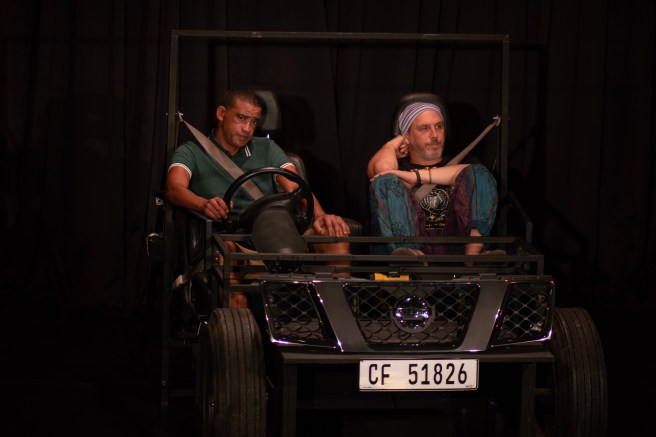
Die Road Trip met Brendon Daniels and Waldemar Schultz picture Retha Ferguson1
Die Road Trip with Brendon Daniels and Waldemar Schultz Picture; Retha Ferguson

with Brendon Daniels and Waldemar Schultz strikingly coming together in Die Road Trip, a festival winner with a clever text and a buddy theme that never alienates women, quite a rare thing. Both will be on show at the KKNK.

The other big production hitting hard was Sylvaine Strike’s magnificent vision of Beckett’s Endgame, never an easy text to engage with or execute. But with a blindingly brilliant performance by Andrew Buckland as Homm, the seriously silly adjutant played by Rob van Vuuren, as well as the hysterical Antoinette Kellerman and Soli Philander whose exquisite hands do most of the expressive talking, it was mesmerising in visual and emotional context.

Toutjies en Ferreira

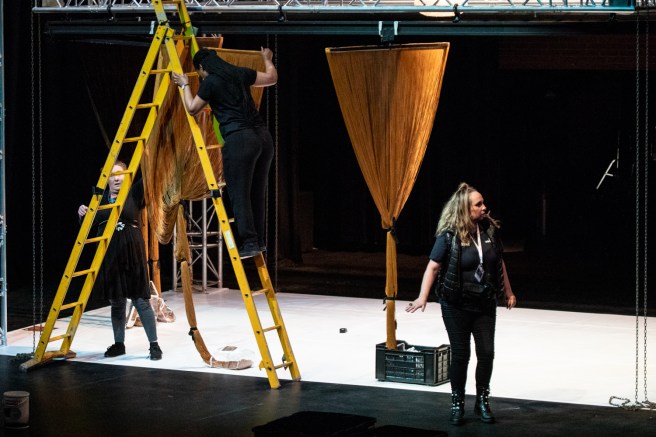
Saartjie Botha’s Toutjies and Ferreira arrived with big-time Fiësta accolades in what could almost be described as a double bill, so different are the two halves. They’re even directed by different directors with Nicole Holm in charge of the first madcap backstage romp, while Wolfie Britz pretty much plays himself in that and then directs the emotionally charged stage show starring a luminous Frank Opperman and Joanie Combrink as parents who are packing up the belongings of their recently immigrated last child.

Two others are already settled in different countries with Combrink’s character confessing that they have children and grand-children on four continents. It’s an emotional rollercoaster with Kellerman’s director proclaiming madly that the theatre cannot exist without ladders, all of which flows into the loss of grieving parents unable to see that other avenues could make their load lighter.

NATALIE GABRIELS_Gangsters_0518
Die Gangsters Picture: Natalie Gabriels

Marthinus Basson describes Die Gangsters as one of his favourite productions giving a nod to the writer, Dr Ben Dehaeck. The piece was first performed at the Breughel Theatre in Cloetesville in memory of the inspired theatre maker and teacher, and now two years later it has returned with new life and an ensemble cast who sparkle and shine as they take ownership of a story with great gusto. Audiences responded in large numbers and the piece blossomed with creativity and cunning performances.

Katvoet Foto Nardus Engelbrecht 3
Katvoet with Tinarie van Wyk-Loots Picture: Nardus Engelbrecht

Unfortunately, at art festivals, some productions are too big to see at the first performance and yet, the programme is so hectic, there’s no other option. Everything about Katvoet excited me about the prospect of witnessing another performance at the KKNK, which I will do. It starts with the robust adaptation of Cat on a Hot Tin Roof by Nico Scheepers and a cast featuring Marius Weyers (Big Daddy) and Marion Holm (Big Mama) as the battling parents, Tinarie van Wyk-Loots as Maggie, Laudo Liebenberg (Boela), Albert Pretorius (Buffel) and Martelize Kolver (his wife Jollie).

Adapting and reimagining a classic is a tough ask, but here it is viewed from a new and younger perspective with less angst about the prescriptions, which offers different insights.

It was an exciting theatrical selection but that’s just some of what was on offer at a festival which started out celebrating books. It still does that while embracing the full spectrum of the arts wholeheartedly. It’s become one of our most important festivals not only because it is based in and attached to a university (although that helps) but also because of the spirited leadership of Saartjie Botha who is constantly pushing the envelope while ignoring the parameters.

That’s what the arts should be – a platform for all artists.

With All the Accolades In Hand Koningin Lear Marches to Aardklop with Swagger

The upcoming Aardklop Festival at Potchefstroom from September 24 to 29 is brave enough to stage the spectacular Koningin Lear. DIANE DE BEER spoke to director Marthinus Basson before its debut at this year’s Klein Karoo Art Festival:


Pictures: Hans van der Veen

Koningin Lear with from left: Wilhelm  van der Walt, Rolanda Marais, André Roothman, Antoinette Kellermann, Edwin van der Walt,, Anna-Mart van der Merwe and Neels van Jaarsveld
Koningin Lear cast: Wilhelm van der Walt, Rolanda Marais, André Roothman, Antoinette Kellermann, Edwin van der Walt, Anna-Mart van der Merwe and Neels van Jaarsveld.


Director/designer Marthinus Basson and Belgian writer Tom Lanoye are a match made in theatre heaven. They’ve proved that with previous collaborations including Mamma Medea (translated by Antjie Krog) and Bloed en Rose (translated by Basson). And they’ve done it again with this majestic  production.

Combining the craft, cunning and creativity of these two to celebrate the 25th anniversary of the Klein Karoo Arts Festival was genius.

This time Lanoye reimagined Shakespeare’s King Lear with Krog (again) translating and Basson directing what is a dream cast. Koningin Lear stars Antoinette Kellermann as Elizabeth Lear who has reimagined her small inherited family business and built it into an international empire.

She is ageing with signs of dementia and announces that she wants to divide the business amongst her three sons, but each of them has to declare their love and loyalty to her. Her youngest and adored son refuses, and this unleashes a torrential family feud.

Many will recognise the bare bones of this tragic tale, but Lanoye being Lanoye, has tied this age-old and much revered play to issues most pressing of our time. It is described as an epic story that comments sharply on the business world where integrity and loyalty have disappeared, and greed has conquered everything and everyone in its wake.

The rest of the cast reads like a who’s who of Afrikaans theatre with Anna-Mart van der Merwe, Rolanda Marais, André Roothman, Neels van Jaarsveld, Wilhelm van der Walt, Edwin van der Walt and Matthew Stuurman, all on one stage, something to relish.

With all these tasty ingredients in one basket (and the almost clean sweep of prizes at their debut festival), it’s a feast that should be tough to resist for theatre lovers.

It’s a tough one though, says Basson.

And this is the closest he will get to the one Shakespeare play he vowed never to direct. “I saw the perfect production as a very young man in Munich and I promised I would never mess with that memory,” he says. “I saw a proper catharsis on stage.”

As he talks about the production, every detail is still seared into his memory – from the performances to the production. “To experience heartache like that made me realise why theatre is great. That’s what we should be investing in.”

But Lanoye and a reimagining of the Lear story (rather than the real deal) was impossible to resist -with its focus on family, all tied together by blood. A bloody family feud is at the centre with power, an ageing matriarch sharing her bounty with her sons and many modern-day ills rearing their heads, including avarice, anorexia, cunning, deviousness, anxiety and the list goes on. It’s soul food for both the players and those of us watching.

Marthinus Basson
The Brilliant Marthinus Basson

As often with festivals, time is a problem. “We have too little time to rehearse,” says the master of theatre who is always expected to create miracles – which he does. The play is also three hours long, not the ideal at a festival. Yet Basson junkies will know this is one not to miss And having seen the production three times already – and will do so again, it’s a joy to experience. Like the Lear he saw that kept him spellbound, this has similar impact.

In today’s world where economy dictates to the arts, even spectacular productions seldom travel further even with all these riches attached, so this Aardklop run followed by one at The Baxter Theatre is a rare treat.

One of these riches is not only the Lanoye text but also the Krog translation. Those of us who witnessed Mamma Medea 17 years ago can remember the poetry of her text. “She’s naughty at times,” notes Basson (as she was with the previous text), but it’s a tough one because Afrikaans is cumbersome with rhythms such a determining factor in Shakespeare’s language. Her translation though is resilient, something he admires.

Because she and Lanoye have worked together before, she understands his writing and he allows her a free hand to interpret. All this leads to a strong South African-slanted Koningin Lear, which adds a secret soap element to this particular Shakespeare.

It is the world of BIG BUSINESS with TV screens dominating the room, skype rather than cell phones is the communicating tool and on the agenda are markets that might implode, rampant social media and fake news.

When the eldest son has to swear undying love, he mentions acquisitions like the Plet home, his horses, his Porsche Cayenne and a celebrated vintage wine, all he would relinquish for his mother. You can hardly go more South African than that.

Koningin Lear with Antoinette Kellermann as Elizabeth Lear Picture Robert A Hamblin
Koningin Lear with a mesmerising Antoinette Kellermann as Elizabeth Lear. Picture: Robert A Hamblin

But it is a hellish text to manage, especially for Kellermann, says Basson, who is delighted that she (being the professional she is) had all that down before they even start work. Yet his heart yearns for plays with 42 players rather than the seven they have, to make this one work. But being Basson, of course he pulled it off with a floruish!

When speaking to Basson, he usually refers to the current production as his last one. Fortunately for local theatre and audiences, he can’t help himself. Whether it is his own imagination that drives him, the opportunities he cannot resist, plays he cannot turn away from or performers he enjoys working with, he keeps coming back. And audiences applaud.

Like the King Lear that stole his heart because time stopped while the story was told, he does similar things when making theatre. It’s always in the detail – no matter how big or small. In the end it all comes together in a production that for Basson fans adds to the greatness of his oeuvre.

This one is a gift for audiences.

Antoinette Kellerman in Koningin Lear
The phenomenal Antoinette Kellerman in Koningin Lear


An extract of my KKNK wrap:

On the other end of the spectrum, there’s the magnificent troika of playwright Tom Lanoye, translator Antjie Krog and director Marthinus Basson. Koningin Lear is a majestic production worthy of the 25th anniversary of the KKNK with Antoinette Kellermann in the role of a lifetime (and her career as we all know, is not a shabby one).

But Lanoye, having said that the role was created with her in mind, has written a part for the ages, on a scale that few women get the chance to play. From the moment she enters the stage and grabs the attention, dressed to kill, until she collapses in a bundle of bones in a shabby slip of a petticoat with her darling son dead in her arms, she is allowed to tower above them all with a might that obliterates, until it turns on her in similarly cruel fashion.

With a script that would have many on their knees, but that Kellermann masters powerfully, her queen of the business world storms majestically but stumbles as disastrously as she demands that her three sons vie for the family riches by declaring their undying love.

It’s in the shading of her character and her speech that Kellermann astounds in this almost three hour play as she paints a picture of a woman fading both mentally and physically as she is ravaged by the worlds she was seen to have conquered yet is ready to relinquish – or so she thinks. It’s about grandeur and grandiosity which falters as greed in every sphere becomes the overwhelming motivator.

Not only does Kellermann command the stage and the character physically, emotionally she gives it all in a role which demands this kind of effort. The work isn’t visible, and the results are riveting.

A New York Times quotation published in the book of the translated play from a review written by Paul Krugman of  Thomas Piketty’s Capital of the Twenty First Century captures the intent of this Lanoye flirtation with King Lear: We haven’t just gone back to the nineteenth-century levels of income inequality, we’re also on a path back to “patrimonial capitalism”, in which the commanding heights of the economy are controlled not by talented individuals but by family dynasties”.

And this dynastic aspect is glaringly explored and exploited in the three sons: Gregory (Neels van Jaarsveld playing the bully with brawn), Hendrik (Wilhelm van der Walt portraying his character’s smarmy self-serving mode) and Cornald (Edwin van der Walt as the gentler more caring sibling and in a contrasting scene-stealing junkie performance).

The eldest two brothers are supported by their differently conniving wives, Connie (a brilliant Anna-Mart van der Merwe as the flamboyantly brassy broad) and Alma (Ronalda Marais as the silent usurper whose roots tug at her better self but loses the battle).

A business-like André Roothman as the somewhat bewildered Kent and Matthew Stuurman as the carer and moral compass, Oleg, complete a cast that contributes and brilliantly balances the whole.

With all his design and directing flair on display, Basson began with clever casting because with a storming Kellermann in the lead of a play titled Koningin Lear, it could have been a lopsided production and it needed all the pieces to fit together.

None of this would have been possible without Antjie Krog’s staggering translation of Tom Lanoye’s Flemish text. She has such command of what she wants to say and how she says it that it gives a specific context, a gravitas as well as playfulness, all of which combine to make it such an exciting and textured work to both watch and listen to. It also allows the actors to spread their wings and with a director of Basson’s stature and vision, the guidance to make this one fly.

Koningin Lear plays at Aardklop, Potchefstroom from September 24 to 29; and at Cape Town’s Baxter Theatre from November 7 to 16.


Uit Die Bloute Hits All The Right Notes

DIANE DE BEER

Bloute In Paly Paul du Toit and Jenna Dunster
Paul du Toit and Jenna Dunster in Uit die Bloute


UIT DIE BLOUTE

DIRECTOR: Henriëtta Gryffenberg

CAST: Paul du Toit (actor), Jenna Dunster (actress), Leon Ecroignard (bass guitar), Jahn Beukes (percussion), Lizanne Barnard (keyboard), Pyjama Shark (acoustic and electric guitar)

TEXT: Adapted from two Eugène Marais stories

MUSIC: Lizanne Barnard

CHOREOGRAPHY: Ignatius van Heerden

PLACE: Atterbury Theatre, Pretoria

This latest production reminds those of us who saw the original show just why it is such a special production. It’s innovative, playful, imaginative, dramatic and as a bonus, has a sensational soundtrack.

It also has a warm heartbeat at its centre. Du Toit and Dunster are two young actors who might not have been the obvious choice and that especially makes it exciting. It’s about the unexpected which suits the piece.

With a text magnificently adapted from Marais’s much-loved Die Lied van die Reën and Salas Y Gomez, an unusual story of struggle for what is precious to you, this is  a performance that is delightful in its presentation of both the remarkable words and the addictive music.

Bloute with Paul du Toit and musos Lizanne Barnard and son
Paul du Toit and musos Lizanne Barnard and son Pyjama Shark in the background

The music/percussion sets the tone with its African slant which also bleeds into the percussive use of emotions from a knock at the door to a sudden movement exaggerated by clever use of a rhythm or a beat. This group of musicians is something special, starting with Barnard who has taken her compositions of 11 Marais poems and contemporised them with African and sounds and rhythms, so perfectly suited to the Marais words in both the poetry and the storytelling. She has also done three new compositions for Skoppensboer, Dieprivier and Eonone.

Bringing much of this to life is percussion genius Beukes with the help of the wacky Ecroignard, who adds to the depth and playfulness with the contemporary edge of the production pushed brilliantly by Barnard on keyboards and Shark on acoustic and electric guitar. They build a musical landscape that holds the production while adding detail while brightly colouring the edges. Then there are the songs beautifully interpreted and sung by Barnard with the depth of male voices introducing even more texture. I’m hoping for a CD.

Telling the stories, Du Toit and Dunster are energetic and enthusiastic as they embrace the performance gymnastics with gusto. It’s never easy when you have such a rich text to combine that with clever choreography, all of which has to unfold seamlessly to make it work.

But they do and it is the combo that turns this into compelling theatre with the two actors creating a comfortable rapport as they move between two quite different tales in both approach and dramatics – and they never lose sight of the text. There’s a wide-eyed deliciousness in Dunster’s performance while Du Toit goes full tilt, especially when in a persona more peculiar than his regular routines.

uit die bloute
The artists from Uit die Bloute

They get it right in a production which has put emphasis on the playfulness to balance the more serious tone as the second story unfolds.

Gryffenberg has pushed the performances and has been rewarded with a production that has everyone on and off stage engaged and entertained. It reminds one of the escapism offered by good theatre, in a way that doesn’t ignore quality and never opts for the lowest common denominator. It’s simply the best.

It’s the full package: starting with a good text, sublime storytelling and a cast of players, musical and dramatic, who can deliver and unwrap this gift they have been handed in spectacular fashion.

  • US Woordfees March 6 (12.30) and March 8 (8pm), 21, 22, 23, 24 March at KKNK, 15-19 April at Oppiewater Arts Festival

DEURnis – The Expansive Embrace of Performance According to Theatrerocket

If you’re looking for something completely different at this year’s US Woordfees (March 1 to 10), check Theatrerocket’s new productions in their latest DEURnis season:

Deurnis Ignatius van Heerden in Droom
Ignatius van Heerden in Droom

 DIANE DE BEER


If there’s one thing that the production company Theatrerocket has proved in its short existence, its that those of us who follow theatre must pay attention.

No one would have given much of a thumbs up to one of their first and probably edgy productions dubbed DEURnis. It just sounds silly – one-on-one theatre!

But they had an idea and they were determined. DEURnis is a one-on-one site-specific theatrical production with a very intimate yet cutting-edge and experimental approach. It involves a single audience member who views three separate dramatic pieces per package (there are four different ones to choose from at Woordfees this year), with each of these having one performer and one audience member.

Each piece is approximately 20 minutes long and written for a particular room/space in a house/building, so as a viewer, you move from one room or even caravan to the next to see your three chosen plays.

It is the social issues that permeate the different works that affect individuals in different ways depending who you are. And for those who aren’t interested in gimmicky theatre, that’s exactly the trap they have avoided by aiming for excellence and substance in the texts. Some will suit specific individuals better than others.

Personally I’m not too excited by the more confrontational ones (there’s usually one that’s slightly more out there in a package), but then other audience members might feel differently.

“We have been inundated by people interested in writing for this venture,” says Johan van der Merwe, who with Rudi Sadler started their production company Theatrerocket a little more than two years ago.

DEURnis Lem 1
Tiaan Slabbert in Lem

Both theatre fanatics of a kind, they know and understand the pitfalls and what audiences want.

Part of why DEURnis works so well is because it is such a well-executed concept. They understood from the beginning that the control had to be constant to see that everything works superbly. And as they have had many plays to choose from, they have managed to execute their strict code of excellence.

It’s a fascinating experience, being the only one in the room in situations with a stranger telling a story that is often inclusive rather than too intrusive but affects you as the viewer in very specific ways. For many it might also be uncomfortable to be this intimate with someone you’re not familiar with. But if you think about it, it makes it easier that you don’t know the actor.

This is not a financial venture for the company. With only single actors and audience members, the numbers simply don’t add up. But because of the way it has been done, the performance-experience the actors (at this stage mostly young but older actors have joined for this latest venture) accumulate, can’t be calculated.

Deurnis Net
Ben Pienaar in Net

And chatting to a few of them in-between performances, they are equally thrilled by how much they are learning in the process. “Each performance is different because of the reaction of the individual viewing,” says one performer. Many of them are already in their second play and the growth is obvious in their performances as well as the play’s toughness a second time round.

Prospective directors are also excited about the challenge and safety of testing their skills on such a small and intimate stage. “It’s a safe environment in which to experiment and push your own boundaries,” says Van der Merwe.

Having sat through two nights of 12 plays (even a dance with multi-media included), it doesn’t matter which package you choose. They’re all extremely well crafted and in sometimes scary ways, fun to experience. Following the earlier seasons, I was excited because of the great potential – and they keep delivering.

“We have been inundated by especially writers who find the format exciting and challenging,” says Van der Merwe and they have also expanded their initial idea with a new concept titled DEURnis 20-voor 2.

This time it is two actors with an audience of 20. Described as an unusual site-specific theatre experience, it is aimed at the adventurous theatregoer. “We are exploring the limits of theatre in a creative way,” says Sadler. A ticket gives you access to two pieces, each approximately 45 minutes long.

These will be staged in The Grappa Shed while the one-on-one plays are performed at the Quiver Tree Apartments in Stellenbosch.

From their earliest days, these two theatre aficionados knew what they were doing. They also realised that it wouldn’t be easy and had no romantic visions about making theatre. Theirs is a true passion, almost the only thing that keeps people pushing through the pain.

With DEURnis for example they have found a sponsor but the financial gain for everyone is minimal. Many of the actors though have been spotted and pulled into more lucrative theatre and television work and that is why it probably appeals to a younger performer who can benefit from the experience.

Last year they were rewarded with a kykNET Fiësta and an ATKV-Woordveertjie as well as being nominated for best production at Aardklop. Their other more traditional play, Die reuk van appels with Gideon Lombard was as richly rewarded.

And if I have to pick a favourite from this year’s batch, it would be Ignatius van Heerden and Droom. The dancer/choreographer has done something remarkable with movement and multimedia which easily transports its audience-of-one to another magical world.

That doesn’t detract from many of the others with sassy texts and performances, which will have you intrigued and sometimes intimidated but also excited about the way theatre finds ways to explore new directions which will hopefully appeal to those who don’t go to more traditional theatre – and then show them the way.

* For more information, check http://www.woordfees.co.za

Women Are Doing It For Themselves

Independent theatre maker MoMo Matsunyane is navigating a new way to create and to secure a future in the arts. She tells DIANE DE BEER about her independence and her latest team effort Dick Or Date? which opens at POPart on Thursday:

DickOrDate

When exciting young theatre maker MoMo Matsunyane suddenly found herself out of work between March and June 2018, she had time to review her life – and especially her work as an artist.

“This time at home made me think really hard about what it was that I wanted to achieve and how is it that as an honours graduate I was sitting at home not working? It was then that I realised the importance of being in control of my career,” she explains.

She knew she had to make her own future work and sprang into action. This led to the establishment and registering of her own production company, MoMo Matsunyane Productions, and working on a new show Dick Or Date? with Lillian Tshabalala.

“I put out a call on Facebook to write a play with someone really funny. Lillian responded with 10 pages of something she was already working on. I thought it was really funny, so we agreed to grow the text.”

The play is about whether it’s possible to find true love online or not and was first called Dating Online but as the work grew and developed in its own direction, they knew they had a slightly different animal to deal with.

“We realised that when it comes to relationships, it’s really between two choices; is he just Dick or are you going to date? And each has its own challenges!”

Dick Or Date? grew into a dramatic comedy that takes you on a love trip with three close but very different friends: Nelly (a hopeless romantic and social media fanatic), Ashley (a privileged young woman who exclusively dates white men) and Maggie, real name, Magogodi (a sex obsessed serial dater who doesn’t believe in love).

Where does a girl go to find her “perfect man” in this instant world of hook-ups and how does she “put herself out there” without looking too desperate? What would happen if women used all the platforms they had available to them today; to date as extensively as they wanted to without judgement? How does one find love organically when it’s readily available online?

One of the delights of this new process was Matsunyane’s discovery that the process of co-writing was so much better than writing alone. “We broke down the storyline and scenes based on what they should achieve. We would give each other homework and slowly began piecing it all together.

“It’s a hybrid comedy and drama which was great to experience as it came to life but it also kept us on our toes because we couldn’t be precious about the work. If something was not working, we had to cut.”

Working in the arts currently is no easy gig as Matsunyane is experiencing while wearing many different hats to make things work. “The industry isn’t as accessible as we think or hope it to be and in the era of social media, popularity also plays a role in who gets the job.”

She knew however that she didn’t want to find herself without work again especially as a creative. That alone could be her driver. “With time, I (and my company) will get to a point where I can put together a team of people who are just as passionate about art as I am and who will help me grow my dreams.”

But ever practical, she knows that it will take hard work and initiative to make her dreams come true. “It will take care of itself. I’m investing in my future and career.”

And she already has loads of experience behind her with winning productions. “I have been producing my own work with a sketch comedy team. I’m a part of Thenx and TAU which has definitely made me more confident in pursuing independent producing.”

Also, these past experiences have taught her how important it is to own your work. “The gear shift now is that I’m an official institution, registered, so I will be able to explore other opportunities that will take my business as an artist to the next level.”

She has the world to contend with though and in a country where the arts have been side-lined for many different reasons, it’s a tough ask for young artists to navigate this closed terrain. “Art has always been political and we know the role it played in liberating our people from the chains of apartheid. However, we also know what isn’t being done for artists,” she says.

“Funds are constantly being embezzled, young artists don’t have enough opportunities and access to collaborate with mainstream institutions and the industry is still too unregulated, which causes a lot of imbalances in opportunities presented.”

She feels they have a long way to go. “The arts survive through people’s passion. Literally. We are called to perform during rallies and at election times but that’s about it. There is a crisis in the industry and we are still too quiet.”

As independent theatre makers, they have had to rely on smaller independent spaces like Maboneng precinct’s POPArt, Thembisa’s TX Theatre and Alexandra’s Olive Tree Theatre to stage our new and experimental work. “I have created a great working relationship with all these spaces and POPArt was more than happy to house us for our debut,” she says thankfully.

“We want the piece to spark critical conversations around sex and relationships. The private becomes public. It’s like having a window into the lives of three young women and how they navigate the dating world in today’s fast paced and technologically advanced society.”

Performed by Lillian Tshabalala, Kitty Moepang and MoMo Matsunyane, Dick or Date? plays on Thu 21st Feb 8pm • Fri 22nd Feb 8pm • Sat 23rd Feb 8pm • Sun 24th Feb 3:30pm at POPart.

Book at https://popartcentre.co.za.


Nina Simone Four Women Gives Young Black Women A Powerful Platform To Speak Their Minds – It’s About Time

Busi Lerayi with Tshepo Mngoma, the piano player in performance

DIANE DE BEER

NINA SIMONE FOUR WOMEN

DIRECTOR: James Ngcobo

PLAYWRIGHT: Christine Ham

MUSICAL DIRECTOR: Tshepo Mngoma

LIGHTING DESIGNER: Mandla Mtshali

SET DESIGNER: Nadya Cohen

COSTUME DESIGNER: Onthatile Matshidiso

CAST: Busi Lurayi, Lerato Mvelase, Mona Monyane Skenjana, Noxolo Dlamini

MUSICIANS AND SINGERS: Bryan Mtsweni, Ezbie Moilwa, Mpho Kodisang

Smanga Ngubane, Sam Ibeh

VENUE: John Kani Theatre at the Market

DATES: Until February 24


With Artistic Director James Ngcobo’s tradition of commemorating Black History Month, his pick of this play starring mainly women is, as Nina Simone so aptly said, about “an artist’s responsibility to reflect the times”.

With the #MeToo and #BlackLivesMatter movements in everyone’s consciousness (or it should be) the Simone-driven play is a clever choice with a cast of powerful young actors strutting the stage.

And even halfway into the run, the theatre is packed with a young (mainly black) audience and they’re enraptured and engaged as these women speak to them with great gusto.

It’s not for the lily-livered because in the main, women haven’t had a voice and black women especially were never invited to speak their mind and tell their stories.

It’s their time and it’s like its all spilling out with an anger that’s palpable but covering a pain that so’s deep and so sore, it breaks your heart while listening.

In song Noxolo Dlamini, Mona Monyane Skenjana, Lerato Mvelase and Busi Lurayi

When Simone slips into a quiet moment and opens her heart about her own experience of living in a world that seems to hate and discard her, it’s like an open wound she exposes to everyone willing to look more closely.

On September 16, 1963, the day after the bombing of the 16th Street Baptist Church in Birmingham, Alabama, Simone shifted her career from artist to artist–activist. This is where the play begins, in the church with riots outside and the pain of four little girls killed in hatred etched on everyone’s mind. She is writing a song when three diverse women enter and engage about their lives as black women.

But so deep is the self-hatred and lack of confidence, they turn not only on those who mean them harm but also on each other as they compare shades of skin colour and the intent with which each lives her life.

Interwoven with much talk is Simone’s haunting music dominated by Mississippi Goddam, Black is the Colour of My True Love’s Hair and closing with the obvious Four Women, the song from which the women in the play were drawn.

And it is this mix that moves in and out of the consciousness. While the songs complete the conversations of the women, they are more contemplative if heart-breaking before the next storm unleashes as the women twist and turn in their tension and anguish of years of abuse punctuated by the current attack.

Busi Lurayi as Nina Simone surrounded by the rest of the cast.

It is a sparse set by Nadya Cohen yet effective in its symbolic power and the women are encouraged to fill the stage, which they do with great abandon. Ncgobo obviously wanted them to embrace their power in this moment – and they do.

The performances are sometimes uneven, Lurayi perhaps hampered by capturing the Simone kinetic energy, but she soars in the quieter moments and in song. It is quite a presence that she has to establish, and the deep timbre of her voice works in her favour. Mvelase, the most comfortable on stage, inhabits her Aunt Sarah, a domestic worker, with quiet dignity, while the young Dlamini is passionate in her rebellion.

Then comes the abrasive whirlwind Monyane Skenjana to perform in the person of an unapologetic prostitute who believes in disarming if not disabling before an offensive can begin. It’s a tough performance to catch but in the mix, it brings the chaos of their lives into sharper focus and adds some light relief to what could become too much to witness and bear.

Cushioning all that is the piano playing of Brian Motsweni supported by a trio of other musicians and two singers, all adding to the depth of the soundtrack. Other sounds like the sudden rush of the riot don’t get the balance right and while the two singers worked well as they sat to the side, the look was confusing. Perhaps they would have slotted in more smoothly as part of the musos rather than characters, but not quite.

Quibbles aside, the importance of the production, what is said and who is saying it, right now, taking into account what is swirling around in the world currently, this is a majestic production.

Theatre is struggling more than ever with little help from anywhere. Even newspapers, their traditional support, are dwindling with less and less art reporting. Yet the audience who were there to look and listen, were predominantly young and black, probably the most sought-after demographic.

And they were delighted – with reason.