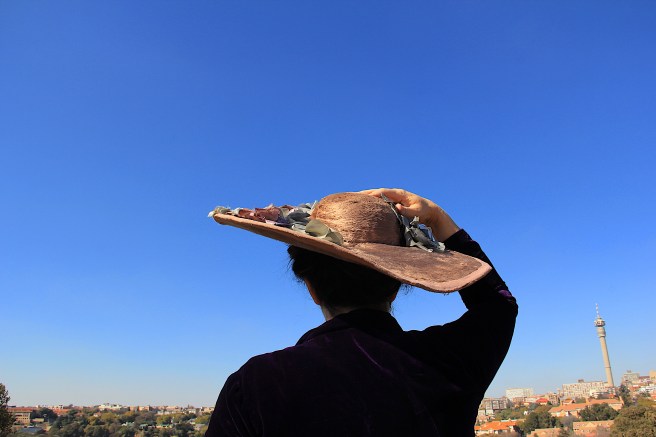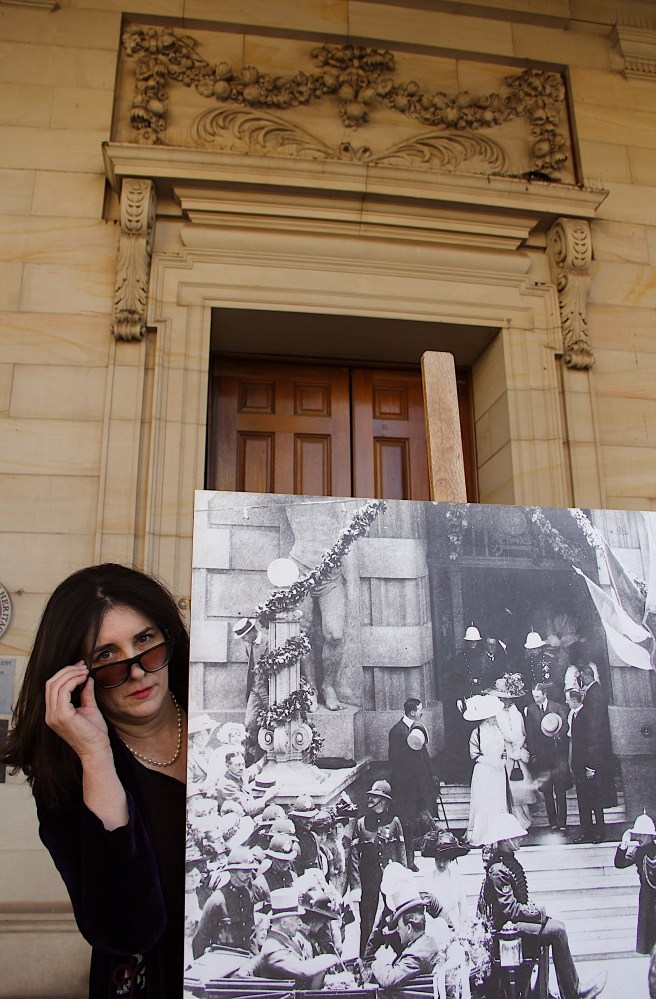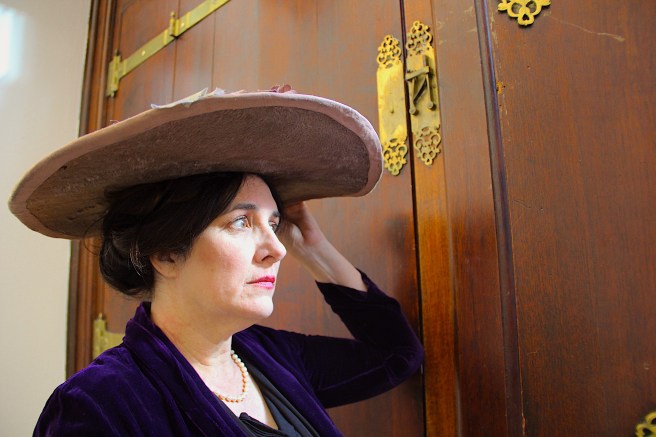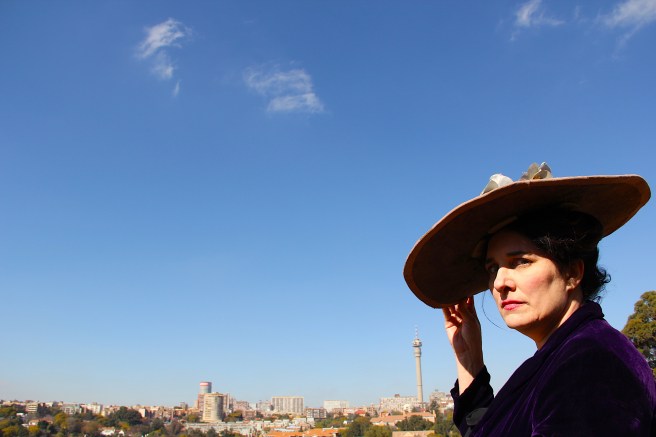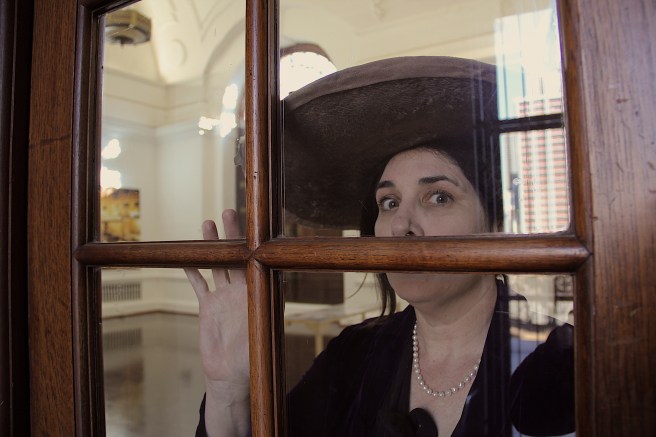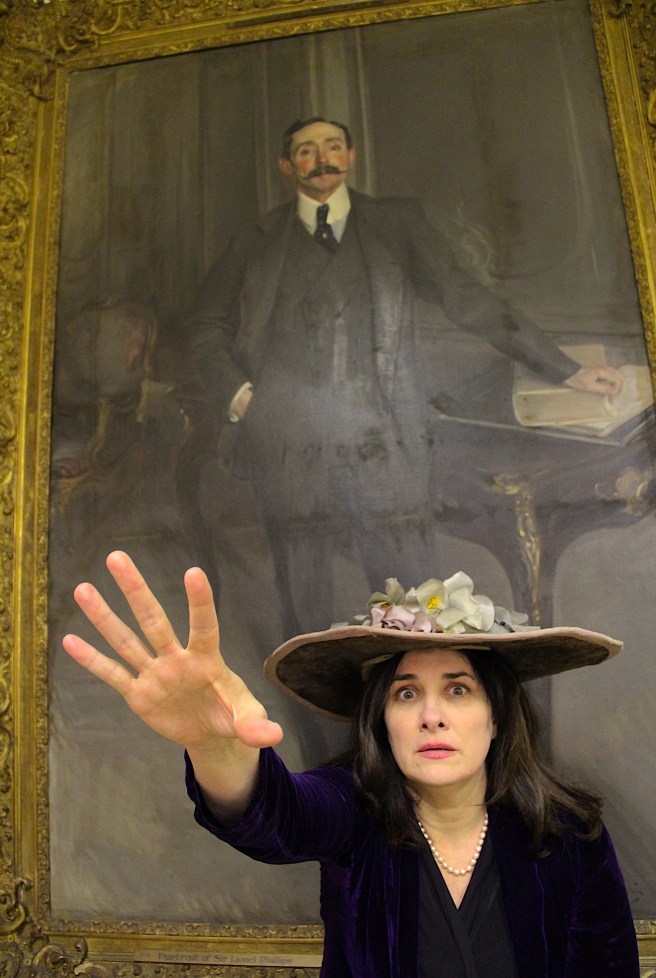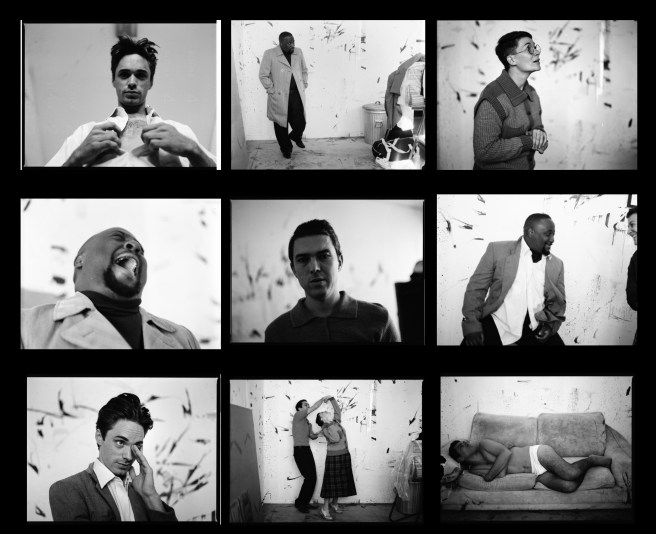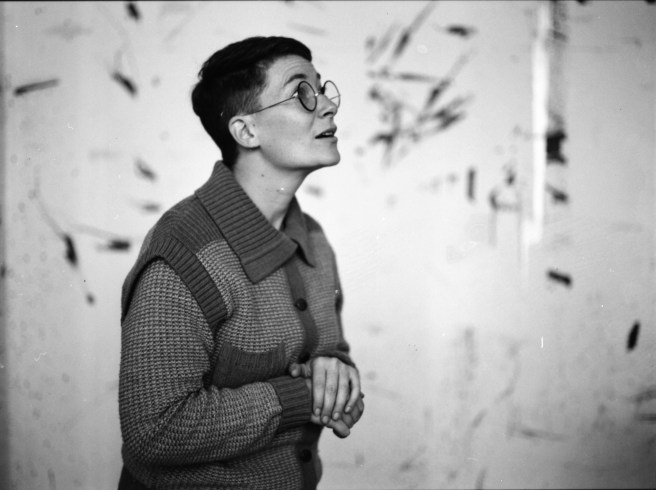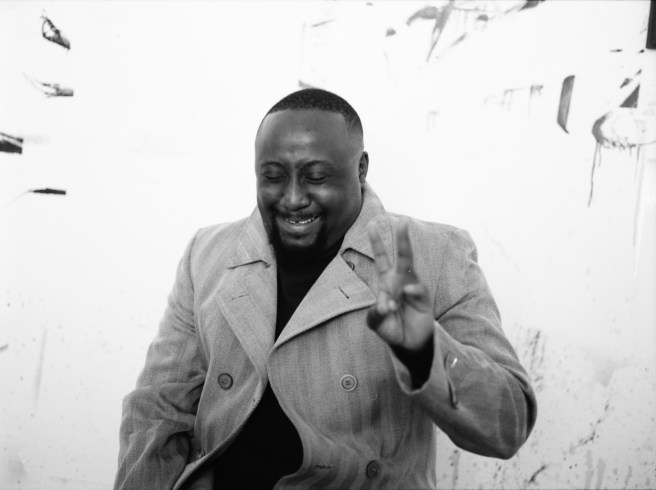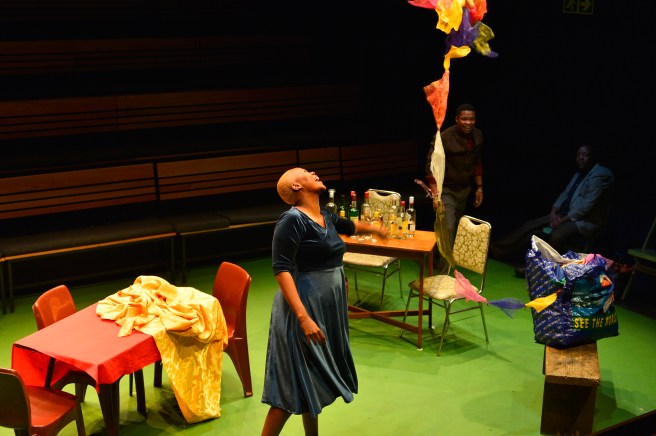
A Play of Artists by Jemma Kahn and her own Band of Creatives as 2018 Standard Bank Young Artist for Theatre

Pictures: JACOB VAN SCHALKWYK

Jemma Kahn Poster


It’s time for the 2018 Standard Bank National Arts Festival from today until July 8. DIANE DE BEER spoke to Jemma Kahn, the innovative theatre maker and Young Artist Award Winner for Theatre about her production The Borrow Pit which performs at the Festival today, tomorrow and Saturday (June 28 to 30) and at The Centre for the Less Good Idea in Joburg on July 7:


“Unmitigated joy,” is how Jemma Kahn, this year’s Standard Bank Young Artist for Theatre, describes her rehearsal process for her National Festival production The Borrow Pit.

And even though, as we know, the life of the artist is a tough and insecure one, she is delighted that in this process, she gets to look into the eyes of another artist. “It’s been a profound working experience,” is how she describes the rehearsal period which has been such a luxury – courtesy of the Young Artist award which is amongst others a monetary one – and for Kahn, there was no question, she has spent that on the people helping her produce this work.

KAHN1_PHOTO_JACOB VAN SCHALKWYK
Jemma Kahn

She describes the piece thus: “The place is London, the time 1966. Artist Francis Bacon meets George Dyer and they start a relationship. Bacon was already a prolific painter and public figure and Dyer, several years Bacon’s junior, was a good-looking criminal who had never been in a gay relationship before. Bacon liked to drink heavily, gamble, get into fights and he liked his lovers to rough him up.

“Bacon was a masochist but unfortunately George was not a sadist. So George Dyer’s tender love (inexplicable and frightening to himself) was intolerable to Bacon. He didn’t want to be cuddled and loved and tea and eggy in the bed. Their relationship was a tumultuous one, fuelled by lots of booze on both sides. A tragic quote: “Being the artist’s ‘friend’ – George played down the sexual connection – provided him with enough money to keep himself and a variety of hangers-on more or less permanently drunk”.

“As Bacon distanced himself, George Dyer, heartbroken, went to seek counsel of Bacon’s friend Lucian Freud. Freud was grandson of Sigmund, painter. Freud, like Bacon was that kind of bohemian posh that means he lived in rambling squalor and had weird relationships with his female children. Bacon and Freud were painter terribles, painting figuratively throughout the 20th century despite portraiture being unfashionable.

VANDERWALT_PHOTO JACOB VAN SCHALKWYK
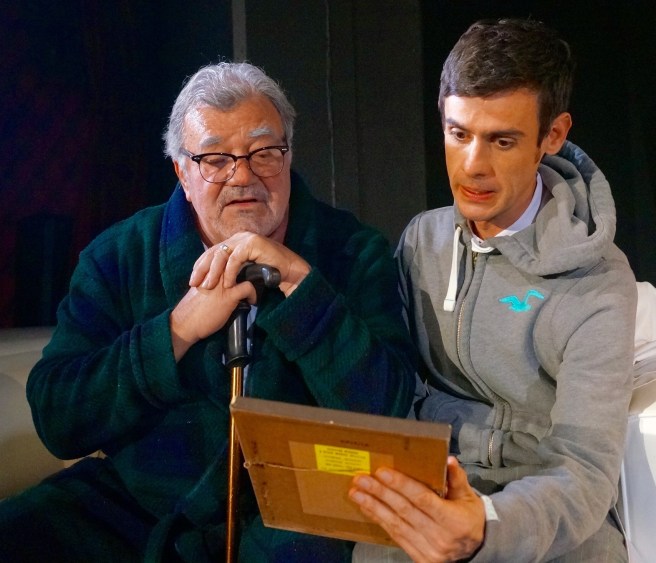
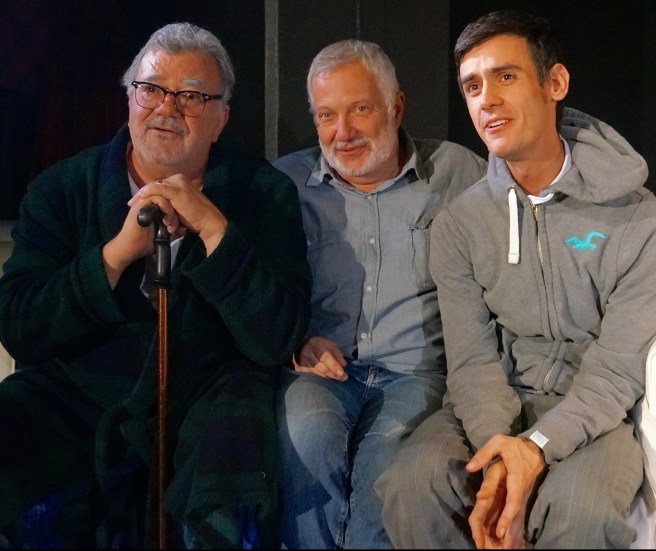
Wilhelm van der Walt plays George Dyer

“Freud painted Dyer’s portrait. To sit for a portrait by Freud was a lengthy commitment of months, even years sometimes.  They must have spoken about Bacon a lot, or perhaps not at all since Freud was a famously mercurial. ‘George got very depressed’, says Freud, ‘he came and stayed with me in Paddington for a while, and I painted him. In the end of course, he killed himself.’ George Dyer died of an overdose in a Paris hotel room in 1971. Two days later a large retrospective of Bacon’s work opened in at La Grande Palais, Paris – many of the paintings on the show were of Dyer.

“Is art more important than people? Are the paintings of Dyer by Freud and Bacon more valuable than he was himself?”

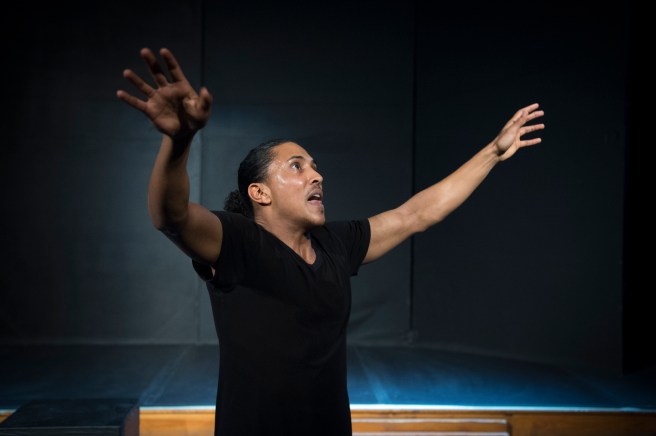
MIYAMBO1_PHOTO JACOB VAN SCHALKWYK
Tony Miyambo plays Francis Bacon

Bacon is somebody who has been floating around her head for a number of years, has even featured in a short film she produced recently and while there is something about actors and celebrities, artists, to her mind, will trump that every time. Her description gives some impetus to the inner working of the play, and what a group of artists of the stature she has gathered, can do with the rich world they have been tasked with.

Some background: Shortly after graduating Kahn spent two years in Japan which had a strong impact on the content and form of her work. Her primary theatre focus is Japanese kamishibai or ‘paper theatre’, a 12th century highly visual storytelling medium. She has been creating and performing kamishibai since 2009 and the interesting aspect has been the way she has developed this particular form of theatre to tell her stories – each production evolving into something that opens yet another avenue for her to explore. And she makes grand leaps.

VIVIERS1_ PHOTO JACOB VAN SCHALKWYK
David Viviers plays Lucien Freud

Collaboration has always been part of her creative process and this time the funds allowed her to stretch that as far as she possibly could. “They had to be paid well,” she stresses. It started with the writing, yet she simply couldn’t afford to bring on a fulltime writer so instead she invited writer/director/film composer Marco Dutra to collaborate on the writing. What it did was to open up the thought processes and filter all those layers while exploring the script. On Skype they teased the thing until it was ready to stand on its own, is how she describes it.

On the production side she further surrounded herself with Jacob van Schalkwyk, artist/writer/filmmaker, as dramaturge and the man who has to bear witness to everything, especially because she was both playing and directing; her childhood friend Rebecca Haysom, an illustrator/artist/curator who helped her with the paintings; and box designer/artist/framer Wessel Snyman who made her the most insanely perfect boxes, which is how kamishibai reveals itself.

On the acting side, Tony Miyambo plays Francis Bacon, “simply because that’s who he is,” David Viviers is Lucien Freud and Wilhelm van der Walt is George Dyer. “They’re all just so gentle and smart,” she says and again waxes lyrical about the process and being allowed to watch how other actors work at revealing their characters. “They arrived in the room at different intervals,” she explains introducing her own role as “everyone else and then some”.

For Kahn, it has been all about the process and when speaking to her just before the company left for Grahamstown, she had earlier found herself in bed reading a book – quite relaxed. But that has been the result of a rigorous planning process and the knowledge of what the rehearsal process has meant to her.

When she received her award, she was told by a wise soul that she could opt for something that would be a commercial success or she could take this opportunity to do exactly what she has always wanted and be damned. No guesses there!

Even if The Borrow Pit appears and disappears swiftly, “sinks without a trace”, Jemma Kahn will have the memory of the artists and the process – worth its weight in gold.

Those of us following her career though have none of those rewards. We need to see it!

*Sadly for those wishing to see, all tickets sold out for Joburg shows. But yea for the arts and artists!!


Zikhona Sodlaka Stakes her Claim as the Majestic Queenie in the Market’s Nongogo

Photographer: Lungelo Mbulwana

_DSC4228
Zikhona Sodlaka as Queenie with Bongani Gumede and Peter Mashego in the background.

DIANE DE BEER

NONGOGO

DIRECTOR: James Ngcobo

CAST: Zikhona Sodlaka, Vusi Kunene, Peter Mashego, Bongani Gumede, Zenzo Ngqobe

LIGHTING: Wesley France

SET AND COSTUME: Nadya Cohen

VENUE: Mannie Manim at the Market Theatre

DATES: Until July 15


Queenie towers over everyone in the room with her power, personality and presence.

The casting is a stroke of brilliance with Zikhona Sodlaka making her debut at the Market Theatre in the role of a woman who encourages many different interpretations. She is described as “a woman of strength, determination and courage as she dreams of a better life and has a past that’s riddled with dark secrets”.

_DSC4183
Zikhona Sodlaka as Queenie with Peter Mashego as Blackie

Sodlaka takes Queenie by the scruff of the neck and turns her into a creature so mesmerising, she completely inhabits the stage as she stalks the room filled with men, all who only have eyes for her –  and each also with his own desires and needs.

Johnny (Ngcobe) appears in the room almost like a whirlwind as he broadcasts the possibility of a big entrepreneurial break. Queenie is immediately enchanted by this handsome stranger who is filled with dreams that appear close to her own. He opens up to her as she does to him much to the distress of her longtime partner Sam (Kunene), a tough businessman who believes he has total control over this woman and in the end, is nothing more than the pimp he used to be. Blackie (Mashigo), her deformed almost slavish hanger-on, will do anything for this woman he is so obviously bewitched by.

And thrown into this mix is the familiar drunk, always part of the shebeen, Patrick (Gumede, a Market Lab alumni), the man who because of his addiction can be manipulated by those who have dark needs.

The setting is Queenie’s shebeen, one of the few places of freedom during the apartheid years. The stage is set for a play of Shakespearean emotions driven by Fugard’s understanding of the human condition and his language that lies easily on the tongue.

_DSC4205
Vusi Kunene as Sam with Zikhona Sodlaka as Queenie.

But in the end, it is the performances in a piece that’s all about ensemble with the queen bee at the centre. Sodlaka is easily up to the task as she rises in raucous laughter, then sinks to the depths of despair at the snap of a finger. Her Queenie is someone who is at the service of others, always trying to please, with hardly anyone really seeing her as the woman she is. Until this stranger enters. She allows herself to see possibilities and opens herself up once again to the charms of this man who she invites into her inner sanctum which has been closed to others for such a long time.

From a tiger to the coquette, it’s all there as she is thrown about by those who demand and dominate her life – but no more. This is her chance and she will fight for it.

_DSC4285
Zenzo Ngqobe as Johnny.

On the night, the men were still struggling to find the rhythm and momentum of their moves, especially Ngcobe, who started with a sprint rather than a canter and then had nowhere to go. This fine actor will fine-tune and come with more nuance as will Kunene, whose initial whimper should be stronger from the start to establish the potential power he has over this strong woman who seems to be her own mistress as she plays with her new man.

Mashigo’s shuffle in both stature and character was pitched perfectly while Gumede’s cameo as the drunkard, intoxicated as well as in remorse, hit all the right notes. And once all these men slip into sync, it will unleash the full power of this intriguing Fugard play.

_DSC4269
Peter Mashego and Zikhona Sodlaka waiting their turn.

Ngcobo’s second attempt is fascinating with a cast so different from the first time round a few years back – and brave. That already changes the piece. The intro (without spoiling the surprise) which establishes a particular approach to the play, could have been signalled again at a later stage to establish the intent. And similarly, one is puzzled by the decision to keep some actors on stage throughout, while others enter and exit the stage. Perhaps uniformity would have served the play better.

But with all the niggles, and that’s what these are, it is a production that excites and exudes energy as it explores the agony and ecstasy of people trying to live their lives in the toughest times – to the fullest.

Chantal Stanfield Tells and Does it Her Way In Koe’siestes to Kneidlach

DIANE DE BEER

Chantal Koe'siestes to Kneidlach
Chantal Stanfield in Koe’siestes to Kneidlach

FROM KOE’SIESTES TO KNEIDLACH

WRITER/PERFORMER: Chantal Stanfield

DIRECTOR: Megan Furniss

VENUE: Sandton’s Auto and General Theatre on the Square

DATES: Until June 23


When actress Chantal Stanfield asks someone about a word a family member of her soon-to-be Jewish husband used in her presence and she discovers it is derogatory on par with the K- or N-word, she is devastated knowing that it isn’t something she can just let go. She would have to tackle it head-on. But how? Well, by slipping it into a play naturally. Checkmate!

This is why it is such a savvy piece of writing. The above is the only section where she really goes quiet and addresses the elephant in the room in serious fashion, but then she flips it to the bright side with her winning solution to a devastating dilemma. That’s how she approaches her marriage, that of a Coloured woman (“some are comfortable with the word and others not,” is how she deals with that) with a Jewish man.

chantal2

Everything has a context and when she deals with this particular cultural clash we know it is loaded on many levels – one could say in today’s world but really, it seems to get worse by the day looking forwards and backwards. What she has done though is found a young man with a sweetly suburban family where the happiness of the individual is the most important driving force. Ditto for her Cape Flats family. That is rare – sadly. Usually families are much more intent on cultural homogeny and protecting their purity from outside influences rather than individual happiness.

She dives right into the religious aspects of the relationship as she joins her new boyfriend and his family for Shabbat, a Friday evening meal that begins with a blessing called kiddush followed by another blessing recited over two loaves of challah.

And while those in the auditorium obviously au fait with these cultures on both sides are collapsing all around, what she is dealing with and sharing is both funny – and not. But again, she has found a way to put it out there while being entertaining and allowing people to face their fears, laugh out loud and then discover what we’re doing to one another. She goes on hilarious rants pointing to all the humiliation dumped on her by yet another family member or friend from her soon-to-become relations who congratulates her on her well-spoken English and comments from within her own community that with this union, at least her children have a chance of better hair!

chantal 1

Stanfield is both smart and talented. She plays with accents, languages, hairstyles, how to dress when and introducing friends to family. All of this is set to a musical soundtrack which is also clever because her other half is musician RJ Benjamin. They met because she was listening to his music while working in Turkey and started tweeting him which started the ball rolling – big time. That’s where the story begins, and the actress has found a way to delve into her life which affects so many people, while others can listen and learn.

While it deals with the world’s most single-minded problem, racism, something few want to grapple with, she has turned it into entertainment, making light of her love entanglement yet never diminishing the disastrous effects of racism on individuals. Her show invites people to listen and participate in a way that few of these discussions would.

Solo shows are tough to do. Not only are you the only one on stage, but when it is your story, the vulnerability issues are vast. But Stanfield has turned all of these to her advantage. Because she tells a story that is heartfelt and obviously hers, she makes no bones about that, it works. She delivers with ease on every level and ticks all the boxes with authenticity and honesty ahead in the race.

She has a smart director which you need in this instance when flying solo with your own story, and one who understands the world she is navigating. All of these combine to produce comedy with a conscience which is probably the best way to deal with issues that have been around forever yet desperately need to be dealt with – constantly.

Taking a Walk on the Wild side in Avenue Q with a Cast and Director with Swing

Pictures: Christiaan Kotze

Avenue Kate Monster and Princeton
Kate Monster (Ashleigh Harvey) and Princeton (Ryan Flynn) get up close and personal.

DIANE DE BEER


AVENUE Q

DIRECTOR:  Timothy le Roux

CAST: Ashleigh Harvey, Ryann Flynn, Daniel Geddes, Yamikani Mahaka-Phiri, grant Towers, Rebecca Hartle, Nieke Lombard, Graeme Wicks, Songezo Khumalo

PUPPET AND SCENIC DESIGN: Kosie Smit

MUSICAL DIRECTOR: Dawid Boverhoff

VENUE: Pieter Toerien’s Main Theatre at Montecasino

DATES: Until July 15


Especially in musical theatre where so much of what we see is stuff we’re familiar with, Avenue Q comes like sneaky fresh breeze – cool as a cucumber.

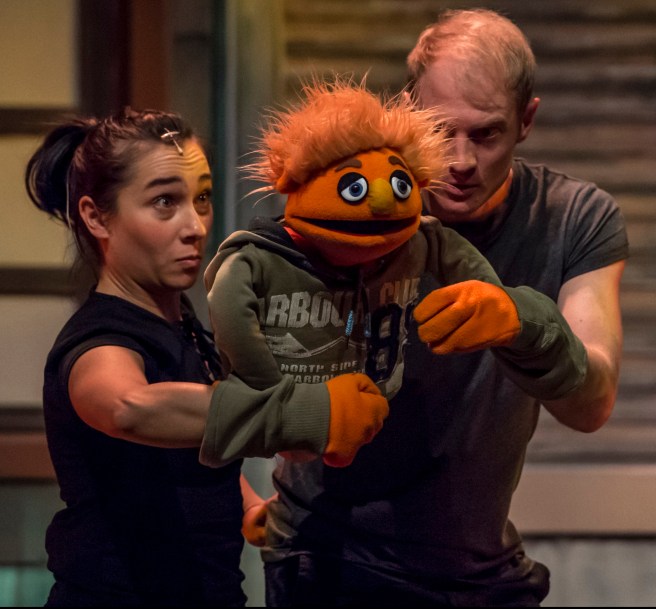
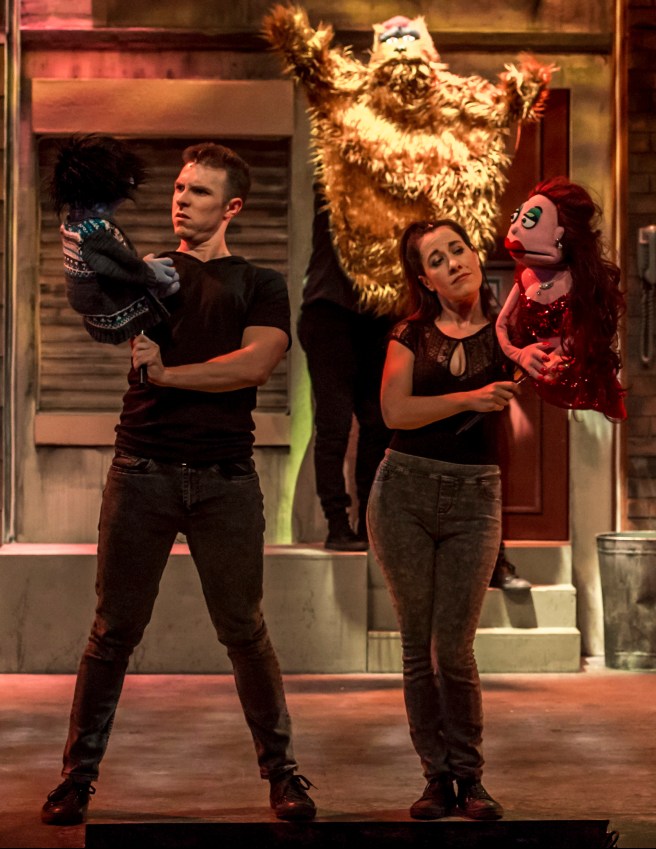
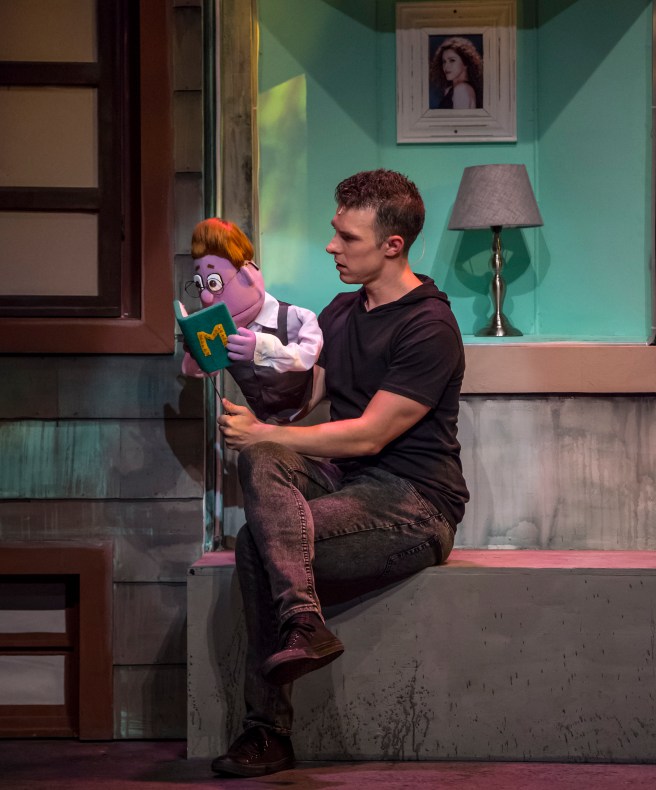
It’s the production – a musical play of puppets steered by a sassy group of actors – that keeps this one turning on a dime as they tell a story of disillusionment as they leave their comfy enclaves of learning to find their way in the world.

It’s wise as the ages but with a youthful exuberance which is firmly stamped into every slinky move made and musical note warbled as they push a story as cynical as they come. And yet, at the heart, it’s all marshmallow soft as the boy and girl walk off into the sunset.

Avenue Q Gang
The Avenue Q gang in full swing.

Of course, a few things are turned on their head, as this one is wont to do. The sex and the talk (about sex, race and gender mostly, but also about finding a purpose) are more raucous and slurpy as the puppets find their inner soul, and the talent pops all the time which it needs to do in a show where singing a song is taken to new levels – and that’s part of the fun.

It’s a show that asks you to engage from the start and once you’ve taken that leap, it’s a treasure trove on many diverse levels.

It starts with the originality, which keeps it current because of the themes but also because of the way it is presented. It’s about the puppets and the way they look and perform with the help of a cast who have found hidden skills and turn every performance into so much more than just a sing-and-dance number.

Even though they make the puppets come alive, the actors never disappear and what they achieve is part of the magic of the show. The audience is engaged in a way that adds to the excitement and exuberance.

You can sit back and smile your way through this one and wallow in the wonder of local talent, beginning with Timothy le Roux, who has put together a show that is razor sharp in the tiniest detail. And it has to be precisely that, or it wouldn’t work. If you can’t buy into the premise, you will lose much of the magic but when you do, it’s a wild and joyous ride. That’s what Le Roux has skilfully managed in near-miraculous fashion.

Avenue Geddes as Nicky
Two actors (Nieke Lombard and Daniel Geddes) manipulate Nicky the Slacker.

But then there are the puppet masters and that’s exactly what they are. They don’t dominate their puppet, yet they become part of the experience in a way that adds depth and delight to every character. It’s incredibly charming to witness and part of the marvel is the way each one on stage pulls it off and adds layer upon layer to the show.

Starting with the main guy and his gal or it could be the other way round – it’s absolutely that kind of show. Everyone is embraced whether you’re a slut or a Republican senator, there’s place for you on Avenue Q, a neighbourhood where the other becomes just another of this tightly-knit community of oddballs.

Avenue Ashleigh as Lucy
Princeton (Ryan Flynn) and Lucy the slut (Ashleigh Harvey) with Trekkie Monster (Daniel Geddes) behind.

But back to the gal (Harvey) and her guy (Flynn). Harvey has done her musical rounds and yet, it’s as if this one fits her like it was written for her. Her performance is rich in emotion, and with her singing simply extraordinary. Her main character, Kate Monster, steps aside when she’s slutty Lucy, but sometimes you have both characters on stage and that simply defies description, the deftness so delicious. She simply soars into the stratosphere with this one.

Avenue Ryan Flynn as Rod
Rod The Republican Senator (Ryan Flynn).

And that goes for Flynn too, who is starring in his biggest musical role to date and simply embraces every challenge. Also flicking between Princeton, the main guy on the lookout for purpose and a recent college graduate, and Rod the Republican senator, who is battling his rigidity, Flynn simply grabs hold of each one’s personality – sometimes at the same time.

It’s exceptional stuff and part of the hilarity of watching this one is revelling in the star power that emerges. The rest of the cast, each and everyone – from the gruff Trekkie Monster (Geddes) to Coleman, desperate to be the comeback kid (Mahaka-Phiri) – they all have to deliver or it just won’t have the zing.

It’s the tiniest gem this one but if you are blessed enough to catch the shine, it brings a new musical happiness that celebrates being different – not just as people but also in performance.

That’s rare in musical speak!

A Battle of Demons and Wit in Visiting Mr Green in a Classic Generational Clash

DIANE DE BEER

Pictures: Philip Kuhn

Visiting Mr Greens

 VISITING MR GREEN

DIRECTOR: Alan Swerdlow

CAST: Michael Richard, Roberto Pombo

VENUE: Auto and General Theatre on The Square, Sandton

UNTIL: June 10


It’s a play that feels as familiar as comfy slippers in chilly times. There’s a classic old-time feel about it and depending on your view of the world and how you prefer your theatrical ventures, this will determine whether you are challenged or simply entertained.

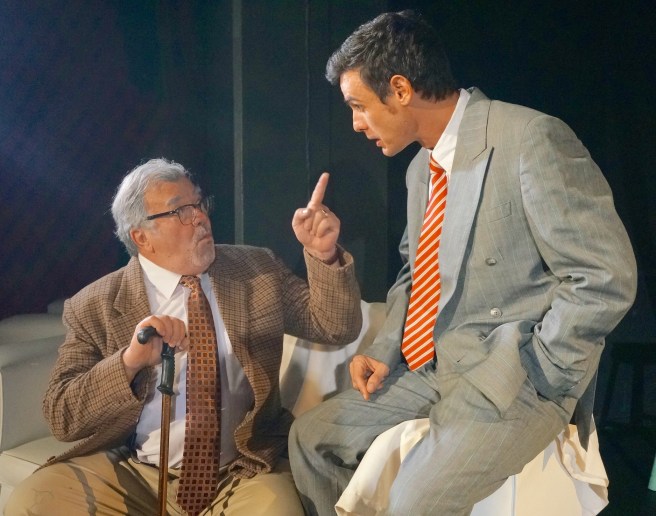
Ross (Pombo) is visiting the elderly Mr Green (Richard) because he has been ordered by the court to do so, once a week, for the next six months after being found guilty of reckless driving and almost injuring the old man. He, however believes Mr Green walked recklessly in front of his car. “I might have been going too fast,” he concedes.

But that’s basically how the story goes, which then allows the two men to battle their demons as they get to know one another. It’s uncomfortable stuff because they inhabit such different planets but that’s also what adds fuel to this fire.

From Richard’s first shuffle into the room, it’s clear he has fashioned his character in a way that inhabits not only the way he speaks but also moves – even eats. His is a crotchety old-timer who has no one who allows him any soft landings, so he simply keeps bulldozing ahead. Loneliness is how he operates even though Ross doesn’t believe that’s good enough.

visiting1

Ross on the other hand is also struggling with his lifestyle but that’s not self-imposed even though many – Mr Green included – would want him to believe it is exactly that.

It’s the acting that makes this one stand on its toes from Richard who seems to know this old codger well as he fires a series of salvos in every conversation. He’s at odds with any conversation with Pombo’s Ross who must work diligently at paying his dues for his bad behaviour on the road.

And the young Ross swings from exhaustion to exuberance as he is struck sideways by Mr Green’s thoughtless swipes and then sees an opportunity to atone for his own thoughtlessness. Pombo adds zip to his youthful portrayal of a troubled young man who is trying to kickstart and navigate a now stagnant life.

It is the battles that are fought in families – often senseless – that adds grit to Visiting Mr Green and we all recognise that these are still too prevalent today. Even in a world with the Guptas almost upending a country or Trump causing mayhem in Jerusalem, mothers are still driving their daughters dilly when they gain too much weight or a family crisis ensues when someone dares to slip a toe out of the closet.

The play didn’t get me excited even if the performances did. It is good to see an old hand like Richard tackle a character he has done in different guises before while Pombo, who is more a physical theatre guy, can play as straight as he needs to play to serve the play. Personally, I would have liked to see the issues moved into the new millennium with the current world as the backdrop. If it’s all still playing out as they are in this play, that in itself would say something.

One request would have been to cut the interval. The play isn’t that long, and it would have benefitted and exacerbated the monotony of the visits and they way they grind each other down, without the break.

Energetic Roberto Pombo Excites With Theatrical Onslaught

Actor and theatre maker Roberto Pombo is one of the most exciting young talents around and the productions he has been part of tell the story.

DIANE DE BEER chats to him about his two latest outings with Visiting Mr Green opposite Michael Richard soon to open at Sandton’s Auto and General Theatre on the Square followed by a more personal encounter:

KidCasino - kyle prinsloo
Picture: Kyle Prinsloo – Jodi Barnard and Roberto Pombo in kidcasino.


It’s as if 2018 is determined to test actor Roberto Pombo by throwing as many different genres at him as possible.

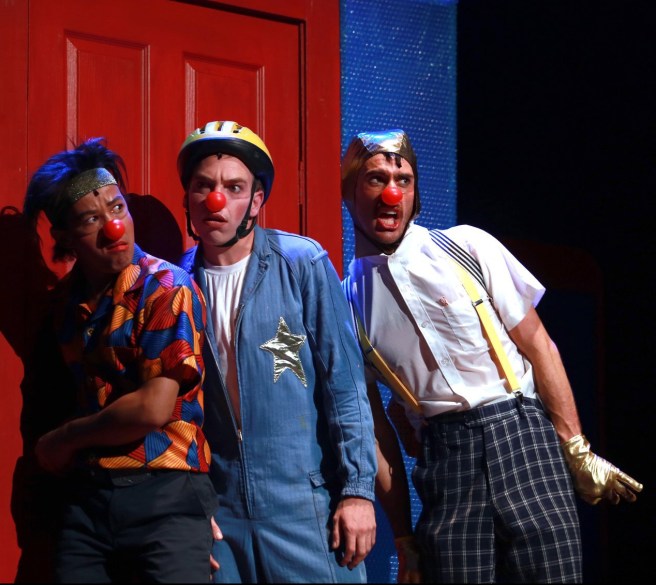
Early in the year, he was part of the exciting Sylvaine Strike/Sam Shepard production Curse of the Starving Class (also headed for Cape Town’s Baxter Theatre later this year). This was followed by a physical theatre production – a collection of clowns in Babbelagtig at the Klein Karoo National Arts Festival – Visiting Mr Green is next on the list and then a short season of Kidcasino before the show is off to the National Arts Festival in Grahamstown at the end of June.

Concluding his initial Wits studies (and a few shows, including History Boys and a stint as Jemma Kahn’s sexy assistant in We Didn’t Come to Hell for the Croissants: Seven Deadly Stories for Consenting Adults), he studied another three years with Giovanni Fusetti of Helikos International School of Theatre Creation in Italy, a man who has coaxed hundreds of clowns into the theatrical world through movement-based theatre.

Babbelagtig
Picture: Nardus Engelbrecht – Dean Balie, De Klerk Oelofse and Roberto Pombo in Babbelagtig.

That’s when he knew he wanted to be more than an actor, he also wanted to be a theatre maker. And at present he is also furthering his academic studies with a master’s focusing on the buffoon and the clown. “I’m interested in using this form driven by personal narratives,” he explains, and is delighted with his studies. “I’m all into academia now!”

Working with the creators of the cult hit Father, Father. Father!, they (Toni Morkel directing while Joni Barnard joins him on stage)  are reviving kidcasino for Grahamstown’s National Arts Festival with a short pre-run at Maboneng’s POPArt at the end of June. “The work is satirical and surreal,” says Pombo and they’re targeting the underbelly of the casino world. While mom is addictively gambling away, the kids are up and running while managing their own sugar high!

It’s all about the obsession with winning and the endless indulgence of compulsive gambling. Describing as dark comedy they promise to entice and unnerve.

Visiting Mr Green
Picture: Philip Kuhn – Michael Richard, Alan Swerdlow and Roberto Pombo

This is a second time round for Visiting Mr Green  director Alan Swerdlow with Richard and Pombo, who both starred in his earlier History Boys. He describes this one as much more than just a treacly sweet story. “It struck a universal cord,” he says, and it has never been out of production since its first production in 1996 having toured 46 countries in 23 languages.

The writer Jeff Baron told Swerdlow that since he created the two characters, Mr Green (Michael Richard) and young corporate exec (Roberto Pombo), they’ve taken on a life of their own. They’re no longer his. “I’ve had to let them go!”

“It’s that age-old clash of generations,” says Swerdlow as he talks about the two men who are deeply unpleasant when first we meet them. “Reaching out to one another, they find their humanity. But at first glance, we don’t really want to get to know them.”

That’s what makes this such an interesting piece, yet a tough part for Pombo. “I know I just have to jump on that train and ride it,’’ he says. “We need stretching as actors, but I find that so stressful.”

Yet watching him and Richard flinging words at one another, you know they will be up and away once the play is in full swing. “They’re dealing with their demons,’’ says Pombo who as Ross is visiting the elderly Green because he has been ordered by the court to do so after being found guilty of reckless driving and almost injuring the old man.

Visiting Mr Green1
Picture: Philip Kuhn – Michael Richard and Roberto Pombo in Visiting Mr Green

He describes the text as loaded and layered. There’s a lot going on because the two characters are both Jewish, living in Manhattan and because of the generational difference, their points of view come from different planets. “They’re prickly and both wear blinkers,” adds Swerdlow but slowly they find one another – with empathy.

Swerdlow is excited by the young Pombo because of his understanding of the nuances of text. “Even though his strength is movement based, he is an actor with extraordinary insight and a great grasp of text.” And this pairing with the accomplished Richard who has a wealth of experience behind him, is a no-brainer. Swerdlow is also fascinated with the timeline and how things have changed since the play first premiered. “There’s a unique perspective now.”

Once he takes a deep breath, Pombo realises he will relax, and he understands his current heightened state is part of the theatrical ritual. In fact, most of us have those hurdles we must jump in our careers as we do tasks we know we’re up to, yet find challenging. “It’s the nature of the beast,” he admits determined to enjoy the experience.

Roberto Pombo and Inge Crafford-Lazarus
Picture: Antoine de Ras – Roberto Pombo and Inge Crafford-Lazarus in Sylvaine Strike’s Curse of the Starving Class

With his track record of attempting different ventures and ongoing studies, growth is what drives him.

That and telling stories!

  • Visiting Mr Green runs at Sandton’s Auto and General Theatre on the Square from May 15 to June 10.

Actors Dawid Minnaar and John Kani Truimph in Fugard’s The Train Driver

Dawid Minnaar and John KaniPictures: Lungelo Mbulwana

DIANE DE BEER

THE TRAIN DRIVER

PLAYWRIGHT: Athol Fugard

DIRECTOR: Charmaine Weir-Smith

CAST: John Kani, Dawid Minnaar

LIGHTING: Mannie Manim

SET AND COSTUME: Thando Lobese-Moropa

VENUE: Mannie Manim Theatre at Joburg’s Market

UNTIL:  June 3


THERE’S a reason certain actors gain extraordinary reputations and to have two of them in a Fugard face-off on stage, is something to cherish.

The Train Driver while written post 2000 and only performed locally once before, is classic old-time Fugard, a story that might seem without much flesh and yet, in the South African context, every sentence is layered with pain and memory. The Train Driver is written in the familiar Fugard idiom which is so much part of his local stories, the way he teases and twists with his tale, coaxes it to unfold and doesn’t take a breath until he deals that final blow.

Minnaar in repose

Weir-Smith first wanted to know if she could relate to the story before accepting this gig – and how she honours the text is part of why it plays with such honesty. It cuts to the bone with no adornment, and very little to detract other than the two men sharing their story – and in the South African context in the past and still today, the stories of two men with similarities, yet the colour of their skin denies them any clear thinking or reaching out. The damage which is ongoing is too much to bear.

Her only nod to any embellishment is a very selective use of music, especially at the end, when the most exquisite and heart-wrenching sounds of the Pretoria Palisander Choir with Ukuthulu  (Prayer of Peace) give expression to everything that’s gone before.

But royal kudos should go to the two actors who took this one and turned it inside out to tell a story of its day – looking back and to the future with a clarity that literally doesn’t leave a stone unturned. Minnaar as the train driver in search of Red Doek, the woman who stepped in front of his train with a baby on her back, seemingly has the meatier role, and yet, it is also Kani as the foil, the one listening with particular intent, who pulls us into the eye of the storm.

John Kani1

As the intruder in this sacred space, Minnaar’s Roelf is completely unaware (as he would be in this context and simply bulldozes ahead in search of salvation. Kani’s Simon is simply someone who happens to be in this space, but Kani the actor makes sure everyone watching knows exactly how Simon feels about this white man who has crossed so many lines without any knowledge or sensitivity of where he is or what he’s doing.

It’s an intriguing tug of war, cultures and humanity as Visagie is battling his personal demons while Simon is perplexed by this spectacle that is taking over his graveyard. “There are only black people here,” he exclaims, because that should make the white man go away.

Minnaar and Kani

In his own unique way Fugard has always held a mirror to his South African people, in particular by telling a story that he knows we will understand without any explanation. Roelf (or Roelfie as Simon prefers calling him) has walked into no-man’s land because of the colour of his skin but he also endangers Simon because of how this encounter will be viewed by those watching and claiming this space.

And while Roelfie rants and raves about his life and how it has been driven to nothing by this unnamed woman, Simon watches, listens and waits. What he is hearing from this white man is not strange to him. His whole life has been determined by the ways of others and it is happening over again and again and again.

From the start, Minnaar goes at it full steam and he has to do that to allow for the full impact of what Fugard wants to unleash. It is the small story between these two men that looms large in their lives – because that’s all they have. That has always been Fugard’s way, to let the unseen little people show the way.

With Minnaar back on the Market stage (the Mannie Manim theatre aptly) and together with Kani, it is a glorious meeting of theatre genius –  all in search and to the benefit of the story.

Exactly what Weir-Smith was hoping to achieve.


Athol Fugard’s Train Driver On the Right Track with John Kani and Dawid Minnaar

Pictures: Brett Rubin

Train Driver3
John Kani, Charmaine Weir-Smith and Dawid Minnaar


With director Charmaine Weir-Smith focussed on the storytelling, Athol Fugard’s The Train Driver which runs at the Market’s Mannie Manim Theatre from May 4 to June 3 starring Dawid Minnaar and John Kani is in gently guiding hands. DIANE DE BEER spoke to three amazing artists:


It is the unexpected coming together of two theatre greats, John Kani and Dawid Minnaar, in The Market’s Fugard@86 season that had director Charmain Weir-Smith bubbling with excitement at the offer to direct Fugard’s little known The Train Driver.

Even though she was ecstatic at the thought, she first had to check whether she connected with the story. “I have to be able to tell the story,” she says – only then could she celebrate with exuberance.

For Minnaar and Kani, it was an easy fit. These two acclaimed actors, while both working in Gauteng, had never worked together. “He has always been on my list,” notes Kani even though he has resisted playing in his friend Fugard’s The Train Driver, because he couldn’t see the point of his character.

But he didn’t need much convincing and when Hollywood (where he is busy with the latest version of Lion King) gave the thumbs up because of a break in his schedule, it was all systems go.

For Minnaar, returning to The Market is something to cherish. He regards it as his theatrical home, but in the past few decades his appearances there were minimal. Hopefully that’s about to change.

It is a haunting play that is only fully realised in performance which is why these two actors and their particular skills are exactly what Fugard would have imagined for this post-apartheid play. In part he reflects on the state of the nation with a clarity and simplicity of thought that possibly only South Africans can fully grasp.

Train driver2
John Kani and Dawid Minnaar

What this theatrical trio appreciated was the commitment from each other. It’s the process they appreciate and enjoy which in today’s festival-driven world is such a luxury. “They think it is a snap of a finger and you have a play,” says Minnaar wryly as he dreams about escaping the relentless festival circuit.

Time allows the director and the actors to work with the text. That’s when they get to the essence not only of the text but also of each other. One can just imagine these two passionate performers and their processes as they twist and turn their characters inside out to get closer to the truth.

It’s a Fugard text that teases the players while not allowing any tricks, to get to the truth. And for the audience the experience is similar as he slips in familiarities in our landscape as clues to what he is really dealing with.

On the surface it is the story of a tormented train driver, Roelf Visagie, who turns up at a graveyard with unmarked graves at the edge of an informal settlement in the middle of nowhere. He is  determined to find the grave of an unknown woman who with her baby on her back, stepped in front of his train. He is in obvious distress as he seeks the guidance of the gravedigger, Simon Hanabe, who is unable to be of assistance but nevertheless willing to sympathise.

Generosity is what was evidenced in the rehearsal space, that and an absence of ego, says the director who believes that is what is necessary for the authenticity that will make or break this particular play.

And while Kani was initially puzzled by the purpose of Simon with Roelf the focus as he struggles to come to terms with the way his life has been upended by a single act, that is no longer true. “I am pleased to be paying tribute to my friend Athol,” he says.

His connection with and knowledge of Fugard’s work and writing has been hugely important to this production. The playwright has Americanised some of his work over the past few years while writing from that country. “He speaks, for example, of barbeque rather than braai,” says Weir-Smith and having sat through a rehearsal, the way they have worked with the text has grounded it locally in a way only Fugard would – thanks to Kani.

Simon, argues Kani, is the one who knows about loss and blame. “I know how to listen,” he adds, and Weir-Smith agrees. “You are the one who holds Roelf,” she says. And even though his own script load isn’t that heavy, he had to learn all Minnaar’s lines. “There aren’t many queues,” he wails which means he has to know when and how to simply nod or come in with a brief phrase or two.

Kani describes the female director as someone who “mothers the process”. And for the director, it is simply about telling a story. “Once upon a time there was a woman with a child …”

No more no less – especially with this one where you don’t want anything to take away from the writer and his words, the way the story unfolds and the two men untangling their minds and their worlds in a way that brings new insights – or reminders of where we are even when dealing with the past.

For Minnaar this is a time of firsts. Not only is this a meeting of minds with Kani, it is also his first encounter with Fugard. “It feels right for me now,” is how he views the season. “I am honoured and to do a Fugard, is fantastic.”

Watching the two men at work and play is a privilege but nothing is guaranteed on stage – not even with Kani and Minnaar. Yet when you watch them slip into their characters, silently but with an assured stride, it is a world of make-believe that comes alive.

These are artists who believe in what they do and will work as hard as it takes – given the time and place – to make it work. We who can witness this, are blessed and Fugard will know that The Train Driver is cherished in this company of true artists.


Mike van Graan – A Warrior for the Arts

Mike van Graan

By Diane de Beer


This has been a good year for cultural activist and playwright Mike van Graan.

Not only has he won the 2018 Hiroshima Foundation for Peace and Culture, a biannual international award recognising those who foster dialogue, understanding and peace in conflict areas, but was also awarded an honorary doctorate from the University of Pretoria.

The opening lines of his address at the university ceremony continues his interrogation of the cultural landscape: “This is my first graduation ceremony.  I was part of the apartheid-must-fall generation.  To attend the University of Cape Town – a “white” university – I was required to apply for a permit from the Department of Coloured Affairs.

“In terms of the separate-and-unequal policies of the time, it was deemed that people of my classification would attend the University of the Western Cape.  To qualify for a permit to UCT, I had to do a subject not offered at UWC.  My permit subject was … drama.

“ By the time of my application, I had never been to a formal theatre; the state-subsidised Nico Malan Theatre in Cape Town where I lived, was boycotted first because it started as a whites-only facility and restrictions were placed on racially mixed casts, and then when it received a permit to allow people other than those classified white, as audience members, this was deemed an affront to those who self-identified as “black”.

“Similarly, many in my generation boycotted our graduation ceremonies; while we were obliged to apply for permits to obtain what we considered to be better education offered at institutions like UCT at that time, we viewed graduation ceremonies as symbolic inductions into an essentially unjust system.

Mike van Graan3

“We live in different times.  And yet, we are no less shaped as individuals by the context in which we live, and we are no less graduating into a society wracked by deep inequality.

“As a playwright, I seek to interrogate contemporary moral questions we encounter in a society in transition.”

More than anything the above should explain to those not familiar with this provocative playwright’s work (including Green Man Flashing, Some Mothers’ Sons and Brothers in Blood) why he is celebrated by the university.

Van Graan, whose plays have often been performed in Pretoria, Johannesburg, Cape Town and around the country as well as internationally – most recently State Fracture at the Klein Karoo Nasionale Kunstefees (KKNK) and Green Man Flashing at Sandton’s Theatre on the Square – is described as a “courageous and provocative advocate not only for local theatre, but also for the broader field of cultural heritage in general,” by Prof Vasu Reddy, Dean of the Faculty of Humanities.

“His plays interrogate South Africa’s socio-political conditions and he locates these explorations in a deeply human context to create layered and emotionally evocative plays. His plays are testimony to a critical and political consciousness that both demonstrates and encourages engaged, critical citizenship in and through the theatre,” the citation reads in part.

“I am deeply conscious that while I am able to write and produce these plays, in a society in which more than half the population lives below the poverty line, with official unemployment at 26%, many of my fellow citizens will be unable to access these plays, and not enjoy their fundamental right “to participate in the cultural life of the community and enjoy the arts” as affirmed in Article 27 of the Universal Declaration of Human Rights.

“In such a divided society, with its inheritance of division, whose stories are told?  Whose values and interests are served by theatre?  Whose standards are used to evaluate theatre?  Who acts, who directs, who designs the lighting, the costumes, the sets?

“It is not enough simply to write and produce within the system, within the structures as they exist; it is necessary simultaneously to work for systemic and structural changes within the theatre sector itself, and within our broader society that shapes both the theatre industry and the opportunities afforded our citizenry, always working towards a more just, more humane order,” he concludes.

That is who Mike van Graan is. At a time when the number of journalists, arts journalists in particular, often at the bottom of the rung in news structures, was curtailed, covering arts and culture in a broader and more in-depth context became impossible.

Van Graan, who has always had much on his mind stepped in with regular newsletters The Cultural Weapon, writing about the state of the arts in general and more particular, in this country, where the arts played such a huge role in the struggle. He was determined to participate, to make his voice heard on as many platforms as possible and was often a lone voice, much maligned.

Awarded the Doctor of Philosophy degree from the UP Faculty of Humanities on April 23 and currently in Sweden where he will be awarded the 2018 Hiroshima Foundation for Peace and Culture  prize (previously awarded to Antjie Krog and John Kani and worth R1-million), it could not happen to a more dedicated cultural warrior.

May his fight always be as persistent.

Mike van Graan2

* Mike van Graan is the president of the African Cultural Policy Network and an associate professor of drama at the University of Cape Town. Professionally, he works as a consultant in the arts and culture arena, while also serving on UNESCO’s technical facility for the 2005 Convention on the Protection and Promotion of the Diversity of Cultural Expressions. Creatively, he works as a playwright and has written 30 plays to date, most of which interrogate the post-apartheid condition.

  • Green Man Flashing will also have a run at this year’s National Arts Festival as well as the Hilton Festival in KwaZulu-Natal.

Womb of Fire a Play of and for our Time

Pictures: by Ratheesh Sundaram

w2
Rehane Abrahams in Womb of Fire


Two women came together over a cup of chai in a Mumbai kitchen in 1999 and the result was an organisation called The Mothertongue Project and a magnificent play titled Womb of Fire which has a three -week run at Cape Town’s Baxter Theatre. It has also had a recently announced grand win at the Stellenbosch Woordfees for Best Actor (Rehane Abrahams), Best Director (Sara Matchett) and Best Play (Womb of Fire). DIANE DE BEER digs deeper:


It all began when actress/writer Rehane Abrahams persuaded Dr Sara Matchett, Senior Lecturer at the University of Cape Town’s Centre for Theatre, Dance and Performance Studies, to direct a piece she was writing. She described the work as seminal and that it would mark a transition into a new way of being for her.

Back in South Africa a few years later and after a rewarding run of What the Water Gave Me in Cape Town, they were faced with a choice: to either continue and grow their organisation, which had been established for funding purposes or abandon it and carry on with their individual lives.

“Rehane and I chose the former. The need for a women’s arts collective – one that focused on women creating and performing theatre inspired by women’s personal stories – became apparent in terms of the role it would play in redressing gender imbalances historically prevalent in South African theatre.

“The necessity to challenge the silencing and marginalisation of women’s voices in theatre was evident. The Mothertongue Project was officially formed in 2000.”

w9(1)
Rehane Abrahams

In 2010, while visiting her parents in Cape Town, Abrahams ended up staying longer than intended and with her mother (Cass Abrahams) grieving the death of her own mother developed an interest in her maternal ancestry – her grandmother’s grandmother.

“My mother writes in her most recent book, how her mother finally admitted Khoekhoen (or ‘Hotnot’ as she said) ancestry as she was in the process of dying. It moved my mother and she herself expressed a strong desire to connect with her Kat Rivier ancestors and retrieve a long denied and erased Khoekhoen connection.”

Abrahams was hospitalised at the time and with a lot of time on her hands, she began writing and dreaming. “The time in hospital delirious with pain medication gave me some of the text used in Womb of Fire – a core kernel if you will of the text – that had to do with blood, and the stories carried by mitochondrial DNA which is passed from daughter to daughter.”

“Of course, I told Sara about this and we talked about making a play that would pull me closer to the earth where I was born, through my motherline in a sense. In a way, I was growing tired of drifting untethered from South African soil.”

Matchett tells of yet another connection in the multi-layered play. “I had the fortunate opportunity of spending a week at Kalakshetra Manipur in October 2012, as part of a PhD research visit to India.  My experience was a deeply transformative one on many levels.”

Kalakshetra Manipur is a theatre company founded by Heisnam Kanhailal, the husband of Ima Sabitri, who started as a child star of Manipuri Opera theatre in the 50s, but later joined her husband and devoted herself to experimental theatre best described as “a fusion of instinctive physical movements with hard-hitting political aesthetic”.

w10(1)

“The experience of living in residence with the couple and the company of young actors, afforded me the opportunity to engage with them beyond the theatre practice.  I felt that the sense of community that they inculcate, deeply informs the work that they make. I was particularly struck by Ima’s sense of playfulness coupled with deep wisdom.

She and Abrahams later saw more work by the company together and the issues raised in their piece had profound resonances with women’s experiences in Southern Africa.

Abrahams’ research for her also Masters inspired her, especially Zoe Wicomb and Pumla Dineo Gqola. “I encountered the stories of Grote Katrijn van Pulicat and Zara, who are the other two characters in the play through the research of a remarkable man called Mansell Upham, who came to a rehearsal while he was visiting from Japan where he now lives; he gave us valuable insights and corrected misconceptions. He is also a descendant of Grote Katrijn and has conducted the most thorough research of her story, so it was imperative that he give his blessings.

w7(1)
Rehane Abrahams

“The story unravels the first years of the colony – our birth, our country’s Womb of Fire. The two characters was based on my mother’s two grandmothers; one a Khoe woman from the Kat Rivier, who was a difficult person apparently, racist, vicious and sexy, even into old age; and Zara written with my mother’s description of Mama Hendrika Jeggels in mind. My mother’s other granny was Catherine Prins who was half Scottish, half Tamil. She was sweet and dignified, the first certified midwife of colour on the Rand and she gave us the sweetness, the love and the tenactiy of Grote Katrijn. Her journey also drew on my own experiences of India and Indonesia – Jakarta or Batavia in particular.”

The language also plays an important role and is selected for the audience it plays to. “I wanted to express something of the polyglot nature of the first years at the Cape with the different languages. I speak Indonesian, which we used for Katrijn’s time in Batavia and baby words from Malayalam for India. For Zara, we use a smattering of Khoekhoegowab or Nama for words of deep significance. For the Woordfees run, we decided to try Afrikaans and asked Jason Jacobs to translate and it foregrounded different aspects in the text and deepened the characterisation. I loved the richness of switching linguistic registers.”

In its finality, Womb of Fire, set against an episode of Indian epic The Mahabharata, interweaves personal narrative and contemporary realities with the lives of two women from the founding years of the Cape Colony to interrogate the Womb of Fire that birthed South Africa. Grote Katrijn (1681-1683) journeys across India to Batavia and then to Cape Town as the first female bandit slave; and the life of Zara (1648-1671), a Khoekhoen servant who was violently punished posthumously by the VOC for the crime of suicide, is explored. In performance, the power of the performing female body challenges the pornography of Empire, in the process decolonising and retrieving itself. The play reaches back and forward across time to reassemble the dismembered body allowing it to speak.

“It is a roar, not a lament,” says Matchett.

And so much more. It’s a play of and for our time, exquisitely executed and accessible to everyone.


*The Baxter run is from April 18 to May 5 in The Golden Arrow Studio at 20h15. They have also been invited to the SA Women’s Arts Festival at the Playhouse in Durban in August as well as Afrovibes in the Netherlands in October and there’s also the possibility of an Indian City tour at the end of the year.