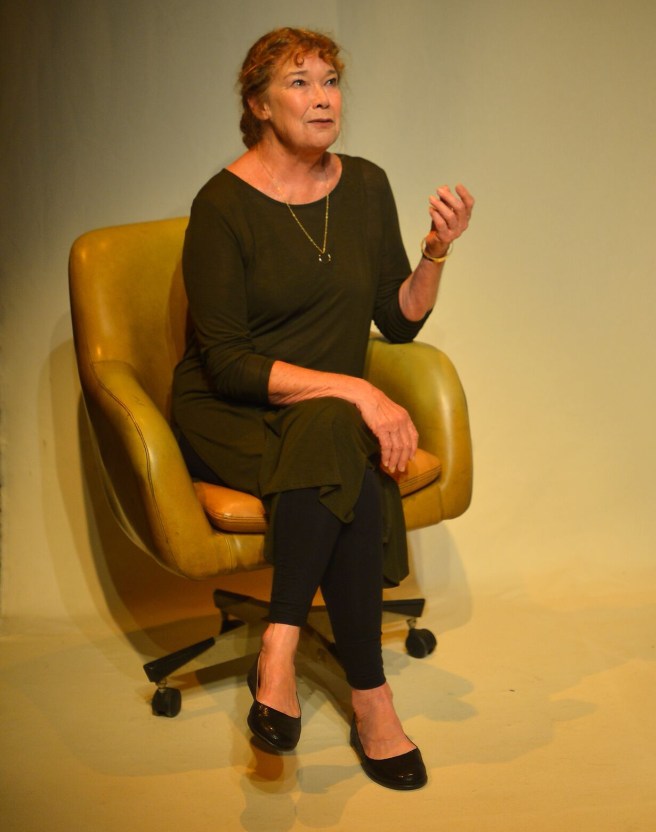
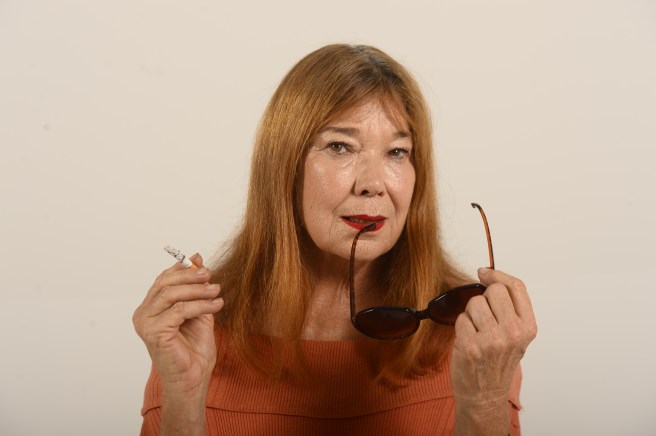
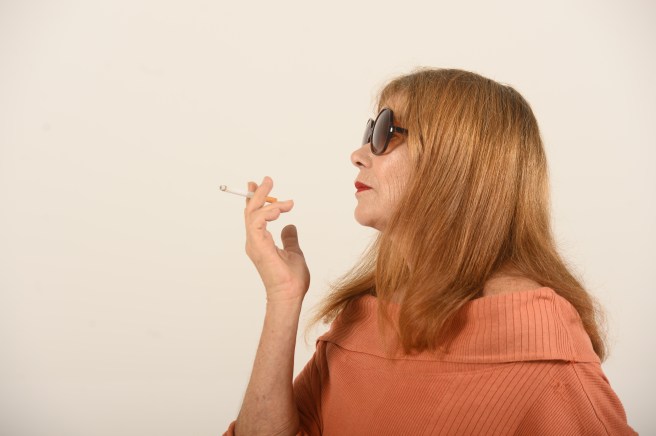
VENUE: Auto and General Theatre on The Square, Sandton
UNTIL: June 10
It’s a play that feels as familiar as comfy slippers in chilly times. There’s a classic old-time feel about it and depending on your view of the world and how you prefer your theatrical ventures, this will determine whether you are challenged or simply entertained.
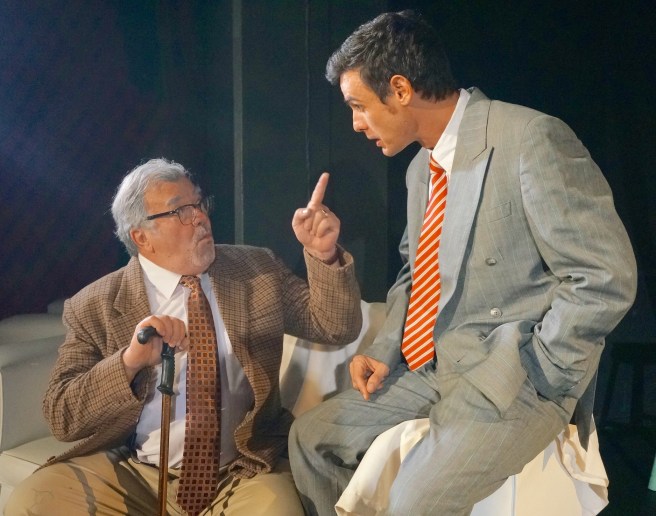
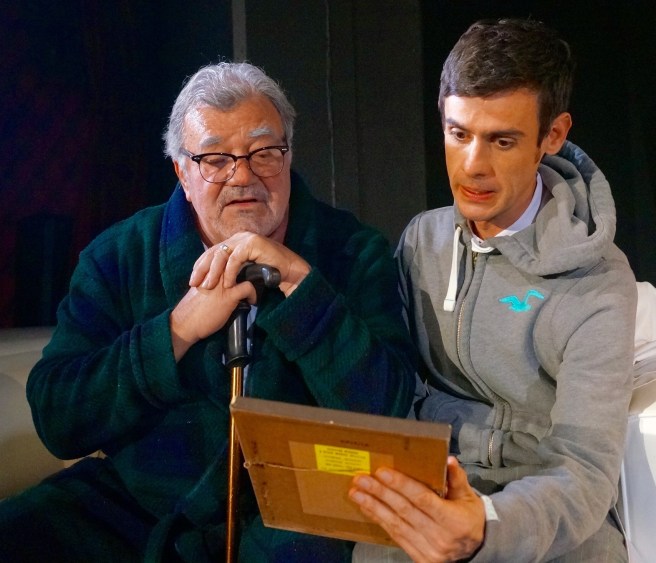
Ross (Pombo) is visiting the elderly Mr Green (Richard) because he has been ordered by the court to do so, once a week, for the next six months after being found guilty of reckless driving and almost injuring the old man. He, however believes Mr Green walked recklessly in front of his car. “I might have been going too fast,” he concedes.
But that’s basically how the story goes, which then allows the two men to battle their demons as they get to know one another. It’s uncomfortable stuff because they inhabit such different planets but that’s also what adds fuel to this fire.
From Richard’s first shuffle into the room, it’s clear he has fashioned his character in a way that inhabits not only the way he speaks but also moves – even eats. His is a crotchety old-timer who has no one who allows him any soft landings, so he simply keeps bulldozing ahead. Loneliness is how he operates even though Ross doesn’t believe that’s good enough.
Ross on the other hand is also struggling with his lifestyle but that’s not self-imposed even though many – Mr Green included – would want him to believe it is exactly that.
It’s the acting that makes this one stand on its toes from Richard who seems to know this old codger well as he fires a series of salvos in every conversation. He’s at odds with any conversation with Pombo’s Ross who must work diligently at paying his dues for his bad behaviour on the road.
And the young Ross swings from exhaustion to exuberance as he is struck sideways by Mr Green’s thoughtless swipes and then sees an opportunity to atone for his own thoughtlessness. Pombo adds zip to his youthful portrayal of a troubled young man who is trying to kickstart and navigate a now stagnant life.
It is the battles that are fought in families – often senseless – that adds grit to Visiting Mr Green and we all recognise that these are still too prevalent today. Even in a world with the Guptas almost upending a country or Trump causing mayhem in Jerusalem, mothers are still driving their daughters dilly when they gain too much weight or a family crisis ensues when someone dares to slip a toe out of the closet.
The play didn’t get me excited even if the performances did. It is good to see an old hand like Richard tackle a character he has done in different guises before while Pombo, who is more a physical theatre guy, can play as straight as he needs to play to serve the play. Personally, I would have liked to see the issues moved into the new millennium with the current world as the backdrop. If it’s all still playing out as they are in this play, that in itself would say something.
One request would have been to cut the interval. The play isn’t that long, and it would have benefitted and exacerbated the monotony of the visits and they way they grind each other down, without the break.
Actor and theatre maker Roberto Pombo is one of the most exciting young talents around and the productions he has been part of tell the story.
DIANE DE BEER chats to him about his two latest outings with Visiting Mr Green opposite Michael Richard soon to open at Sandton’s Auto and General Theatre on the Square followed by a more personal encounter:
Picture: Kyle Prinsloo – Jodi Barnard and Roberto Pombo in kidcasino.
It’s as if 2018 is determined to test actor Roberto Pombo by throwing as many different genres at him as possible.
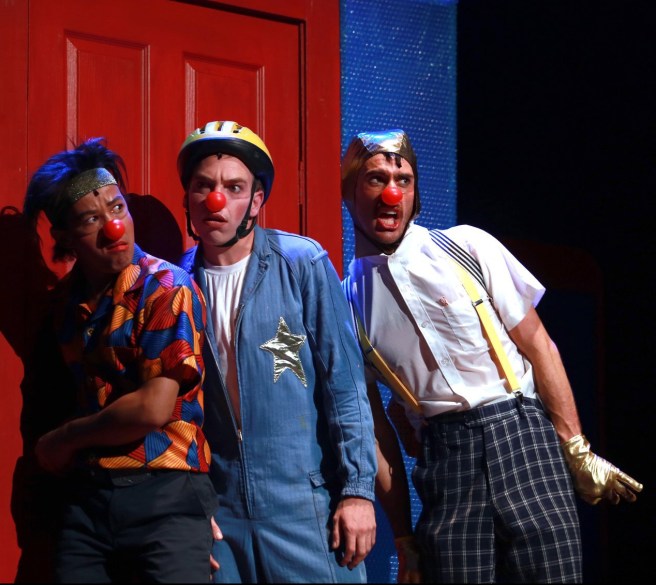
Early in the year, he was part of the exciting Sylvaine Strike/Sam Shepard production Curse of the Starving Class (also headed for Cape Town’s Baxter Theatre later this year). This was followed by a physical theatre production – a collection of clowns in Babbelagtig at the Klein Karoo National Arts Festival – Visiting Mr Green is next on the list and then a short season of Kidcasino before the show is off to the National Arts Festival in Grahamstown at the end of June.
Concluding his initial Wits studies (and a few shows, including History Boys and a stint as Jemma Kahn’s sexy assistant in We Didn’t Come to Hell for the Croissants: Seven Deadly Stories for Consenting Adults), he studied another three years with Giovanni Fusetti of Helikos International School of Theatre Creation in Italy, a man who has coaxed hundreds of clowns into the theatrical world through movement-based theatre.
Picture: Nardus Engelbrecht – Dean Balie, De Klerk Oelofse and Roberto Pombo in Babbelagtig.
That’s when he knew he wanted to be more than an actor, he also wanted to be a theatre maker. And at present he is also furthering his academic studies with a master’s focusing on the buffoon and the clown. “I’m interested in using this form driven by personal narratives,” he explains, and is delighted with his studies. “I’m all into academia now!”
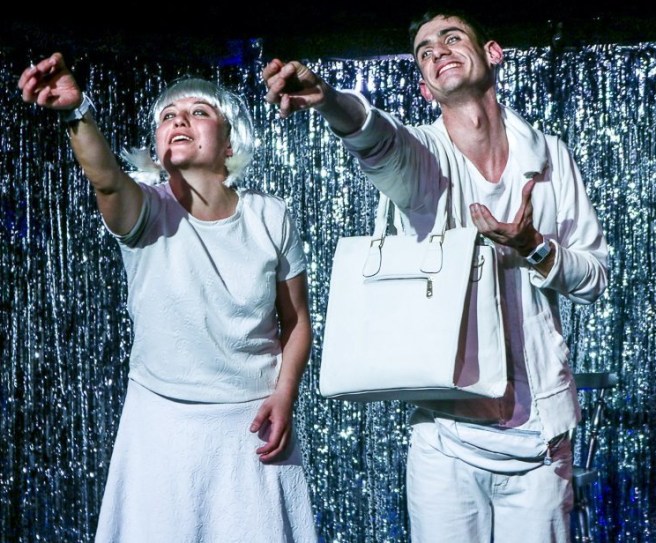
Working with the creators of the cult hit Father, Father. Father!, they (Toni Morkel directing while Joni Barnard joins him on stage) are reviving kidcasino for Grahamstown’s National Arts Festival with a short pre-run at Maboneng’s POPArt at the end of June. “The work is satirical and surreal,” says Pombo and they’re targeting the underbelly of the casino world. While mom is addictively gambling away, the kids are up and running while managing their own sugar high!
It’s all about the obsession with winning and the endless indulgence of compulsive gambling. Describing as dark comedy they promise to entice and unnerve.
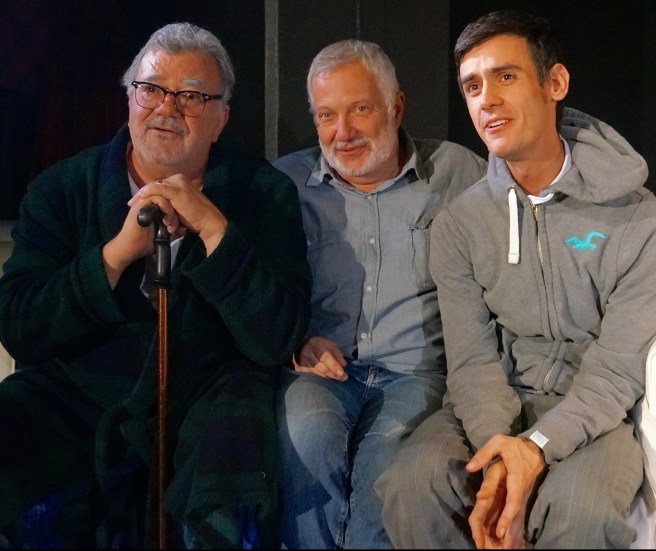
Picture: Philip Kuhn – Michael Richard, Alan Swerdlow and Roberto Pombo
This is a second time round for Visiting Mr Green director Alan Swerdlow with Richard and Pombo, who both starred in his earlier History Boys. He describes this one as much more than just a treacly sweet story. “It struck a universal cord,” he says, and it has never been out of production since its first production in 1996 having toured 46 countries in 23 languages.
The writer Jeff Baron told Swerdlow that since he created the two characters, Mr Green (Michael Richard) and young corporate exec (Roberto Pombo), they’ve taken on a life of their own. They’re no longer his. “I’ve had to let them go!”
“It’s that age-old clash of generations,” says Swerdlow as he talks about the two men who are deeply unpleasant when first we meet them. “Reaching out to one another, they find their humanity. But at first glance, we don’t really want to get to know them.”
That’s what makes this such an interesting piece, yet a tough part for Pombo. “I know I just have to jump on that train and ride it,’’ he says. “We need stretching as actors, but I find that so stressful.”
Yet watching him and Richard flinging words at one another, you know they will be up and away once the play is in full swing. “They’re dealing with their demons,’’ says Pombo who as Ross is visiting the elderly Green because he has been ordered by the court to do so after being found guilty of reckless driving and almost injuring the old man.
Picture: Philip Kuhn – Michael Richard and Roberto Pombo in Visiting Mr Green
He describes the text as loaded and layered. There’s a lot going on because the two characters are both Jewish, living in Manhattan and because of the generational difference, their points of view come from different planets. “They’re prickly and both wear blinkers,” adds Swerdlow but slowly they find one another – with empathy.
Swerdlow is excited by the young Pombo because of his understanding of the nuances of text. “Even though his strength is movement based, he is an actor with extraordinary insight and a great grasp of text.” And this pairing with the accomplished Richard who has a wealth of experience behind him, is a no-brainer. Swerdlow is also fascinated with the timeline and how things have changed since the play first premiered. “There’s a unique perspective now.”
Once he takes a deep breath, Pombo realises he will relax, and he understands his current heightened state is part of the theatrical ritual. In fact, most of us have those hurdles we must jump in our careers as we do tasks we know we’re up to, yet find challenging. “It’s the nature of the beast,” he admits determined to enjoy the experience.
Picture: Antoine de Ras – Roberto Pombo and Inge Crafford-Lazarus in Sylvaine Strike’s Curse of the Starving Class
With his track record of attempting different ventures and ongoing studies, growth is what drives him.
That and telling stories!
Visiting Mr Green runs at Sandton’s Auto and General Theatre on the Square from May 15 to June 10.
THERE’S a reason certain actors gain extraordinary reputations and to have two of them in a Fugard face-off on stage, is something to cherish.
The Train Driver while written post 2000 and only performed locally once before, is classic old-time Fugard, a story that might seem without much flesh and yet, in the South African context, every sentence is layered with pain and memory. The Train Driver is written in the familiar Fugard idiom which is so much part of his local stories, the way he teases and twists with his tale, coaxes it to unfold and doesn’t take a breath until he deals that final blow.
Weir-Smith first wanted to know if she could relate to the story before accepting this gig – and how she honours the text is part of why it plays with such honesty. It cuts to the bone with no adornment, and very little to detract other than the two men sharing their story – and in the South African context in the past and still today, the stories of two men with similarities, yet the colour of their skin denies them any clear thinking or reaching out. The damage which is ongoing is too much to bear.
Her only nod to any embellishment is a very selective use of music, especially at the end, when the most exquisite and heart-wrenching sounds of the Pretoria Palisander Choir with Ukuthulu (Prayer of Peace) give expression to everything that’s gone before.
But royal kudos should go to the two actors who took this one and turned it inside out to tell a story of its day – looking back and to the future with a clarity that literally doesn’t leave a stone unturned. Minnaar as the train driver in search of Red Doek, the woman who stepped in front of his train with a baby on her back, seemingly has the meatier role, and yet, it is also Kani as the foil, the one listening with particular intent, who pulls us into the eye of the storm.
As the intruder in this sacred space, Minnaar’s Roelf is completely unaware (as he would be in this context and simply bulldozes ahead in search of salvation. Kani’s Simon is simply someone who happens to be in this space, but Kani the actor makes sure everyone watching knows exactly how Simon feels about this white man who has crossed so many lines without any knowledge or sensitivity of where he is or what he’s doing.
It’s an intriguing tug of war, cultures and humanity as Visagie is battling his personal demons while Simon is perplexed by this spectacle that is taking over his graveyard. “There are only black people here,” he exclaims, because that should make the white man go away.
In his own unique way Fugard has always held a mirror to his South African people, in particular by telling a story that he knows we will understand without any explanation. Roelf (or Roelfie as Simon prefers calling him) has walked into no-man’s land because of the colour of his skin but he also endangers Simon because of how this encounter will be viewed by those watching and claiming this space.
And while Roelfie rants and raves about his life and how it has been driven to nothing by this unnamed woman, Simon watches, listens and waits. What he is hearing from this white man is not strange to him. His whole life has been determined by the ways of others and it is happening over again and again and again.
From the start, Minnaar goes at it full steam and he has to do that to allow for the full impact of what Fugard wants to unleash. It is the small story between these two men that looms large in their lives – because that’s all they have. That has always been Fugard’s way, to let the unseen little people show the way.
With Minnaar back on the Market stage (the Mannie Manim theatre aptly) and together with Kani, it is a glorious meeting of theatre genius – all in search and to the benefit of the story.
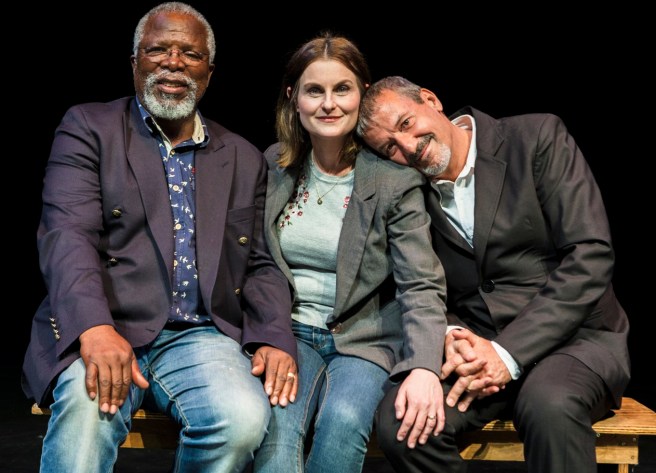
With director Charmaine Weir-Smith focussed on the storytelling, Athol Fugard’s The Train Driver which runs at the Market’s Mannie Manim Theatre from May 4 to June 3 starring Dawid Minnaar and John Kani is in gently guiding hands. DIANE DE BEER spoke to three amazing artists:
It is the unexpected coming together of two theatre greats, John Kani and Dawid Minnaar, in The Market’s Fugard@86 season that had director Charmain Weir-Smith bubbling with excitement at the offer to direct Fugard’s little known The Train Driver.
Even though she was ecstatic at the thought, she first had to check whether she connected with the story. “I have to be able to tell the story,” she says – only then could she celebrate with exuberance.
For Minnaar and Kani, it was an easy fit. These two acclaimed actors, while both working in Gauteng, had never worked together. “He has always been on my list,” notes Kani even though he has resisted playing in his friend Fugard’s The Train Driver, because he couldn’t see the point of his character.
But he didn’t need much convincing and when Hollywood (where he is busy with the latest version of Lion King) gave the thumbs up because of a break in his schedule, it was all systems go.
For Minnaar, returning to The Market is something to cherish. He regards it as his theatrical home, but in the past few decades his appearances there were minimal. Hopefully that’s about to change.
It is a haunting play that is only fully realised in performance which is why these two actors and their particular skills are exactly what Fugard would have imagined for this post-apartheid play. In part he reflects on the state of the nation with a clarity and simplicity of thought that possibly only South Africans can fully grasp.
John Kani and Dawid Minnaar
What this theatrical trio appreciated was the commitment from each other. It’s the process they appreciate and enjoy which in today’s festival-driven world is such a luxury. “They think it is a snap of a finger and you have a play,” says Minnaar wryly as he dreams about escaping the relentless festival circuit.
Time allows the director and the actors to work with the text. That’s when they get to the essence not only of the text but also of each other. One can just imagine these two passionate performers and their processes as they twist and turn their characters inside out to get closer to the truth.
It’s a Fugard text that teases the players while not allowing any tricks, to get to the truth. And for the audience the experience is similar as he slips in familiarities in our landscape as clues to what he is really dealing with.
On the surface it is the story of a tormented train driver, Roelf Visagie, who turns up at a graveyard with unmarked graves at the edge of an informal settlement in the middle of nowhere. He is determined to find the grave of an unknown woman who with her baby on her back, stepped in front of his train. He is in obvious distress as he seeks the guidance of the gravedigger, Simon Hanabe, who is unable to be of assistance but nevertheless willing to sympathise.
Generosity is what was evidenced in the rehearsal space, that and an absence of ego, says the director who believes that is what is necessary for the authenticity that will make or break this particular play.
And while Kani was initially puzzled by the purpose of Simon with Roelf the focus as he struggles to come to terms with the way his life has been upended by a single act, that is no longer true. “I am pleased to be paying tribute to my friend Athol,” he says.
His connection with and knowledge of Fugard’s work and writing has been hugely important to this production. The playwright has Americanised some of his work over the past few years while writing from that country. “He speaks, for example, of barbeque rather than braai,” says Weir-Smith and having sat through a rehearsal, the way they have worked with the text has grounded it locally in a way only Fugard would – thanks to Kani.
Simon, argues Kani, is the one who knows about loss and blame. “I know how to listen,” he adds, and Weir-Smith agrees. “You are the one who holds Roelf,” she says. And even though his own script load isn’t that heavy, he had to learn all Minnaar’s lines. “There aren’t many queues,” he wails which means he has to know when and how to simply nod or come in with a brief phrase or two.
Kani describes the female director as someone who “mothers the process”. And for the director, it is simply about telling a story. “Once upon a time there was a woman with a child …”
No more no less – especially with this one where you don’t want anything to take away from the writer and his words, the way the story unfolds and the two men untangling their minds and their worlds in a way that brings new insights – or reminders of where we are even when dealing with the past.
For Minnaar this is a time of firsts. Not only is this a meeting of minds with Kani, it is also his first encounter with Fugard. “It feels right for me now,” is how he views the season. “I am honoured and to do a Fugard, is fantastic.”
Watching the two men at work and play is a privilege but nothing is guaranteed on stage – not even with Kani and Minnaar. Yet when you watch them slip into their characters, silently but with an assured stride, it is a world of make-believe that comes alive.
These are artists who believe in what they do and will work as hard as it takes – given the time and place – to make it work. We who can witness this, are blessed and Fugard will know that The Train Driver is cherished in this company of true artists.
This has been a good year for cultural activist and playwright Mike van Graan.
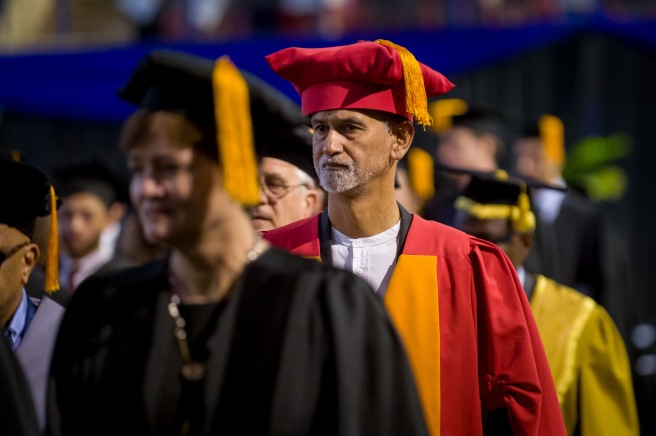
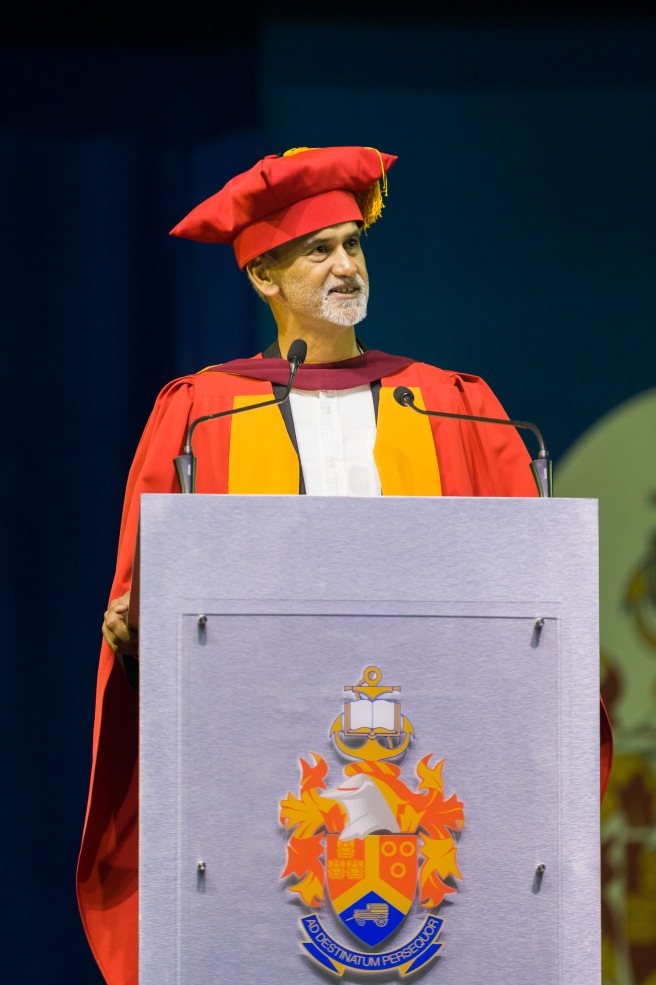
Not only has he won the 2018 Hiroshima Foundation for Peace and Culture, a biannual international award recognising those who foster dialogue, understanding and peace in conflict areas, but was also awarded an honorary doctorate from the University of Pretoria.
The opening lines of his address at the university ceremony continues his interrogation of the cultural landscape: “This is my first graduation ceremony. I was part of the apartheid-must-fall generation. To attend the University of Cape Town – a “white” university – I was required to apply for a permit from the Department of Coloured Affairs.
“In terms of the separate-and-unequal policies of the time, it was deemed that people of my classification would attend the University of the Western Cape. To qualify for a permit to UCT, I had to do a subject not offered at UWC. My permit subject was … drama.
“ By the time of my application, I had never been to a formal theatre; the state-subsidised Nico Malan Theatre in Cape Town where I lived, was boycotted first because it started as a whites-only facility and restrictions were placed on racially mixed casts, and then when it received a permit to allow people other than those classified white, as audience members, this was deemed an affront to those who self-identified as “black”.
“Similarly, many in my generation boycotted our graduation ceremonies; while we were obliged to apply for permits to obtain what we considered to be better education offered at institutions like UCT at that time, we viewed graduation ceremonies as symbolic inductions into an essentially unjust system.
“We live in different times. And yet, we are no less shaped as individuals by the context in which we live, and we are no less graduating into a society wracked by deep inequality.
“As a playwright, I seek to interrogate contemporary moral questions we encounter in a society in transition.”
More than anything the above should explain to those not familiar with this provocative playwright’s work (including Green Man Flashing, Some Mothers’ Sons and Brothers in Blood) why he is celebrated by the university.
Van Graan, whose plays have often been performed in Pretoria, Johannesburg, Cape Town and around the country as well as internationally – most recently State Fracture at the Klein Karoo Nasionale Kunstefees (KKNK) and Green Man Flashing at Sandton’s Theatre on the Square – is described as a “courageous and provocative advocate not only for local theatre, but also for the broader field of cultural heritage in general,” by Prof Vasu Reddy, Dean of the Faculty of Humanities.
“His plays interrogate South Africa’s socio-political conditions and he locates these explorations in a deeply human context to create layered and emotionally evocative plays. His plays are testimony to a critical and political consciousness that both demonstrates and encourages engaged, critical citizenship in and through the theatre,” the citation reads in part.
“I am deeply conscious that while I am able to write and produce these plays, in a society in which more than half the population lives below the poverty line, with official unemployment at 26%, many of my fellow citizens will be unable to access these plays, and not enjoy their fundamental right “to participate in the cultural life of the community and enjoy the arts” as affirmed in Article 27 of the Universal Declaration of Human Rights.
“In such a divided society, with its inheritance of division, whose stories are told? Whose values and interests are served by theatre? Whose standards are used to evaluate theatre? Who acts, who directs, who designs the lighting, the costumes, the sets?
“It is not enough simply to write and produce within the system, within the structures as they exist; it is necessary simultaneously to work for systemic and structural changes within the theatre sector itself, and within our broader society that shapes both the theatre industry and the opportunities afforded our citizenry, always working towards a more just, more humane order,” he concludes.
That is who Mike van Graan is. At a time when the number of journalists, arts journalists in particular, often at the bottom of the rung in news structures, was curtailed, covering arts and culture in a broader and more in-depth context became impossible.
Van Graan, who has always had much on his mind stepped in with regular newsletters The Cultural Weapon, writing about the state of the arts in general and more particular, in this country, where the arts played such a huge role in the struggle. He was determined to participate, to make his voice heard on as many platforms as possible and was often a lone voice, much maligned.
Awarded the Doctor of Philosophy degree from the UP Faculty of Humanities on April 23 and currently in Sweden where he will be awarded the 2018 Hiroshima Foundation for Peace and Culture prize (previously awarded to Antjie Krog and John Kani and worth R1-million), it could not happen to a more dedicated cultural warrior.
May his fight always be as persistent.
* Mike van Graan is the president of the African Cultural Policy Network and an associate professor of drama at the University of Cape Town. Professionally, he works as a consultant in the arts and culture arena, while also serving on UNESCO’s technical facility for the 2005 Convention on the Protection and Promotion of the Diversity of Cultural Expressions. Creatively, he works as a playwright and has written 30 plays to date, most of which interrogate the post-apartheid condition.
Green Man Flashing will also have a run at this year’s National Arts Festival as well as the Hilton Festival in KwaZulu-Natal.
Two women came together over a cup of chai in a Mumbai kitchen in 1999 and the result was an organisation called The Mothertongue Project and a magnificent play titled Womb of Fire which has a three -week run at Cape Town’s Baxter Theatre. It has also had a recently announced grand win at the Stellenbosch Woordfees for Best Actor (Rehane Abrahams), Best Director (Sara Matchett) and Best Play (Womb of Fire). DIANE DE BEER digs deeper:
It all began when actress/writer Rehane Abrahams persuaded Dr Sara Matchett, Senior Lecturer at the University of Cape Town’s Centre for Theatre, Dance and Performance Studies, to direct a piece she was writing. She described the work as seminal and that it would mark a transition into a new way of being for her.
Back in South Africa a few years later and after a rewarding run of What the Water Gave Me in Cape Town, they were faced with a choice: to either continue and grow their organisation, which had been established for funding purposes or abandon it and carry on with their individual lives.
“Rehane and I chose the former. The need for a women’s arts collective – one that focused on women creating and performing theatre inspired by women’s personal stories – became apparent in terms of the role it would play in redressing gender imbalances historically prevalent in South African theatre.
“The necessity to challenge the silencing and marginalisation of women’s voices in theatre was evident. The Mothertongue Project was officially formed in 2000.”
Rehane Abrahams
In 2010, while visiting her parents in Cape Town, Abrahams ended up staying longer than intended and with her mother (Cass Abrahams) grieving the death of her own mother developed an interest in her maternal ancestry – her grandmother’s grandmother.
“My mother writes in her most recent book, how her mother finally admitted Khoekhoen (or ‘Hotnot’ as she said) ancestry as she was in the process of dying. It moved my mother and she herself expressed a strong desire to connect with her Kat Rivier ancestors and retrieve a long denied and erased Khoekhoen connection.”
Abrahams was hospitalised at the time and with a lot of time on her hands, she began writing and dreaming. “The time in hospital delirious with pain medication gave me some of the text used in Womb of Fire – a core kernel if you will of the text – that had to do with blood, and the stories carried by mitochondrial DNA which is passed from daughter to daughter.”
“Of course, I told Sara about this and we talked about making a play that would pull me closer to the earth where I was born, through my motherline in a sense. In a way, I was growing tired of drifting untethered from South African soil.”
Matchett tells of yet another connection in the multi-layered play. “I had the fortunate opportunity of spending a week at Kalakshetra Manipur in October 2012, as part of a PhD research visit to India. My experience was a deeply transformative one on many levels.”
Kalakshetra Manipur is a theatre company founded by Heisnam Kanhailal, the husband of Ima Sabitri, who started as a child star of Manipuri Opera theatre in the 50s, but later joined her husband and devoted herself to experimental theatre best described as “a fusion of instinctive physical movements with hard-hitting political aesthetic”.
“The experience of living in residence with the couple and the company of young actors, afforded me the opportunity to engage with them beyond the theatre practice. I felt that the sense of community that they inculcate, deeply informs the work that they make. I was particularly struck by Ima’s sense of playfulness coupled with deep wisdom.
She and Abrahams later saw more work by the company together and the issues raised in their piece had profound resonances with women’s experiences in Southern Africa.
Abrahams’ research for her also Masters inspired her, especially Zoe Wicomb and Pumla Dineo Gqola. “I encountered the stories of Grote Katrijn van Pulicat and Zara, who are the other two characters in the play through the research of a remarkable man called Mansell Upham, who came to a rehearsal while he was visiting from Japan where he now lives; he gave us valuable insights and corrected misconceptions. He is also a descendant of Grote Katrijn and has conducted the most thorough research of her story, so it was imperative that he give his blessings.
Rehane Abrahams
“The story unravels the first years of the colony – our birth, our country’s Womb of Fire. The two characters was based on my mother’s two grandmothers; one a Khoe woman from the Kat Rivier, who was a difficult person apparently, racist, vicious and sexy, even into old age; and Zara written with my mother’s description of Mama Hendrika Jeggels in mind. My mother’s other granny was Catherine Prins who was half Scottish, half Tamil. She was sweet and dignified, the first certified midwife of colour on the Rand and she gave us the sweetness, the love and the tenactiy of Grote Katrijn. Her journey also drew on my own experiences of India and Indonesia – Jakarta or Batavia in particular.”
The language also plays an important role and is selected for the audience it plays to. “I wanted to express something of the polyglot nature of the first years at the Cape with the different languages. I speak Indonesian, which we used for Katrijn’s time in Batavia and baby words from Malayalam for India. For Zara, we use a smattering of Khoekhoegowab or Nama for words of deep significance. For the Woordfees run, we decided to try Afrikaans and asked Jason Jacobs to translate and it foregrounded different aspects in the text and deepened the characterisation. I loved the richness of switching linguistic registers.”
In its finality, Womb of Fire, set against an episode of Indian epic The Mahabharata, interweaves personal narrative and contemporary realities with the lives of two women from the founding years of the Cape Colony to interrogate the Womb of Fire that birthed South Africa. Grote Katrijn (1681-1683) journeys across India to Batavia and then to Cape Town as the first female bandit slave; and the life of Zara (1648-1671), a Khoekhoen servant who was violently punished posthumously by the VOC for the crime of suicide, is explored. In performance, the power of the performing female body challenges the pornography of Empire, in the process decolonising and retrieving itself. The play reaches back and forward across time to reassemble the dismembered body allowing it to speak.
“It is a roar, not a lament,” says Matchett.
And so much more. It’s a play of and for our time, exquisitely executed and accessible to everyone.
*The Baxter run is from April 18 to May 5 in The Golden Arrow Studio at 20h15. They have also been invited to the SA Women’s Arts Festival at the Playhouse in Durban in August as well as Afrovibes in the Netherlands in October and there’s also the possibility of an Indian City tour at the end of the year.
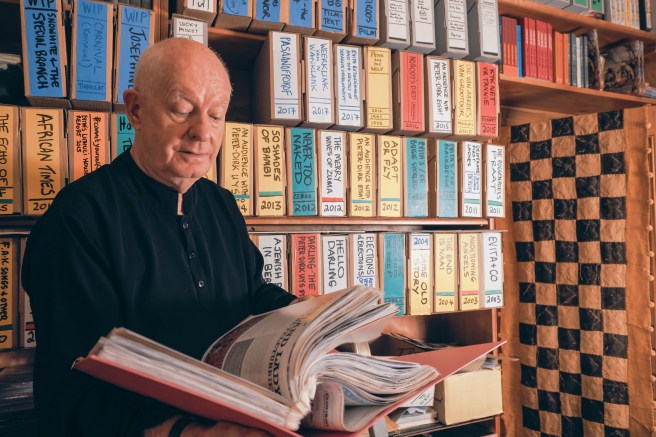
It’s show time and Pieter Dirk Uys is on the march as he opens his latest show at the Klein Karoo National Arts Festival followed with a season of the same show – albeit with a switch of languages from Afrikaans to English – with a stated mission: Live theatre has slipped down to the bottom of page 5 of everyone’s priorities. Let us reboot it back to page one!
He speaks to DIANE DE BEER about this time of performance:
The wonderful thing about artist Pieter Dirk Uys is his maturity, the way he is looks back yet keep his eye on the future as he confronts, charms and sometimes chills us with his stories about our past, present and what to expect in years to come.
“The age of 72 is a very specific place to be,” he says. “You can see your sell-by date. The audition is also over. The disease to please has been cured. You don’t have to prove anything; just improve. To quote from (a previous show) The Echo of a Noise: sort out your legacy. Make sure you flush before you go.”
That’s exactly what he is doing with Weifel oor Jy Twyfel: When in Doubt say Darling which plays at the Klein Karoo National Arts Festival on March 29 and 30 followed by a season at Montecasino’s Pieter Toerien Theatre from April 4 to 22.
“The stage setting is an area filled with cardboard boxes, crates and black bags. Packing-up time. After 40 years I have a collection of props, costumes, wigs, eyelashes, hats and Koornhof masks among old Nat emblems. The show is about sorting out, and reinventing.
“Out of a box comes a prop. I give it a place in our history, and then it also becomes the centre of a new sketch, character, issue. I also weave throughout stories about my d—word: darling. And living in Darling: the kids, the community, the hope, the humour and the reality that if we do not look after our communities, the country will dissolve.
“Too much focus on government as a superman; no, government is the essential toilet paper to help us clean up and move on!”
As always, this one also started with the title which began in 1968 when he was the only one in CAPAB’s PR department brave enough to deal with Taubie Kushlick who was arriving to direct The Lion in Winter.
“Pietertjie-darling, she called me, and I was at her bek se call! Instinctively I knew how to handle her demands and maybe that was the beginning of the rest of my life as a one-man band. PR is essential. Diplomacy is a foundation to negotiation. When I kissed her goodbye, I said: ‘Mrs Kushlick, you call everyone darling.’ ‘Yes, darling?’ she asked. I said: ‘You must call your autobiography When in doubt say darlng.’ She looked at me as if I had coughed. Didn’t get it. Didn’t use it. Now I use it!”
Proof again, that his way of thinking is instinctive and is always there – in the early days as much as it is now. But now, many decades on, he can reach back and recycle the past while reinventing the future.
He understands that he has a broader horizon behind him than ahead and that’s why he dusts off those targets to remind audiences that bad politics easily reinvents itself as a democratic solution.
“In this new show I even do Piet Koornhof in a sketch from 1984 with his focus on illegal blacks, and then reinvent him in the same voice as an officer at Heathrow Airport, sorting out refugees and illegals who want to get into the UK – not unlike what we did in the old days of apartheid.
“Yes, it is a full English Brexit. I am moving away from the brittle political reflections. Let the younger generation sort out their future. I am already in my future!”
And as he points to his future, he also gives credit to his health. “If you can do it, get on with it. And so far, touch wood and stroke kitty, I still have the discipline and energy to tour with three 70-minute solo shows in the boot of my car. I also treasure my independence. I have no staff: I am my own stage manager, writer, director, performer (he or she) driver, publicist and sometimes my own worst enemy.”
“All you need to do is speak clearly and not bump into the furniture.”
His shows are all about the audience. He wants to make a difference to their view of life and their belief in themselves. No small task!
It’s about laughing at your fear, confronting fear, giving it a name, understanding its lethal ability but never allowing it to win, he explains. “There is no time for knock-knock jokes. The reality of the absurdity around the obscenity of daily life is enough to fill 70 minutes. And then someone leaves my theatre and realises that they have laughed at something they don’t even dare think about.”
He points out that we have just again teetered on the edge of a cliff only to see “the Ramaphosa wind gush up and level the playing field. We must stop blindly believing that things will get better. They won’t. What you see is what we’ve got. Just make sure things don’t get worse.”
Instead of watching the world, he suggests we look in the mirror and ask the stranger his/her next move.
“Courage, honesty, compassion, healthy anger, information, respect and maybe a talent to amuse,” are his keys to success.
But not just any old talent. It is one that he has kept shining for more than half a century – and now sparkles more brightly than ever.
PS: ‘Evita’s Free Speech’ on You Tube every Sunday is now in Episode 132! On Daily Maverick on Mondays. She has 140,000 on @TannieEvita.
* KKNK: Thursday and Friday (March 29 and 30) at 6pm at Oudtshoorn Civic Centre
Pieter Toerien Theatre, Montecasino: (April 4 to 22); Wednesday to Friday at 8pm, Saturdays at 4pm and Sundays 3pm.
Too few women directors’ was a topic of discussion a few years ago following the Afrikaans festivals. Things are changing with two new directors, both accomplished actresses – brought into the fold. DIANE DE BEER speaks to Nicole Holm and Tinarie van Wyk Loots about this debut directing outing:
Nicole Holm
For Nicole Holm directing wasn’t an option. “I didn’t like the idea that the buck stopped here,” she said about that role.
Yet that’s exactly what’s happened with her first stint as director. The text by Ingrid Winterbach, Ons Is Almal Freaks Hier, isn’t an easy one as it deals with Saartjie Baartman, a loaded issue in especially these fraught times, for women.
Ons is Almal Freaks Hier, as the title suggests, deals specifically with the Other, the way they are exposed and viewed by those who feel entitled and empowered – white people, to state the obvious. And then the text is written by a white woman and directed by yet another one, to further contaminate the issue.
Ons is almal freaks hier with Albert Pretorius, Kay Smith and Lee-Ann van Rooi. Picture: Nardus Engelbrecht
But she’s been fielding those missiles and believes the growth value for her as an artist has been extraordinary. What she didn’t expect for example was the isolation she felt before coming together with the actors while studying the text. “I felt as if I had to make these huge decisions without any input, no chorus,” she explains.
But once they moved into the rehearsal space and the collaboration kicked in with her cast (Lee-Ann van Rooi, Albert Pretorius and Kay Smith), she could tackle and get to grips with the process and the issues. Who has the right to tell the story, and could she take the Saartjie Baartman issue wider than it has been viewed before? Is it time now to grapple with the issues from a 2018 perspective?
Or should it be that of collaboration so that all the different perspectives are covered? In the final product it was exactly that, taking the issues from a new vantage, combining the past and the present and asking whether anything has changed for the victims/oppressed of the past?
The venue in Stellenbosch (which changes perspective again in Oudtshoorn) was the Stellenbosch Museum which, for Holm, brought in the historical as well as a theme of knowledge, which is part of any university. “It seemed as if many narratives were served, in retrospect; probably too many.”
That has all been part of the learning curve for this experienced actress who chose to wear this new hat albeit a touch gingerly at the start. One of the challenges in the museum was the way they presented the piece. On the first night, because the audience was led from room to room, it lengthened the performance by 20 minutes which added rhythm problems for the context and the cast.
But thinking on her feet, she quickly changed the format by the next performance to fit the scale and movement of the audience better. “Someone advised me that you could not expect the audience to move more quickly. They had to be allowed to follow at their own pace,” she said.
Speaking to Holm early in the Stellenbosch run, I was impressed by the way she reacted, how she was coping with the criticism, and how she experienced this first-time adventure. It wasn’t a comfortable ride because of the subject matter and the differing opinions about the performance, but probably because of her maturity as an actress, it was less daunting to deal with this kind of exposure and her decision to face it head on was a good one.
While she found the responsibility quite stressful, she also processed the joyful aspects of this new venture. In a way this was her narrative to tell with the collaboration of her cast, and while it wasn’t a familiar place for her to be, she revelled in this discomfort and the growth that followed.
Oudtshoorn will bring its own challenges, but at least this time she will be aware of the possibility of problems. They will be moving into a new space with very little time to acclimatise, which is the old bugbear at festivals, but her head space will accommodate everything thrown at her. She has got through it once, a second time round will be less stressful.
And even though this wasn’t a smooth ride – is there ever one? – the thing Holm discovered is that she wants to do this again.
Gif with Tinarie van Wyk Loots Picture: Hanno Otto
For Tinarie van Wyk Louw, the process was different and perhaps not as unexpected. She had walked a long road with her text, Swerfgoed by Bauke Snyman, which she had been involved in from the start as well as passing it on to different people to read until it finally reached the text market which has been set up to feed the Afrikaans festivals.
Once it had been accepted, Van Wyk Louw was selected to direct. “That was unexpected and a push that I needed,” she says hardly containing her excitement about the project ahead. Speaking to her while she was performing in four different pieces at the Woordfees, the bulk of the process still lay ahead.
Richard September, Andrew Laubscher, Nicole Holm and Anna Mart van der Merwe (front) in Swerfgoed. Picture: Robert A Hamblin
But she was ready to bolt. The script is unusual, she says, “out there” and her casts includes Anna Mart van der Merwe, Nicole Holm (yes the director of the first piece), Richard September and Andrew Laubscher, any director’s dream. And she is salivating.
Water and land is at the centre of the story and with a script which gave birth in 2009, it started happening long before the current crises. She describes the text as colourful, visceral and focused and she’s pushing it as far as she can. “I want to see how far we can stretch it,” she says.
If anyone is passionate about theatre it is this completely compulsive actress – or so it seems when you look in from outside. In the world of theatre, there’s more to that story of course. But when she speaks about theatre, you pay attention.
She’s one of a younger generation that fuels Afrikaans theatre and she believes that it is the stage that takes you into a personal space with universal stories. “This is where you find understanding, beauty and where you find yourself. It’s intimate and immediate, it’s raw and it has to be live.”.
Speaking about the process so far at that stage, she was excited by the cast and how they allowed her to be the facilitator, putting it all together. “The actor is the real tool, the one telling the story,” she argues.
She has handpicked those with whom she surrounds herself and for the design, she has the best with Jemma Kahn. Most of their props were purchased at the Milnerton Market, which she knows will add authenticity to the venture.
She’s also relieved that she is only committed to one other production (Gif with Mbulelo Grootboom) at the festival. This is rare for this prolific actress, who has found herself on a bit of a treadmill – which is difficult to disentangle once you’re there. It is the nature of the beast because of the precarious world of theatre, when you’re offered work, it is tough not accept it. It is a case of juggling and trying to balance as best you can but sometimes the pendulum swings too far which happened with her at Stellenbosch.
It’s an accumulation of work, years of running too fast that catches up with you, with often your health showing the first signs of strain. “It’s madness when the very thing that you love, destroys you,” she notes.
But she takes a deep breath, giggles about the production she holds so tenderly in her hands and concedes that fortunately, the more you surround yourself with people you admire, the more they inspire you. “We’re a team,” she says, “which means equality,” is how she speaks about the Swerfgoed team.
She’s been inspired by the generosity and the spirit and the lesson she has learnt is to let go and to focus on her new task at hand – directing.
Both of these will be seen at the KKNK from March 29 to April 4 with a run in 2019 at The Baxter for Swerfgoed backed by Kunste Onbeperk and Ons Is Almal Freaks Hier produced by Kunste Onbeperk and the US Woordfees.
It’s a scary thought and probably why we don’t spend much time thinking or talking about it on a personal level. This is exactly what the extraordinary writer Joan Didion does following the loss of first her husband John Dunne, while their daughter Quintana is in a coma, and then dies a few years later, leaving a devastated wife and mother behind.
Described as an unusually close family threesome, that’s probably what turned this into such a dramatic life-changing trauma that propelled her to share what she had experienced. With this play, she talks directly to her fellow travellers, all of whom will experience this nightmare in some form or another – hopefully not many as traumatic as hers.
She compels her audience to participate, not allowing them to simply watch, but addressing them directly, almost in confrontational fashion, because she feels she must.
She can do this, because she knows in different forms, everyone sitting in the theatre, listening to her, will have to deal with death. That’s a fact. The only thing she cannot predict is how they will experience it and how their particular journey will challenge them. But sitting there, we all know that it will.
Even though she accepted her husband’s death intellectually once she had survived the initial shock, emotionally she imposed a full set of rules to live by to ensure his coming back. As ridiculous as that might sound, when you hear her story, the anguish and the horror she experienced with her partner and soul mate’s death while dealing daily with her daughter’s induced coma, the coping mechanisms that kicked in make perfect sense.
Who of us hasn’t woken up after a particularly bad day and for a moment believed that the bad stuff of the previous day was just a nightmare? Someone close to you dying can have a similar effect depending on your relationship.
Playwright Rachelle Greef wrote in Die Naaimasjien that death is like someone turning their back on you. It is the inevitability, the fact that we can’t control any of this and everything else that comes and goes with the finality of death that makes this such a taboo subject and, in this instance, such a riveting one. There’s not much said in the 80-minute-long play that doesn’t have resonance on some level for everyone participating.
It’s a masterclass all round. Dorothy Ann Gould and director Mark Graham Wilson are solid gold as a team. He has a delicacy when directing while she slips into character in a way that pulls you directly to the centre of the story.
Gould had to battle the text, the American accent as well as the fact that she is basically doing this long monologue in which she has to engage an audience on a topic that’s deathly serious and scary. But being Gould, she grabs the text by the throat and becomes one with Didion’s sublime and insightful words in a way that holds your thought processes in almost vice-like grip as you navigate your own narrative of what this woman experienced in her life. None of us will be spared, that’s what we all know and are told by this wife and mother who is trying to make sense of her life – even when she has finally let her loved ones go.
The staging adds to the narrative with a visual reflection of her emotional as well as physical presence in the story as a backdrop. Depending on where you sit, it will have specific impact.
The stage is set almost horseshoe-style and for those sitting on the side, almost on stage, the actor draws most of the attention, while from the more traditional auditorium side, there will be a somewhat fuller visual picture.
Moving around the demarcated stage, Gould often stands closer to the audience than the centre of the stage, as if looking on as she talks about her life. The only physical aid is a chair that she sometimes sits in or stands behind.
So subtly has Graham Wilson worked the production that the striking thing is the conversation that she maintains throughout. It’s as if someone is sharing a story about their life, sometimes -as a relief to both audience and narrator – she slips into a side stream that takes us away from the immediacy of what she wants to unpack. But then she faces the full force of her life and attacks it with the veracity of someone who has lived it.
The despair is devastating and yet, there’s a grace that accompanies her pain and her eventual understanding of what it means for her – and eventually those who are willing to share.
It’s tough but tackled with such dexterity, you want to be there to witness the fullness of what it means to live and love.
It took someone the quality of writer Joan Didion to get actor Dorothy Ann Gould and director Mark Graham Wilson together for a stage production following their much-acclaimed Hello and Goodbye with her husband Michael Maxwell, a decade ago. They speak to DIANE DE BEER about The Year of Magical Thinking that opens on March 9 and runs until April 1 at The Market’s Barney Simon Theatre in Joburg:
Life changes fast.
Life changes in the instant.
You sit down to dinner and life as you know it ends.
Thus begins the American writer Joan Didion’s haunting memoir of the year following the death of her husband, John Gregory Dunne. The unexpected event ended a partnership of 40 years in a second, just days after their only child, Quintana, had fallen dangerously ill and slipped into a coma.
During Didion’s New York promotion of the recently published memoir, Quintana became seriously ill again. Following massive brain surgery, she died. She was 39.
Following these catastrophic events, it was the famed director David Hare who asked Didion to change her memoir into a play and six months after her second tragedy, the death of her daughter, she began working on the play. This time she was dealing with both the death of her partner and her daughter – a double tragedy.
Both director and actor knew this was the play that would embolden their stage partnership. It is said that The Year of Magical Thinking is a journey through that most universal experience of human pain: bereavement. And while it is frequently harrowing, it is also often amusing and, ultimately has been described as an expression of the power love has to give life meaning. All of that describes the remarkable writer Joan Didion and that is what struck both Graham Wilson and Gould.
How much can one person take? That’s the question Gould asked herself when reading the memoir. “We all cope differently,” she acknowledges but we all encounter these kinds of tragedies at some point in our lives.
It is the way Didion thinks, the way she escapes, the way she writes that makes this such a harrowing yet healing experience and just thinking about Gould and Graham Wilson tackling this depth of feeling is exciting. Watching them work, the detail and thought that goes into every breath, the way they battle one another to get to the truth, is extraordinary and the stuff theatre is made of.
“It’s the scale of the mountain of loss that’s daunting,” says Gould as she wonders about Didion’s husband’s death who she believes just “let go of the fence,” because he couldn’t cope with the sadness of his daughter’s coma. “Some people do that, and I think he told Joan that he was going, he warned her. But she wasn’t listening.” Gould was also affected by the ordinary circumstances in which tragedy occurs hence the opening stanzas of this marvelous text.
“She goes on a big journey with this lament but because she’s deprecating and wry, it is bearable to witness,” is how Gould explains it. She talks for example about the games Didion plays with her mind to cope, something we will all recognize.
How often do we not wish for a different outcome when we go to sleep and hoping for comfort when we wake up? “Joan wills things to turn around, believes she can shift reality with her strong will,” says Gould. We all recognise those games we play with the universe.
For Graham Wilson, one of the joys of the text is the perfection. “There’s not a word you want to cut, not a word out of place,” he says. Gould at the time we were speaking was still worried about remembering her words because we are speaking solo performance and 62 pages of monologue.
But we’re also dealing with someone who knows how to work through tough situations. She started memorizing the text earlier than she would have normally because she knew how important it was to get this one to a point where she didn’t even have to think about what she was saying.
It’s all in the text. The tension is held in what is being said, notes Graham Wilson, and as importantly being left unsaid. That was why every word is so important. “It isn’t a conventional play,” he acknowledges, but that is why this pairing is so valuable. Both these artists are risk takers, daring with their art and pushing the boundaries. Gould feels safe with Graham Wilson because they have worked successfully together before and that allows her to step beyond her comfort zone – to the benefit of audiences.
For Graham Wilson returning to stage after many years in the television world of soapies where he has been in the writing side because of family commitments and financial stability, this project is terrifying – but in the best sense of the word. “It’s such an exposed world,” he says of the stage. And he regards himself as very private. He likes being out of sight, but working in live theatre changes that.
To watch these two experienced artists work, delve into the work, manage every movement, every thought, how something should be placed, when she should turn and how to connect with her audience, is quite something. It’s an exciting and beautiful play written by a woman who has an extraordinary ability to express her deepest feelings in a most unusual fashion.
Gould in her own way has all those qualities on a different level and that’s why this is such a heavenly match. With Graham Wilson as her guide, her star gazer, the two of them will make theatre magic. All the ingredients are there – and this is not above expectation.
“I have to channel her energy of thought,” says Gould about the process.
This is only the second day of rehearsal and already they’re grappling with meaning and movement – the words flowing as if they come from the actress herself.

 Pictures: Lungelo Mbulwana




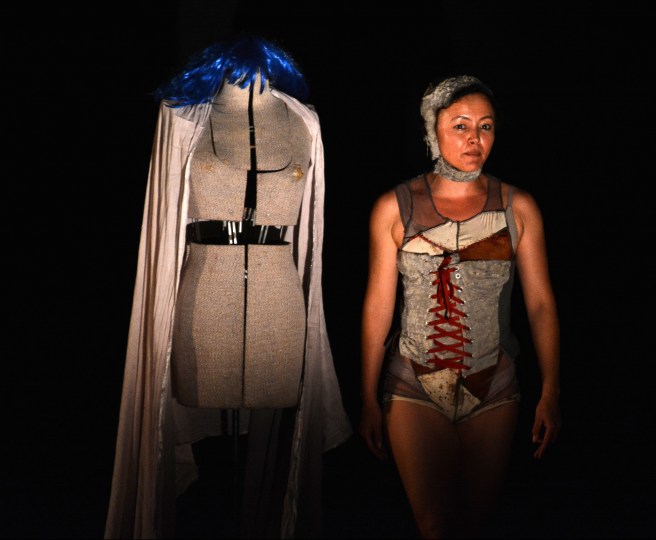
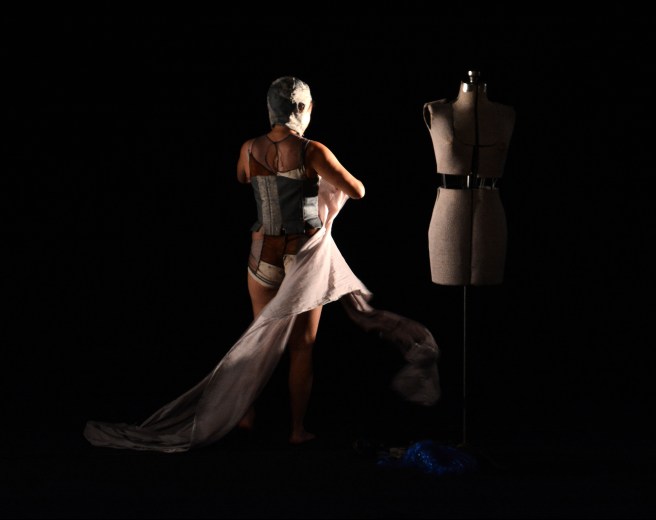
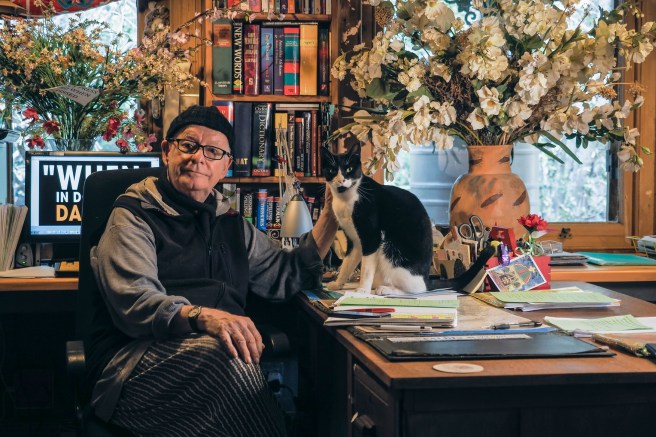 It’s show time and Pieter Dirk Uys is on the march as he opens his latest show at the Klein Karoo National Arts Festival followed with a season of the same show – albeit with a switch of languages from Afrikaans to English – with a stated mission: Live theatre has slipped down to the bottom of page 5 of everyone’s priorities. Let us reboot it back to page one!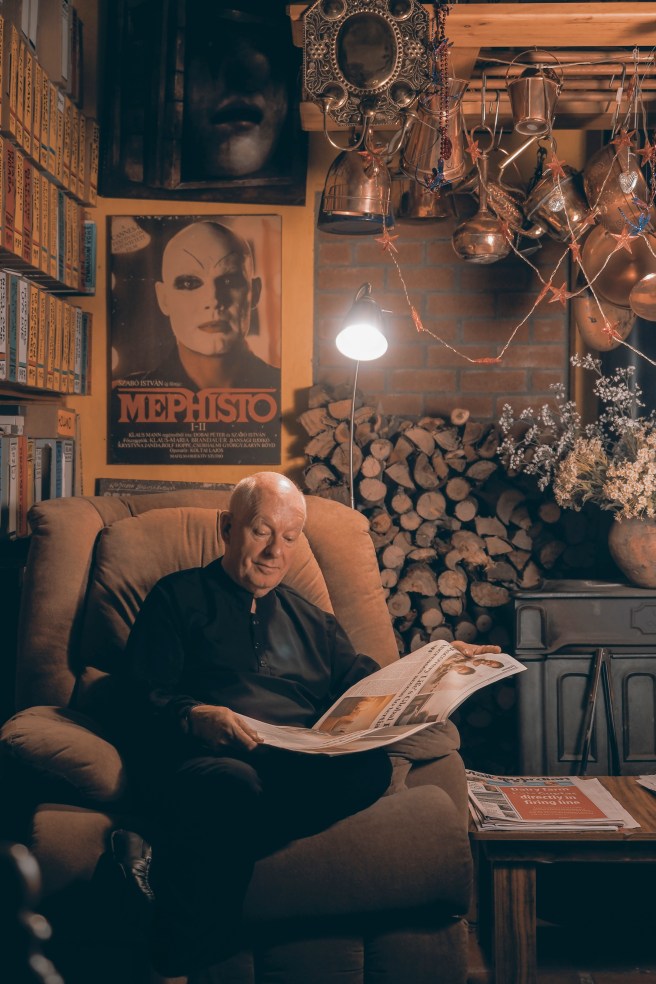


 Pictures: Lungelo Mbulwana