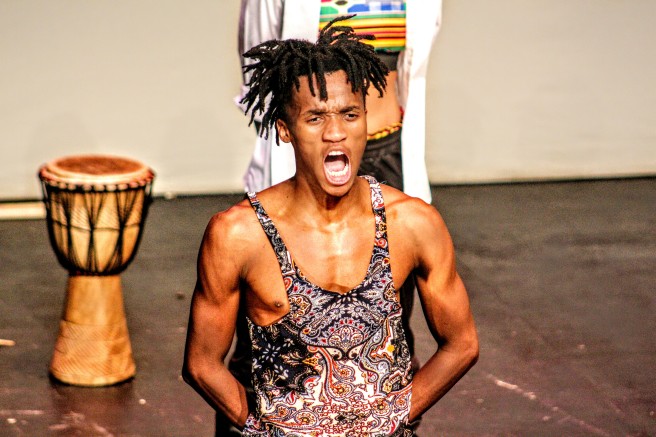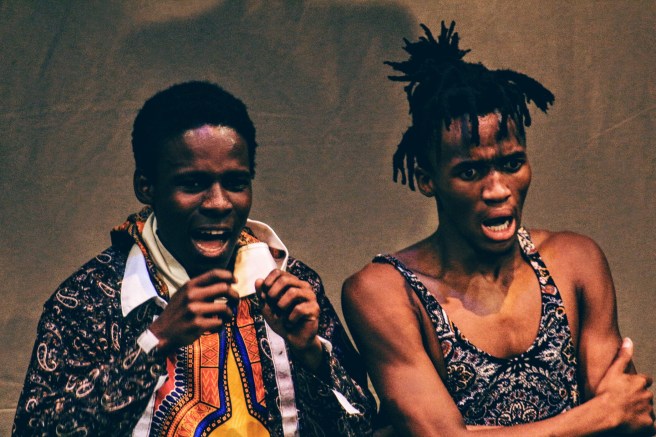
The Anticipation of a New Drama Company through Collaboration with Market Lab and Windybrow Art Centre

If you don’t know anything g about the Market Theatre Laboratory in Newtown, it means you haven’t been paying attention. Some of our top talent in the acting world – from directors to actors – come from this rich and diverse training school established as a training and development arm for the Market Theatre. DIANE DE BEER spoke to the head of the Market Lab, the innovative Clara Vaughan about their latest endeavours and plans for 2018 and it’s all systems go right from the start with all kinds of new plans being hatched and executed:


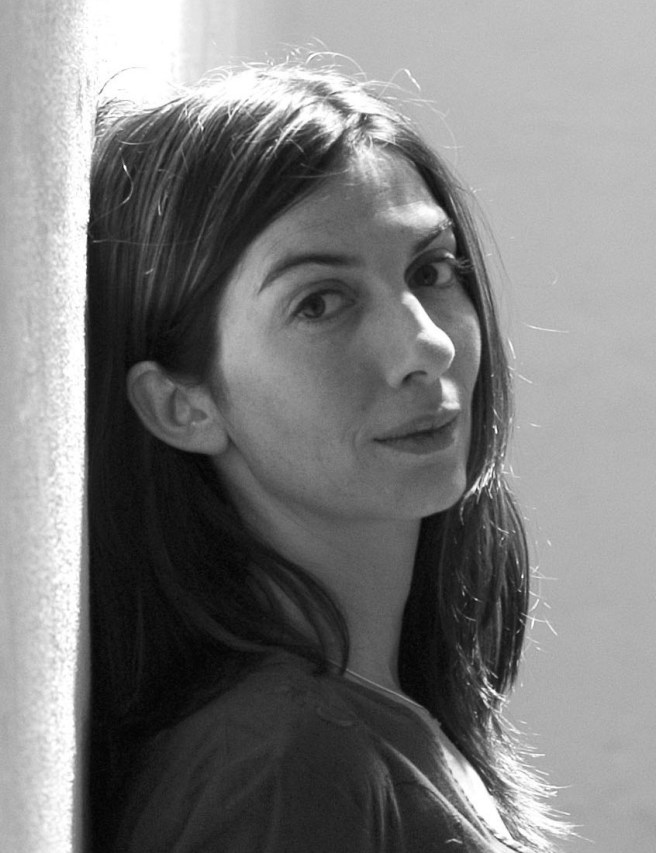
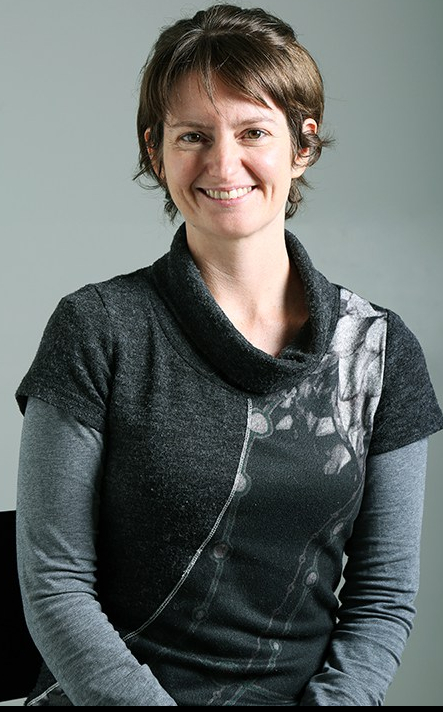
clara-headshot.jpeg
Clara Vaughan, head of the Market Lab

The big news at the Market Theatre Laboratory in 2018 is the launch of a new drama company, in collaboration with the Windybrow Arts Centre.“We’re currently busy with auditions,” says Clara Vaughan, head of the Market Lab, who hopes that for a few of their graduates (from the past five years), this will function as a bridge at the beginning of their professional lives.

“For actors there are no structures in place,” she argues and especially for the newbies, this is a tough ask at the start of what is usually a taxing if rewarding career choice.

The company which will be based at the Windybrow Art Centre, will consist of six young people, four from the Lab and two from other institutions. Vaughan is excited, for example, that two of the UK actors who had participated in the Lab/UK collaboration have also applied.

The Market Theatre Foundation has appointed Keituletse “Keitu” Gwangwa, daughter of legendary SA jazz musician Jonas Gwangwa and social activist Violet Gwangwa, as the head of the Windybrow Arts Centre. She will be running the company with Vaughan and the Market Lab contributing to programming, partnerships and operations.

The Centre has been given a new lease on life as a division of the Market Theatre Foundation since April 2016. The once-mothballed theatre has been refurbished and now brands itself with the tagline “More than just a theatre” to reflect the changing nature of the space including as a base for the newly-launched drama company (still in search of a catchy name).

The programme for the company will be one of productions as well as workshops and teaching opportunities and the aim is to select six people who have the skills to work without outside intervention, while certain exciting individuals will be introduced on specific programmes.

Lab class pic
The Market Lab students in action.

One of these already in the planning stages is the current recipient of the Julie Taymor World Theatre fellowship, with the founding principle to provide travel opportunities for enterprising young theatre directors to immerse themselves in artistic experiences beyond the US borders thereby expanding their creative horisons.

He will be doing The Comedy of Errors with the company in collaboration with PopArt.

They are also looking at a site-specific work to investigate the history of this historic landmark building that will become their home for a year.


All kinds of collaborations are already envisioned with, for example, Gerard Bester and the Hillbrow Theatre Community Centre.

Vaughan knows that working in the same area both geographically and philosophically, they want to make sure they are complementing rather than replicating services. “There’s such a need,” she says and that’s what they hope to serve.

rm-theatre.jpg
The Ramolao Makhene Theatre Theatre at the Market Theatre Square in Newtown

Similarly, the actors will benefit from the teaching experience – as some of the Lab students already have when participating in the Hillbrow Theatre’s Inner-City festival, discovering their skills and love for directing, for example. “One of our students co-directed the winning production last year,” she notes.

These are just some of ways the students and graduates are guided gently into the industry where possible. It also opens learning experiences for those who will become part of the company to work with one company of actors for a full year in a diversity of projects, the value of which should not be underestimated and something that is regarded as a necessity in the industry in order to learn, develop and grow.


The other expanding enterprise at the Lab is the acting class for anyone over 16. “It is so over-subscribed,” says Vaughan which tells her that there’s a need out there for affordable classes which is what they’re offering. Theirs is a 12-week course every Saturday and it attracts people from across the board – race, gender and age. “The diversity is exciting,” says Vaughan who explains that anyone – from those acting in soap operas (“sometimes the production house pays”) to individuals who have always wanted to act but have never had any coaching – can apply.

For the Lab, it is a way to generate money for other projects as well as invest in growing their audiences.

What they have realised is that audiences who are invested in the acting process are loyal and interested in what they do. “It’s as if they suddenly care about acting and it’s not just someone randomly attending one of our shows. They’re invested which means they will keep coming back.” That, she believes, is a terrific way of building and establishing their audiences.

But they also learn, and some stay on for more courses after the first round having decided to tap into this rich vein of experience that so many have benefitted from in some way in the past.

In the meantime, there are the Lab students who will be working on exciting projects while learning their craft. Vaughan has for example obtained the services of Andrew Buckland who will be working with the students. Like with Leila Henriques who directed the successful Hani, The Legacy, she feels it’s important to use the resources available to them. “Just think of the skills we’re tapping into,” she says as she points to people like Dorothy Ann Gould and others, all who have invested in the Market Lab over the years.

Another avenue Vaughan is keeping on point with this year is international collaborations having witnessed what their UK experience taught her students last year. “It’s been amazing to witness,” she says. But also, to watch and see what they experience and how they internalise everything they have learnt.

This year she’s hoping to work with the Market Photoworkshop on a collaboration, a New York Instagram outfit with the handle Everyday Africa. It seems like the perfect fit and will bring new horisons for them to master and hopefully turn into yet another great learning experience for the then soon-to-be graduates which they can again pass on.

That’s the important thing about the set-up at the Market Lab. While there’s only immediate opportunity for a few, every student that walks through those Newtown doors can reach a much larger audience on many diverse levels.

That’s why a director like Leila Henriques waxes lyrical about her experience with the students. They understand how many lives they touch.

Viva theatre and storytelling, viva!


Hani: The Legend Celebrates a Hero’s Life with a Youthful Ensemble at Market Lab

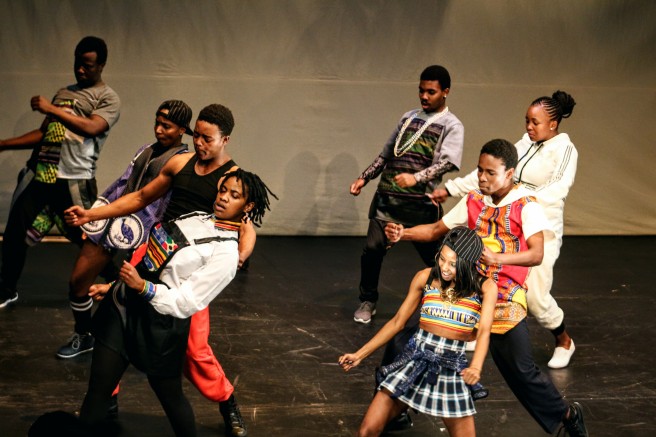
The ensemble of Hani the Legacy1
The Ensemble of Hani: The Legacy

Pictures: Craig Chitima

DIANE DE BEER

HANI: THE LEGEND

DIRECTOR: Leila Henriques

ASSISTANT DIRECTOR: Linda Shabalala

CHOREOGRAPHER: Teresa Phuti Mojela

CAST: Graduates of the Market Lab (Boikobo Masibi, Darlington Khoza, Khanyiswa Mazwi, Mathews Rantsoma, Mthokozisi Dhludhlu, Ncumisa Ndimeni, Nosipho Buthelezi, Pereko Makgothi, Sinehlanhla Mgeyi, Thabiso Motseatsea, Tumeka Matintela and Vusi Nkwenkwezi

VENUE: The Ramolao Makhene @The Market Theatre Square

AGE RECOMMENDATION: PG12

TIMES: Tuesdays to Saturdays at 7pm and Sunday at 3pm until January 28


It’s bold, brash and brilliant just like Hani and the youthful ensemble who are celebrating a hero’s life.

How do you reimagine a hero, perhaps forgotten or not known by particularly the young, and push him to the forefront where he belongs?

In this instance, they played it smart by taking a group of energetic and enthusiastic Market Lab students under the guidance of someone with the insight and experience of director Leila Henriques and you get those young minds fine-tuned and into the zone.

You play to their strengths and then you redline it with some hip-hop and rap with beat. It hits all the right marks with the young who are the target audience but because of the quality and the exuberance, it reaches much wider.

What is impressive is the text that so encapsulates the genius of Chris Hani while cleverly shining a light on his desire and determination to give his people, especially those at the bottom of the rung, economic freedom. This is also what bumps this one brilliantly into where we are right now. It emphasises how on the mark Hani was all those years ago – almost a quarter of a century back.

Because his wishes were so all-embracing and inclusive of especially those who had nothing, his outcomes would have delivered a much different country. That’s also the country so many are pointing to right now. In a world turned upside down by greed, it’s time which is what makes him such a prefect role model for the young and this such an exciting and invigorating show.

Sinehlanhla Mgeyi
Sinehlanhla Mgeyi

But that’s just a part of it. It’s storytelling from start to finish no matter the means. It starts with Hani’s humble beginnings and how he witnessed his parents’ suffering and how that contributed to his political fire and eventually fighting spirit. And it concludes with advice on how to light that torch and take it forward.

It’s all good if you have worked wonders with the script, but then you also have to execute. Inspired by the way the US musical phenomenon Hamilton stands and delivers with hip-hop at the forefront, that’s exactly what they do with this one.

The performances – one and all – are firebrand from the movement to the emotional impact of every word uttered either in speech or in song.

How does one so youthful capture someone so iconic as Mandela? And that’s all part of the fun as well as the gauge of where they’re going in search of their heroes.

Storytelling is such a powerful tool to achieve different things. In this country with its horrific past, this is arguably the purest way to engage and to get to know one another, amongst other things. What better way to explore one another than to celebrate our extraordinary talent?

Mathews Rantsoma
Mathews Rantsoma

Once you discover the transformative excitement of theatre there’s no turning back. In Newtown, both at the main theatres and at the Market Lab, there’s a strong push to engage with young audiences by telling stories that will both educate and entertain. That’s a big ask.

But they have been making inroads on all counts with South African theatre surging ahead as the winner.

These actors were all Market Lab students when they started this production for Grahamstown’s National Arts Festival last year. They have recently graduated, and this short season is their first foray onto the professional stage.

What a way to jumpstart what is not an easy if hugely satisfying profession. And hopefully they can take this one on tour to schools around the country. It is a play that will work for scholars on so many various levels – from creating role models to showcasing the possibility and potentials of theatre and more.

It’s a win for everyone.

But there’s still a week to catch the spirit of Chris Hani as nurtured by this very exciting group of young players. And well done to the Market Lab for giving the play another airing.


Chris Hani – a Reimagined Hero and Role Model for Today’s Youth in Hani: The Legacy starts Market Lab Season 2018

Pictures:  Craig Chitima.

Darlington Xhosa as Chris Hani

DIANE DE BEER

It’s a time when we all need heroes, people we can look up to, individuals who will stand up as role models.

Who better than the late Chris Hani as re-imagined by the Market Theatre Laboratory students, graduates of 2017, in a Gold Ovation Award production in their first professional run presented at The Ramolao Makhene Theatre at the Market Theatre Square in Newtown, Johannesburg?

Hani: The Legacy originated when lecturer Leila Henriques had to create a play with a group of first year students for their acting class. “I was inspired by Hamilton and Lin-Manuel Miranda, his philosophy,” she says about the hip-hop musical about the life of American founding father Alexander Hamilton.

That took her head to Chris Hani, a man whose death is better recorded and illustrated than his life. Henriques knew that she had found her inspirational figure and someone who today’s youth know very little about.

The ensemble of Hani The Legacy

The students were all on board and they started by creating timelines which then had to be researched. How, for example, Hani had to walk 25 km to school on Mondays and back on Fridays as a young rural boy? All of this not only bode well for performance – which was rewarded with the National Arts Festival award and full houses at last year’s Festival – but also taught the students how to put something together, to workshop and improvise, to research and finally, to keep working and perfecting the product.

That’s exactly what they’ve been doing up to this latest run until January 28 following the Grahamstown run, and two short seasons at the Joburg 969 Festival and then at the Lab last year.

It’s about celebrating a life and one that is not defined by his death. And it had to be with music. “It’s been amazing because none of these actors were singers but the sounds they created has been magical,” notes Henriques. Sitting in on rehearsals as they work on a new song that has to improve and inform the transitions, it’s amazing to experience the versatility.

This is their language, they understand the rhythms required and how a movement emphasises a sound and the sounds inform the story. It all had to be an integrated part of the storytelling.

They have combined hip-hop, ballad, traditional music and choreography all pulled together by Teresa Phuti Mojela to underline the life story of a struggle hero who played such a key role in the liberation of our country.

His murder by right-wing extremists in April 1993 will never be forgotten by those of us who lived through that time when the country was on a knife’s edge of critical political negotiations and political violence.

It turned him into a martyr and Hani: The Legacy is an attempt to use theatre in an innovative way to colourfully explore the full man – the revolutionary, the freedom fighter who became a father, and the husband who became a hero.

“What could have been if Hani was still alive is what could still be his legacy,” is how Henriques captures their thinking. But more importantly, this is the youth speaking to the youth, telling our stories. It’s not that others are excluded but this is where the strength of the production lies.

Mathews Rantsoma and Sinehlanhla Mgeyi

What they tried to do was walk the life of this rural boy who became a struggle hero, the gap left by his assassination and the potency of a legacy that is nurtured in this time of enormous political and social challenges.

Once the production got traction and then went on to win awards, they knew it could travel. Henriques is thrilled that this current season also offers the new young graduates a bridge into their new professional world. And because this is one that is also geared towards learners, it is something which has legs and opportunities.

It’s a large cast, 12 actors, but that’s all they need. There’s no set or any other trappings. It’s the cast, the music and their story. “It’s easily transportable,” says Henriques, who is proud of how this production evolved from its early days.

Ncumisa Ndimeni and ensemble

She is also effusive in her praise of her young cast. Describing them as exceptional, she cannot speak generously enough about their enthusiasm, their energy and their commitment. These are also the same young students, six of whom participated in an exchange programme with a UK theatre company, who first performed together with the British students here in October last year. They all travelled to the UK in November for their final performance and some workshops.

Clara Vaughan, head of the Market Lab, hopes to revive and repeat these international contacts in different ways because they are invaluable both as a confidence-building exercise and through the exposure to a much wider world

With the help of her assistant director Linda Tshabalala, Henriques feels blessed and privileged to work with these young talents. “It’s such a worthwhile, positive experience,” she says.

At the end of the month she returns to her first love, acting. She’s working with extraordinary director Sylvaine Strike on a Sam Shepard play Curse of the Starving Class which premieres at the Woordfees in Stellenbosch (March 2 to 11). “It’s the words,” she says, of the play, “it’s beautiful and so amazing to work with such a quality text.” She’s also excited by the cast which includes actors like Rob van Vuuren, Neil McCarthy, Roberto Pombo and Anthony Coleman.

But for now, she is focussed on the immediacy of Hani, The Legacy which she knows will find its audience.

The cast for Hani: the Legacy: Boikobo Masibi, Darlington Khoza, Khanyiswa Mazwi, Mathews Rantsoma, Mthokozisi Dhludhlu, Ncumisa Ndimeni, Nosipho Buthelezi, Pereko Makgothi, Sinehlanhla Mgeyi, Thabiso Motseatsea, Tumeka Matintela and Vusi Nkwenkwezi

Venue: The Ramolao Makhene @The Market Theatre Square

Age Recommendation: PG12

Duration: 60 minutes

Show times: Tuesdays to Saturdays at 7pm and Sunday at 3pm.

To make block bookings, contact Anthony Ezeoke 011 832 1641ext 203 or Yusrah Bardien at 011 832 1641 ext 204.

Ticket Prices: Students R70; Tuesday to Sunday R90.


Funerals, Food and Feeding Schemes Fueled by Women in Full Flow

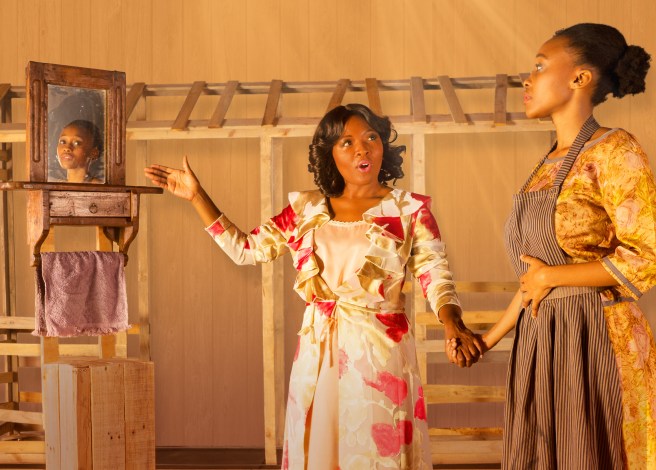
Another One's Bread. Written by Mike Van Graan. Directed by Pamela Nomvete. The play features an all-women cast in Faniswa Yisa, Chuma Sopotela (recently announced as the 2018 Standard Bank Young Artist for Performance Art), Motlatji Ditodi and Awethu Hlel
Awethu Hleli and Motlatji Ditodi

Pictures: Suzy Bernstein

DIANE DE BEER


ANOTHER’ ONE’S BREAD: A Dark Comedy about food, funerals and feeding scheme

PLAYWRIGHT: Mike van Graan

DIRECTOR: Pamela Nomvete

CAST: Faniswa Yisa, Chuma Sopotela, Motlatji Ditodi, Awethu Hleli

VENUE: Mannie Manim at the Market Theatre, Newtown

UNTIL February 4


As is his nature, Mike van Graan breaks new ground – in a fashion.

Apart from being commissioned by the Centre of Excellence in Food Security (CoE), he has also tapped into the trending world of woman power quite magnificently.

Commissions aren’t a new thing, but kudos to the CoE for taking their topics of interest and giving them to activist playwright Van Graan who in recent years has found the ideal way of juggling comedy and crisis.

His writing has always been crisp and insightful but finding a handle, in this instance food security, and tying it to something as ubiquitous as funerals which have spectacular value in black communities (“they eat Shoprite food, but want Woolworths funerals”) is sheer brilliance and allows for an abundance of hilarity.

In direct contrast to Zakes Mda’s tragic mourner in Ways of Dying, The Substitutes, whose name implies a singing group rather than a serious quartet of mourners, are four dynamic women who have come together driven by need.

The one, as the title suggests, feeds the other. Not only are they making a living, but by finding the best source of leftover food – funerals – they have discovered a way to generously keep their feeding schemes going and growing in the township.

Fashioning this one out of sketches, allows Van Graan to pick different topics with one, for example, that many would appreciate – bureaucracy. It’s the scourge of the modern world and it seems the way big business has settled on to keep their money, while endlessly frustrating their customers, until they run off screaming.

He spotlights this with an incomprehensible application being drafted to the Arts and Culture fund while on the other side of the room, one of the women is engaged in a phone conversation with a call centre as she runs through all the buttons she must push before finding life – and that quickly dies.

The razor-sharp text is combined with clever casting of four actresses cunningly individual yet speaking with one voice. The choice of giving this one to the women is dazzling not only because it’s time, but also because we so seldom see four (especially black) women running the show and with the director also female, truly ruling this one.

And they nail it! It’s fun, highlights the comedic talents of actresses like Sopotela and Yisa who often play more weighty characters and also brings a different energy to the story and the stage.

Yes, it’s slightly messy but for this one, it works as they move in and out of the stories with the light shining on different characters and their tales, or simply get them all squabbling quite deliciously around a table.

But Van Graan, while having a giggle, never lets his audience off the hook. It’s a time of trouble in our world and beyond and he won’t let you forget it. He’s simply feeding you some funny lines to hook you gently and then turns the screws.

That’s what we need in these times. We can’t turn away from what is happening around us. It’s a disaster on so many levels. But why should we be pulled down to that level at the same time? Instead, look at it from a different vantage point, laugh a little – or a lot as in this instance – and then get serious as you get the message.

He casts the net far wider than might have been asked for but in that way, you must listen carefully while enjoying the merriment. He preaches vegetarianism as the healthier option while lambasting the fat cats in parliament on the one hand. Then sweetly turns the land issue upside down with a discussion on the disastrously tiny plots of land dedicated to RDP housing.

With funerals as the backdrop, Van Graan taps into the lucrative business that this has become in the black community. Many families might end up spending more on the dead than on the living and here, he also has something to say, when one of the women talks about her own burial and how she would rather go up in smoke than lie until the end of time amongst all those strangers in a cemetery.

Holding it all together is the camaraderie of the four larger-than-life characters as they turn up at funerals where they do the mourning – with flourish – and then get paid. And with this comes some soul-baring singing and choreography to die for.

It’s a terrific way to start your theatre year and you get a chance to vent.


Nataniël wears his Art on Stage

DIANE DE BEER

Closet – the remarkable wardrobe of Nataniël (Human&Rousseau, R390):

Nataniel book cover


This past year, 2017, was Nataniël’s 30th year as a solo artist on stage. He celebrated in many ways and amongst others, with this extraordinary encyclopaedia of his stage wardrobe.

“It is beyond logic that I have been able to be this politically incorrect and unashamedly Eurocentric in presentation, content, sound and inspiration, and still managed to go unpunished,” he writes.

He describes the book as both a celebration and a preservation. Books and costumes are what he collects and holds dear. They cover his walls and fill many rooms. “I love them like others would love their children.”

For him his costumes are works of art. “I wouldn’t go on stage, if that wasn’t true,” he explains.


They are conjured by those with creative minds, “crafted by skilful hands, worn by those lucky enough to have been chosen and admired by those who need to escape, travel or dream”. He wanted to document his life, and this, he thought, would be the easiest way to do it. What he didn’t heed was the fact that getting hold of the pictures would be an impossible task. But, he still has every costume which meant that those not captured on film could tell new stories.

Nataniël has written, staged and appeared in more than 80 original stage productions. He has released 17 albums and five DVDs, filmed three TV series (“Edik van Nantes” now being broadcast on DStv’s kykNET, channel 144, on Wednesdays at 8pm), and published 17 books. Together with 28 concert tours, numerous collaborations, food shows and lifestyle talks, he has given more than 6 000 performances.

Whatever he decides to do and whenever he is creating a new show, it always starts with a costume. This is where his fantasy world begins. It began quite simply and organically. He says in his early performance days, he had no role models, no one to look up to or to follow. “I was part of a society that was anxious, conservative, judgemental and fearful.”

He made his own clothes, dressing like fictional characters and with the help of friends, made his own costumes. “I dressed like someone looking for trouble and appeared on stage wearing as little as possible, as tight as possible.” It seemed to work because he caught everyone’s attention and people were talking. That’s a performer’s dream. He had found a formula that worked.

On a trip one day, he bought a magazine somewhere and spotted a faux fur, Dalmatian printed, short-cropped jacket with a large collar and a red lining. The designer was listed as Blue Zoo with a phone number which he called the next day. A new world opened for this young performer. “I could have pieces created that nobody else had. The possibilities were endless: the picture could change as often as I needed it to. The music would become visual. The stories would follow.”

His three designers then dictate the way the book unfolds, with Shani Boerstra from Blue Zoo starting the show. She introduced Nataniël to the wizardry of costumes and how to make the impossible become possible and that is how the structure of his shows developed and evolved. He selects wisely and is intensely loyal with his first designer still creating daywear for him, zips and all, he tells.

She was followed by James Edward Moulder, whose attention to detail and dedication to the understated, blew Nataniël’s mind. His ability to draw was exceptional and he was also tasked with doing the graphics for the show posters and programmes as well as illustrating Nataniël’s book “Tuesday”. When he left for the UK, he told Nataniël about a young fashion student named Floris Louw who had just completed his studies and won every possible award.

Nataniel Red Period
From stage show After Animals, 2015; Coat Floris Louw. Picture: Lorinda van den Berg

For Louw it is all about texture – layers and layers of texture, says Nataniël. It runs from quilting to beading to embroidery to fringing to fraying to plaiting to printing and even welding. The two of them together explored new horizons both in costume and show. “Through the years I have worn crystal, metal, lace, wood, canvas, rope, chains, vinyl X-rays and foam. One costume had a dancer inside, one had to be carried by dancers, one was on wheels, one had hundreds of meters of ribbon, one covered the entire stage, one turned into a backdrop.”

These all served the shows and have very little to do with fashion, yet everything with history. Both the performer and his designer tap into specific periods in the past, which they revisit for different looks and references. “We do occasionally take a breath, exhale and visit minimalism,” he adds.

Having honoured his three designers, he turns to the way his costumes determined his shows. The knee-length coat, for example, evolved because he felt the need for more costume changes. It only appeared about 10 years into his stage career. Because of the nature of his performances, he could only leave the stage so many times for a costume change. Thus, layering came into play – hugely.

Nataniel in Nantes historical setting
Costume from show inspired by historical events, shot in Nantes in historical castle. Pictured by Nataniel’s brother Erik le Roux

Open with a dramatic coat, have a smaller garment underneath and a lighter but striking top or shirt beneath that. A fourth could then be thrown on during a blackout or lighting change. During an instrumental or a guest solo, he could leave and change into another set or two or three!

That was how the “formula” for his current shows started and how the knee-length coat made its first appearance. Nataniël also understands that the cut accentuates your waist, the length adds elegance and the shape is a perfect canvas for detail and play.

Add to all this drama, his love of colour – from red and gold to black and white – and he gives just a small taste of his storytelling with a short story (from a show) on coats (in Afrikaans), all included and elaborating on his closet.

For Nataniël, the stage is his perfect world. This is where he paints his pictures, creates a land where things work the way he imagines they should. Here he allows his imagination to run riot as he tells stories set against extravagant landscapes in which his costumes explode in full splendour.

With more than 300 pictures and a story that explains his creativity, Closet documents a stage career that is as extraordinary as it is explosive. It captures a time, a place and a world that is unique to Nataniël, a reminder of a world-class act.

Full Disclosure: Diane de Beer wrote the foreword in the book.


Jemma Kahn takes you into the mouth of the wolf like the theatre warrior she is

jemma-kahn-in-bocca-al-lupo.jpg
Jemma Kahn in In Bocca Al Lupo in designs by Ella Buter directed by Jane Taylor

It had to come to this in the third of her Kamishibai series which started with The Epicene Butcher, followed by We Didn’t Come to Hell for the Croissants. Now with In Bocca Al Lupo, the innovative Jemma Kahn (2018 Standard Bank Young Artist Award Winner for Theatre) turns the spotlight on herself – sharply – and we get to know where the series comes from and how it started. DIANE DE BEER gives the lowdown on a short run at the end of the month at POPArt in Maboneng:

It’s the perfect way to go if you are creating your own work which probably like for most stage creatives, is all about making a living. She had to turn somewhere new while maintaining the structure that has made this solo series such a rich and rewarding enterprise.

It is about working those changes while not losing the essence of what makes something work in the first place. And this is where Kahn cleverly brough playwright Tertius Kapp on board . Even and especially when telling such a personal story, it is good to have an outside eye. And arguably someone who is not involved with what is being shared on stage.

“After every kamishibai show I say ‘not again’ or rather ‘not again immediately’ but then an idea comes to mind that niggles me. The idea of the multiple boxes came first and then I thought, ‘if there are four, it could be about family – one story, four perspectives.’

“I approached Tertius to write with me because I had enjoyed his story for Croissants so much. I’d also enjoyed our back and forth and I wanted to work with him again. He asked for some writing and I sent him a pile of shit; a few diary-type entries (some which I had written whilst in Japan) and some pretentious descriptive pieces. He thought the kamishibai origin story was a good one. We sat and had a bottle of wine, I told him about The Irishman and he was like ‘whaaaaa? There’s a story here’.”

The partnership was on a roll … again. He hammered it into a 3 Act structure and Kahn sent him writing. “He would say ‘we need to know what happened here’, or ‘did this happen?’ – prompting me. I needed prompting because writing is an impossibly irritating and boring and painful exercise. All I remember was sitting with my forehead mashed against the keyboard howling. Was it hard to be that personal? Yes and no. Again Tertius was very helpful with curating what ended up on the stage.

He told it like it is: “‘Don’t put a wound on stage and expect a plaster.’ he said. So nothing that ended up in the show was emotionally unresolved. Through the process of rehearsals with Jane (Taylor) and then hitting the road alone, I did relive some stuff and sometimes that was painful. Painful but not destructive.”

Jemma Kahn
The 2018 Standard Bank Young Artist Award Winner for Theatre

This is hard stuff, putting yourself out there, but Kahn has always been that girl. She knocks your expectations down quite quickly in Bucca when she shares how unhappy she was in Japan, especially as this is seemingly where her theatre genesis established itself in her mind. But that’s her story, unexpected, with much to say about our world, especially the stage she finds herself on with her particular career choice.
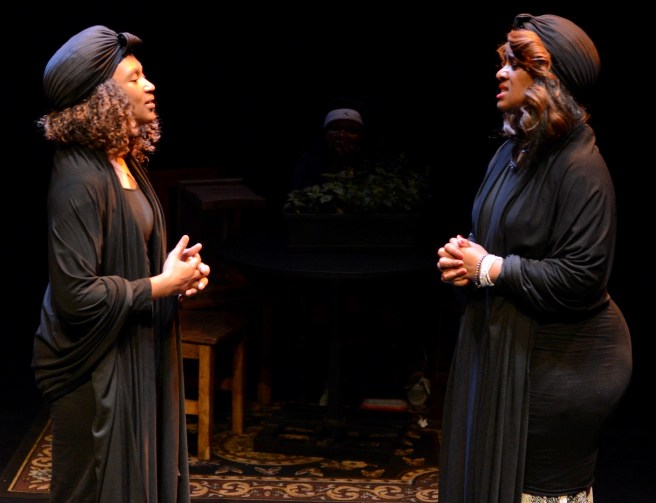
She describes this one as cathartic though because she could learn to love Japan again, “although it nearly killed me. Also it was a way of telling my parents things that were too difficult to say to their faces. And I like remembering my grandmother. I like that strangers know her name because if people know her name she can still be around. I like having her around.”

Kahn might not be the predictable pick for particular roles but it is those quirky choices that often turns a theatre piece on its head and appeals to those who are constantly waiting for the unexpected. In tough times, taking risks though, are often prohibitive – sadly.

But then again, had Kahn’s obvious creative talent been spotted and applied from the start, what she has come up with might never have seen the light of day. She was forced to experiment and explore, and being who she is, she did.

“Good actors are watchable for so many reasons,” responds Kahn. “Whatever the case may be. I’m starting to understand what makes me watchable.  Though I resent the word brave I think that is it. Fearlessness. Of course it’s not real. In real life I have fears. But they are very deep down. Over the course of a show, I can be fearless. “

That’s how it works and those that need that push and can deliver, share the magic with those watching. Which is exactly what Kahn does that makes her performances so exciting. And I haven’t even touched on her visual acuity.

She has street smarts. She picks the right team to surround her, knows and understands the impact of design and colours every corner of a performance in the sharpest shades. Add to that 160 illustrations by Kahn that illustrate her story elaborately and music by the brilliant Charl Johan Lingervelder to set the mood.

It’s a wild ride.

Jemma Kahn2
Jemma Kahn
  • In Bocca Al Lupo can be seen at POPArt in Joburg’s Maboneng Precinct on 29, 30 November and 1 and 2 December at 8pm; as well as 2 and 3 December at 3:30pm.

    Tickets are R 150. Block rates available for groups over 10pax

    Venue: POPArt Theatre, 286 Fox Street, Johannesburg

    Tickets available at : www.popartcentre.co.za

    Running time: 70mins

  • In Cape Town next year at the Alexander Bar from February 28 to March 10.


Graham Weir gives us Moments in Time in Dead Yellow Sands at Market Theatre

DIANE DE BEER

graham-weir-picture-jesse-kramer.jpg
Graham Weir in Dead Yellow Sands Picture: Jesse Kramer

DEAD YELLOW SANDS

DIRECTOR: Bo Petersen

PERFORMER/WRITER: Graham Weir

LIGHTING DESIGN: Darron Araujo

VENUE: Barney Simon at the The Market Theatre, Joburg

UNTIL: December 10  (Tuesday – Saturday at 8.15pm and Sunday at 3.15pm)


It feels like a moment in time.

Now he’s there, talking about different lives, all exposed in a specific shard of light – and as quickly it is all gone, quiet and then as it began – with a young boy’s voice, singing.

It takes a while to catch the monotony and the accent of the voice telling that first tale of a town called Benoni, translated from Hebrew as Son of Sorrow, to get to grips with what is unfolding. But then the tales take you by the hand and the heart and you fall silently into this reverie which seems to be snapshots of sacred yet suffering lives.

It’s in the writing, the telling of the tales, the performance, the lighting, all working together seamlessly to catch an audience moving through at that time. They have to stop, and listen, to immerse themselves in the powerful onslaught of what is unfolding mostly in their mind’s eye.

The actor is capturing different lives and he does this with a slight movement of how he is sitting in a chair, a voice that might shift an octave or a half, and accents. But then there’s the shift in each tale and a light(s) that falls in a different way.

graham-weir.jpg
Graham Weir       Picture: Lungelo Mbulwana

Yet nothing detracts from the essence of each life as it is washed ashore in this crashing of a wave. There’s little trickery and no gilding of these stories. It is all up to  the author who mesmerises with a message he wants those listening, to hear.

It’s hard to explain because these are not lightheartedstories and all have an inherent sadness about a life that has been caught up in some slipstream which is difficult to stop or even divert. And yet, one is left with a feeling of gratitude about what you have and this experience in particular.

While the state of art and artists, their diminishing options as time progresses and they a age are also offered, you are faced with an artist who is battling all those forces and triumphs in a way that is quite extraordinary in the conception and the execution of this performance.

There’s the writing of each particular story, the accent chosen, the character dissected and then there’s Weir’s performance that never falters. It’s quiet and yet each word cuts the air even (or especially) when whispered – or sometimes sung.

The extraordinary lighting on its own colours and shades each individual character vividly.

Written and performed by Weir, it is a piece we are catching at the tail end of huge acclaim. As it jabs at the heart it also lands softly as these characters take you by the hand, draw the curtains just to glimpse a life and then let go.

It’s haunting and magnificently compelling.

The Grand Dame Of Many Different Parts

A panto without Janice Honeyman is unthinkable. This year, the much loved and completely apt Pinocchio is her 30th season. This is how she unleashes her inner child, something that has always been part of her creativity and when you listen to her speak, it doesn’t seem she will ever stop.

Yipee!

With some help from Honeyman, DIANE DE BEER explains why:

Pinnochio
Kanyi Nokwe as Pinocchio

I hate Horrible Hook, I adore Sweet-sweet Smee, and the lonely Lost Boys creep into my heart. But then Snow White, as the first one, also has a special place for me. In every Panto I’ve written and directed I get immersed in the excitement and stimulation of creating a Favourite for our audiences.

That response from the unstoppable Janice Honeyman is why she has never been allowed to let go of the panto reins.

She took her first scary steps towards writing one for Joburgers when her colleague and friend Lynette Marais asked her 30 years ago to get going. She was astonished, had never seen a pantomime, and had no clue where this would lead to. She was simply told to jump as she took that first flying leap …

Janice Honeyman
Janice Honeyman

Janice being Janice, you simply have to run through her resumé to know, her life has been about taking risks – and those that didn’t pay off, taught her lessons.

“Yes –  I knew nothing 30 pantos ago, but by now I should be able to fiddle with the formula knowing that I have learned lots and lots of truths, techniques and tricks over the years.  I try to keep the spirit and heart of each story pure and unique, but still use what I know works for audiences.”

Those of us who have been around with her for as many pantos, know that Marais knew what she was doing all those years ago.

In Honeyman’s own words: “I think that the panto has grown and developed and up-scaled itself over the years, to achieve more audience satisfaction, but it has essentially remained a fun-filled story-telling presentation of well-known and loved folk and fairy tales. They have essentially been “family” shows, with something for everyone, an experience to be enjoyed together – perhaps I have always had ‘the common touch’, and that is why they’ve worked across a very broad age range and cross-section of the public. And I hope I can stay in touch and continue to give people what they want.”

She thinks about the next one all year long – as she must: “I know there is a constant pressure to come up with something new every year, and so I try to check on the news, read newspapers, kids and teenage magazines, watch what is trending on social media and take note of worldwide lunatic politics (great lines for the script are handed to me on a plate by some of the current world leaders!) I listen to popular music on radio while driving, or the background supermarket song-choice while shopping. And I try to sense what is hot with youngsters, nostalgic for grown-ups, and what will aid and abet the classical story I’m busy embellishing at the time. The rehearsal period is always fun, sharing interpretations of topical events with the cast, and trying to integrate some of their suggestions into the show.”

tobie-cronje-as-gepetto-e1509537837433.jpg
Tobie Cronje as Gepetto

Casting is another trick up her sleeve and she wants to pay tribute to the contributions of actors like Marc Lottering, Robert Whitehead, Desmond Dube, Fiona Ramsay, Anna-Mart van der Merwe, Judy Page, the late Greg Melville-Smith, the late Dale Cutts, Val Donald-Bell, Seputla Sebogodi, Louise St-Claire, Michael Richard, Maralin Vanrenen, Christopher Japhta, Bongi N’thombeni, Graham Hopkins, the late Frantz Dobrowski and many, many more – including, of course, the long-standing (and she wants to know if we get the pun!) expert Dame and Villain, the much-loved Tobie Cronje who will be stealing hearts in this reprising role as Gepetto.

There is also a whole range of good performances waiting in the wings with Andre Schwartz, Chi Mende, Garth Collins, Ilse Klink and Kanyi Nokwe (from theatre royalty) as Pinocchio in this year’s panto.

She praises her panto sidekick Timothy LeRoux, who has been at her side for at least half of the time she has been at it, for his wonderful theatre sense, his choreographer’s eye, and his understanding of pace and rhythm. “It feels like long long ago! He is definitely the Crown Prince who should succeed the Panto Queen when she abdicates.”

And then she moves to the prime minster of panto, executive producer Bernard Jay. “He enabled me to continue this tradition over the last 17 years. Credit must go to him for the WOW factor each year.”

lerato-mvelase-as-shug-avery.jpg
Lerato Mvelase as Shug Avery

As soon as Pinocchio is up and running, next in line is The Color Purple which opens at the end of January. Producers Joburg Theatre and Bernard Jay have recently announced the casting of Lerato Mvelase as Shug Avery, the popular bluesy singer whom we meet in the musical ‘at death’s door’. The all South African cast also features Didintle Khunou as Celie and Aubrey Poo as Mister.

That has been Honeyman’s trademark – moving between genres ranging from serious drama to opera to TV presentation, from storytelling to rowdy, raucous rude comedy (as she did in Stratford Upon Avon  for the RSC earlier this year), prose adaptations like Andre P Brink’s Bidsprinkaan and workshop productions. “That’s what has kept me excited and stimulated these 48 years.”

From her early days of fame as TV’s storytelling Bangalory Girl, she clicked she could tell stories. And a better way of doing this, was to become a director rather than an actress.

“I couldn’t have had a better time in the theatre. And I can’t see myself retiring, giving up the joys of theatre. I’ve quite a few more goodies to create up my sleeve.”

Hear hear, bravo and encore for as many as she is still up for.

Pinocchio opens officially at Joburg Theatre on Sunday and runs until December 30. It is followed by The Color Purple on January 31 until March 4.


Sello Maake kaNcube’s Can Themba speaks his truth at Theatre on the Square

DIANE DE BEER


Can Themba2
Sello Maake kaNcube as Can Themba

Pictures: Neo MNtsoma

THE HOUSE OF TRUTH

PLAYWRIGHT: Siphiwo Mahala

PERFORMER: Sello Maake kaNcube

DIRECTOR: Vanessa Cooke

VENUE: Sandton Theatre on the Square

UNTIL November 18


It’s the perfect storm when the playwright, director and actor all come together this sweetly.

Telling stories from our past, especially in this country, reminds us of where we come from, what we have lost and how many lives were affected, often devastated by the laws in a land functioning for a handful of white people.

And while it takes us back to a dark past which we should never forget, that is not what this play is about. The focus is on Can Themba, a writer and raconteur of remarkable quality, a man who regales us with tales of his life and his longings in spite of his hardships, all the result purely of the colour of his skin.

But he soldiers on, thank goodness, or we wouldn’t have had any of his writing which is all pleasurable and a reminder of the creativity that is so much a part of this continent and adds to the richness of our cultural landscape from the past with much to learn for the present.

CanThemba-1The writer/educator is craftily captured in Mahala’s text and it is amazing that this is his first play. It is cleverly put together in a way that illustrates the struggling writer who wanted nothing more than to be a teacher which was blocked in every conceivable way shattering his only hope for a future in his beloved country. And while battling to fight the good fight, a bottle of brandy looms ever larger.

It explains much about his personality but also his life and again reminds us that as in all these oppressive situations, survival is always tougher for those who have the ability to speak their minds – something Themba did with such flair and fire.

Maake kaNcube steps onto stage into a role that he obviously relishes and has refined in the time he has been touring with the production. It’s great that it is being afforded more than just a single run because it tells such a personable and enlightening story about our past and people that should be honoured and remembered.

In this remarkable actor’s hands, Themba comes alive in a way that is completely his own. There’s nothing straightforward about the performance which turns into a dance as he moves between the writer and the man that finds his stories all around him from the shebeens to the Sof’town streets. As a bonus, he also does a heart-warming rendition of Madiba perhaps the results of his earlier turn in Rivonia Trial.

can thembaThere’s a strong beating heart with Cooke deftly using the solo performance in a way that is never static yet doesn’t feel choreographed which is always the dilemma in these kinds of performances.

Not with these two stalwarts. With Cooke’s experienced artistic vision and kaNcube’s performance skills, they do justice to Mahala’s invigorating script in a way that’s mesmerising and enthralling. One would have imagined that most of us would be as familiar with Themba as was possible, but this piece shows his life in a completely novel way – with many life lessons to boot.

Apart from stricter editing which would allow for a slightly shorter show, it’s a near perfect production and one that brings much joy – from performance to storytelling of a personal kind which we need much more of.

Can Themba’s voice is one that should be heard. And in this show, the volume is at its sharpest.


The Suitcase is packed with Stories

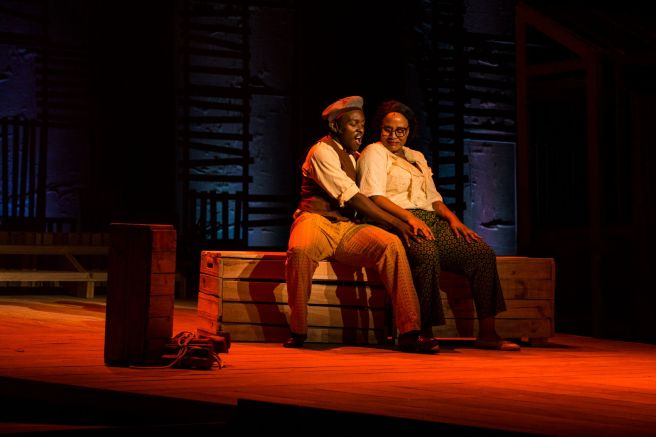
The Suitcase 2017
Masasa Mbangeni and Siyabonga Thwala

DIANE DE BEER

THE SUITCASE (by Es’kia Mphahlele)

ADAPTED AND DIRECTED by: James Ngcobo

CAST: Siyabonga Thwala, Masasa Mbangeni, Desmond Dube, John Lata

GUITARIST: Bheki Khoza with singers Gugulethu Shezi, Ndoh Dlamini, Nokukhanya Dlamini

SET DESIGN: Nadya Cohen

LIGHTING DESIGN; Wesley France

COSTUME DESIGN: Nthabiseng Makone

VENUE: Joburg’s Market Theatre

UNTIL: November 26


The Suitcase 2017
Siyabonga Thwala and Masasa Mbangeni


The audience were vocal in their approval from start to finish with Es’kia Mphalele’s The Suitcase, a reminder of how important and inspirational stories that reflect lives will always be.

This is the third reincarnation of this James Ngcobo production which started at The Baxter more than a decade ago, evolved for the opening of the Soweto Theatre and now this current production, which was revived for a UK tour with original members Thwala and Lata with Dube and Mbangeni, new additions.

And none of its power is lost. If anything, it grows in strength as Ngcobo, adds, takes away, uses the space differently, plays with the pace, and approaches the music from a different perspective, which in this instance with the three women singers, seems to reflect on the times.

Also in sync with the times is the spotlight on the poor and their particular dilemma. For many it is unthinkable not to have somewhere to turn to in times of distress, yet in the real world, that’s a luxury and an option not many are privileged to have.

When you are battling for survival, there usually aren’t any safety nets and that makes every day precarious.

The Suitcase 2017
Siyabonga Thwala and Masasa Mbangeni

For Timi and Namhla, that’s a way of life and they have moved to the big city in pursuit of their dreams. They do still have those and their strongest suit is their love. They’re partners in everything they do and get their strength from one another – until it all becomes too much to bear. But for that desperate chance, says Timi, who seemingly loses hope and yet …

Set in the days of apartheid, it is a reminder of where we come from but also that for these particular people in today’s world, not much has changed. The safety net is still not there and their days are as precarious as they ever were. And that’s sad. The poor seem to get poorer in a world where greed is what drives the powerful.

One of the fascinating things about seeing this play in its different incarnations, is Thwala’s growth through the years. He is older and that adds to the substance of the performance. Each step is taken with so much more impetus as if everything this man does determines what comes next.

But all of the sweetness between the two lovebirds is still there, the lifeline that exists in this family and carries them into their future. Masasa with her beautiful depth of voice offers a gentle strength for her man as he struggles to find something to keep them going in their battle for a better life. And it gives her older character a gravitas which adds to the story.

The Suitcase 2017
Ndo Dlamini, John Lata, Desmond Dube and Siyabonga Thwala

As the two narrators as well as numerous other characters, both Dube and Lata are seasoned performers who know when to milk a specific scene and how far to go without stepping completely out of character – and the story demands their kind of tomfoolery.

To hold it all together, there’s the music that is both haunting and heavenly with Khoza’s guitar accompaniment for three sublime voices in unison and solo, holding the show in a very specific ambience. It’s quite something.

The Suitcase is a story, sometimes sublime and sometimes extraordinarily sad, that captures both the good and the bad, and in these specific times, it again underlines the lives of others, and how those without, so often slip through the cracks.