Books & Bones & Other Things Attempts to Unravel The Secrets and Lies of Old

An art exhibition is often exciting not only because of the creativity but also the idea that holds the project. Jan Coetzee’s Books & Bones & other things is an example of just that kind of imagination:

booksbonesotherthings_cover

DIANE DE BEER


From the beginning of time, individuals have at some stage of their lives questioned the meaning of life in some way.

It makes sense that a man who has spent his whole working life in academia, studying and researching, would use these tools to question his own life – and thus began what has turned into an exhibition, Books & Bones & other things, which Mark Read of Everard Read Gallery invited academic/artist Prof Jan Coetzee to present for the month of February in CIRCA.

Jan Coetzee started his career at the University of South Africa; later became Professor of Sociology at the University of the (Orange) Free State (1979‑1986); and then moved to Rhodes University (1987‑2010) as Professor and Head of Department. In 2011 he returned to the University of the Free State as Senior Professor of Sociology where he initiated and directs the programme: The narrative study of lives.

jancoetzeeportrait
Jan K Coetzee

Within this research programme, he became interested in books as documents of life. “Throughout my life I’ve always been attracted to old texts – maybe not surprising given the fact that I did classical Greek and Sociology as majors for a BA. Together with my interest in narratives, I’ve also been playing around for years with sculpting,” he explains.

In short, he says, he put together almost 60 installations of “bookworks” consisting of old texts combined with found and sculpted objects. Most of these are enclosed in acrylic museum cases. “The object of this whole exercise is to attempt a reading of these aesthetically pleasing old texts – all of them old and many of them written in closed languages such as Latin, old German, old Slavic, etc.

“The installations attempt to unwrap/open the meaning of this collection of old texts: to try to hear what they are telling us today.”

As an academic he has thoroughly explained this complicated yet fascinating exhibition which would appeal to both scholars and the lay public.

“From the very beginning, humans have been living in storytelling societies. The earliest recordings of our stories are found in art and artefacts, and later on, in documents — the predecessors of what we call ’books‘.”

 Books & Bones & Other Things is thus a dialogue with a collection of books serendipitously encountered across Europe and South Africa. What started as a collection developed into a project to make the author’s own life, as well as life in general, more intelligible to himself and to others, he believes – and hopes.

The books in the collection are old texts which have considerable aesthetic appeal which originated from and bear witness to the actions, intentions, motivations, joys and hopes, as well as the fears and sufferings of human beings.

Each text, he says, narrates a story. But as his process developed, he realised that our ability to hear what they are trying to say is undermined: most are written in old, inaccessible languages which meant that Coetzee could not merely present these books as is.


And this is where interpretation came into play. He needed to find a way to retell the stories, to break them open and even subvert traditional narrative conventions by presenting them in a way that conjures up new stories in his mind and – hopefully – the minds of his ‘readers’.

This is when he began critically inquiring into the aims, context, and content of these books by systematically engaging with the title pages of the texts.

“Only the title pages,” he underlines. It meant that without studying the rest of the texts and without examining the meaning of the inside pages, he set out re-imagining the texts by recalling stories from his own life and readings.

He also initiated conversations between the different books so that the individual stories would resound more emphatically.

imperialprincipal.jpg
Imperial Principal

The bookworks, he says, explore the historical development of society and its structures — religion, colonialism, imperialism, racism, language, identity and time — all steeped in Western thought and tradition. “This I relate to the books themselves, and to the sculptures and the religious and cultural artefacts that accompany them.”

Coming to terms with yet another phenomenon of our time, an acknowledgement that in these European texts the voices of indigenous peoples are silent and their values, laws, and cosmologies — their very lives — are largely discounted.  He emphasises this in the use of sculls and chains for example. “What survives all individual authors, all human remembering and forgetting, I show in prehistoric fossils — a knowledge in the bones.”

He compares the results to a small private library in an ordinary family home which reflects something of the family. This collection of documents he feels, uncovers and reveals something of his own roots as it resonates with wider social, cultural, and historical refrains.

dominiumandcontrol.jpg
Dominium and Control

“I cannot think of a more accomplished scholar of stories, or the narrative study of lives, than Jan Coetzee who in this ground-breaking book demands a reckoning with all those stories, of ourselves and others entangled in this post-1994 dance. This attempt at excavating the ‘knowledge in the bones’ is truly an exceptional piece of scholarship by Coetzee and an outstanding set of authors and should be required reading not only for sociologists but story-tellers and -listeners across the disciplines. It is the curriculum we desperately need.”

This is the recommendation of Jonathan Jansen, former Rector and Vice-Chancellor at the University of the Free State of Coetzee’s book which is at the centre of this exhibition.

The exhibition will end on February 28 with an endowment auction of these bookworks – conducted by Strauss and Co – the proceeds going to Kim Berman’s Artist Proof Studio and William Kentridge’s Centre for the Less Good Idea. The exhibition/auction consists of the almost 60 bookworks/installations that form the basis of a book Books & Bones & Other Things published by Sun Press in 2018.


US Woordfees Exemplifies a World of Humanity and Theatrical Diversity

The performance year kicks off in grand style with the US Woordfees, the first of the country’s arts festivals. DIANE DE BEER highlights some of the theatrical diversity in the programme of the Stellenbosch-based festival:

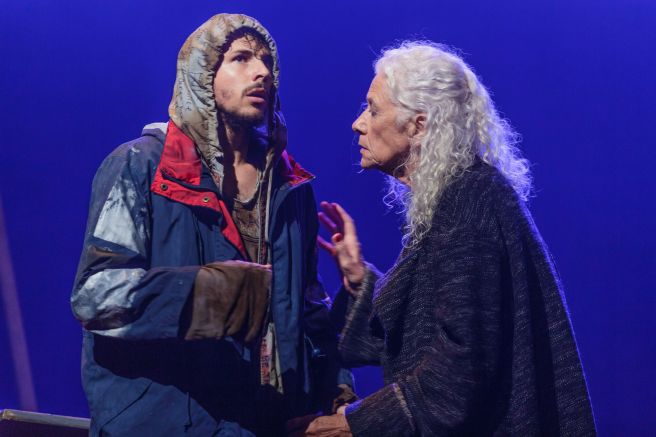
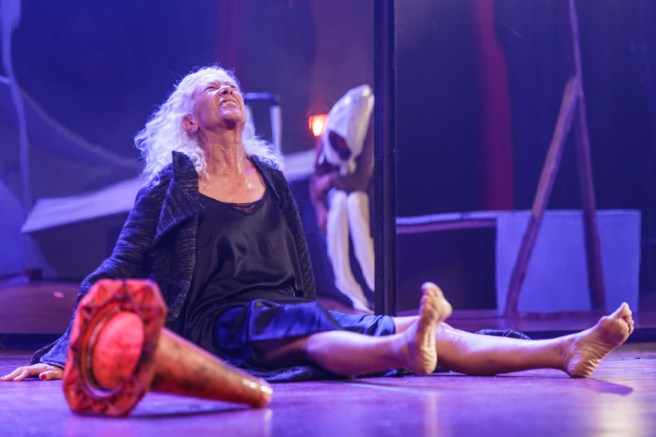
Endgame with Soli Philander and Antoinette Kellerman
Endgame with Soli Philander and Antoinette Kellerman Picture by Oscar O’ Ryan.


In her welcome foreword to this year’s festival guide, Director of the Woordfees, Saartjie Botha, points to the political dilemma in the country and how that sometimes detracts from the art festivals. But she’s optimistic. “The world of the arts is a gentler place,” she says.“It is confrontational sometimes – and it should be, but it is a world focussed on humanity. And finally creates understanding and empathy for that humanity.”

The University of Stellenbosch Woordfees, the annual arts festival with books as its heartbeat, runs from March 1 to 10 with a programme that has grown through the years and theatre arguably the one that has benefited most – and it needs that more than ever right now. But so do the audiences to get them thinking and talking. Right or wrong, arts festivals have become a lifeline for artists, and for many, one of the few times they have the opportunity to exercise their craft.

Apart from an extensive discourse programme which covers anything from the state of the nation to financial health as well as many book and author-related discussions, their entertainment and arts reach is an embracing one with fine arts, music (classical, jazz and pop), film, stand-up as well children’s theatre all given a strong platform. And added to that is WOW (Words Open Worlds), an empowerment project focussing on the youth of previously disadvantaged communities, which also includes the largest spelling competition in the country sponsored by Sanlam.

Theatre lovers will know that they must add the Woordfees to their calendar with a programme that this year especially sets the benchmark for the rest of the country and times ahead. It is a festival that benefits from its university connection as well as a community that supports the arts and has a strong cultural understanding. But it has also broadened its reach which has meant that its artistic offering has extraordinary depth and variety and that’s exciting. Diversity in the arts – especially in this country – is the only way to go.

toutjies & ferreira (picture by aardklop)
Toutjies en Ferreira

Director Saartjie Botha sets the tone with a piece that is branded both comedy and drama titled Toutjies en Ferreira with two directors, Wolfie Britz and Nicole Holm and a cast to die for, including Frank Opperman, Anthea Thompson, Aphiwe Livi, Malan Steyn, Melanie Scholtz and Antoinette Kellerman. If you have ever wondered about the backstage chaos an hour before the show starts at a festival, this is a rare glimpse into that world bolstered by drama and delicious comedy.

And launching into the stratosphere, extraordinary theatre maker Brett Bailey debuts with a new work, Samson, described as dance-musical theatre based on the Old Testament values of domination, treason and rebellion yet set in today’s world of political extremism, inequality, expatriation and violence. In the spotlight are opera, choirs, animation and electronic music and the vibe promises the brilliant theatre maker is anarchistic.

He explains that Samson brings the Old Testament story crashing into the 21st century, setting the myth of love, betrayal, ethnic tensions and violent revenge within our complex era. “I’ve been working on the piece for around 18 months, so it has been a very thorough process. I’m blessed to be working with some stellar collaborators: Vincent Mantsoe as choreographer, and Shane Cooper as composer. With a live band playing a very contemporary electronic score, huge projections, and some great voices and performers, we aim to deliver something very special.” Prospective audiences should take note.
endgame with rob van vuuren and andrew buckland
Endgame with Rob van Vuuren and Andrew Buckland.

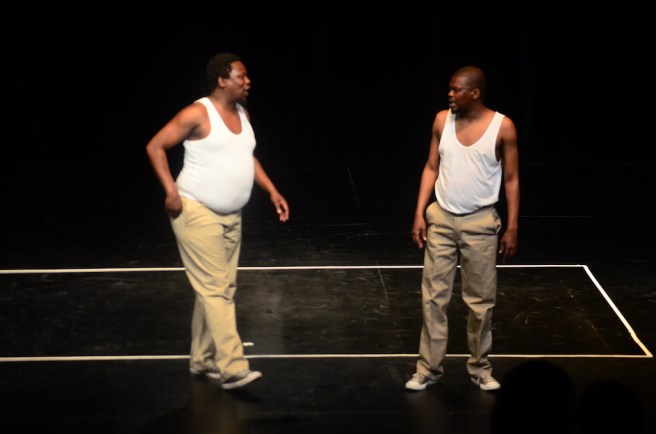
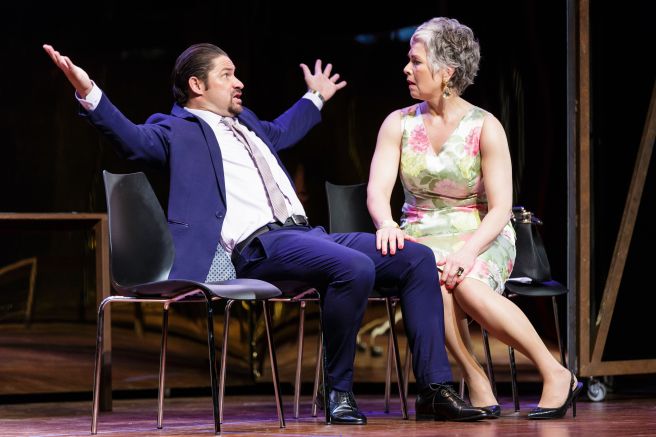
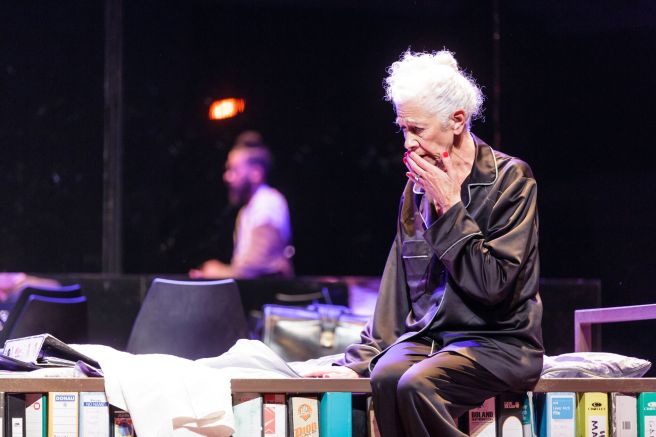
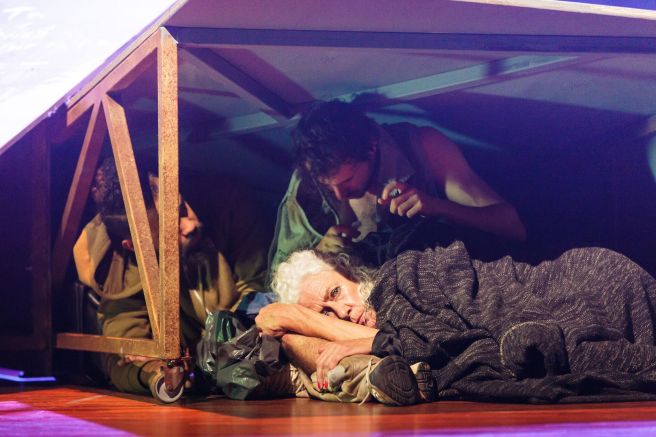
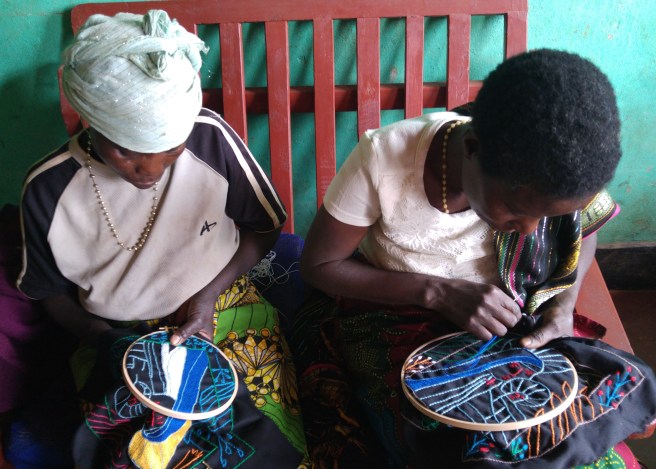
In classical vein Sylvaine Strike follows last year’s inspired Sam Shepard with Beckett’s Endgame with Antoinette Kellerman, Andrew Buckland, Rob van Vuuren and Soli Philander. It has already had a sold-out season at the Baxter with Strike unleashing her magic with powerhouse performances as she dissects the playwright’s exploration of relationships between the controllers and the controlled. Her interpretations are unique, from this time and dealing with the human condition.

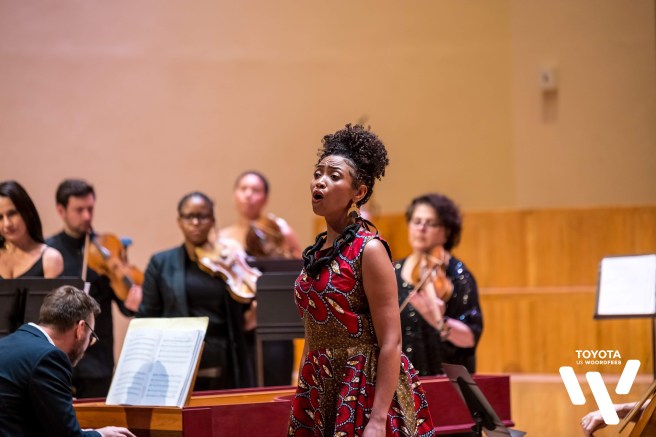
Director Marthinus Basson is a name with immediate appeal and with Antjie Krog’s Mi(SA)- Die Nuwe Verbond – ‘n Misorde vir die Universum (The New Covenant – a Disorder for the Universe) and a cast of singers that includes Amanda Strydom, Cecilia Rangwanasha (soprano), Makudupanyane Senaoana (tenor), Ané Pretorius (harpsichord), Erik Dippenaar (piano) and the Cape Town Opera Choir, fireworks are predicted. It is a complex thing (a Basson trait), with a trio of works, the Missa Luba, the Missa Criola and Krog’s new work with music by Antoni Schonken in conversation with the established and celebrated works.Basson pulls it all together with a blend of rites and liturgy to create a contemporary South African soundstage predominantly in Afrikaans but also adding many tongues like Greek, Latin, English, Xhosa and Khoisan words. The choir also brings depth to the texture with individuals telling their own stories and where they come from.

Other English productions include Carpets, a text which first surfaced at last year’s third Text Market initiated by Hugo Theart from Kunste Onbeperk (KKNK). With the help of the Baxter (which hosts the event) as well as NATI (National AfrikaansTheatre Iniative), new texts are constantly being developed and evaluated with some selected to be further developed and staged at the different festivals. At the last Market CEO of the Baxter Theatre Lara Foot added R100 000 to the sponsorship which was matched by NATI for 2019 with the intent of expanding the Text Market to include Xhosa texts in addition to Afrikaans and English. She stressed the importance of developing new voices – and also exposure of the different cultures to one another.And whileJenine Collocott; Carpets wasn’t one of the winning texts, it was selected for a performance at the Text Market where it has benefitted from that exposure. Playwright and director Caitlin Wiggil has written an intriguing story about an agoraphobic woman unable to leave her house because of an earlier trauma.

du toit alberze
Du Toit Albertze, the playwright of Klip Kween.

Two playwrights who were rewarded with writer’s bursaries will be presenting plays: Herschelle Benjamin with Slavenhuis 39 explores what it means to be a person of colour while Du Toit Albertze homes in on a young transgender woman who returns to her birthplace in Klip Kween to investigate her past. She sacrifices her last bit of sanity to go back to Namakwaland to reclaim her innocence from the local pastor. “The narrative becomes just as blurred as the characters’ morality when the pastor’s new victim becomes intertwined in this Christmas play-like tragedy,” explains the playwright.

“Director Jason (Jacobs) and I strive to honour the sisters before us, the daughters of District Six. Also to remind the ‘ooms en tannies’ of transgender existence and exposing the trans- and homophobic religious leaders still abusing their power.”. It’s important that all of this be talked about. “There are too many of us who hide away like vampires. Hopefully these stories will kick some of them out of the closets!”

stof with james cairns
Stof with James Cairns

Both of these young playwrights are worth checking out. It is early in their writing careers, but they have already made their mark as they tell stories that open new worlds.Another transgender story titled Rokkie showcases a 48 year old transgender woman from the Cape Flats, and is the solo debut of Charlton George, an actor with extraordinary talents; while Craig Morris returns with one of his breathtaking performances in Greig Coetzee’s Johnny Boskak is Feeling Funny.

babbelagtig
Babbelagtig – Picture by Hans van der Veen


It’s also going to be fascinating watching James Cairns switch to Afrikaans in his solo show Dirt (which he has translated as Stof), directed by Jenine Collocott, who is also in charge of the family-orientated clown show Babbelagtig with an extraordinary comedy ensemble with Jemma Kahn, Roberto Pombo, De Klerk Oelofse, Dean Bailie, Klara van Wyk, Thami Baba and David Viviers.

Marching in step is the Gerrit Schoonhoven-directed two-hander with partners Elize Cawood and Wilson Dunster in Narkose (Anesthesia). Two old clowns, Koos and Koos, are down and out but determined the show must go on. This talented trio have a way of sprinkling fairy dust whenever on stage, even when they gently let rip with the truth. Louis Roux, a young playwright, is helping with the text.

And finally, with a title like GodgOdgoD it’s hard to resist. It has already reaped some rewards with a cast as versatile as Charlton George, Ilana Cilliers and Wolf Britz. Described as experimental, language isn’t the star as the company explores identity, who we are, where we come from and exploding the myths and theories that want to determine the way we live.

That’s only a handful, a starting point especially if English theatre is more accessible at this mainly Afrikaans festival. But do yourself a favour, go online and have a look at their programme which is also available in English. Be prepared to be overwhelmed. It is a staggering offering from the arts in all its glorious diversity.  


Debut Novel Talion Bravely Explores and Pushes the Boundaries in Thriller Genre

Photographer: Joanna Olivier


booktalion

Discovering a first novel with a young writer in the process of finding his voice is exciting. DIANE DE BEER chats to author Beyers de Vos about Talion, his love of writing and future plans:


It’s always a thrill reading the first novel of a new writer, especially when it turns out to be quite experimental, pushing the boundaries and the result of an MA in creative writing under celebrated author Etienne van Heerden.

The young man in question is Pretoria born and bred Beyers de Vos, the novel, a thriller, is titled Talion (Penguin) and the dedication of the book points to the origins of his writing:

For my mother, who taught me to love words.

And for my father, who told this story first

It’s also a love of reading and being blessed with incredible English teachers all through primary and high school, he explains. “They fostered a love of story.”

“I wanted to understand how those stories worked – why I loved them so much and how they were made. When I started writing myself, trying to find those answers, everyone was really encouraging. I also had a really strong sense that my imagination was my strongest asset. If I let my imagination grow, if I figured out how I could harness it, I would never feel alone, never feel powerless, never feel insecure. And after all that, what choice did I have but to become a writer?”

With an undergraduate degree in Publishing, an honours degree in English literature and then the creative writing, following this with a first novel, he felt comfortable enough to resign his job as script writer to focus on a second book. “So reckless of me,” he interjects.

beyers de vos_-10
First-time author Beyers de Vos

Yet when you listen to his story, there’s nothing that’s not carefully thought through in the way he has gone about carving a niche in the world of literature.

“I knew that I wanted to write a novel. But I also knew that I would never commit to it if I wasn’t put under some pressure. I thrive in an academic environment – so an MA seemed ideal. Having Etienne as my supervisor was just luck – he was there and at my disposal. He’s a genius, obviously, and his influence on my work is difficult to measure. With Talion he really guided it from something that could have been more ordinary to something that is maybe a little stranger.”

We’ll get to that strangeness later. First the book, which is a thriller – and that, it seems, is happenstance as it’s not a genre De Vos is going to stick to exclusively. “I love crime literature, I like thrillers. But I’m also a bit of a snob about it – I need my thrillers to be more than your average Jo Nesbo. Not that there’s anything wrong with Jo Nesbo – but as a reader and a writer, I’m much more interested in the darkness of those stories than the thrill of them. What I’m attracted to is tragedy – thrillers lend themselves to that beautifully. The genre is a vehicle, a shortcut, to get to what I’m really after – which is some kind of exploration of why humans are so capable of torturing themselves, and others.”

And whatever way you look at it, a strong feature of the novel is the writing and perhaps more importantly, the young audience it should appeal to. It’s young and happening with the main characters all in that peer group. The fact that it’s set in Pretoria, a city De Vos knows well and captures in an invigorating and unexpected fashion, is also a bonus. He even has Oom Paul and his warriors doing a gig on Church Square!

He isn’t always sure what he is trying to do or why, some of which works and arguably at other times not quite and he is uncertain how to articulate what attracts him to certain stories, death rather than romance for example. “An idea takes hold of me – in this case the idea was ‘what happens to someone psychologically when they decide to kill someone else?’ – and I become obsessed with it. Then I have to write my way through it. I come out the other side with a piece of work, and I’m not sure I understand what I’m trying to accomplish beyond shaking the idea around until I’ve created something meaningful. What is Talion trying to say? What am I trying to say – I’m still figuring that out.”

beyers de vos_-2
Beyers de Vos

That’s not a bad thing though, and he feels similarly about his writing style. “It’s instinct. It has its own rhythm, like music. I didn’t have to ‘find’ it – it just was there, inside my head.” It’s also something that you can feel when reading the book is still being formed, sometimes it seems just too precious, perhaps self-conscious, and as a reader you become more aware of the writing than the story. But what I loved was that he was willing to go this route, to play with ideas and words which will inevitably lead to some failure, yet driven by a desire to do something different, to tell stories his way and to play with a genre that many might advise him to leave well alone.

On some levels it did feel like a first novel because of all the above reasons, but the overriding emotion was one of excitement to experience this writer’s future writing and how he approaches book two following mostly rave reviews for this first one.

Speaking to him about young readers, he argues different sides. “Are my peers reading? If not, is it because they feel alienated by the books that are out there? Are they looking for something new? Is it even a question of age? It’s certainly my hope that a new generation of writers are writing for a new generation of readers, who can pick up a book and say, ‘this book represents me and the country I know and is exploring ideas that are important to me’.”

De Vos, who describes Afrikaans as his home language and English as his first language, notes that he has a complicated relationship with his heritage, which he is only reckoning with now that he is working in Afrikaans too. “The truth is that my publishers asked me to translate it because they thought the market would be more responsive if it was released in both languages,” he says of the translated version. “The Afrikaans market is much bigger, and to be frank, much more supportive. Going forward, I will be working in both languages. I am currently working on a couple of Afrikaans-only projects, as well as a new novel, written in both English and Afrikaans.”

And as a reader: “I read fiction almost exclusively. In the last few months I’ve read The Southern Reach trilogy, which is science fiction, and Snap, a crime novel by Belinda Bauer. I’ve discovered Joyce Carol Oates, and I’m making my way through her bibliography. I also read Transcription, Kate Atkinson’s new novel.”

What I loved about Talion most was the approach on all the different levels, the language, the youthfulness which is fun and informative and also the intent. It is also with some of those aspects that I often struggled most. But given a choice, this is the kind of book I like reading as I discover a new voice still finding its way – but once it hits the ground running, I predict, will soar spectacularly.

  • The author will be part of a panel discussion titled Nuwe Bloed (New Blood) at this year’s US Woordfees on March 6 at 2pm in the Adam Small seminar room

Magically Mesmerising Japanese Islands are Packed with Art and Architecture

In the next two years, Japan will be highlighted on the travel itinerary as they host the 2019 Rugby World Cup and the 2020 Olympic Games. Travelling that far it’s worth checking into some of their magnificence.


birthdayfatman_0001 (17)

DIANE DE BEER


If your travels are driven and dominated by art and architecture, Japan’s art islands seem designed specially for your desires – and then they deliver so much more.

Hearing about them the first time, they sounded magical, almost unreal – islands filled with art – which I couldn’t believe I had never heard about.

Only once you journey there, the fantasy and fun of it all materialises majestically. The island landscape that’s the backdrop for this art-inspired world often determines the art you will be viewing in what should be an extended trip – as many days as you possibly can pack in.

seascape from naoshima
Seascape from Naoshima

Google was my first port of call when starting my research. And coming back following the visit, returning to that information, much of it only makes sense once you’ve been.

When your research says that you need at least three days, even that isn’t quite enough, but it will be worth your while. Some 3 000 islands are dotted in the Seto Inland Sea of Japan, which separates Honshu, Shikoku and Kyushu, three of the four main islands of Japan. Three of these – Naoshimo, Teshima and Inujima –  form the main part of what is described as Japan’s art islands but there are more and they’re multiplying as islanders understand what it can mean for the future of a particular island.

This unique art project began in 1987, when a businessman, Soichiro Fukutake, the chairman of Fukutake Publishing (now known as the Benesse Holdings, Inc.), bought the south side of Naoshima. He then enlisted Pritzker Prize-winning architect Tadao Ando to design his dream and most of the architecture you visit on this main island, all the established museums (and the hotels) are the work of Ando. If you haven’t heard of him before, you will appreciate his architecture once you witness his work. He has also designed, for example, a museum to form part of the cultural precinct planned for Abu Dhabi with the Louvre the first finished project.

an example of tadao ando's architecture
An example of Tadao Ando’s extraordinary architecture on Naoshima.

One of the strongest visual pleasures of Naoshima is that it is one architect and his unique architectural vision that determines the impact. He sets the tone, not only of the museums on the main island, but also of the art.

When you embark at your port of call, it’s all sea, sky and islands with boats of all sizes as far as the eye can see.  And once on the ferry, the landscape, dominated by shades of blue, is completely enveloping and an inviting sign of the excitement that awaits. As you enter the port at Naoshima, one of the famous dotted pumpkins, this one in bright red, of one of Japan’s most prolific artists, Yayoi Kusama, is the first thing that greets you. You know you have arrived.

shrine's glass stairway (2)
Shrine’s sparkling glass stairway

First it’s on a bus (or a bicycle, motored for the hilly countryside) and you’re off to see either the mainstay of the island, the Benesse Museum complex which is furthest from the port, or, on the way there, the Art House project which includes the architect’s own house with his architectural plans explaining his art island mission and his design ethos. We started off there, but it would probably have made more sense once we had seen all his buildings even if they speak with great clarity for themselves.

Six other buildings have been used to create special artworks which include anything from an artist playing with light in almost fairground fashion with extraordinary results, an outside shrine with a spellbinding glass stairway, to a mesmerising pool of darkness, which takes viewers on a specific journey.

Even though I would leave the Ando house till later, the rest of the project is a great introduction, playful and out of the box, while giving individual artists and their unique voice a chance to shine. This is where one could probably also find accommodation (but more about this later).

Then it’s on to the three major museums as well as the outdoor sculptures on the main Benusse site. It’s a fusion of architecture and nature with the island and the surrounding backdrop the perfect setting for Fukutake’s expansive dreams. Importantly, the Ando environment-sensitive designs are part of the landscape as he plays with light and hidden delights in a way that fashions and informs his designs.

His buildings are all different yet have a similar sensibility. His building blocks are concrete with natural light the premiere design feature to show the art in a way never seen. This is especially true of Monet’s Water Lilies, which are given a fresh perspective.

20181014_113658
The entrance to Tadao Ando’s Lee Ufan Museum displays all his design strengths

From the detail of the floors in the passages and specific rooms and even the toilets (or, as some would say, especially the toilets!), every detail is put out there, full tilt. The Chichu Art Museum, for example, is built like a bunker, all underground, but with shafts of light encouraged and enticed to play with the space and the art.

The art includes many familiar names but there’s much to discover and learn, for example, the Lee Ufan Museum is dedicated to this octogenarian Korean artist quite spectacularly. And in especially the Chichu and the Lee Ufan museums, there are only a few rooms with minimal art displayed in a fashion that grabs both your attention and your soul. You are gifted time to appreciate each piece and to absorb the impact. It’s the the best way to view art.

lee ufan's art outside the museum
Korean artist Lee Ufan’s art outside the Museum

The outside sculptures have similar impact. Pieces speak to one another unexpectedly, and others simply because of their placement, sometimes like driftwood on a beach, have a special charm. Because of these outside pieces and the museums which are in walking distance, you engage with nature as much as with the art and the day strikes a particularly balanced note without you even trying.

We were there for two days, thinking we could do three islands, but in the end, only managed the one. It was one of the most unusual art excursions of my life and one I could easily repeat – often. But it takes careful planning, thoughtfulness about where you want to stay, on or off the islands with the ferry which is a joyous ride but takes time depending on the port you choose. Probably the best, if you can afford it, is the Benesse Hotel on Naoshima Island which is part of the museum complex and allows you to see the art in  a way that is completely deluxe – early in the morning and late at night.

You can travel from either Tokyo or Kyoto to Okyama and then one of the ports, either Uno or Takashima, both of which have ferries that travel to and from the three islands daily.

20181013_124353
Art is a way of life on Naoshima

Take note though that it isn’t as easy as jumping on and off a ferry as they’re scheduled very specifically and it’s tough to squeeze in more than one island on a day. If you make the train journey as we did from Kyoto (two hours), once passing through Okyama to Takamatsu, you’re traveling surrounded by the sea – seemingly everywhere – over expansive bridges and this is the beginning of the discovery of the breathtaking backdrop for the next few days.

It’s a fairy tale journey for art and nature lovers.


Mike Nicol pushes all the right buttons with Sleeper, the third in his latest trilogy

DIANE DE BEER

Sleeper_NicolWith issues and idiosyncrasies like state capture and Donald Trump dominating the news cycles almost to the exclusion of anything else, it feels as if in the realm of fiction, especially writers of thrillers and espionage must be having so much fun. When fact becomes stranger than fiction, doesn’t that give especially a thriller writer carte blanche?

“Oddly enough,” says author Mike Nicol whose latest book Sleeper (Umuzi) is the third in a series that began with Of Cops & Robbers and Agents of the State, “the worse the behaviour of our leaders, the more difficult it is to write fiction that reflects contemporary situations.”

Trump, he says, is so outrageous that he cannot be placed in anything but farce while Zuma was slightly different and more in the manner of dictators as his period in office was characterised by the deliberate and malicious plundering of the state. “You must remember that readers aren’t that interested in the fantastical. They want their thriller fiction to be logical and deadly and they certainly don’t want the outlandish.”


That means instead that life has suddenly become that much harder for crime writers because of what is happening in the real world. But he is having fun – to his surprise. As someone who switched to crime writing following a slew of novels and non-fiction writing, he wasn’t expecting that. “Don’t get me wrong, it is no easier than any other type of writing, but it is a lot more fun,” he accentuates.


He reckons he has the best time with the dialogue. In Sleeper there were great opportunities – with the sleeper herself and two characters called Bill and Ben. This is exactly what he means by fun. These two are a reference to Bill and Ben, the flowerpot men in the popular children’s story. “As I had been exposed to the antics of Bill and Ben thanks to my granddaughter, I thought why not haul them in to do service in a spy novel?”

You have to love that in-between all the madness and mayhem, two of the characters have been snatched from a children’s book!


Those familiar with Nicol’s writing will know his characters but if you need to catch up, Nicol supplies some back story. While each book is a standalone and can be read in isolation, the main characters – Fish Pescado, a private investigator, and Vicki Kahn, a lawyer and spy – are at the heart of the books. “Their relationship is the link from book to book,” explains the author. “There are walk on parts by secret operative Mart Velaze and his handler the mysterious Voice, who have featured in earlier novels. Also, Krista from Power Play, the daughter of Mace Bishop, who was the protagonist of the initial Revenge Trilogy. And here Mace flies in for a small part in Sleeper,” he elaborates.


“I had always wanted to develop a universe of characters, which I could call on from time to time. Unfortunately, they’re only human and for some of them Death comes calling,” he says ominously. That’s precisely what makes the books intriguing. If you have been following the different trilogies, you have come to know even the side characters well because at some point they were centre stage. If one of them is killed, as a reader, you are much more invested because of previous meetings.


So, bizarrely in a world where the characters often don’t feel that much for one another and are often easily expendable, the reader has an attachment because of a character’s back story. It keeps you reading though because of the unpredictability and Nicol’s seeming indifference for his (and our) darlings. It’s as it should be.


Speaking about thriller writing in general, it all started for him when trying to find a good fit as writer. “The house of crime fiction has many rooms and my initial venture into the genre was into a sub-category, the security industry, which hadn’t yet had much play at that point.”

But as we live in a lightning fast, changing world while his first, the Revenge Trilogy, confronted such issues as Pagad bombings, arms trading, land claims, farm murders, corruption in real estate development and then drugs and abalone poaching in Power Play, with Of Cops & Robbers he found a new tack. “The focus here was to look at the atrocities of the apartheid hit squads, rhino horn and elephant tusk poaching then and now, before moving into the corruption of the current government and human trafficking, particularly during the Zuma years in Agents of the State.

Mike Nicol
Mike Nicol


“Once the major crime in the country became government crime it seemed logical to shift into a form of espionage fiction – thrillers by another name. And this is where Sleeper finds its centre: the corruption of government officials in positions of power and what happens to whistle-blowers.”

Sound familiar?


There is so much going around at present but as usual, this savvy writer is pushing all the right buttons. His writing has always been exceptional and in this genre, he has found his niche with great aplomb. Both the writing and story are fast, feisty and furious and with Cape Town (where he lives) as the backdrop, it’s visual and familiar to everyone living here. If in the earlier books, the story might have felt far-fetched, the real world has raced ahead so briskly that far-fetched has become an outmoded concept.


As Nicol has established not only his slacker hero in the minds of readers but a clutch of colourful characters that keep us entertained, if this is your introduction, perhaps start with the first in the trilogy and work your way to number three.

There won’t be too much of a gap between this one and yet another encounter with Fish and Vicki, so for the moment, he is sticking with them. “The characters are the real plot manipulators but there invariably and inevitably comes a point where I don’t know what is going on or how to resolve things. This is about two thirds of the way in. Weeks of despair follow until the obvious plot resolution suddenly dawns. And it is always obvious. The obvious, I have discovered, is difficult to see. So I guess you could say that the process is a tough one.”


When he has time to tune out and get into his own reading, Nicol has an eclectic smorgasbord to choose from: “A variety of non-fiction and fiction. Just recently I read McMafia by Misha Glenny and The New Confessions of an Economic Hitman by John Perkins.

“On the fiction front I have been immersed in espionage novels by Charles McCarry, Robert Littel, Olen Steinhauer, Charles Cumming, John le Carre, Chris Pavone. My crime fiction reading encountered the French writer Pierre Lemaitre (who probably wrote the first of the now popular psychological thrillers involving a woman, Blood Marriage) but who has also written three really good police procedurals (Alex, Irene and Camille). Another interesting top crime writer this time from Australian is Candice Fox, especially her Crimson Lake.”

Chimamanda Ngozi Adichie On Histories Of Yesterday, Today and Tomorrow

Nigerian author Chimamanda Ngozi Adichie was the keynote speaker at an event hosted by the Nelson Mandela Foundation as part of the “Remembrance period” to mark five years since Madiba’s passing. She explored how histories have shaped the imagination of the future. This was followed by a conversation with Dr. Sebabatso Manoeli and Neo Muyanga on the role of memory and importance of remembering:


Chimamanda and Graca
Chimamanda Ngozi Adichie and Graca Machel © Nelson Mandela Foundation

Diane de Beer


There was envy, said Nigerian writer Chimamanda Ngozi Adichie in Johannesburg on Thursday night, where she was the keynote speaker at the Nelson Mandela Tribute night hosted by the Nelson Mandela Foundation as part of the centenary Living the Legend celebrations. “We wanted a Nigerian Nelson Mandela!”

Fresh from her talk with former First Lady and author Michele Obama, who reinforced the Nelson Mandela legacy when she told Adichie that Nelson Mandela made Barack Obama possible, she switched between the inaccuracies of history and memory, turned to women who need to fight back and also dwelled on being African and the pride that had to be reclaimed.

“But I don’t trust this Rainbow Nation thing,” she said to loud cheers from her predominantly young audience. “I am fiercely Pan African. My visceral sense of protection is high. We haven’t talked it through,” she said, pointing out that we cannot just forget the past as is so often suggested.

Can the process of remembering be scrubbed clean? “They might suppress it but always it will be there,” she warned. “It is important to acknowledge that the process will be messy and long and most of all, that kindness is necessary.”

Returning to Nelson Mandela time and again as was her brief, who and what he represented, speaking about memory and history, she shared that even though he was South African, the world claimed him. “He sparked a belief in what was possible,” she said.

Chimamanda
An ecstatic Chimamanda Ngozi Adichie © Nelson Mandela Foundation

Speaking in a country where heroes are ditched easily, and the memories distorted, she explained that as a storyteller she couldn’t trade in perfection. “Where does absolute perfection exist? Memory, she pointed out was often about how the present configured the past, something that features strongly in our world today. “To avoid the truths we do not like is to avoid grappling with complexity,” she says. “Progress is a journey which doesn’t run in a straight line but in zigzag.”

“I think humanising him, acknowledging that he wasn’t perfect, isn’t denigrating him. When we do that, we realise that there’s a lot that we ourselves can do.”

“It’s about pushing against this idea that perfection is required. The idea of people being heroic is not that they are perfect, it’s that they have done one thing that is remarkable”

That’s it absolutely. Often with history, the facts are there, but the citizens, those who lived it, know it is not the truth. That’s where storytelling becomes the driving force says the storyteller. That’s where the truth often lies. “If human beings were perfect stories wouldn’t exist because our imperfections create the stories we tell.”

Who defines the accepted norm? “It’s about owning who you are and knowing that who you are is enough.” In stories she learnt about the loss of dignity, to be human, is to be valued, she affirmed. “We need to push back against the idea that there is a way that things should be.”

“Our history was invented for us. It’s time for us to reclaim it. I went to a very good school in Nigeria, but I knew very little about Nigerian history. I knew a lot more about the kings and queens of England.”

Changing tack but sticking to her theme of humanity, she said that with our high rates of sexual violence, South Africa needs to grapple with gender stereotypes, but we need to focus on the perpetrators, the boys. It’s no longer good enough to tell the girls to be careful.  “It is time to raise boys differently,” she says. “A woman’s body belongs to her and to her alone. We must insist that men go through a process of learning. Women must be accepted and respected as full human beings – from the boardrooms to the busses.”

As we focus on boys rather than on girls, we could start by saying “Mandela wouldn’t do that!” And switching to fighting talk she insisted that women should never feel shame or guilt because they were a victim of crime.

She also touched on South Africans and their many languages. Traveling from the airport, her driver confessed that he spoke nine languages. “South Africa is in many ways an inspiration to many parts of the African continent,” said Adichie, as she pointed to their confidence and their command of African languages.

“We should own who we are and know that it is enough.”

Chimamanda and guests
Facilitator Cathy Mohlahlana, Chimamanda Ngozi Adichie, Neo Muyanga and Dr Sebabatso Mano. © Nelson Mandela Foundation

She was then joined on stage by historian Dr Sebabatso Manoeli and activist, composer and musician Neo Muyanga. Discussing how people could reclaim their history, Dr Manoeli suggested that Europe should be regarded as irrelevant, an idea that Adichie immediately adopted.

“We also need to read against the grain,” noted Muyanga, suggesting that’s how to find history on the margins. “We need to explore alternative narratives as we move away from fact to truth.”

Given the final word by journalist Cathy Mohlahlana, who facilitated the discussion on the importance of memory, Adichie encouraged everyone not just to talk about the wrongs of the current historical narrative, but to find a way to do something – anything – even something tiny.

That’s the way forward.

Nataniël at Play with Family and Friends

Edik book coverSiblings Nataniël and Erik le Roux partner in a book that captures the magic and mayhem of a French-styled lifestyle based on their four-season television cookery series Edik van Nantes, which finished earlier this year:


DIANE DE BEER


“Except for family, we don’t have things that old,” says Nataniël at a French heritage evening hosted by French ambassador to South Africa, Mr Christophe Farnaud, in celebration of the entertainer/TV personality’s latest book Die Edik van Nantes (Human & Rousseau, R370) co-written by his brother Erik le Roux, who was also co-presenter of the KYKnet cookery/lifestyle/travel programme consisting of four 13-episode seasons.

It all began with the younger Le Roux brother settling in Nantes after marrying Nathalie, who is from the area and introducing Nataniël to this city where he quickly lost his heart. Before that, he says, he only travelled to Paris where he had great adventures – amongst them Paul Gaultier remarking that he was the only overdressed person he had encountered in this city of high fashion.

Nataniel and French Ambassador
Nataniël presents his latest book to the French ambassador in SA, Mr Christophe Farnaud

Once the siblings discovered that Nantes was their heritage, their great adventure followed as they searched for their roots, criss-crossing the region all the while cooking with both their French and Afrikaans heritage, coming into play. But they also focused on the arts and culture of the city and region, turning this into much more than just a cooking show.

They were also smart enough to know that you have to have a hook to hang a cooking show on (similarly with a book) to distinguish yourself in a market that’s saturated. “People don’t use recipe books anymore,” says Nataniël, “they cook from the internet. You have to give them more.”

He is amused by some South Africans who feel a sense of betrayal because of his love affair with many things French, but to understand his admiration, you have to understand his sense of adventure and added to that, a journey he could share and experience with his brother. “We could catch up and reconnect,” he says which is why he describes this as one of his happiest work experiences.

Not only could the Le Roux siblings research their heritage as descendants of the French Huguenots, but Nataniël could also discover and explore the culturally rich university city, now the home of family.

He describes Erik as someone who has the technique and experience of professional kitchens while he is a “rough home cook”. Erik notes that he loves eating more than cooking, yet they both acknowledge that food is the way too many hearts and hearty get-togethers with friends and family. “It’s an escape and a way to destress from a hectic stage career,” explains Nataniël, hence the book, which features the lifestyle and recipes the way these were presented in the television series in celebration of a city the artist now calls his second home.

His brother was always going to leave South Africa, because he couldn’t come to terms in a place where old men wear shorts, he notes.

Nataniel's favourite table in the book
Nataniël’s favourite table in the book

And when Nataniël first wanted to visit his brother’s new home, Erik explained that he would hate the industrial city. But determined to recognise the region, it was a quick yet lasting enchantment. To the amusement of everyone at the French Embassy, he explained that Nantes was his French addiction. What he learnt in France was everything about inspiration, aspiration and even more importantly, intimidation!

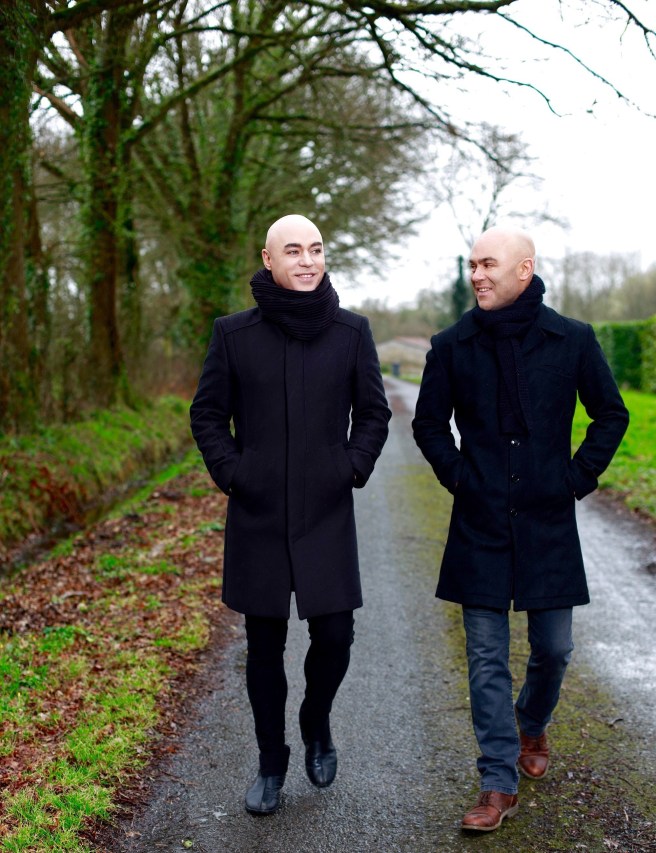
“I love the way the city has welcomed me and my crew,” he explains. Doors were flung open and he was invited to film in renovated art museums, try their regional cuisine, tweak the recipes for local viewers, discover new ingredients in cafés, bistros and restaurants and share his French passion with his South African television audience. Because of their dedication to capture the essence of the city, these two bald brothers have also become a fixture in this North-Western French city.

Discovering a town that boasts everything from four upmarket paper shops, for example, to the largest puppet building company in the world, Nataniël knows how to flaunt it. He was thrilled to hand the Ambassador his first Afrikaans book on French culture!   “It’s a South African book on France without any lavender or rusted wrought iron,” he says, pointing to an overcrowding in this French oeuvre that he feels has leant too heavily on a specific nostalgia.

And followed that with a piano recital where he was joined in a piano tribute (with She and Emmenez-Moi) to Charles Aznavour by his accompanist, classical and jazz pianist Charl du Plessis (see picture).

messenger poster

So apart from this latest book, which is already flying off the shelves according to the author, he is also finishing with his last short season in 2018, Messenger, at the Oude Libertas from December 12 to 15, following a short run at Pretoria’s Atterbury Theatre.

“A sign, a message, a suspicion, a proverb, a shock, a revelation, that’s how lives are changed, for the better or worse,” he notes. From the earliest miracles, legends and myths to new discoveries or internet filth, most of humanity live life overwhelmed by fear, trends, tiredness or hysteria. “This is what I wanted to explore, social phenomena that paralyze, surprise and rejuvenate.”

These are his topics of discussion in a show performed in a time usually associated with festivities and inspiration and you will find all of that in these stories told in either Afrikaans or English with music both self-penned (including Messenger, which is completely mesmerising) and established songs, like the soft Duke Ellington jazz ballad  It Shouldn’t Happen to a Dream..

Costumes are original and breath-taking in his own inimitable style and his superb musicians include Du Plessis (piano), Juan Oosthuizen (guitar), Werner Spies (bass) and drummer Peter Auret.

It’s a glorious way to conclude your cultural year with an entertainer who will have you laughing hysterically as he smartly underlines the madness we need to navigate in our modern world.

Booking at Computicket.


Meandering in the Midlands is Magical

20181111_080313
View of the Midmar dam from Lake House

DIANE DE BEER

In our stressful world, all of us should respond to the need to get away. The Kwazulu-Natal Midlands is around the corner for Gauteng with ‘meander’ the verb that encapsulates this scenically spectacular part of our country:


The Midlands reminds us of a country rich in things to do and places to go.

The choices of how you do it are many and will be determined by what you want to do and how active you want to be. Price also comes into play because this is a popular area for many things, weddings included, as well as the Midlands Meander, which offers a leisurely way of exploring the countryside by crisscrossing the area in search of artisans and artists selling their wares. Like anything else, this has also become commercially driven more than the initial ideals of people making and developing their own, but there’s enough of the real thing left to keep everyone happy.

It’s not always easy to find them but with smart phones, everything is possible today and much of the discomfort is dissolved as you find a map or a phone number which will quickly explain and navigate the route. The roads might also be an obstacle for some, but this is not speed racing and if you amble along, even the challenging ones will be easy to navigate.

Personal favourites on the Meander included the Terbodore coffee roasters with simply the best coffee to drink (also available online), clothing companies, including well designed and locally made canvas bags and cotton shirts at Dirt Road Traders, irresistible handmade shoes at the Groundcover Leather Company, homemade goat’s cheese with delicious options at Swissland Farm, the extraordinary family-run Culamoya wind chimes and a really cool kitchen shop Cookin at the more commercial end of the Meander at Piggly Wiggly which was really an anomaly on the meander yet hard to resist.

Glorious Culamoya wind chimes

Our favourite by far was Ian Glenny’s Dargle Valley Pottery – everything about it from the pottery to the place. And it’s no secret that there are fairies playing in the woodland area surrounding his house which is an artwork in itself and worth the trip.

But be warned, both the artist and his work will captivate you and you won’t be leaving without one of his beautiful art creations. There are tables full to choose from which makes it really tough.

Ian Glenny's fairyland
Ian Glenny’s fairyland

It is all quite bewitching and one can wander around the pottery and the place for some time and then have wonderfully winding conversations with the artist about his work and his life.

As one of the originators of the Meander, he misses the way it was, but is happy that he still attracts his fair share of visitors. You would be silly not to take the turnoff to his special world.

The special Howick Falls as well as arguably the most evocative Mandela site are both easy to access on the meander.

The Marco Cianfanelli monument

The Marco Cianfanelli monument was constructed to mark the 50th anniversary of Nelson Mandela’s capture by the apartheid police in 1962 – at the site of the capture.

The setting is striking, and you must do a symbolic “long walk” before you are struck by the remarkable image of Nelson Mandela and the rustle of the wind through the columns as you approach which seems to tell its own story. According to the artist, the 50 columns represent the 50 years since his capture, but he also hoped to illustrate the great man’s legacy of inclusiveness by showing how individual structures all come together to complete the perfect whole.

Howick Falls
Howick Falls

The Howick Waterfall is on the edge of the town and you can pop in when you pick up some groceries if you’re staying in a self-catering lodge which is popular in the area. It’s simply a skip and a jump from the car to the viewing point and again evokes a South African scene that’s quite humbling.

If you like traditional wares, this is also a good place to support the local community in their endeavors with even some serenading happening on the side which might just fall gently on your ear.

Succulent paradise by Mandy Crooks
Succulent paradise by Mandy Crooks from HillHouse

Hotels, lodges and self-catering cottages are plentiful and depending on what you like and for how many, you should find exactly what you’re looking for. Our first few days were spent in Lake House at Hillhouse Accommodation on a farm owned by two artists. It is situated in Dargle on a hillside (hence the name) overlooking the magnificent Midmar Dam. The cottage we stayed in can house four people but just the two of us filled it easily and the sheer isolation (seemingly) from the rest of the world was almost other-worldl

A higgledy piggledy gravel road takes you up to the cottage and while there are two other houses, one accommodating as many as 12 people, each one is different and slightly unusual to the more commercial venture. This is where the artists come to play with husband Nick the architect and builder and Mandy (Crooks) the one responsible for the interiors. All of the cottages are delightfully individual with a quirkiness that’s unexpected but joyful to experience.

And once there, the indigenous gardens in many hidden spots on the property and Mandy’s artistic succulent obsession are like outdoor galleries.

Hillhouse is situated on the edge of the Meander (was part of it at one time) and Howick is only 10 minutes away. But It felt like total immersion in nature as well as a kind of hideout from the rigours of the real world. You could easily just hide out right here for a few days.

The views at Whispering Waters


Our second port of call, Whispering Waters, is nestled in-between hills and dams with cows munching in every pasture as far as the eye can see. From the minute you wake up, the fields and the water lie invitingly in the early morning light. You can wander up and down hills and dales and warmed by a brisk walk, the dams are inevitable even if we didn’t think so initially, more used to sparkling swimming pools. Once in the water, the spell was cast.

Closer to the Notting Hill Road side of the Meander in Fort Nottingham, this is a more commercially driven property and yet because of the farm setting, it had that Meander appeal. The thatch cottages are spacious with a large kitchen, lounge, dining area and a stoep with a view – and the staff are intent on catering to your every wish.

Food is another Meander obsession, but these can be hit and miss like anywhere else. Howick is best for grocery shopping and our best find for exciting food was the Blueberry Café (with the adjoining brewery with a different kitchen) presenting many choices.

the quinoa and falafel salad with a blueberry sauce
The quinoa and falafel salad with a blueberry sauce

A personal favourite was the quinoa and falafel salad with a blueberry sauce while on the more substantial side, the fillet steak paired with risotto caught my eye. The brewery offers hearty hamburgers or if you want a healthy option, a roasted veggie salad. But there’s much to explore even though we did find it simpler to stick with what works for you.

If you’ve never been this way, it’s a treasure trove to explore in so many different ways. Just another corner of natural loveliness in this diverse land of ours.

Adrienne Sichel Gives Context to SA Contemporary Dance in Body Politics

Adrienne book cover

Kgomotso Moncho – Maripane

Guest Writer


The description that dance is “wordless expression in a world where words are currency,” by poet Lebo Mashile in her unpublished poem, I Dance To Know Who I Am, speaks to the hesitation and sometimes lack of engagement with South African contemporary dance locally.

The poem also encapsulates the transformative experience that dance can be.

Mashile created the poem for the production, Threads, a collaboration with choreographer and anthropologist, Sylvia Glasser and her Moving Into Dance Mophatong Company.

The poem opens veteran dance writer and arts journalist, Adrienne Sichel’s new book, Body Politics: Fingerprinting South African Contemporary Dance (published by Porcupine Press).

Adrianne_Sichel_photo_by_Val_Adamson
Adrianne_Sichel_ Picture: Val_Adamson

The book is a socio-political cultural history that focusses on the roots and evolution of South African contemporary dance from the mid 1970s to 2016.

Whereas the role of protest theatre is known in its engagement with socio-political issues, it may be taken for granted that contemporary dance, through its activist actions, played an important part in the championing of a free and multi-cultural society, during and post- apartheid.

Sichel’s book illuminates this particular cultural history, revealing how prior to democracy, the proponents of contemporary dance were at the fore-front of cultural activism.

“The policy-making Arts and Culture Task Group (ACTAG) process which culminated in the White Paper, the establishment of the Department of Arts and Culture, Science and Technology, as well as the founding of the National Arts Council in 1997, was the handiwork of many politically focussed dancers, educationists, choreographers, researchers and administrators,” she writes.

One of the standout traits of South African contemporary dance is that it is driven by the activist artist.

Adrienne Sichel Book Launch Jhb.

“That’s what gives it its originality and made it attractive to the world. You have people commenting on their society and the human condition. It has overtaken theatre in a way because dancers keep working and make it happen despite the challenges,” says Sichel.

“Paradoxically contemporary dance is an individualistic art form, but in so many ways South African contemporary dance is a collaborative mission to express our cultural and artistic identity. A lot of SA contemporary dance and African contemporary dance is sensorial and experiential. Those dimensions create a much more holistic vibrant art form,” she says.

Body Politics gives context to South African contemporary dance. It captures the collusion of cultures and histories as people explored their roots and their identities of the country and the people they wanted to be pre-1994. It highlights these very rich essences and fingerprints their origins with chapters looking at the birth of Afro-Fusion, subversive storytellers, the birth of theatre dance and what constitutes contemporary African dance.

It features festivals, companies and artists including early pioneers and contemporary players like Glasser, Carly Dibakwane, Robyn Orlin, Alfred Hinkel, Jay Pather, Jeannette Ginslov, Vincent Sekwati Koko Mantswe, Gregory Maqoma, Mamela Nyamza, Nelisiwe Xaba, PJ Sabbagha and many more.


It also includes a collection of Sichel’s published and unpublished journalistic writing. This makes it an important documentation and preservation of a unique artistic heritage and a necessary learning tool.

In mapping the evolution of this remarkable art form and its vocabulary, Sichel moves through terrains of contentious issues of appropriation and ownership, leaving questions to ponder on. Questions similar to the ones she asked herself when contemplating writing this book, like, who has the right to collate and tell this history? Who owns this history?

As a dedicated witness to and advocate for SA contemporary dance for 40 years in an environment that often rejects SA contemporary dance, she has earned the right to tell this history. Her background growing up in the rural Rustenburg exposed to her to a variety of cultures, religions, rituals, political practices and prejudices which fueled her curiosity as an arts journalist.

She co-founded the South African Dance Umbrella as a free democratic platform for all South African dancers and dance forms. She has also created an accessible language to articulate meanings behind movements and the fresh aesthetics of South African contemporary dance, which is no easy feat.

At the Johannesburg launch of the book in September, Sichel said, “What is scary about Body Politics is that it’s very concrete, it is tangible and it can’t be changed. I will be judged, just as I have been judging and evaluating people over the decades.”

She is also acutely aware of the gaps the book leaves and this is perhaps a challenge for the gaps to be filled.

The existence of Body Politics also makes the dearth

of books archiving or capturing cultural history in the country glaring. This is an urgent concern for Sichel.

“So many people did not want to publish this book. We don’t respect our history in this country. There are many narratives and cultural histories that are not being published and also need to be written,” she says.

Sichel’s hopes for dance is that “it keeps informing, transforming and educating.”


c

African Adaptation of The Little Prince Creatively Engages Young Audiences

The Little Prince Stage Adaptation by guest writer Kgomotso Moncho – Maripane

Picture by Ettione Ferreira Cue Media


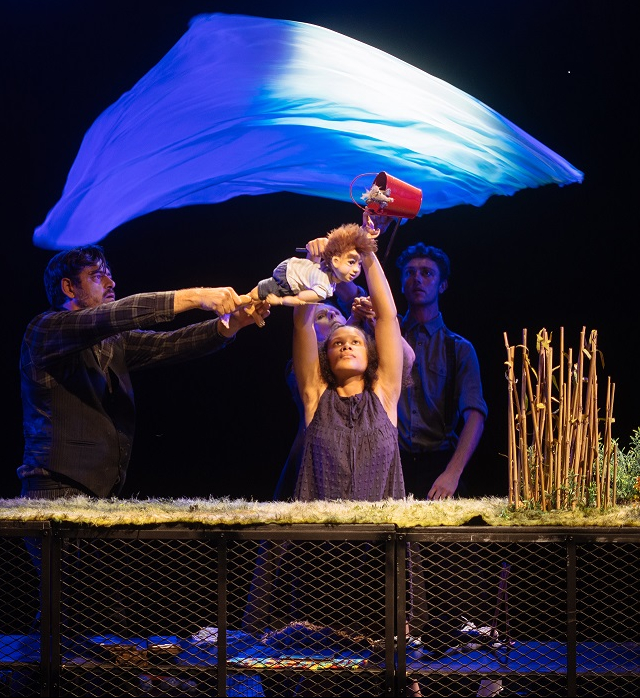
©Ettione Ferreira-CueMedia_IFAS_Market_TheLittlePrince_16
The Little Prince with Khanyisile Ngwabe in the title role 

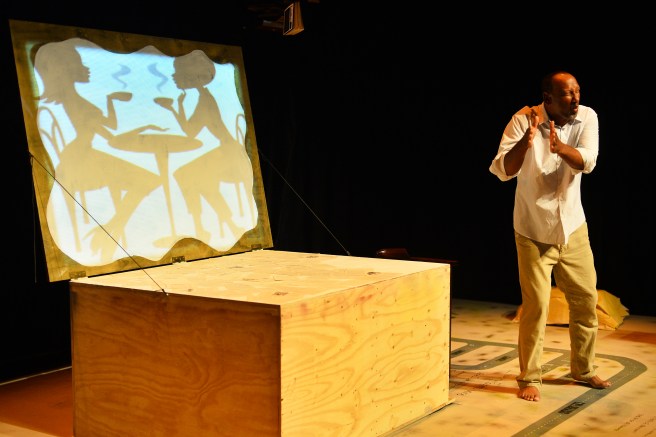
Antoine de Saint-Exupery’s classic story, The Little Prince is written in such vivid imagery and magical surrealism that it lends itself to the playful theatrics of the stage. But the unconventional text may also be a challenge: Because the book already does a lot of the work with its powerful, provocative images, what else can performance do? What can live bodies add to that?

The Market Theatre Laboratory’s new company, Kwasha, headed by Clara Vaughan who co-directs the stage adaptation of The Little Prince with theatre practitioner and academic, Mwenya Kabwe, employs a physical language to the storytelling.

To prepare for the production, the company did circus training with a circus company called Art of Synergy, working specifically with acrobatics, tumbling, lifting, balancing and counter balancing.

“With the idea of magic being so deeply within the story, with a sense of other worldliness and a suspension of adult rules, the circus feels like a really appropriate form. With the theme of flight also being so strong in the story – flying and crashing, travelling through space – it felt always like the qualities of circus, both in its sense of the unexpected and its sense of magic and of defying gravity, really fit with the themes within the book. It was also very important to make the movement of the play as beautiful and poetic as the language in the book,” says Vaughan.

The play achieves this in its moments of beauty where the movement poetically articulates Saint-Exupery’s moral and philosophical ideas which lean more towards the value of life rather than its meaning. However, in some places, the physicality in the show could be more cohesive for the magic of the book to shine through.

The Little Prince is a European text set in the Sahara desert, whose universal themes resonate worldwide. It is the most translated text outside of religious books, with 300 translations including English, Zulu, Afrikaans and Xhosa.

During the early days of rehearsal for this production, co-director, Kabwe questioned how African languages were used in the show. The importance of this showed how careful thought went into giving this adaptation an African context, but without overthinking it.

“The African adaption of anything is a contentious question to grapple with. There are easy surface ways to do that. I feel like we’re trying to ask other questions about what it means to be staging a European text of this nature here. And how just by working with it, it can be localized. In a way, not taking an overt approach to African adaptation, but letting the work, as we discover what it is, what the ideas are that we’re dealing with speak for themselves. Just the fact that it’s this company, and it’s us and we’re here, already feels like an African adaptation,” Kabwe said.

It is by being authentic to its mechanisms and allowing the individual sensibilities of the cast to come together that this production excels. Its African-ness then comes through inherently.  It’s in the subtle music and the organic flow of the languages.

The open and rustic staging speaks to the bareness of the Sahara. It is also evocative of plays like Mncedisi Shabangu’s Thirteen and Prince Lamla’s Coal Yard whose imaginative exploitation of a minimalist stage are innovative. This feeds into the playfulness of the show that stays with you together with its strong messages. The Little Prince directly confronts the conflict between adult and child relationships and the execution of this production engages the perceived notions of what it means to create for young audiences in this country.

For Vaughan, this extends into her own ideas on creating.

“There are ideas that I really care about in terms of creativity and making – the ways that the world instructs what is good creating – which resonates with ways of theatre making. The ways that people lose their desire to make, or their playfulness around making – losing that internal pleasure that children have. That matters to me. It’s something I have been interested in. As an adult, the story around grown up expectations and expectations of being a grown up, really resonate with my internal tensions about what you choose to take on,” she says.

The Little Prince finishes its nationwide tour in Johannesburg, which started at the National Arts Festival and went to Bloemfontein, Sasolburg and Durban. It runs at the Market Theatre Laboratory until November 25.