Author Thuli Nhlapo’s Colour Me Yellow Written With Substantial Heroic Honesty

READING IS A CONVERSATION. All books talk. But a good book listens as well.

Mark Haddon

DIANE DE BEER


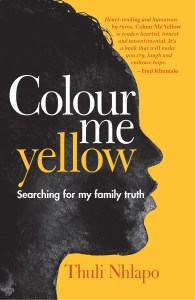
Colour me Yellow by Thuli Nhlapo (Kwela Books):

book colour

It’s so often a matter of birth and where you land on this little planet – in what shape and form that – determines the rest of your life – as this title subtly suggests.

White people are seldom or never called out on the colour of their skin while black men especially in the US approach every morning as they leave their home with a certain trepidation. To be a woman in the #metoo era might be exciting for some but for far too many, they still have a target on their back. Just listen to the horrifying news from India for instance.

You could find yourself as a stateless human being if you’re of a certain ethnicity in Myanmar and whether you’re born in North or South Korea has huge implications.

It’s not only this time although everyone probably feels that of their time, but life seems particularly harsh now. You need all the help you can get, starting with your family, to make it in this world. If you have to battle them as well, life can be extreme.

The only person who knew the whole truth had stayed mum, not once volunteering to talk. The closest she had come to it was when she said: ‘I hated being pregnant with you.’ Hearing that mantra as a child already in a hostile environment doesn’t bode well for your future and it is exactly that story the journalist Thuli Nhlapo was determined to unravel and expose – if only to herself. She knew it had to do with her father but she didn’t know who he really  was and her mother was not going to tell.

In the meantime, from the day she can remember, she was harshly treated by her family. I felt I needed to prove there was absolutely nothing wrong with me – even though I may have been yellow or a boesman, I breathed and bled like any normal human being.

And this starts with her family, those closest to her, her mother and father, who have to mirror the outside world to a child. What chance does she have with those who don’t know her if this is the reaction of those who do?

But one can imagine that in today’s environment where dysfunction is usually a family trait, there are many children who battle with those closest to them, those that should protect them, often in a fight for their life, or as Nhlapo confesses, a struggle for her soul.

Where she has been blessed is that she has an ability to write (was winning as she says, writing and journalism prizes left, right and centre), which also means that she could organise her thoughts, think like a journalist and investigate her own past – with the accent on the identity of her father. As she grew older, this became more and more of a problem with even the spirits rejecting the surname given to her as that of her ‘father’s’. It couldn’t go on this way but her mother was refusing to budge.

It’s an extraordinary tale, but also one of immense fortitude and courage, self-reliance and making it on her own because that was all she knew how to do. When she was struggling with one of her pregnancies, she coped without asking for any help. She ascribes that to being a black woman and that’s just what black women do, but she concedes that the prospective father was out of town – and not a doctor! So that’s what she did, went to hospital and saw a doctor and when he treated her with disregard, she insisted that he do a thorough check-up – and she was right. She knew she was the only one who would be fighting for her life. If she didn’t do it, no one else would step up.

As she forecast, he was lazy in his diagnosis of a miscarriage and she could move on and out and find a doctor who would treat her with care – the care she knew deserved.

Colour me Yellow isn’t an easy book to read but it is written with heroic honesty with a real-life heroine who demands and easily draws your enthusiastic support. It is easy to give as well as a nod to your own much more comfortable life because even without asking, you got what a child needed – her family’s love. It just makes life that much easier and survival not something you have to deal with every day.

But as Nhlapo proves, every life is worth fighting for and finally – for yourself and your children – you will triumph.

African Muckraking: Power to Writing it Like it Is

There’s so much more to a book than just the reading – Maurice Sendak


DIANE DE BEER

AFRICAN MUCKRAKING COV


African Muckraking: 75 Years of Investigative Journalism from Africa edited by Anya Schiffrin with George Lugalambi (Jacana):


South Africans will know exactly what the power of this kind of investigative journalism is following apartheid and now the Zuma years.

There are of course other things involved as well, but nothing can downplay the importance of the freedom of the press and, even when that is sacred, the courage of journalists to tell the hard stories. When powerful people do bad things, they have the means to protect their wrongdoing.

Except from journalists whose lifeblood it is to tell the truth, nothing but the truth. So help us God. And that’s exactly how it works, often.

And nowhere is it more important than in countries where powerful people think they have the right to do things exactly the way they please. It’s not a new thing and it’s absolutely not something that is found in just certain parts of the world. Power corrupts, sadly, and more than ever, politics has become abusive in a way that few could have predicted.

It’s a known fact that African journalists are not recognised around the world, not even on their own continent. In Africa itself it is difficult to reach a broad audience due to the oftentimes low education, literacy problems and income levels of potential audiences. That goes hand in hand with poor distribution possibilities because of inadequate infrastructure, which makes reporting and distribution tough.

In the global North, writes the author in her introduction to the book, the contributions of African journalists are largely unknown – often because of the assumption that good journalism doesn’t originate in Africa. Western audiences trust satellite news, parachute journalists more than they do local reporters, she writes.

“This book aims to dispel that.” She goes on to say that readers should be reminded that journalists really can change the world – and again, we have seen that most recently in our papers and on television, in the unflinching reporting as well as among those who stood up to the SABC and fought for truthful journalism.

In the book she presents 41 pieces of campaigning and/or investigative journalism from around the continent, each with context provided by today’s foremost experts on the continent; in South Africa, for example, Anton Harber and Ferial Haffajee. They don’t come better than that.

When selecting pieces to include in the book, they tried to be inclusive, including excerpts from pamphlets as well as newspapers from a wide range of countries, as well as stories that had impact or covered an important story even if they weren’t classical works of investigative journalism by today’s standards.

It’s stirring stuff on a continent that doesn’t flinch when it comes to horror. She notes that Africa is diverse and newspaper were influenced by colonial powers. They hoped to reflect this diversity, for example, with someone like David Martin who wasn’t born in Africa but still calls it home.

This book followed on Shiffrin’s editing of Global Muckraking (2014) when Harber, then director of the investigative reporting programme at Wits suggested that they edit a book exclusively for African journalists.

Then disaster struck. There was a paucity or often complete absence of records, which pushed her and her crack researcher Vanessa Pope to persevere. Anyone who has worked in newspapers these past few decades will know exactly what that means. When newspaper libraries went digital and as newspaper groups changed ownership, these archives were the first to disintegrate. All of this also bumped into the disastrous lack of funding for the profession, which meant these side issues completely disappeared.

That is exactly what makes this such an amazing read. Not only is every story selected something quite extraordinary (especially given the context and the quality), it is also a reminder of the quality to be found on the continent that is so often ignored in the wider context of the world. Fortunately, we now have the means in a digitally connected world to change that to some extent.

Following the introduction, which highlights significant historical cases of journalism supporting social and political change, she points out that this journal can only hint at the “full constellation of contributions” that African journalists have made to their societies.

But she does encourage readers to get a taste of the powerful work that African muckrakers have done and hopes that the book will contribute to a conversation about the importance of investigative journalism in Africa.

Nobody reading the book will have any doubt about that but the times we live in have also underlined the importance of investigative writing about those who abuse their power at the cost usually of vulnerable people.

It is beautifully set out, which all adds to the power of the pieces which are classified in sections ranging from struggles for independence to corruption; health, rural affairs and environment; mining; and women, for example.

And more than anything, the intent is clearly stated with the first piece written by Sol Plaatje: All We Claim is our Just Dues.

It is riveting from start to finish.


Elize Botha: a Remarkable Book of Letters Reveals the Life of a Remarkable Woman

I am a reader, not because I don’t have a life, but because I choose to have many.

(unknown)


DIANE DE BEER

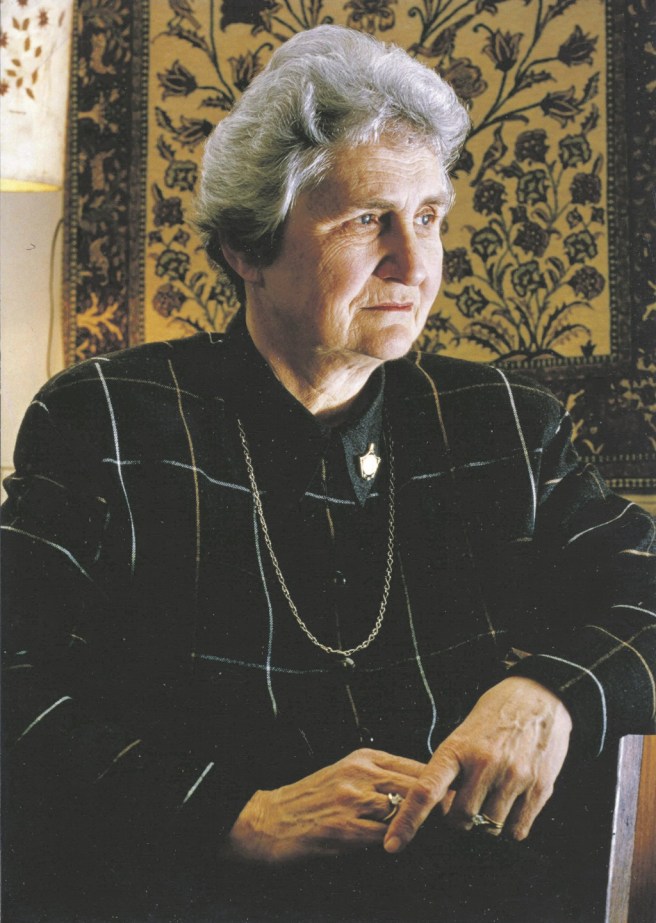
Elize Botha

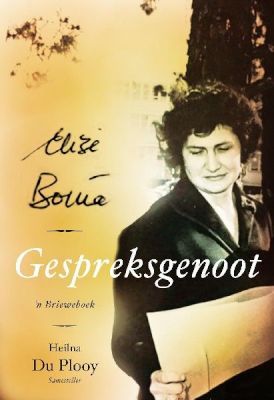
ELIZE BOTHA: Gespreksgenoot – ‘n Brieweboek by Heilna du Plooy, the co-ordinator (Litera):


This is an unusual and very specific book and obviously you must understand Afrikaans to even think of reading it.

Pay heed to the delightful name: Gespreksgenoot – ‘n Brieweboek (Companion – A Letters Book). What surprised me most was how the letters capture the time, a specific period, and the Afrikaans literary world which because of the politics of the country, was all-important.

Because I wasn’t part of that world yet knew about the people and read some of the books while writing about the arts and interviewed Elize Botha at a specific time, it’s been an amazing read.

The compiler (and the word doesn’t really do justice to what must have been a mammoth task brilliantly executed) who was going to write a biography of Botha, a woman ahead of her time and supremely important in the Afrikaans literary world, was handed the key to much of her letter-writing which was how she kept contact and became close friends with so many writers. Starting to read through the letters, Du Plooy very quickly realised that Botha would be much better served if she could simply put the letters together in a certain fashion to tell the story.

From the beginning, she decided that once a letter had found its way into the book, it would not be censored in any way. It’s either in or out, warts and all. And she needn’t have feared, for those of us on the edges, the finer gossip items are too nuanced and for those who can pick it up, they probably knew it all already. But it’s not that kind of book anyway and Botha was not the kind of person to be entertained unduly by idle gossip. She had far more interesting things to talk about. It is these conversations between those with similar interests – literature – that are so fascinating and educational.

There are many surprises, quite unexpected, I would imagine. For example, the art of letter writing, if anything, points a finger at a lost art since we now rely on the internet and social media to communicate. What a joy to still encounter someone who wrote such meaningful letters – and regularly. It was the way she communicated with those not in her immediate vicinity and what a blessing for us, because she has riches to impart on many levels.

More than anything, it is the way the letters have been written, the language, the topics they discuss and how regularly in extremely busy lives, they still managed to keep up this correspondence. It’s a lost world. The letters are illuminating and sheer joy and point to the loss of something that will never be recovered. Typing an email is just not the same as taking the time to sit down to write a letter to a friend. It’s extremely special and when they really have something to say, and its about something as important and universal as literature, it is something special to share and to experience.

Take, for example, someone like Audrey Blignault, an Afrikaans writer who for those of us who didn’t have better insight might have viewed her in a specific way. There’s a completely different woman who emerges when you follow these two smart people’s writing and exchange of ideas. It’s fascinating to read for example how they were influenced at the time by international writers like Saul Bellow, hardly able to wait for his latest novel; or when discussing someone like Tolstoy, the quality of their ideas is illuminating. It’s like bumping into a mini lecture in the comfort of your home and a real gift to have insight into their thoughts on reading and how it stimulates their inner worlds.

elize botha1

The joy of reading and superior writing is celebrated on every page and though the accent here is on Afrikaans literature in a time when many in this world were fearful for the language, in essence, it is about reading in whichever language you prefer, the appreciation of that language and the art of storytelling. That’s universal and a great advertisement for books, something that can always do with encouraging publicity.

For Botha it would have been unthinkable not to read. Even though as a judge for many different institutions, dealing with books and regarded as one of our finest Afrikaans literary figures, it was part of her daily life, and the way she lived. Most of her career was spent in academia, teaching but also setting the guidelines in her particular field of literary theory and criticism. But she was also very aware that her career was on a slow burn (“a long slow curve,” is how she phrased it) because of being a woman in this time. Hopefully that graph might now be changing with everyone being more vocal about the problems and the social media world keeping a watchful eye.

Starting out in her early days as a journalist, she was also the editor of the Tydskrif vir Letterkunde (Magazine for Literature) from 1973 to 1992. Many celebrated authors published their first work here in the 70’s and 80’s under her guidance and nurturing. She also published often in different spheres – from literary criticism to articles and collections of literary essays. And she traveled often with literary quests as part of these journeys. She featured on every literary committee and academy of the time and for many years was the chairperson of the M-Net Book Awards.

As a woman she was often the first in many different fields, like a board member of Nasionale Pers, the first female chair of the Akademie vir Wetenskap en Kuns (Academy of Science and Art) and finally, the first female chancellor of the University of Stellenbosch, a position she occupied until her untimely death in 2007. But all of this is just a small part of her packed life as any woman who has raised three children in between all this academic superpower will know.

More than anything, says the compiler (colleague and friend), Heilna du Plooy, this collection of letters is also an effort to preserve something that is precious, and to capture people and events and views and insights which can serve as encouragement and a source of survival for others.

It’s a remarkable read about a remarkable woman.

Books that Allow the Words and Actions of Those Involved To Tell the Real Stories

If you want to go for fact rather than fiction, DIANE DE BEER has two examples dealing with events happening on an international front but with relevance here:


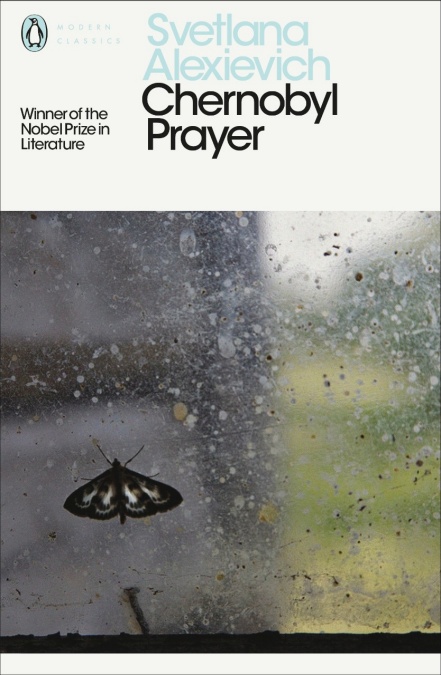
book chernobylChernobyl Prayer by Svetlana Alexievich (Penguin Books):
I first discovered this author with her book celebrated with a Nobel Prize for literature in 2015 –  Secondhand Time: The Last of the Soviets – in which I discovered her unique style. She rejects the term journalist but describes herself as an oral historian. What she does is allow people to tell their stories and something remarkable unfolds. In Russia for example, like in South Africa at more or less the same time and like here, people were expecting their lives to change dramatically with the and dismantling of the UUSR.

It did of course for a handful of oligarchs and the usual suspects and like here the lives of ordinary people were trampled on and they were left gasping for air. It is where she shines her spotlight harshly yet illuminating the lives that are struggling to make sense of what is happening to them.

I picked this one up at a sale recently and was as engrossed in this story told in similar style. Who doesn’t remember Chernobyl? And yet, it’s the name and nuclear disaster that strikes hardest, the rest is hazy. On this particular cover, Julian Barnes is quoted as saying: “The book leaves radiation burns on the brain.”

Being the writer, he captures it magnificently.

“All that remained behind barbed wire was the land. And the graves. Our past our great country,” says one party member who felt he had to help with the clean-up. Another was taken on a cleaning operation without any warning: “On the first day we saw the nuclear power plant from a distance. On the second, we were already clearing the rubbish around it. We were shoveling with ordinary spades…As we said battling the atom with spades! In the twentieth century.”

Then there’s this about the nuclear operator Leonid Toptunov who was on duty that night at the power plant, and pressed the red emergency shutdown button a few minutes before the explosion. It didn’t work…He was treated in Moscow: “To save someone, there has to be a body to start with,” the doctors said throwing up their hands in despair.”

“The most serviceable robots were soldiers,” says another of the clean-up period following the catastrophe which just kept going on and on for those unwittingly commandeered to help in this deathly process.

Women were being tested when breastfeeding and found to be radioactive. Professionals who knew what happens in these situations, asked the right questions. They were told to simply carry on testing and watch the television. Emergency measures were being taken. “I – an engineer with twenty years’ experience, someone who knew the law of physics. I knew every living thing needed to be evacuated from the area, at least temporarily…We were accustomed to believing. I belong to the post-war generation that grew up with the faith.”

It is statements like these and many, many more that tell the full story in the saddest detail, the way the people are led by their noses because they follow their leaders with blind faith – to their deaths. “Everybody knows and still they can’t do anything, not the killers in command and neither those who are doing the dirty work – and then die. That is our world – and the world of most who live on this earth today.”

It is Alexiev’s powerful research and conversations with people on the ground who tell their stories and how and what happened. It is tragic and horrific, even more so than the actual explosion. But at least these unwitting victims can be heard, their stories are being highlighted – and sadly in this world, it probably won’t make a difference.

But now we know – at the very least.

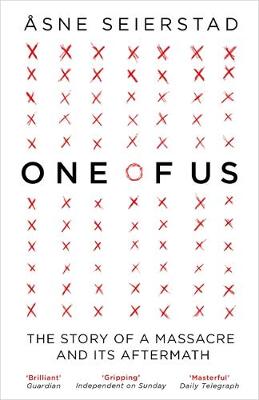
book oneOne of Us by Åsne Seierstad (Virago):

When someone told me they were reading the book about the mass killings in 2011 by Anders Behring Breivik who killed 77 of his fellow Norwegians, young people who were doing their civic duty, on an island, isolated from the world and any immediate help, I didn’t understand why anyone would want to read about this distant tragedy seemingly unrelated to anything here.

Nevertheless, I was given a copy and happy to test my misgivings. Of course it is much more than simply the story of the killings as the author is a journalist who knows how to go about finding and researching her stories, in some instances perhaps too thoroughly but that might also have to do with the translation. The language doesn’t always hold to the subject matter and the focus is sometimes just too much for a particular topic.

And yet, what she does is to walk back in time to Breivik’s childhood, the tug of war between his father and mother, his father’s second and much envied family by the young man, his own isolation in the world and a determined almost frantic effort to be recognised and accepted by almost any peer group.

It is pointed out on the book’s cover that the book shows that “evil is not born but created” (Independent on Sunday) and that is evident in the detailed evidence that Seierstad is at pains to point out.

It is also a story of our time, how people are unable to deal with their own lives and how there is nowhere to turn to. Today’s living is so fast, hardly anyone will notice someone else’s pain, reach out a hand or take the time to even have a conversation. If you grow up in the kind of isolation that is illustrated here, the dark web is almost inevitable if you are determined to make yourself visible.

This is obviously the extreme but if you take this relatively young century into account, people seem to feel more and more that they have to make an impact simply to be seen. That’s a problem of our time which can only get worse.

Is Sitting Pretty a Case of White Afrikaans Woman Sitting Pretty Uncomfortably?

Sitting Pretty Cover Oct- hi res

Sitting Pretty – White Afrikaans Women in Postapartheid South Africa – the title is enough to stop you in your tracks. DIANE DE BEER speaks to author Christi van der Westhuizen about the issues that encouraged her to write this book:


I first heard author/social and political commentator/associate professor in Sociology at University of Pretoria Christi van der Westhuizen chat to Radio 702 host Eusebius McKaiser about her latest book Sitting Pretty – White Afrikaans Women in Postapartheid South Africa (University of KwaZulu-Natal Press) and I was intrigued.

How can I not be, as one of that species whom she describes as both the oppressor (as white) yet also oppressed (woman)? Chatting to her about this academic treatise, she explains that book’s intro, which is the toughest of the lot because she wanted to get all the theoretical stuff out of the way at the start. And if you read it slowly – and again once you’ve read the book, even if like me, you are not au fait with academic speak – you will get there.

Van der Westhuizen has a mind that grapples with life and she had enough given to her to make sure that it will be worth grappling for. She grew up in a female-headed household in 1980s Boksburg when the city council was taken over by the Verwoerdian Conservative Party, and the Afrikaner-Weerstandsbeweging was on the rise. “My experience of alienation as a young woman and a lesbian within a patriarchal and racist context made me ask hard questions. People should know,” she says, “that I’m investigating my own life when writing on these kinds of subjects.”

Christi - pic - FLF
Christi van der Westhuizen

She took her premise from Nelson Mandela who in his inaugural State of the Nation address extended an invitation to South Africans who identify as ‘Afrikaner women’. She starts with that invitation as Mandela re-remembers Afrikaans Poet Ingrid Jonker “and poignantly proffered her ‘glorious vision’ of possibilities of identification:

“She was both a poet and a South African, he said. “She was both an Afrikaner and an African. She was both artist and a human being. In the midst of despair, she celebrated hope. Confronted by death, she asserted the beauty of life. (…) She instructs our endeavours must be about liberation of the woman, the emancipation of the man and the liberty of the child.” He then quoted Jonker’s best known poem, The Child Who Was Shot Dead by Soldiers in Nyanga.

She argues rigorously that Mandela’s invitation to Afrikaner women was “an invocation of the democratic potentialities … amid the ruins of apartheid”. That’s what she wants you to think about, says Van der Westhuizen as she asks whether Jonker’s contemporary counterparts (at least in terms of structural classifications of gender, sexuality, class and race) step into the positions that democratic discourses have prepared for them?

We all know how big an ask the country was given and up to now, how dismally we’ve failed. But Van der Westhuizen believes that the global context hasn’t helped. Because of the neoliberal kind of capitalism that exists today, with its high level of destabilisation and inequality, people feel under attack, which has meant that they have fled into specific enclaves of recognisable identity. It’s a very complex situation.

“Because of all these forces at play, people tend to organise their lives to re-entrench hierarchies and keep oppressive power relations intact.” Previously, she says, the state enforced gender, sexism and racism for us. “Now people are doing it for themselves.”

She is happy that greater diversity exists among white Afrikaans women in the democratic era. For some it is still true that if they don’t adhere to the strict rules laid down mainly by family structures headed by the husband/father, they will be ostracised and banned. But there are those who battle the forces stacked up against them.

Van der Westhuizen points to identity as the main culprit, in those instances where old habits recur, the way the instability and precariousness associated with the current phase of capitalism make people feel threatened and turn inward rather than embracing the diversity that’s out there. There’s no arguing that. Sadly though for those white Afrikaans women given an invitation at the beginning of our democracy to forge different lives. The pressures are many (from family, church, school and society at large) because if you don’t conform. However, that might also plant the seed of resistance.

The book also deals with the fact that this country is unusual as it has two distinct settler groups. “That doesn’t often happen and has its own set of problems, as both groups vie for the spoils of whiteness, with a particular model of heterofemininity attached,” she argues. It’s all fascinating stuff and in a complicated country as ours, with its past, with its diverse cultural groups trying to work together even though all the odds seem stacked against us, it is important to get as much understanding about the issues that confront us.

Van der Westhuizen makes it clear that her study is a qualitative one, which shows what the dominant discourses are that form white Afrikaans women. “If you throw these women together in focus groups, what comes through? It’s about throwing light on what is the mainstream,” she says. “The study also uses dissident voices to do that.”

This was a relief to know, because it was one of my issues when reading this gripping dissertation. I know all over the world conservatism seems to be a dominant force and while locally, amongst both Afrikaans and English speakers, racism seems to be everywhere, it isn’t all pervasive.

But is this where we should be throwing the light? Yes, says Van der Westhuizen and I agree, because white Afrikaans women are the least studied group in the country.

“That isn’t the case for the earlier part of the last century when the Nasionale Manne Party and the Nasionale Vroue Partye (men and women’s parties) folded into one another to form the National Party in the 30s, but after that Afrikaner women seem to disappear from public view and into the home where they were expected to be wives and mothers. But they were homemakers with an edge, as most instilled apartheid’s racism, sexism and homophobia in their children through socialisation in the family,” she concludes.

In a world where the Other is perceived as all-invasive, and many negative ‘isms’ are deployed to subvert challenges from groups with less power, an investigation of a previously dominant group that still holds significant relative power, and the contestations within this group, is fascinating reading.

With its academic slant, it is a tough yet compelling read.


Renata Coetzee Honoured with Relaunch of Feast from Nature and UP Food Feast

DR Renata Coetzee, a pioneer in research and awareness of the various food cultures in South Africa over five decades, passed away in Stellenbosch at the end of last month at the age of 88. DIANE DE BEER honours a woman, always a warrior, who attended the relaunch of her latest book only last month:


Through her lifetime of research and books, Renata Coetzee has built both national and international awareness of the culinary heritage of various cultural groups in South Africa. It is apt that her latest book, Food Culture of the First Humans on Planet Earth – A Feast From Nature, is currently being relaunched with a 2nd impression to bring it to the attention of a wider public.

One of these celebrations will be a dinner in Tshwane on Mandela Day to celebrate the impact of the culinary and cultural history of our first people on contemporary South African cuisine and another a launch presented at the Market Theatre the day before, July 17.

In collaboration with the DST-NRF Centre of Excellence in Food Security, the editor Truida Prekel and African Sun Media, the University of Pretoria Department of Consumer and Food Sciences will present a four-course dinner with recipes inspired by Coetzee’s decades of research on indigenous food cultures in celebration of her book.

Renata's porcupine skin braai
Renata’s porcupine skin braai

The menu which will honour her research is the following: Sundowner is a honeybush and aloe cooler; First course, Nature’s Salad consists of morogo puree, spekboom gel, pelargonium sand, lemon foam, pickled papkuil shoots, compressed aloe buds, and an array of flowers; Second Course, Forager’s Pride is a dune spinach soup with deep fried warthog biltong; Third course,  Rocky Waters, includes Tilapia, buttered ice leaf, sea fennel and oyster leaf puree and bokkoms dust ; main course, Exploring Burrows presents porcupine and waterblommetjies served with “ystervark-se-mielie”, roast uintjies, crickets rice and glace de viande; and thre meal is concluded on a sweet note with  a Sunset tea party  of buchu panna cotta served with pickled t’samma, rooibos and gooseberry syrup, arum lily crumble and acacia sweets.

Many will remember this remarkable woman as someone who was obsessed with and specifically studied our roots in many different forms with the food culture of different groups as her resource. Her aim was to promote “nutritional authentic cultural cuisine” which she believed could play a huge role in our growing tourist industry – and should do even more so in the future. Her major contribution is probably scientific, but she has always tried to engage ordinary people interested in food heritage with creative and stimulating documentation of various aspects of the South African – and particularly the Cape’s – culinary culture and lifestyles.

renata's veld food
Renata Coetzee’s veld food

Her most important books in this field include South African Culinary Tradition/Spys en Drank – the food and food habits at the Cape between 1652 and 1800, featuring influences of the Malay slaves, French, Dutch and German settlers (Struik, 1977) (Afrikaans and English both out of print); Funa – Food from Africa – the food and food habits of the different African ethnic groups (Butterworths, 1982) (which should be reprinted); Cost-conscious Creative Catering and recently KukumakrankaKhoiKhoin-Culture, customs and creative cooking which was a translation of the 2009 Afrikaans version dealing with food cultures in the early days; and this present relaunched book is based on research of 15 years which aimed to preserve the culinary heritage of the earliest humans and their descendants.

She always believed that she had to understand local foods to promote healthy nutrition. At one point in her career, she was catering for Anglo American Gold Mines providing 250 000 meals a day for five years with the accent on cultural preference. That is why she was always intrigued by the palates of especially the San and the Khoi people who presented the oldest DNA. She felt she was dealt this amazing hand which would just be silly to ignore.

By going back into the past, the way brains progressed and patterns developed, all of these, she argued, influenced the way people selected food. When the San and the Khoi people split, for example, their food choices developed differently. She realised that many of these choices were made for practical reasons. Some wouldn’t let go of traditions, but sometimes the changing environment determined new dining habits. The San, for example, became hunter gatherers and the Khoi turned to smaller animals while also learning more about the veld and the plant life around them. This was all determined by the way their lifestyles changed, something which still influences and determines our eating patterns and choices today.

Renata Verjaa r 2
Foodies Renata Coetzee, Cass Abrahams and Topsi Venter celebrate in style

Because of the way she studied, researched and publicised her hard-earned knowledge through her writings and TV programmes, and formal training, she empowered thousands of women over the years, by training them in the finer skills of entertaining guests and tourists with her cultural cuisine.

This latest version of this unique collector’s book on original food cultures, A Feast From Nature (R650 is a combination of the many decades of her knowledge as a nutritionist and food culture expert with multidisciplinary research of over 15 years – bringing together aspects of archaeology, palaeontology, botany, genetics, history, languages and culture in a unique way. While scientifically sound, it is also beautifully illustrated and a true collector’s piece.

In 2015 she self-published the book, through Penstock Publishing. The first print-run of 500 copies was soon sold out – mostly to friends, family and fans. The book was reprinted shortly before her death to make her unique work available to a wider audience. Academics, researchers and food experts can also benefit and build further on her research.

According to Prekel, “Communities will benefit from further work to build understanding among various cultures and on the history of our ‘First Peoples’. Indigenous plants with culinary and agricultural potential can be further developed for food production.”

Renata en Johan by S-Delta

“Her research included interviews with many elderly Khoi-Khoin women and men in various regions, about the details of their food sources and uses. A special feature in the book is that wherever possible, the Khoi and Afrikaans names of plants and animals are given, with English and scientific names. About 250 fine photographs and over 80 illustrations of edible indigenous plants – as well as maps and Khoi traditions – make the book a journey of discovery, bringing to life the linkages between evolution and culinary history over millennia.

“The book also offers valuable lessons in terms of the nutritional value of many indigenous foods, food security and sustainability. The DST/NRF Centre of Excellence: Food Security, hosted by UWC and the University of Pretoria, has supported the reprint of the book. They, together with the Agricultural Research Council, intend doing further research on indigenous food products identified in Coetzee’s extensive work on the various food cultures in South Africa.”

Her legacy will be legendary especially as it impacts on all of our lives, not only now – but especially in the future.

The book can be ordered from orders@africansunmedia.co.za or online at http://www.sun-e-shop.co.za

feast of nature1

  • The book will be relaunched on July 17 with speakers Prof Himla Soodyall, 50:50 presenter Bertus Louw and Prof Julian May on Tuesday 17 July at 6pm at the Market Photo Workshop Auditorium, Market Theatre. Contact: zamab@markettheatre.co.za.
  • The four-course dinner will be held at EAT@UP, Old Agricultural Building 2.9.1, University of Pretoria, Hatfield Campus. For more info contact kyla.balcou@gmail.com Tickets are R300 per person.


Mad Nomad Reflects the Owner’s Passion

Nomad front
Mad Nomad

DIANE DE BEER

Mad Nomad, Shop 2001, Level 5, Mall of Africa, Magwa Crescent, MIDRAND

Open seven days a week.  Phone010 786 0250


The new Turkish restaurant Mad Nomad in the Mall of Africa is a passion project.

It’s been the dream of the Turkish-born, German-raised Tufan Yerebakan, now South African restaurateur, for as long as he can remember. And while he grew up on the Turkish street food so popular in Germany, he has always had his head and heart set on the real deal.

If there’s one word that slips into the conversation regularly, it’s authenticity.

Nomad Interiors with art1
Mad Nomad with its artistic interiors reflecting its owner’s passion.

Mad Nomad is a response to his roots and is completely different to his two smart family restaurants, Kream, in Brooklyn and in the restaurant square of the Mall of Africa.

Now in his mid-40s, for Yerebakan, restaurants have been his business since he came to this country in the early 90s. Kream has a very specific feel and philosophy which Pretoria will recognise as part of the smart, traditional dining experience so loved in the capital city.

But Mad Nomad is something completely different. The name points to his journey across the world and the interiors – for which Yerebakan brought in a young designer who would push the boundaries – say what he wants to achieve with what he views as his special place. He wanted something that would make a splash – and it does.

With an open kitchen, as you enter the restaurant to your right, you’re immediately engaged with the food as chefs are busy baking and braaiing behind a counter that runs the length of the restaurant.

Nomad Interiors with art
Mad Nomad interiors

The seating space is divided into two areas differentiated slightly by look and, as with all Yerebakan’s restaurants, art plays an important role and is introduced when he spots something he wants to live with.

“I spend most of my time in my restaurants, so that’s where I show my art,” he says, and it’s wonderful to see how he displays local art in such a magnificent way. “I don’t really care what others think because this is a huge part of my life.” That’s who he is and what he wants to show the world – in full colour.

When you get to the food in Mad Nomad and that’s after all why you’re there, it’s the real deal. If anything, this was the most important thing for this restaurateur. He went to Istanbul to check the food at source and to find chefs who could help him establish a strong kitchen while training local chefs in the art of Turkish food.

Stuart Basaran Nomad
Suat Basaran, chef in charge at Mad Nomad

It’s an on-going process with a full kitchen of chefs to get things started. “I have to keep at least one here because you need someone to check on the authenticity,” he says.

Only a few months into the life of Mad Nomad and they’re still experimenting and distilling the menu. It’s impressive as it stands now yet while there’s no watering down of textures and flavours, they are still adding some new ones and removing recipes that aren’t quite pulling their weight.

It’s important that South Africans experience a truly Turkish feast and that’s exactly what you’re in for.

On the night, we were a table of five and served extravagantly from a menu that’s as wide in its approach as it is in narrowing down the Turkish flavours. As you tuck in, you cannot help but wonder about the dearth of Turkish restaurants in this country.

Nomad shawarma wrapped
Shawarma Wrapped: Thinly Sliced Beef and Lamb with Lettuce, Onion and Tomato, Hummus and Tahini with Tzatziki Sauce

Many people visit that part of the world and the Middle Eastern palate is one that’s familiar to us. It’s perhaps the most fun to approach this one as a group, which means you can order more and a greater variety which is really what this food is all about. Once you get to know the dishes better, ordering will be simpler but, in the meantime, ask the staff for guidance. They should be able to help.

Starters can be done meze style and these will include all the usual suspects including hummus, tzatziki, aubergine with yogurt or with tomatoes depending on the style you prefer, roasted red pepper, vegetarian vine stuffed leaves (dolma) with rice, onion, tomato, currants and olive oil, and Icli kofte (deep fried meatballs with walnut and spices covered in potato and bulgur wheat crust), falafel with hummus and flat bread, Urfe kebab (starter version of minced lamb served with bread) and the list goes on.

But you could also, as we did on the night, go for a selection of pide, the Turkish version of a pizza which comes in many different versions. It’s a thin crust: with mozzarella cheese, beef mince and diced onion, tomatoes and peppers, or fillet cubes and mozzarella cheese or sucuk, a cured sausage made with lamb or beef and flavoured with garlic, cumin and red pepper flakes. There’s also a vegetarian option with mixed vegetables or with spinach and feta. Nomad Doner, which some might recognise, is another option with thinly sliced beef and lamb, onion, parsley and mozzarella. But keep the portions small or the mains won’t be an option and you want to try some of their finger licking meat. You won’t resist.

Nomad pide
Mince & Mozzarella Flat Bread/ Folded Option World Famous Turkish Pizza with Beef Mince, Diced Onions, Tomatoes and Peppers

The shawarma options aside for the moment, their kebab selection is excellent and again, it’s best to check the various kinds ranging from the Iskender (the name of the original creator), Adana, Urfa or the Beyti Sarma. There are also fillet cubes on a skewer, chicken chops that are quite spectacular, lamb sis kebab or a Turkish-style filled pasta called Manti. A mixed platter on the first visit (R200) is perhaps the best way to go because of the riches the menu offers. It can be overwhelming.

The wine list is also something that has been given special care with many other liquor choices.

What this expansive selection on all fronts means is that there’s something for everyone and for us, the flavours of the Middle East were what lingered the longest. That and the superior quality of everything on the plate. We did get to dessert, but I must be honest, by that stage, my palate took some time out. I do remember that even though the rice pudding and kazandibi (famous Turkish milk pudding) were both there, Tufan spoke about their sweet selection and that they were still experimenting.

It’s a sweet spot and even though the Mall of Africa seems vast, once you’ve checked your bearings, it’s easy to find. Because this is this restaurateur’s dream child, it’s going to keep evolving as he keeps shaping and streamlining.

Already this is a huge plus on the Gauteng cuisine landscape and beckoning to be explored.


A Family Play on Generations of Women

DIANE DE BEER


It’s not often that Cape Town comes to Gauteng but when they do, it is worth taking note as this production was the 2016 Standard Bank Ovation GOLD award winner and it’s easy to see why:


IvanBlazic
Rebecca Makin-Taylor (daughter) and Michele Belknap (mother) Picture: Ivan Blazic

SILLAGE

DIRECTOR/WRITER: Penny Youngleson

CAST: Rebeccas Makin-Taylor, Michele Belknap

VENUE: POPArt, 286 Fox Street, Maboneng Precinct

DATES: Tonight, Thu and Fri at 8pm at 8pm; Sat at 3.30 and 8pm; Sun at 12 and 3.30pm

Don’t worry about the name, it is explained and scents the play throughout as the story unfolds as if in a set piece that has been part of the mother/daughter relationship for millennia.

In this instance, recognisable and toxic, the younger and older generation square up as if starting off on the same foot but gradually the dance becomes more disheveled, the tone more confrontational and two individuals though bound by blood, antagonistic and attacking rather than supportive and sympathetic.

If they were on the same side, that sharply unravels as each one stands their ground in what seems like a fight in which both have something to lose and little to gain.

Youngleson has again tapped into family mores which in this instance might be mother and daughter but could be played on any scale and in different settings – even the country, as she points out.

Sillage_2
Rebecca Makin-Taylor (daughter) and Michele Belknap (mother) Picture: Ivan Blazic

We live in a world that stands on its head with a world power considering a vote for a sexually accused candidate to secure a political victory. Why would the rest of us remain unscathed? If ever these smaller battles are important and worth rescuing, it’s now.

Everything on Sillage’s playing field is fraught. Even on a generational level, how we do things, when we cannot concede that time might play a part and what was right then, might not be the best approach now and vice versa.

But rational thought isn’t what rules in these instances. It’s the battle, its the wound that has been opened and is festering, and there’s no reaching out as the two women come together to unpack a life that touches and tears at their relationship in tortuous fashion.

It’s an hour-long hugely entertaining lament from two perspectives with two women who when you sit them down, would probably want the same thing but they have long stopped caring about themselves and the other. They’re trapped as they tear each other down at the cost of what could have been.

It is a play best seen with little foreknowledge as it unfolds delicately in front of your eyes with two actors who are intertwined in their thought processes and how they want to impart the story.

Not only has Youngleson written a tone poem that reaches to the heart of this sadly familiar relationship, she has also painted a picture that best displays and allows the characters to detail this daily dance magnificently.

Everything about the production folds into one another with this one as we witness something that is as familiar as it is fatal. It is as funny as it is horrific because the inevitability is what lingers.

And that really makes you think…

Tickets available at : www.popartcentre.co.za

Running time: 60mins


With Robert Whitehead’s wisdom and Lebo Toko’s tenacity, it’s a powerful theatrical cocktail

An intriguing play titled The Man Jesus, coupled  with a dynamic duo, director Robert Whitehead and actor Lebo Toko, and you have a potent theatrical mix. DIANE DE BEER speaks to the director and actor pair during rehearsals of the play now running at Joburg’s Market Theatre:

The Man Jesus photographer Brett Rubin
Robert Whitehead (director) and Lebo Toko (actor) discussing The Man Jesus

“It’s a story of possibility,” says Robert Whitehead, about the playThe Man Jesus written by Matthew Hurt, a South African born Irish playwright.

The playwright, the son of a friend of his, asked Whitehead whether he would like to do the play – as an actor. He felt that this was not the part for him to play – and knew he wanted a black actor to tell the story – but he wanted to direct.

And when he talks about the play, he has very specific ideas, understanding that with 12 different characters involved, you didn’t need much more than the story to play out.

He also needed a very special actor to commit to the role. A solo play with Lebo Toko as his pick (last seen in James Ngcobo’s Raisin in the Sun), Whitehead acknowledges that as a trained actor/singer/dancer, (what is commonly known as the triple threat), he wouldneed all those skills to get through this one.

But Toko is up for the challenge. Speaking to them during the early days of rehearsal, there was still a sense of nervousness – but also excitement at pulling this one off.

It’s the first time back at The Market for Whitehead in 12 years and quite a while since he has directed.

Yet with a clear head, he knows that he won’t make use of any electronics or even props. “It’s going to be the actor and a set,” he says simply. It’s all about the text, which was nominated for the Irish Times Best New Play in 2013, and looks back 2 000 years to witness key moments in the life of ‘the man Jesus’, through the eyes of the people who knew him.

“It’s conjecture,” says Whitehead about the thought provoking and challenging script dealing with the man who had an enormous and profound impact on the history of mankind. The Man Jesus traces his life from before his birth to after his death through some dozen characters, both male and female, with whom he came into contact.

Was he a man with magical powers?  Was he a prophet with miraculous skill sets? Or did a few Jews start to realise something else? “That, of course, is entirely up to you.  People should understand that in spite of the title, or because of it, this is a work of imagination.  There was no ‘The New Testament’, ‘The Gospels’, ‘The Early Church’ or any such thing which makes what eventually came into being, so fascinating,” says Whitehead as he points to Christianity.

The Man Jesus starring Lebo Toko directed by Robert Whitehead photographer Brett Rubin (002).jpg

He is intrigued by the times when all of this was playing out specifically because of what followed – and that’s what the play deals with. Everyone was running around trying to figure out what was happening in this “cruelly conquered land”, he notes. And they had to try to make sense of this man called Jesus – and make it work politically.

And for the director and actor the challenge is to latch onto the immediacy of the story and not get stuck in the “sacredness”. “That only came later,” explains Whitehead. This deals with the now of then.

The man they explore was a guy who did weird and freaky things. “How much is mythology? We are telling a story that is expressing the inexpressible.”

For Toko accepting this part is the bravest thing he has ever done in his young life as an actor. “I know I can act, but this is something else,” he says with a shake of his head. And already, as the solo performer, he understands that this is a very lonely world.

But he also gets that what he is experiencing in this rehearsal period is a great learning experience. “I know that the day I leave this classroom, I will leave with something bigger than I understood when starting out.”

Talking about the writing, Whitehead remarks that the text is quite formal and very English. “We have left everyone who they are and where they are, but have changed some words that work better here where we are.”

And, he points out, the obvious and yet … “ours is not a blond Jesus!”

I leave them working the process, still finding their way into the play but also knowing that with Whitehead’s wisdom and Toko’s tenacity, their combined talent will pull this one off.

“It’s all about baby steps,” says Whitehead as he turns to his actor. That’s the exciting thing about this one – and they know that.

It’s not an easy story to tell, but for this theatrical duo, that’s not what they were looking for. They want people to listen and learn, and leave the theatre with something.

That’s what they plan to do.

PICTURES: Brett Rubin

The Man Jesus plays at the Market Theatre’s Barney Simon until Sunday 5 November.


Artist Margaret Nel shares Stories with Provocative Paintings at Retrospective

The Pretoria Art Museum, in conjunction with the Association of Arts Pretoria, is presenting a major retrospective exhibition by South African artist Margaret Nel at the Pretoria Art Museum until January 28, featuring a selection of over 70 paintings, spanning a career of over four decades.

Due to popular demand, the Pretoria Art Museum will be hosting a final walkabout of the exhibition A Retrospective: 1970 – 2017 on Saturday,  January 20 as the artist Margaret Nel discusses selected key works from the show.

Entry to the museum is free for those attending the walkabout. Light refreshments will be served before the walkabout commences at 11. Book your spot at info@margaretnel.com by Thursday, January 18 .

For those unable to attend the walkabout, but who still wish to view the exhibition, the show closes on Sunday, January 28.


DIANE DE BEER spoke to the artist just before the opening:

Artist Margaret Nel’s world reflects her artistic mien, from her art to her home and her personal style.

She lives in Pretoria’s famous round house on Tom Jenkins drive and upon entering the space, the way she has fashioned her interiors – from the paintings on the wall (her own work and others) to the interiors – the way she presents herself, all has a specific artistic ambience. It’s almost as if one is moving with and walking into an evolving artwork.

In the process of finalising her exhibition, we chat about a career that stretches from the 70s and is ongoing. “I am always painting,” says Nel. “There’s not a year that goes by without having produced something.” She is already working on an exhibition to be presented at the Oliewenhuis Art Museum in Bloemfontein next year.

Apart from a period in the 80s, when she stepped away from her art because of a young family and life in general, it is what occupies her heart and her mind and what she surrounds herself with. And when perusing the information available on the current exhibition, everything she does is done with a fine eye for planning, not leaving anything to chance.

She has even thought about the criticism ahead of this retrospective. But she’s excited and keen to hear what people think, especially the knowledgeable ones. As someone who shows her work, she knows viewers feel and have the right to criticise. While as a young artist, she might have struggled with that, now it is something she embraces.

She wonders how others will view her progress, something she is quite happy with. “I am confident about my work,” she says softly. And that steely demeanour might have something to do with the fact that while studying and starting her career, female artists always found themselves attached to part of a boy’s club. “We had to deal with that, always in the minority.”

1998_Waiting-for-the-Renaissance
Barren Land: 1998: Waiting for the Renaissance

Now, regarding her work in a retrospective, she is interested to see how it holds up in a solo exhibition. “Usually it is juxtaposed with the work of other artists and then it becomes difficult to judge,” she admits. She realises that certain periods like what she refers to as her Post Modern period could be perceived as out of step but believes the themes are even more relevant. “I touched on subject matter, such as xenophobia and diminishing and compromised natural resources, at a time when these issues were not as relevant as they are currently.”

The original title of the exhibition was Loss as it felt that as a concept, loss was the overarching theme, connecting the five distinct periods that her work falls into, over 40 years.

1970-Tea-time-I
The Outsider: 1970 Tea-time

“Loss of identity and control and loss of mental acuity are covered in the early period titled The Outsider as well as in the second titled Barren Land, where loss of culture and heritage as well as the potential loss of a sustainable future are also explored. The third section titled Incident talks about loss of security and a place of safety, specifically in the South African context but also in the global context.

“The fourth section titled Exposed deals with loss of protection from outside elements. And finally, the fifth, deals almost exclusively with universal feminist issues such as loss of identity, and loss of youth, loss of a voice in a male dominated society. I also obliquely speak about domestic abuse in the latest work, a subject very close to my heart and very difficult to comment on in a subtle way. Cuts of meat, enclosed in a fragile skin of plastic which is often shown ripped open is used as a metaphor.”

2013_Isolate_I
Exposed: 2013: Isolate

“I use models, myself included, not to paint portraits but to try to get across an idea. The double portrait of myself where I used a cell phone to capture a ‘selfie’ is titled Isolate and speaks about old age, loss of youth etc etc.” She shows herself as she really is – warts, ageing et all. There’s no fooling about here. Art is a release, therapy, autobiographical if obliquely so and you must face it head-on.

“Ultimately I explore aspects of the human condition that have directly touched me.”

Nel strikes one as someone who makes very specific choices in life. She might seem the introvert when one first meets her, but easily opens up and shares her feelings when she feels comfortable – her choice.

Her reason for showing her work in this large retrospective is also specifically driven. She admits, as artists should, that she wants people to see her work. “And hopefully educate and make people more aware of the issues that I find important.”

2015_Custard-bun-6s
2015: Custard buns

All her paintings have very specific titles, offering the viewer a key to unlock the work and she has detailed descriptions that might further the understanding of the artist’s point of view. But she is as thrilled if other layers or meanings are uncovered and explored by viewers.

“The work can be interpreted on many levels though, even quite superficially, and ultimately it must be left up to the viewer,” she says firmly.


Her art is eye-catching, intriguing, draws you in, challenges and encourages you to engage with many different emotions. This might be her chosen landscape, but with individual interpretations and varied life experiences, different people will react and embrace the work individually.

And that’s how it should be and how it is intended.


Pretoria Art Museum
Cnr Schoeman and Wessels Str
Arcadia Park
Arcadia

Pretoria

Open: Tuesdays to Sundays 10am to 5pm