State of the art in Joburg with the opening of the 10th FNB JoburgArtFair this week

Art is in the air as the annual FNB Joburg Art Fair returns to the Sandton Convention Centre for its 10th edition, from Friday to Sunday (8 – 10 September 2017).

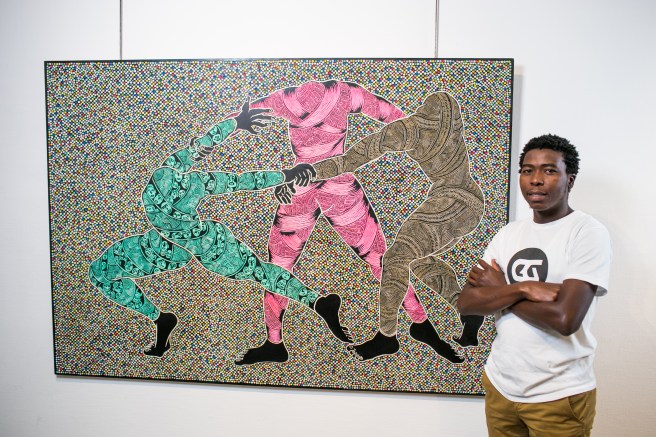
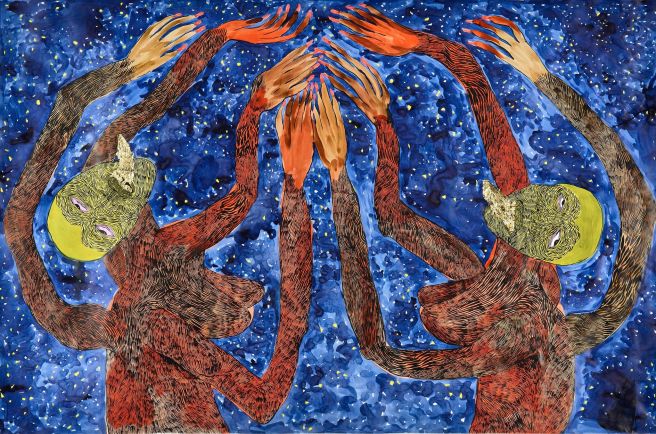
Robin Rhode_Paradise08And with these celebrations, they welcome Robin Rhode back – the featured artist at the very first Fair in 2008 and now once again as 2017’s featured artist. Rhode’s most recent body of work resonates with the concept of ‘Looking Forward’.

“In preparing for the 10th anniversary edition,” says Mandla Sibeko, Director of the FNB JoburgArtFair, “we asked ourselves if we ever simply reflect on a scenario without imagining the potential outcomes, or envision a future without considering the past?

“So we used this natural moment of reflection and celebration as a framework for the focus of this year’s Fair – to interrogate how closely the acts of ‘Looking Back & Looking Forward’ are tied. We’ll be looking back at the legacy of Modern and Contemporary African Art while looking forward to the future possibilities of artistic practices, communities and markets on the continent.”

As featured artist, currently based in Berlin, Rhodes obscures obvious age, race or even gender from his imagery, favouring instead the constants of geometry, balance and colour theory.

For this exhibition, he moves out of his comfort zone which has been the anonymity of the public space outside to a much more intimate environment in the Convention Hall. He is interested in both himself as the artist and then the spectators, all of whom become part of the experience.

He describes the results of his art as eerily comforting avatars in the age of globalisation – iconography with which anyone may identify.

In the same spirit of ‘Looking Back’, Dr. Zoe Whitley of London’s Tate Modern, curates an exhibition entitled ‘Truth, or some other abstraction’, looking at how South African modern artists voiced their stories and how those stories shaped our contemporary understanding of history.

Borrowing works not often on public display from Gauteng’s collections, Whitley’s curatorial investigation of the modern South African narrative aims to demonstrate the importance that our past plays on present realities.

Lady Skollie_TG-WINDV-0014-B-300
Lady Skollie

In these gender sensitive times, the solo presentations are dominated by women with six of the eight artists being female.  South African artists include Sethembile Msezane – represented by Gallery MOMO (Joburg & Cape Town), Lady Skollie by Tyburn Gallery (London), Thenjiwe Niki Nkosi by the Mariane Ibrahim Gallery (Seattle) and Bronwyn Katz by blank projects (Cape Town). In Toto Gallery will showcase Ilana Seati, and SMAC Gallery will present newe work by Chemu Ng’ok’s. SMITH Studios will exhibit a unique presentation of the collective HOICK and ELA – Espaço Luanda Arte will present António Ole.

The Fair features over 60 exhibitions within 5 categories, including Contemporary and Modern Art, Solo Presentations, Limited Editions and Art Platforms. The selected galleries and organisations hail from 11 countries across Africa, Europe and the United States.

More detail:

  •       The Contemporary section will feature MOV’ART (Luanda), exhibiting for the first time here, while Addis Fine Art (Addis Ababa) and Circle Art Agency (Nairobi) both return for a second time. Other new exhibitors include 50ty/50ty (Joburg) in Limited Editions, NWU Gallery (Potchefstroom) and Under Ground Contemporary (Kampala) in Art Platforms.
  • Peju Alatise_photo 1
    Peju Alatise

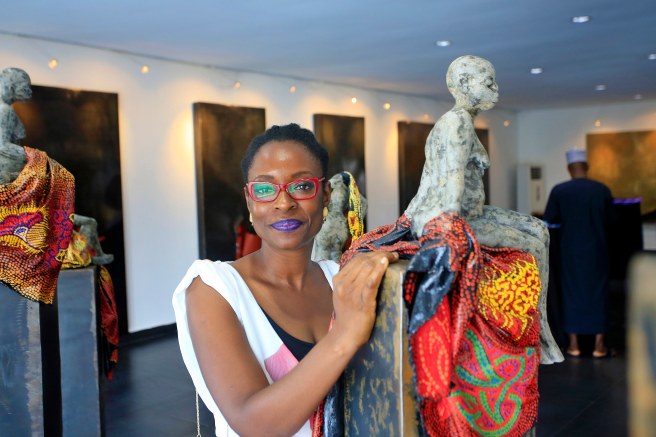
    Nigerian artist, Peju Alatise, has been announced the 2017 recipient of the coveted FNB Art Prize. She received a cash prize as well as the opportunity to be showcased in a dedicated exhibition space at the Fair. She is a mixed-medium artist, poet and published writer who is passionate about addressing social, political and gender-related issues as well as capturing the joys and pain of womanhood in modern-life-African traditions.

  • New to  Fair, Cartier will be showcasing exceptional jewelry and watch creations, and a selection of artworks created by the students of Johannesburg-based art schools, The Artists Proof Studio and The Market Photo Workshop.
  • Esther Mahlangu (1)
    Esther Mahlangu

    Also exhibiting for the first time, BMW presents a BMW 7 Series by Ndbele artist Esther Mahlangu. Following her famous design 26 years ago, in 2016 she was once again commissioned to refine a BMW 7 Series, which was exhibited at the Frieze London art fair.

  • Lalela will host the Educational Programme and Artinsure will host the Art Tours. Professor Federico Freschi and Magkati Molebatsi will lead the walkabouts, giving art lovers an insight into some of the works on display.”
  • This year, the addition of a Film Programme will be headlined by the Centre For the Less Good Idea, the brainchild of acclaimed artist William Kentridge. On Friday, audiences can enjoy  specially curated selections of video works from their first season, which will be projected on a large outdoor screen in Nelson Mandela Square.
  • The Talks Programme  at the Theatre on the Square includes featured artist Robin Rhode and The Armory Show (New York) Director Benjamin Genocchio – each delivering a keynote – as well as a conversation that looks at The School of Anxiety, a project by Moses Serubiri, showcased at the 10th Berlin Biennal


The FNB JoburgArtFair takes place at the Sandton Convention Centre, Exhibition Hall 1, 161 Maude Street, Sandton

Opening times: Friday: 11am – 8pm; Saturday: 11am – 7pm; Sunday: 11am – 5pm

Tickets are R150 and can be purchased through tixsa.co.za.

The Talks Programme and Film Programme are free and open to the public. No advance booking is required.

For more information, please visit: www.fnbjoburgartfair.co.za


A provocative scent of the past as Die Reuk van Appels plays at State Theatre

2017-09-01-PHOTO-00000035

DIANE DE BEER

DIE REUK VAN APPELS

DIRECTOR: Lara Bye

SCRIPT: Johann Smith (adapted from Mark Behr novel)

PERFORMER: Gideon Lombard

VENUE: Momentum, State Theatre

DATES: until September 24


If you don’t know how to reply to that ubiquitous question, “When have we had enough?”, see the provocative Die Reuk van Appels.

If we don’t investigate and explore the past, how do we learn? How do we not make the same mistakes and punish ourselves and others all over again?

So many have pointed to specific cultures that have made others suffer like they have suffered. They understood the pain and yet had no qualms to dish it out themselves. But if we look at why certain decisions were made and actions were taken and have the in-depth conversations leading from that, which might be uncomfortable yet necessary, we can perhaps forgive and be forgiven. Never forget.

The past looks very different when time has elapsed and what might have been acceptable to some, is viewed from a much different perspective. That’s one of the things that knocks you when listening to the young Marnus chatter about his life in Apartheid South Africa circa 1973.

It’s the way innocence was politicized in the smallest way. Certain words, spark the memories and take you back to that very dark place. How could the same people for example use a pet name like the K-word in diminutive form for their young sons while at the same time telling their children never to use the K-word? How does a child deal with that in his head?

The other was always painted in the darkest terms and children were taught to do everything in the name of Christianity because then they would go to heaven. If you were young and white in this country, life was a breeze. You were protected from the harsh reality and your days passed easily with few hassles. Or that’s what Marnus was led to believe.

The biggest problems in his protected world were the issue of his sister’s confirmation as head girl the following year and the identity of a house guest which was not to be revealed to anyone but the family.

2017-09-01-PHOTO-00000044

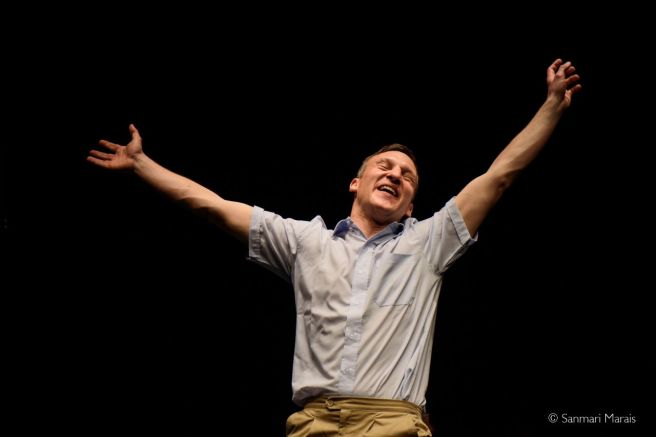
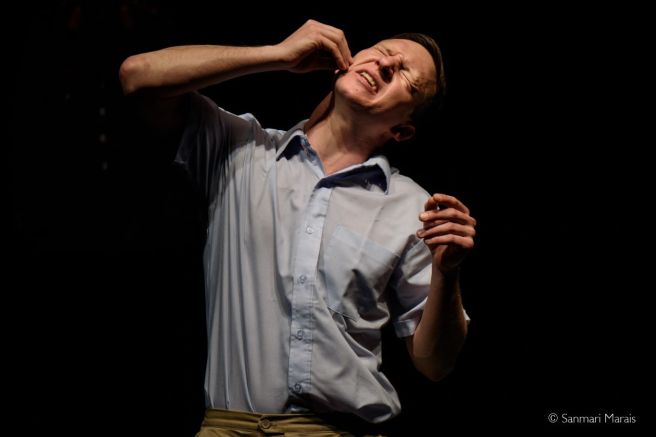
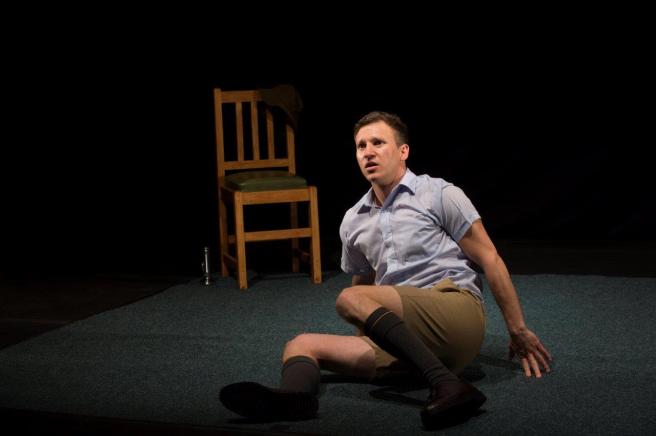
But as with most things, life was more complex and this is where Lombard’s acting skills soar. He holds the floor easily as the young Marnus and the many characters he has to adopt and with the director’s help, the story is skillfully massaged to keep the audience hooked.

As a solo show which is played almost stationary, the movement they manage to incorporate is stunning. It lifts both the emotional level and introduces a physicality which is at the heart of the horror of this young boy’s history.

He might not understand everything that’s happening in his life and his country, but he can feel when things aren’t what they should be and once the questions start, there’s no going back.

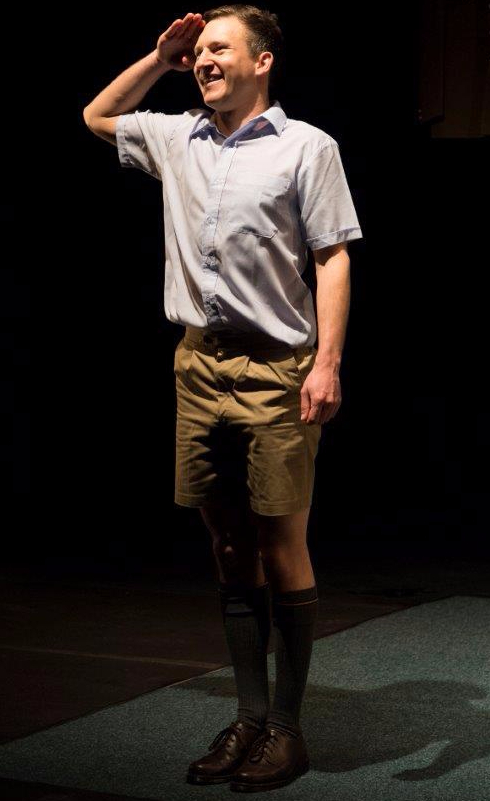
Lombard displays an innocence without being too childlike which is charming and encapsulates the 11-year-old who is baffled by his surroundings which seem to be crumbling around him.

It is an intimate piece of storytelling that embraces a much wider world and one that resonates as strongly today with everything happening out there. Judgement is such an easy thing while your own life warrants no scrutiny. How could it, you’re a god-fearing man?

With the seemingly gentle script with brutally dark undertones, a searingly sensitive performance by Lombard and Bye’s brilliantly sculptured direction, it is powerful theatre that both illuminates and pummels you emotionally.

If not in this way, how will the lessons ever be learnt?

Die Reuk van Appels will be staged at Potchefstroom’s annual arts festival Aardklop from October 3 to 7 October and at Cape Town’s Fugard Theatre from 17 October to 11 November.

Sassy choices like Die Reuk van Appels give Theatrerocket fantastic blast off

 DIANE DE BEER

Fledgling theatre production company Theatrerocket is making waves with its first production Die Reuk van Appels, which runs at the State Theatre until September 24;

Die reuk van appels 4 - credit photo by Jan Potgieter
Gideon Lombard in Die Reuk van Appels                  Pictures: Jan Potgieter


When Johan van der Merwe and Rudi Sadler started talking about their passion for theatre while traveling many kilometers between Pretoria and Joburg as theatre  judges, they decided to start their own production company Theatrerocket.

Van der Merwe previously owned a catering company in-between attending all the major art festivals in South Africa as well as going on an almost annual visit to the Edinburgh Festival (averaging 700 theatre shows a year). Sadler is a theatre journalist and graphic artist. Both have recently left their day jobs because they realised while trying to achieve their dream, producing is a full time job. They’re determined to make it work and throw everything at it to see that happen.

Their first production, Die Reuk van Appels, which opens at the State Theatre’s Momentum tonight (Saturday September 2), adapted from the celebrated Mark Behr novel, hasn’t been an easy one, but it has been successful on every possible level, already raking in the awards – and they’re not done yet. It still has runs at Aardklop in October and a season in Joburg next year.

“We have been told that you never make money on your first production, but we are starting to see the light,” they explain. Anyone in and out of theatre would agree that it can only be passionate madness for these two theatre fanatics to take on this formidable task. And yet it has paid off big time. They have had many more offers than they can accept.

Their first option was a good one (as it seems with everything they have done thus far), and it was an easy choice because Van der Merwe since first reading the book, has hankered to produce this for stage – as a solo show.  The main character tells the story from his point of view, thus a solo stage show was the way to go.

die-reuk-van-appels-2-photo-by-jan-potgieter.jpg

After much work, they were finally given the rights and the book, after some detours was passed on to award winning scriptwriter Johann Smith to adapt for stage. Once that was done, the two producers as well as actor Gideon Lombard and director Lara Bye had discussions with input and finally they had the completed script.

For those who don’t know the story’s bare essentials, it’s about an 11-year old Afrikaans boy Marnus who lives in a country where the black and coloured majority are governed by a white minority. He gradually becomes more aware of the injustice of the system and has to make complex decisions especially at his age about right and wrong as he witnesses certain things. His life is irrevocably changed when a foul deed destroys his existence.

“It is the story of so many white South Africans,” says Van der Merwe about living as a youngster in a country where everything was presented as normal, and he also believes that a younger generation should learn about and understand our horrific past. “They have no clue about the world we lived in, how closed it was,” he says of that period of our past.

For Lombard, this has been an extraordinary experience. Working with this particular director (and producers) was an added bonus because they knew one another. “I have worked with her before and she was a lecturer at UCT when I studied,” he says. Trust was a given and helped enormously with this very difficult text, especially as this is Lombard’s first solo performance.

Die reuk van appels 3 - by Jan Potgieter

For him and Bye, the text as it currently stands has to be just that. Everything is justified in context and what some may see as inappropriate wholly serves the story and is not included to shock. To go into more detail would be a spoiler because the experience of the play is all about the unusual and unexpected unfolding and unraveling of this young boy’s experience.

“It’s a play that needs patience when viewing,” says Lombard. The rewards come at the end but in the telling, lies the detail and the poetry of the text. “Bye has created a wonderful safe space on stage,” says Lombard which also shapes an unnerving intimacy that is part of this extraordinary play.

Lombard loves the metaphorical essence of the play and is ecstatic about the experience even if like anything else – and here the producers nod in agreement – it took hard work. For all of them this has been a learning experience because it is all about firsts. But because of their dedication and their knowledge of the industry and more importantly, what it takes to make good theatre, they are painstaking about the details, and it shows.

Van der Merwe and Sadler have up to now usually been audience members. They know what they want when going to the theatre, from the practical issues like being on time and having the right sight lines to the production. But more importantly it is the content and with their first production and all its participants included, they have set a benchmark to be proud of.

If theatre is your particular bent, take a closer look at this coming-of-age story.  It grapples with the Afrikaner mentality in the late ’70s early ’80s and the brutal consequences of apartheid and the militarisations of South African life.

It will tear at your heart.

Nataniël’s Blast of Brilliance, 30 Years in 90 Minutes at Emperors Palace

Pictures: Lorinda van den Berg

Nats3

DIANE DE BEER

30 YEARS 90 MINUTES

WRITER, DIRECTOR, PERFORMER: Nataniël

SINGERS: Nicolaas Swart, Dihan Slabbert

MUSICIANS: Charl du Plessis (piano), Juan Oosthuizen (guitars), Hugo Radyn (drums), Werner Spies (bass)

COSTUMES: Floris Louw

UNTIL September 24

Celebrating 30 years as a solo artist is quite something. Doing it in the spectacular style as Nataniël does in 30 Years, 90 Minutes is awesome but not unexpected.

Having watched him for most of those 30 years bar the first few, what has excited me most is to watch his work evolving with time, to witness the confidence grow slowly allowing him to take more and more risks until his stage brand was completely embedded.

That doesn’t mean that he keeps doing the same. This current show says everything about his past but also gives us glimpses into the future.

Nataniël has always noted that the vision for his shows begins with the costumes. It sets the tone for everything else. The costumes are the thing visually. Not that they haven’t always been but they have competed with everything else happening on stage. One always knew that you would be missing some effects at first viewing of his shows, because there was so much going on.

This time though, the stage is stripped and more than anything, the costumes and his breath-taking lighting give the visual cues. A red shimmering jacket sparkles in the light or is turned into a black jacket with flashes of red and a closing outfit is transformed in colour and texture from the beginning to the end of the song. It’s magical!

Nats1
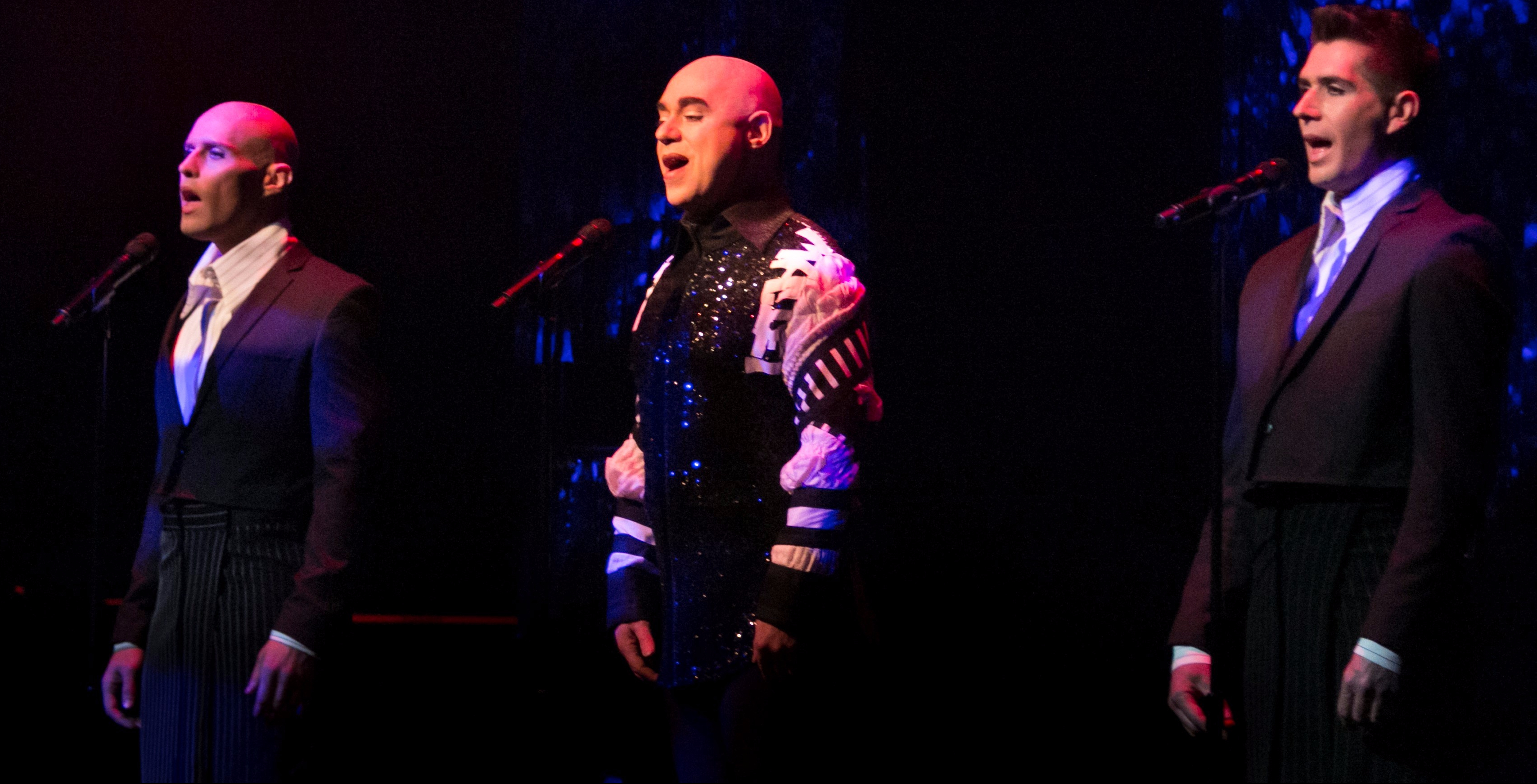
Nicolaas Swart, Nataniël and Dihan Slabbert

All of that, as well as the set, are completely woven into the fabric of the storytelling, even when his stories don’t form one narrative other than being proof of his extraordinary ability to capture the imagination and paint pictures with words.

It’s not only the content of the stories, it’s the way they are germinated and have been constructed. In one, for example, he gives you a sentence that could be interpreted in diverse ways depending on how and when it is said, and then he ends that tale with the exact same construct as where it all started. It’s more than smart, it also gives the audience many aspects to engage and play with throughout the show. For those who think he is all about telling a story and singing a song, think again. There’s so much more – even if the former is more than enough. That’s why the longevity and the loyal fanbase.

As someone who has probably seen 90 plus percent of the shows he has created, it was a first for me when one story (spoiler alert: there’s a red Citroen with black stripes involved) was so funny, that my eyes burnt from all the tears caused by laughter.

And then there’s the music. Nataniël has always professed a deep love for singing. It’s what he enjoys most and when you see him live, it shows. His cover versions for those familiar with his music are legendary. His arrangements are so astute, they turn something familiar into something fabulous and he does a handful exquisitely in the show.

The choice of music for this season also includes something old and something new in his self-penned repertoire. To be reacquainted with some of the old tunes and being gifted something new, all adds to the richness of the production.

In addition to all of that you have the accompaniment of four supreme musicians (all in their own right) as well as two gifted singers that add even more tone and texture to the different songs. It is the complete package.

That’s the thing about a Nataniël show. Every detail is covered.

And to top it all, there’s the performer himself. It is his individuality, his unique gift for storytelling and song (creating and performing), his vision and his obsession to keep it fresh that transforms the stage and auditorium into the perfect dreamscape for 90 minutes.

He gives you what you want but in a new guise.

That’s genius!


War of Words: Freud and CS Lewis

DIANE DE BEER

FREUD’S LAST SESSION

DIRECTOR: Alan Swerdlow

CAST: Graham Hopkins (Sigmund Freud), Antony Coleman (CS Lewis)

VENUE: Sandton”s Auto and General Theatre on the Square

DATES: Until September 14

Freud3
Graham Hopkins as Sigmund Freud and Antony Coleman as CS Lewis. Pictures: Philip Kuhn


Take two great minds with opposing points of view, make the subject religion and let them go at it.

But load up some extra tension. Make it a looming World War (2), as well as one of the protagonists suffering a debilitating disease which will kill him sooner than later. And he knows that. It becomes a war in oneself  and a war of words set against the backdrop (and constantly brought into the room) of  war on the horison.

That’s exactly what this intriguing play juggles as these two great actors slip into their respective personas with great ease while tackling some of life’s most vexing issues. If this doesn’t pull you in, it’s perhaps not your play but think about two adults having a discussion with opposing points of view without coming to blows. It doesn’t happen that often anymore – or not so one can witness. And perhaps not in real life?

Freud4

Freud2
Conversational classic with Antony Coleman and Graham Hopkins

Freud1


It’s huge fun. With Hopkins and Coleman really getting stuck into the roles, it makes for mesmerising viewing.

How can you not get into the Germanic, almost austere world in which Hopkins has cloaked his Freud. He completely sucks you into his character, an atheist at the end of his life who seems to be battling with life’s issues that might not be as crystal clear as he always thought they were.

Coleman’s CS Lewis is a more affable chap, recently converted from a similar position his adversary is defending, yet not at all thrown out because of their wildly differing points of view. The only time he is caught off balance is when the war-time sirens go off and having confessed to participating in World War 1, it seems like post traumatic stress disorder (PTSD).

Both are battling their own demons.

As the distractions dissipate, the two men continue their conversation about religion, mainly, as they argue their different stances, both with superior minds which they apply to showcase their opinions. It’s not as if we can’t all participate while watching. None of what they’re talking about is new. It’s just fascinating to see these two giants of old, fight to the end, to imagine what could have happened in that room if indeed they  had this particular discussion.

It’s a good piece of writing. American playwright Mark St Germain is quick with his wit and wisdom and keeps the flow of the ideas fast while giving time to digest. And with this premise, director Swerdlow could have over-exerted his actors to keep them from turning into talking heads. Wisely he didn’t and with actors of this stature, that was the right choice. They have a good text to work with and ideas that are both challenging and engaging, and the actors have a great time sparring with each other.

It’s gloves off and may the best man win. But this is a civilised clash of great minds happy to have some fun while running through their own beliefs and testing them against the best.

Changing Life through the Arts

DIANE DE BEER

I was watching a documentary on the DStv’s Sundance Channel titled The Music of Strangers: Yo-Yo Ma and the Silk Road Ensemble (check for screenings on Channel 108, Wednesday, 17.30 pm) and Thursday (10.40 am).

I have always loved the cello but I had heard some of their amazing music before and wanted to investigate the origin and how it has evolved. I didn’t expect such a profound effect – with huge impact on what is happening in the world today and how each individual could make a difference.

We meet the young Yo-Yo Ma prodigy as he performs music way beyond his years and watch how, now with children of his own, he takes his music into different spheres – one the Silk Road Ensemble which is an attempt to bring different cultures and their traditional music together so that it could blend and not clash with one another as might be the case if you listen only to Western classical music and then hear Indian or Chinese classical music for the first time.

Music of Strangers

Made up of performers and composers from more than 20 countries, the Silk Road Ensemble was formed by Yo-Yo Ma in 2000. Since then, these artists have been embraced for their passion for cross-cultural understanding and innovation. The group has recorded six albums. Their latest album, Sing Me Home, was released in April 2016. This documentary about the Silkroad musicians was directed by Academy Award-winner Morgan Neville (20 Feet from Stardom), was released in June 2016.

When Yo-Yo Ma started with this ensemble in 2000 he probably didn’t envision the magnitude and the unexpected results. What he ends up with is a mini United Nations of extraordinary musicians, many who play their cultural music on traditional instruments.

You see Yo-Yo for example being shown a string technique by an Iranian musician Kayhan Kalhor who plays a string instrument called a Kamanchen that might be lost to the world, if these enthusiasts are not determined to take it up, become a master and pass the skills on to a new generation. Or the vivacious Galacian Cristina Pato who is a piano graduate but plays Galacian bagpipes  called gaita.

There’s also the sadness of a Syrian clarinetist Kiman Azmah whose haunting sounds reminds us of the healing powers of the arts in general. Few people don’t succumb but perhaps we don’t use it enough.

While listening to the evocative music, half classical, half folk, and watching these artists from all over the world communicate through music and seemingly having the best time while breaking the boundaries and ignoring the restrictions that might come from elsewhere, I was again affected by the strength of diversity. These are people from different corners of the world, playing music that comes from their roots (and hearts) and yet managing to blend it with sounds that might sound foreign to them.

In the end, the result is spellbinding. And one is charmed as much by the performers as the performance. It seems so obvious. It might be tougher to reach out, to work out the differences and to harmonise those disparate sounds into some kind of cohesive musical miracle, but the results are magnificent – and do-able!

Check it out, it’s a heartwarming documentary about the richness of cultural diversity. It concludes with Yo-Yo Ma listening to a young Chinese piano player perform – way beyond her years – as he clutches his heart in admiration.

The cycle is renewed and starts all over again.

Have Suitcase, Will Travel

The Suitcase6
Siyabonga Thwala, Desmond Dube and John Lata

Pictures: Brett Rubin

Diane de Beer

Sitting in the rehearsal room at Joburg’s Market Theatre complex where the cast of the latest revision of The Suitcase is busy rehearsing, it is easy to see why this is such an impactful piece of writing.

Add to that the evocative music (arranged by Bheki Khoza) that James Ngcobo has incorporated into the fabric of the story, it catches your heart from the start.

This was the play that first brought actor James Ngcobo’s directorial skills to everyone’s attention.

Adapted from Es’kia Mphahlele’ s short story by Ngcobo, it is set in the 1950s in Sophiatown (here it has been moved to Durban). The Suitcase is a haunting love story of a couple who try to pursue their dreams with nothing more than each other yet they believe that will carry them through. Set in the bitter apartheid years, it is the tale of countless couples who try to make a simple living in extraordinarily harsh times. Everywhere they turned, doors closed without even a glimmer of hope except perhaps that chance of a lifetime which might change their lives.

It is also a universal and timeless story which can be set anywhere, at any time.

Having watched it in all its reincarnations, I thought I would be immune to the sadness that gently yet determinedly envelops you but, as Ngcobo always points out, it is a love story before anything else, and it has a devastating yet mesmerising effect.

The Suitcase5
James Ngcobo and Siyabongo Thwala.

The pressures of the city, unemployment and poverty strip away the husband`s self-esteem and he starts to lose his moral compass. He is so desperate to provide for his pregnant wife that he steals a suitcase left on a bus.

This third reincarnation has come about because  of a 5-week tour of Northern England (see schedules below). For the artistic director of The Market who was invited to bring this piece, it is about honouring this time by reinterpreting  The Suitcase and in that way, to keep shining those classics for a contemporary world.

If one sometimes wonders why a stage production works, The Suitcase is ample proof that it helps when all the elements come together so emphatically.

From the poetic script which remains true to the original text and captures the haunting powers of a short story to an ensemble cast that work so sweetly together like a tightly knit family.

The cast includes original members Siyabonga Thwala as the husband Timi and John Lata, while Desmond Dube as the storyteller and other characaters and Masasa Mbangeni as the wife Namhla, joins the play.

Solo guitarist Bheki Khosa accompanies three singers – Nomfundo Dlamini-Sambo, Gugu Shezi  and Nokukhanya Dlamini.

The way it is told and performed is all about this country. It’s in the music, the gestures, the sound effects, the movement and the classic storytelling that pulls you right into the eye of the storm as the characters emerge painfully from their dreams.

It’s a beautiful piece of theatre to travel and represent this country as it incorporates so much of our own storytelling yet it is a universal story and with a cast and performers that just in rehearsals (and not quite on their game yet) had me enthralled. I am so proud that this team will be representing us in the world.

Ngcobo is intent on furthering The Market brand and understands the benefits of reaching out and forming international partnerships, to exchange the riches particular to the different countries.

For him it has always been about outside exposure, introducing and involving the young to also learn from these international adventures and to return to plough back. He has wanted to re-position the brand and has worked hard to be brave and to try new content for their space. “Post 94 we started experiencing a new and changing country which meant that as curators we had to exhibit the change in how we programme and that is exactly what we have done, to cast our net wide and not only be a theatre that is driven by a political narrative but to find a way that sees us operating in a continental and universal space,” he says.

In a previous review I had remarked that The Suitcase is pure theatre. “Hopefully it tours both nationally and internationally.”

And that blissfully (with a previous tour to Scandanavia) has come to pass.

Here are the British schedules which will be followed by a home run at The Market from 20 October to 26 November:

Hull: Friday 1 September – Saturday 9 September at Hull Truck; Newcastle: Tuesday 12 September – Saturday 16 September at Northern Stage; Derby : Tuesday 19 September –Saturday 23 September at Derby Theatre; Lancaster: Tuesday 26 September – Saturday 30 September at Lancaster Dukes; Liverpool: Tuesday 03 October – Saturday 07 October at Liverpool Everyman & Playhouse.

Teju Cole, an Embracing Writer

Known things bk

Diane de Beer


Teju Cole: Known and Strange Things – Essays (Faber and Faber):

I was smiling from start to finish.

Not because it is all that funny, it seldom is. It’s the way the writer writes with such authority of both subject and language, his frame of reference that stretches wide, offering both the familiar and something else to take a closer look at, and the way he views life through the prism of art whether poetry, photography, film, books and more.

But then he also tackles a wide variety of subjects in a way that’s novel (on paper), brings a point of view that’s confidently his from a lived experience and explains a way of  being experienced by others and thus experiencing the world differently, simply because of a colour of a skin. Many of us yet have to face that dilemma. The world always comes from a particular point of view – or so it seems – ours.

Teju Cole was born in the US in 1975 to Nigerian parents, and raised in Nigeria. He currently lives in Brooklyn and is the author of four books. His bio describes him as a writer, art historian, and photographer, a Distinguished Writer in Residence at Bard College and photography critic of the New York Times Magazine. He brings all of that to bear in this brilliant book.

Explaining in the epilogue, this collection of enlightening and enlightened essays, he notes that in the 8 year period these essays were written, he thought a great deal about poetry, music, and painting, traveled to dozens of countries  and engaged with many interesting artists whom he didn’t write about.

“This book contains what I have loved and witnessed, what has seemed right and what has brought joy, what I have been troubled and encouraged by, and what has fostered my sense of possibility and made me feel, as Seamus Heaney wrote, like ‘a hurry through which known and strange things pass’.”

It is all of this that engages, brings both joy, sadness and understanding of something you didn’t know. That’s not what he is trying to do though, it’s simply a reading of the world which comes from a different life than yours.

He, for example, follows James Baldwin to Leukerbad and notes that it gave Baldwin the way to think of white supremacy from its first principles. It was, writes Cole, as if he found it in its simplest form here. “The men who suggested that he learn to ski, so that they might mock him, the villagers who accused him behind his back of being a firewood thief, the ones who wished to touch his hair and suggested he grow it out and make himself a winter coat…”

Cole’s visit to this same Swiss village is decades later and his experiences come from a different time but the way he chooses to look at particular dilemmas is far reaching and takes you into many different places.

That’s the magician in this creative man. It’s not only what he writes about, it’s how he approaches everything, the way he looks at it,  how art dances constantly through his being – simply who he is and how he puts that across.

In a chapter about the poet Tomas Tranströmer he writes about his compulsion: “The new century has been full of dark years, and I have returned again and again to poets. They kept watch over me and to adopt a phrase of Tranströmer’s, I survived on milk stolen from their cosmos”.

Writing about theatre and what it can do for you, he quotes Annie Carson who explained in the introduction to Grief Lessons, her translation of four Euripides plays: “Grief and rage – you need to contain that, to put a frame around it… Do you want to go down to the pits yourself all alone? Not much. What if an actor could do it for you? Isn’t that why they are called actors? They act for you.”

It’s the way he encapsulates exactly what you have wanted to say for so long. And then he uses language that’s arresting. It’s not unfamiliar but it is the choice of particular words, or swinging a familiar phrase around, that makes you see something so differently or simply see it.

The one thing that he does is to make any writing you might attempt feel completely inferior and writing about him, madness. But I have to share the obsession that has gripped my world for the past few days.

It’s too rare a pleasure not to.


Freud and CS Lewis tackle Religion – and more – on stage at Theatre on the Square

freudpic3
Graham Hopkins, Alan Swerdlow and Antony Coleman


Diane de Beer

Throw the names of actors Graham Hopkins and Antony Coleman into a hat and I pay attention.

There are also the play (Freud’s Last Session) and the director, Alan Swerdlow, that add weight. There’s no way the description “cerebral play with warmth” does this project justice though, it is one of those seasons you will have to take a chance on.

At worst you will have the acting talents of these two extraordinary actors – each in their own right. They have in fact never worked together on stage, only in TV’s Scandal, and Coleman remembers that they were fighting a court case in that particular session while Hopkins recalls the reams and reams of dialogue he had to memorise. “I had to devise a special method of pictograms to get it all down,” he says.

Freud’s Last Session which opens on Tuesday (August 22) at the Auto and General Theatre on the Square in Sandton, running until September 14, was imagined by Marc St Germain following the premise of a meeting between  legendary psychotherapist Dr. Sigmund Freud (Hopkins)  and the rising Oxford don C.S. Lewis (Coleman). He tellingly sets this particular tête–à–tête in London on the eve of World War 2.

The one is famous for his views on sex, the other for his religious beliefs (and the Narnia books, some of his life story captured in the play/film Shadowlands), and this will be much more than talking heads – and with these three artists involved, you’d better believe it.

As these two opinionated men argue about the existence of God, whether the belief in God is merely a childish fantasy, or a crucial element of leading a meaningful life, the BBC keeps interrupting with the latest bulletins on the impending war.

With the possibility of a war looming in the background and foremost in their minds, they might start out with religion, the conflict between science and religion, but their conversation veers to their parents, music, meaning of Hitler – and even the entertainment value of flatulence! It would have to have all that to keep us listening I suspect.

The whole affair is of course heightened because of the Hitler’s presence heavy on the horison, Freud being an 83-year-old Jewish refugee from Vienna and Lewis, a 40-year-old World War 1 veteran, both with their own set of worries.

For both actors, finding their particular persona was top of the agenda and Hopkins notes that there’s not much live footage on Freud, while for Coleman there’s obviously much more. But neither of these two actors would be inclined to go for mimicry, it’s simply finding a truth to the men they’re portraying. “It’s so skilfully written,” explains Hopkins, that their characters are revealed in the conversation.

“It’s what theatre does best,” says Swerdlow as he talks about the actors and the way they give life to the people they play. And in this case, it will be part of the enjoyment of the piece – to watch these two skillful artists at work on the same stage – and playing great men, so often larger than life.

For Hopkins the play deals with that age-old question of why we’re here? “It’s something all of us ask at some stage,” he says and there will be both squabbles and serious, thought-provoking debate.

At the time of our chat, the actors were enjoying their first outing together, both thrilled that they have a rapport with much laughter ensuing during rehearsals. Swerdlow is a director who allows his actors to find their way, especially with two as stage savvy as Hopkins and Coleman. While he worries about the play finding its people, he knows when it does, the audiences will stream in and discover the delights of this rich work.

This is the kind of theatre we don’t get to see that often; it’s quite wordy, its about topics that might blow a few minds, and many managements in these tough times aren’t able to take the risk.

Once in a while like in this instance, Daphne Kuhn allows herself this leap of faith. In the end, to get you to go and to pay attention (and win New York theatre awards), Freud’s Last Sessions has to be entertaining.

This trio (Swerdlow and his actors) are determined to showcase the best and prove a point.


Delicious and Delightful: de food, de chef, de deli

Diane de Beer


LadiesWithKopdoeke1
Rachel and her deli dames


Pictures: Theana Breugem

CarltonChef
Carlton Chef Rachel Botes


What makes a good deli?

We have a few in Pretoria but if you check your favourite, mine happens to be Carlton Café Delicious (Menlo Park Centre, 71, 13th Street, Menlo Park) – it usually has something to do with the chef patron; in this instance,  the fabulous Rachel Botes.

It’s all about quality produce and seasonal food, as it usually is with good chefs across the world, but with Rachel it’s about something more. It is her deep love of food, her instincts of what she wants to present and how, as well as strong roots in terroir which taps into her cultural background.

She never lets up. The deli is always evolving with fresh ideas popping as frequently as her trademark baked goodies that few can resist. She has a demanding clientele who through the years have appreciated the excellence, thus always expecting more. And she doesn’t disappoint.

Reading her daily specials on the blackboard is a treat and often trips you up if you’re expecting that all old favourites will remain on the menu. Because her dishes often defy the description, it’s difficult to resist just checking out what she has come up with.

CarltonTomatoTarts
Carlton Tomato Tarts

She has developed a formidable team around her but as anyone in the competitive restaurant world knows, nothing stays the same for too long. Yet she has been up to the challenges, understanding that well-trained staff will move on to different experiences, sometimes simply dictated by a change in their lives.

A good example is her Friday Dinners, which were inspired by a tough economy and a desire to gift her customers with an enticing option at a competitive price to counter punch financial famine. The options are well thought through, varied and cuisine that would be difficult to replicate with similar excellence both in the kitchen and on monetary grounds.

There’s also the Friday happy hour, which was initiated to celebrate and spotlight a long-awaited liquor licence while simultaneously allowing the creative cuisine minds in the kitchen to explore and experiment. Watch out for some of these favourites to resurface in the new menus.

It’s not only the food that’s fiery, it’s also her choice of wines which she has astutely assumed should be cheap but of supreme quality because they are a daytime deli. She has some of the best sourcing secrets and if you are smart, make a note of your favourites for your own wine cupboard.

CarltonAnchovyToast
Carlton Anchovy Toast

Different folks want different strokes in their desires for their best deli. In mine (or all honesty my partner’s), it is the anchovy toast breakfast (for the past few years and foreseeable future) that is the meal of choice – and would be any time of day, if there wasn’t a cut-off point.

Others cannot make their annual trek to the sea without the Rachel festive specials and it’s a treat of a different kind to watch these goodies being collected.

A few years ago that side of the deli has moved next door and there’s more breathing space all round but it has also allowed Rachel to have her own long table, which is used for separate occasions. You can book the table for a special lunch or evening event allowing the chef supreme to do her own menu.

She’s at her best when given free rein because it allows that cuisine craftiness to shine through.

If you wonder about her not receiving all the accolades her reputation so richly deserves, it is a result of its being a daytime deli. It’s as if the food powers that control these awards don’t take that kind of food finesse into account.

CarltotMarmiteTart
Carlton Marmite Tart

And yet, with everything she does, travelling the country to pass on her skills or to cook on request for people who know what she achieves in the kitchen, is worth experiencing, any time, any place.

If you’re wondering about this ode to a chef, it took some thought to decide when writing about food on this first-time blog, what would I like my first food musings to cover.

Why not someone who has been worth watching over the years, someone who has become a friend, but was first and foremost a chef whose artistry from the start was awe-inspiring?

CarltonBiltong
Carlton Biltong

Whether it is about a table setting, the choice of flowers or table decorations on a particular occasion, deciding to make her own biltong, or the way she has constructed artistic meals in art museums to accompany and illustrate an exhibition. Or simply thinking about the drinks she served all those years when she was waiting for a licence, to make it colourful for her clients who might have preferred a light wine with their lunch.

It’s about the innovation, the innate sense of style, the way she turns everyday meals into something imaginative with sleight of hand to make it special and often spectacular that fills a dreary day with sunshine.

This is a chef who loves to feed people, to have them smile, to add new tastes and textures, to surprise even the toughest critic – but also someone who has learnt to accept that you cannot please all of the people all of the time.

For me though, it is always delicious because this is food that is thought about, has to fit different criteria but in the end, has one goal, to be delicious!