CAST: Stuart Brown, Léa Blerk, Charlie Bouguenon, Keely Crocker. Kent Jeycocke, Shelley Lothian, Ntshikeng Matooane, Arno Meyer, Sharon Spiegel Wagner, Michael Stray, Justin Swartz, Lucy Tops
SET AND LIGHTING: Niall Griffin
MUSICAL SUPERVISOR: Charl Johan Lingenvelder
CHOREOGRAPHER: Louisa Talbot
SOUND DESIGNER: David Classen
RESIDENT DIRECTOR: Shelley Lothian
DIRECTOR: Greg Karvellas
Producers: Showtime Management and How Now Productions
VENUE: Montecasino Teatro
DATES: Until 13 April
PICTURES: Daniel Manners
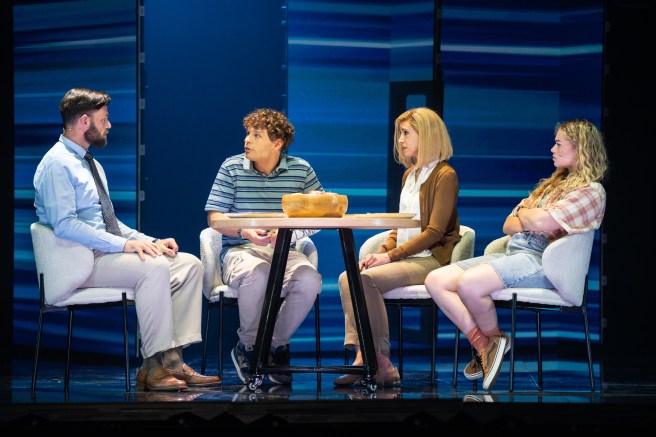
Charlie Bouguenon (Charlie Murphy), Stuart Brown (Evan Hansen),Sharon Spiegel Wagner (Cynthia Murphy) and Keely Crocker (Zoe murphy).
WHAT struck me instantly while watching this musical was that being young a few decades ago was much easier.
No social media, less scrutiny, much less peer pressure because it had to be done person to person rather than through technical means or phones – it was just a much simpler and less stressful life.
What young adults have to contend with at that vulnerable age when you start transitioning into adulthood is quite monstrous. One would think that the huge physical upheaval would be enough to deal with, but now there’s so much more.
It’s a musical with an intimate if weighty story as it deals with depression and hiding from the world at a time when you should reach out rather than go into hibernation, yet it has huge heart.
It’s not often that musicals deal with mental health issues especially targeting teen and young adult audiences, who are particularly vulnerable. These aren’t issues readily discussed and this offers an amazing opportunity to ignite sensitive conversations.
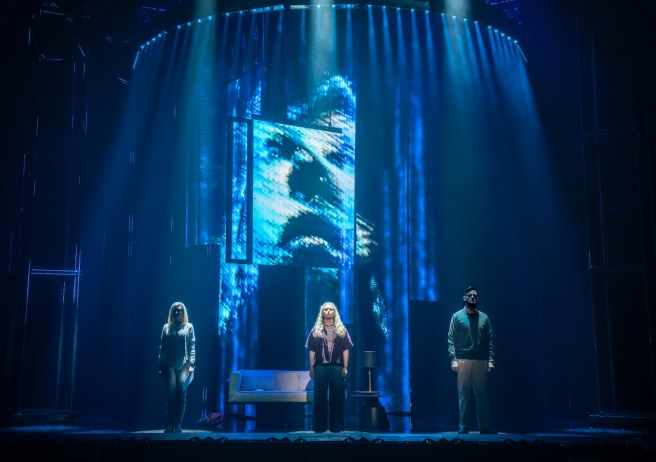
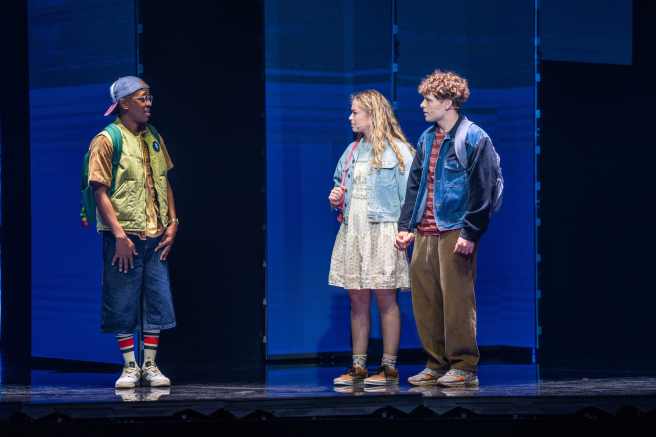
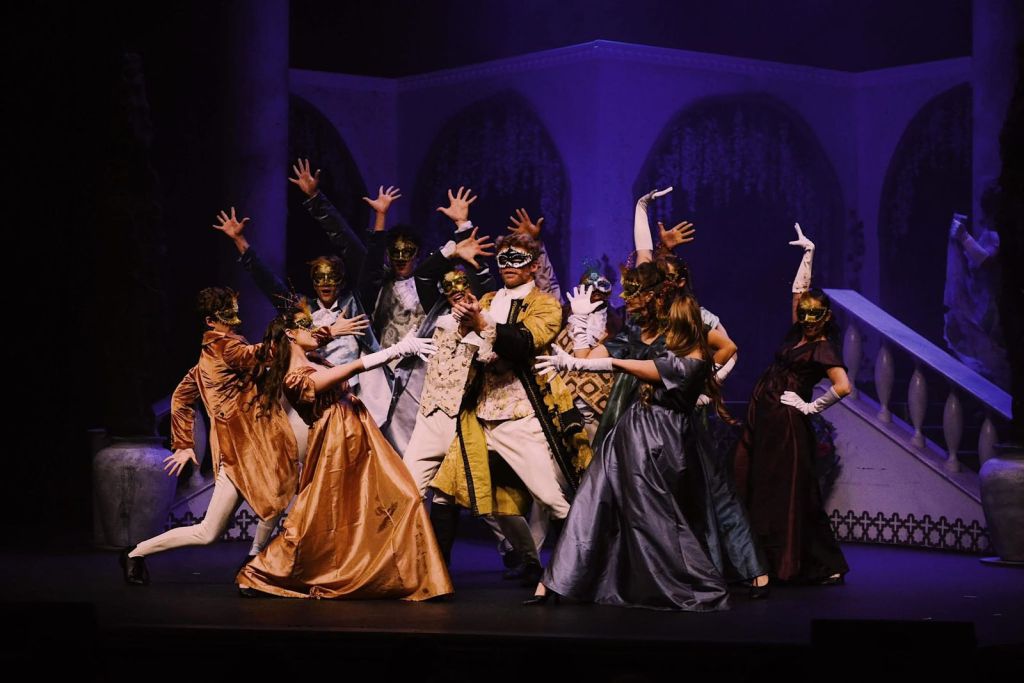
Griffin, who is known for his ingenious designs, has hit the brief spectacularly. It’s all high-tech and could be quite alienating and overwhelming but also allows for the cast to flow in and out of the grand and gleaming structure (above) quite seamlessly.
It also allows the high tech environment we live in to dominate and underlines the world we cannot escape – even if that is exactly what Evan Hansen is trying to do.
That is the genius of the musical. It all feels quite overwhelming, almost as though you have to fight your way to the heart of the story, yet this is where the magic lies. At that centre is a timid and rather terrified young boy who can hardly get out from under the covers.
His way of communicating is to write letters to himself, hence the Dear Evan Hansen title. Many people, young and old, could identify at some stage in their lives with his struggle of dealing with life. His is the universal struggle to be seen.
His mother, a single parent, is so stretched to keep them afloat that she hardly notices her son or witnesses any of his anguish. He feels he has no one to turn to until an incident allows him to find a different persona and a family to hook onto.
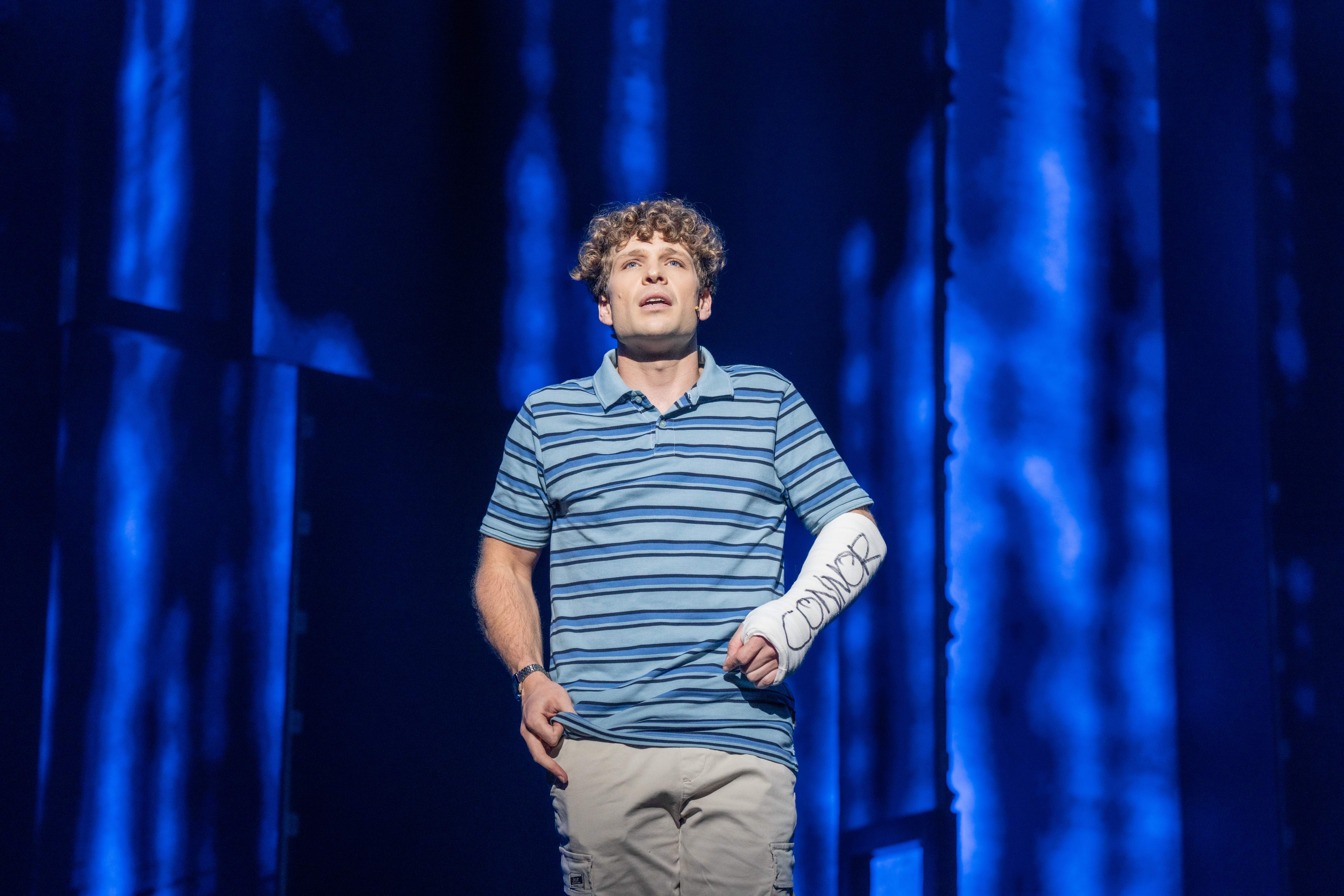
This particular production has been gifted the perfect package in Stuart Brown, who engages with the audience and embraces his persona in the title role of Evan Hansen. The way he commands the stage and fills the auditorium with an emotional sensitivity that’s quite astonishing in such a huge space is extraordinary.
There’s nothing showy or superfluous in his approach to the role, he simply is Evan Hansen, which draws even those few souls – including myself – who don’t instinctively engage into the angst-ridden universe of a teenager whose whole being is fearful of the outside world.
Justin Swartz (Jared Kleinman), Keely Crocker (Zoe Murphy) and Stuart Brown (Evan Hansen) in conversation.
That and the music written by an experienced team of songwriters, Benj Pasek and Justin Paul, who are best known for their Oscar, Grammy and Tony-winning work on La La Land, The Greatest Showman and now this, each of which spawned albums that landed in the Top 10 on the Billboard 200. That’s hard to beat and you could pick up from the audience that many of them knew the music and the lyrics, which would really add to a fuller experience.
There really isn’t much to fault in this production guided by the genius musical instincts of Karvellas supported by Lingenvelder’s music know-how, with a marvellously clever ensemble cast, all with voices that carry the music, it is a story well told.
It’s not just teens but also families that would benefit from the show. Communication, real person-to-person contact and, in this instance parents and children, is the other issue that is explored. These are not traditional topics for musicals and that is what makes this one so intriguing.
It also one of the finest shows to target the teen audience. At their most susceptible to be groomed as future theatre fans, this one ticks all the boxes. There’s a hero who explores and explodes, a story that ventures into almost forbidden territory and a production that unfolds beautifully with many different characters who find what they are looking for, a variety of issues to mine, and for those who want a softer landing, a story of romance.
But more than anything, there’s the glorious music and the explosive performances by an exciting ensemble who push the energy with joyful enthusiasm. You simply have to let go and engage.
CAST: André Odendaal, Oarabile Ditsele, Chantal Stanfield
DIRECTOR: Lesedi Job
VENUE: Pieter Toerien’s The Studio at Montecasino
DATES: Until March 16
Everything to my mind seemed aligned for this one. I found the casting as well as the director intriguing, a new local play is always something to be excited about and Paul Slab has a way of climbing into a story.
At the same time, it also makes me nervous. I don’t want to raise my expectations by thinking ahead, but one can hardly prevent it.
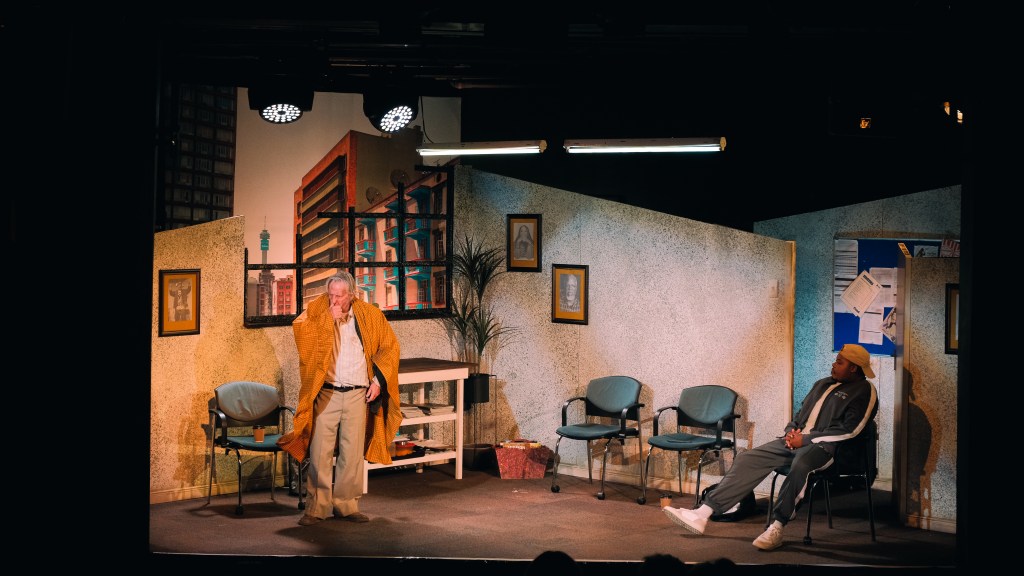
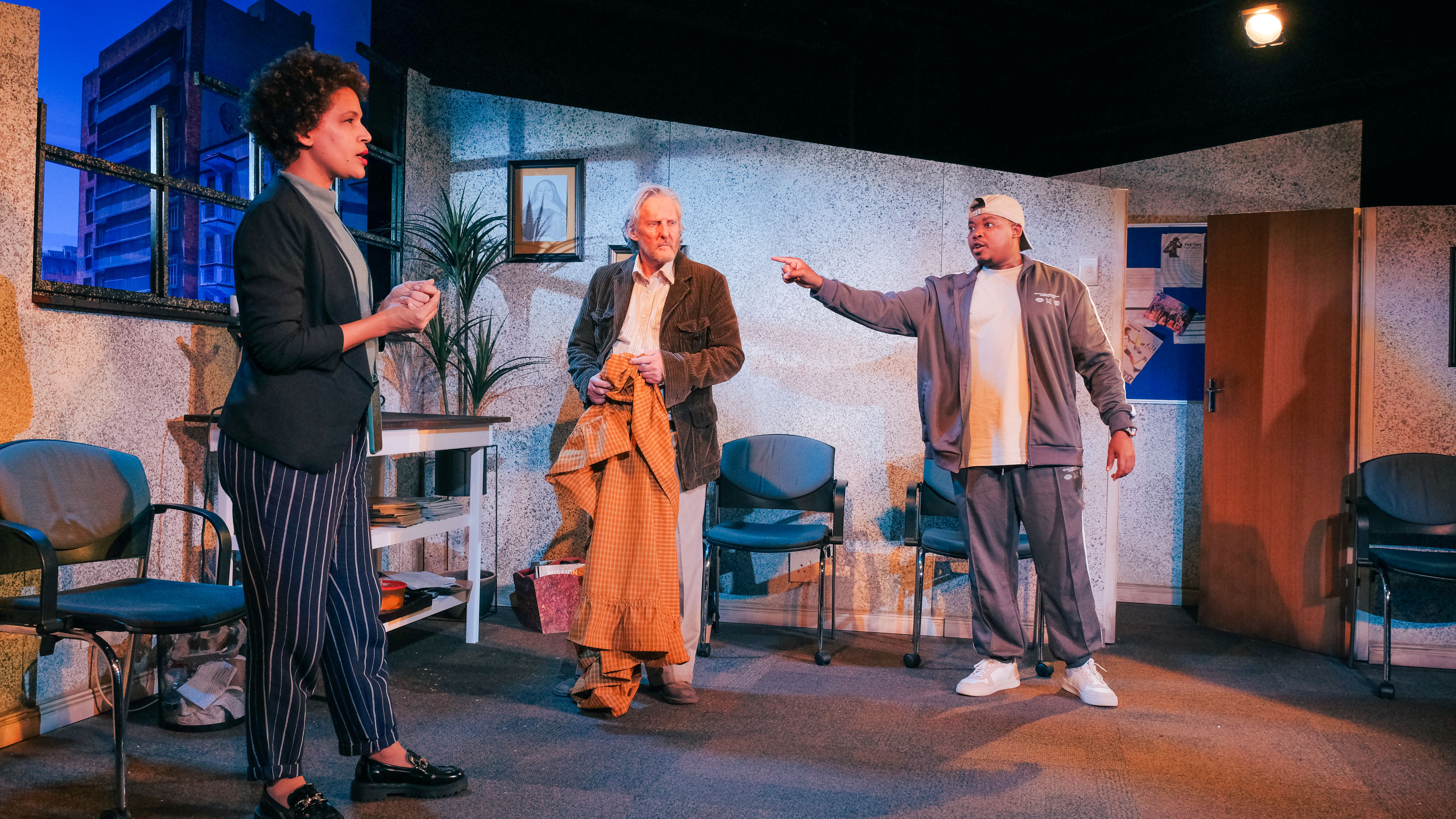
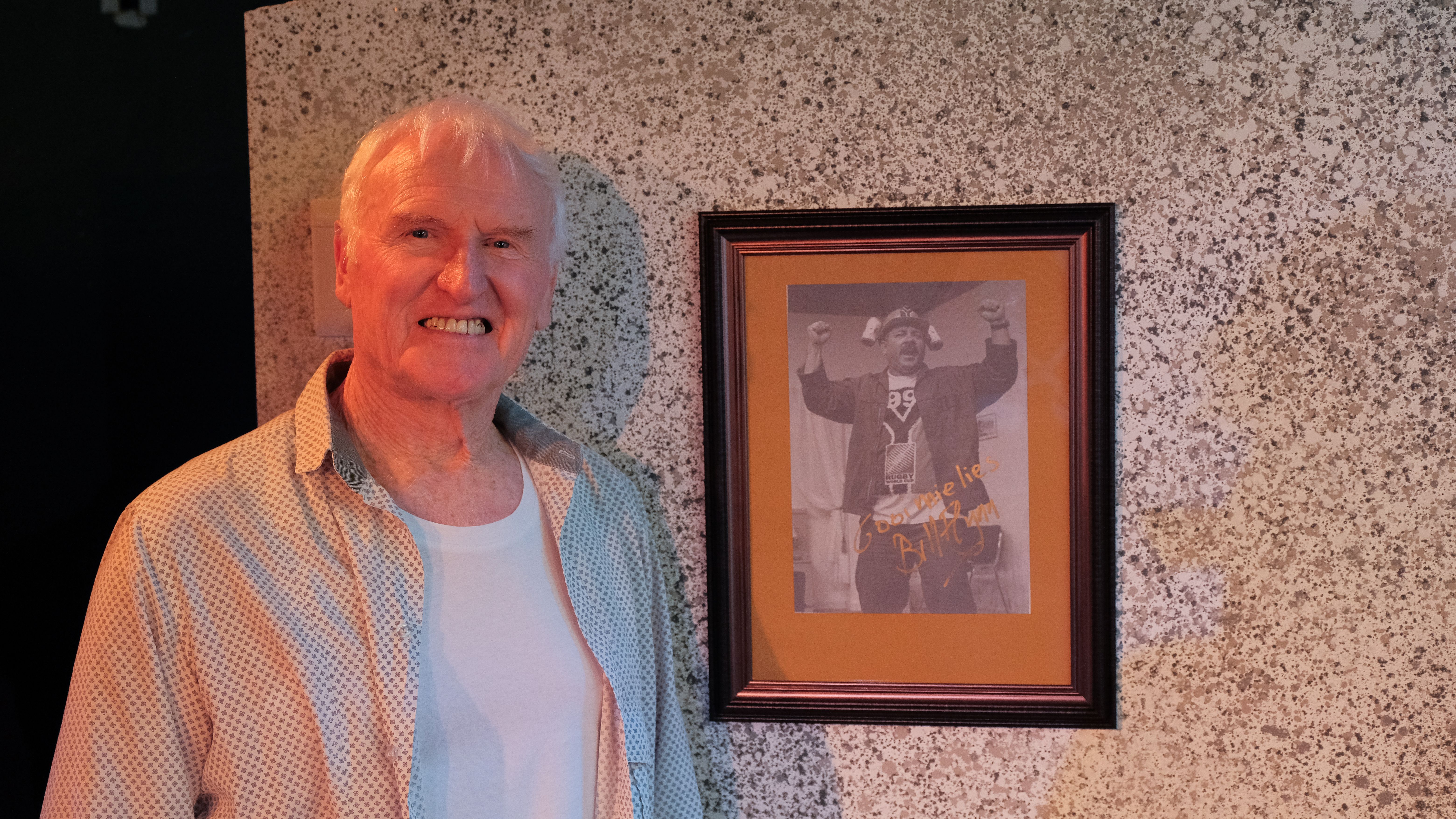
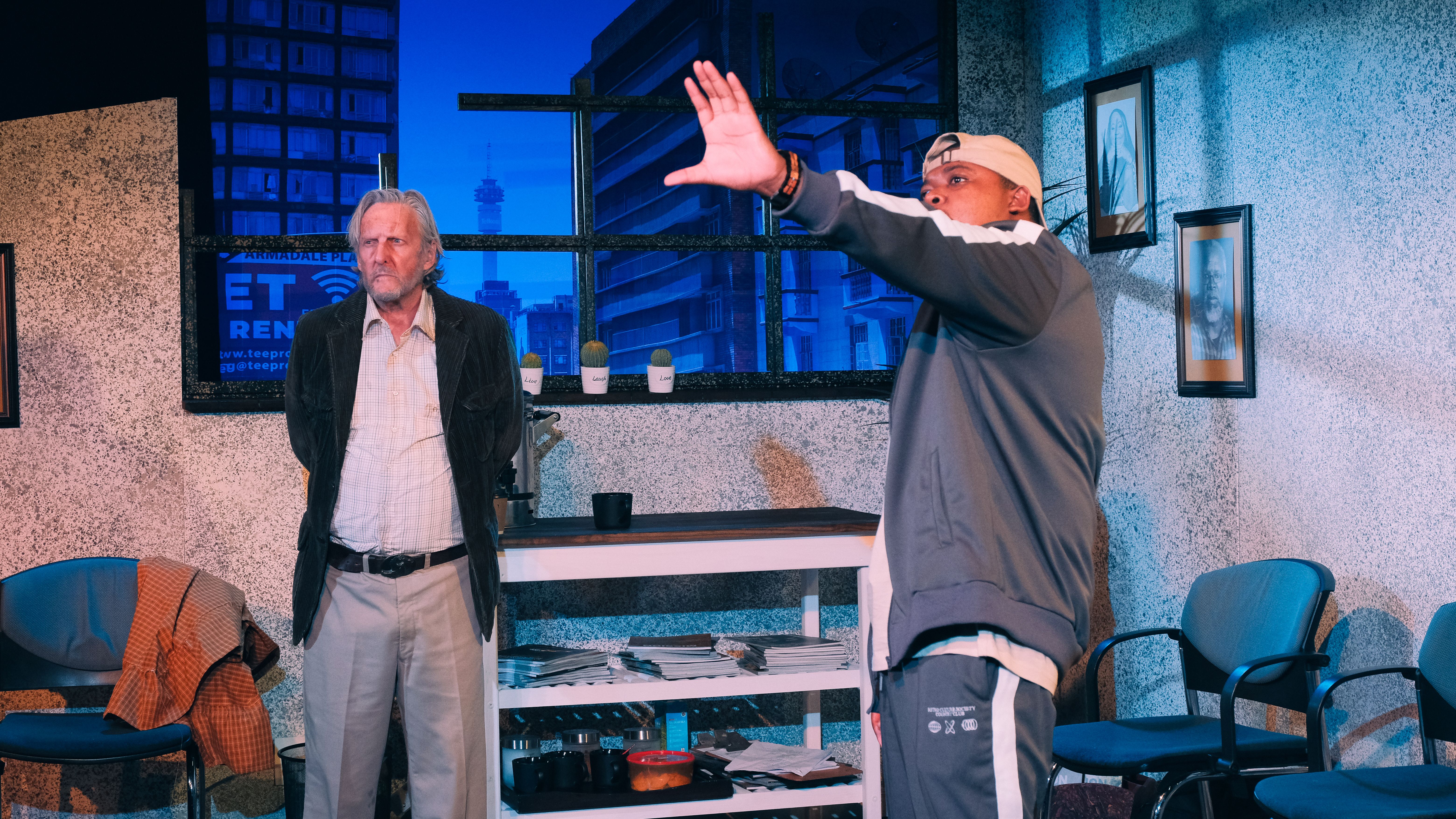
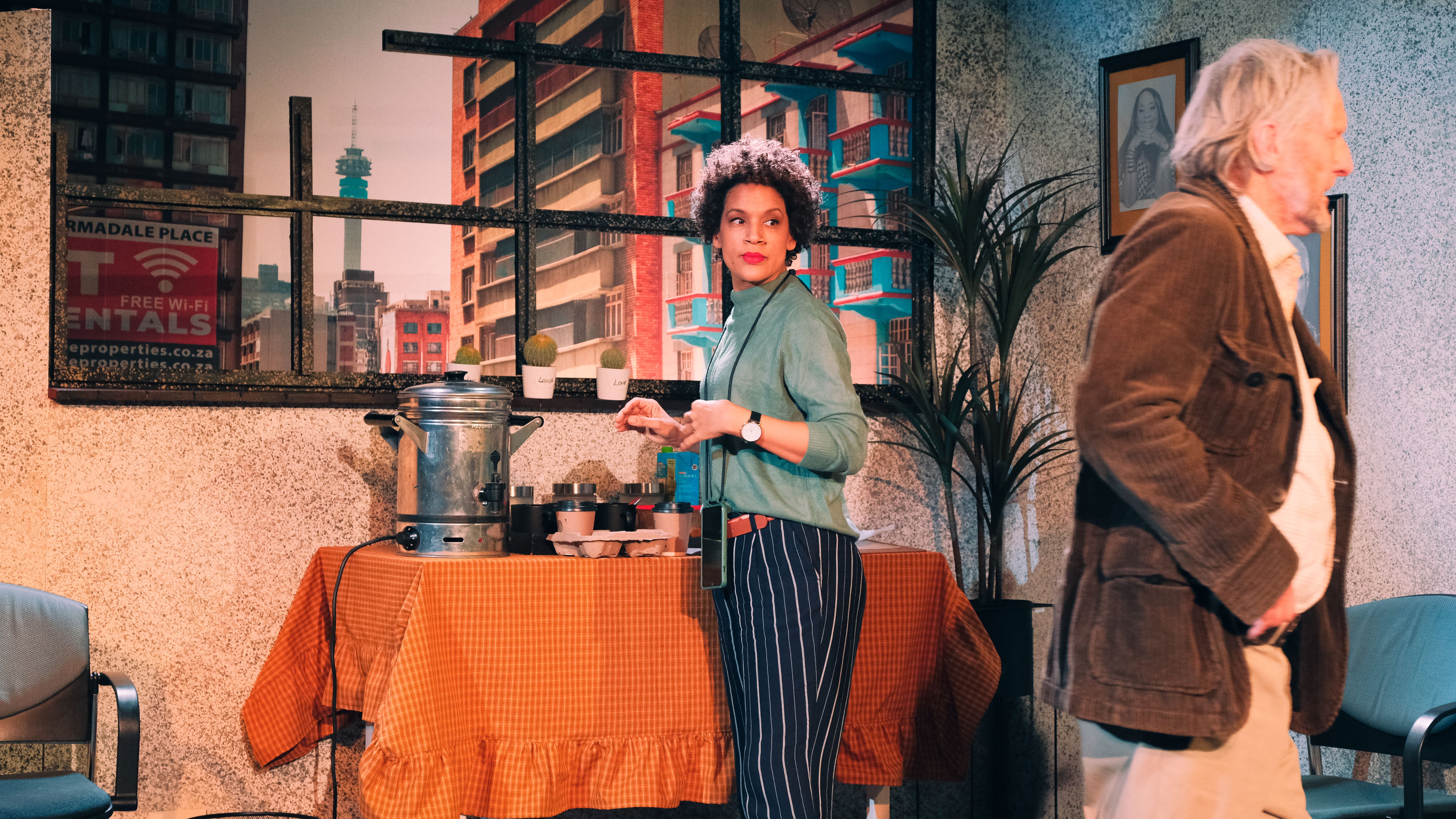
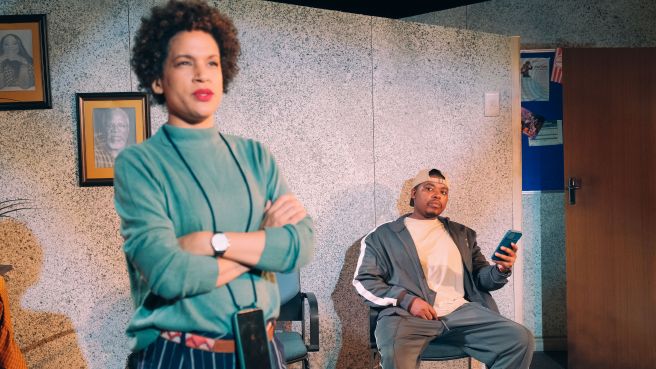
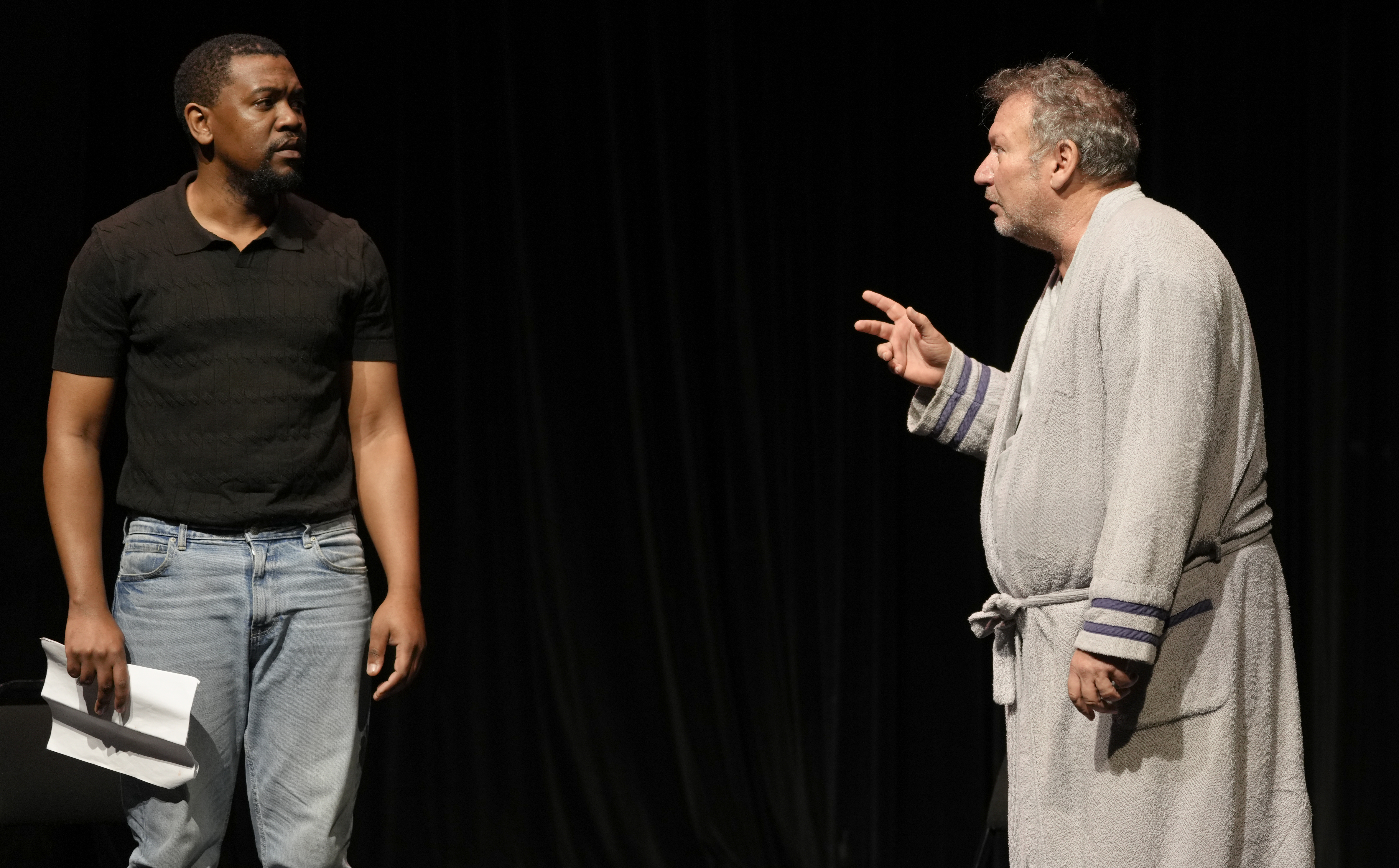
Ensemble cast (Chantal Stanfield, André Odendaal and Oarabile Ditsele) and playwright Paul Slabolepszy
Either way, I was quick to exhale once the actors found their way on stage. One feels it immediately. It’s two actors in a room waiting (rather like a doctor’s waiting room) to be auditioned.
Anyone who knows anything about theatre knows that this is both an exhilarating and a scary experience. Not many of us have to sell ourselves in such a public way each time when applying for a new job. And like most things in life, there’s not really anything that can be done to alleviate the nerves crashing into one another at high speed in these circumstances.
Not only that. If there’s something Paul knows everything about, it’s this. Both as a writer and an actor, it’s a scenario that he has lived most of his life – and one feels all of that when watching the play.
The two hopeful actors (the one at the end of his career, the other excited about the life ahead) who don’t know one another are sitting in a room checking each other out. Times are tough – not only for actors – and this is not a friendly space. There’s no one around trying to soften the gig they’re waiting for.
Every once in a while, a rather officious woman enters and, while she’s charming to the one actor, she bristles when the other asks anything. The tension is palpable.
Already a scary space for all involved, it is also heightened in the South African context. And this is what the playwright handles so well. He plays the moment and not the context, which he leaves to the audience to experience.
It’s subtle yet clichéd but with this clever script and a team who works with everything they’re given, it sweeps you along.
The title could work in two of our languages, English and Afrikaans, and that’s another trick up Slab’s sleeve. He has both languages (as well as three more indigenous languages inluding Sesotho, isiZulu and Tsotsi) flowing throughout and, in this instance appropriately and with some delicious irony in hand as he points to the state of the arts in general.
The choice of actors and director, novel and genius, adds to the grit and weightiness of what we’re dealing with. It’s not an easy world to navigate in current times and if your particular career choice constantly also takes you to the edge of life’s challenges, it can be excruciating.
And yet, that is where these people involved choose to play. That is exactly what this play explores. It’s part of who they are and what they have to do.
Bitter Winter is a fantastic vehicle for someone who has been in the game for some time and knows the territory, the people and their insecurities, and the fears involved. But then he also knows how to capture the magnetism of live theatre, how it cherishes the soul, captures our imagination and makes you think.
It works because everyone pulls together. The acting, the directing and the text all play their part.
I can hear Paul say Local is Lekker in his exuberant manner. And he’s right. When it works this wonderfully, it’s a joy to behold.
Bitter Winter is donating a portion of ticket sales to the Theatre Benevolent Fund and every cent counts.
Driving back from this year’s pantomime (the children of the kids who first used to accompany me are now my annual companions) I thought it was time that I should write a more personal letter of thanks and admiration rather than the usual review.
Not being at a newspaper any longer and posting on my personal blog, I have the right, I think. Also, between the two of us, you have probably/arguably written and produced more pantomimes than anyone else, definitely in this country and probably out there in the big world too; and I have probably watched and reviewed more than many can claim.
The genre as such isn’t my favourite and you have many other theatrical accomplishments in case anyone should think this is the only thing you do. But because of you, I make a distinction between a panto and a Janice panto, and as I mentioned in the review of Aspoestertjie (currently running in Pretoria), you have raised the bar for anyone who wants to participate in this field.
There isn’t any chance that I would have managed year by year if not for your genius and innovation. Being who you are, I know you would have been bored to death as anyone would have been, if you didn’t set a particular challenge for yourself. And perhaps that was what saved us both.
I was sitting in a packed Joburg Theatre on a Sunday with a show starting at noon and the aircon struggling with the current heat. Watching the audience, there were many kids but many couples or friends without youngsters too. It’s an institution and one you established and nurtured and grew to what it is. Small wonder they don’t want to let you go!
The text, which is always current and probably the thing most cherished by the adults, is as always on the mark with bullies a strong theme. That’s no surprise, but I love the way you wangle to be political without offending anyone.
You always have your finger on the pulse and have managed to work your way with casts which now fully represent the country without too much fanfare, you just did it. And this mirror of our society at a season that has such mass appeal is probably one of your strongest achievements. Few would have managed in such an easy fashion while showing the best of the country without bashing anyone on the head.
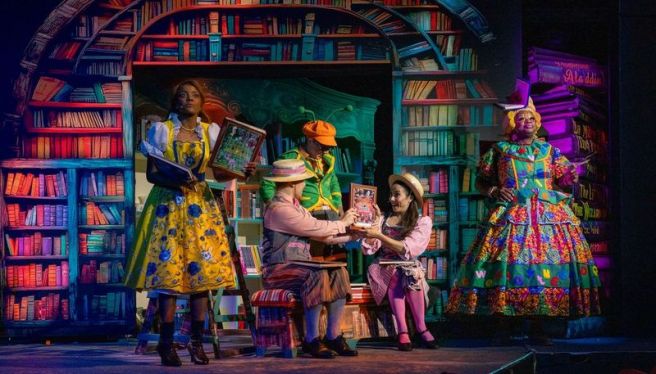
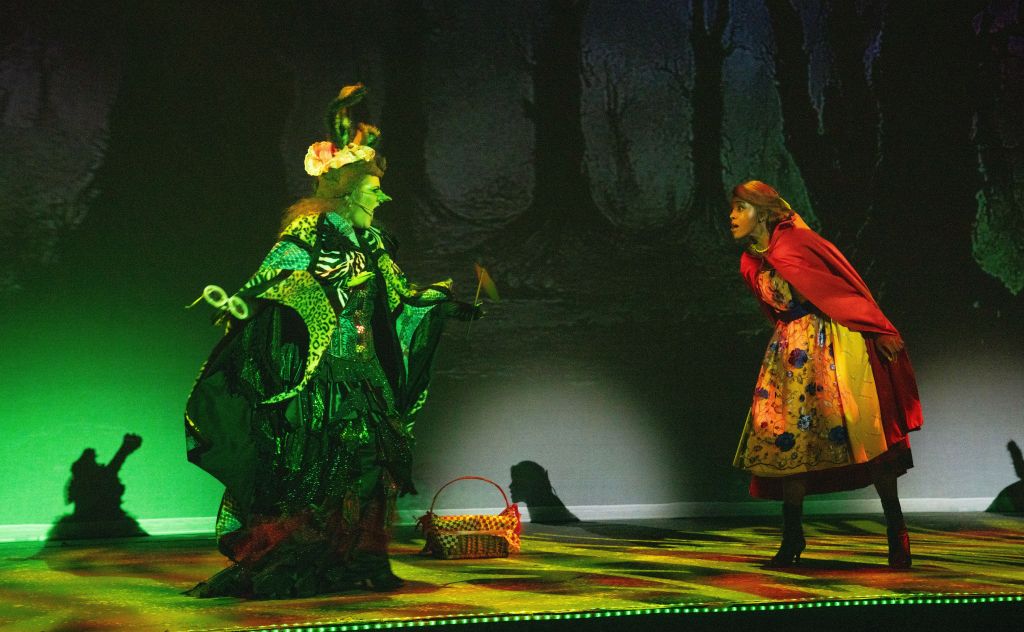
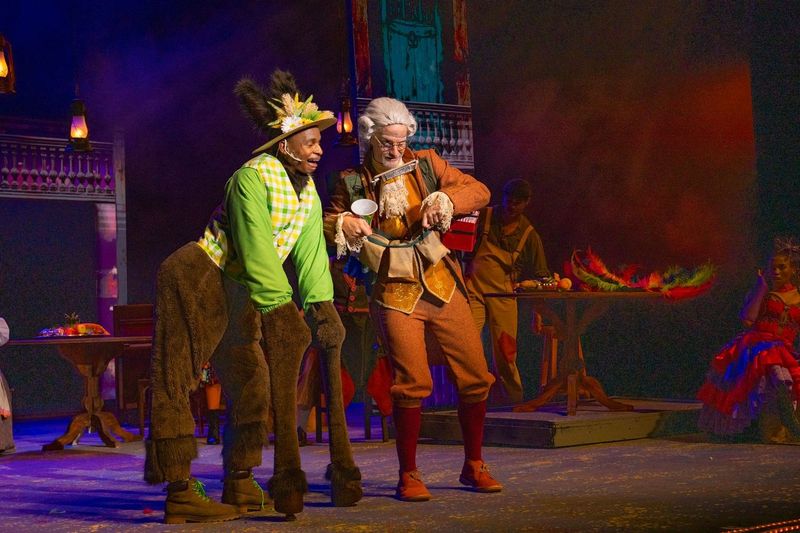
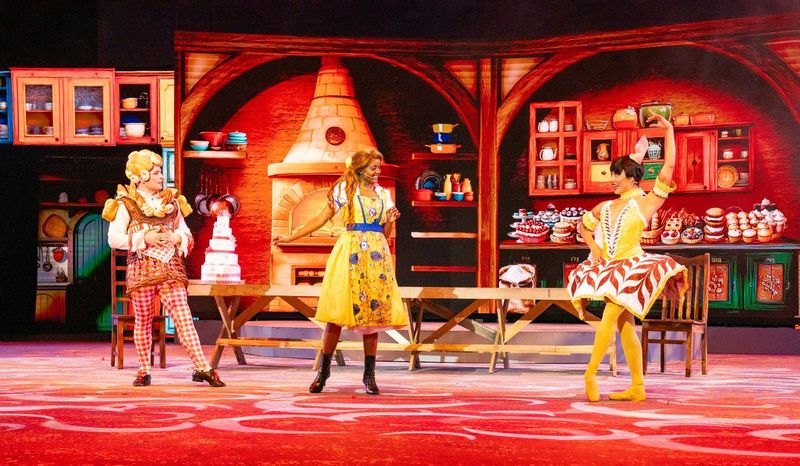
I know this is unfair, but allow me the indulgence. Cast and musicians were fantastic, but there were five that deserve special mention: Bongi Archi (aboveas the Good Fairy (Mama’ama’bali); Virtuous Kandemiri as Beauty-Belle; Judy Ditchfield having an absolute ball as Hectate-Hex, the wicked witch; and Lesedi Rich as Doodlesakkie The Donkey; and lest we forget, Chrissie-Anna Mampoer as the guest newsreader.
Through the decades you have been gifted technological advances, but the wonderment of that is to see how you have applied that in such a wonderful way. This time it’s the way you blend the players from their digital images to the live performers.
Also the sets, the in jokes which some might miss but it doesn’t matter. It keeps viewers on their toes. The six-year-old was curious about some of the adult laughter and that’s also a good thing. There’s a lesson there every once in a while.
I truly loved your Hitchcock moment this time. You managed to display almost all your different skills as well as showing that you’ve still got it – and will always keep forging ahead.
You are an example of a true artist. Someone who could probably have stopped through the years, but you simply cannot resist. For that I’m grateful. Your casting of the young and the old, the experienced and the newbies, each one of them bringing something unique to the stage and the story, also contributes to the success.
Even your choice of Timothy le Roux as assistant director and company manager looks ahead, as you made sure you don’t go without leaving some institutional memory and knowledge behind. If anyone was there to watch and learn it was this artist who started in the arts as a ballet dancer and followed that by crafting and creating his own way on the production side in this very tough profession.
To everyone’s delight, it’s the usual spectacular pantomime, but the reason we could say that time and again from one decade to the next, is you, Janice Honeyman.
And for me to say this about pantomime is all your doing.
Thanks for the magic and the memories!
I don’t have to preach to the converted and for those of you who need to introduce youngsters to the enchantment of live theatre, this is it.
CAST: Afrikaans singer Leah (Aspoestertjie); Marno van der Merwe (Prins Jan-Percy); Carmen Pretorius (stiefma Mevrou Violetta Esterhuizen); Grant Towers en Schoeman Smit (stiefsusters Marabella en Amaranta); Elsje Lourens (Feetjie peetma) as well as Donae Brazer, Duandre Vorster, Jemma Gradwell, Jonathan Raath, Lindi Niemand, Monique Barnard, Rainy van Zyl, Tristin Indigo, Tseamo Mapukata and Zante Marais to complete the ensemble
For the first time in decades Pretoria has a pantomime to be proud of.
Gauteng has grown accustomed to the Janice Honeyman spectaculars at the Joburg Theatre and that is also happening, which meant that my expectations were put on hold when I went to the first preview of this production.
I was also prepared to give them some slack because of the early attendance but it’s a short run and I wanted to get the word out there – especially if, as in this case, it is good.
It’s much better than that. It all starts with the script, which is original and funny – and has some real edge to keep the adults happy while the youngsters get the drift of this thoroughly modern Cinderella tale with many twists and turns.
Add to that a cast that have been rehearsed to within an inch of their lives and there was very little to complain of.
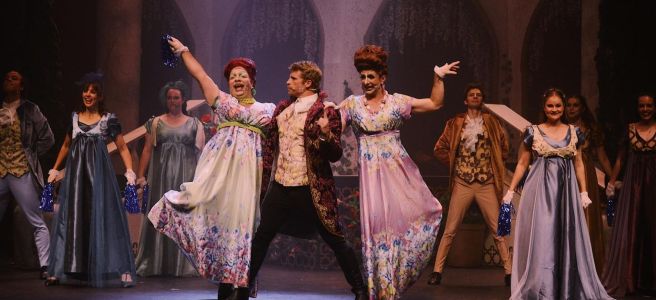
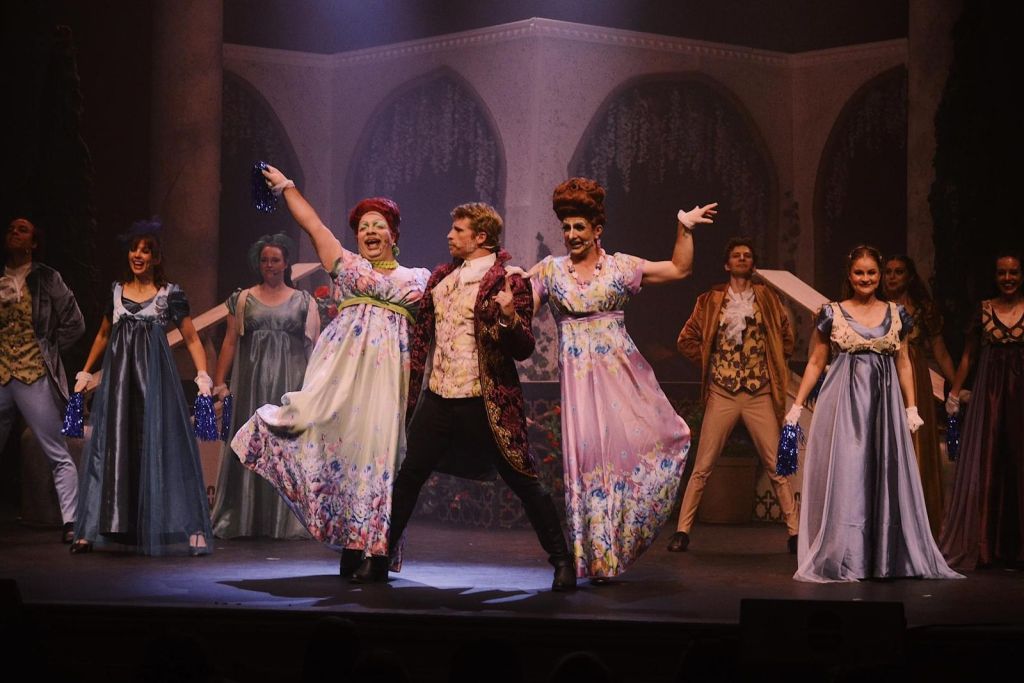
The prince and the two ugly sisters.Let’s all go to the masked ball!
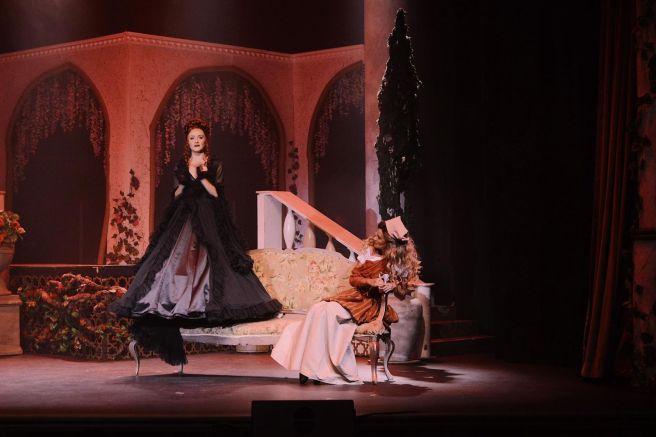
It’s also good to see that they’re prepared to take some chances, like the vibrant, young Elsje Lourens cast as the fairy godmother, Tina Tydreis. She’s the one who has to set the tone and pace of the production and has no problems doing just that. There’s bounce in every move and she immediately engages the audience in her particular telling of this over-the-top tale.
Pantomimes rely heavily on a handful of actors who have to keep everything together. The romantic leads, in this instance Leah and Marno as Cinderella and her prince, have to keep the little hearts racing. I had a youngster right next to me who was terrified she would not witness the final embrace.
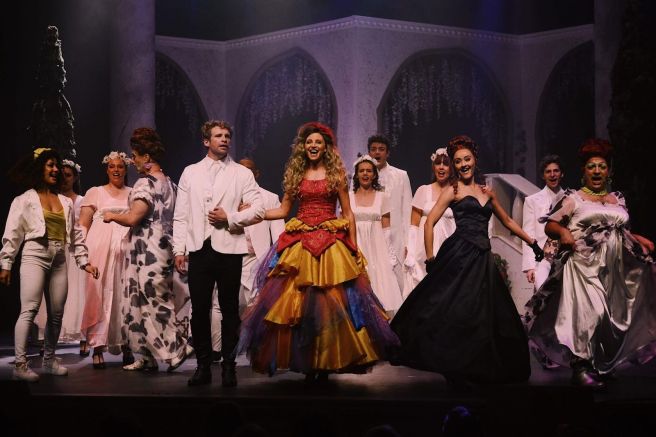
With Lourens, the two deliciously decorative ugly sisters (Towers and Smit) and probably the celebrity of the show, Carmen Pretorius as the achingly precious stepmother, they especially knew how to keep the show on its toes and the laughter rolling while playing their parts to the hilt and singing their songs magnificently.
It truly was a treat and I was thrilled that Pretoria finally stood up to challenge their neighbouring city with some panto excellence. I know Ms Honeyman will welcome the competition and she will delight in witnessing the results of the standard she has set other professionals in this particular field.
Pantomime isn’t as easy as it looks. Everyone is having a merry old time but if your cast doesn’t have the energy and elegance to pull it off, the audience won’t engage.
This one did. From the youngsters to a row of elderly women, everyone was shaking with laughter and delight throughout and for me, someone who has seen far too many pantos in her life, the fiesty and fresh approach, and the sheer excellence of the presentation, was a highlight.
It wasn’t that I was expecting to experience doom and gloom, but the standard was unexpected and something that blew me away.
Tseamo Mapukata (as Buttons, centre) has a magnificent voice and the rest of the cast are not too shabby either.
If you have children in the family, gather them and get tickets to join this talented gang in some lovely end-of-year entertainment. There’s not a weak link in sight and I would go especially to hear Tseamo Mapukata who played Buttons sing.
What an exquisite voice. But none of the cast was too shabby.
Let’s hope we hear more from OAK Entertainment in the future, they certainly know how to put on a show!
Tinarie van Wyk Loots talking about her script Hamlet/Speenvark. Picture: Nardus Engelbrecht
DIANE DE BEER
This is the 9th time I’ve written about the Klein Karoo Kunstefees/NATi/Baxter Teksmark (text market), the reason being it is such a smart creative endeavour.The brainchild of Hugo Theart, the CEO and artistic director, Hugo Theart of the Klein Karoo Nasionale Kunstefees (KKNK), it is one of my favourite events of the year It’s existence was born out of need because original local scripts had become a problem. What they were hoping to do was to create new theatre texts which would provide local content for the festivals as well as encouragement for both budding and seasoned writers. And that is exactly what happened.
This past festival was the 9th, 156 text ideas in many of our official languages have been presented and in total, 43 of these texts have been developed into full scale productions, some of which can also boast well-deserved prizes.
What I find so intriguing is the zeitgeist that shifts year by year. Very specific strong themes usually emerge and it is fascinating to observe the topics tackled and which struggles or celebrations the creatives have focused on in a particular year.
One of the extraordinary gifts that this particular platform supplies is the chance for artists to experiment, to test ideas, to play and simply to reach for the stars which is something that quite a few playwrights attempted with brilliant results.
Acknowledged as one of our best actors, Tinarie van Wyk Loots presented a play titled Hamlet/Speenvark. Even the title suggests that this is going to be something unusual. Blessed with her acting skills, she could present her own play/monologue, which I found challenging yet immensely exciting.
She describes it as an attempt at a solo production, or struggling poem, modelled on, and with apology to Shakespeare’s Hamlet (and she cites Jonker, De Villiers, Malherbe, Totius, Opperman and Yeats). That’s quite a list.
She writes that it is “a tentative but violent investigation into the emotional landscape of being South African – the search for identity and a relationship with guilt and victim mentality.”
She further explains that her choice was driven by her “ancestors rooted in Africa and Europe, the disillusion of humanity, and emotional suicide depicted through the extrapolation of various characters in the original script, who all speak from the same mouth.”
The reading was magnificent and I could feel that this was going to develop into something quite extraordinary. Van Wyk Loots is someone who has given her heart and soul to the stage. Few actors can still afford to do that. But she has the skill and talent to keep adding to her repertoire and her engagement with theatre.
Not only can she write, she can then take the text, already her own, and do with it whatever she wishes. Personally I can’t wait. This is the kind of production that keeps theatre alive.
Dianne du Toit Albertze in conversation about Meire en Pinkie. Picture: Nardus Engelbrecht
Never one to shy away from tackling holy cows, Dianne du Toit Albertze’s writing grabs you by the throat. On first reading of the text, I needed to know who had written with such abandon and such a brave heart. When I discovered who it was, I knew it couldn’t be anyone else and I was surprised I didn’t pick up the harsh yet haunting style of this writer.
Meire en Pinkie depict orphanage runaways and ladies of the night and day. Okiep jintoes with nagging drug addictions who scramble for survival daily, searching for a cure, writes Du Toit Albertze, but fail to know how to get it. But they continue running towards ways to escape the vicious cycle of poverty and abuse.
But she points out, life has a way of outsmarting you. The sins of their mothers catch up with them when they are accused of selling the means to vicious addiction, Meire’s child. It’s something they endured themselves as children. And now they feel abandoned
Picture: Nardus Engelbrecht A scene from Meire en Pinkie.
It’s gritty, hard-hitting and without compromise. Some would argue for something with less hard edges but this is exactly what theatre can achieve: to tell real-life stories in a language that becomes a character, confronts you and makes you listen without turning away. This is when theatre becomes therapy for those writing and performing as well as those watching.
These are just two of the standout texts, part of this year’s text market at the Baxter but there were many more that had potential for further development and some already stage-ready.
Playwright Gavin Werner (Meeting Murphy, centre) with two actors playing the parts on either side. Foto: Nardus Engelbrecht
The theme of bullying captured by Gavin Werner in Meeting Murphy will touch everyone who would have experienced it in some form. Another one that popped up in quite a few texts was memory and the way individuals remember the same event in different ways. How we view the world is often coloured by past experiences and this can lead to discomfort in some instances.
The Salt Lesson by the insightful Sibuyiselo Dywill also tackles memory but here it has to do with different generations, cultures and languages and most importantly for the playwright, from the same bloodline. In any context this is a huge ask but with the South African apartheid past, when the elderly family member (white) suffers from dementia and regards the youngster (black) as an intruder rather than a son, things can get really messy.
Playwright Sibuyiselo (with the mic) surrounded by the three actors in his play The Salt Lesson. Picture: Nardus Engelbrecht
It’s such a clever idea which explores different issues in genius and thoughtful fashion forcing audiences to look at their own world views from a different vantage point.
Scenes from The Salt Lesson. Pictures: Nardus Engelbrecht
With plays written in home languages including Afrikaans, English and Xhosa, the premise is embracing and expansive with the graft expanding year by year. Once we can figure out how to present theatre in different languages so that everyone can understand – easily – Teksmark will truly break down barriers and shift theatre in this country into a unique stratosphere.
And if you want to check out what is happening at the second Gauteng Teksmark to be held at UJ, where different playwrights and others involved in the theatre industry discuss their ideas as play readings, enquire with J.C. Aucamp at 0763335945 or jc@kunste.org.za.
The KKNK 2024 Gauteng Teksmark will be held on 24 and 25 October at Keorapetse William Kgositsile Theatre, Kingsway Campus, University of Johannesburg.
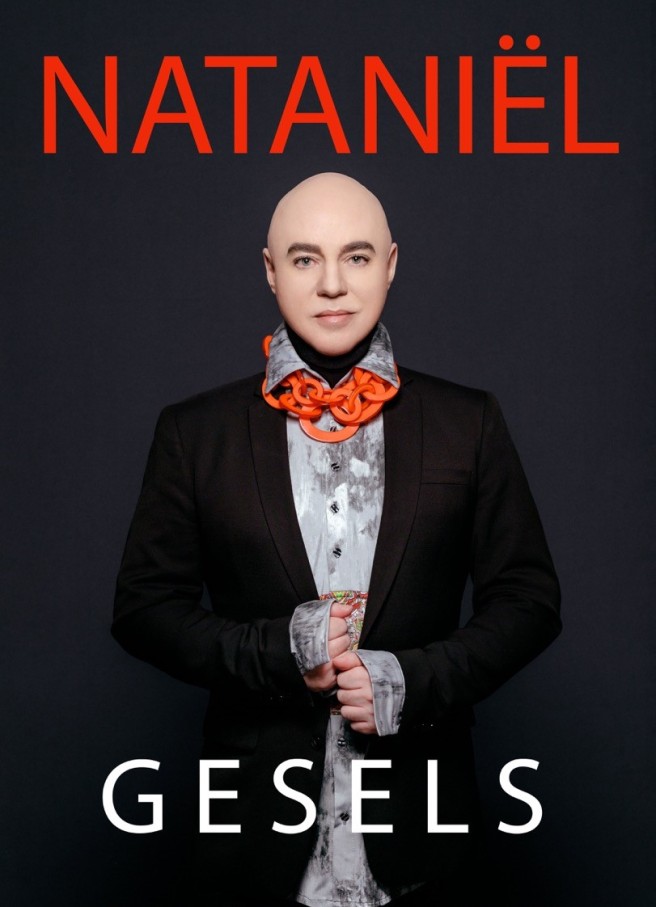
So I went to last year’s Fairtree Atterbury Theatre show in Pretoria, and was so impressed that I forgot to take notes. There was little chance of reporting or writing without having a single note and when he announced the 2024 (he changes topic every year) I was ready to go – which happened a few weeks ago.
It’s always packed, no room for a single late-comer, and while last year’s topic was Pain, this year he focused on our chaotic world and the urge to achieve excellence. “What are we busy doing?” he asked. “What is going on?”
All of this chatter happens at breakneck speed and what I had forgotten was that the auditorium is pitch dark, like in a theatre show. Taking notes would be quite a challenge, but I was determined.
What I hoped to capture would perhaps not be the most accurate version of his magical monologue, but I was hopeful that I would capture the essence and encourage fans to attend future talks.
First off, it’s all in Afrikaans. But that’s always part of his charm. He often complains about a show or a talk which is too serious and not really funny. What escapes him is the way he speaks, his vocabulary and the way he constructs a sentence are unusual and often hysterically funny.
With the focus on the times we live in, he began his talk with one of his irresistible stories which set the tone for the rest of his talk. He can’t but be funny even when he is having a serious conversation. It’s his special formula and what makes you listen while forgetting that you’re actually part of a masterful sermon.
He has always had the gift of the gab. That’s how he makes a living. People hang on his every word. Why not impart some wisdom while making them laugh? And that’s exactly what he does. Not many can make you smile while telling you how to behave. But he does, and gets paid to do exactly that.
And again, it’s because he knows how to tell a story: whether these are true or fabricated, the life lessons come from the heart – and experience. Being Nataniël, he has an unusual life and people share their secrets. He will juggle and jiggle them around so that even those involved will probably not recognise themselves, and then he will douse it with wit as well as wisdom – and the audience will lap it up.
In the current talk he investigates the need to succeed and sparkle (“prestasie” in Afrikaans, but he was unsure of the English translation as achievement doesn’t quite hit the mark!)
And while fame and celebrity seem to be the hallmark of success in today’s world, he believes there’s more to it than that. Legacy is something that is often talked about yet the individual in question doesn’t experience that, it only comes once they’re dead. “A career is also an achievement,” he suggests. And at least then, you can share in the satisfaction of having achieved something.
While at school – something he hated with his whole being – he was often charged by a teacher or someone in authority to participate in a competition of some kind. His response was always, but why? To what end? Who benefits? And what does any of this achieve?
Others again will equate success with money, but having raced through a spectacular career himself, he has had the chance to reflect. For him it has always been the process of getting from beginning to end – whatever the journey might entail. Once you have travelled from one point to another, you can look back, and perhaps make sense of it.
“Success changes your perspective,” he reasons. And for him, 114 productions on (all self-written, music composed, directed and performed), the pain and anxiety have remained. It has never been easy and he still questions the damage accumulated through the years. “It has to impact my health, surely,” he says. “I seem to be in constant pain.”
In his world, he only recognises five iconic individuals: Van Gogh and Leonardo da Vinci, neither of whom lived fabulous lives; Shakespeare, who had to act in his own plays to make a living; Einstein whose famous equation explains the energy released in an atomic bomb; and his grandmother who is the individual most often featured in his stories and the one he credits with influencing his life the most.
“I have tried everything but could never recreate the magic she created in her home and on others.” That’s what he refers to as a natural achievement – not something one tries to do, it simply happens.
Go and listen when you can. Nataniël is one of those people who lives an interesting life because of who he is. It’s not so much the celebrity status, rather the way he views the world that comes through in his talks.
He is naturally wise, more witty than anyone I know or have encountered, and he knows how to tell stories. More than anything, that has probably most endeared him to audiences.
His spectacular shows are something to witness and experience, I never miss those. These latest talk sessions are something completely different yet no less entertaining. As with his shows, you leave the theatre feeling you have gained something – and for everyone it will be different.
And you will die laughing…
He can’t help himself. Even when serious, his inner clown escapes.
29 June 2024
GESELS 2024
11am + 3pm
Fairtree Atterbury Theatre, Pretoria No children under 15 Book at: seatme.co.za
Niall Griffin dying the costumes wearing protective gear.
When Niall Griffin was invited to take on most of the design elements (set, costumes and lighting) for the Sylvaine Strike-directed Spring Awakening, he was nervous going into the process because living up to the expectations of a legend can be daunting. He tells DIANE DE BEER about the experience, which he describes as the highlight of his career:
Spring Awakening, presented by Cape Town’s Luitingh Alexander Musical Theatre Academy (LAMTA) as their first book musical, also marks the first time that Sylvaine Strike has directed a musical.
Based on the controversial play that was written in the late 1800s by Frank Wedekind, Spring Awakening delves into the lives of a group of adolescent students discovering their changing bodies, their sexual identities, urges and desires, all while navigating the oppressive and draconian societal norms of the day.
Under Strike’s visionary direction, this reimagined production (with a very young cast) brings the gripping and emotional story to life as it explores complex themes such as self-discovery, repression and the power of rebellion.
Niall Griffin, a designer with a mission.
And while there was initial anxiety, once the work began, Griffin knew instantly that he was on safe ground. “The care, respect, trust and sense of magical play that Sylvaine instilled in our journey together are unmatched in my career. I think we both felt an immediate understanding of each other and were both amazed at how perfectly our style and ethos merged,” he says.
“We care immensely for our process, our casts, our team and our audiences, sometimes to our detriment, but finding someone with that same level of care has been one of the greatest gifts of my career.”
Being familiar with the level of detail Strike approaches when making a play, all of the above sounds like a match made in heaven.
The vibrant young cast in Spring Awakening
Accepting the challenge was a no-brainer for a designer who is also described as an industry legend. “There are musicals and then there are musicals. Some are light and frivolous and the perfect escapism and then some hit you harder in a place that truly moves you. Spring Awakening is the latter for me. The little rockstar hit that came out of left field to take Broadway by storm,” is how he describes it.
“It deals with things that we’ve all been through or are going through, both good and bad. All too often, in this day and age, we are driven into false beliefs and horrific mental health issues because we carry such shame from our experiences. The show, as heartbreaking as the story is, leaves one with love, compassion and a sense of togetherness. The human condition is not singular. We are not alone. We all need a little more love in our lives… and who doesn’t love a bit of Victorian-era deliciousness?”
Describing the process, he explains that what began as an exercise in replicating period fabric developed into an exploration on how possible it was to create an entire show from natural fibre. “Our planet has rapidly become saturated with ‘the synthetic’ and I believed this show needed authenticity in every aspect if it was to have the impact it deserved.
“The entirety of the show’s design is manufactured from purely natural fibre. Costumes began as neutral cotton that were dyed with natural dyes. The set is sustainably sourced wood and hessian made from vegetable fibre. It has been an incredibly educational and rewarding process.”
It is that process that piqued my interest, especially when basically the whole look depends on the outcome. Griffin understood that taking on the full production design across set, costume and lighting was a huge undertaking and not for the faint hearted.
“My driving force is to find a seamless synergy between all departments. What I term ‘one organism’. While taking on full production design is huge, it does make knitting a visual together far easier. Even though this show was Sylvaine’s and my ‘maiden voyage’, it was clearly destined, as our sensibilities and aesthetics couldn’t be better matched.”
And there’s the key, something they obviously both understood. “Theatre design to me, at its core, is about designing emotional response. I needed to immerse myself in the emotional journey of the piece, the high and low tides, in order to find its design core,” he notes.
For him texture is far more than paint and dye. “I spent a long time with the score and libretto and, to quote the Gen Z’ers, ‘felt the feels’. This is how I approach the majority of my design work, from a place of emotional honesty. It’s about finding the heart of the piece.”
Describing his process in more detail, he began with the sets, followed by costumes and finally lighting:
“When it comes to scenic design, my favourite moments in theatre are when a space manages to completely morph its texture, feeling and setting without all the ‘big toys’ and flash. A threatening storm can become something else, in mere moments, with a shaft of light breaking through the clouds. I wanted the space to morph seamlessly so that the emotional flow wasn’t interrupted by a clunky scene change. Finding the balance between something that can feel both oppressive and beautiful was a challenge. Using exposed wood was a no-brainer for me. Wood is a material that carries its growth with it forever. Its rings and knots and imperfections are part of it. This felt poetic to me.”
When it came to costuming, he wanted to create a uniform that felt prescribed by an oppressive regime, “a regime trying to erase the individual and force uniformity. I felt this would underpin the narrative journey of our characters rebelling against the blind norm by illustrating how prescribed uniformity cannot erase the burning fire of the individual.
“Every costume, from head to toe, has been lovingly made from scratch. They are all individually hand dyed and aged, and this is where I started to sneak the individual into the uniforms by aging and breaking down each individual’s garments with their own personality. Some of this detail may not be evident to the audience, but it was important to me that the cast could experience their costumes in this way. I truly believe that what the cast feels in their costumes translates into their performances.”
Lighting delivers the final flourish. “Sometimes, at the speed a musical moves, the audience needs to understand an emotional shift quickly, and this is where lighting was vital to me. I wanted the world to feel murky and rich, like an oil painting come to life.”
If the successful runs in Cape Town are an indicator, this has all been achieved, as the visuals will attest.
And Griffin has his final say: “Making theatre, especially non-replica productions, in South Africa in the current climate is hard work. Creating an entire musical from scratch was a feat second to none. I have a team of remarkable artisans that I work closely with and whom I would be nothing without. They all share my level of delivery standards and they all jump into the deep end with my crazy ideas. A tribe second to none. I couldn’t be prouder of the product, and watching audiences experience it in Cape Town has filled me with so much joy.” * Performances run until 5 May 2024 at Pieter Toerien’s Theatre at Montecasino with shows from Wednesdays to Saturdays at 7:30pm and matinees on Saturdays and Sundays at 2:30pm. Tickets cost from R200 through Webtickets. Please note that Spring Awakening contains mature themes, partial nudity, sexual situations as well as explicit language. No persons under 13.
Another Klein Karoo National Arts Festival has come and gone but what lingers are the artists, their originality, dedication, blood, sweat and tears and delight that they provide in a lopsided world which is difficult to navigate. DIANE DE BEER finds nourishment, inspiration and novelty in the imaginative and ingenious artistry of our creatives:
I have to be honest from the start. Festivals always have a strong emotional impact on me. I am in the fortunate position as an arts journalist to be invited to see as many productions as I can squeeze into the run of an event and at this year’s Klein Karoo Nasionale Kunstefees (KKNK) there was still a post-Covid frisson with the festival at full strength for a second year.
When a festival goes into full swing, it can be quite daunting and I’m not sure whether I want to be there, but as excellent productions and artists climb into my head, I go into full festival mode where I’m simply thrilled at being overwhelmed by the local arts community.
Being an artist isn’t an easy profession, even if many on the outside feel that they had a choice and simply have to bite the bullet. That they have a choice is arguable and to produce excellence year after year, often with few rewards and never under ideal circumstances, can be daunting and not for the fainthearted.
And yet they go full tilt as they battle extreme circumstances like pandemics or vitriolic social media, all in the name of art.
More than anything, whatever anyone says, we cannot resist them. For me it is a huge blessing and privilege to witness and write about our uniquely original creatives.
Post-festival, an overview of the festival is always a personal reminder of and reflection on everything extraordinary, yet it’s tough to choose which among all those actors and productions, to highlight. There are simply too many that demand attention and especially this year, the scope was exceptional.
I always feel I want to bring something of the flavour of a particular festival to those who weren’t there. Perhaps one of my favourite pieces might pop up somewhere and a reader might be encouraged to go, or even more ideally, someone who has always thought about festivals but never attended might be encouraged to go.
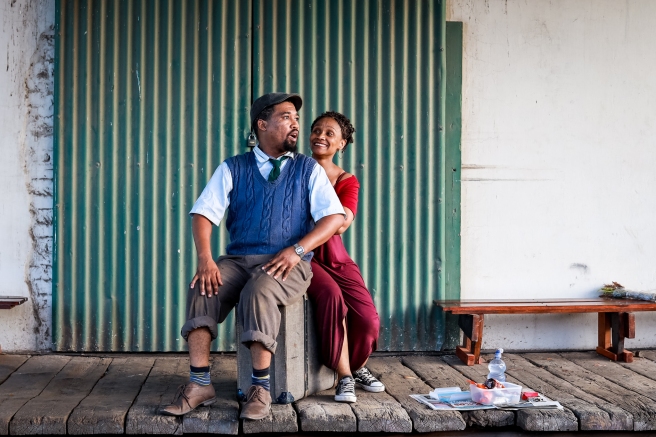
The enchanted Die Swartmerrie withTheo Witbooi and Chantell Phillipus. Pictures: Ryan Dammert.
I have to start with Karoo Kaarte. It’s one of the dream projects of the KKNK, simply ticks all the boxes and grows more impressive every year since its first inception with special mention of last year’s winning production, Droomkrans Kronieke, which landed with such impact because of its energy and precision. How can you not win when developing the underdeveloped artistic talent of the previously disadvantaged by implementing a programme that empowers those who wish to make it in the arts.
It’s inspiring and this year’s production, Die Swartmerrie, is a site-specific piece set on dilapidated terrain with a set of train tracks, an imagined train, and a rundown platform. Two people, a man and a woman (Theo Witbooi and Chantell Phillipus) are waiting, both traveling but not with the same destination in mind. There is a past, the tracks and possible journey points to a future, but this notion disappears with the wind.
It is breathtakingly beautiful and hauntingly gripping as the two talk and tackle their issues with delicate determination.
Afrikaans is an especially emotive love language and when spoken in the specific Karoo accent, warm and intimate, the sounds are as captivating and meaningful as the actual words being spoken.
I was surprised by this couple alone on stage and also electrified that the team (in this instance Neil Coppen – a facilitator of the whole project with Vaughn Sadie – and Oudtshoorn’s Tiffany Saterdacht) decided to go this route but, of course, this is a company packed with the unexpected, and hopefully it is a production that will become an institution in Oudtshoorn and won’t be limited to the festival. You don’t want to miss out on these performances and such a quality production. They should keep pushing the repeat button and keep it as part of their arsenal.
Karoo Kaarte further packed a punch with its art exhibitions, as well as walking tours done by young Oudtshoorn inhabitants all participating in turning the town’s current and future narrative into an inclusive one. The community is constantly gaining strength thanks to Coppen and Sadie who have invested their creativity in this wonderful way, all the while bringing their local learners on board.
It’s a marvellous investment in the future of this town (and hopefully others across the country will follow) and fingers crossed that a smart investor will see the potential going forward.
Because we were born in such large numbers, our generation is referred to as the baby boomers (born from 1946 to 1964) and probably that’s why ageing and the lifestyles of those growing older has become part of today’s theatre language. We are also fortunate to have some amazing artists who keep on practising their craft while ignoring any barriers that might come their way.
They know how to choose, break out and try new things and simply keep audiences flocking to their performances. Names like Sandra Prinsloo, Antoinette Kellermann, Jana Cilliers, Elzabe Zietsman, Amanda Strydom not only arrive with new productions, they’re also constantly adding skills to their resumés.
Cilliers took up playwrighting for the first time with Veelhoek, a two-hander with herself and Ludwig Binge directed by Marthinus Basson, and the wisdom and writing were quite overwhelming. Who would have thought that, apart from all her other accomplishments, she would now add writing to the list – and then perform it with such clarity as she tells a story that lies close to the heart?
Zietsman is another one who keeps shifting those barriers and I am so delighted that she has added the magnificent Tony Bentel to accompany her on stage. He is one of those pianists who brings much more than just the music to the performance and it shows. Vier Panado’s en ‘n Chardonnay again has Zietsman expounding on life, singing brilliantly and with heart – and cherishing cabaret as it should be performed. The content, which deals with resilience,needs hardly any acting by this actor. Most of it is probably her life which she has shared heartily and hastily over the years. And she will always rise…
Do we need to say anything more about those two great dames, Sandra Prinsloo and Antoinette Kellermann? How lucky are we to witness them in performance after performance as they just keep surging ahead.
Die stoele with Antoinette Kellermann and Chris van Niekerk. Picture: Hans van der Veen.
Kellermann tackled the Ionescu tour de force Die Stoele, accompanied by a much-too-rare performance by Chris van Niekerk. Marthinus Basson adds genius to the production, which can be seen over and over again as it deals with something we all have to confront – LIFE. The content might be terrifying but to watch, quite hysterical. As always Kellermann is in with everything she’s got and what she does with her body tells a story all its own.
Goed wat wag om te gebeur with an actress I would love to see more of, Emma Kotze and Gideon Lombard.
She’s also a part of the magnificent cast (Kellermann, Emma Kotze and Gideon Lombard) of Philip Rademeyer’s Goed Wat Wag Om te Gebeur. I had seen the English version most recently but also this one a few times, and this latest run proved how good theatre improves with time. It’s the best the production has been and I know the director agrees.
Prinsloo brought her masterful Master Class, a piece of classical theatre, to the festival and, also as is her nature, she teamed up with the exceptional David Viviers in a Teksmark original Op die hoek van Styx en River is Noraper Abuis met die Dood Oorgeslaan (playwright Henque Heymans). It’s a novel work which showed flickers of what it could be in time (always a scarce commodity).
Like Rademeyer’s Goed Wat Wag Om te Gebeur, Monsters, (produced, directed, adapted and translated by Tinarie van Wyk Loots) which has had runs at other festivals previously, found a remarkable rhythm that lifted the text and the performers into another realm . It was rewarding to experience and again I was reminded what a precious entity the different circuits are because single theatres cannot afford to take many risks and festivals add an extra buffer in this precarious world – to the benefit of arts audiences.
Michele Burgers in Monsters. Picture Stephanie M Gericke.
We haven’t seen much of the versatile Michele Burgers, who will hopefully return to stage more often in the future and who was beautifully supported by the talented René Cloete, Ntlanhla Kutu and Elton Landrew.
Die Vegetariër with Tinarie van Wyk Loots and Melissa Myburgh who as young actress has shown her mettle magnificently . Picture: Nardus Engelbrecht
Smartly directed by yet another multi-talented artist, Tinarie van Wyk Loots, she also featured in Jaco Bouwer’s hard-hitting Die Vegetariër (adapted and translated by Willem Anker) which also benefited from another run, as well as in the latest probing Anker text, Patmos, also brilliantly staged and directed by Jaco Bouwer, who always challenges and pushes boundaries with his choice of productions, casts and presentation.
The visually captivating Patmos with Melvyn Minnaar and Tinarie van Wyk Loots. Picturess Hans van der Veen.
Without these art warriors our art landscape would be barren. They keep us returning to theatres time and again with their unique approach, their determination to do their best under trying circumstances, including a lack of time and money, and simply their excellence.
Nataniël, for example, returned from an extensive tour to New Zealand and Australia during the festival yet put together one of his distinctive shows with flamboyant costumes, mind-blowing text and two musicians (Marcel Dednam on Piano and Leon Gropp on guitar) who created a spectacular rhythm to underpin his songs and singing quite magnificently.
I could go on forever, there were simply too many highlights, yet I cannot go without honourable mentions of the following, no less important than those already mentioned:
Jefferson J. Dirks-Korkee in a return of the soul-stretching Rooilug.
Fietsry vir dommies. Picture: Gys Loubser Hallo, is Bettie wat praat with Dean John Smith.
Marianne Thamm
Solo shows: the return of Rooilug with the delightful Jefferson J. Dirks-Korkee; Fietsry vir Dommies (masterful text by Tiffany Saterdacht and deftly directed by Dean Balie) which showcased the enormous talent of Eldon van der Merwe, who was also rewarded with a Kunste Onbeperk prize for Young Voice. Dean John Smit shone in his now full-length solo production of Hallo, is Bettie wat Praat; the craftily current My Fellow South Africans by Mike van Graan, starring the physically and mentally dextrous Kim Blanché Adonis; Vuisvoos, maar nog regop, where journalist Marianne Thamm delivers a gloves-off and much needed monologue, incisive if laugh-out-loud, on the state of the nation; a shout-out to much missed director, Jenine Collocott, who teamed with actor Klara van Wyk to present the hysterical Monika, it’s me:
The mesmerising ‘n Lewe in die dag van ‘n vrugtevlieg ensomeer with David Viviers and Wessel Pretorius. Picture: Hans van der Veen The Old Man Who Thought He Had a Dog with Merwe van Gent and Angelique Filter.
Double-up: David Viviers and Wessel Pretorius returned as a popular duo in a follow-up to their successful Klara Maas with ‘n Lewe in die die dag van ‘n vrugtevlieg, ensomeer and hopefully many more encores in the future, they were missed; an innovative new duo, Stellenbosch students Angelique Filter and Merwe van Gent, soared with the tragicomedy The Old Man who thought He had a Dog;
The delightfully funny Marc Lottering.KG Mokgadi- Weighing In.
Stand-up (not my speciality) yet: Who can resist the always energetic and enthusiastic funny man Marc Lottering who always delivers?; as well as my comic standout of the festival, KG Mokgadi. It feels as if these two have something more to say than just one-liners.
Ken Jy Vir Dewie with , Joshwin Dyson, Crystal Donna Roberts and Robert Hindley
Productions: The original Ken Jy Vir Dewie was cleverly staged with themes that target the whole family and as the play was dealing with bullying, the setting for everyone, actors and audience alike, was a classroom; and again, it was directed by yet another versatile artist, Margit Meyer-Rödenbeck, who has exchanged Dowwe Dolla for Ouma, again a sign of the times. She cleverly started the play outside with audience and cast waiting to enter the classroom!;
The joyous Braam en die engel with Rehane Abrahams, De Klerk Oelofse and Timothy Isaacs. Picture Hans van der Veen
And Craig Morris grabs the attention in Die Rooi Ballon.
Children’s Theatre: It’s not something I usually see at festivals but, as I did, I was encouraged by the effort made by the KKNK to look after these tiny tots who are of our more enthusiastic audiences: My favourites included Braam en die Engel and Rooi Boeties.Watch out for them as they might travel.
Dance: is back with brilliance because of the clever choice of productions, only two of them but with some of the most innovative names in contemporary dance: Dada Masilo who choreographed one of three pieces, Salomé, for Joburg Ballet; and Grant van Ster and Shaun Oelf with the Figure of 8 Dance Collective (pictured), who brought in other creatives like Nico Scheepers on text, Andi Colombo on lights and Franco Prinsloo on original music. Both companies were sublime.
Lucky Pakkie (Packet): Thanks to the brilliant team of Llandi Beeslaar and Stephanie Gericke, this is another of the KKNK delights because of their dedication and hands-on approach. It needs that because what you have is three lucky packets of four 15-minute productions each; the three sections embrace easy viewing to soft touch to pushing the envelope as much as possible, and artists who cannot manage a full production or perhaps just want to say what they need to say in this time and on this platform are vetted and included in a fun-filled programme.
The original Karli Heine. Picture by Stephanie M Gericke
There are too many to name, but for starters … what about Karli Heine, who turned herself into a pot plant and blew my mind … for script, performance and imagination!
It is impossible to cover everything and I haven’t given the art exhibitions a mention, even though curator Dineke Orton again broke down barriers and took us on a visual trip. But these are just some of my thoughts on a festival that felt like one joyous merry-go-round. Try and catch some of these through the year as they travel to different theatres and festivals.
Here’s holding thumbs!
And finally, on the last day, even the weather seemed out of sorts…

















 De Beer Necessities