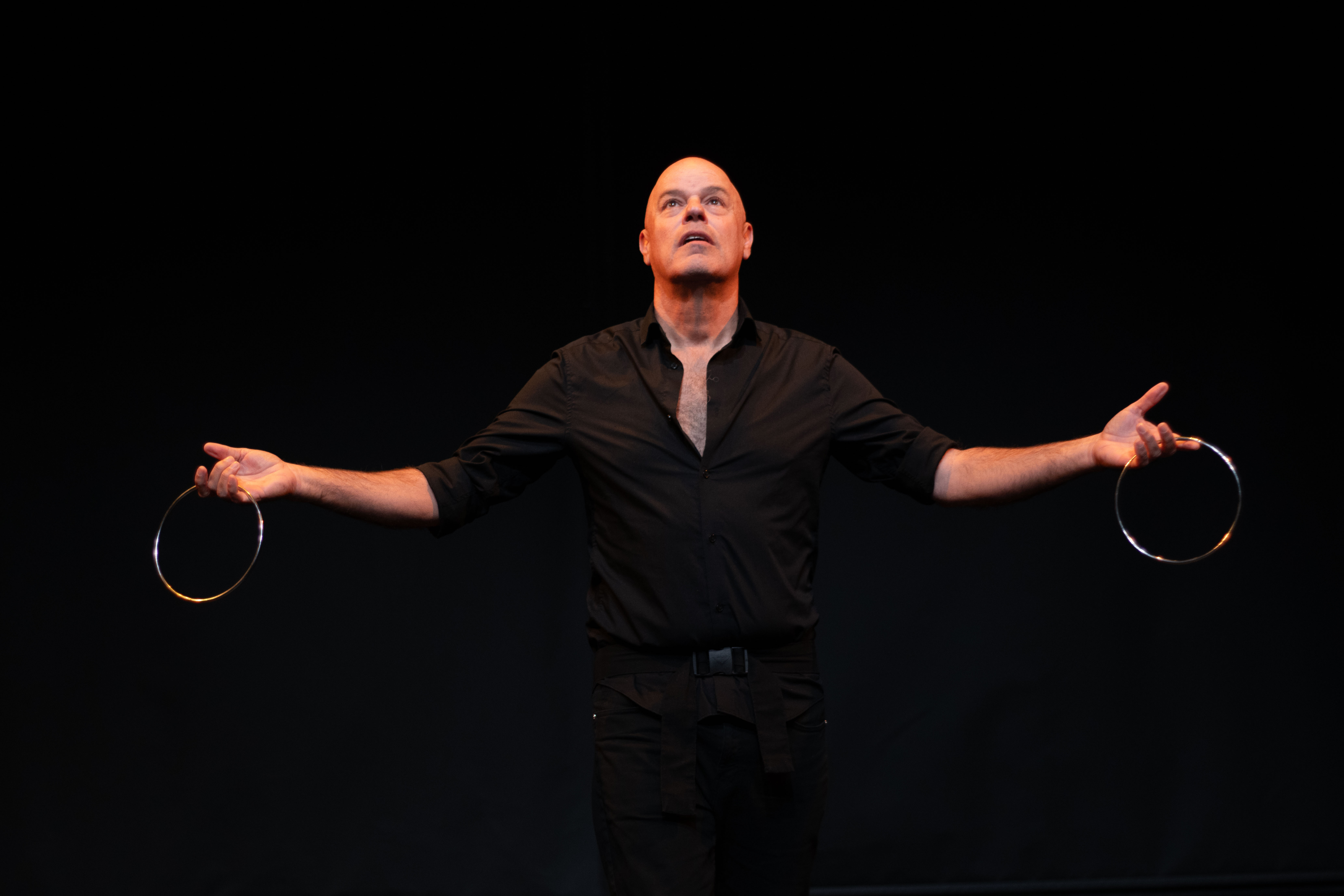
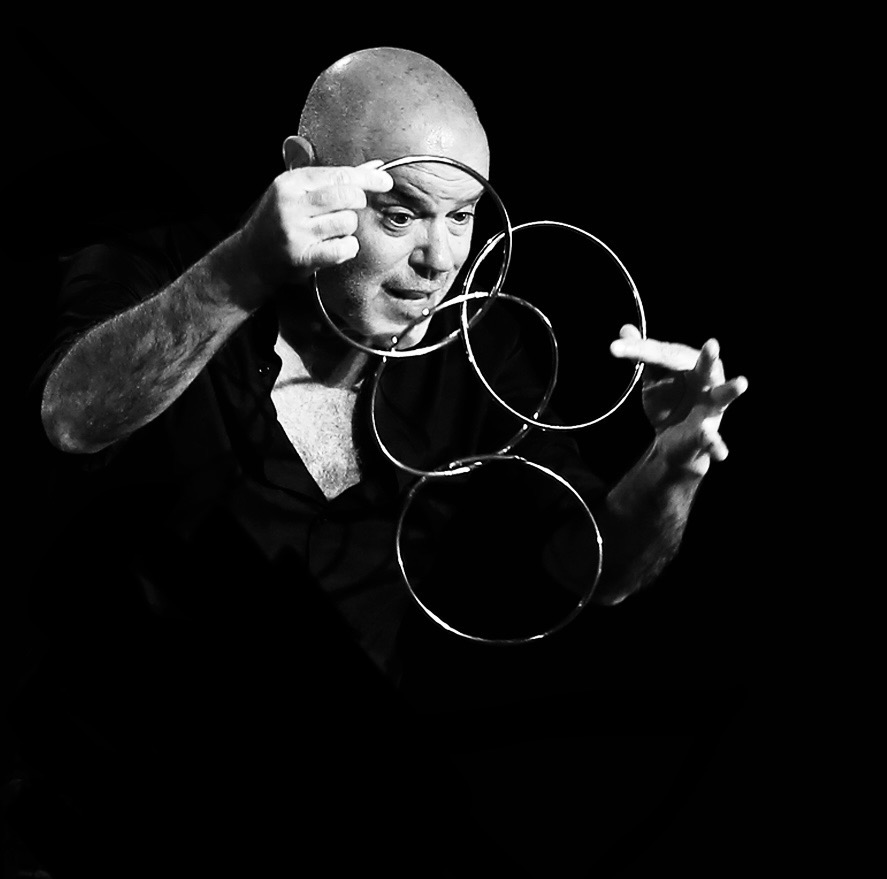
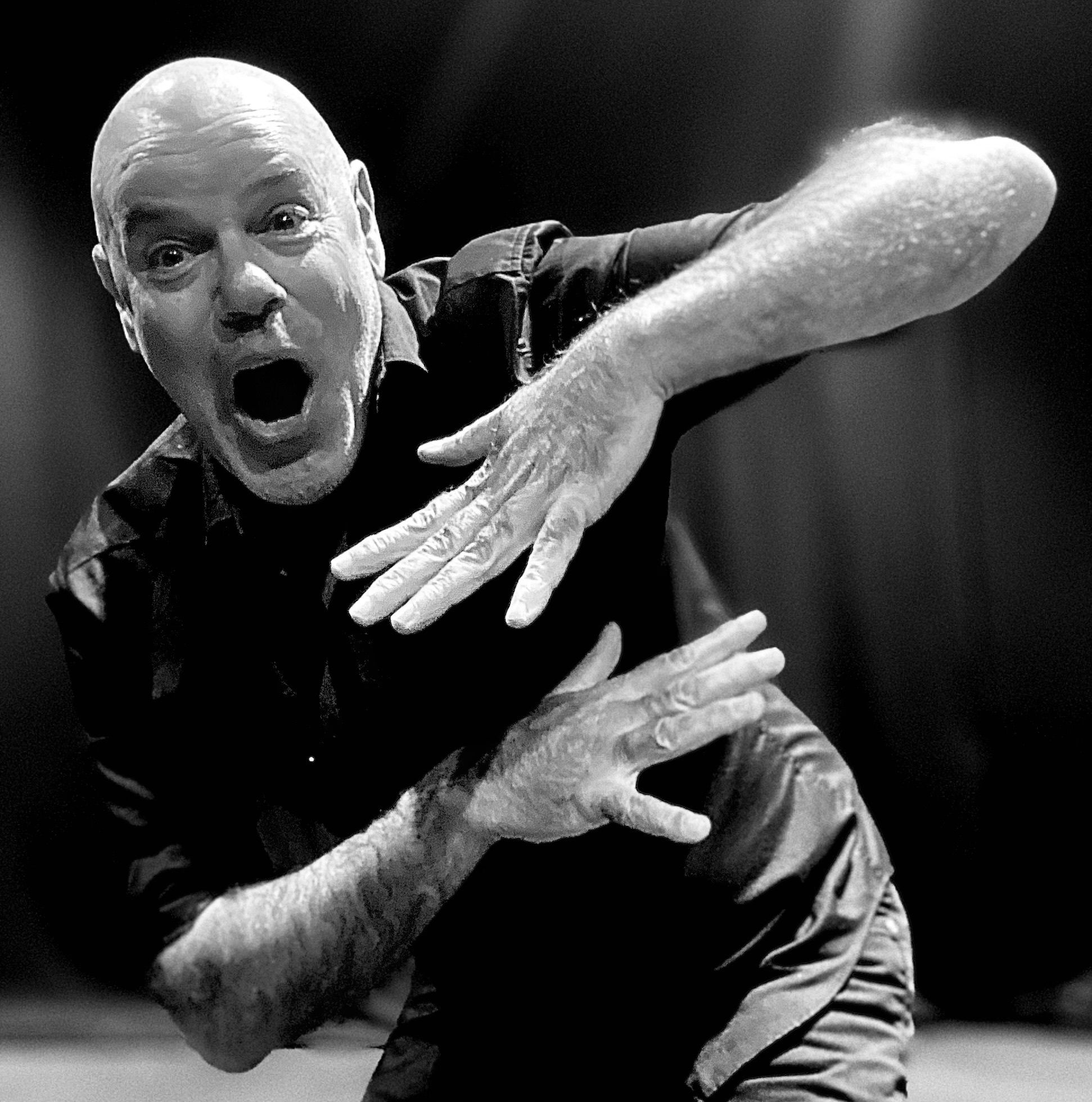
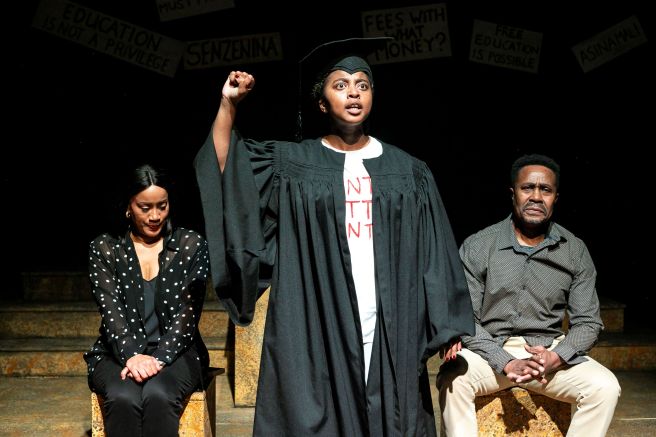
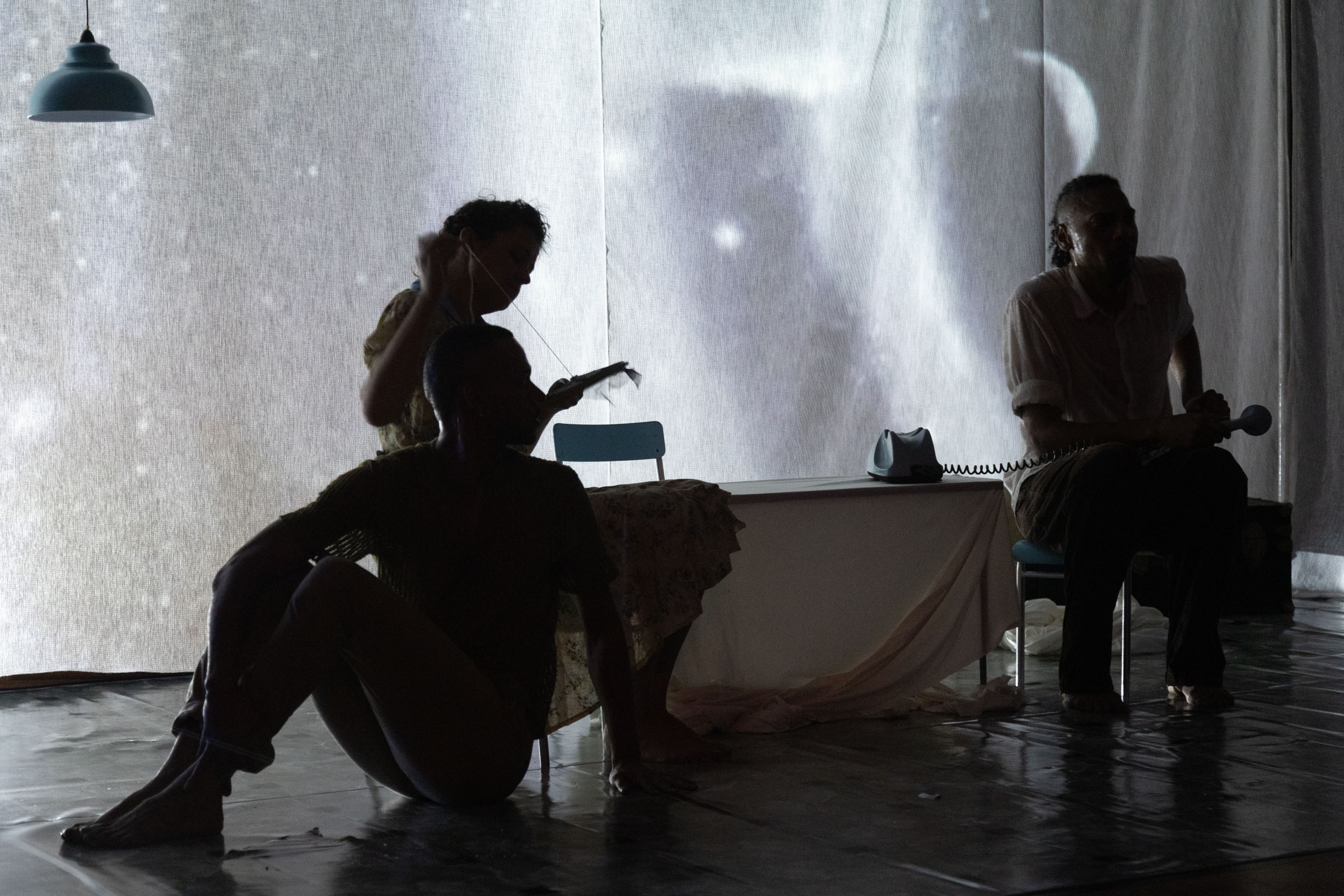
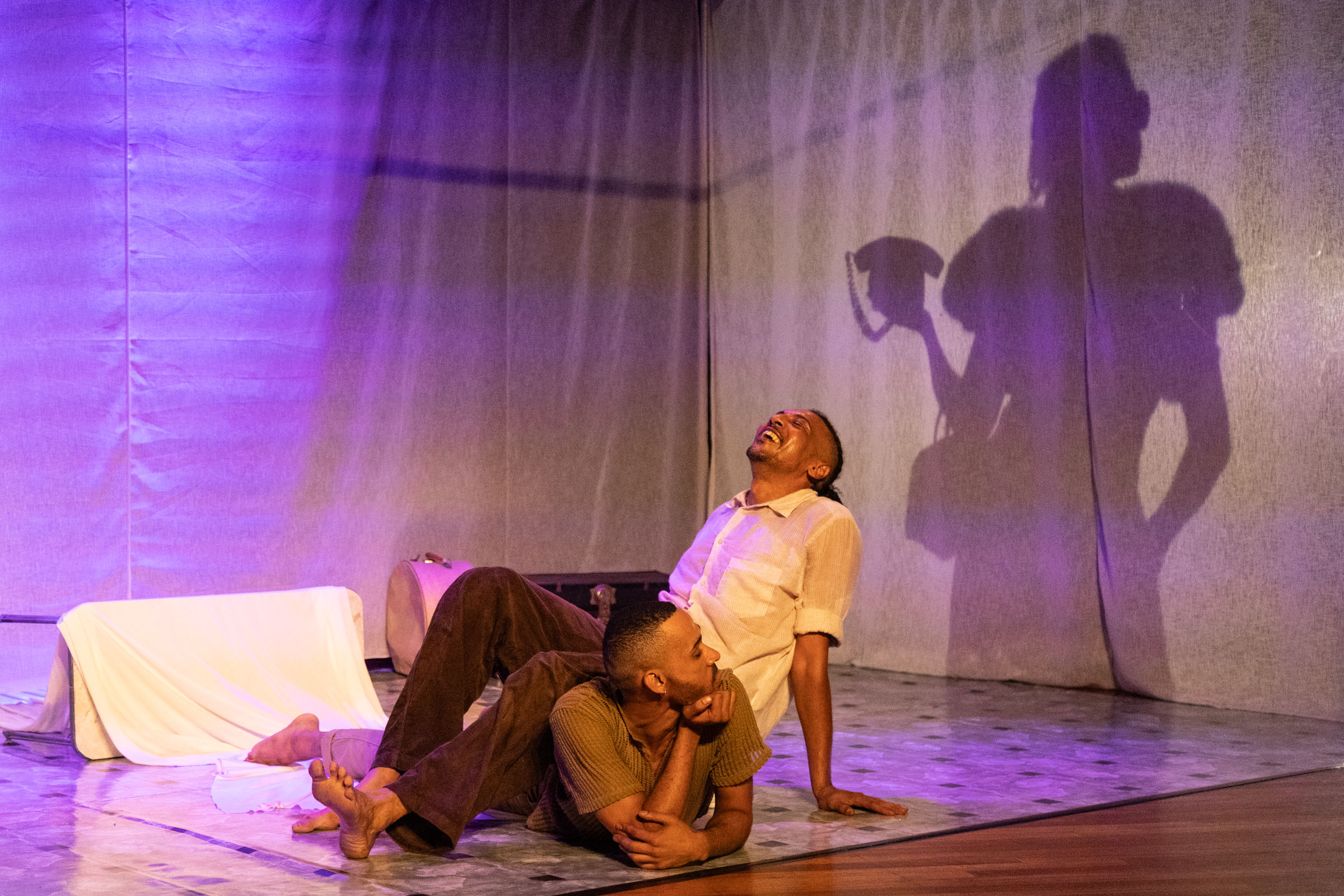
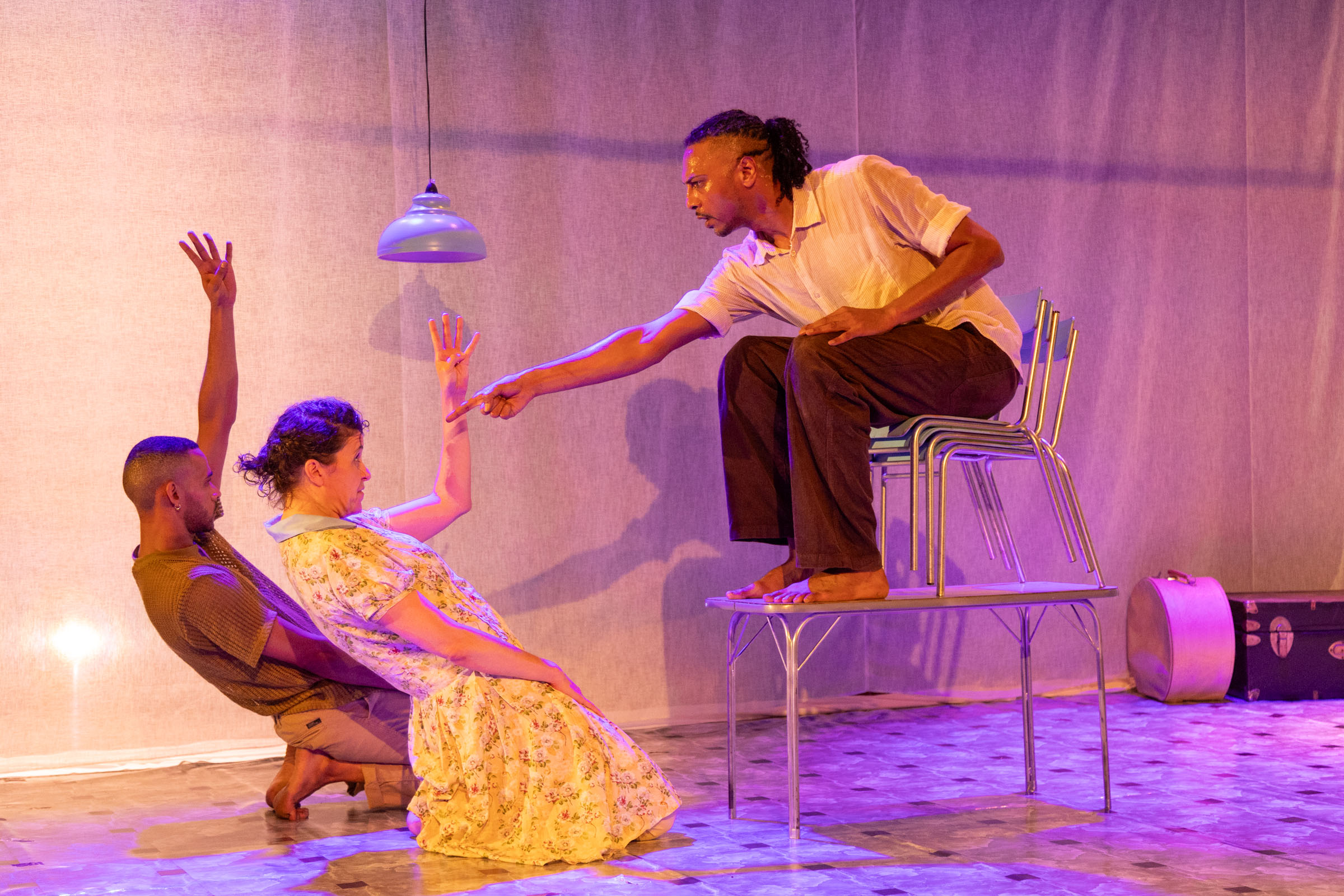
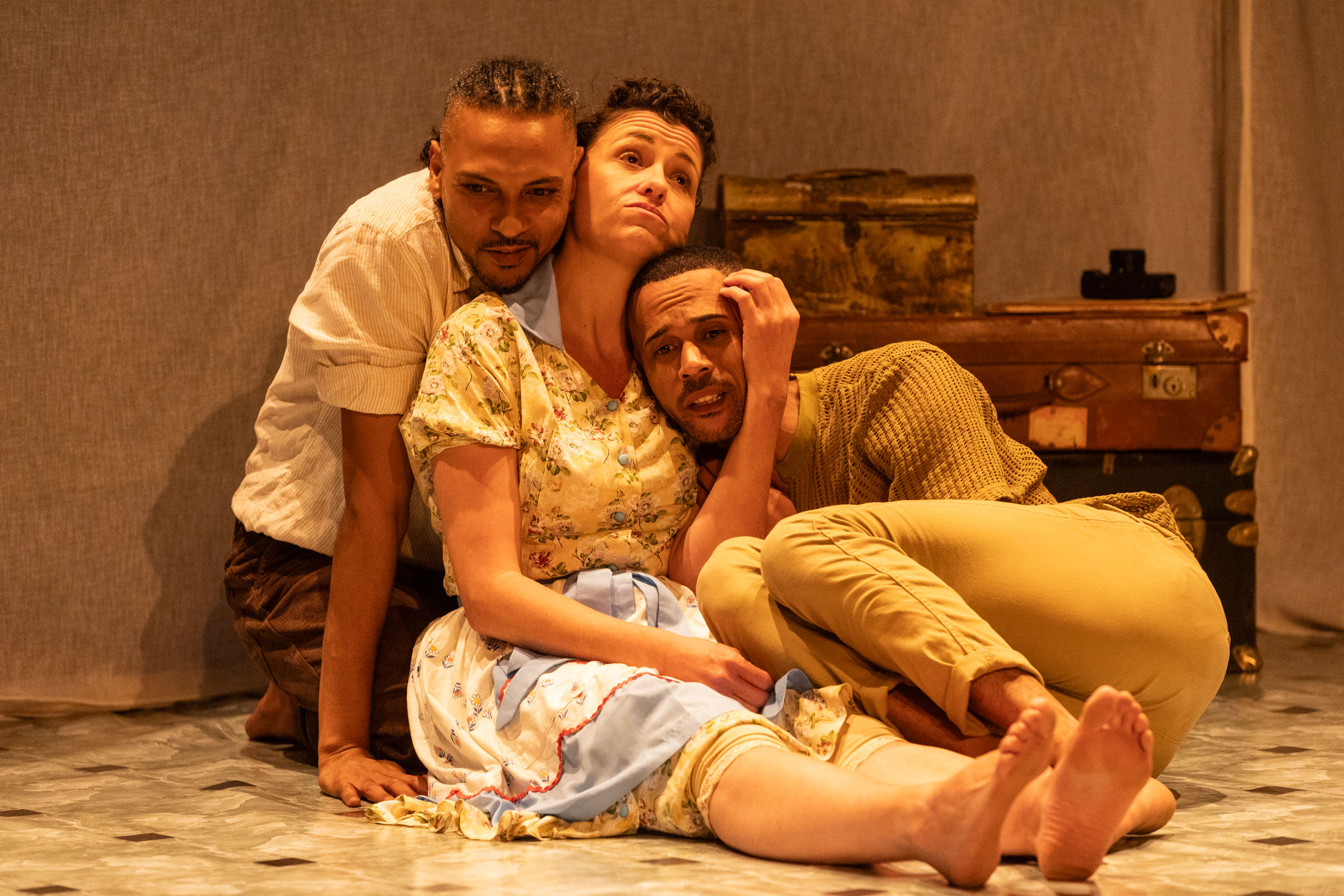
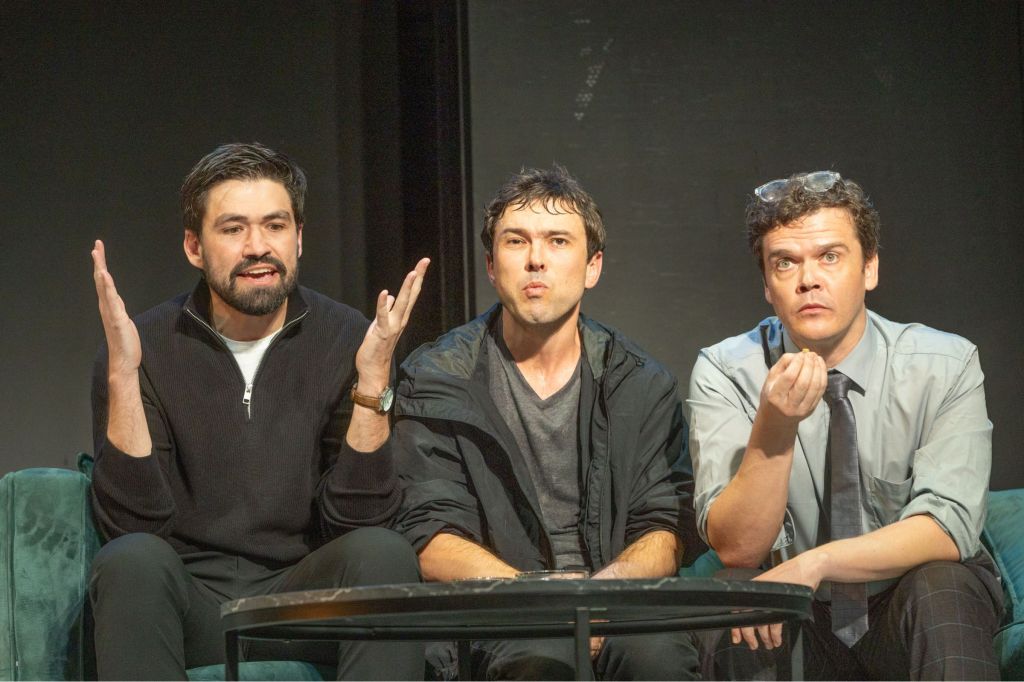
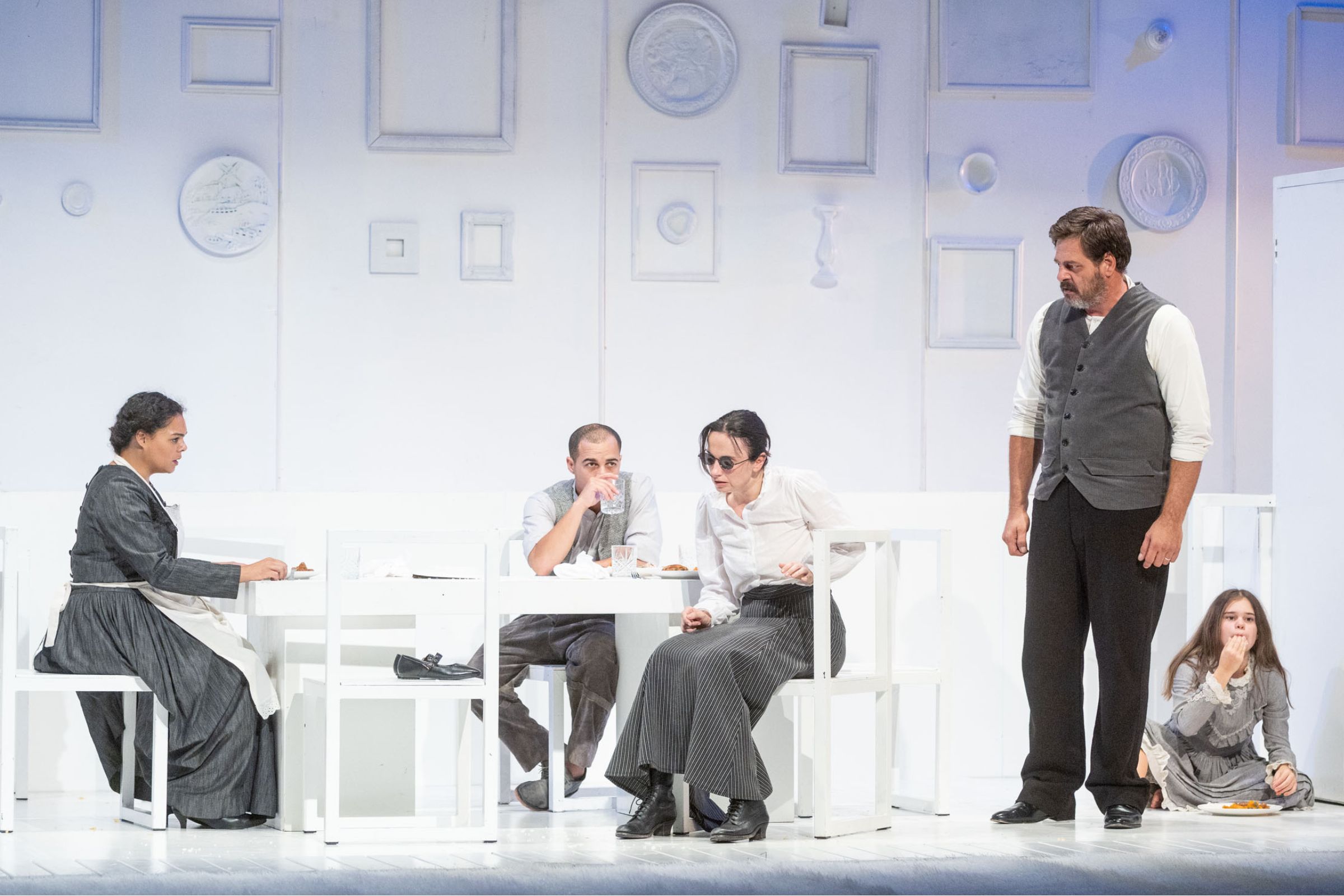
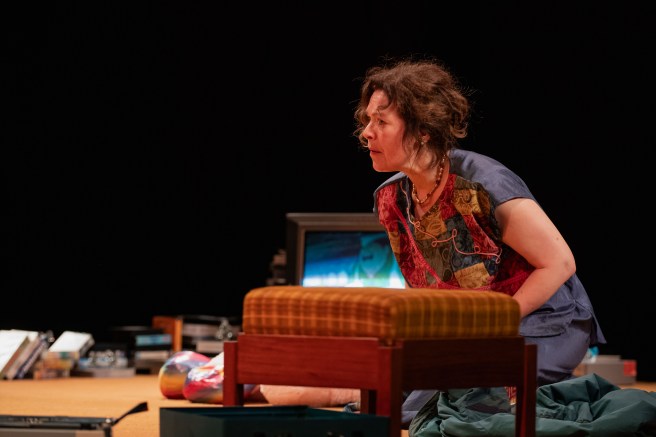
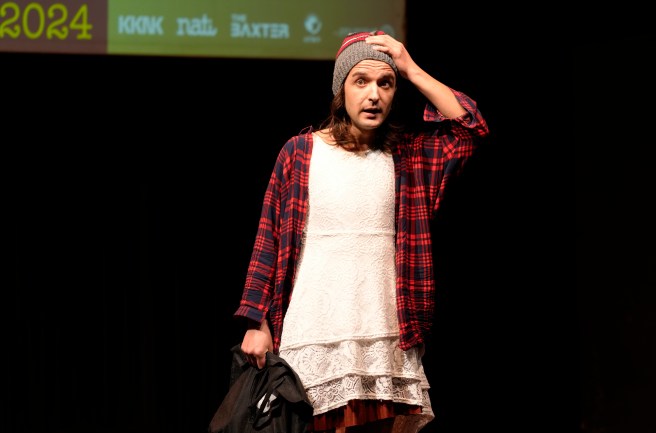
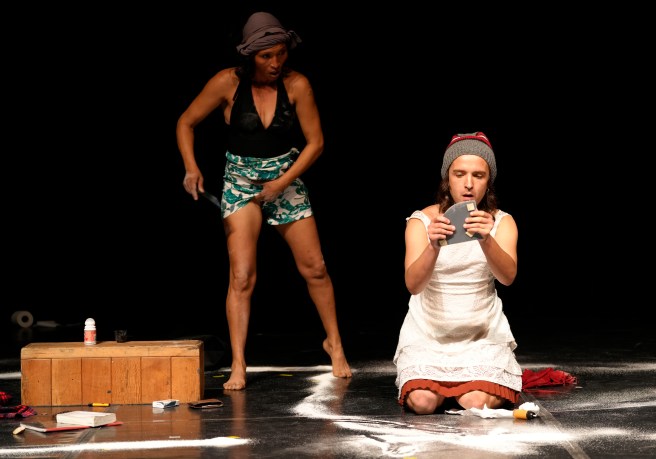
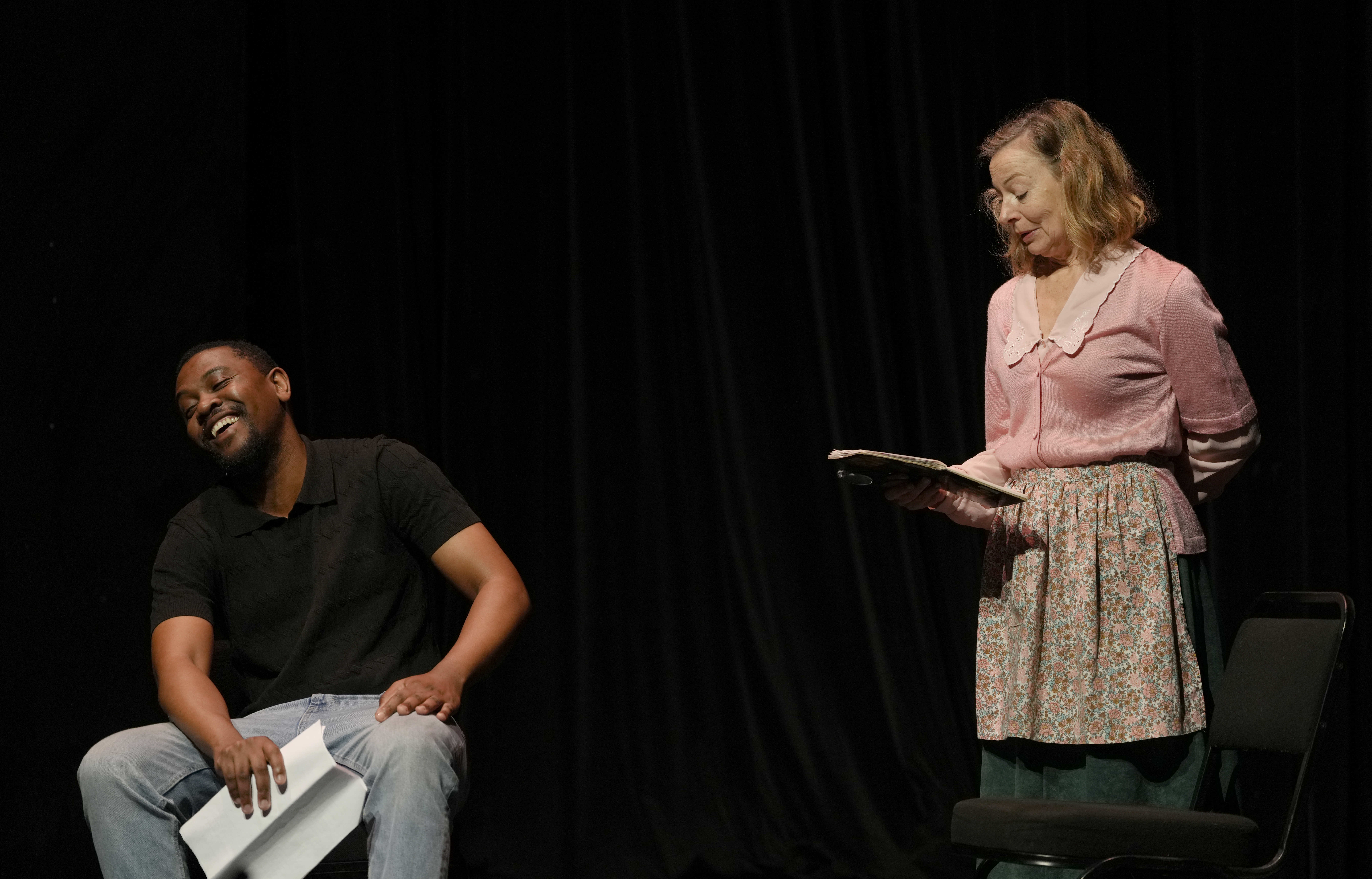
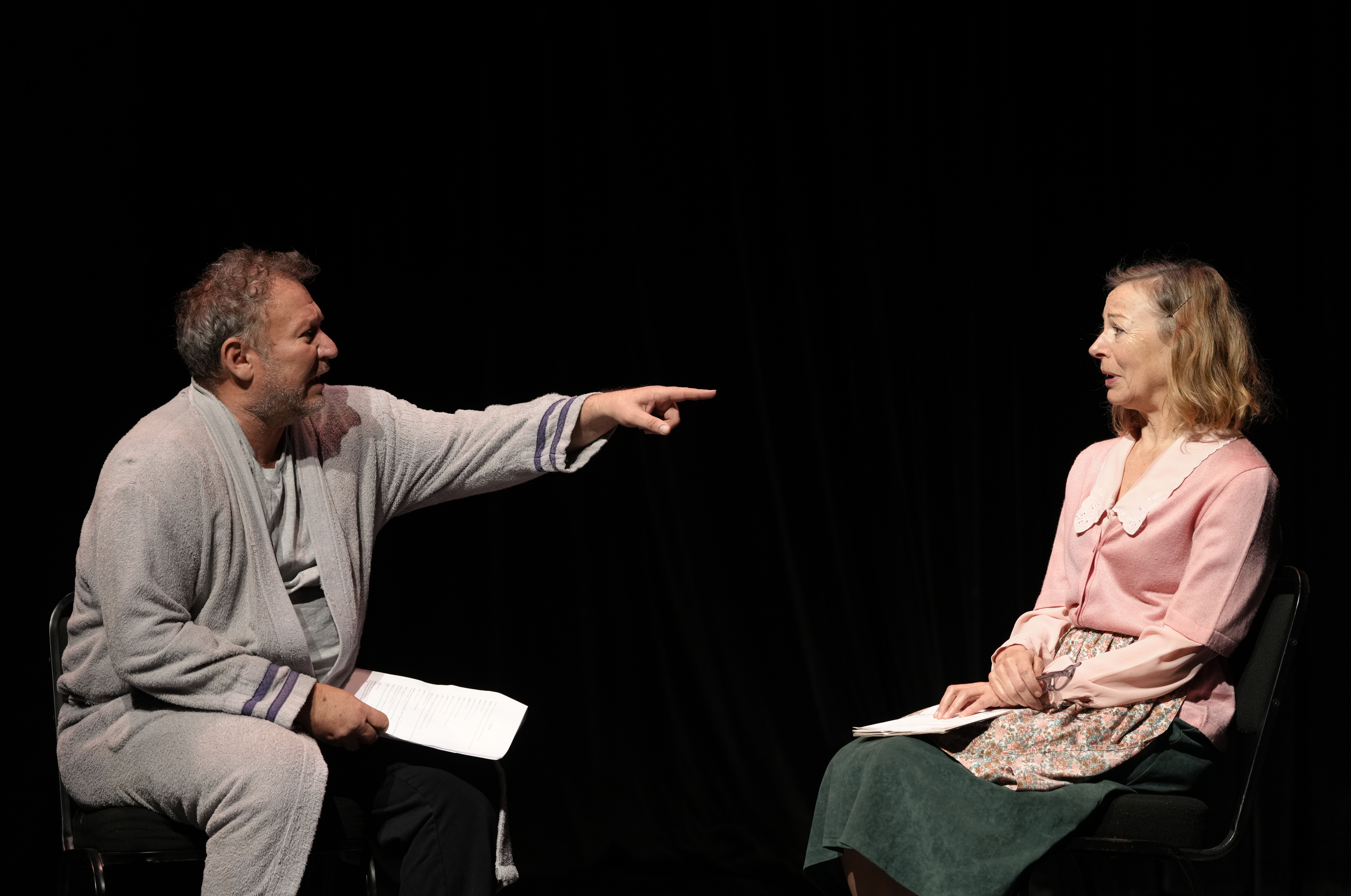
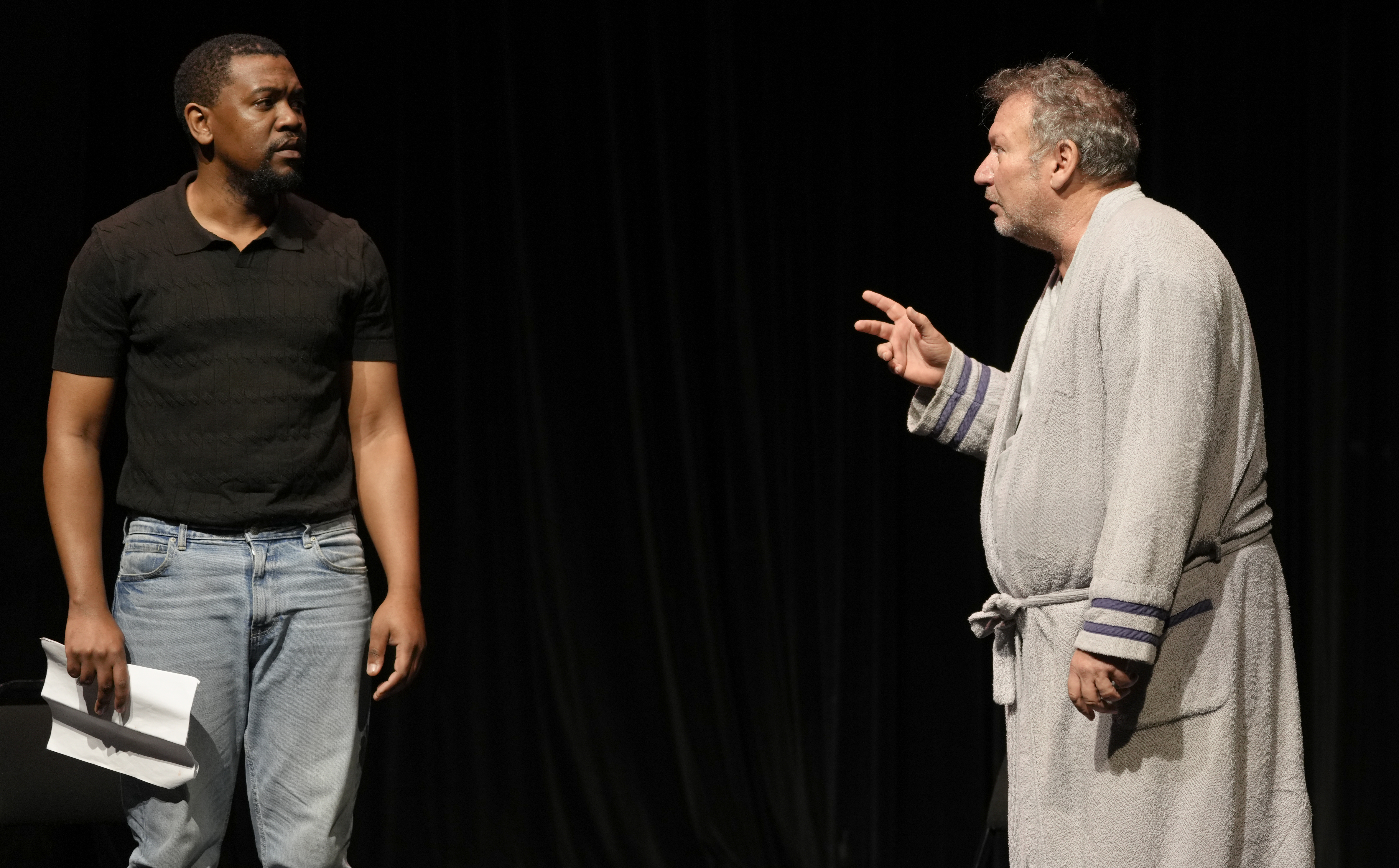
In the programme notes online it says that this play is a masterclass in writing and performance – and that is exactly what it is. And the aspects that I found most intriguing as being a born South African, I have been dealing and watched others sharing their trauma in this country for many decades.
Some similarities especially in text will occur, but I am passionate about people creating theatre – especially solo theatre.
Having to travel from Pretoria for most of my theatre, I consider very carefully which plays I want to see whether good or bad, just work that will appeal to me. And this is where theatre sometimes becomes problematic. If you are going to see a play that is 70 minutes long, it becomes a money issue. It has to. Time and travel become a worry.
So I have started coming up with fresh solutions to make my choices easier. With this one, I had already booked for a new musical opening and I thought I could slip this short prodcution into the mix without any difficulty. I see many more plays on one day when attending a festival. And that is what I did and will do more of in the future when the problem rears its head.
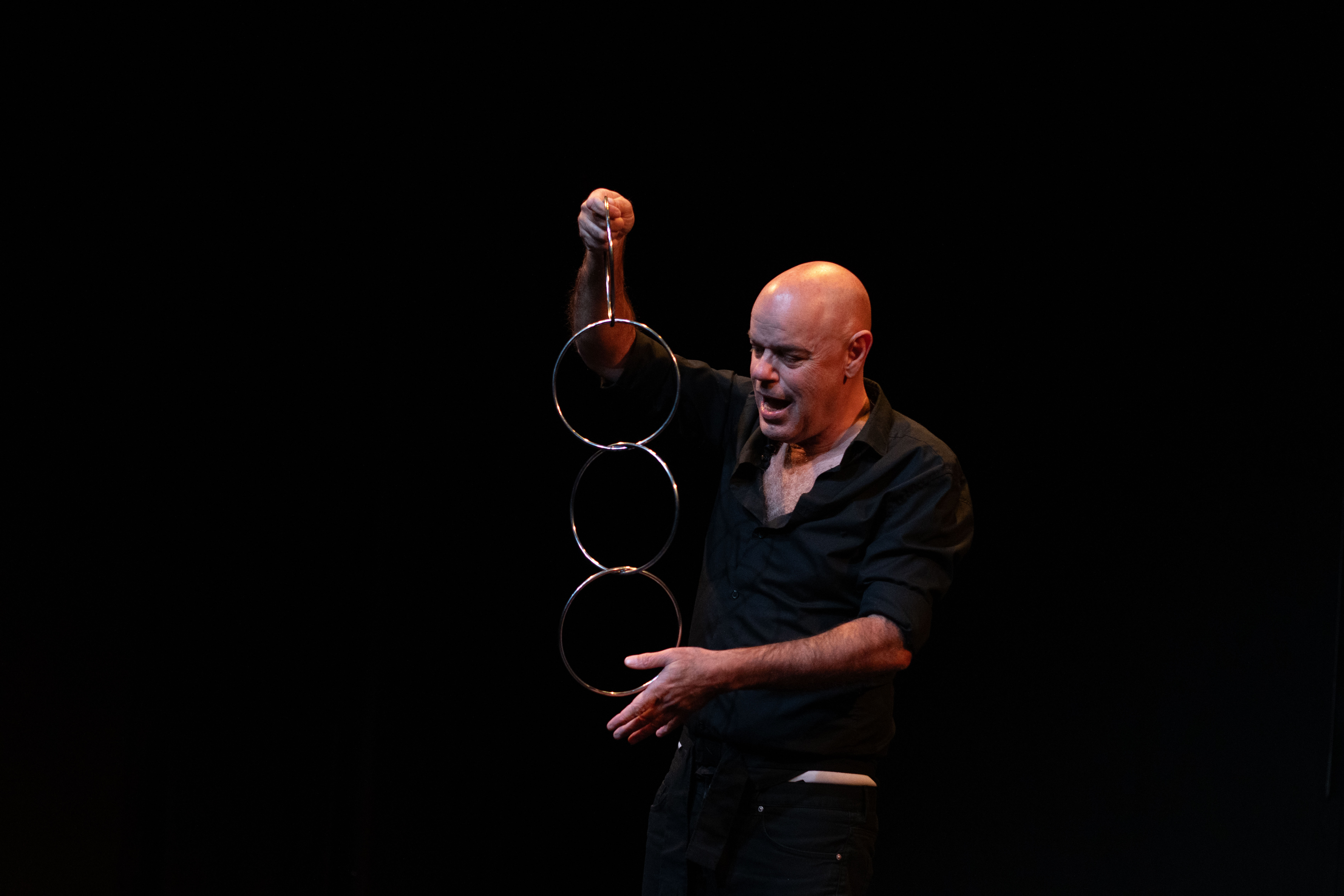
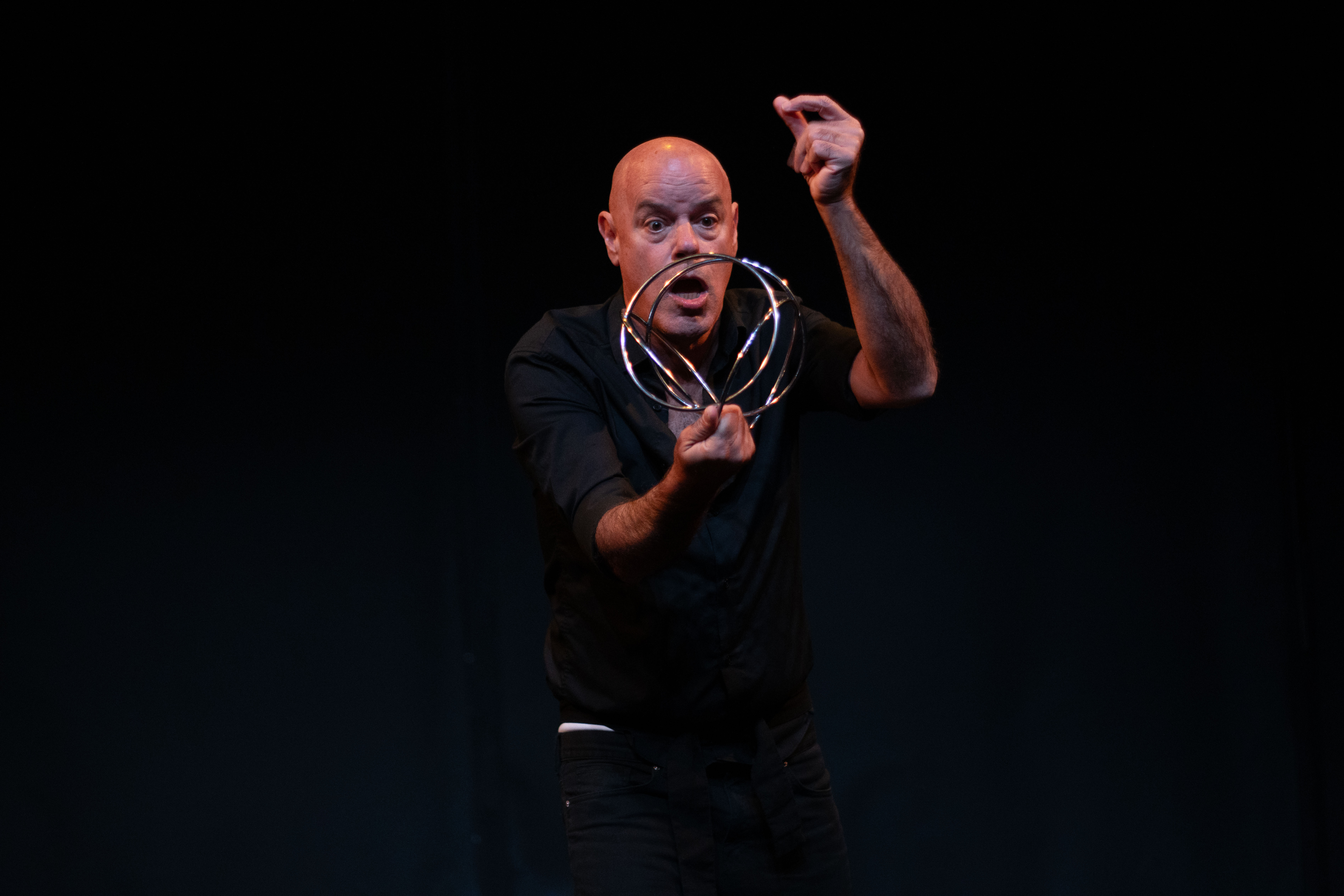
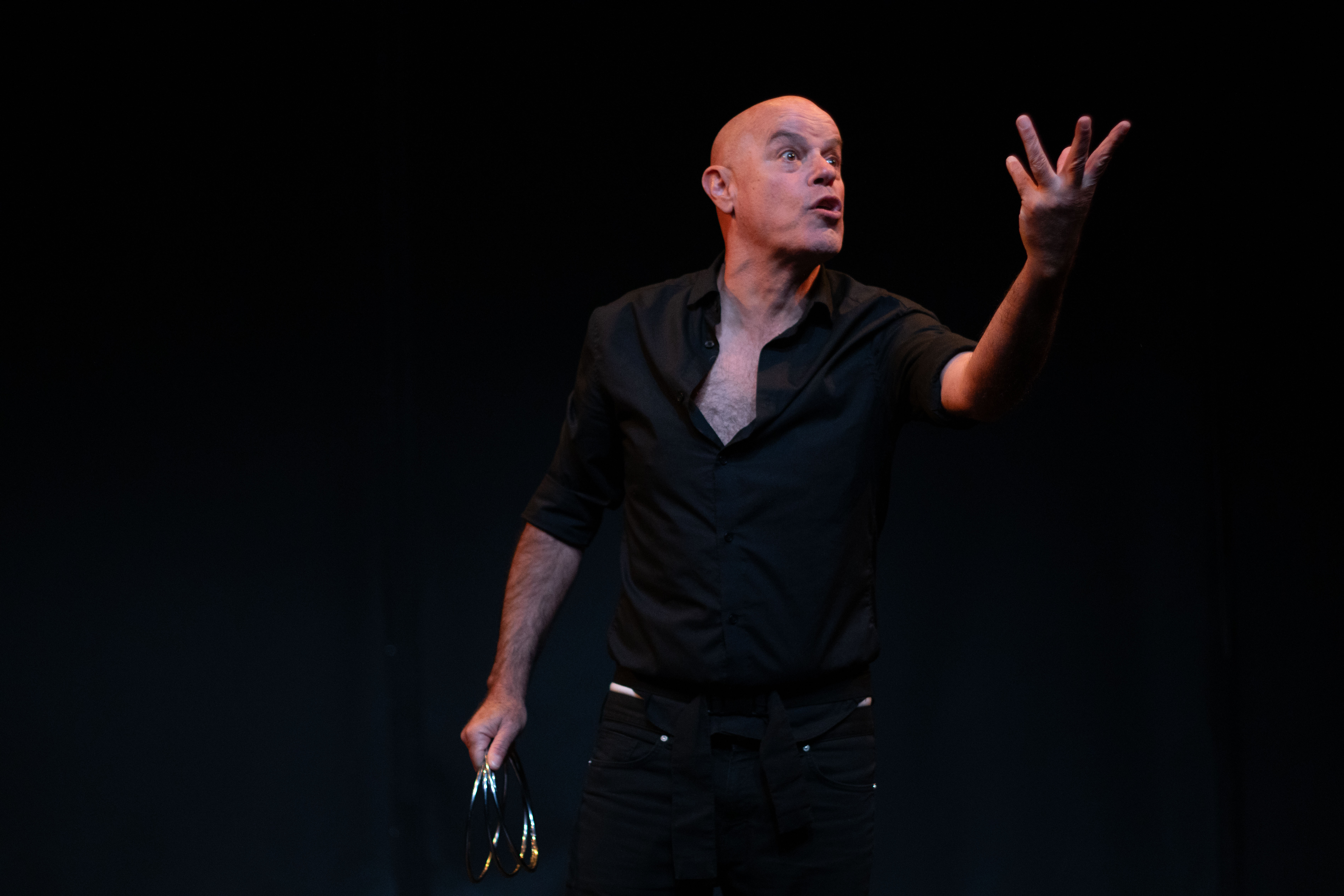
Brincat, who is a first generation South African, is described in many different ways and with many accomplished skills from acting, juggling and magic artistry to fine art, chef, writing and producing one-man shows, it seems.
But this is my first encounter as far as I can tell with this versatile artist. As he’s based in Cape Town and visits the National Arts Festival, while I am based in Pretoria and cover the Afrikaans festivals around the country, his work is unfamiliar to me.
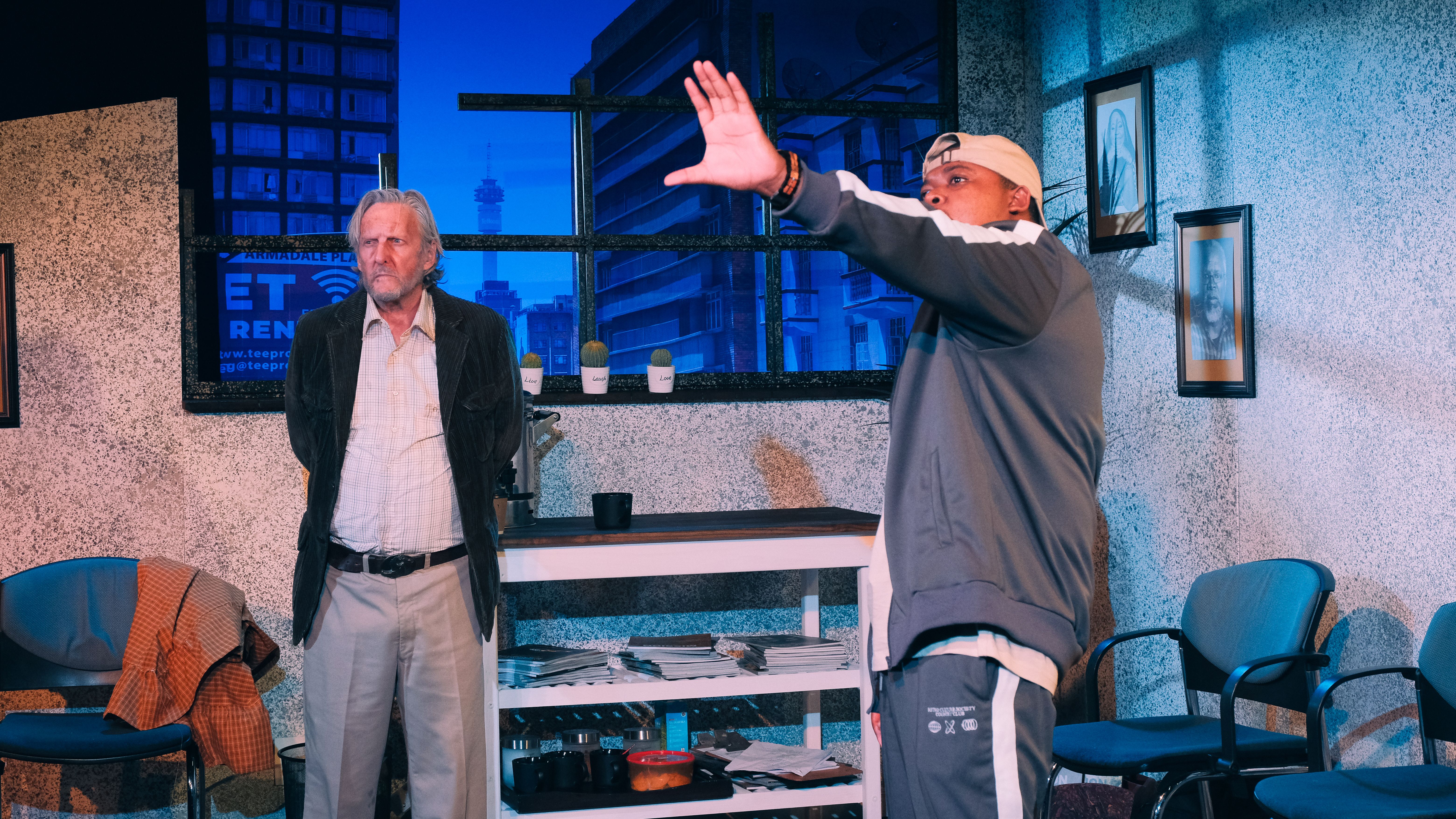
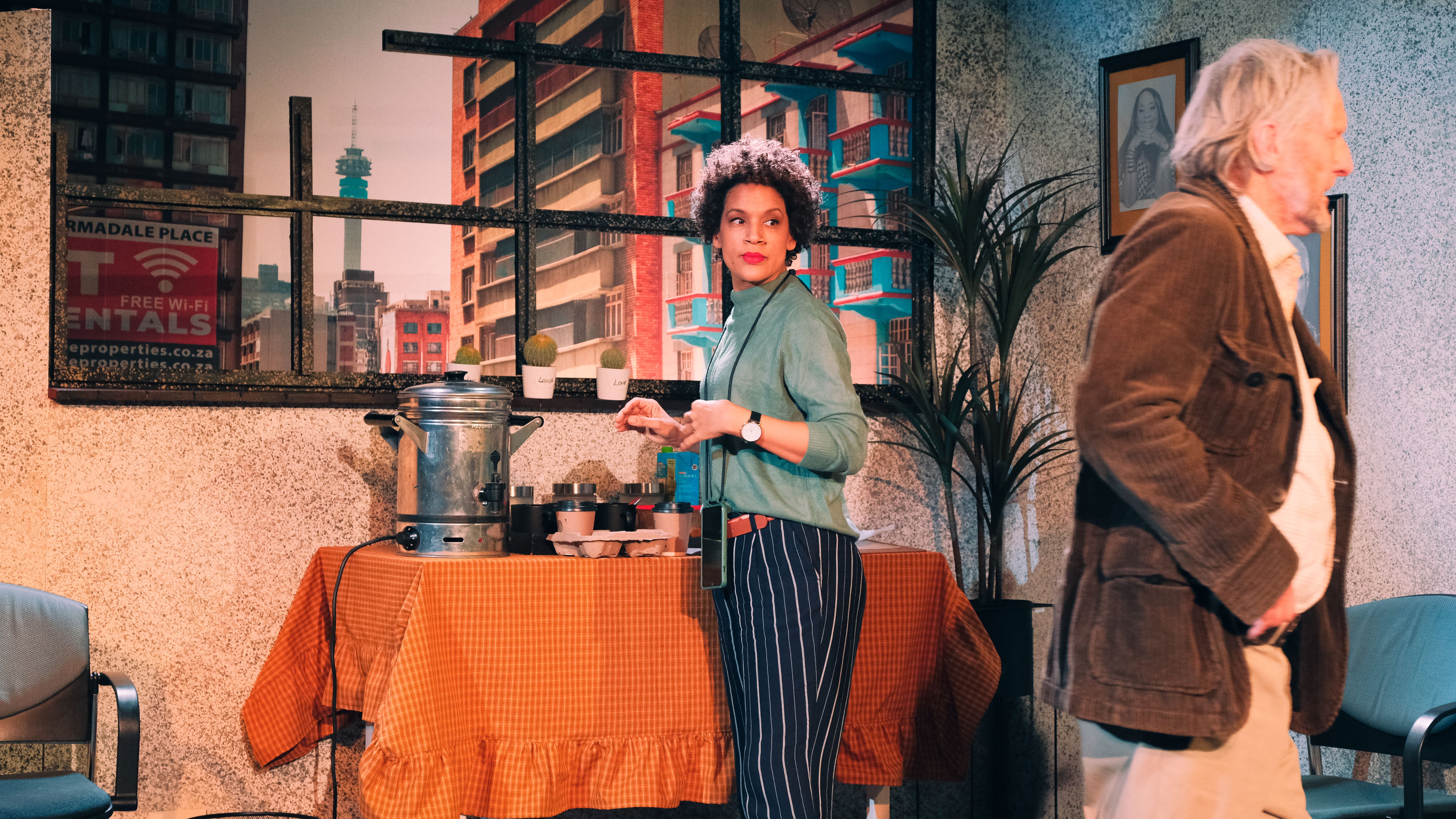
The Moon Looks Delicious from Here is a man’s struggle with identity and finding his own place in what should be his world but isn’t always that straightforward is what he shares and struggles with.
It is familiar territory stretching from the ‘60s tot ’94, but it’s always interesting to discoverhow other people deal with issues that come up for many of us in different ways. It is also fascinating to see how others approach their work, especially when at play, as solo shows can be limiting, depending on the content and how familiar you are with the subject.
He had me from beginning to end; engaging with his audience wasn’t an issue for him even with a most unusual mix on a Sunday afternoon. Half of the 100-plus theatre audience (and I’m guessing numbers) were elderly white couples and the other half were young (between 20 and 35) Black men and women. And throughout there was laughter from different quarters. It was a journey of remembrance for oldies and probably one of illumination for youngsters.
It would have been fascinating to have an audience talk after the show in this instance. This is Brincat sticking his toe in the water and it feels good. Hopefully he will be back so that we can get to know more of his work and his content.
It’s explosive, it’s engaging, it plays with your mind (stretching it this way and that), it’s mesmerising, it sweeps your whole being along and most of all, it’s original and creative in a way that heightens all the senses. And then it shows you everything theatre can be.
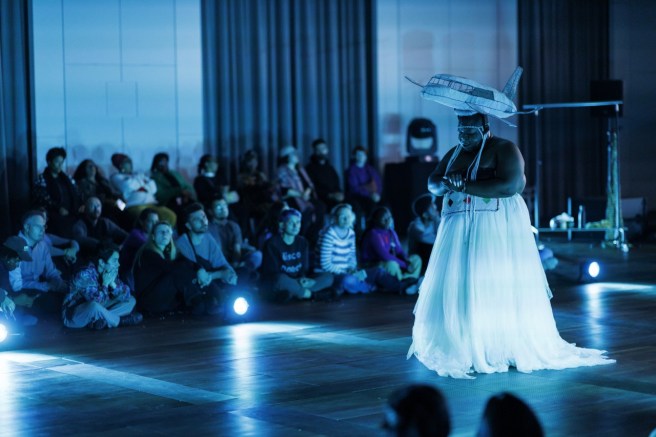
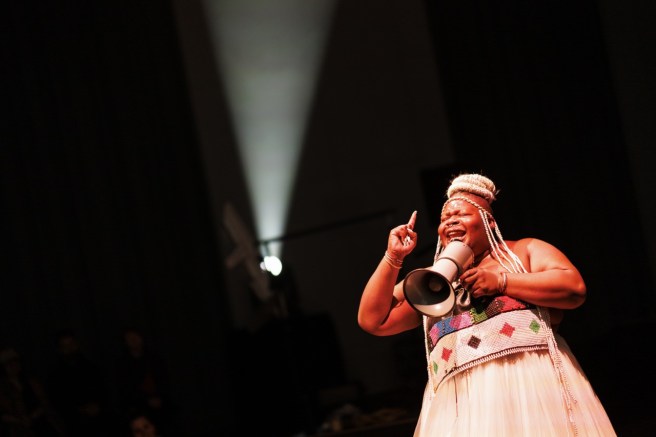
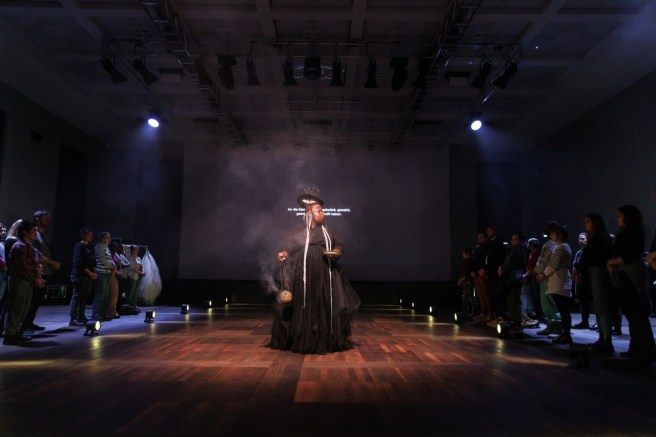
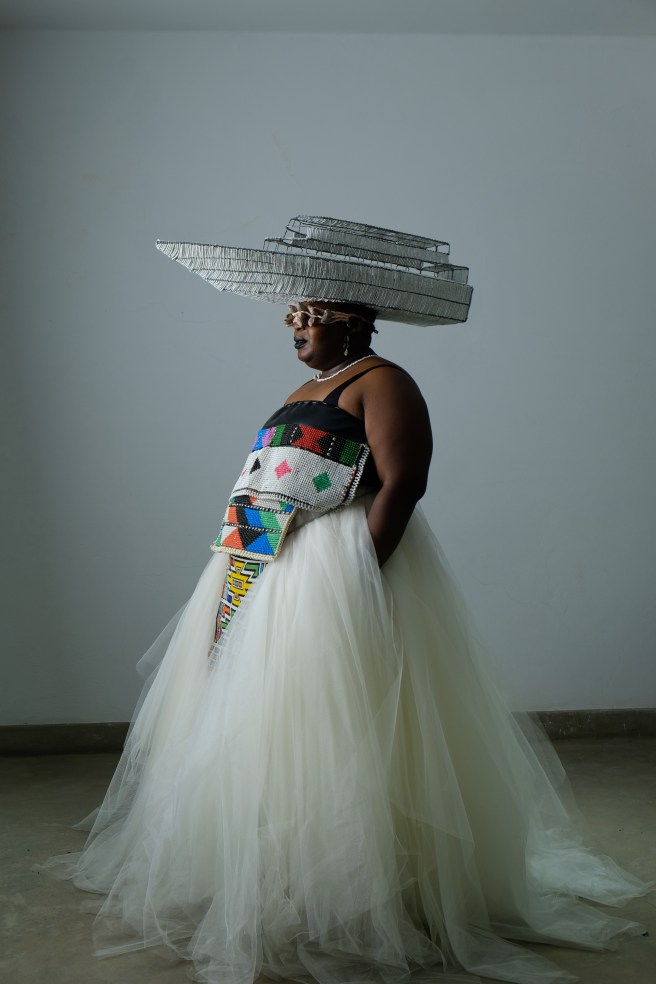
Khoza is a presence not only with the theatricality of their costumes but especially with the way they move, speak, sing, chant and engage their audience from start to finish. There’s no time for your mind to wander or wonder, you’re simply in the moment as you participate in this experience that for most of us would be completely unique.
It’s ritual and rhythm, it’s engaging your whole being. This isn’t something you‘re watching, you’re participating on a level that is here and now. It’s theatre-in-the round with the performer, the one who is leading the way on this exploration of the past where human zoos and exhibitions in Western societies, our societies, turned people into curiosities to be paraded and exploited for the delight of white fetish. That is even difficult to write after seeing this play.
Especially for those of us on the oppressors’ side, while we gasp in horror at the stories, we know what our race has done to people because of the colour of their skin, have seen many plays and read many books about those times, yet, sadly it remains just that. It’s not as though your body can viscerally experience what that must have been like. It’s something that white people to this day never experience. They simply don’t have to navigate a world that plays by rules made for them … still.
How many times have you as a white body thought about how anything that you do on a specific day will be determined by the colour of your skin? Think of Trump’s world in today’s context for example. People are being rounded up and deported even with citizenship because of the way they look.
Khoza suggests that it is a history that is not spoken about and which they are determined to address so that those affected can reclaim, reflect and confront themselves as people. Because it is something that continues to this day, for them it is about the need for spiritual healing and reclaiming violated dignities.
The one thing all of us have felt in our lives is humiliation. For many it is an occasional thing that can be quickly discarded as you move on with your life. For others it is an institutionalized part of their life and there’s no escaping. The only requisite to fall prey to this is the colour of your skin. Everything in our lives to this day is determined by this. Think Black Lives Matter.
It is described as an installation-based performance and for me personally, it was as though my whole body had suddenly been awakened. I felt alerted to the way the world works. Was there anything said that I hadn’t heard before or didn’t know? How many times have I not experienced the Saartjie Baartman story, a woman torn from her family, stripped of her identity as a human being, taken from Africa to Europe and displayed for the Western world to view in a human zoo? We know and sympathise about the atrocities of the past. And again we wonder about those happening all around us, because they’re still there.
What The Black Circus does is change the perspective; it inhabits your body and soul in a way that takes you the the heart of the atrocities. For Khozait is a place of collective healing where the shackles are discarded, and a spiritual connection established.
It’s a difficult experience to write about because it is one to experience rather than to analyse. You want to enter the space knowing just the title.
At the beginning I felt as though I was sitting in a glorious painting. A story of some kind was going to unfold and as with most theatre, I was excited. What I got was so much more. It was unexpected, challenging in the way theatre should be, explosive in performance and presentation, and something that has changed my life. And that is what theatre should be.
I will be looking at and facing the world diffently.
DIANE DE BEER reviews the latest Mike van Graan play
THE GOOD WHITE
DIRECTOR: Greg Homann
PLAYWRIGHT: Mike van Graan
CAST: Shonsani Masutha, Russel Savadier, Vusi Kunene and Renate Stuurman
SET DESIGNER: Patrick Curtis
LX DESIGNER: Themba Stewart
COSTUMES: Nadia Kruger
VENUE: Market Theatre
RUNNING TIME: Until June 1
Pictures: Ngoma Ka Mphahlele
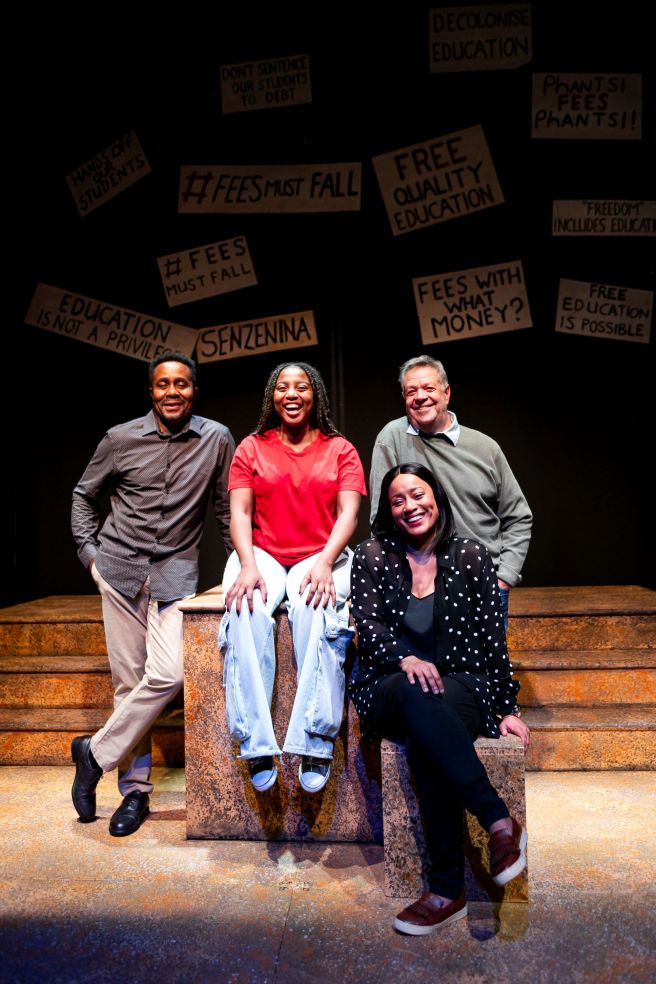
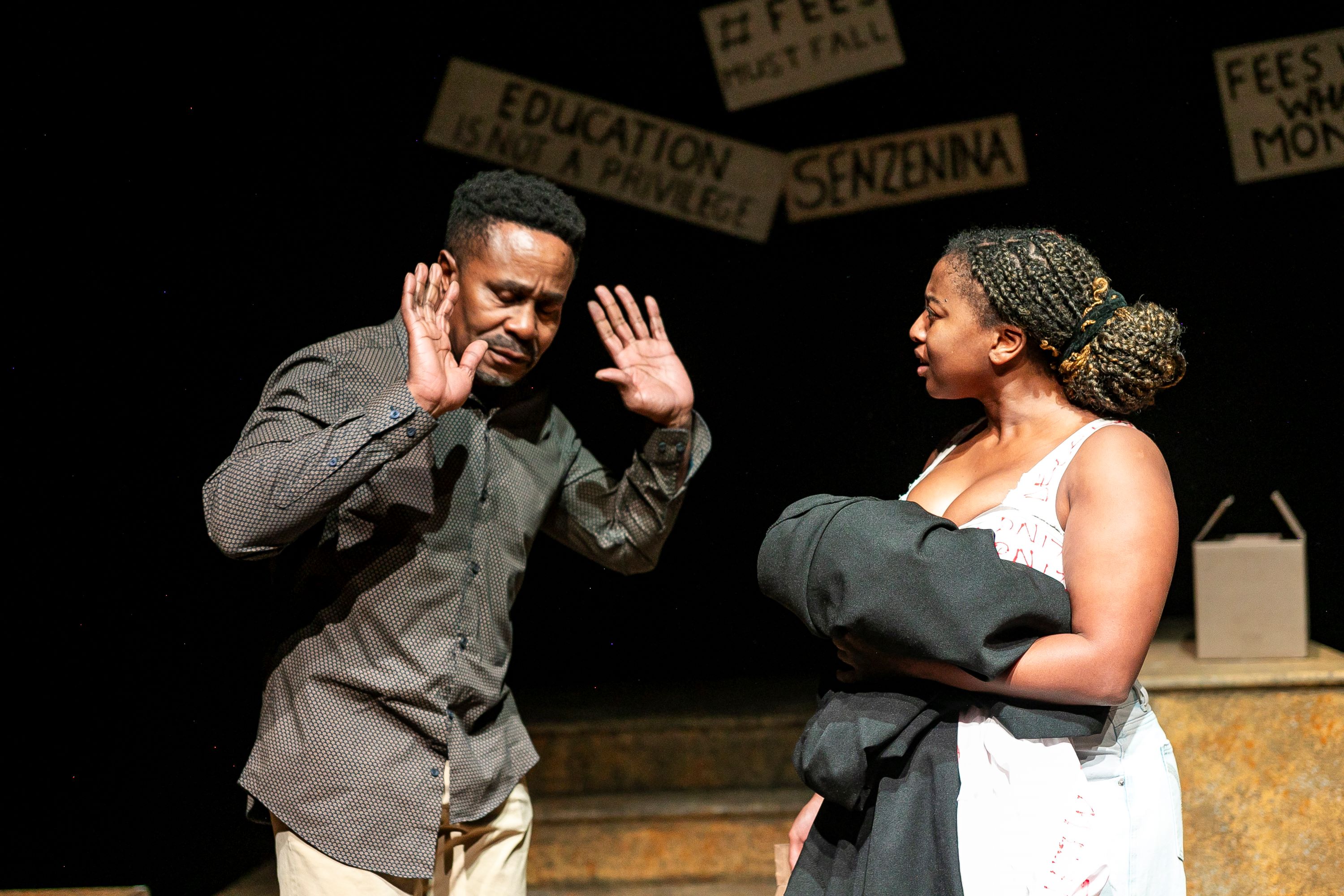
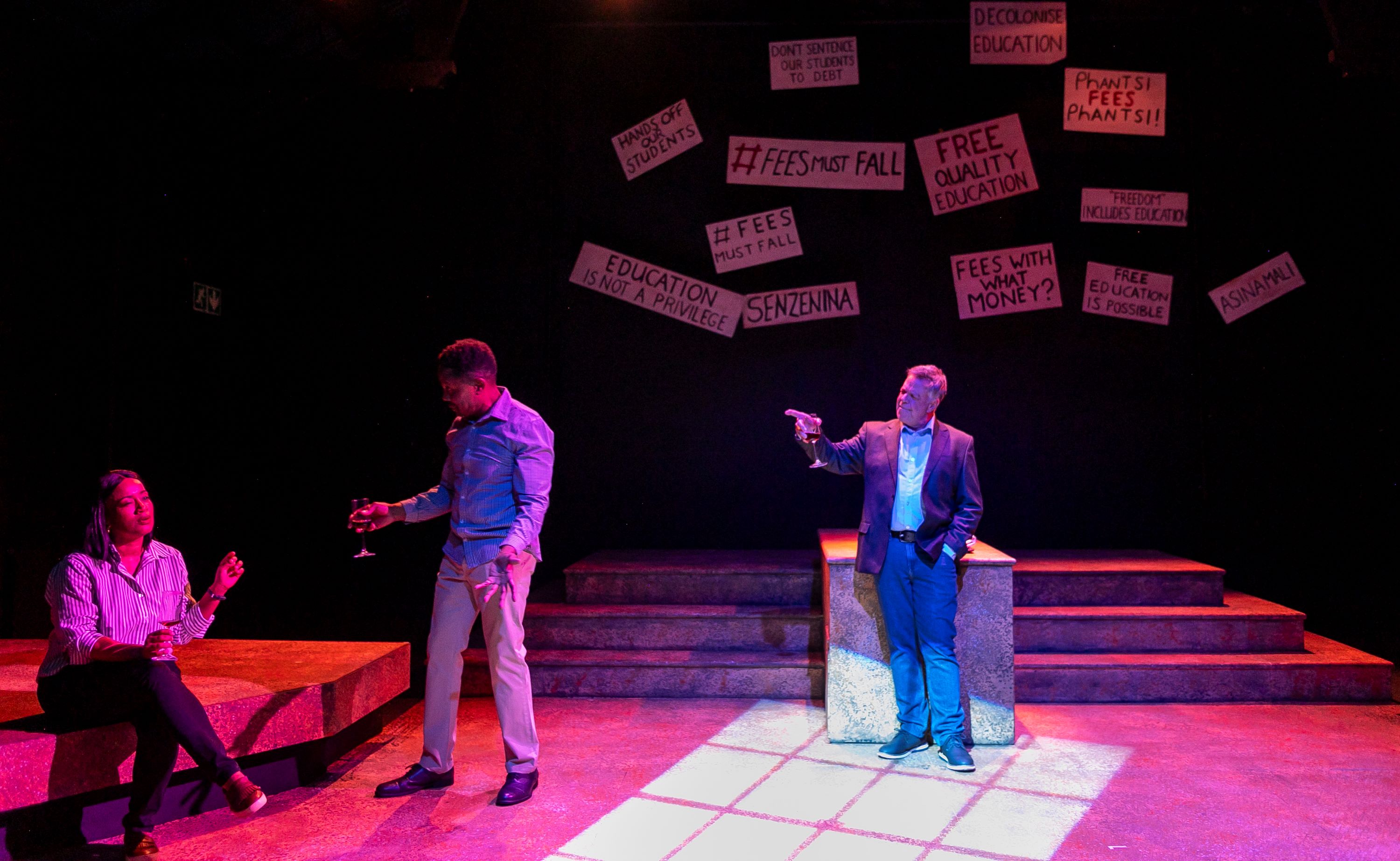
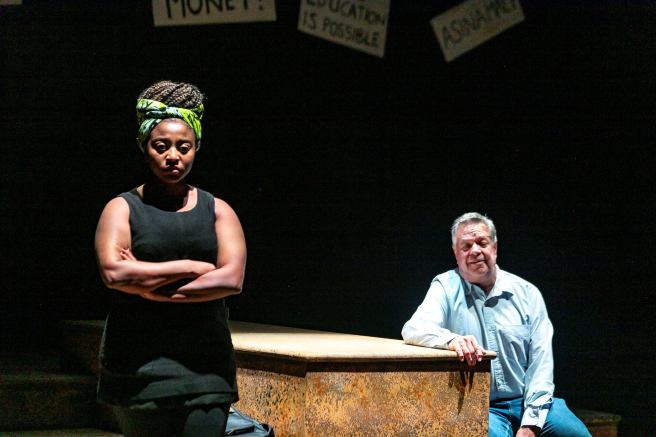
Pair the title with the four characters on stage – Vusi Kunene (Black, pictured right), Russel Savadier (White), Renate Stuurman, (Coloured, pictured left) and Shonsani Masutha, (Black, centre front), — and, in the South African context, sparks will fly.
That is what Mike van Graan’s latest play leans into. He says in the programme notes that he hasn’t written anything but solo shows since 2018 and it feels as though this one has been bubbling under and then just exploded – in the best possible way. It’s an epic piece of writing which will have you gasping as he appeals to each one in the audience, whoever they are, to grapple with the issues – our inner core – of South Africa.
While Nelson Mandela did many things for this nation, coining the phrase Rainbow Nation was arguably not one of them. It is as though he constantly reminds us what we are not, but if you were part of the opening audience on what seemed to be a quiet Sunday afternoon in the theatre, you would have witnessed that we could be.
The perfect quartet: Vusi Kunene, Shonsani Masutha, Russel Savadier and Renate Stuurman.
The audience pretty much reflected the mixed bunch we are and from the deadly silence following the first poem of strength recited by the astonishing Masutha to the immediate participation during the rest of the play, it was as though there was another solo performer on that stage – the audience.
It captured the heartfelt emotions Van Graan has always been able to harness as he tackles the South African nation. And no one does gloves-off like this playwright. Setting the play in academia, he has chosen his boxing ring and then selected his characters to represent every foible in the human race, it felt like. And then he lets them rip.
As always, he doesn’t hold back, everyone and each weakness is held up for scrutiny and the constant audience gasping and finger clicks told you how he hit the mark throughout the play.
Through the years Van Graan has been honing his very own way of dealing with what he views as our fatal flaws and this time it feels as though he has unleashed it all in glorious colour.
It might sound like something you don’t want to hear or see but, because South Africans will all relate to everything, it’s like witnessing the full South African story from Once Upon A Time …Prejudices in all their pitiful hostility, power plays, colour bashing, gender gore, poor vs privilege and the list is endless. He plays all those cards to their fullest.
Those who know his work, also know that he can write and he has never been scared to speak his mind. He does it to the Department of Arts and Culture and he does it on stage. When he has a platform, he steps up and tells it like it is and believe me, he is one of the few who speaks his mind unabashedly whenever he can.
He has been maligned to the high heavens, but nothing has stopped him. And finally, to my mind, here is his magnus opus and it is flawless and delicious to witness. And when (not if) you go and see it, I hope you have the same audience we had; it added to the fun and spectacle of the drama.
Add the director and the cast to complete the perfect coming together. Homann allowed the Van Graan words to do the work, which was the best thing to do. It should be unfettered because you really have to engage and listen to get the full extent, which here you do.
The cast delivers magnificently. I didn’t know Masutha’s work but she made sure I would never forget her. What a performance! From start to finish she’s there with all her energy and might and that’s what her volatile character needs. Stuurman is an old favourite and to my mind, this is her best performance yet. Savadier and Kunene also fit the bill and, as seasoned actors, they never put a foot wrong.
It’s a play I will try to see again towards the end of the run, because there’s just too much to take in at one sitting. It’s something — even though it doesn’t sound like it — that gives hope. If, as Van Graan suggests, this is exactly who we are, at some stage togetherness will take hold. As for now, we are still that dysfunctional family who needs a stern word to set us on the right path – and this is it.
Diversity was the element that dominated this year’s fantastic KKNK Festival (in Oudtshoorn at the beginning of the month) – from the audiences to the artists, also including the plays and performances. DIANE DE BEER reports:
PICTURES: Hans van der Veen (unless otherwise stated.)
On one day you could see a solo show, a play with both words and movement, a translated modern classic and a new work that will outlast some of us watching.
Yet as is often the case at this festival, theatre was what really captured the imagination – and true to the diversity theme, it played out in many ways.
For me it started with a bang with a piece titled Die Een Wat Bly (which can also be seen at the upcoming Cape Town Suidooster) with a cast consisting of the two talented dancers from Figure of 8 Dance Theatre (Grant van Ster and Shaun Oelf) who in this instance combined their extraordinary movement with the insightful words of Wessel Pretorius who seems to deliver an endless stream of brilliance. And the third member of this inspired cast is Daneel van der Walt who is an actor who has emerged these past few years as someone to watch.
Everything seemed to combine beautifully, from the story, how it was written, the excellence of the casting and the way movement underlined and emphasized every emotion so magnificently. I couldn’t resist catching it a second time and it confirmed my initial instincts that all the elements just flowed together seamlessly to present perfect theatre. I could easily watch it again … and again… and again.
In a different guise, Pretorius performed in Yasmina Reza’s translated text Kuns (which had previously been performed by two of the actors, also directed by Marthinus Basson in the English version titled Art). Pretorius and Wilhelm van der Walt (part of the former cast) were joined by Ludwig Binge in a play that satirises the often achingly precious way people view and talk about art.
Because of the NOW, a time where an anti-wokeness and fake news seem to dominate everything, it worked even better than the first time I saw it and with these three adventurous actors (all three Basson graduates who have established exciting theatre careers), it was perfect for this festival which always celebrates.
Basson also delighted with a play which has been on the circuit for a while, and I was thrilled to finally experience. Who would not be intrigued by a play titled Kruispad, of die legende van die goue vis.
Picture: Nardus Engelbrecht.
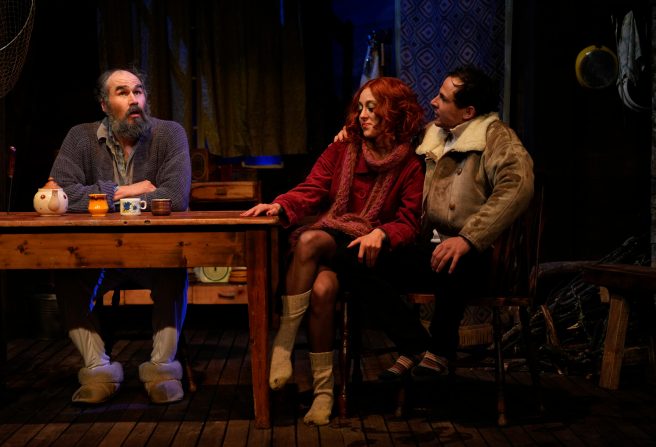
Again the casting blew me away with Eben Genis giving one of his finest performances in the role of the eccentric recluse Oswald whose life is rudely interrupted by two lost and rain-drenched youngsters played by two of the best, Edwin van der Walt and Carla Smith, with a glorious copper-coloured wig which completely changed her character without her having to say a word.
Because it plays with temptation and loyalty, it reminded me of the film Indecent Proposal in which Robert Redford offers to buy Demi Moore for a million dollars for the night.
Masterfully written and performed with great gusto you are never sure what is real or not, whether something is fact or fiction, and in fact when someone is being honest or not. It’s like trying to solve a puzzle that tortures and teases with a few disruptive detours that keep you slightly unbalanced as an audience.
There was so much more in the theatrical realm with solid performances in the Hennie van Greunen translated and directed Annie+Helen with Cintaine Schutte as Annie, the governess/teacher in the Hellen Keller story and Judi Hattingh as the severely damaged teenager who cannot see, hear or talk.
A mighty struggle ensues and from beginning to end, the two actors battle, and sometimes, bruise one another in a fight for something so much more than survival.
I have always been a huge fan when some of our younger directors (and he might take exception to that description) take on the classics, and I was excited to see Speelgoed van Glas translated, directed and designed by Nico Scheepers.
Casting was a further incentive with Annamart van der Merwe, Carla Smith, Ben Albertyn and Mark Elderkin on board, and was also alerted by all the awards they had already received, all of them thoroughly deserved. Van der Merwe’s bravura performance as the brittle mother is bruising as she embodies a woman who is desperately fighting to hold on to the only power available to her, that of motherhood (and in this instance also victimhood).
Her children, especially her son, have no such illusions and their confrontation reminds one of how a home which should be a protected space for a family can become a warzone which holds only fear and a frantic will of those threatened, to flee and find emotional freedom.
It’s devastating writing, smartly translated and, set in the present with a cast who have had the time to hone their craft and honour the play.
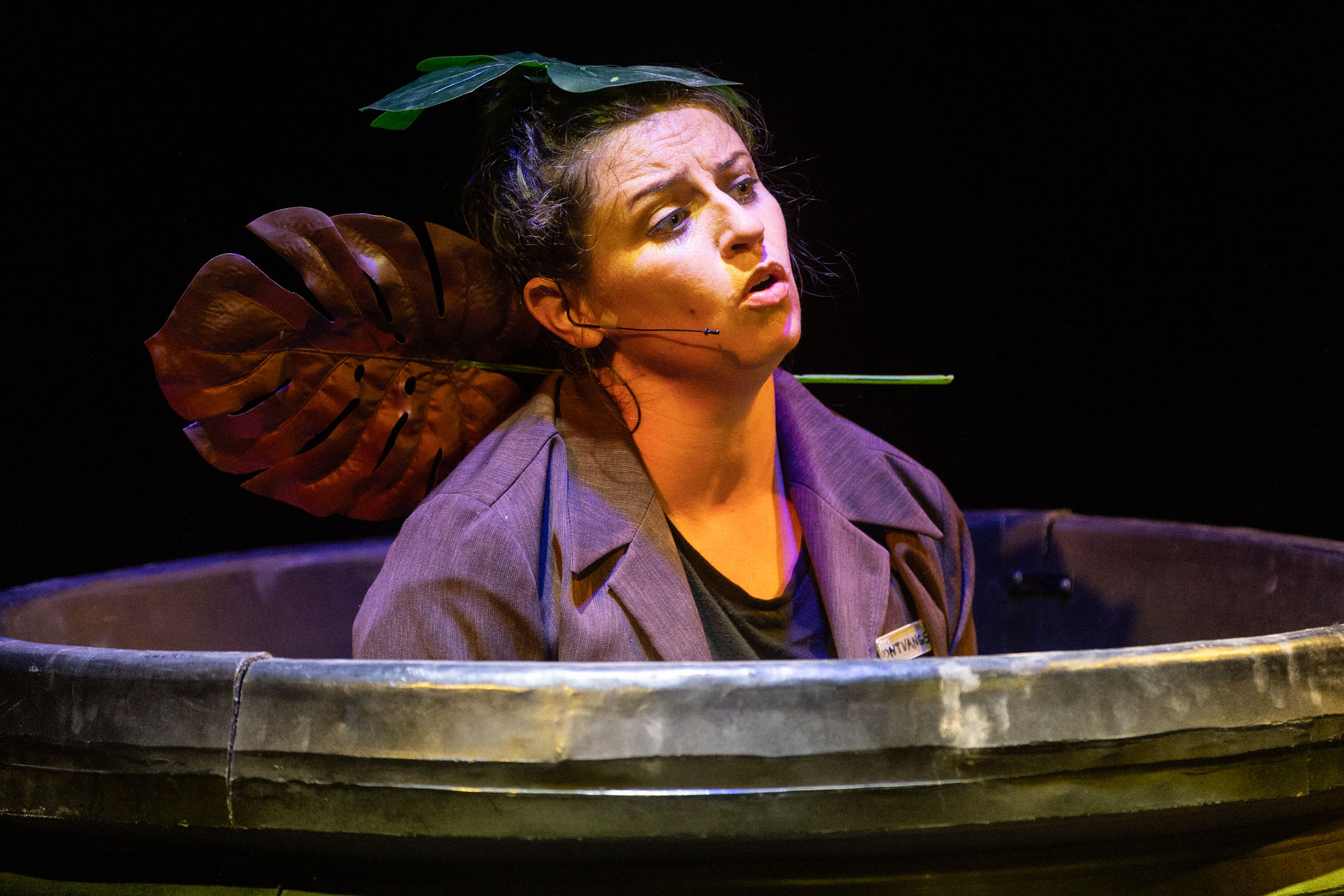
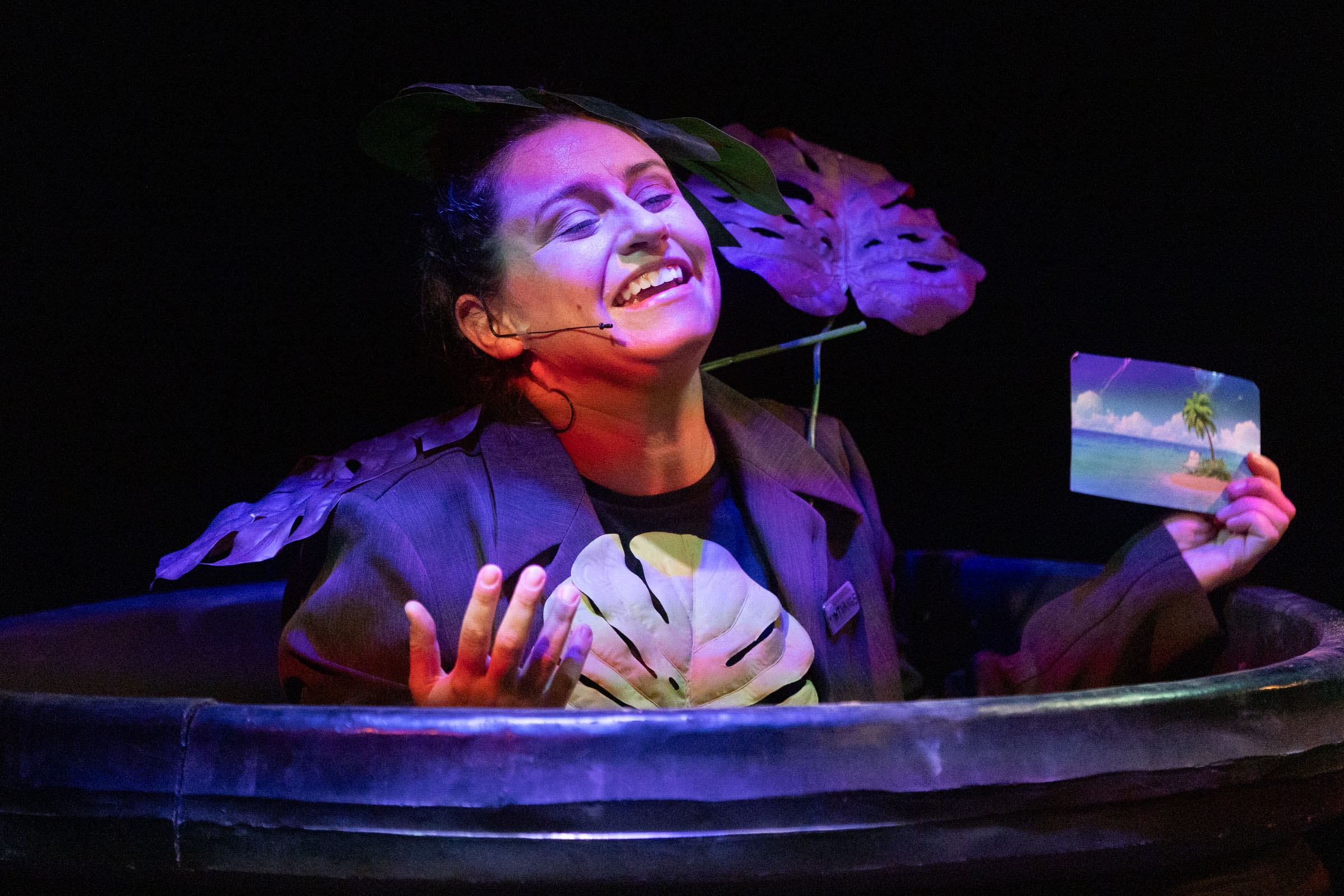
Also Die Potplant: ‘n Tragedie written and played by Karli Heine who changed what had previously been part of something now called Blitsteater into a longer piece had an interesting effect on me. It’s a wonderful idea with a script that’s inventive with underlying pathos – and yet, while it still had the impact and was cleverly stretched into a more comprehensive play, I think I preferred the shorter version.
It might have had something to do with the impact it had the first time round as well as having lost my heart to that version, I was more aware of the padding. Yet Heine is worth watching. She is someone that thinks out of the box as well as having the courage to take chances. You need all of that in this challenging profession.
Another joy at a festival is discovering new talent as well as witnessing the creativity of artists and how they find ways to explore their craft in a world with no boundaries yet many obstacles. Bibi Slippers, who can only be described as a compulsive creative did two shows as part of the Blitsteater (a bit like fast food, fast theatre), but there’s nothing fast about what she does with her imagination.
Picture: Stephanie M. Gericke.
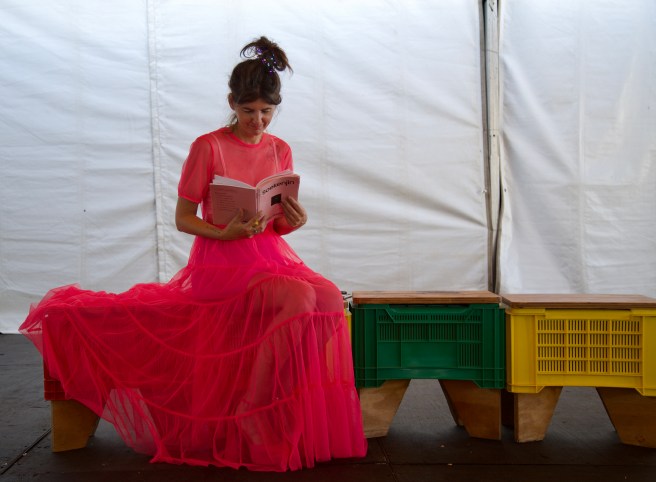
I have always been fascinated by this young woman who has carved her own career in a very individual way. She pops up all over the show and her strengths lie in her words. She knows how to use them and has two spectacular poetry books that run like a thread through her performances.
Everything she does has thought behind it, is usually novel and it works. If anyone wants to see how to be an artist in today’s world and be in command of your own life, this is it.
In similar vein Sandi Dlangalala and Ilana Cilliers combined style and swagger to present an interlude of theatrical magic with Smak. The way they told the story in very little time with their whole being and soul was quite extraordinary.
A regular festival contributor, Llandi Beeslaar, who with her partner has been running a series of short performances by various artists, in the above mentioned Blitsteater, decided it was her turn to shine individually. She was ready to test herself as a comic with her first stand-up piece.
She participates in the arts in different ways, but this is a chance to use her own voice – and that she does with a particular style. Most importantly she has something to say and should keep going while honing her craft. There aren’t enough women in this space and the only thing she lacks is confidence.
Picture: Mia Truter.
A solo performance that stood out was that of singer/songwriter Frieda van den Heever. I first noticed her as producer with a fine sensitivity as well as an imagination which seemed to be strongly independent.Picture
She has obviously decided it is her time and instead of producing others, she staged her own show. She’s got all the goods and probably if you start counting, has more talents than a triple threat. In this her first solo show (that I know of) at a festival, she did the performance as well as the production. She brought in Mauritz Lotz on guitar, but the rest was all done by this astonishing performer.
I’m more of a theatre girl than music, but she blew me away with her presentation, the way she put together her show, her music (on piano as well as singing and songwriting), her lyrics and her singing. I know I can find her album Ontspoor, onlineand that’s what I’ll do.
But to find new music so accessible and a performance that’s fresh, daring and quite darling. I’m a groupie. Once I checked her previous work (which I had seen, with her as producer rather than performer) I understood why I liked the show so much.
Karoo Kaarte is one of my favourite experiences every year at this festival. They pick their battles, how best to explore them and this year they joined forces with the District Six Museum and GALA queer archive and used the Kewpie: Daughter of District Six picture archive as a platform to develop this years’ experience.
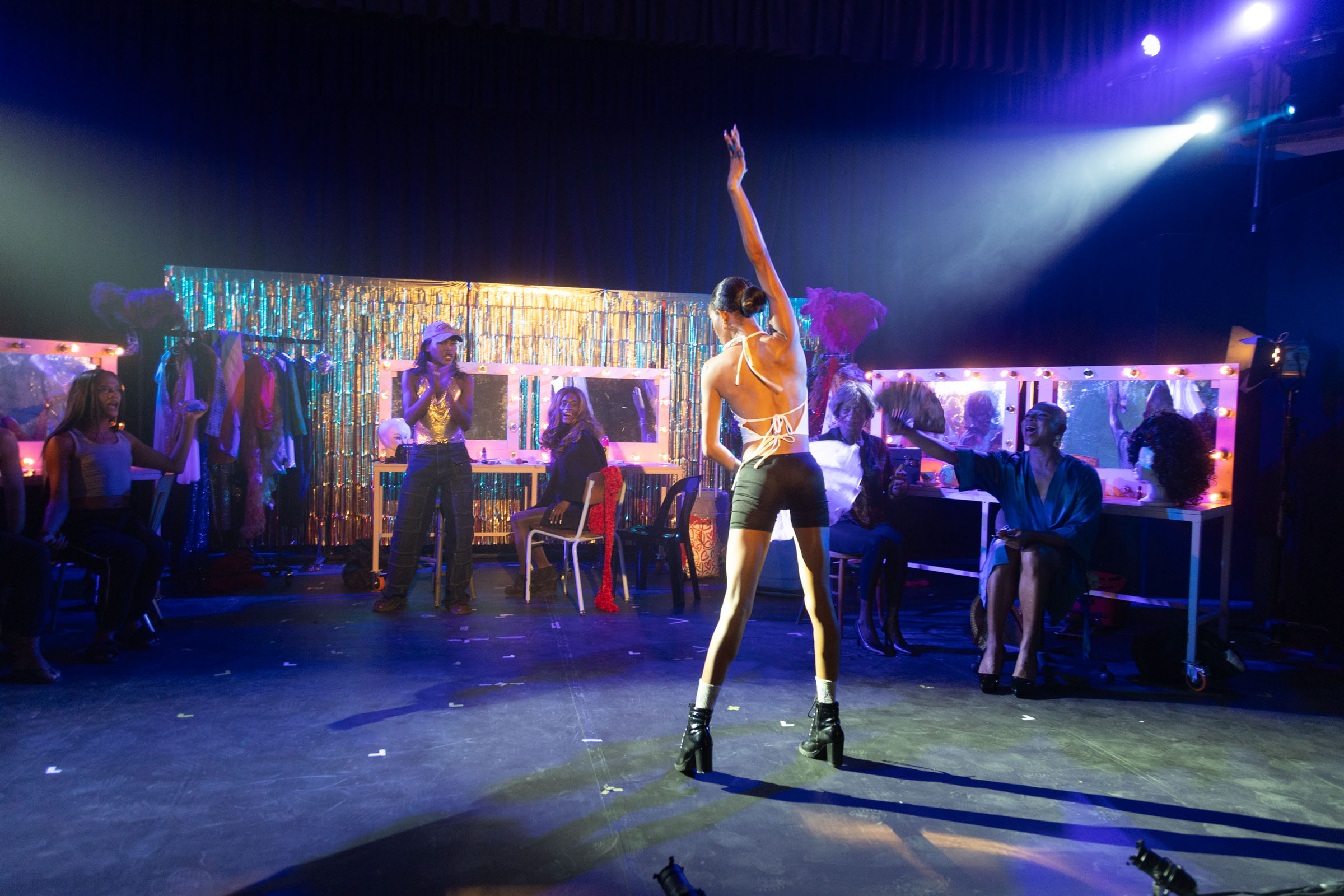
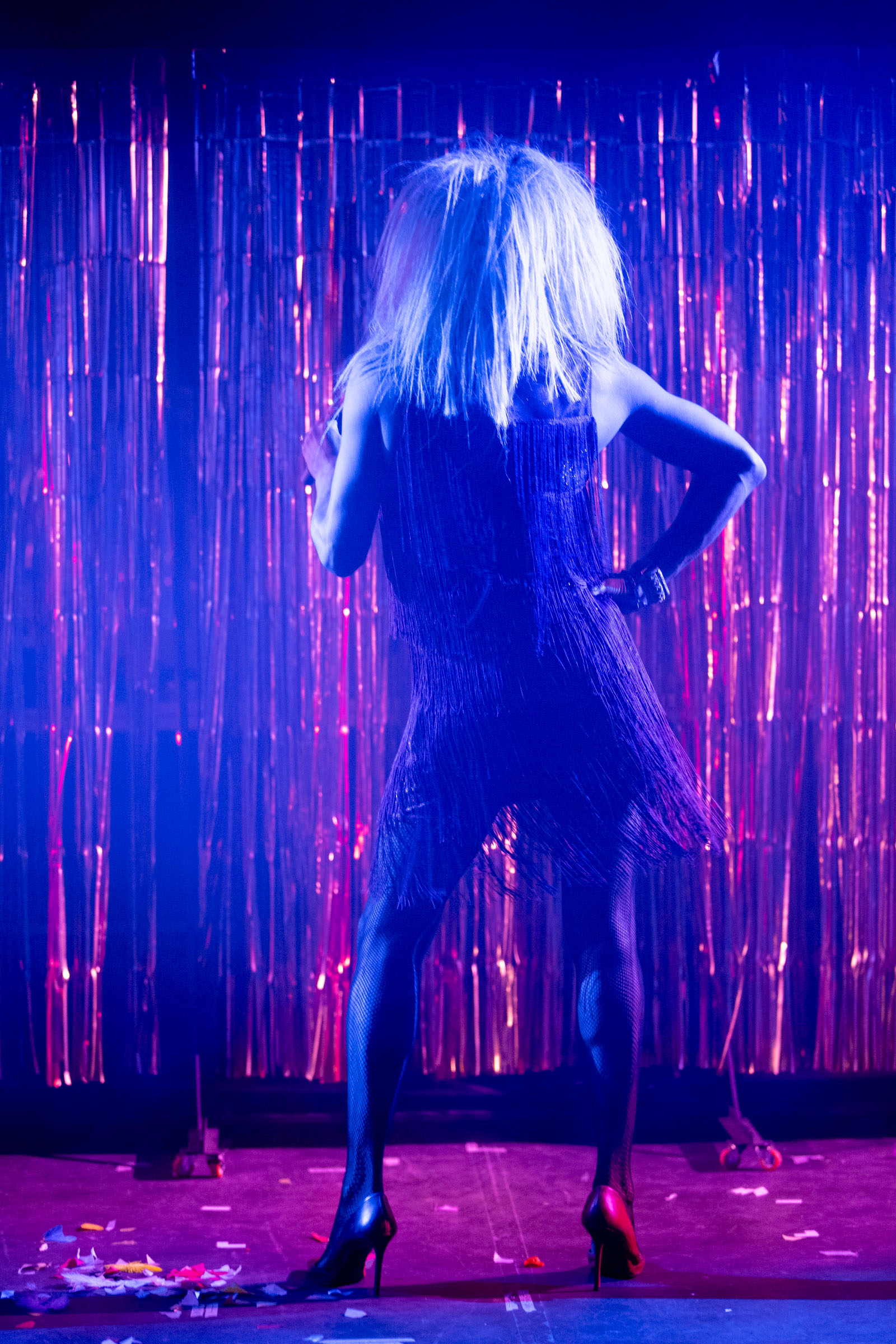
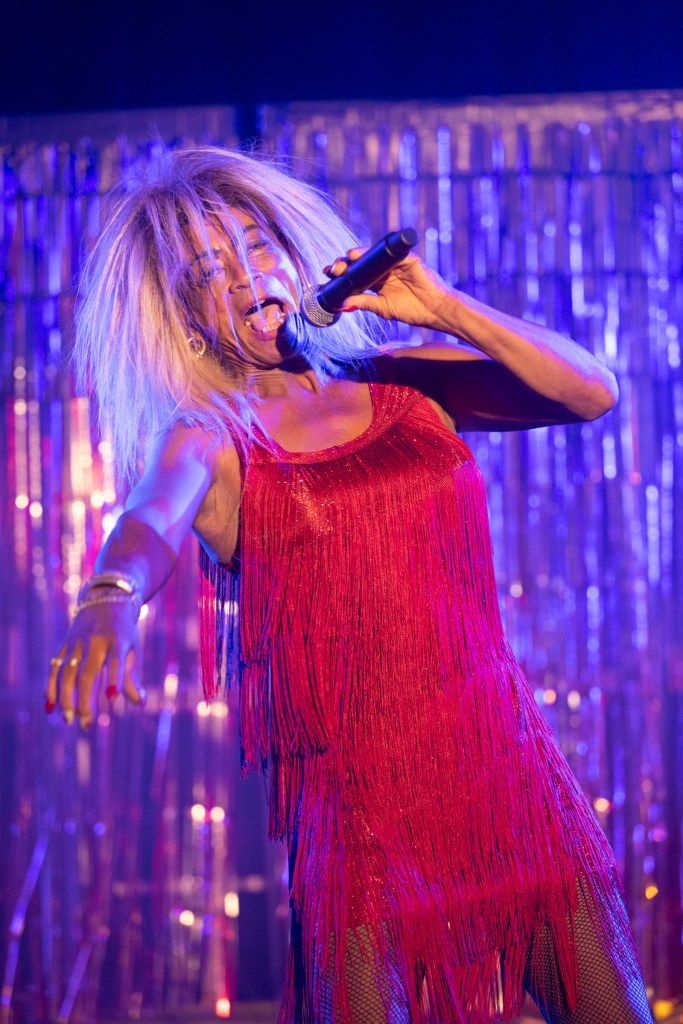
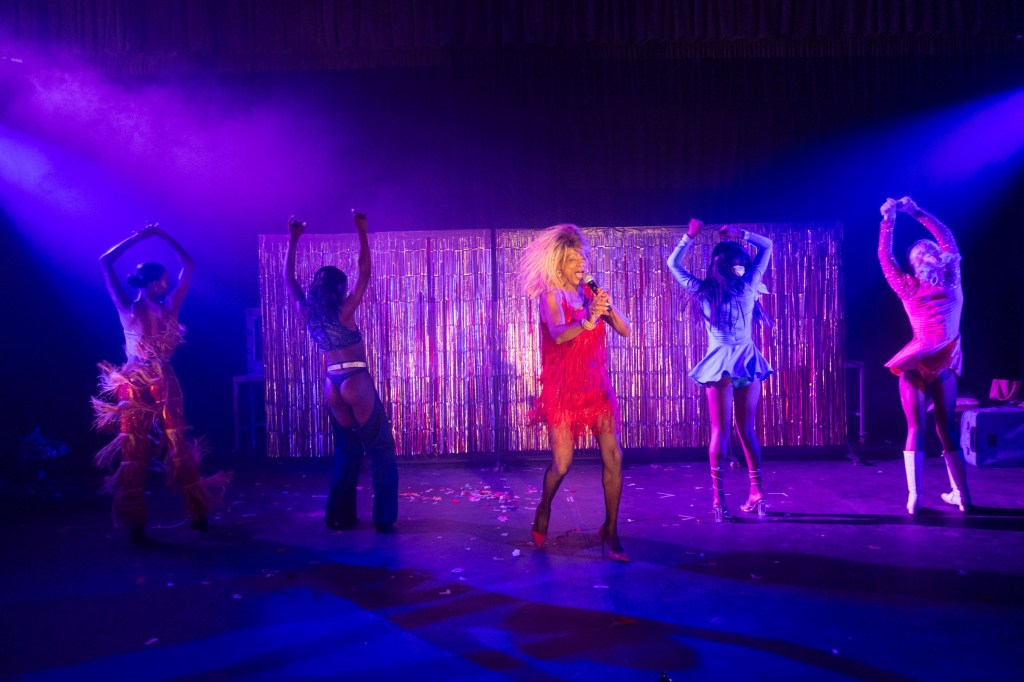
It all culminated in a queer festival with a multi-disciplinary drama titled Kroon en Konfetti which incorporated three elements: Kewpie’s life and legacy as dancer and artist; the rich culture of Oudtshoorn’s beauty competitions called “models”; and 25 personal stories collected from Oudtshoorn’s queer community.
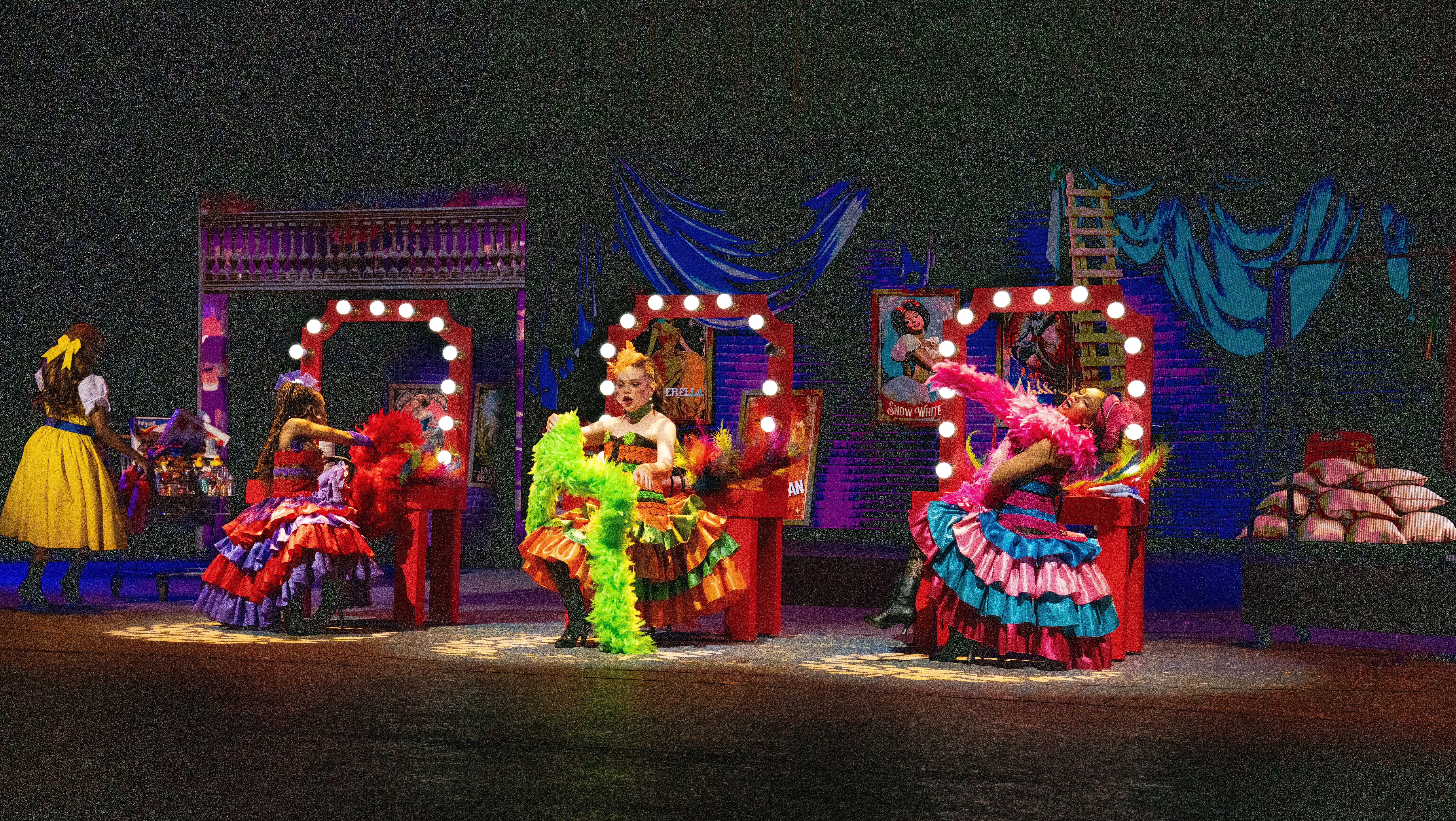
Dressed in all their finery, the “models” all gathered in a dressing room to start their show with the dialogue smart, sassy and with an edge. It was quite magnificent as are all the Karoo Kaarte productions and more than anything it’s the topics they choose to spotlight that’s so important.
Here is deals with a group of people who are already sidelined in a country where prejudice is still rife. With their queer status they are in search and hoping to find safe spaces in their community where they can celebrate their culture, yet behind all the glitz and glamour, the shadow of oppression is hard to ignore.
As always Neil Coppen, Vaughn Sadie and Tiffany Witbooi are the creative team responsible and my only regret – as happens every year – is that I couldn’t participate in all their offerings. It’s one of those projects that’s imaginative and innovative and even more importantly, they’re constantly working with elements that result in real change in a community that has always been neglected.
And then cleverly the festival ended with Nataniël and a company of 10 on the openair stage under the Oudtshoorn night skies. The elements aren’t his friends, but it was a glorious way to end the festival with a performance that showcased new voices and performers as well as the glorious artist himself with stories and songs that suited the occasion.
Tracy-Lee Oliver was the artist he chose to spotlight on the night, and she made full use of the occasion with spunk and singing that added spark to this final show. It was great to see someone step into the limelight with such poise. As usual, making sure he gave his audience all the hysterical stories and masterful songs they expected with his superb band and backup singers, he also paid it forward with this sassy introduction of new voices for this audience.
He first spotted her when she was a contestant on a television show he judged, and astute as he always is when it comes to producing for an occasion, this was where he decided to showcase her – for all the world to witness.
Rehearsal picture.
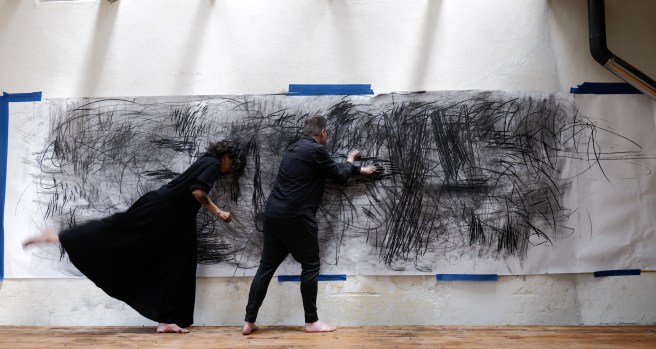
I haven’t even touched on the festival artist Henk Serfontein’s magnificent exhibition Die Stomme Aarde complimented by a performance piece by the artist and his collaborator Hannah Loewenthal as he made a painting to which she contributed while both of them participated in an expressive dance which further enhanced this particular emotional landscape of both the St Jude’s Church as well as the art displayed in this holy space .
It was the perfect example of how art and artists when working with an emotional intelligence can transport you in a way that seldomly happens in what has become quite a cranky world.
Similarly, Mareli Stolp, a pianist with a particular penchant for avant garde music invited animation artist Diek Grobler to illustrate her chosen compositions for a programme Die Gevlerktes. It was a stroke of genius.
The exquisite animation was imaginative in the way it enhanced the music and the listening experience which then also transformed into a visual feast.
I could go on, but this is simply one art lover’s experience …
See if you can catch any of these gems at other festivals and theatres in the year ahead.
CAST: Stuart Brown, Léa Blerk, Charlie Bouguenon, Keely Crocker. Kent Jeycocke, Shelley Lothian, Ntshikeng Matooane, Arno Meyer, Sharon Spiegel Wagner, Michael Stray, Justin Swartz, Lucy Tops
SET AND LIGHTING: Niall Griffin
MUSICAL SUPERVISOR: Charl Johan Lingenvelder
CHOREOGRAPHER: Louisa Talbot
SOUND DESIGNER: David Classen
RESIDENT DIRECTOR: Shelley Lothian
DIRECTOR: Greg Karvellas
Producers: Showtime Management and How Now Productions
VENUE: Montecasino Teatro
DATES: Until 13 April
PICTURES: Daniel Manners
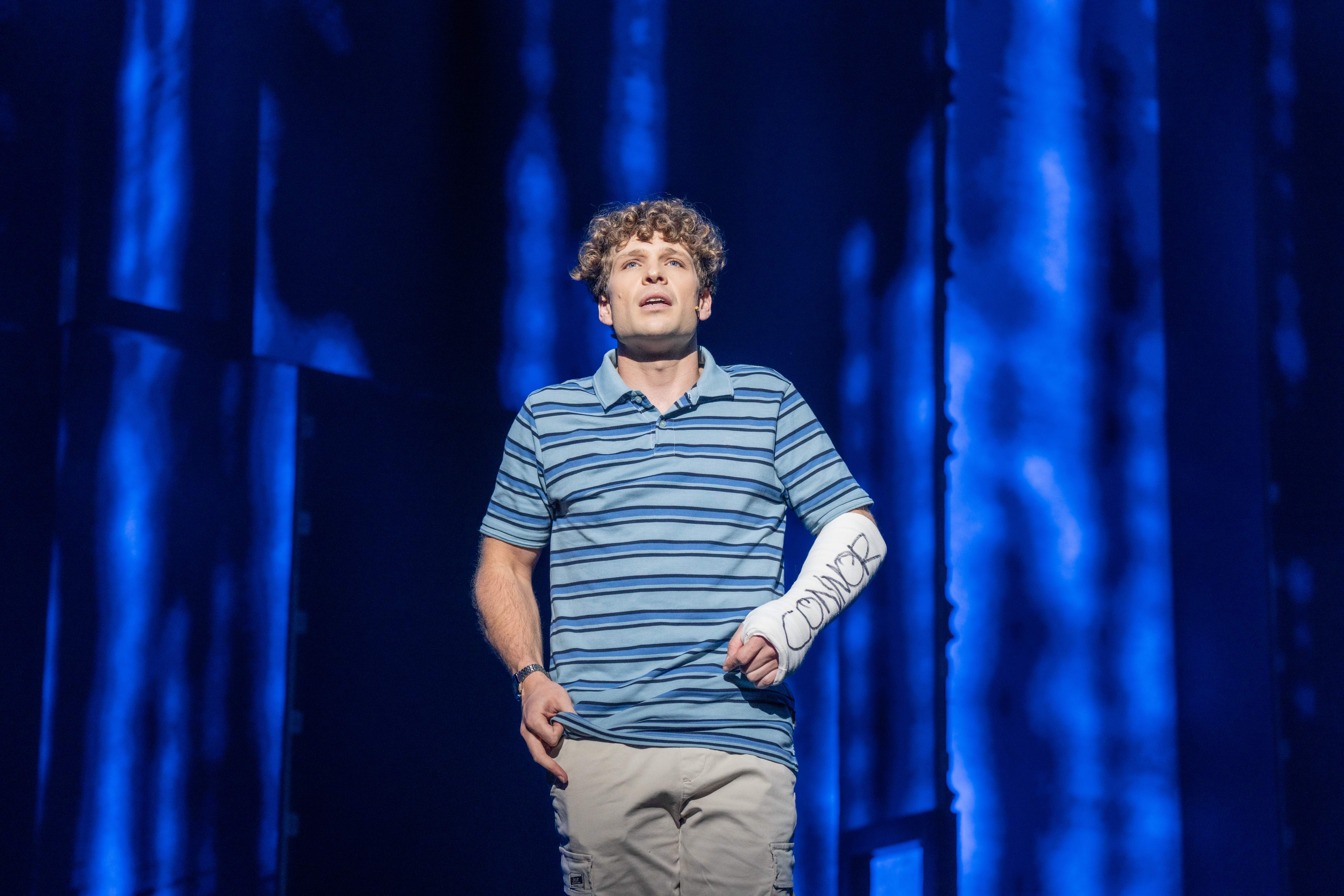
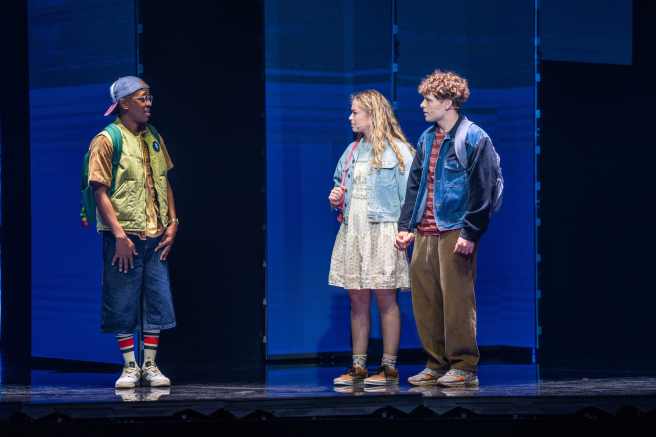
Charlie Bouguenon (Charlie Murphy), Stuart Brown (Evan Hansen),Sharon Spiegel Wagner (Cynthia Murphy) and Keely Crocker (Zoe murphy).
WHAT struck me instantly while watching this musical was that being young a few decades ago was much easier.
No social media, less scrutiny, much less peer pressure because it had to be done person to person rather than through technical means or phones – it was just a much simpler and less stressful life.
What young adults have to contend with at that vulnerable age when you start transitioning into adulthood is quite monstrous. One would think that the huge physical upheaval would be enough to deal with, but now there’s so much more.
It’s a musical with an intimate if weighty story as it deals with depression and hiding from the world at a time when you should reach out rather than go into hibernation, yet it has huge heart.
It’s not often that musicals deal with mental health issues especially targeting teen and young adult audiences, who are particularly vulnerable. These aren’t issues readily discussed and this offers an amazing opportunity to ignite sensitive conversations.
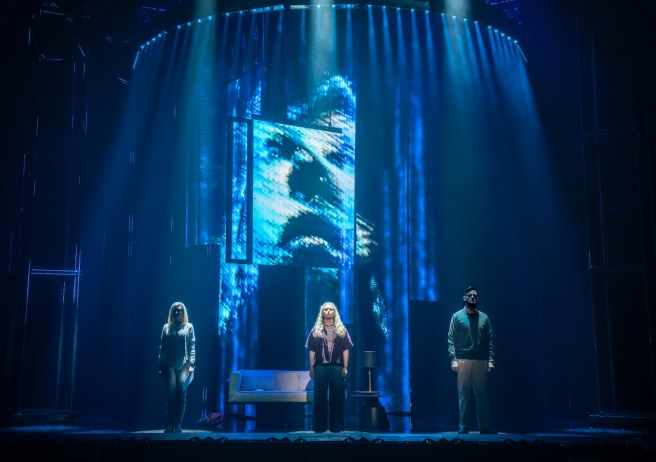
Griffin, who is known for his ingenious designs, has hit the brief spectacularly. It’s all high-tech and could be quite alienating and overwhelming but also allows for the cast to flow in and out of the grand and gleaming structure (above) quite seamlessly.
It also allows the high tech environment we live in to dominate and underlines the world we cannot escape – even if that is exactly what Evan Hansen is trying to do.
That is the genius of the musical. It all feels quite overwhelming, almost as though you have to fight your way to the heart of the story, yet this is where the magic lies. At that centre is a timid and rather terrified young boy who can hardly get out from under the covers.
His way of communicating is to write letters to himself, hence the Dear Evan Hansen title. Many people, young and old, could identify at some stage in their lives with his struggle of dealing with life. His is the universal struggle to be seen.
His mother, a single parent, is so stretched to keep them afloat that she hardly notices her son or witnesses any of his anguish. He feels he has no one to turn to until an incident allows him to find a different persona and a family to hook onto.
This particular production has been gifted the perfect package in Stuart Brown, who engages with the audience and embraces his persona in the title role of Evan Hansen. The way he commands the stage and fills the auditorium with an emotional sensitivity that’s quite astonishing in such a huge space is extraordinary.
There’s nothing showy or superfluous in his approach to the role, he simply is Evan Hansen, which draws even those few souls – including myself – who don’t instinctively engage into the angst-ridden universe of a teenager whose whole being is fearful of the outside world.
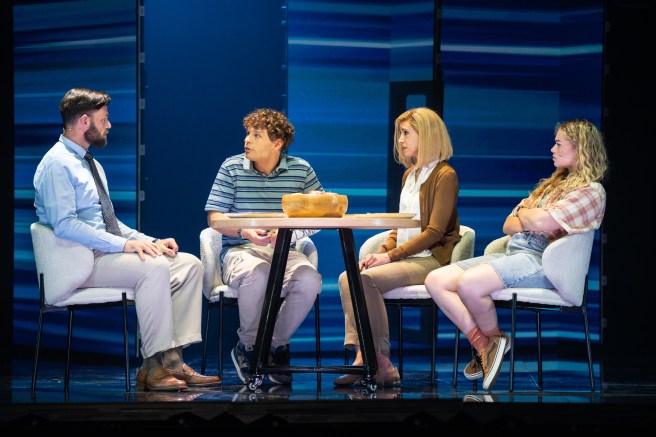
Justin Swartz (Jared Kleinman), Keely Crocker (Zoe Murphy) and Stuart Brown (Evan Hansen) in conversation.
That and the music written by an experienced team of songwriters, Benj Pasek and Justin Paul, who are best known for their Oscar, Grammy and Tony-winning work on La La Land, The Greatest Showman and now this, each of which spawned albums that landed in the Top 10 on the Billboard 200. That’s hard to beat and you could pick up from the audience that many of them knew the music and the lyrics, which would really add to a fuller experience.
There really isn’t much to fault in this production guided by the genius musical instincts of Karvellas supported by Lingenvelder’s music know-how, with a marvellously clever ensemble cast, all with voices that carry the music, it is a story well told.
It’s not just teens but also families that would benefit from the show. Communication, real person-to-person contact and, in this instance parents and children, is the other issue that is explored. These are not traditional topics for musicals and that is what makes this one so intriguing.
It also one of the finest shows to target the teen audience. At their most susceptible to be groomed as future theatre fans, this one ticks all the boxes. There’s a hero who explores and explodes, a story that ventures into almost forbidden territory and a production that unfolds beautifully with many different characters who find what they are looking for, a variety of issues to mine, and for those who want a softer landing, a story of romance.
But more than anything, there’s the glorious music and the explosive performances by an exciting ensemble who push the energy with joyful enthusiasm. You simply have to let go and engage.
CAST: André Odendaal, Oarabile Ditsele, Chantal Stanfield
DIRECTOR: Lesedi Job
VENUE: Pieter Toerien’s The Studio at Montecasino
DATES: Until March 16
Everything to my mind seemed aligned for this one. I found the casting as well as the director intriguing, a new local play is always something to be excited about and Paul Slab has a way of climbing into a story.
At the same time, it also makes me nervous. I don’t want to raise my expectations by thinking ahead, but one can hardly prevent it.
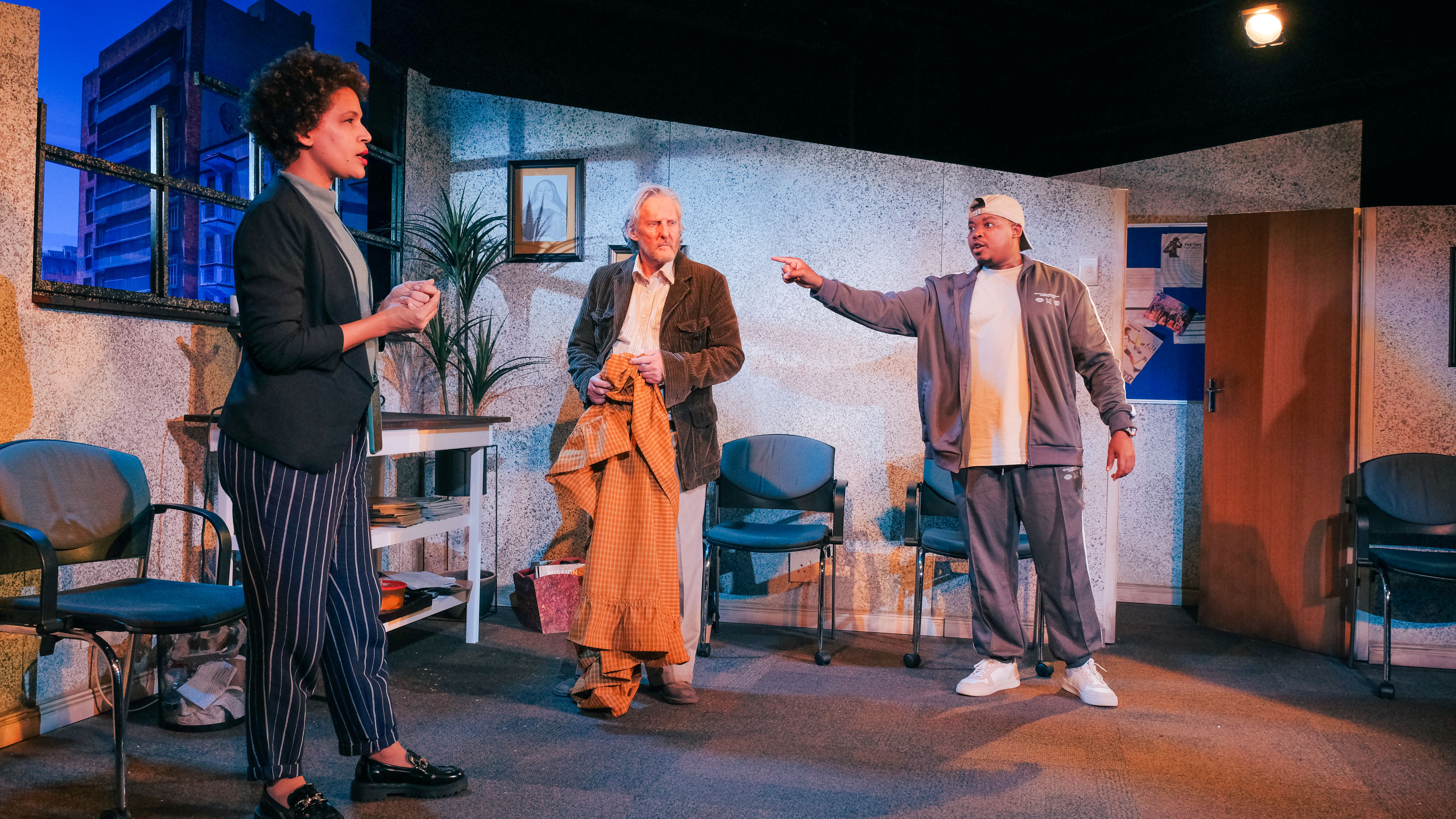
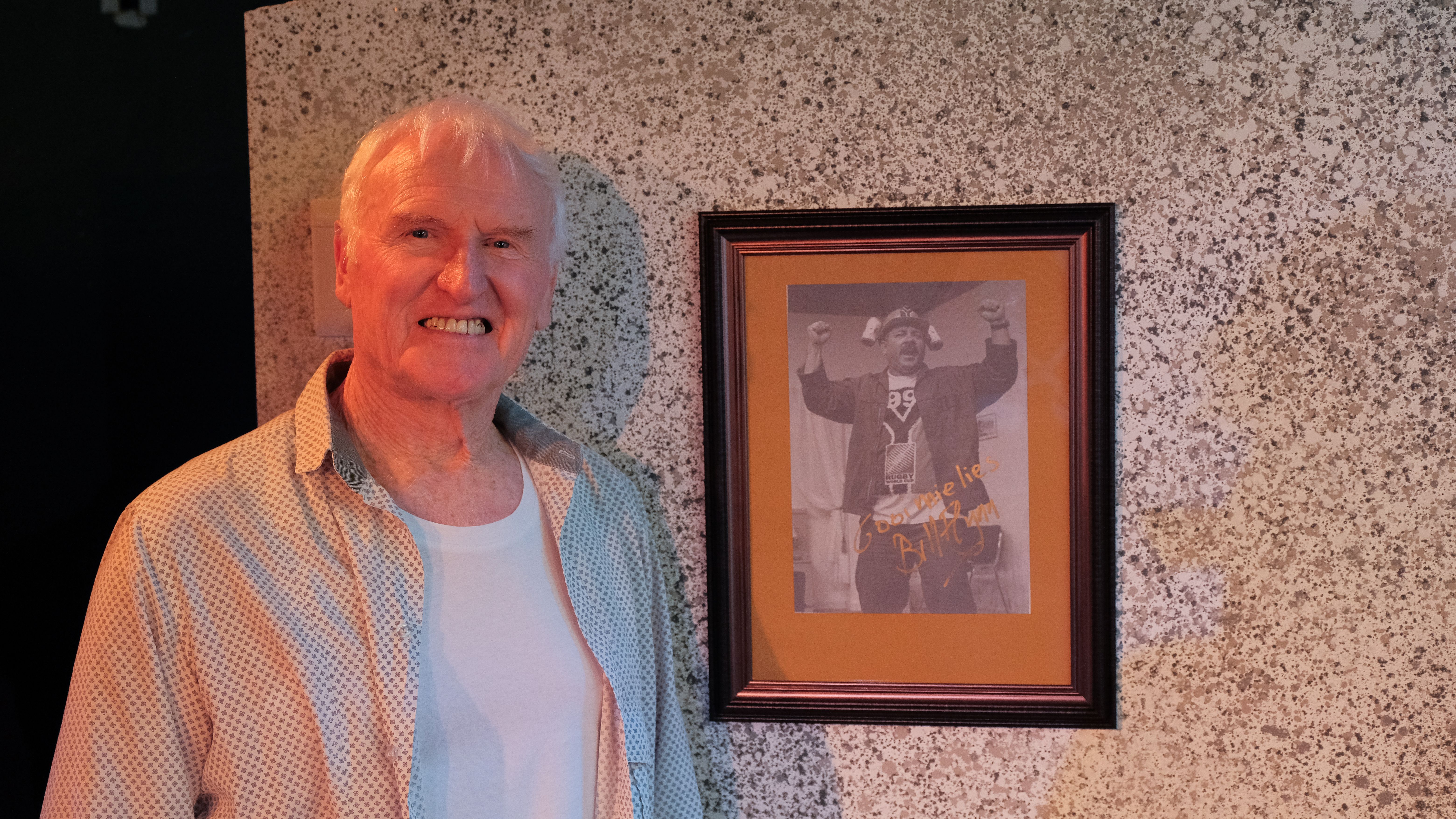
Ensemble cast (Chantal Stanfield, André Odendaal and Oarabile Ditsele) and playwright Paul Slabolepszy
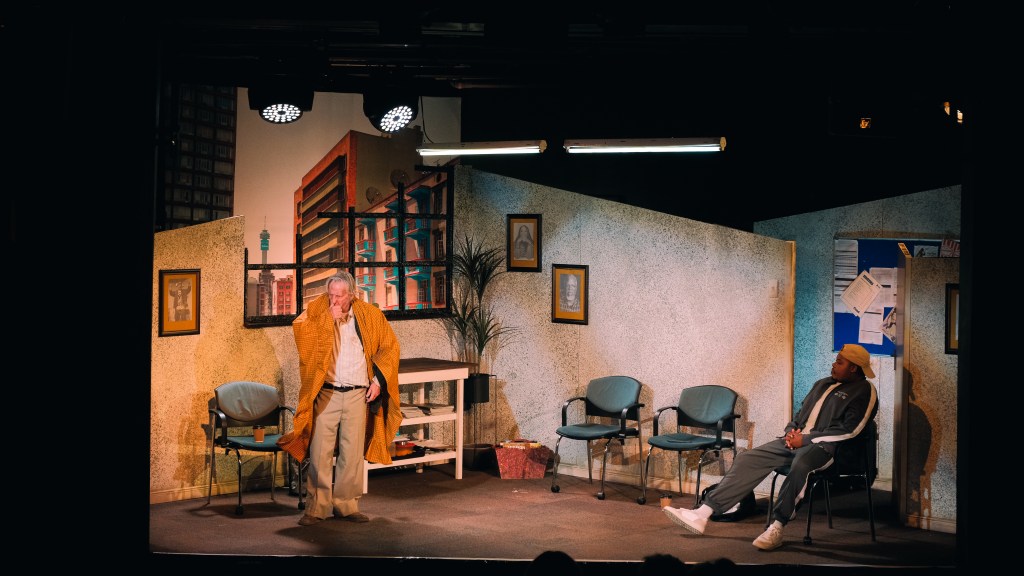
Either way, I was quick to exhale once the actors found their way on stage. One feels it immediately. It’s two actors in a room waiting (rather like a doctor’s waiting room) to be auditioned.
Anyone who knows anything about theatre knows that this is both an exhilarating and a scary experience. Not many of us have to sell ourselves in such a public way each time when applying for a new job. And like most things in life, there’s not really anything that can be done to alleviate the nerves crashing into one another at high speed in these circumstances.
Not only that. If there’s something Paul knows everything about, it’s this. Both as a writer and an actor, it’s a scenario that he has lived most of his life – and one feels all of that when watching the play.
The two hopeful actors (the one at the end of his career, the other excited about the life ahead) who don’t know one another are sitting in a room checking each other out. Times are tough – not only for actors – and this is not a friendly space. There’s no one around trying to soften the gig they’re waiting for.
Every once in a while, a rather officious woman enters and, while she’s charming to the one actor, she bristles when the other asks anything. The tension is palpable.
Already a scary space for all involved, it is also heightened in the South African context. And this is what the playwright handles so well. He plays the moment and not the context, which he leaves to the audience to experience.
It’s subtle yet clichéd but with this clever script and a team who works with everything they’re given, it sweeps you along.
The title could work in two of our languages, English and Afrikaans, and that’s another trick up Slab’s sleeve. He has both languages (as well as three more indigenous languages inluding Sesotho, isiZulu and Tsotsi) flowing throughout and, in this instance appropriately and with some delicious irony in hand as he points to the state of the arts in general.
The choice of actors and director, novel and genius, adds to the grit and weightiness of what we’re dealing with. It’s not an easy world to navigate in current times and if your particular career choice constantly also takes you to the edge of life’s challenges, it can be excruciating.
And yet, that is where these people involved choose to play. That is exactly what this play explores. It’s part of who they are and what they have to do.
Bitter Winter is a fantastic vehicle for someone who has been in the game for some time and knows the territory, the people and their insecurities, and the fears involved. But then he also knows how to capture the magnetism of live theatre, how it cherishes the soul, captures our imagination and makes you think.
It works because everyone pulls together. The acting, the directing and the text all play their part.
I can hear Paul say Local is Lekker in his exuberant manner. And he’s right. When it works this wonderfully, it’s a joy to behold.
Bitter Winter is donating a portion of ticket sales to the Theatre Benevolent Fund and every cent counts.
Driving back from this year’s pantomime (the children of the kids who first used to accompany me are now my annual companions) I thought it was time that I should write a more personal letter of thanks and admiration rather than the usual review.
Not being at a newspaper any longer and posting on my personal blog, I have the right, I think. Also, between the two of us, you have probably/arguably written and produced more pantomimes than anyone else, definitely in this country and probably out there in the big world too; and I have probably watched and reviewed more than many can claim.
The genre as such isn’t my favourite and you have many other theatrical accomplishments in case anyone should think this is the only thing you do. But because of you, I make a distinction between a panto and a Janice panto, and as I mentioned in the review of Aspoestertjie (currently running in Pretoria), you have raised the bar for anyone who wants to participate in this field.
There isn’t any chance that I would have managed year by year if not for your genius and innovation. Being who you are, I know you would have been bored to death as anyone would have been, if you didn’t set a particular challenge for yourself. And perhaps that was what saved us both.
I was sitting in a packed Joburg Theatre on a Sunday with a show starting at noon and the aircon struggling with the current heat. Watching the audience, there were many kids but many couples or friends without youngsters too. It’s an institution and one you established and nurtured and grew to what it is. Small wonder they don’t want to let you go!
The text, which is always current and probably the thing most cherished by the adults, is as always on the mark with bullies a strong theme. That’s no surprise, but I love the way you wangle to be political without offending anyone.
You always have your finger on the pulse and have managed to work your way with casts which now fully represent the country without too much fanfare, you just did it. And this mirror of our society at a season that has such mass appeal is probably one of your strongest achievements. Few would have managed in such an easy fashion while showing the best of the country without bashing anyone on the head.
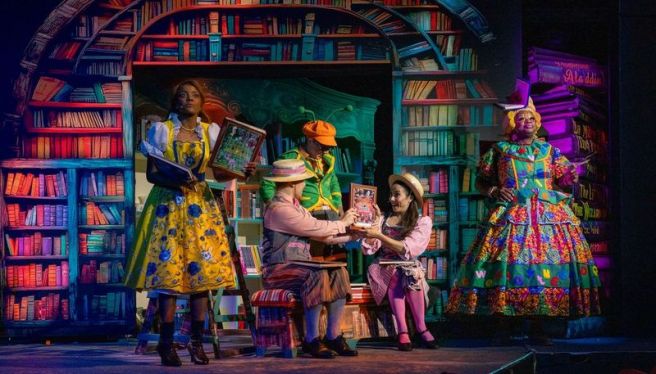
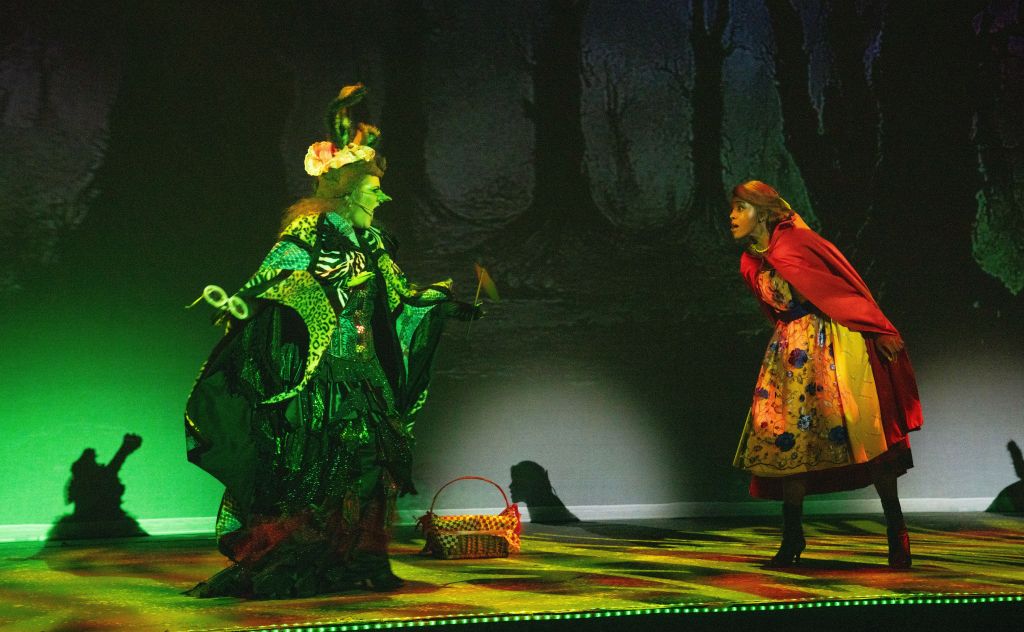
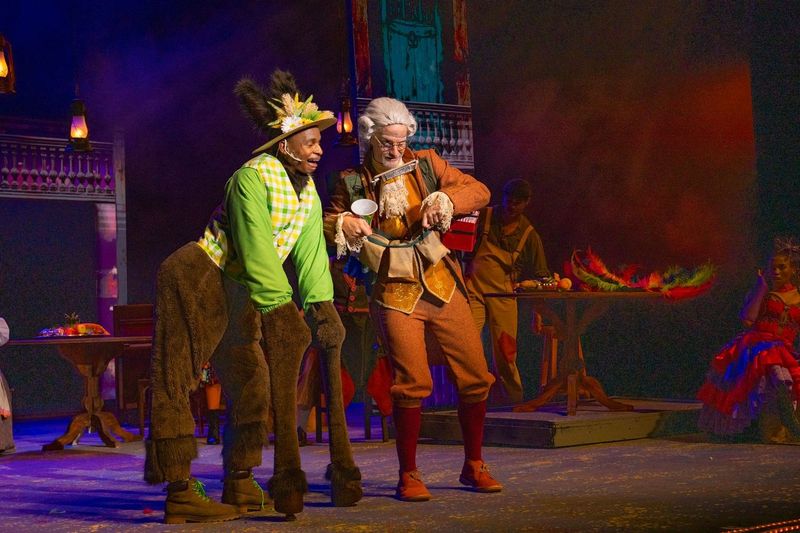
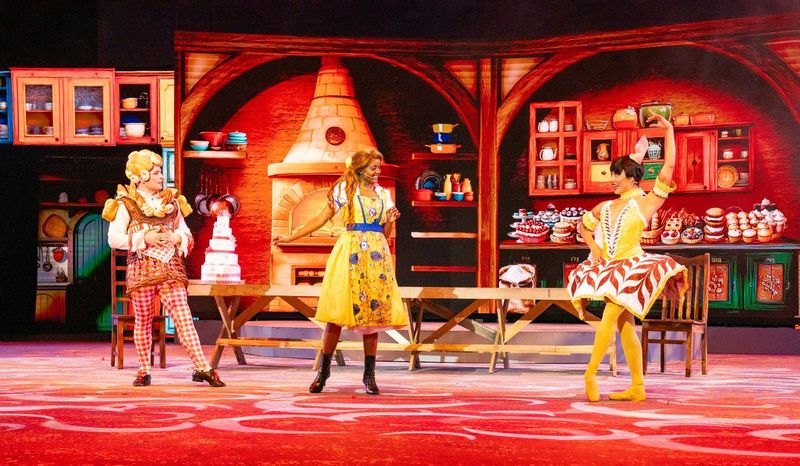
I know this is unfair, but allow me the indulgence. Cast and musicians were fantastic, but there were five that deserve special mention: Bongi Archi (aboveas the Good Fairy (Mama’ama’bali); Virtuous Kandemiri as Beauty-Belle; Judy Ditchfield having an absolute ball as Hectate-Hex, the wicked witch; and Lesedi Rich as Doodlesakkie The Donkey; and lest we forget, Chrissie-Anna Mampoer as the guest newsreader.
Through the decades you have been gifted technological advances, but the wonderment of that is to see how you have applied that in such a wonderful way. This time it’s the way you blend the players from their digital images to the live performers.
Also the sets, the in jokes which some might miss but it doesn’t matter. It keeps viewers on their toes. The six-year-old was curious about some of the adult laughter and that’s also a good thing. There’s a lesson there every once in a while.
I truly loved your Hitchcock moment this time. You managed to display almost all your different skills as well as showing that you’ve still got it – and will always keep forging ahead.
You are an example of a true artist. Someone who could probably have stopped through the years, but you simply cannot resist. For that I’m grateful. Your casting of the young and the old, the experienced and the newbies, each one of them bringing something unique to the stage and the story, also contributes to the success.
Even your choice of Timothy le Roux as assistant director and company manager looks ahead, as you made sure you don’t go without leaving some institutional memory and knowledge behind. If anyone was there to watch and learn it was this artist who started in the arts as a ballet dancer and followed that by crafting and creating his own way on the production side in this very tough profession.
To everyone’s delight, it’s the usual spectacular pantomime, but the reason we could say that time and again from one decade to the next, is you, Janice Honeyman.
And for me to say this about pantomime is all your doing.
Thanks for the magic and the memories!
I don’t have to preach to the converted and for those of you who need to introduce youngsters to the enchantment of live theatre, this is it.
CAST: Afrikaans singer Leah (Aspoestertjie); Marno van der Merwe (Prins Jan-Percy); Carmen Pretorius (stiefma Mevrou Violetta Esterhuizen); Grant Towers en Schoeman Smit (stiefsusters Marabella en Amaranta); Elsje Lourens (Feetjie peetma) as well as Donae Brazer, Duandre Vorster, Jemma Gradwell, Jonathan Raath, Lindi Niemand, Monique Barnard, Rainy van Zyl, Tristin Indigo, Tseamo Mapukata and Zante Marais to complete the ensemble
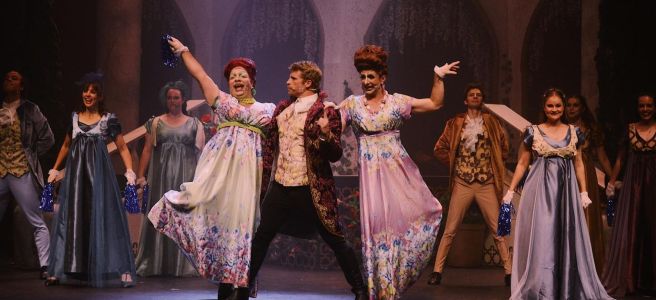
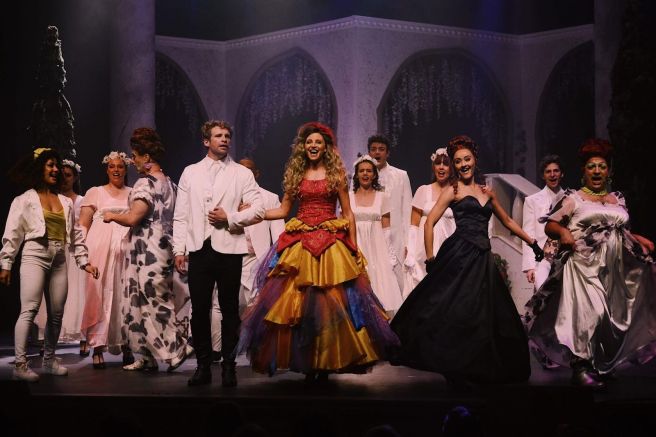
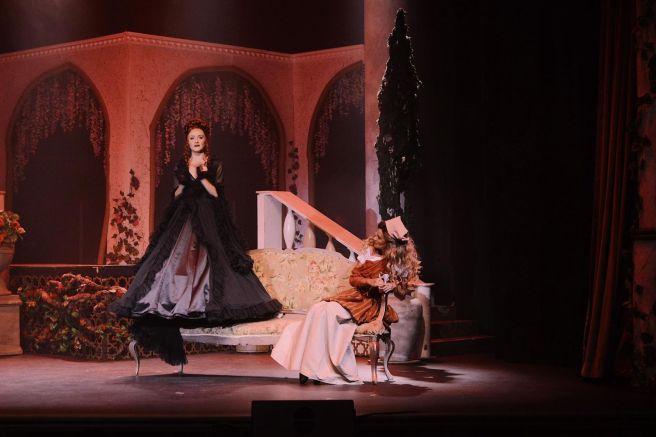
For the first time in decades Pretoria has a pantomime to be proud of.
Gauteng has grown accustomed to the Janice Honeyman spectaculars at the Joburg Theatre and that is also happening, which meant that my expectations were put on hold when I went to the first preview of this production.
I was also prepared to give them some slack because of the early attendance but it’s a short run and I wanted to get the word out there – especially if, as in this case, it is good.
It’s much better than that. It all starts with the script, which is original and funny – and has some real edge to keep the adults happy while the youngsters get the drift of this thoroughly modern Cinderella tale with many twists and turns.
Add to that a cast that have been rehearsed to within an inch of their lives and there was very little to complain of.
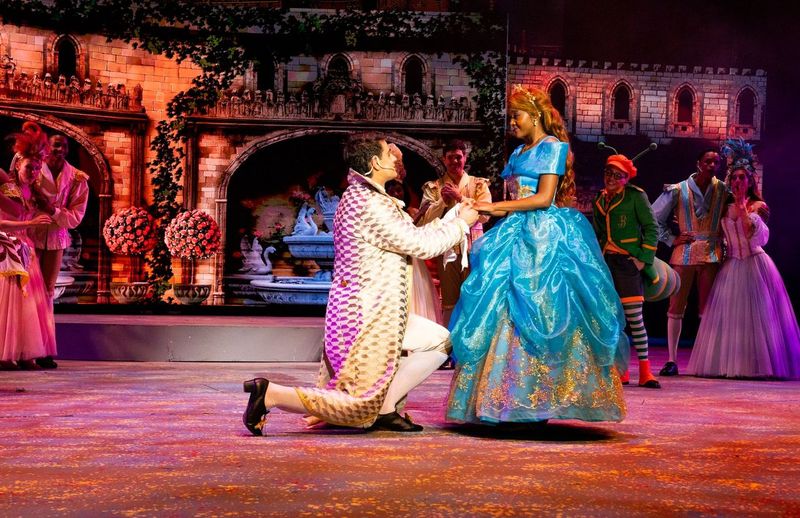
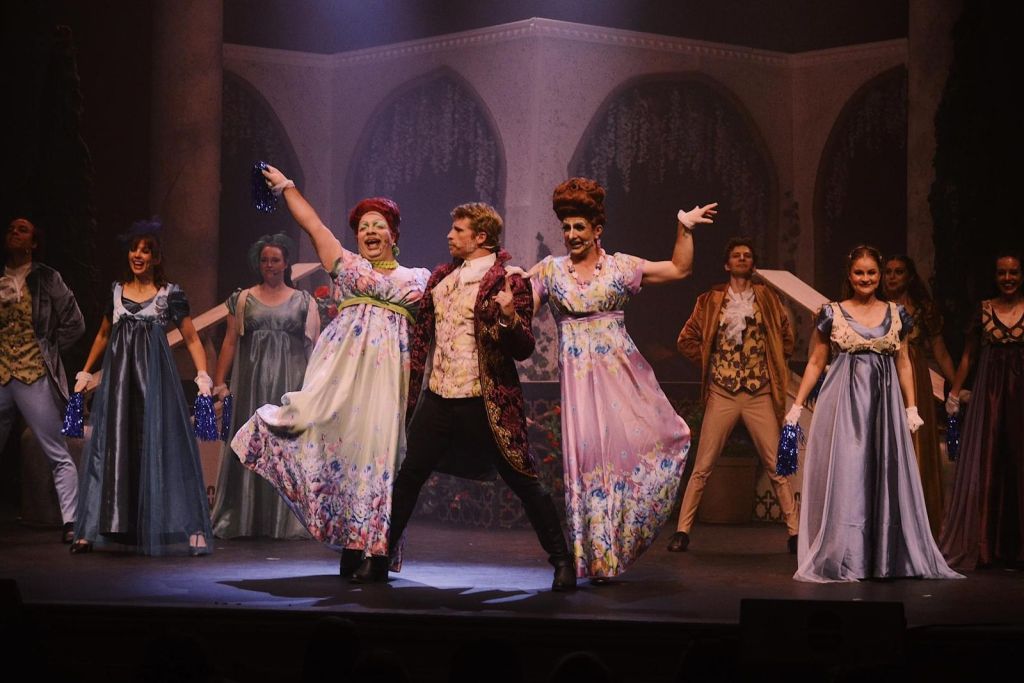
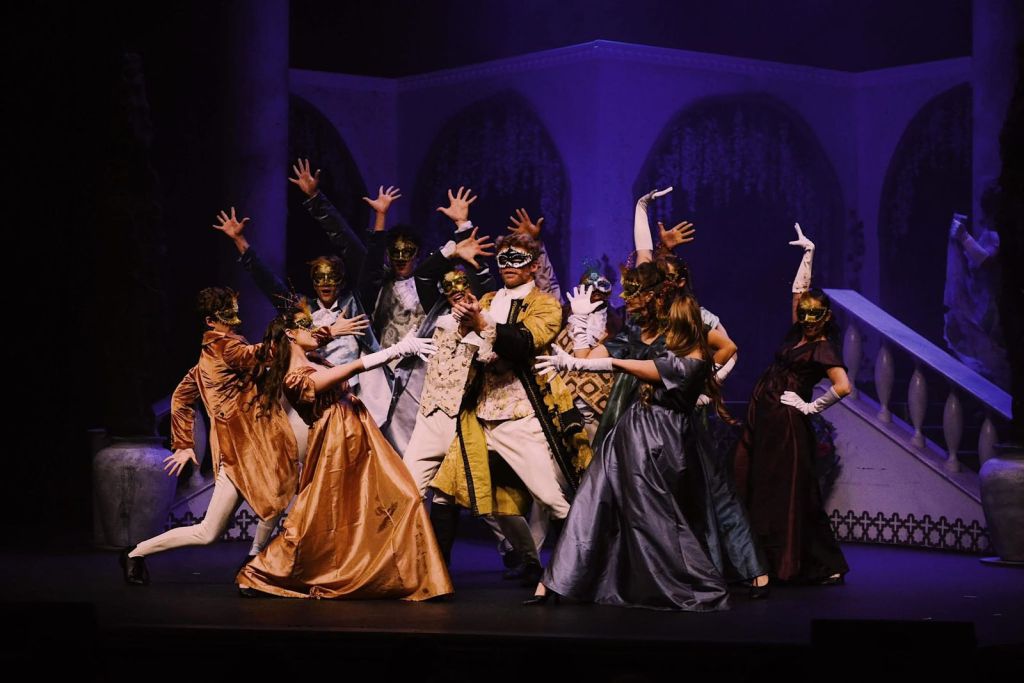
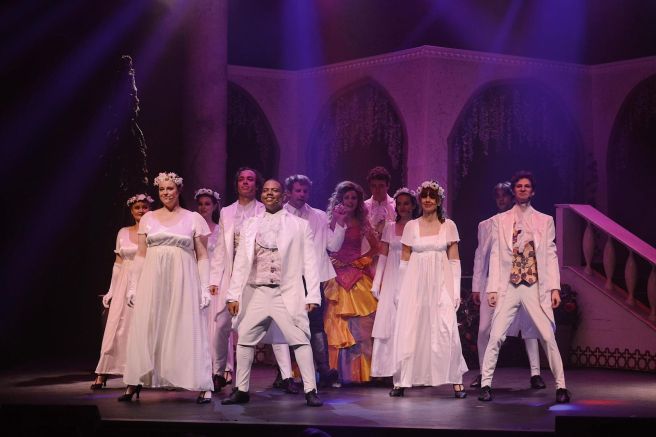
The prince and the two ugly sisters.Let’s all go to the masked ball!
It’s also good to see that they’re prepared to take some chances, like the vibrant, young Elsje Lourens cast as the fairy godmother, Tina Tydreis. She’s the one who has to set the tone and pace of the production and has no problems doing just that. There’s bounce in every move and she immediately engages the audience in her particular telling of this over-the-top tale.
Pantomimes rely heavily on a handful of actors who have to keep everything together. The romantic leads, in this instance Leah and Marno as Cinderella and her prince, have to keep the little hearts racing. I had a youngster right next to me who was terrified she would not witness the final embrace.
With Lourens, the two deliciously decorative ugly sisters (Towers and Smit) and probably the celebrity of the show, Carmen Pretorius as the achingly precious stepmother, they especially knew how to keep the show on its toes and the laughter rolling while playing their parts to the hilt and singing their songs magnificently.
It truly was a treat and I was thrilled that Pretoria finally stood up to challenge their neighbouring city with some panto excellence. I know Ms Honeyman will welcome the competition and she will delight in witnessing the results of the standard she has set other professionals in this particular field.
Pantomime isn’t as easy as it looks. Everyone is having a merry old time but if your cast doesn’t have the energy and elegance to pull it off, the audience won’t engage.
This one did. From the youngsters to a row of elderly women, everyone was shaking with laughter and delight throughout and for me, someone who has seen far too many pantos in her life, the fiesty and fresh approach, and the sheer excellence of the presentation, was a highlight.
It wasn’t that I was expecting to experience doom and gloom, but the standard was unexpected and something that blew me away.
Tseamo Mapukata (as Buttons, centre) has a magnificent voice and the rest of the cast are not too shabby either.
If you have children in the family, gather them and get tickets to join this talented gang in some lovely end-of-year entertainment. There’s not a weak link in sight and I would go especially to hear Tseamo Mapukata who played Buttons sing.
What an exquisite voice. But none of the cast was too shabby.
Let’s hope we hear more from OAK Entertainment in the future, they certainly know how to put on a show!
Tinarie van Wyk Loots talking about her script Hamlet/Speenvark. Picture: Nardus Engelbrecht
DIANE DE BEER
This is the 9th time I’ve written about the Klein Karoo Kunstefees/NATi/Baxter Teksmark (text market), the reason being it is such a smart creative endeavour.The brainchild of Hugo Theart, the CEO and artistic director, Hugo Theart of the Klein Karoo Nasionale Kunstefees (KKNK), it is one of my favourite events of the year It’s existence was born out of need because original local scripts had become a problem. What they were hoping to do was to create new theatre texts which would provide local content for the festivals as well as encouragement for both budding and seasoned writers. And that is exactly what happened.
This past festival was the 9th, 156 text ideas in many of our official languages have been presented and in total, 43 of these texts have been developed into full scale productions, some of which can also boast well-deserved prizes.
What I find so intriguing is the zeitgeist that shifts year by year. Very specific strong themes usually emerge and it is fascinating to observe the topics tackled and which struggles or celebrations the creatives have focused on in a particular year.
One of the extraordinary gifts that this particular platform supplies is the chance for artists to experiment, to test ideas, to play and simply to reach for the stars which is something that quite a few playwrights attempted with brilliant results.
Acknowledged as one of our best actors, Tinarie van Wyk Loots presented a play titled Hamlet/Speenvark. Even the title suggests that this is going to be something unusual. Blessed with her acting skills, she could present her own play/monologue, which I found challenging yet immensely exciting.
She describes it as an attempt at a solo production, or struggling poem, modelled on, and with apology to Shakespeare’s Hamlet (and she cites Jonker, De Villiers, Malherbe, Totius, Opperman and Yeats). That’s quite a list.
She writes that it is “a tentative but violent investigation into the emotional landscape of being South African – the search for identity and a relationship with guilt and victim mentality.”
She further explains that her choice was driven by her “ancestors rooted in Africa and Europe, the disillusion of humanity, and emotional suicide depicted through the extrapolation of various characters in the original script, who all speak from the same mouth.”
The reading was magnificent and I could feel that this was going to develop into something quite extraordinary. Van Wyk Loots is someone who has given her heart and soul to the stage. Few actors can still afford to do that. But she has the skill and talent to keep adding to her repertoire and her engagement with theatre.
Not only can she write, she can then take the text, already her own, and do with it whatever she wishes. Personally I can’t wait. This is the kind of production that keeps theatre alive.
Dianne du Toit Albertze in conversation about Meire en Pinkie. Picture: Nardus Engelbrecht
Never one to shy away from tackling holy cows, Dianne du Toit Albertze’s writing grabs you by the throat. On first reading of the text, I needed to know who had written with such abandon and such a brave heart. When I discovered who it was, I knew it couldn’t be anyone else and I was surprised I didn’t pick up the harsh yet haunting style of this writer.
Meire en Pinkie depict orphanage runaways and ladies of the night and day. Okiep jintoes with nagging drug addictions who scramble for survival daily, searching for a cure, writes Du Toit Albertze, but fail to know how to get it. But they continue running towards ways to escape the vicious cycle of poverty and abuse.
But she points out, life has a way of outsmarting you. The sins of their mothers catch up with them when they are accused of selling the means to vicious addiction, Meire’s child. It’s something they endured themselves as children. And now they feel abandoned
Picture: Nardus Engelbrecht A scene from Meire en Pinkie.
It’s gritty, hard-hitting and without compromise. Some would argue for something with less hard edges but this is exactly what theatre can achieve: to tell real-life stories in a language that becomes a character, confronts you and makes you listen without turning away. This is when theatre becomes therapy for those writing and performing as well as those watching.
These are just two of the standout texts, part of this year’s text market at the Baxter but there were many more that had potential for further development and some already stage-ready.
Playwright Gavin Werner (Meeting Murphy, centre) with two actors playing the parts on either side. Foto: Nardus Engelbrecht
The theme of bullying captured by Gavin Werner in Meeting Murphy will touch everyone who would have experienced it in some form. Another one that popped up in quite a few texts was memory and the way individuals remember the same event in different ways. How we view the world is often coloured by past experiences and this can lead to discomfort in some instances.
The Salt Lesson by the insightful Sibuyiselo Dywill also tackles memory but here it has to do with different generations, cultures and languages and most importantly for the playwright, from the same bloodline. In any context this is a huge ask but with the South African apartheid past, when the elderly family member (white) suffers from dementia and regards the youngster (black) as an intruder rather than a son, things can get really messy.
Playwright Sibuyiselo (with the mic) surrounded by the three actors in his play The Salt Lesson. Picture: Nardus Engelbrecht
It’s such a clever idea which explores different issues in genius and thoughtful fashion forcing audiences to look at their own world views from a different vantage point.
Scenes from The Salt Lesson. Pictures: Nardus Engelbrecht
With plays written in home languages including Afrikaans, English and Xhosa, the premise is embracing and expansive with the graft expanding year by year. Once we can figure out how to present theatre in different languages so that everyone can understand – easily – Teksmark will truly break down barriers and shift theatre in this country into a unique stratosphere.
And if you want to check out what is happening at the second Gauteng Teksmark to be held at UJ, where different playwrights and others involved in the theatre industry discuss their ideas as play readings, enquire with J.C. Aucamp at 0763335945 or jc@kunste.org.za.
The KKNK 2024 Gauteng Teksmark will be held on 24 and 25 October at Keorapetse William Kgositsile Theatre, Kingsway Campus, University of Johannesburg.
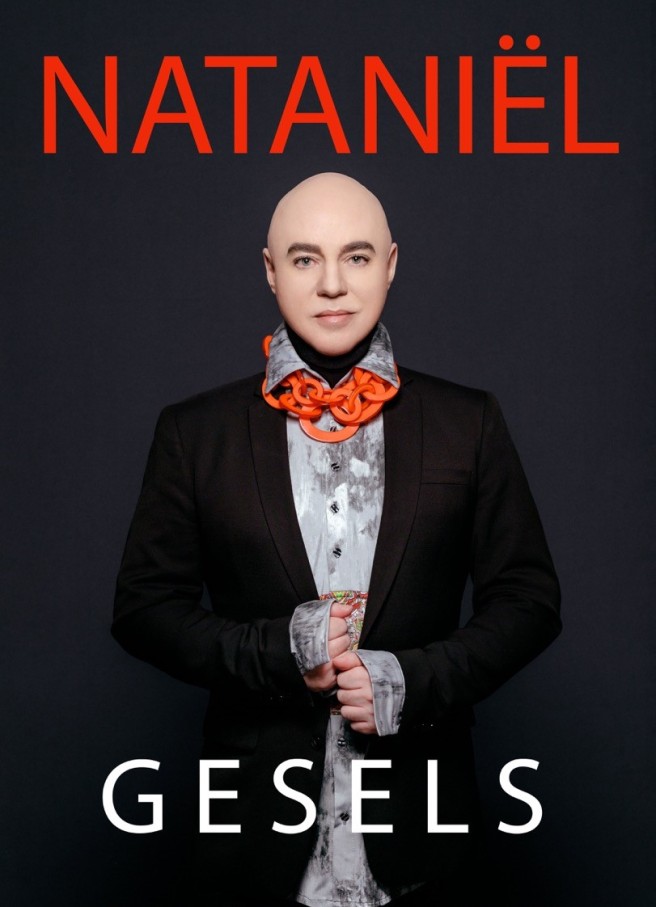
So I went to last year’s Fairtree Atterbury Theatre show in Pretoria, and was so impressed that I forgot to take notes. There was little chance of reporting or writing without having a single note and when he announced the 2024 (he changes topic every year) I was ready to go – which happened a few weeks ago.
It’s always packed, no room for a single late-comer, and while last year’s topic was Pain, this year he focused on our chaotic world and the urge to achieve excellence. “What are we busy doing?” he asked. “What is going on?”
All of this chatter happens at breakneck speed and what I had forgotten was that the auditorium is pitch dark, like in a theatre show. Taking notes would be quite a challenge, but I was determined.
What I hoped to capture would perhaps not be the most accurate version of his magical monologue, but I was hopeful that I would capture the essence and encourage fans to attend future talks.
First off, it’s all in Afrikaans. But that’s always part of his charm. He often complains about a show or a talk which is too serious and not really funny. What escapes him is the way he speaks, his vocabulary and the way he constructs a sentence are unusual and often hysterically funny.
With the focus on the times we live in, he began his talk with one of his irresistible stories which set the tone for the rest of his talk. He can’t but be funny even when he is having a serious conversation. It’s his special formula and what makes you listen while forgetting that you’re actually part of a masterful sermon.
He has always had the gift of the gab. That’s how he makes a living. People hang on his every word. Why not impart some wisdom while making them laugh? And that’s exactly what he does. Not many can make you smile while telling you how to behave. But he does, and gets paid to do exactly that.
And again, it’s because he knows how to tell a story: whether these are true or fabricated, the life lessons come from the heart – and experience. Being Nataniël, he has an unusual life and people share their secrets. He will juggle and jiggle them around so that even those involved will probably not recognise themselves, and then he will douse it with wit as well as wisdom – and the audience will lap it up.
In the current talk he investigates the need to succeed and sparkle (“prestasie” in Afrikaans, but he was unsure of the English translation as achievement doesn’t quite hit the mark!)
And while fame and celebrity seem to be the hallmark of success in today’s world, he believes there’s more to it than that. Legacy is something that is often talked about yet the individual in question doesn’t experience that, it only comes once they’re dead. “A career is also an achievement,” he suggests. And at least then, you can share in the satisfaction of having achieved something.
While at school – something he hated with his whole being – he was often charged by a teacher or someone in authority to participate in a competition of some kind. His response was always, but why? To what end? Who benefits? And what does any of this achieve?
Others again will equate success with money, but having raced through a spectacular career himself, he has had the chance to reflect. For him it has always been the process of getting from beginning to end – whatever the journey might entail. Once you have travelled from one point to another, you can look back, and perhaps make sense of it.
“Success changes your perspective,” he reasons. And for him, 114 productions on (all self-written, music composed, directed and performed), the pain and anxiety have remained. It has never been easy and he still questions the damage accumulated through the years. “It has to impact my health, surely,” he says. “I seem to be in constant pain.”
In his world, he only recognises five iconic individuals: Van Gogh and Leonardo da Vinci, neither of whom lived fabulous lives; Shakespeare, who had to act in his own plays to make a living; Einstein whose famous equation explains the energy released in an atomic bomb; and his grandmother who is the individual most often featured in his stories and the one he credits with influencing his life the most.
“I have tried everything but could never recreate the magic she created in her home and on others.” That’s what he refers to as a natural achievement – not something one tries to do, it simply happens.
Go and listen when you can. Nataniël is one of those people who lives an interesting life because of who he is. It’s not so much the celebrity status, rather the way he views the world that comes through in his talks.
He is naturally wise, more witty than anyone I know or have encountered, and he knows how to tell stories. More than anything, that has probably most endeared him to audiences.
His spectacular shows are something to witness and experience, I never miss those. These latest talk sessions are something completely different yet no less entertaining. As with his shows, you leave the theatre feeling you have gained something – and for everyone it will be different.
And you will die laughing…
He can’t help himself. Even when serious, his inner clown escapes.
29 June 2024
GESELS 2024
11am + 3pm
Fairtree Atterbury Theatre, Pretoria No children under 15 Book at: seatme.co.za