African Muckraking: Power to Writing it Like it Is

There’s so much more to a book than just the reading – Maurice Sendak


DIANE DE BEER

AFRICAN MUCKRAKING COV


African Muckraking: 75 Years of Investigative Journalism from Africa edited by Anya Schiffrin with George Lugalambi (Jacana):


South Africans will know exactly what the power of this kind of investigative journalism is following apartheid and now the Zuma years.

There are of course other things involved as well, but nothing can downplay the importance of the freedom of the press and, even when that is sacred, the courage of journalists to tell the hard stories. When powerful people do bad things, they have the means to protect their wrongdoing.

Except from journalists whose lifeblood it is to tell the truth, nothing but the truth. So help us God. And that’s exactly how it works, often.

And nowhere is it more important than in countries where powerful people think they have the right to do things exactly the way they please. It’s not a new thing and it’s absolutely not something that is found in just certain parts of the world. Power corrupts, sadly, and more than ever, politics has become abusive in a way that few could have predicted.

It’s a known fact that African journalists are not recognised around the world, not even on their own continent. In Africa itself it is difficult to reach a broad audience due to the oftentimes low education, literacy problems and income levels of potential audiences. That goes hand in hand with poor distribution possibilities because of inadequate infrastructure, which makes reporting and distribution tough.

In the global North, writes the author in her introduction to the book, the contributions of African journalists are largely unknown – often because of the assumption that good journalism doesn’t originate in Africa. Western audiences trust satellite news, parachute journalists more than they do local reporters, she writes.

“This book aims to dispel that.” She goes on to say that readers should be reminded that journalists really can change the world – and again, we have seen that most recently in our papers and on television, in the unflinching reporting as well as among those who stood up to the SABC and fought for truthful journalism.

In the book she presents 41 pieces of campaigning and/or investigative journalism from around the continent, each with context provided by today’s foremost experts on the continent; in South Africa, for example, Anton Harber and Ferial Haffajee. They don’t come better than that.

When selecting pieces to include in the book, they tried to be inclusive, including excerpts from pamphlets as well as newspapers from a wide range of countries, as well as stories that had impact or covered an important story even if they weren’t classical works of investigative journalism by today’s standards.

It’s stirring stuff on a continent that doesn’t flinch when it comes to horror. She notes that Africa is diverse and newspaper were influenced by colonial powers. They hoped to reflect this diversity, for example, with someone like David Martin who wasn’t born in Africa but still calls it home.

This book followed on Shiffrin’s editing of Global Muckraking (2014) when Harber, then director of the investigative reporting programme at Wits suggested that they edit a book exclusively for African journalists.

Then disaster struck. There was a paucity or often complete absence of records, which pushed her and her crack researcher Vanessa Pope to persevere. Anyone who has worked in newspapers these past few decades will know exactly what that means. When newspaper libraries went digital and as newspaper groups changed ownership, these archives were the first to disintegrate. All of this also bumped into the disastrous lack of funding for the profession, which meant these side issues completely disappeared.

That is exactly what makes this such an amazing read. Not only is every story selected something quite extraordinary (especially given the context and the quality), it is also a reminder of the quality to be found on the continent that is so often ignored in the wider context of the world. Fortunately, we now have the means in a digitally connected world to change that to some extent.

Following the introduction, which highlights significant historical cases of journalism supporting social and political change, she points out that this journal can only hint at the “full constellation of contributions” that African journalists have made to their societies.

But she does encourage readers to get a taste of the powerful work that African muckrakers have done and hopes that the book will contribute to a conversation about the importance of investigative journalism in Africa.

Nobody reading the book will have any doubt about that but the times we live in have also underlined the importance of investigative writing about those who abuse their power at the cost usually of vulnerable people.

It is beautifully set out, which all adds to the power of the pieces which are classified in sections ranging from struggles for independence to corruption; health, rural affairs and environment; mining; and women, for example.

And more than anything, the intent is clearly stated with the first piece written by Sol Plaatje: All We Claim is our Just Dues.

It is riveting from start to finish.


Elize Botha: a Remarkable Book of Letters Reveals the Life of a Remarkable Woman

I am a reader, not because I don’t have a life, but because I choose to have many.

(unknown)


DIANE DE BEER

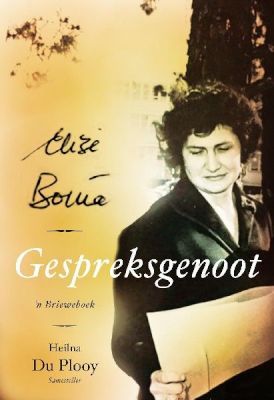
Elize Botha

ELIZE BOTHA: Gespreksgenoot – ‘n Brieweboek by Heilna du Plooy, the co-ordinator (Litera):


This is an unusual and very specific book and obviously you must understand Afrikaans to even think of reading it.

Pay heed to the delightful name: Gespreksgenoot – ‘n Brieweboek (Companion – A Letters Book). What surprised me most was how the letters capture the time, a specific period, and the Afrikaans literary world which because of the politics of the country, was all-important.

Because I wasn’t part of that world yet knew about the people and read some of the books while writing about the arts and interviewed Elize Botha at a specific time, it’s been an amazing read.

The compiler (and the word doesn’t really do justice to what must have been a mammoth task brilliantly executed) who was going to write a biography of Botha, a woman ahead of her time and supremely important in the Afrikaans literary world, was handed the key to much of her letter-writing which was how she kept contact and became close friends with so many writers. Starting to read through the letters, Du Plooy very quickly realised that Botha would be much better served if she could simply put the letters together in a certain fashion to tell the story.

From the beginning, she decided that once a letter had found its way into the book, it would not be censored in any way. It’s either in or out, warts and all. And she needn’t have feared, for those of us on the edges, the finer gossip items are too nuanced and for those who can pick it up, they probably knew it all already. But it’s not that kind of book anyway and Botha was not the kind of person to be entertained unduly by idle gossip. She had far more interesting things to talk about. It is these conversations between those with similar interests – literature – that are so fascinating and educational.

There are many surprises, quite unexpected, I would imagine. For example, the art of letter writing, if anything, points a finger at a lost art since we now rely on the internet and social media to communicate. What a joy to still encounter someone who wrote such meaningful letters – and regularly. It was the way she communicated with those not in her immediate vicinity and what a blessing for us, because she has riches to impart on many levels.

More than anything, it is the way the letters have been written, the language, the topics they discuss and how regularly in extremely busy lives, they still managed to keep up this correspondence. It’s a lost world. The letters are illuminating and sheer joy and point to the loss of something that will never be recovered. Typing an email is just not the same as taking the time to sit down to write a letter to a friend. It’s extremely special and when they really have something to say, and its about something as important and universal as literature, it is something special to share and to experience.

Take, for example, someone like Audrey Blignault, an Afrikaans writer who for those of us who didn’t have better insight might have viewed her in a specific way. There’s a completely different woman who emerges when you follow these two smart people’s writing and exchange of ideas. It’s fascinating to read for example how they were influenced at the time by international writers like Saul Bellow, hardly able to wait for his latest novel; or when discussing someone like Tolstoy, the quality of their ideas is illuminating. It’s like bumping into a mini lecture in the comfort of your home and a real gift to have insight into their thoughts on reading and how it stimulates their inner worlds.

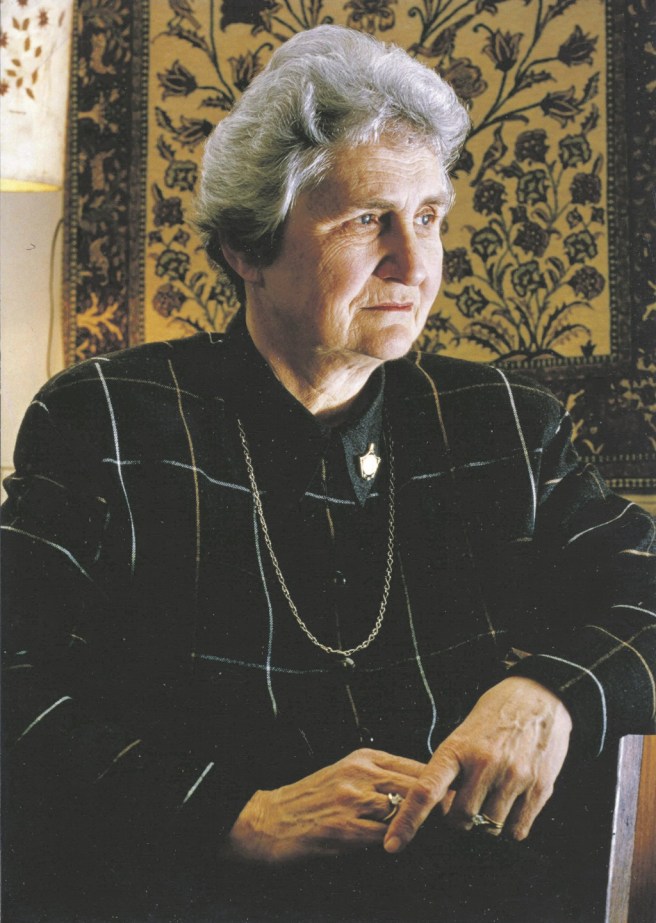
elize botha1

The joy of reading and superior writing is celebrated on every page and though the accent here is on Afrikaans literature in a time when many in this world were fearful for the language, in essence, it is about reading in whichever language you prefer, the appreciation of that language and the art of storytelling. That’s universal and a great advertisement for books, something that can always do with encouraging publicity.

For Botha it would have been unthinkable not to read. Even though as a judge for many different institutions, dealing with books and regarded as one of our finest Afrikaans literary figures, it was part of her daily life, and the way she lived. Most of her career was spent in academia, teaching but also setting the guidelines in her particular field of literary theory and criticism. But she was also very aware that her career was on a slow burn (“a long slow curve,” is how she phrased it) because of being a woman in this time. Hopefully that graph might now be changing with everyone being more vocal about the problems and the social media world keeping a watchful eye.

Starting out in her early days as a journalist, she was also the editor of the Tydskrif vir Letterkunde (Magazine for Literature) from 1973 to 1992. Many celebrated authors published their first work here in the 70’s and 80’s under her guidance and nurturing. She also published often in different spheres – from literary criticism to articles and collections of literary essays. And she traveled often with literary quests as part of these journeys. She featured on every literary committee and academy of the time and for many years was the chairperson of the M-Net Book Awards.

As a woman she was often the first in many different fields, like a board member of Nasionale Pers, the first female chair of the Akademie vir Wetenskap en Kuns (Academy of Science and Art) and finally, the first female chancellor of the University of Stellenbosch, a position she occupied until her untimely death in 2007. But all of this is just a small part of her packed life as any woman who has raised three children in between all this academic superpower will know.

More than anything, says the compiler (colleague and friend), Heilna du Plooy, this collection of letters is also an effort to preserve something that is precious, and to capture people and events and views and insights which can serve as encouragement and a source of survival for others.

It’s a remarkable read about a remarkable woman.

Books that Allow the Words and Actions of Those Involved To Tell the Real Stories

If you want to go for fact rather than fiction, DIANE DE BEER has two examples dealing with events happening on an international front but with relevance here:


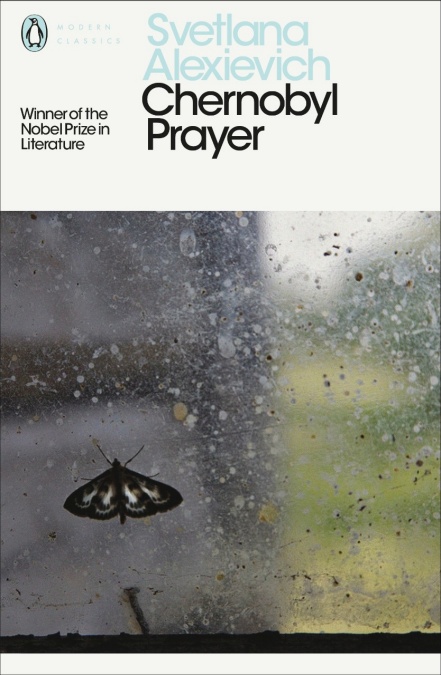
book chernobylChernobyl Prayer by Svetlana Alexievich (Penguin Books):
I first discovered this author with her book celebrated with a Nobel Prize for literature in 2015 –  Secondhand Time: The Last of the Soviets – in which I discovered her unique style. She rejects the term journalist but describes herself as an oral historian. What she does is allow people to tell their stories and something remarkable unfolds. In Russia for example, like in South Africa at more or less the same time and like here, people were expecting their lives to change dramatically with the and dismantling of the UUSR.

It did of course for a handful of oligarchs and the usual suspects and like here the lives of ordinary people were trampled on and they were left gasping for air. It is where she shines her spotlight harshly yet illuminating the lives that are struggling to make sense of what is happening to them.

I picked this one up at a sale recently and was as engrossed in this story told in similar style. Who doesn’t remember Chernobyl? And yet, it’s the name and nuclear disaster that strikes hardest, the rest is hazy. On this particular cover, Julian Barnes is quoted as saying: “The book leaves radiation burns on the brain.”

Being the writer, he captures it magnificently.

“All that remained behind barbed wire was the land. And the graves. Our past our great country,” says one party member who felt he had to help with the clean-up. Another was taken on a cleaning operation without any warning: “On the first day we saw the nuclear power plant from a distance. On the second, we were already clearing the rubbish around it. We were shoveling with ordinary spades…As we said battling the atom with spades! In the twentieth century.”

Then there’s this about the nuclear operator Leonid Toptunov who was on duty that night at the power plant, and pressed the red emergency shutdown button a few minutes before the explosion. It didn’t work…He was treated in Moscow: “To save someone, there has to be a body to start with,” the doctors said throwing up their hands in despair.”

“The most serviceable robots were soldiers,” says another of the clean-up period following the catastrophe which just kept going on and on for those unwittingly commandeered to help in this deathly process.

Women were being tested when breastfeeding and found to be radioactive. Professionals who knew what happens in these situations, asked the right questions. They were told to simply carry on testing and watch the television. Emergency measures were being taken. “I – an engineer with twenty years’ experience, someone who knew the law of physics. I knew every living thing needed to be evacuated from the area, at least temporarily…We were accustomed to believing. I belong to the post-war generation that grew up with the faith.”

It is statements like these and many, many more that tell the full story in the saddest detail, the way the people are led by their noses because they follow their leaders with blind faith – to their deaths. “Everybody knows and still they can’t do anything, not the killers in command and neither those who are doing the dirty work – and then die. That is our world – and the world of most who live on this earth today.”

It is Alexiev’s powerful research and conversations with people on the ground who tell their stories and how and what happened. It is tragic and horrific, even more so than the actual explosion. But at least these unwitting victims can be heard, their stories are being highlighted – and sadly in this world, it probably won’t make a difference.

But now we know – at the very least.

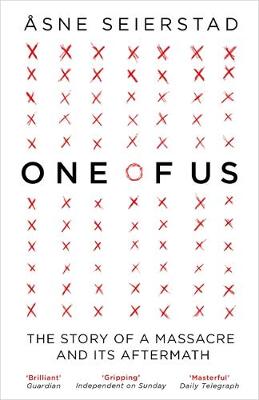
book oneOne of Us by Åsne Seierstad (Virago):

When someone told me they were reading the book about the mass killings in 2011 by Anders Behring Breivik who killed 77 of his fellow Norwegians, young people who were doing their civic duty, on an island, isolated from the world and any immediate help, I didn’t understand why anyone would want to read about this distant tragedy seemingly unrelated to anything here.

Nevertheless, I was given a copy and happy to test my misgivings. Of course it is much more than simply the story of the killings as the author is a journalist who knows how to go about finding and researching her stories, in some instances perhaps too thoroughly but that might also have to do with the translation. The language doesn’t always hold to the subject matter and the focus is sometimes just too much for a particular topic.

And yet, what she does is to walk back in time to Breivik’s childhood, the tug of war between his father and mother, his father’s second and much envied family by the young man, his own isolation in the world and a determined almost frantic effort to be recognised and accepted by almost any peer group.

It is pointed out on the book’s cover that the book shows that “evil is not born but created” (Independent on Sunday) and that is evident in the detailed evidence that Seierstad is at pains to point out.

It is also a story of our time, how people are unable to deal with their own lives and how there is nowhere to turn to. Today’s living is so fast, hardly anyone will notice someone else’s pain, reach out a hand or take the time to even have a conversation. If you grow up in the kind of isolation that is illustrated here, the dark web is almost inevitable if you are determined to make yourself visible.

This is obviously the extreme but if you take this relatively young century into account, people seem to feel more and more that they have to make an impact simply to be seen. That’s a problem of our time which can only get worse.

Marthinus Basson in Conversation with Pieter-Dirk Uys with the Accent on Artists

PDU and Basson
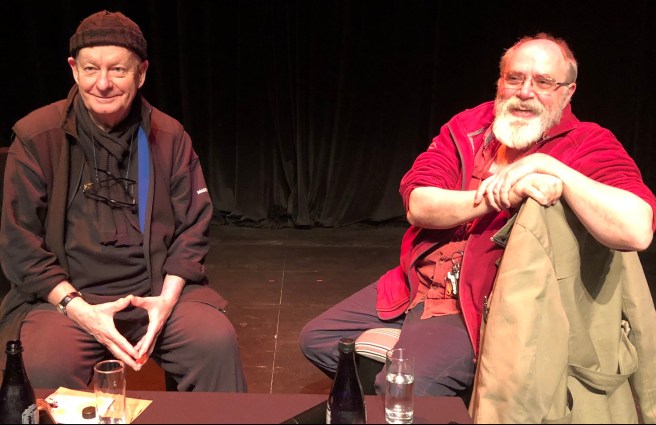
Pieter-Dirk Uys and Marthinus Basson in conversation at the Teksmark. Photographer: Fahiem Stellenboom

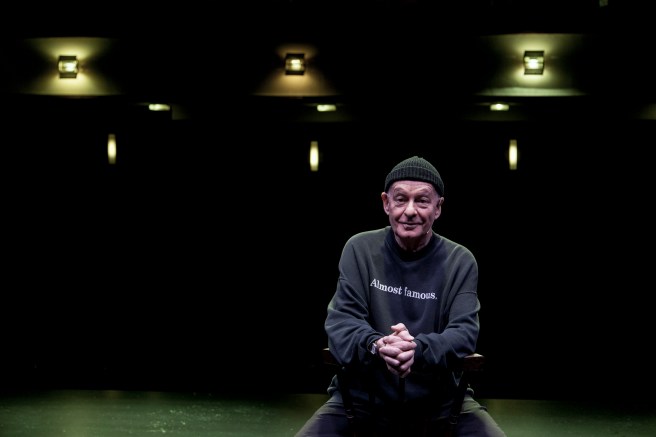
At the recent Kunste Onbeperk text market (Teksmark) held in Cape Town, legendary artists (both flying solo with multiple skills) director/designer Marthinus Basson spoke to playwright/performer Pieter-Dirk Uys about his career, with the accent on being an artist and how to make it – in his case – to the top, here and internationally. DIANE DE BEER tuned in:


Many will be familiar with the prolific Pieter-Dirk Uys’s career, his initial relationship with the ground-breaking Space Theatre after his return from studies and playwriting in London, followed by his mainly solo career with some cast-rich plays interspersed, but when listening to him chat with friend and colleague Marthinus Basson, it is his chutzpah, his dedication and determination, the people who taught him (sometimes unknowingly) that is a rich source of knowledge for young artists trying to make a living and a career.

He sees himself as typical with his adoration for stars like Elizabeth Taylor, Marlene Dietrich and the one he probably formed the deepest relationship with, Sophia Loren. When Dietrich was brought to Cape Town by a very young Pieter Toerien, the equally young Uys knew this was his time. And it was. Having bought tickets for opening night, he was spotted by Toerien and commandeered to be in the front row every night to present her with a bouquet, which meant he saw every performance. He also slipped into the theatre during the day to see what this performer was up to and caught her scrubbing the stage – every single day. “It was a lesson learnt. That’s what we don’t do anymore and why we’re in trouble,” he says. It’s her stage and she would make sure that it’s pristine – for her and her audience.

When he left drama school to study further in London, similar tactics applied. Early on, he sat in the Old Vic Theatre and heard the greats from Gielgud to Olivier and realised he couldn’t compete with their English. Instead he studied at the London Film School, who accepted his application because he had the money and that’s where he began slowly to create a career that is still flying fast and furiously. He wrote his first play, Faces in the Wall. And then the problem solving started. Where and how to put it on?

“The old Vic is full, but I can put the play on in the cinema during the holidays,” is how he planned. Once the theatre was secured, he got writing again, 32 letters, to ask famous people for help. The Duchess of Bedford and Elizabeth Taylor replied, and both sent him 100 pounds, a lot of money at that time with which he bought some old cinema seats to furnish his theatre space.

He invited everyone he knew who had influence for opening night but forgot to ask the critics. The next night no one came, except for two people. He offered them their money back, but they wanted to stay. “We played and at the end, a woman came to me, an agent Patricia MacNaughton, who is still my agent today. Never cancel a performance because you never know who is in the audience,” he stressed.

“My instinct drove me and I’m a terminal optimist which we have to be as artists because what we do is total madness.” But this is what he wanted to do and where he wanted to be – on stage amongst people with passion and people with humour.

PDU_ECHO_TOTB_019
Pieter-Dirk Uys in performance with Echo of a Noise.

Speaking at the Teksmark and giving a nod to his recent 2018 Hertzog Prize for drama (“they were all my enemies in the past,” he says of his benefactors), he advises playwrights never to be precious about their words. But when you cut, put it in that box under the bed. “It might not work in the current play, but it will be good for one down the line. Recycle, recycle, recycle. A  good idea is always a good idea.”

Of the 30 plays he wrote, four were not good, he believes. “They are the ones that still worry me,” he says. “Failure is a terrible word. If it’s unsuccessful, just keep trying.” He ascribes their downfall to the fact that he listened to other people and not his gut. “Failure is the cement for the wall on which you will eventually put your statue; you’ve got to have failures to have success, but it only happens in someone else’s eyes. Don’t believe them.”

Text, he believes, is unimportant. It’s about the story, a joke is a small story, a prayer slightly larger and the text is just the map. It has to be adapted and changed during the work process. “That’s why I always direct the first runs of any of my scripts,” he says. “It’s a very private thing, that new script. Keep it close to the chest and don ‘t show it around too freely. That’s when the advice starts influencing you.

“And when writing, don’t be scared for moments of silence, play with the cat, watch a movie, the ideas will come when they’re ready. And once finished writing, cut what you have written by half and then you lose 50 percent. That’s what I learnt at film school and I still do that today. It’s scary but it works. Those first 10 pages can usually go…”

Paying tribute to the festivals, he acknowledges that artists need that space to sharpen their pencils but perhaps a more structured circuit can emerge. In a dream world, that would be a festival a month which would keep the artists going all year round.

He describes his solo venture as a risky business. But he knew instinctively then, that in the long run, he could make it work. With today’s overheads, the cost of theatres and advertising alone, is prohibitive for dramas with a large cast. With only himself as the beneficiary, he is lucky if he walks away with 33 percent of the earnings.

How he describes humour, what he works with, is to laugh at the things that people fear.  Or perhaps as Basson describes this particular brand: “Don’t do the obvious which make people feel good; do the opposite that make them question and they feel good because they’ve taken a step in the right direction.”

“I have been unemployed since 1975,” says Uys. “I had to become myself, do everything myself, survival being not stand up but working with a personal chorus line of characters.” All this is also going to change in the future. He is tired of politics which isn’t everyone’s cup of tea, it’s an acquired bad taste. “I want to tell stories about people, children, youth, love and loss, the reality of breathing, to smell the roses and focus on something that matters. For 40 years I have had my head stuck in a political toilet and my sense of smell is gone.  I want to smell the flowers again. That’s why I live in Darling where I can perform live in a world where everything is canned.”

And as an aside, he lets rip about the new hate speech laws. “I’m proud of our young democracy. We don’t need laws, we have a society who stands up and says NO – loudly. The moment something is illegal, you will find a minefield of hate speech and hashtags. We have to find a way of surviving – with humour.”

And finally, to the artists: “You have to be a unique talent. Don’t be a copy, we have enough of those. Be original. Don’t specialise, do everything. You must learn the alphabet of the theatre – everything. Read, watch documentaries by people who do what you want to achieve. Don’t be afraid to adore talent.”

Listening to him speak about his life, that’s where he learnt the most. He was led by the example of the best. And now he follows suit giving great advice, but even better, showing how it is done.

All you have to do is watch and pay attention.

Writing is What Debut Author Siphiwe Gloria Ndlovu Wants to do With her Life

A writer who was born to write is a wondrous thing as DIANE DE BEER discovers when first reading The Theory of Flight (Penguin Books) and then speaking to the author Siphiwe Gloria Ndlovu:


book Siphiwe and mom
Author Siphiwe Gloria Ndlovu and her mom Sarah Nokuthula Ndhlovu.


On the third of September, not so long ago, something truly wondrous happened on the Beauford Farm and Estate. At the moment of her death, Imogen Zula Nyoni – Genie – was seen to fly away on a giant pair of silver wings…


These are the first words in Siphiwe Gloria Ndlovu’s debut novel The Theory of Flight (Penguin Books) and it never lets up. From that first sentence, it grabs your attention and keeps you in a state of wonderment about this first-time fiction writer’s glorious gift of storytelling.

She says that an immensely strong connection to her family and a similar one to Bulawayo, the city where she was born and raised, informs her writing.  “I am also deeply invested in Zimbabwe’s history. These things not only influence my sense of self but also inform my writing. The Theory of Flight is marked through with these influences and Beauford Farm and Estate is built on the memory of the place I grew up as a child – Rangemore.”

She was born in 1977 in the former Rhodesia during what she calls “the country’s civil war, but what most call the war for liberation and others call the bush war or terrorist war”. At the time of her birth, her family was going through a rough time as her grandparents’ nationalist politics had her grandfather imprisoned as a political detainee and her grandmother blacklisted from her teaching profession. “When my grandfather was released from prison in 1978, my entire family left the country as political refugees. We lived in Sweden and then the USA before moving back to Zimbabwe when the country became independent in 1980.

“I grew up in Bulawayo, Zimbabwe in the 1980s and 1990s, in 1997 I left Zimbabwe for college in the USA. I lived in the USA for 18 years, furthering my education until I received my PhD from Stanford University in 2013. When my grandmother passed away in 2014, I realized that I had lived in the ‘diaspora’ long enough and that it was time to come home. I got a job in Johannesburg in 2015 and worked and lived in South Africa until July this year. I had decided to take a year off to just focus on my writing, so that is what I will be doing, now back in Bulawayo, starting in October.”

book flight

The remarkable thing about her book is not only the writing but also the way she tells her story which she says she has been doing since she was a very young child. With a grandmother who was a teacher, she was taught to read from a young age and was told these amazing stories. “I have always had a vivid imagination and a passion for storytelling. My grandmother used to tell the most amazing stories so from a young age I was very aware of what a great and wonderful expanse the imagination was. I visited the places in my imagination many times as a child. I remember standing in sunflower and maize fields lost in my imagination.” (All images which are very present in her book).

“As my vocabulary grew, I started drawing stick figures whose lives grew more and more complicated as I grew. In my teens, I started writing general ideas for stories and short stories. I loved reading ever since I started reading at around the age of 4. And at some point it occurred to me that I wanted to be a writer. It was a distant dream, but one I firmly believed I would realise. So at college I studied Writing, Literature and Publishing.”

She then went on to pursue an MFA in Film and a PhD in Modern Thought and Literature, but she held tightly to the dream of becoming a writer. “It was something that I always knew I was going to do. Doing it, however, proved somewhat more difficult and complicated than I had imagined.”

She started writing The Theory of Flight in 2010. But she was writing her PhD dissertation as well. The situation was untenable because she was losing her heart to her characters but she didn’t have time to spend with them. She talks about being a conduit for these stories, that it feels as if they come to her and she simply has to listen.

She finally finished writing the dissertation in 2013 and the first draft of The Theory of Flight in 2015.

What she discovered was how difficult it is to transport the world you visit in your imagination onto the page. But however difficult, she fell in love with the process of writing, of getting to know the characters better, of having more of their world revealed to her. “This was what I want to do with my life.”

She can’t remember how the title of the book came to her but there is an explanation in the book. The story, she explains, was a means for her to deal with the loss of her aunt, Sibongile Frieda Ndlovu to whom the book is also dedicated, who passed away in 2007, at the age of 34. “She was four years older than me and we had grown up as sisters.”

She wanted to explore the many ways we love and lose the people in our lives. She also wanted to examine Zimbabwe’s own history of loss — civil war, ethnic cleansing, HIV/AIDS, genocide. “The country has lost millions of people, all within the span of a generation – what does this mean for the country, who are we now?”

It’s clear when reading the book that the writer is someone extraordinary and when you chat to her, that feeling is reinforced. Having been out of her country of birth the past 20 years, she could watch from afar, think about things more clearly and come to very specific decisions. In a time when it is all about me, Ndlovu believes strongly in the Kennedy adage: ask not what your country can do for you, ask what you can do for your country.

But she was also very clear in her mind that she did not want The Theory of Flight to be a doom-and-gloom African tale. “I wanted all that loss to be put in the context of all the love that existed throughout all those difficult events in our history. I wanted the story to also be about the sunflowers, the friendships, the loves that people experienced. I also wanted the story to capture the way stories are told in this place: anything is possible, the imagination is a great big expanse, people can fly.”

She does all that and so much more. When she was a little girl, soon after her grandfather came out of prison, she saw the torture marks on his body. When she asked him about them, not fully understanding yet feeling the pain, her response was that she hated all white people. “He looked at me and asked me what had white people ever done to me?” She describes this as her most teachable moment which says everything about who she is and has become – and it runs through her writing with clarity and charm.

And if you lose your heart to the people of her world in The Theory of Flight, there’s good news. She’s in the process of planning the second book of what she hopes will be a trilogy.


A Mighty Man and His Music – Professor Mzilikazi Khumalo

prof khumalo2
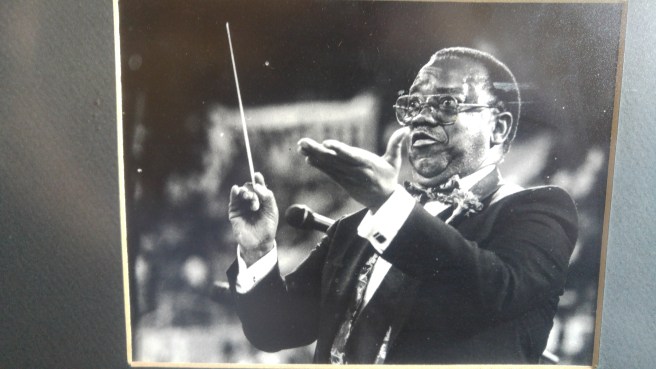
Professor Mzilikazi Khumalo and his passion for choral music.

At a recent conference held at Unisa titled The Intellectual Legacy of Professor James Steven Mzilikazi Khumalo, DIANE DE BEER discovered how this great man became the focus of this event and why it is so important to relook at all these iconic figures who need to have the spotlight refocused on their work and their achievements:

African American Naomi André, an Associate Professor in the Department of Afroamerican and African Studies, Women’s Studies at the University of Michigan, first started a collaboration with Professor Brenda Mhlambi (Associate Professor of African Languages and Assistant Dean of Humanities at Wits) and Dr Donato Somma (Senior Lecturer in Music, Wits School of Arts) around 8 years ago (in 2010).

“I was interested in learning more about the opera scene in South Africa, especially after the dismantling of apartheid and had heard about Bongani Ndodana Breen’s Winnie: The Opera,” she says. They saw the premiere (at the State Theatre in Pretoria, 2011) and then published a cluster of articles on it in African Studies something that will also happen with the Khumalo conference to enhance his public profile.

prof khumalo speakers1
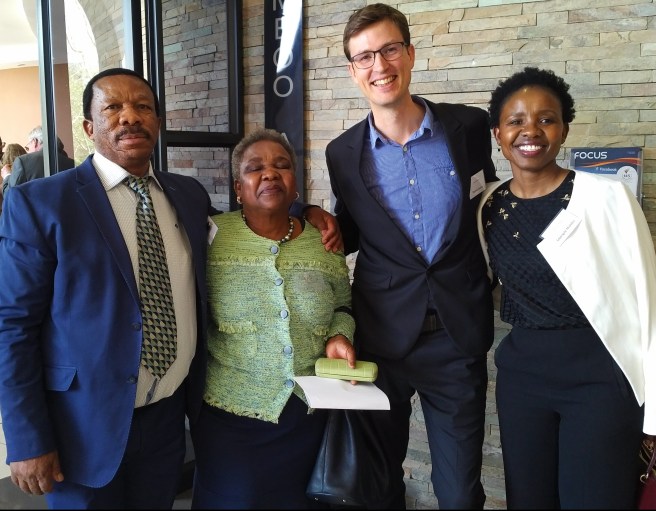
Diliza Khumalo, Naomi André, Donato Somma, Brenda Mhlambi

Her focus becomes clear and her interest in Mzilikazi Khumalo and the continuation of her South African collaboration is illuminated with the knowledge that she is the author of Black Opera: History, Power, Engagement (University of Illinois Press, 2018) which examines race, gender, and sexuality in opera in the US and South Africa.

Following the first collaboration, she was again involved with her two former collaborators in organising a broader conference where she met Dr Thomas Pooley  (from Unisa who served as conference convenor) with a mutual interest in choral and indigenous music. They all decided then that a working symposium that honoured the great legacy of Prof. Mzilikazi Khumalo as a linguist, choral composer, and opera composer would be a good idea.

“My main goal was (and continues to be) to find a way to have Khumalo’s works become better known, become integrated into school curricula (secondary and tertiary education in South Africa and abroad), performed more regularly, and generate scholarship on South African music,” she says. They also wanted to start small with people directly involved either as family, friends or colleagues as well as academics in the field.

In all these endeavours, she knew that collaboration was a no-brainer. “My (South African) colleagues are terrific as they knew that in order to do this, we would need to bring scholars together with members of the Khumalo family, SAMRO, and people close to Khumalo (such as conductors and musicians who had worked with him) as a way to start the process of getting this music out into a wider public.”

They realised that as South Africa is moving to decolonize their curricula and structures of knowledge, it was fitting to shine more light on Prof. Khumalo (as he is familiarly known) and his work in many interlocking areas with language, linguistics, choral music, and large operatic ventures for example Princess Magogo which was also staged at the State Theatre.

Prof khumalo speakers
Themba Msimang (keynote speaker and librettist), Nomavenda Mathiane, a sister, organiser Thomas Pooley and niece, Seloane Matoase

On board were both family members as well as friends and colleagues who could speak about the man and his work giving a very personal insight of how the one informed the other. For those listening it was more than an educational endeavour. The role of music in his life was evident as the different speakers (with audience members) broke into song regularly by way of illustrating a point about the music man under the spotlight. This was after all the best way to tell his story.

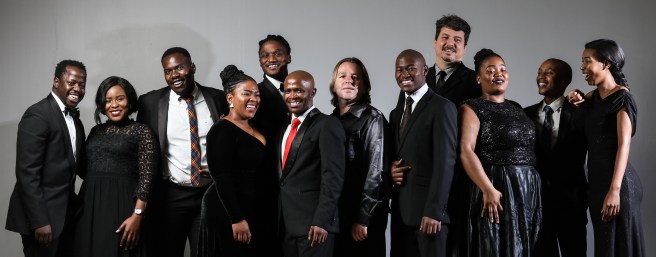
What stood out was the central role Prof Khumalo played in this country’s vibrant choral tradition and that, all the speakers agreed was why he had to be in concert halls and in classrooms.

Music was always central in his life and when his family members spoke, (a son, Diliza Khumalo and a sister, Nomavenda Mathiane) they captured the essence of a man whose life revolved around music. “He involved us all in his music,” said Khumalo Jnr, “and when he was involved with local choirs, his children also became members of his choirs.”

He also drew the family into the development of his compositions and when he had finished a piece, they would all have to listen. “He was also a dedicated academic and when he did research, we all did research,” added Khumalo Jnr. His father was passionate about the history and culture of the Zulu nation which explains his compositions UShaka KaSenzangakhona (described as a musical epic) and the opera Princess Magogo for example. “He had one mission and that was to compose music for the people to sing and enjoy,” he concluded.

His sister on the other hand gave insight into their childhood and a family that was always surrounded by music. “We could all play instruments and music was a part of our lives from a very early age,” she explained. Choirs, she believes is where he honed his music skills.

Prof Khumalo
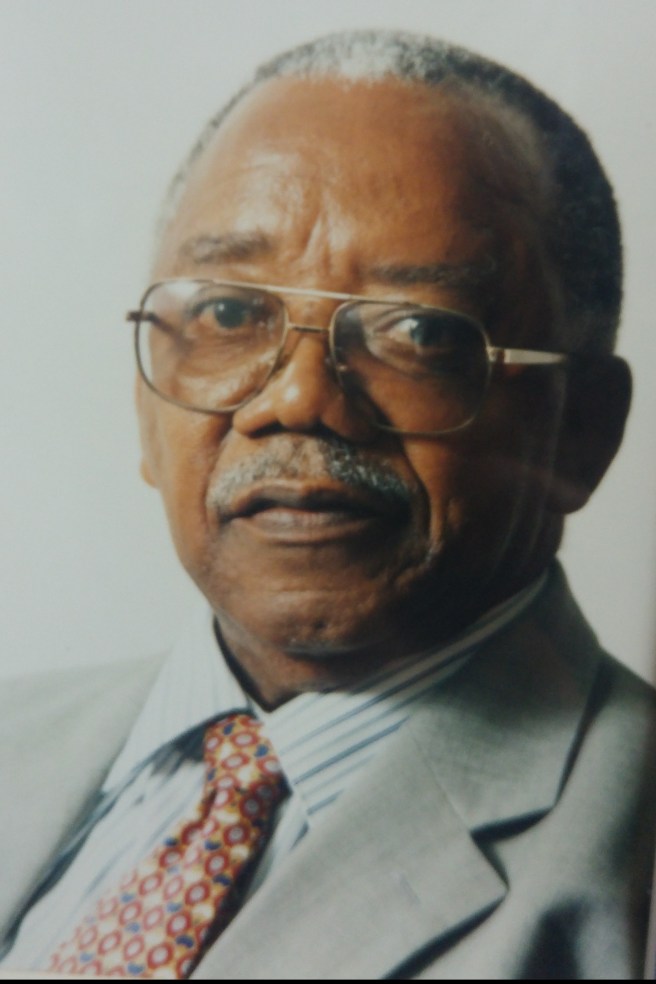
Professor James Steven Mzilikazi Khumalo

“He was a teacher,” says Themba Madlopha who first encountered Prof Khumalo in a lecturer/student capacity but is now a choir master himself. He threw light on how the professor was influenced by the times, for example, his resentment of the treatment of political prisoners. “He was not at home with injustices, but he was such a gentleman, he hid it under a religious cloak. But, he found ways of including the truths in his work like a lament of the black people in apartheid chains,” he noted.

He also explained that Prof Khumalo was deeply obsessed with folk music traditions and he found a way to marry the melodic directions to the Zulu tones. “He was the most prolific composer of our time,” he said. And he agrees to all the above says poet Themba Msimang, the man who was brought on board by Khumalo as his lyricist. First on the list was Shaka which was intended as a rite of reconciliation not only for the Zulu nation (and those who betrayed Shaka) but also for South Africa as a nation. This was followed by Princess Magogo which originated as a commission from Opera Africa as the first African opera and yet, the man responsible for the lyrics had no experience of musicals or opera.

He was puzzled why he was selected but it was because of his poetry, his own love and understanding of the Zulu nation and his writing as a poet. And probably, because he wasn’t steeped in opera, he would approach it with a fresh eye which contributed a unique quality together with Khumalo’s African-inspired tone. Both of these are now considered landmark productions.

As the chairman of the committee responsible for our current national anthem, he is part of the public discourse yet his name, accomplishments and compositions should be a living part of our heritage.

In conclusion André and her collaborators are planning to publish a collection of essays that include papers that were delivered and round out the publication with other essays to provide a strong introduction to Khumalo’s work and materials for people to learn more about him and include him on the syllabi in music classrooms.

“I strongly believe that the arts and culture of a nation are very important in having that nation develop and thrive. I hope this work that brings Khumalo’s accomplishment into a brighter spotlight will also help open up other opportunities for other composers and artists. South Africa has a rich heritage in music—both in traditional and folk music, as well as the syncretic musical traditions that reveal rich intersections with the West and music from other cultures. Khumalo’s choral and operatic works are central to this legacy,” she concludes.

*The symposium was made possible through funding from an African Heritage Seed Grant from the University of Michigan and from the Department of Art History, Visual Arts and Musicology, Unisa.


The Bravely Functioning Gauteng Opera Needs Funding to Exist and Caring Friends to Flourish and Survive

Gauteng Opera 2
The hardworking and glorious Gauteng Opera

DIANE DE BEER


Money or more pertinently funding is the asset that drives Gauteng Opera and helps them not only to function but to exist.

Following a closure scare in March this year due to lack of funds, Classic 1027 came on board with support and raised R400 000 for the company which allowed them to go ahead with the students who study at the Academy as well as holding on to the interns in the company for the time being.

It is a constant struggle though but quite a few measures have been taken to help financially in the future.

The company created by Neels Hansen and Mimi Coertse in 1999 with the aim of finding and training young talent unable to afford formal education, has achieved much but with their constant struggle for funding and tighter financial constraints all round, they have had to be even more proactive than usual.

Two newfound friends, experienced marketing experts, Collett Dawson and Claire Pacariz, both offered their many years of operating skills recently to put Gauteng Opera on a much more visible stage.

Already an all-round performing arts and entertainment company focusing on opera related productions, concerts and events, their scaling down earlier this year has turned them into a streamlined outfit but that also means fewer hands doing even more work.

Arnold Cloete - Chief Executive Officer Gauteng Opera
Arnold Cloete – Chief Executive Officer Gauteng Opera

This has never been a problem for founding member and CEO Arnold Cloete and his new artistic director Phenye Modiane with their slogan “Opera for Everyone”, encouraging and enthusing them to expose opera to varied audiences with different vocal offerings. This was also what these two women wanted to showcase a few weekends ago.

In the process they also introduced prospective clients to the facilities of the company’s recently established theatre and their base – Tin Town Theatre in Ferreirasdorp, that offers many possibilities as well as rehearsal facilities for everyone from dance companies to theatre.

The company is driven by excellence in vocal performance and theatre and pride themselves in being one of the foremost nurturers of quality vocal performance and theatre practitioners.

The reason their mandates are as broad as possible is to maintain a company at all, notes Cloete. In today’s world, opera companies in South Africa are fast disappearing and the artists of Gauteng Opera have no choice but to challenge the conventions of art while not being confined to the traditional operatic repertoire.

Performance is their endgame but for Gauteng Opera education and the development of South African singers is vital.  Through sponsorships and support for the Academy, they train young talented singers without the financial support to study at accredited tertiary institutions and provide opportunities to develop their talent and performance experience during a three-year internship.

These trainees get tutoring in the various music disciplines such as singing technique, music theory, history of music, repertoire development and piano, the operatic languages, acting and movement. They form part of the Gauteng Opera chorus and perform regularly with the professional singers.

Phenye Modiane - Artistic Director Gauteng Opera
Phenye Modiane – Artistic Director Gauteng Opera

Gauteng Opera artists have performed throughout South Africa in various concerts, events and productions with the best orchestras South Africa has to offer. They are also involved in Community work with schools and charities.

Notable concert performances include Gauteng Opera’s One Voice: An African Celebration, annual Christmas Concerts and Forté in Concert. Opera productions include Mozart’s Cosi fan tutte, Giuseppe Verdi’s La Traviata in 2015, three short South African operas, performed under the banner, Cula Mzansi in 2015 and 2016, Donizetti’s L’elisir d’amore in 2016 and recently, Puccini’s La Bohème at the Joburg Theatre and Durban Playhouse.

To find and nurture resources to ensure their future, they have come up with a few options: The Friends of Gauteng Opera initiative permits individual patrons and businesses to support the company through monthly donations. Proceeds help Gauteng Opera meet monthly operational costs.

There’s also a sponsorship scheme for individual artists. A supporter builds a personal relationship with the adopted singer and contributes to their operational sustainability by meeting a portion of the artist’s monthly salary. The name of the adopter features in brackets behind the artist’s name in all event programmes and the artist undertakes to perform at an event of the sponsor’s choice, accompanied by a Gauteng Opera pianist. The supporter receives invitations to all Gauteng Opera productions during the sponsoring year.

The Build Gauteng Opera scheme helps to meet or minimize maintenance expenses. Contributors (private and corporate) are encouraged to donate building materials, equipment, kitchen appliances, fabric for theatrical costumes and other items. Facility enhancement also enables them to increase the desirability of the space as a venue for launches, presentations and other events which then develops an income stream by hiring out the Tin Town Theatre when the space is not required by Gauteng Opera.

Any of these will help to save one of South Africa’s leading entertainment and performing arts companies. Simply call Gauteng Opera on 011 067 8001 or make contact at arnold@gautengopera.org / artistic@gautengopera.org.

If you want to support them by attending their concerts, here are the next couple of events:

  • Saturday, 29 September at 1pm; Gauteng Opera City Walk with Flying Cows of Jozie Concert at The Market Shed @ 1Fox – Concert – free entrance.

Bookings for the city walk: Josine Overdevest – josine@flyingcowsofjozi.co.za

  • Saturday, 06 October at 3 and 8pm; The Merrow Down Estate Concerts at the Merry Down Country Club, Magaliesig, R150 per person

Bookings: Vera Harvey – event@icon.co.za / 083 461 0857

  • Saturday, 13 October at 7pm;

Rotary and CCJ Fundraising Event for GO, Country Club Johannesburg, Woodmead, R250 per person, include substantial snacks – cash bar;

Bookings: Denise Cruickshank deni@global.co.za / 011 784 0617 / 083 448 4844

  • Wednesday, 17 October at 7pm, La Trinita Dinner Concert at Kyalami Centre, R200 per person, a la carte menu;

Bookings: latrinita@mweb.co.za / 011 466 7949

  • Sunday, 21 October at 3pm, 4th Sunday Afternoon Concert at Tin Town Theatre, Ferreirasdorp, R150 per person

Bookings: Arnold Cloete – arnold@gautengopera.org / 011 067 8001

Check under season banner for further concerts at http://www.gautengopera.org.

Gauteng Opera 1

A Fight for the Soul of a Cape Flats Family

DIANE DE BEER


Jarrid Geduld as Abie
Time out – Jarrid Geduld as Abie


ELLEN, DIE ELLEN PAKKIES STORIE

(Afrikaans with English subtitles)

DIRECTOR: Daryne Joshua

SCRIPT: Amy Jephta

CAST: Jill Levenberg, Jarrid Geduld, Elton Landrew, Kay Smith

When Requiem for a Dream was released in 2000, it established a benchmark for movies dealing with addiction. But what has changed in the meantime is the way addiction manifests in specific communities.

Currently in the US they are battling the worst opioid addiction in their history, but back home specifically amongst the coloured community on the Cape Flats (and elsewhere) it is the scourge of tik that holds communities hostage. Theirs is a very particular and personal story because of the past, the history of where they come from and where they find themselves and the never-ending cycle of hardship with those in trouble ripe for the picking.

The Ellen Pakkies story is a familiar one and many will know the bare facts of the mother who in desperation strangled her tik-addicted son. But what Jephta and Joshua have achieved is to disembowel this family tragedy in all its horror. Set in Lavender Hill where it all happened with the community part of the story, Pakkies was involved with the script and stripped her soul to unravel the story of a son unable to deal with the tragedy of his life and then turning to drugs and away from the father and mother who would have given their lives to keep him safe.

Instead, they are the people he turns on, that’s what addiction does, and the people involved, both the user and those around the addict, are not equipped to deal with the fallout of their lives. In this instance, a mother’s past impacts on decisions made in the future and in turn infiltrates a family’s way of dealing with life. When tough issues surface, no one sees their lives spiraling out of control because the fall is fast and before they know it, lives are completely out of control and so often lost.

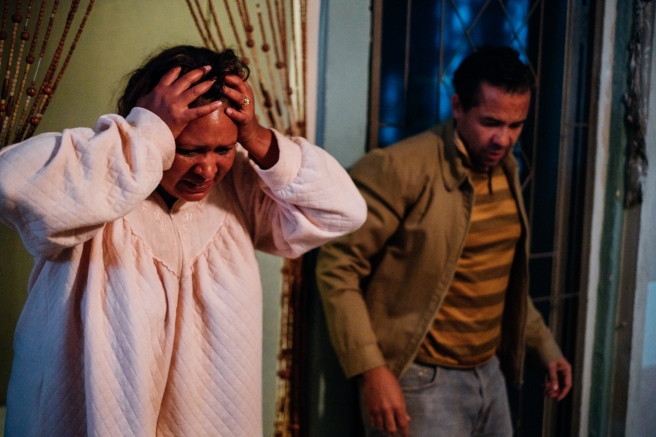
Pakkies parents in distress
Pakkies parents in distress – Jill Levenberg as Ellen and Elton Landrew as Odneal.

Pakkies knew how to battle the world. She had a battered childhood and was used to fighting her way out of trouble. But this time she would need help, and this is really the dilemma of these communities who are overwhelmed by drugs and the culture that comes with it. Just this week the police again released murder statistics and the highest are gang-related.

With these devastating numbers prevalent on the Cape Flats, the individual families dealing with the addicts have nowhere to turn. The system is inadequate, and they are left to their own devices which is how they got into trouble in the first place. The well has run dry.

But when disaster strikes, people turn on those who aren’t able to cope. That’s the story that is being told and that plays out in these communities’ time and again with no hope of change. What empowers the Pakkies story is the script, the clear direction and dramatic performances from the three main characters that tear at your heart. Levenberg’s Ellen and Geduld’s Abie, the out-of-control son, were awarded best actress and actor prizes at the recent Silwerskerm Fees as a result.

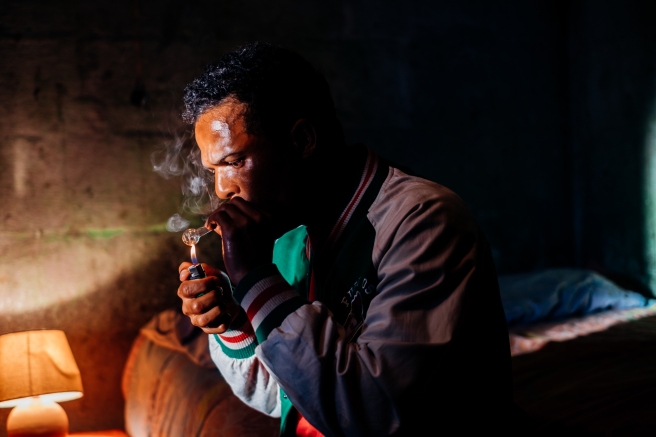
Jarrid Geduld as Abie1
No way out – Jarrid Geduld as Abie

It is their crystallising vision and sensibility that add texture to the work. Watching Abie turn from a promising scholar with a future to someone whose every breath is focussed on the drug that feeds his life, is traumatising. From a loving teenager he turns into something rather than someone as the drug dehumanises every move he takes to ensure a continued fix from day to day. We all know the devastating effects but to watch it happening in front of your eyes is harsh and the only way to deal with that reality.

Levenberg’s Ellen is a tiger mom who goes on the prowl to defend her son. She is determined to fight for his soul but while she and husband Odneal (Landrew in another heartfelt delivery), are in the fight for their son’s life, the outside world turns its back. Turning their home into a prison to keep their son out, having lost most of their possessions, their nights turn into terror as the drug makes their son a thug who devastates them to feed his habit.

Ellen, die Ellen Pakkies Storie is not easy to watch especially because we think we are familiar with the reality of what is happening around this addiction, but with a smart script and direction, Levenberg, Geduld and Landrew tell their story of pain with a poignancy and punch that forces audiences to engage.

The Brilliance of Rachel Botes

Pictures: THEANA BREUGEM

Rachel Botes2
Chef and butcher Rachel Botes Pictures: Theana Breugem/ http://www.thefoodphotographer.co.za

Chef Rachel Botes is all about brilliance. DIANE DE BEER mourns the loss of her much loved Carlton Café Delicious which recently closed its doors after 16 years of excellence but celebrates the potential this unleashes for this genius food mind in the future:


Looking back, moving forward was the title of something described as an inspirational discussion presented by Weylandts Kramerville on design and lifestyle trends recently. And the person I was really focussed on was the woman responsible for all the magic at our dearly departed Carlton Café Delicious in Menlyn a few weeks back.

And while mourning all round happened in Pretoria café circles, Rachel junkies like myself, though sad about the demise of this particularly delicious deli, also knew that perhaps the universe was having its way with this forward-thinking chef whose talents were sometimes overlooked by those who should know better. Not only has she been busy writing her first cookbook with venison the topic du jour but she is also knee-deep in studies on the historical background of the iconic melktert (milk tart).

And it was specifically the future venison book that was the topic of her conversation on the day; the fact that it is the cleanest and most sustainable meat available. “Food is my design and my colour; venison is my passion.” That’s how this chef, butcher and future author describes her focus and it’s clear that this is a talent that refuses to go away.


Tapping into the topic of the day, she explained that memories and nostalgia have always been an inspiration for her food. But just in case you think you can pin her food choices down, her recipes for the day and in advance of the venison book to come, include leg of venison with pineapple peels and banana, wrapped in fig leaves; venison rusks; and biltong cheesecake with preserved quinces and goat’s cheese. She also notes that the recipes will all be interchangeable with beef, lamb and pork if venison is not your choice or perhaps not available.

It is to hear her speak about the individual recipes to understand where her food brain wanders. Sheep-fat rusks, for example, is a Karoo special and she wanted to include a version of this in the book. What she has done, because venison doesn’t boast the kind of fat necessary for the rusks, was to include shredded impala in the dough mixture. “It pairs magnificently with coffee,” she says.

Using the pineapple skins and banana as a tenderiser for the meat in her leg of venison and then wrapping it in fig leaves, she loves the way all the flavours permeate the meat. And in case you’re wondering, when your fig tree has leaves, that’s when you preserve them, to have their availability all year round.

Rachel rusks
Venison rusks

The biltong cheesecake was a no-brainer. As South Africans we’ve always liked something sweet with our meat, she confides, so this cheesecake straddles that savoury/sweet conundrum and it could go either way.

This is exactly who Rachel Botes is. She cannot call halt when it comes to imagination and innovation. It is her goal to turn venison into the star she and her sponsor, Sollie Potgieter, believe it should be. His wife (Elize) and his passion is Burkea Wild where they farm mainly with Livingstone eland, buffalo, sable and oryx.

She met the couple when they started coming to her deli 15 years ago and discovered they had similar food desires and dreams.

She points to days when we all knew where our food came from. “There were trust relationships between a client and her butcher or grocer,” she reminds us, and this is something she believes should be part of our food culture again. And while this cannot happen in the way it did in the past, we could still endeavour to create these relationships where we can in the interest of our health and good living.

While there isn’t a regular supply for venison and we cannot just order a kudu rump or a springbok sirloin at will, with a stronger demand it could be more and better controlled. With her book, which will be titled Antelope, she hopes to start an education process that will inform those interested in food and their health. “I would rather opt for these free-range animals than those injected with hormones,” she adds.

rachel melktert2

When she first started investigating the recipes available on venison, she turned to what she refers to as “compilation albums”, those recipe books put together by schools and churches and sold to raise funds. Her starting point has always been to respect what she is working with and when it’s venison, that’s not a tough ask. With her first encounter with an enormous kudu carcass, she had to find a bigger kitchen to accommodate this craziness. It was quite intimidating, but she also realised that she loved working with this extraordinary meat. “I have such respect because I know I’m working with something special,” she explains.

If you think venison is not your kind of meat, Botes will be the one to persuade you differently. Those of us who know and have sampled her food often, understand her extraordinary ability to create something completely different from something we thought we all knew.

And in Pretoria, while Cartlon Café Delicious has left a gaping hole in our culinary chest, Botes will be back. That is already clear with what she has been up to this year without knowing that impossible rentals would unexpectedly rush a closure which would have come in the not too distant future anyway. But with venison and milk tart a part of her everyday thinking at present, it won’t take long before she pulls all her dedicated followers into some kind of version of her food fantasies.

She has many. But she is still mulling about her future with many of her ideas in an early state of osmosis. When she returns, it won’t be quietly.

The book titled Antelope is the first to appear – in January 2019. So, watch out for that and follow news on her progress on Instagram and facebook: @rachelsdelicious.

Blackwashing Homophobia in SA and How Violence is Used as Control

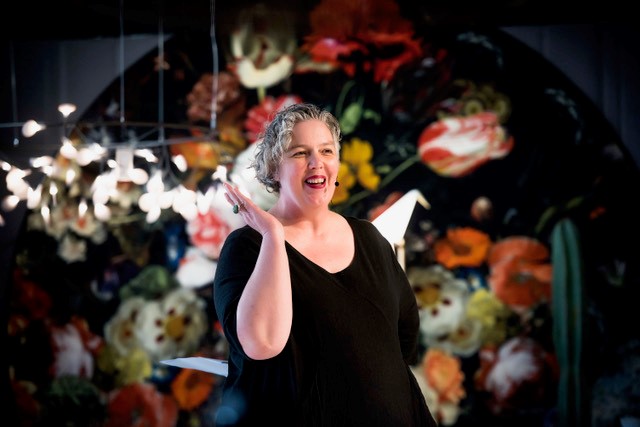
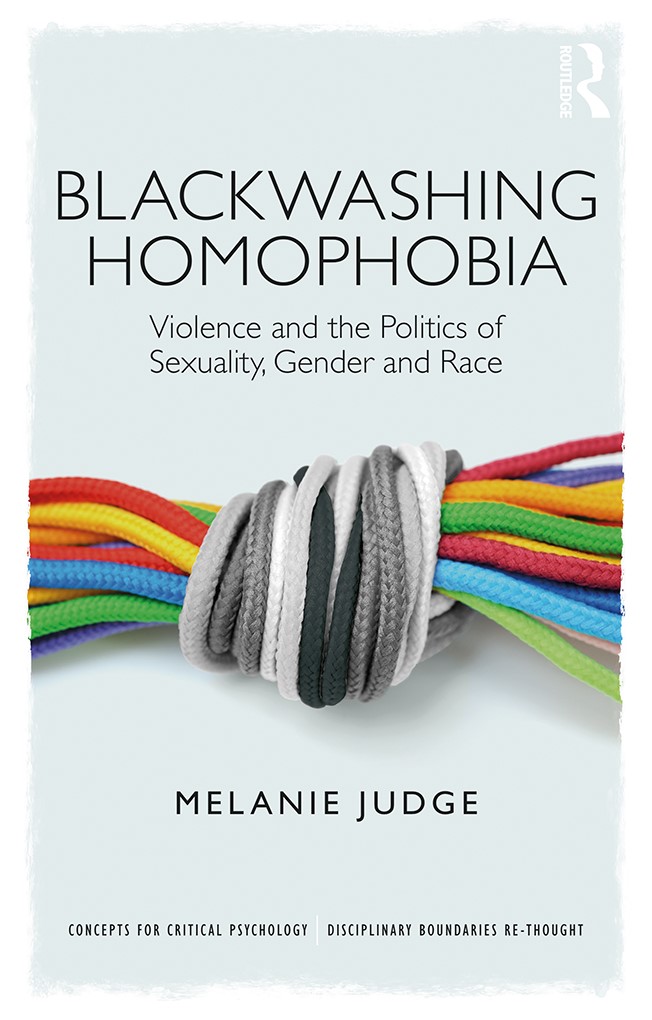
blackwashing coverAuthor and activist as well as adjunct associate professor in the Department of Public Law at the University of Cape Town, Melanie Judge is speaking at the Open Book Fair in Cape Town on September 5 and 7, and then she will also be joining diverse authors at the South African Book Fair in Jozi on September 8 in a discussion titled Feminism – a global conversation. She spoke to DIANE DE BEER about her latest book titled Blackwashing Homophobia: Violence and the Politics of Sexuality, Gender and Race (Routledge, 2018):


It sounds like a mouthful, the title, and it is, but what it captures is the essence of what still drives the world – power and how that plays out in the worlds of especially “the other”.

The title, notes Melanie Judge, is an attempt to think about homophobic violence alongside other types of violence and discrimination, not in isolation but to historically situate it in a South African context. “I wanted to know what fuels homophobia” And adds, “given our history, it is impossible to unpack issues of race and sexuality in South Africa separately – hence the title.”

Pointing to the title – blackwashing homophobia – and what emerged from her research, especially how racial and sexual discrimination work alongside one another to produce very problematic ideas about gay and lesbian people in South Africa, and about black gay and lesbian people in particular, is what drives this particular story.

As an activist, she wanted to understand and glean the multiple dimensions of both the causes and effects of violence and its relationship to race, gender and sexual power.

She notes that violence is always an instrument of power and a way to exercise it. How then are lesbians vulnerable to violence – more so than other groups for example – and in what way do they resist.

Power, she explains is a way to exert control over those who don’t conform to sexual and gender norms. If for example, you’re a lesbian, the implication is often that you’re not a “real woman”. In the book, the specific vulnerability lesbians face is described as “double trouble”, meaning that they are stigmatized because they are women, and also because they are lesbian, and that the trouble the gender system in which men are straight people are dominant. In all cultures, sexual and gender diversity is battle ground on which social norms are defined and challenged.

Melanie Judge
Melanie Judge

The book also explores how violence is used to control sexuality and gender. Looking back at colonial and apartheid times, people were governed through violence. “Violence was used to control,” she explains, and that continues to today. “We are a very violent society, so it makes sense,” she argues as she fast forwards to now.

But her focus for the book is on homophobic violence and how it relates to other forms of violence. “How for example does it intersect with racism?” Her argument is that violence props up, establishes and maintains systems of inequality. It is also used to maintain the hierarchy between men and women, gay people and straight people, and rears its ugly head whenever there’s inequality.

It’s important in maintaining the status quo to keep those binaries in place. In other words, if you’re a lesbian, you cannot be a real woman, so you’re always viewed as ‘lesser than’ for not complying with gender norms. And in the end, everyone in society is affected. “Queer becomes a spectacle,” she says, “a kind of anomaly to the ‘normal’ that is sometimes tolerated, just as long as it knows its place and doesn’t disrupt too much”.

If people from the LGBT (lesbian, gay, bisexual and transgender) community are systematically excluded on different levels, it creates a form of marginalisation, something the South African society and its way of conducting life is very familiar with. It was important in this sense for example to explore the link between the everyday insults that LGBT people face and the more brutal forms of violence they are subjected to.

This results in a social environment that makes these more extreme forms of violence possible. Already, for example, white LGBT people who are affluent, escape some of the targeting. In trying to understand this violence, she found that it was often ascribed to blackness. “I find that particularly racist,” she says.

There’s a strong discourse for example about violence in the township and this idea that violence is inherent to black people. What she feels needs to be done is to problematise that kind of misrepresentation because it doesn’t tell the full and thus correct story. “No one,” says Judge, “is naturally bigoted, and we must understand the realities facing black LGBT people as a product of centuries of racial and economic oppression and dispossession.”

But she argues, power inequalities produce violent outcomes. “People are kept in their place in the social and economic hierarchy through violent means.”

She argues strongly that if we want to address the violence, we have to address social injustices. Violence is all about building your identity, who you are and how you function in the world. It is time says Judge that we stop asserting our own right over others in terms of race, gender and sexual superiorities. “We have to establish new forms of social relationship,” she says. “How empty is your power if it can only hold its own at the cost of the other?”

That’s why binaries were so essential during apartheid: blackness and whiteness had to be classified and identified constantly. “Yet, we never have singular identities,” she notes. You’re not just a woman, you might also be queer or straight, rich or poor, and this will shape your life prospects. What defines you never rests on one thing alone and in that intersection is where people connect across difference. “We have a multiplicity of identities. Some of these give us power and others make us vulnerable.”

As individuals we are all complicit in maintaining the current state of affairs but she has discovered powerful and positive resistance against discriminatory social norms.

But how does one erase the past patterns of doing and being in relation to others? It is something that we need to confront in this country especially because of our past and with the hope of creating a different future. “We have to undo everything,” says Judge who knows things don’t just happen as a matter of course.

Systems of prejudice are all about exclusion. “It’s about keeping people in positions of inferiority or superiority that lies at the heart of inequality.”

But she is excited about the divergence and vibrancy of queer life in this country. “We are in post-apartheid and to some extent with huge advances, but the law has largely run its course in how far it can take us towards a more equal society.” She believes that with the firm footing of legal equality, the battle ground can, and has, shifted to the religious and cultural spheres. “It is important that we change the way we relate to one another, and that we change social structures to be more equitable and inclusive.”

“We have to think back before we can go forward,” are her sage words of advice. Homophobia is part of the legacy of colonialism and apartheid. “We can’t approach the now if we haven’t dealt with the past,” she advocates.