Diane de Beer
The Last Girl: My Story of Captivity and my Fight Against The Islamic State by Nadia Murad and Jenna Krajeski (foreword by Amal Clooney) (Virago):

We read the headlines and we see the awful images, especially those horrific beheadings but then a mudslide, another refugee crisis, drownings in the Mediterranean Sea or a Trump tweet swamp the news cycle and the ISIS terror falls through the cracks.
They were topping all the news broadcasts at a specific time but only in very specific instances. We knew much more of those leaving their own safe homes in the UK and Europe to join the Islamic fighters in their endeavours to establish a caliphate than about the people in the devastated countries like Syria and Iraq.
But it is these little lives – those we don’t read about, those who lose everything and have never had a voice – who have to live the everyday horror on the ground of what it means to become part of the statistics of these terror groups that have only their ideology (power and money) to dictate their actions.
Humanity isn’t part of what they believe which is a scary thing when you are at their mercy.
This is the story of one of the voiceless women snatched from everything she ever knew to be a sex slave for men who had all might on their side and believed they had the go-ahead of the Koran to do their worst. Nothing could stop them.
Nadia Murad was born and raised in Kocho, a small village of farmers and shepherds in northern Iraq. She is a member of the Yazidi community and with her brothers and sisters lived a quiet and quite isolated life.
On August 15, 2014 when she was just 21 years old, life as she knew and loved it, ended abruptly. Even though the village had been waiting for the Islamic State militants who were on the march in the region, no one could have predicted what was about to happen to this community.
Already regarded as a fringe of a fringe community in the wider Iraq, they believed their Arab and Iraqi neighbouring villagers would step in and come to their aid. But they were left on their own without any chance of survival. Nothing could have prepared Nadia for the devastation and emotional upheaval of her life.
Scenes of the holocaust and people being pulled from one another without any warning, or simply shot if there was any resistance, play out in your imagination as you follow this story of a young girl who had hardly ever set foot outside her village.
Once the rape begins, it isn’t only the horror of that brutality that is overwhelming but also her belief and being told that her family would reject her because she is no longer a virgin and it won’t help for any of them to escape. In the end they would be killed by friend or foe.
Survival is part of our genes and this is also how it plays out here in even the direst circumstances. Nadia never stops fighting for her life. She knows even with her family decimated, that she wants to go on, fight the good fight and tell the world what is happening to the tiny Yazidi community that is in the last spasms before being obliterated.
The frightening thing about Nadia’s story is that it is happening today in a time where no one goes unseen. But there’s so much going on, countries devastated, people wiped out by other people or natural disasters, that we can hardly keep up. So even if the means are available, the audience is overwhelmed.
Think of Rwanda. Nadia herself makes that comparison, saying that never in her life would she have thought her horrors would be compared to that of Rwandan women. It is like a cycle repeating itself over and over again and the picture is of course far bigger than this one small corner of Iraq where ISIS has now been removed to go and battle and sow chaos somewhere else.
But Nadia has done this the way that works best. She wanted to tell her story, to bring justice to her world, not to allow the Islamic State militants to further their reign of terror and to make people pay attention – one story at a time.
It must come to that or it simply becomes a mass of horror. It’s like the body of the small boy that washed ashore that stopped everyone in their tracks – for a moment at least.
Learning about the Yazidi people, listening to Nadia explain how fractured Iraq is since the fall of Saddam, understanding when she notes how ISIS occupied the roads in these outlying regions which meant that they controlled all the movement. There was no other way in or out.
This is a story not only of the atrocities but also of a country that has splintered into tiny pieces with everyone fighting and mistrusting each other and even the larger groups we are aware of, consisting of infighting, splinter collectives.
It’s madness and in amongst this, real lives are battered and destroyed. Nadia has become an activist and a Goodwill Ambassador for the United Nations but every time she tells her story – and that is often what she does – she relives the horror of every rape and the loss of every member of her family and friends.
She also remembers how they searched the horizon for help, how they hoped above all that their neighbours would be there for them. It’s an anger and a mistrust that is difficult to curb to the point where she couldn’t speak Kurdish once she managed to escape even when it meant it could save her life.
That’s what happens in these circumstances when the world turns its back.
“More than anything else,” concludes Nadia in this astonishing book, “I want to be the last girl in the world with a story like mine.”
Hence the title and the reason you should take the time and read her story.
This is our world – sadly.
 I’m a tennis fanatic so I loved his first memoir A Handful of Summers, but that was some time ago and as I started this one and set off with a bunch of ageing guys having lunch and the discussions emanating from that, I wasn’t sure I was up for it.
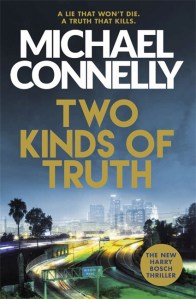 Harry Bosch has been with us for a long time.
 First dip into what might be the more traditional story, published in 2016, magically titled The Atomic Weight of Love by Elizabeth J. Church (4th Estate).
 Isabel Allende’s In the Midst of Winter (Scribner) veers off into a completely different universe. For those of us who have loved her since the magic realism days of Eva Luna and House of Spirits, her amazing storytelling qualities might sometimes teeter on the brink of soap opera but her writing is of a quality that pulls it back just at the right time.
 On a more serious note but no less entertaining, Lionel Shriver will always test your mindset and where you are on issues as she is never simply telling a story. And of the three love stories, her The Standing Chandelier (The Borough Press) is perhaps the most intriguing.




 It’s always a treat when a new John le Carré thriller makes its way onto your bookshelf and with a name like this one, which points to the kind of thrillers we first fell in love with like The Spy Who Came in from the Cold and Tinker, Tailor, Soldier, Spy, expectations are high.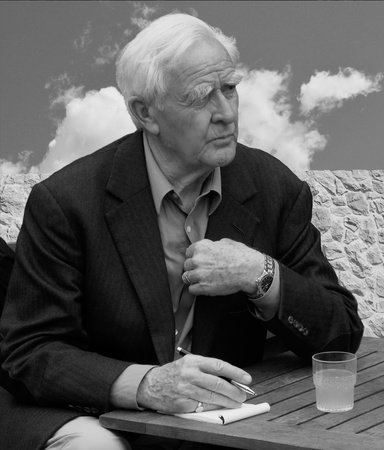


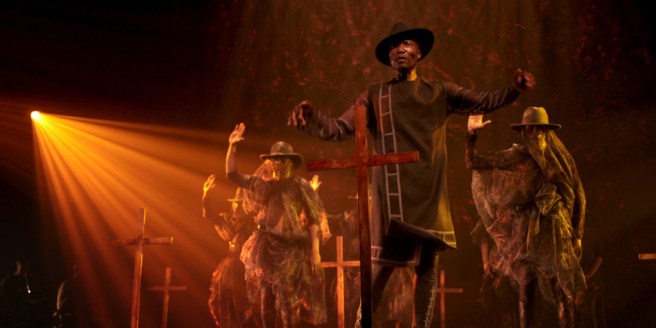 Summertime and the living is easy. DIANE DE BEER kicks off this season of reading and catching up with all those books that were put aside during the year. She starts her holiday reading with two award-winning novels by the erudite Zakes Mda: one old, one new-ish, but both will take you into a world where you can lose yourself – while learning more about our people and this place:


 De Beer Necessities