DEURnis – The Expansive Embrace of Performance According to Theatrerocket

If you’re looking for something completely different at this year’s US Woordfees (March 1 to 10), check Theatrerocket’s new productions in their latest DEURnis season:

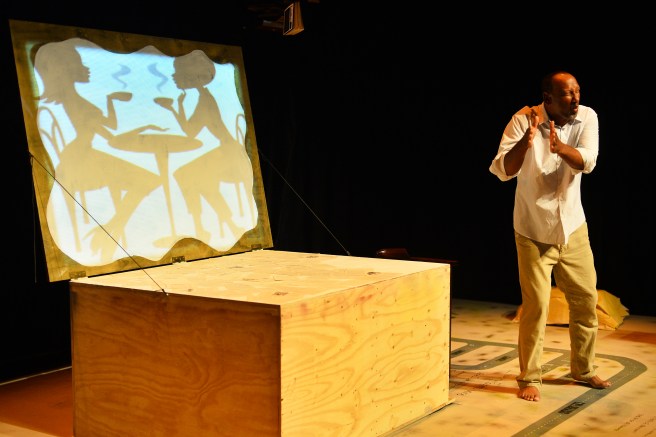
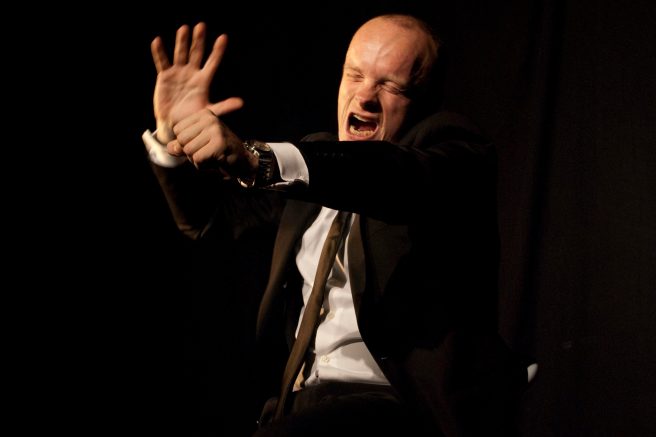
Deurnis Ignatius van Heerden in Droom
Ignatius van Heerden in Droom

 DIANE DE BEER


If there’s one thing that the production company Theatrerocket has proved in its short existence, its that those of us who follow theatre must pay attention.

No one would have given much of a thumbs up to one of their first and probably edgy productions dubbed DEURnis. It just sounds silly – one-on-one theatre!

But they had an idea and they were determined. DEURnis is a one-on-one site-specific theatrical production with a very intimate yet cutting-edge and experimental approach. It involves a single audience member who views three separate dramatic pieces per package (there are four different ones to choose from at Woordfees this year), with each of these having one performer and one audience member.

Each piece is approximately 20 minutes long and written for a particular room/space in a house/building, so as a viewer, you move from one room or even caravan to the next to see your three chosen plays.

It is the social issues that permeate the different works that affect individuals in different ways depending who you are. And for those who aren’t interested in gimmicky theatre, that’s exactly the trap they have avoided by aiming for excellence and substance in the texts. Some will suit specific individuals better than others.

Personally I’m not too excited by the more confrontational ones (there’s usually one that’s slightly more out there in a package), but then other audience members might feel differently.

“We have been inundated by people interested in writing for this venture,” says Johan van der Merwe, who with Rudi Sadler started their production company Theatrerocket a little more than two years ago.

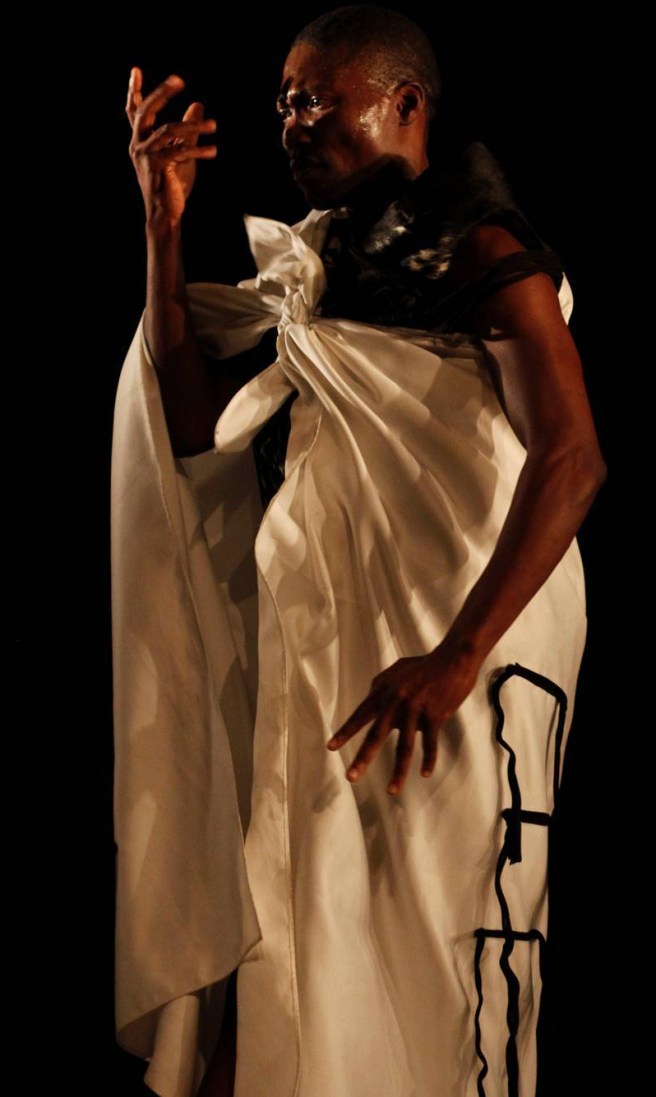
DEURnis Lem 1
Tiaan Slabbert in Lem

Both theatre fanatics of a kind, they know and understand the pitfalls and what audiences want.

Part of why DEURnis works so well is because it is such a well-executed concept. They understood from the beginning that the control had to be constant to see that everything works superbly. And as they have had many plays to choose from, they have managed to execute their strict code of excellence.

It’s a fascinating experience, being the only one in the room in situations with a stranger telling a story that is often inclusive rather than too intrusive but affects you as the viewer in very specific ways. For many it might also be uncomfortable to be this intimate with someone you’re not familiar with. But if you think about it, it makes it easier that you don’t know the actor.

This is not a financial venture for the company. With only single actors and audience members, the numbers simply don’t add up. But because of the way it has been done, the performance-experience the actors (at this stage mostly young but older actors have joined for this latest venture) accumulate, can’t be calculated.

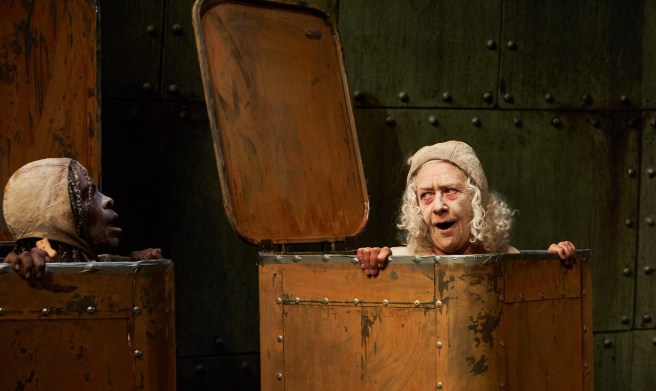
Deurnis Net
Ben Pienaar in Net

And chatting to a few of them in-between performances, they are equally thrilled by how much they are learning in the process. “Each performance is different because of the reaction of the individual viewing,” says one performer. Many of them are already in their second play and the growth is obvious in their performances as well as the play’s toughness a second time round.

Prospective directors are also excited about the challenge and safety of testing their skills on such a small and intimate stage. “It’s a safe environment in which to experiment and push your own boundaries,” says Van der Merwe.

Having sat through two nights of 12 plays (even a dance with multi-media included), it doesn’t matter which package you choose. They’re all extremely well crafted and in sometimes scary ways, fun to experience. Following the earlier seasons, I was excited because of the great potential – and they keep delivering.

“We have been inundated by especially writers who find the format exciting and challenging,” says Van der Merwe and they have also expanded their initial idea with a new concept titled DEURnis 20-voor 2.

This time it is two actors with an audience of 20. Described as an unusual site-specific theatre experience, it is aimed at the adventurous theatregoer. “We are exploring the limits of theatre in a creative way,” says Sadler. A ticket gives you access to two pieces, each approximately 45 minutes long.

These will be staged in The Grappa Shed while the one-on-one plays are performed at the Quiver Tree Apartments in Stellenbosch.

From their earliest days, these two theatre aficionados knew what they were doing. They also realised that it wouldn’t be easy and had no romantic visions about making theatre. Theirs is a true passion, almost the only thing that keeps people pushing through the pain.

With DEURnis for example they have found a sponsor but the financial gain for everyone is minimal. Many of the actors though have been spotted and pulled into more lucrative theatre and television work and that is why it probably appeals to a younger performer who can benefit from the experience.

Last year they were rewarded with a kykNET Fiësta and an ATKV-Woordveertjie as well as being nominated for best production at Aardklop. Their other more traditional play, Die reuk van appels with Gideon Lombard was as richly rewarded.

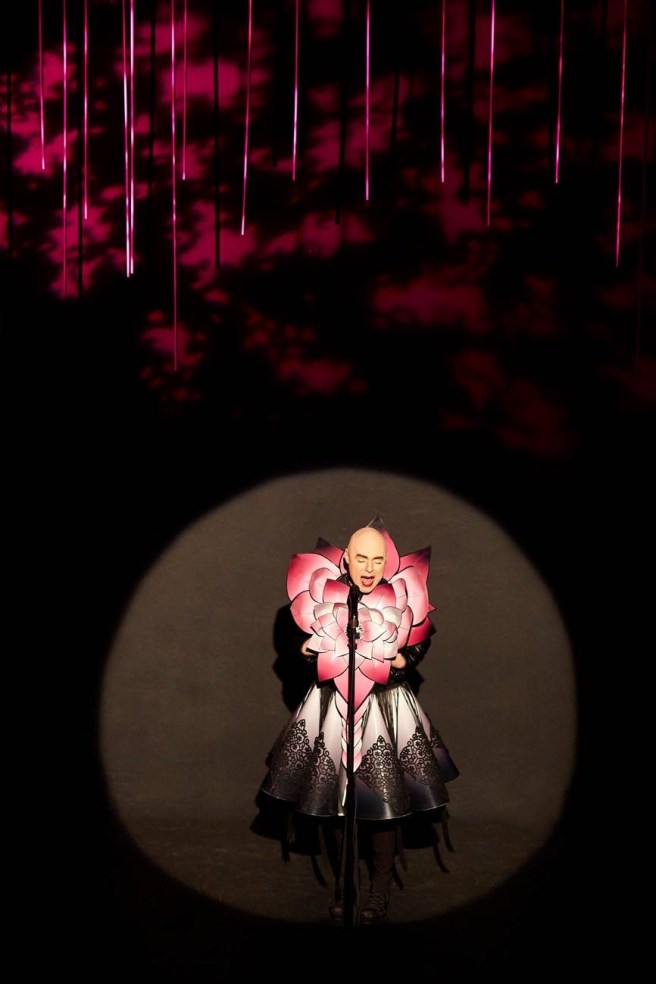
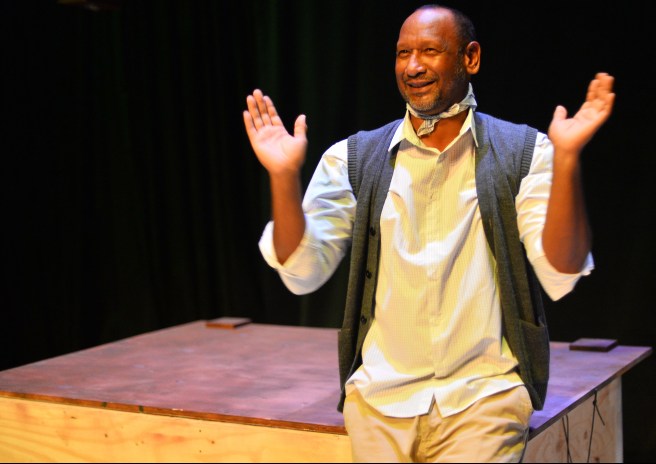
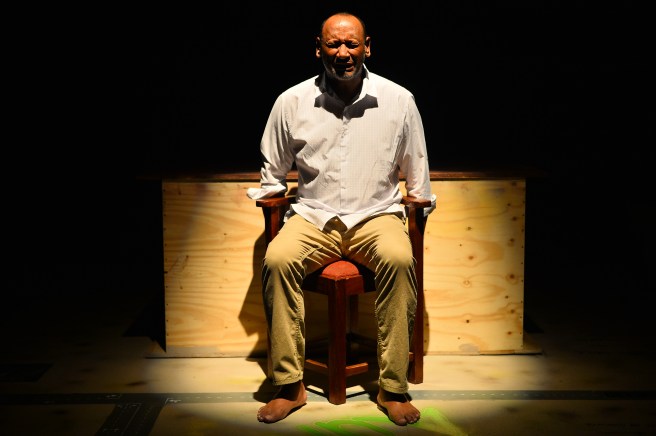
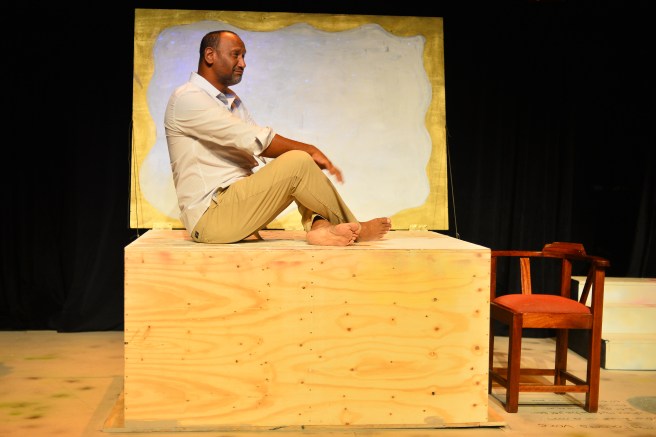
And if I have to pick a favourite from this year’s batch, it would be Ignatius van Heerden and Droom. The dancer/choreographer has done something remarkable with movement and multimedia which easily transports its audience-of-one to another magical world.

That doesn’t detract from many of the others with sassy texts and performances, which will have you intrigued and sometimes intimidated but also excited about the way theatre finds ways to explore new directions which will hopefully appeal to those who don’t go to more traditional theatre – and then show them the way.

* For more information, check http://www.woordfees.co.za

Women Are Doing It For Themselves

Independent theatre maker MoMo Matsunyane is navigating a new way to create and to secure a future in the arts. She tells DIANE DE BEER about her independence and her latest team effort Dick Or Date? which opens at POPart on Thursday:

DickOrDate

When exciting young theatre maker MoMo Matsunyane suddenly found herself out of work between March and June 2018, she had time to review her life – and especially her work as an artist.

“This time at home made me think really hard about what it was that I wanted to achieve and how is it that as an honours graduate I was sitting at home not working? It was then that I realised the importance of being in control of my career,” she explains.

She knew she had to make her own future work and sprang into action. This led to the establishment and registering of her own production company, MoMo Matsunyane Productions, and working on a new show Dick Or Date? with Lillian Tshabalala.

“I put out a call on Facebook to write a play with someone really funny. Lillian responded with 10 pages of something she was already working on. I thought it was really funny, so we agreed to grow the text.”

The play is about whether it’s possible to find true love online or not and was first called Dating Online but as the work grew and developed in its own direction, they knew they had a slightly different animal to deal with.

“We realised that when it comes to relationships, it’s really between two choices; is he just Dick or are you going to date? And each has its own challenges!”

Dick Or Date? grew into a dramatic comedy that takes you on a love trip with three close but very different friends: Nelly (a hopeless romantic and social media fanatic), Ashley (a privileged young woman who exclusively dates white men) and Maggie, real name, Magogodi (a sex obsessed serial dater who doesn’t believe in love).

Where does a girl go to find her “perfect man” in this instant world of hook-ups and how does she “put herself out there” without looking too desperate? What would happen if women used all the platforms they had available to them today; to date as extensively as they wanted to without judgement? How does one find love organically when it’s readily available online?

One of the delights of this new process was Matsunyane’s discovery that the process of co-writing was so much better than writing alone. “We broke down the storyline and scenes based on what they should achieve. We would give each other homework and slowly began piecing it all together.

“It’s a hybrid comedy and drama which was great to experience as it came to life but it also kept us on our toes because we couldn’t be precious about the work. If something was not working, we had to cut.”

Working in the arts currently is no easy gig as Matsunyane is experiencing while wearing many different hats to make things work. “The industry isn’t as accessible as we think or hope it to be and in the era of social media, popularity also plays a role in who gets the job.”

She knew however that she didn’t want to find herself without work again especially as a creative. That alone could be her driver. “With time, I (and my company) will get to a point where I can put together a team of people who are just as passionate about art as I am and who will help me grow my dreams.”

But ever practical, she knows that it will take hard work and initiative to make her dreams come true. “It will take care of itself. I’m investing in my future and career.”

And she already has loads of experience behind her with winning productions. “I have been producing my own work with a sketch comedy team. I’m a part of Thenx and TAU which has definitely made me more confident in pursuing independent producing.”

Also, these past experiences have taught her how important it is to own your work. “The gear shift now is that I’m an official institution, registered, so I will be able to explore other opportunities that will take my business as an artist to the next level.”

She has the world to contend with though and in a country where the arts have been side-lined for many different reasons, it’s a tough ask for young artists to navigate this closed terrain. “Art has always been political and we know the role it played in liberating our people from the chains of apartheid. However, we also know what isn’t being done for artists,” she says.

“Funds are constantly being embezzled, young artists don’t have enough opportunities and access to collaborate with mainstream institutions and the industry is still too unregulated, which causes a lot of imbalances in opportunities presented.”

She feels they have a long way to go. “The arts survive through people’s passion. Literally. We are called to perform during rallies and at election times but that’s about it. There is a crisis in the industry and we are still too quiet.”

As independent theatre makers, they have had to rely on smaller independent spaces like Maboneng precinct’s POPArt, Thembisa’s TX Theatre and Alexandra’s Olive Tree Theatre to stage our new and experimental work. “I have created a great working relationship with all these spaces and POPArt was more than happy to house us for our debut,” she says thankfully.

“We want the piece to spark critical conversations around sex and relationships. The private becomes public. It’s like having a window into the lives of three young women and how they navigate the dating world in today’s fast paced and technologically advanced society.”

Performed by Lillian Tshabalala, Kitty Moepang and MoMo Matsunyane, Dick or Date? plays on Thu 21st Feb 8pm • Fri 22nd Feb 8pm • Sat 23rd Feb 8pm • Sun 24th Feb 3:30pm at POPart.

Book at https://popartcentre.co.za.


Nina Simone Four Women Gives Young Black Women A Powerful Platform To Speak Their Minds – It’s About Time

Busi Lerayi with Tshepo Mngoma, the piano player in performance

DIANE DE BEER

NINA SIMONE FOUR WOMEN

DIRECTOR: James Ngcobo

PLAYWRIGHT: Christine Ham

MUSICAL DIRECTOR: Tshepo Mngoma

LIGHTING DESIGNER: Mandla Mtshali

SET DESIGNER: Nadya Cohen

COSTUME DESIGNER: Onthatile Matshidiso

CAST: Busi Lurayi, Lerato Mvelase, Mona Monyane Skenjana, Noxolo Dlamini

MUSICIANS AND SINGERS: Bryan Mtsweni, Ezbie Moilwa, Mpho Kodisang

Smanga Ngubane, Sam Ibeh

VENUE: John Kani Theatre at the Market

DATES: Until February 24


With Artistic Director James Ngcobo’s tradition of commemorating Black History Month, his pick of this play starring mainly women is, as Nina Simone so aptly said, about “an artist’s responsibility to reflect the times”.

With the #MeToo and #BlackLivesMatter movements in everyone’s consciousness (or it should be) the Simone-driven play is a clever choice with a cast of powerful young actors strutting the stage.

And even halfway into the run, the theatre is packed with a young (mainly black) audience and they’re enraptured and engaged as these women speak to them with great gusto.

It’s not for the lily-livered because in the main, women haven’t had a voice and black women especially were never invited to speak their mind and tell their stories.

It’s their time and it’s like its all spilling out with an anger that’s palpable but covering a pain that so’s deep and so sore, it breaks your heart while listening.

In song Noxolo Dlamini, Mona Monyane Skenjana, Lerato Mvelase and Busi Lurayi

When Simone slips into a quiet moment and opens her heart about her own experience of living in a world that seems to hate and discard her, it’s like an open wound she exposes to everyone willing to look more closely.

On September 16, 1963, the day after the bombing of the 16th Street Baptist Church in Birmingham, Alabama, Simone shifted her career from artist to artist–activist. This is where the play begins, in the church with riots outside and the pain of four little girls killed in hatred etched on everyone’s mind. She is writing a song when three diverse women enter and engage about their lives as black women.

But so deep is the self-hatred and lack of confidence, they turn not only on those who mean them harm but also on each other as they compare shades of skin colour and the intent with which each lives her life.

Interwoven with much talk is Simone’s haunting music dominated by Mississippi Goddam, Black is the Colour of My True Love’s Hair and closing with the obvious Four Women, the song from which the women in the play were drawn.

And it is this mix that moves in and out of the consciousness. While the songs complete the conversations of the women, they are more contemplative if heart-breaking before the next storm unleashes as the women twist and turn in their tension and anguish of years of abuse punctuated by the current attack.

Busi Lurayi as Nina Simone surrounded by the rest of the cast.

It is a sparse set by Nadya Cohen yet effective in its symbolic power and the women are encouraged to fill the stage, which they do with great abandon. Ncgobo obviously wanted them to embrace their power in this moment – and they do.

The performances are sometimes uneven, Lurayi perhaps hampered by capturing the Simone kinetic energy, but she soars in the quieter moments and in song. It is quite a presence that she has to establish, and the deep timbre of her voice works in her favour. Mvelase, the most comfortable on stage, inhabits her Aunt Sarah, a domestic worker, with quiet dignity, while the young Dlamini is passionate in her rebellion.

Then comes the abrasive whirlwind Monyane Skenjana to perform in the person of an unapologetic prostitute who believes in disarming if not disabling before an offensive can begin. It’s a tough performance to catch but in the mix, it brings the chaos of their lives into sharper focus and adds some light relief to what could become too much to witness and bear.

Cushioning all that is the piano playing of Brian Motsweni supported by a trio of other musicians and two singers, all adding to the depth of the soundtrack. Other sounds like the sudden rush of the riot don’t get the balance right and while the two singers worked well as they sat to the side, the look was confusing. Perhaps they would have slotted in more smoothly as part of the musos rather than characters, but not quite.

Quibbles aside, the importance of the production, what is said and who is saying it, right now, taking into account what is swirling around in the world currently, this is a majestic production.

Theatre is struggling more than ever with little help from anywhere. Even newspapers, their traditional support, are dwindling with less and less art reporting. Yet the audience who were there to look and listen, were predominantly young and black, probably the most sought-after demographic.

And they were delighted – with reason.

Nataniël’s Second Phase Will Have Him Playing On Many Different Platforms

optog kombi and nataniël.pic by optog
Optog kombi and Nataniël. Picture by Optog!

Showman Nataniël is embarking on what he calls the second phase of his career with quite a few tricks up his sleeve. He tells DIANE DE BEER about his future plans:


It took only four phone calls, says Nataniël, to cut his salary by half but this drastic measure was necessary for him to get things going in a different fashion.

It’s always been part of his strategy, not to keep doing the same things all the time. Leave before they’re tired and start something completely different.  “I am not going to do anything that I’m not in control of any longer,” he says hence all the changes. And money is no longer a driving force.

As someone who prefers being the one responsible for something he does, whether good or bad, he says it is time out for projects where he is involved with egos bigger than the talent. “It’s not that I am all-powerful, just tired of all the bull!”

“I am back to earning all my money in my own head,” he notes, but he’s used to creating his own world and then sharing it with the rest of us.

men-in-black.jpg
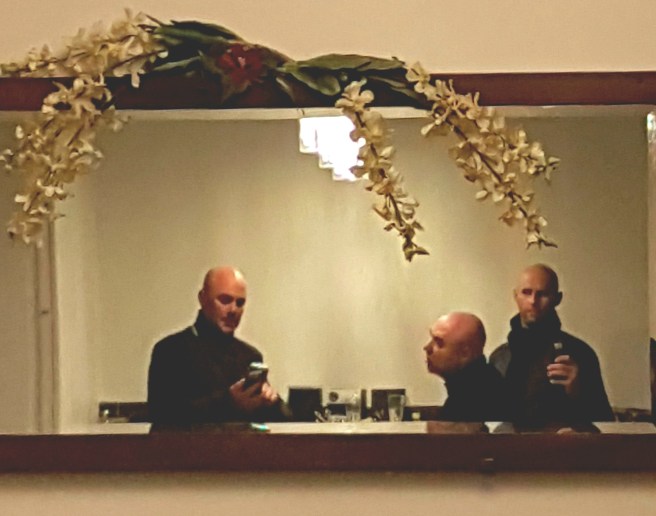
Men in black – Erik, Nataniël and Nicolaas

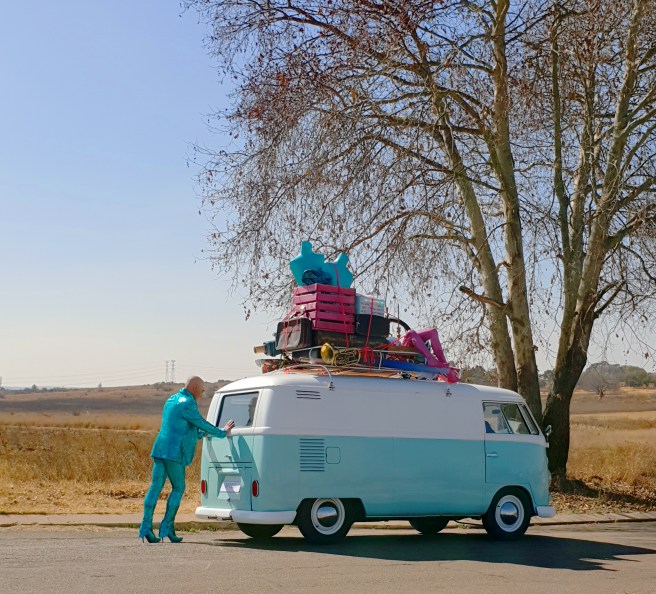
He and his assistant Nicolaas Swart are currently in Nantes, France (arriving back this week) where his most recent four-season television series (Die Edik van Nantes with his bro which also evolved into his latest cook/lifestyle-book released just before Christmas) was shot, and while this is a well-earned break, it is also a time to scout for new ideas with his brother-in-arms Erik le Roux who lives in Nantes.

“We love working together, so we will come up with something new,” says Nataniël, who has just started his own YouTube channel, something which is part of his plans but will also prevent one of his huge irritations, people randomly posting show videos or unwanted clips of him on the popular channel. “Once you have your own channel, you can remove any illegal ones,” he says joyously.

nataniel slow tear
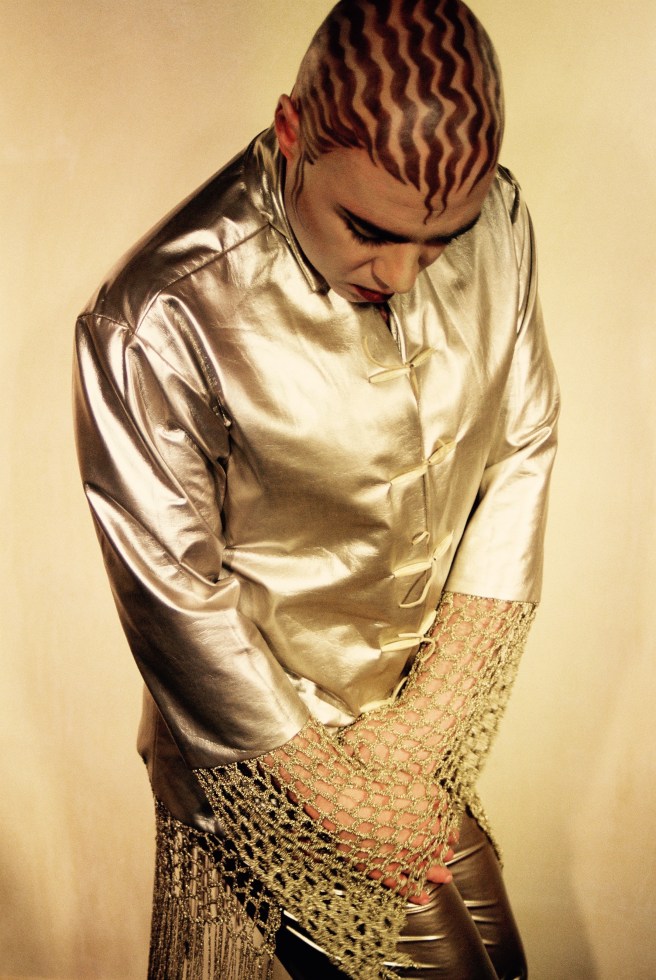
Nataniël in costume.

He will also be shooting a music video for this platform while in France, the first he has made in 20 years. “We’re going to do it with cell phones,” he says, and it will be a short art film with music rather than a traditional music video.

Importantly, he will be focusing on finding creative outlets that make him happy. What he has discovered in especially Nantes, a creative city, is that he has been allowed to film and introduce basically anything to his local audience. “There’s a pride and a generosity which makes everything accessible and it is such a pleasure to work in a hassle-free environment.”

On the performance side locally, he starts his year on a new platform called Optog (March). The brainchild of producer/pianist Matthys Maree, it is described as one huge concert tour on wheels travelling through the whole of the country and beyond, running from February 14 until December with artists like Nataniël, Karen Zoid, Jo Black, Laurika Rauch, Coenie de Villiers and Deon Meyer, Vicky Sampson and Corlea Botha, all on a musical note with a few theatre productions also going on the road. Stellenbosch, Pretoria, Rustenburg, Polokwane, Welkom, Sasolburg, Kroonstad, Bloemfontein, Kimberley, Durbanville, Port Elizabeth, East-Londen, Potchefstroom, Durban, Windhoek and Swakopmund are all on the map.

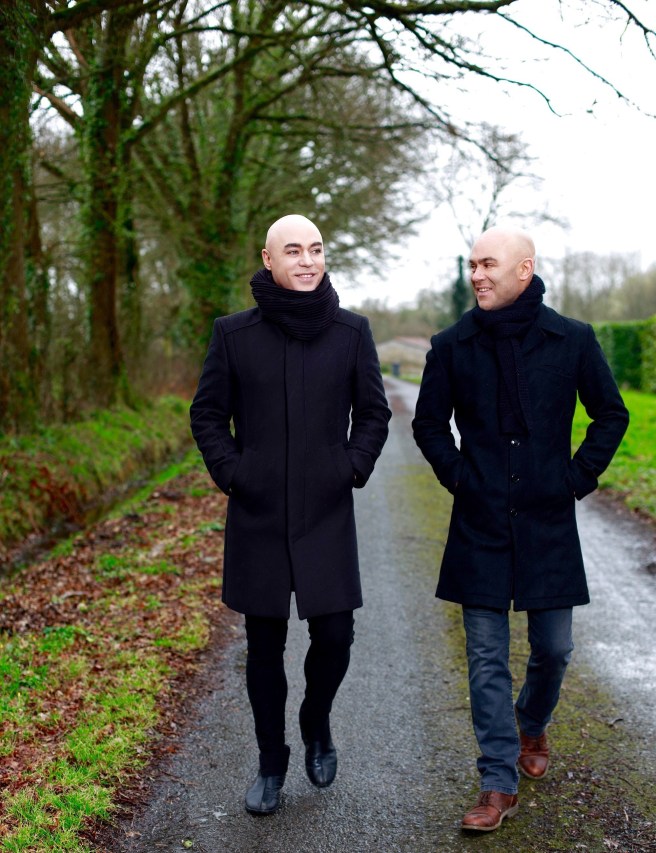
Nataniel and Erik in Nantes
Nataniël and Erik in Nantes

“I am visiting rural towns I have never been to,” says Nataniël, one of our best travelled artists locally – and something he will again do more of in the future. He will be performing in three shows: Nataniël Gesels (talks) where he will be presenting one of his famous talks in theatres, something he tested at the end of last year for the first time; Nataniël Unplugged accompanied by Charl du Plessis, which is a more intimate version of his larger shows; and Four Loud People with his full band, the Charl du Plessis Trio and representative of his shows compiled of stories and songs in both English and Afrikaans.

Check out the website for more info and dates (www.optog.co.za) and hold thumbs for their plans to give new life to existing performance sites and halls in the platteland which might generate more platforms for artists everywhere.

In April he will be presenting a show at Artscape titled Anthems. And we’re not talking national flags or such like here! Nataniël describes it as “songs that singers claim as their personal anthems”. It will be in the style of his classical concerts of the past two years and he can be viewed as songs for grownups. “The songs usually represent an era, a life or an event,” he explains, “but anthems can also be attached to movies.” And he will be showcasing a few of his own.

Nataniel
Nataniël at Emperor’s

Later in the year he will return to Emperor’s where he has been performing annually for just short of two decades taking a break last year and this time the run is planned to play almost like 12 individual concerts. As always with Nataniël, what that means exactly will only become clear once we see the latest spectacular extravaganza so much a part of his annual showcase.

For the first time he is also in the throes of writing an original book. “I have written many, but these have always been compiled from either columns or my show catalogues,” he says. This is something different, a kind of memoir, and more than that he isn’t willing to reveal, only that it will be published in both English and Afrikaans and this is the first time he has sat down and written an original book. He’s excited but also nervous while working hard on a Nataniël voice that works as well on paper as in performance.

On the food side, he will do a few kitchen demos – usually presented at the Atterbury Theatre in Pretoria and booked out as soon as the announcements are made – but much more than that he hopes to avoid. “When you have just finished a cookbook, food is the last thing on your mind,” he says, although his Nataniël Collection (food and kitchen products and tableware) in Checkers is going to be expanded and has been doing well around the country. They will be appearing in every shop and he is hoping to add a few new products, something he always enjoys doing.

And in private time, he will be battling cell phones (mainly in shows) and plastic. “Botswana has banned single-use plastic! Surely, we can too. What makes us so special that we keep destroying the planet?”

He argues that nothing usually comes from the top and a minor anti-plastic violence in shop queues, isn’t a bad thing. “Little old ladies should just hit those using plastic bags with their handbags,” he says. “They can get away with it.”

“It’s not that anyone listens to me, but to remain silent isn’t an option any longer.”

Writer and Poet Extraordinaire Chris van Wyk Tells Stories with a Poetic Tongue

DIANE DE BEER

Pictures: Lungelo Mbulwana

zane-meas-in-storyteller-of-riverlea-picture-by-lungelo-mbulwana.jpg
Zane Meas as Chris van Wyk.

VAN WYK – THE STORYTELLER OF RIVERLEA

Written and performed by: Zane Meas

Directed and Designed by: Christo Davids

Lighting design: Thapelo Mokgosi

Costume design: Nthabiseng Mokone

Music: Cyril ‘Dafunc’ Peterson

Venue: Manie Manim at the Market Theatre

Dates: Until February 24


Author/poet/storyteller Chris van Wyk wrote for the people, telling stories about his people, but he also had a deeply serious side, an intellectual one that couldn’t ignore what was seriously unjust and wrong in the world he found himself in.

His family surrounded him with love and laughter which allowed him to get more from life than the colour of his skin encouraged him to do in the Apartheid years – and he grabbed on to life with gusto. Van Wyk used his abilities to share the lot of his people probably as much a balm to his own being as to those who read his extraordinary words.

Many will know him for arguably his most loved book Shirley Goodness and Mercy, a memoir which best captured the way a family laughed and cried together to hold themselves apart yet together in a cruel Apartheid world.

But what this script and show do so spectacularly is showcase Van Wyk’s poetry which might not be as familiar to audiences as his family and community featured in his memoirs.

Zane Meas 2 (photographed by Lungelo Mbulwana).JPG

It is in the poetry that he magnificently portrays his mother (The Laughter of my Mother), holds his wife’s impact on his life up for scrutiny, and then sharply looks at the lay of the political land with the horrifyingly haunting In Detention – the best kept for last.

It is in that melding together of the happy and the horrifying that Van Wyk becomes clearly and colourfully defined by his friend Zane Meas whose love of acting was first fuelled when he performed in a play based on one of the author’s short stories.

His love and knowledge of the writer is clear from the script, the way he has decided to tell the story with a lovingness that is hard to describe and shines through also in the performance.

Meas is masterful in his portrayal of Van Wyk and even if you didn’t know they were friends, you know that what you see on stage is the essence of the man in all his colourful cheerfulness even at the end when he reluctantly has to leave his family.

It is his spirit that lives on in his words, the way he views and explains his world, how he has you laugh, yet with a sadness at a life ended too soon. “We know the end,” says Meas both at the start and the end.

Zane Meas1 (photographed by Lungelo Mbulwana)
Telling it like it is…

And while the title says The Storyteller…, Meas is able to direct the writing in a way that tells you who this man was, how he lived his life, the empathy he exudes because of the family he grew up in, and the people he chose to have in his life. And then he shared these insights with the world.

He achieves what many writers can only dream of. His way with words is extraordinary but it is also accessible, something not easily done. He has both a common touch and the ability to appeal to the intellect as he plays with words and ideas without fear even in this country’s darkest days.

These were the things that touched him, the unfairness of it all, which he realised at a young age and the way his parents and granny engaged with his world and showed him a way out of the mess that surrounded him growing up.

He found his salvation in words and when wondering what impact he has had on his world, words are what start stumbling out and for those listening, an awareness that there is so much wisdom lost from this voice silenced too soon.

Meas is determined to honour his legacy and with his friend/colleague Christo Davids as both director and designer, they have pulled a rabbit from their theatrical hat. It could have been just another storytelling nostalgic trip and with Van Wyk speaking his mind, that would have been enough.

They have, however, elevated this performance with loving care and in the detail of the script, performance, design and direction.

Zane Meas (photographed by Lungelo Mbulwana)
It’s in the detail

The design shows that they started out with a clear picture in mind, helped by the short-hand between two actors who have a working life together on stage, know what each of them can achieve and then pushing way beyond those goalposts.

Davids worked the solo show as much as he can (pushing too hard once or twice with an ending that is overly-dramatic and must go) creating his own book of stories on stage, which allowed Meas a freedom to focus on the man and what every word he wrote or spoke, meant.

It helps when you’re intimately involved with the individual you’re trying to explore because in this instance it encouraged them to show the inner workings of Van Wyk’s soul. They’ve put together a life filled with love in words and pictures.

If you can’t make it now, watch out for this one because it should (and will, I’m sure) travel, and while this is a homage by friends, they have truly done justice to the wordsmith Chris van Wyk.

If you want to rush out to discover more of his writing, you know they have found the key. It is some of the director and actor’s finest work.


For Artistic Director of The Market James Ngcobo, Theatre Is All About Diversity

market-theatre-4275
Lerato Mvelase, Busi Lurayi, director James Ngcobo, Mona Monyane Skenjana and Noxolo Dlamini Picture: Brett Rubin

Into the second month of 2019 and things are pumping at Joburg’s Market Theatre where artistic director James Ngcobo has staged Nina Simone Four Women to celebrate Black History Month with this South African premiere. He speaks to DIANE DE BEER about his future plans in this, his second term, at this iconic theatre:


For James Ngcobo, Nina Simone Four Women written by Christina Ham, one of a quartet of hot female playwrights in the US currently, means many different things. Presented in conjunction with the US Mission in SA, he believes strongly in staging this kind of work which forms part of the Market’s 6th annual commemoration of Black History Month.

It’s all about the message, telling the story and the four actresses on stage who will be portraying different aspects of Nina Simone, as the title indicates. “The play is based on four characters Simone created in a song,” explains Ngcobo who sees this as an exploration of the landscape of women.

It was Nina Simone who said: “Music can’t just be about the art, but it has to be an expression of the good, bad and ugly in life.” A staunch activist in the Civil Rights Movement in the ‘60s, she wrote songs that told stories of people she observed in everyday life. It is because of that truth that her music still resonates so strongly today, argues Ngcobo.

On September 16, 1963, the day after the bombing of the 16th Street Baptist Church in Birmingham, Alabama, Simone’s career shifted from artist to artist/activist because she believed as an artist it was her responsibility to reflect the times. And in this sacred place, four little girls lost their lives.

Nina Simone Four Women is set in the sadness of the church and also uses the framework of one of Simone’s most blistering songs Four Women to portray a quartet of women who suffered from self-hatred due to the different shades of their skin. As if being black in those times in that place wasn’t damning enough, they further judged themselves on the light- or darkness of their skin.

It’s also about the conversations between the four women. It’s about who they are, how they fight the battle, how they escape for solace – and in the background lingers the death of four little girls. For Ngcobo, this story from the past reverberates with the racism of our time.

“Nina made a choice when she started speaking out. She knew that talking about some of the things she did was to the detriment of her career, but that’s what she had to do,” he notes. And like her songs, this play is also all about storytelling. “That’s why her music still has impact today,” he says.

His cast includes Busi Lurayi as Nina (who brought a flippancy to her audition that caught the director’s eye), Lerato Mvelase (who starred in Colour Purple and King Kong, as Auntie Sarah who is only interested in her livelihood, daily washing and ironing), Mona Monyane Skenjana (who was part of his Coloured Museum cast and he’s been wanting to work with again) and Noxolo Dlamini (representing youth and thus hope) as the four women in the title. There’s also a young piano player representing Simone’s brother who tinkles away in the background – as well as two extra singers.

Nina Simone Four Women is staged in the main, John Kani Theatre until February 24, while storytelling of another kind is playing in the Mannie Manim Theatre.

zane meas and christo davids director of van wyk the storyteller of riverlea
Actor Zane Meas and Christo Davids director of Van Wyk The Storyteller of Riverlea

Van Wyk the Storyteller of Riverlea was created and is performed by well-known South African actor Zane Meas and directed by Christo Davids. These two have a previous links with Van Wyk as they both played in Janice Honeyman’s 2008 adaptation of Shirley, Goodness and Mercy which performed to full houses at the Market Theatre. This is the 5th time that they will be working together on stage in a partnership that spans over 12 years.

Anyone who has read Van Wyk’s books will know that he was foremost a storyteller. This particular piece explores his influences as a poet, as political activist and writer, his family life and his tragic battle with cancer.  It is an homage to his humour, political values and storytelling abilities, all of which add texture to the piece and insight into the writer’s life. (see review).

nailed starring khulu skenjana, aya mpama, katlego letsholonyane, zesuliwe hadebe and lunga khuhlane
Nailed starring Khulu Skenjana, Aya Mpama, Katlego Letsholonyane, Zesuliwe Hadebe and Lunga Khuhlane.

In the Barney Simon Theatre Nailed will premiere from February 8 to March 3. The production is sponsored by the Department of Arts and Culture’s Incubation Fund, aimed at assisting emerging practitioners to hone their skills from amateur to professional status.

If you want to tell the naked truth about post-apartheid South Africa, better do it through fiction believes The Market’s artistic director. Author Niq Mhlongo has long been a Ngcobo favourite and he believes he masters his art brilliantly.

His latest work, Soweto Under the Apricot Tree is a collection of short stories about contemporary Soweto, Johannesburg and South Africa and the one that caught Ngcobo’s attention. The stories are an account of township life with commentary on post-apartheid South Africa still grappling with many of the issues emanating from our past. “Every township house always had an apricot tree,” reminisces Ngcobo.

 It is a story about abuse of political power, infidelity and violence. It deals with corrupt, greedy and selfish politicians who are in the business not for the people but for self aggrandisement and personal gain.

This country knows better than many how behavior impacts on the lives of ordinary people and how it affects the morale of a country. That’s why this one will be fun to watch with an engaged audience as well as writing that comes alive on stage.

Nailed is directed by Luthando Mngomezulu, who was responsible for Isithunzi, the 2017 Zwakala Festival winner, and the cast includes Aya Mpama, Khulu Skenjana, Katlego Letsholonyane, Lunga Khuhlane, Nyaniso Dzedze and Zesuliwe Hadebe.

gregory-maqoma-in-exitexist.jpg
Gregory Maqoma in Exit/Exist

Other exciting plays to watch out for is a reworking of Tsafendasby by playwright Anton Krueger starring Renos Nicos Spanoudes and directed by the exciting Jade Bowers, who will add fresh and young perspective; in Exit/Exist, dancer/choreographer Gregory Maqoma takes inspiration from his ancestral past as he blends storytelling with his powerful dance vocabulary and dynamic live music in this moving solo performance with live musicians. It’s an examination of race, political power, and the melding of past and present. (Also watch out for a return of the haunting Cion – inspired by the Zakes Mda book -which will be staged in September to celebrate the company’s 20th anniversary.

There’s also a lot of buzz around the new John Kani play which deals with the relationship between a dying white actor (Anthony Sher) and his black nurse (John Kani) directed by Kani stalwart Janice Honeyman which will be staged in the latter half of the year. The Baxter’s production of Strindberg’s The Goat starring the powerful combination of Jennifer Steyn and Andrew Buckland directed by Mdu Kweyana will also be staged.

Times may be tough, but theatre is as always inspired.


US Woordfees Exemplifies a World of Humanity and Theatrical Diversity

The performance year kicks off in grand style with the US Woordfees, the first of the country’s arts festivals. DIANE DE BEER highlights some of the theatrical diversity in the programme of the Stellenbosch-based festival:

Endgame with Soli Philander and Antoinette Kellerman
Endgame with Soli Philander and Antoinette Kellerman Picture by Oscar O’ Ryan.


In her welcome foreword to this year’s festival guide, Director of the Woordfees, Saartjie Botha, points to the political dilemma in the country and how that sometimes detracts from the art festivals. But she’s optimistic. “The world of the arts is a gentler place,” she says.“It is confrontational sometimes – and it should be, but it is a world focussed on humanity. And finally creates understanding and empathy for that humanity.”

The University of Stellenbosch Woordfees, the annual arts festival with books as its heartbeat, runs from March 1 to 10 with a programme that has grown through the years and theatre arguably the one that has benefited most – and it needs that more than ever right now. But so do the audiences to get them thinking and talking. Right or wrong, arts festivals have become a lifeline for artists, and for many, one of the few times they have the opportunity to exercise their craft.

Apart from an extensive discourse programme which covers anything from the state of the nation to financial health as well as many book and author-related discussions, their entertainment and arts reach is an embracing one with fine arts, music (classical, jazz and pop), film, stand-up as well children’s theatre all given a strong platform. And added to that is WOW (Words Open Worlds), an empowerment project focussing on the youth of previously disadvantaged communities, which also includes the largest spelling competition in the country sponsored by Sanlam.

Theatre lovers will know that they must add the Woordfees to their calendar with a programme that this year especially sets the benchmark for the rest of the country and times ahead. It is a festival that benefits from its university connection as well as a community that supports the arts and has a strong cultural understanding. But it has also broadened its reach which has meant that its artistic offering has extraordinary depth and variety and that’s exciting. Diversity in the arts – especially in this country – is the only way to go.

toutjies & ferreira (picture by aardklop)
Toutjies en Ferreira

Director Saartjie Botha sets the tone with a piece that is branded both comedy and drama titled Toutjies en Ferreira with two directors, Wolfie Britz and Nicole Holm and a cast to die for, including Frank Opperman, Anthea Thompson, Aphiwe Livi, Malan Steyn, Melanie Scholtz and Antoinette Kellerman. If you have ever wondered about the backstage chaos an hour before the show starts at a festival, this is a rare glimpse into that world bolstered by drama and delicious comedy.

And launching into the stratosphere, extraordinary theatre maker Brett Bailey debuts with a new work, Samson, described as dance-musical theatre based on the Old Testament values of domination, treason and rebellion yet set in today’s world of political extremism, inequality, expatriation and violence. In the spotlight are opera, choirs, animation and electronic music and the vibe promises the brilliant theatre maker is anarchistic.

He explains that Samson brings the Old Testament story crashing into the 21st century, setting the myth of love, betrayal, ethnic tensions and violent revenge within our complex era. “I’ve been working on the piece for around 18 months, so it has been a very thorough process. I’m blessed to be working with some stellar collaborators: Vincent Mantsoe as choreographer, and Shane Cooper as composer. With a live band playing a very contemporary electronic score, huge projections, and some great voices and performers, we aim to deliver something very special.” Prospective audiences should take note.

endgame with rob van vuuren and andrew buckland
Endgame with Rob van Vuuren and Andrew Buckland.

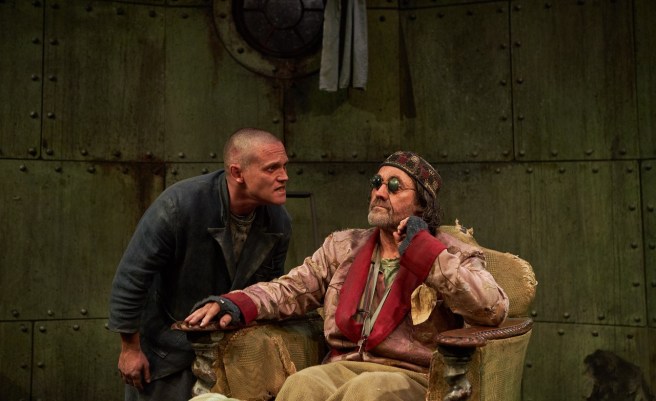
In classical vein Sylvaine Strike follows last year’s inspired Sam Shepard with Beckett’s Endgame with Antoinette Kellerman, Andrew Buckland, Rob van Vuuren and Soli Philander. It has already had a sold-out season at the Baxter with Strike unleashing her magic with powerhouse performances as she dissects the playwright’s exploration of relationships between the controllers and the controlled. Her interpretations are unique, from this time and dealing with the human condition.

Director Marthinus Basson is a name with immediate appeal and with Antjie Krog’s Mi(SA)- Die Nuwe Verbond – ‘n Misorde vir die Universum (The New Covenant – a Disorder for the Universe) and a cast of singers that includes Amanda Strydom, Cecilia Rangwanasha (soprano), Makudupanyane Senaoana (tenor), Ané Pretorius (harpsichord), Erik Dippenaar (piano) and the Cape Town Opera Choir, fireworks are predicted. It is a complex thing (a Basson trait), with a trio of works, the Missa Luba, the Missa Criola and Krog’s new work with music by Antoni Schonken in conversation with the established and celebrated works.Basson pulls it all together with a blend of rites and liturgy to create a contemporary South African soundstage predominantly in Afrikaans but also adding many tongues like Greek, Latin, English, Xhosa and Khoisan words. The choir also brings depth to the texture with individuals telling their own stories and where they come from.

Other English productions include Carpets, a text which first surfaced at last year’s third Text Market initiated by Hugo Theart from Kunste Onbeperk (KKNK). With the help of the Baxter (which hosts the event) as well as NATI (National AfrikaansTheatre Iniative), new texts are constantly being developed and evaluated with some selected to be further developed and staged at the different festivals. At the last Market CEO of the Baxter Theatre Lara Foot added R100 000 to the sponsorship which was matched by NATI for 2019 with the intent of expanding the Text Market to include Xhosa texts in addition to Afrikaans and English. She stressed the importance of developing new voices – and also exposure of the different cultures to one another.And whileJenine Collocott; Carpets wasn’t one of the winning texts, it was selected for a performance at the Text Market where it has benefitted from that exposure. Playwright and director Caitlin Wiggil has written an intriguing story about an agoraphobic woman unable to leave her house because of an earlier trauma.

du toit alberze
Du Toit Albertze, the playwright of Klip Kween.

Two playwrights who were rewarded with writer’s bursaries will be presenting plays: Herschelle Benjamin with Slavenhuis 39 explores what it means to be a person of colour while Du Toit Albertze homes in on a young transgender woman who returns to her birthplace in Klip Kween to investigate her past. She sacrifices her last bit of sanity to go back to Namakwaland to reclaim her innocence from the local pastor. “The narrative becomes just as blurred as the characters’ morality when the pastor’s new victim becomes intertwined in this Christmas play-like tragedy,” explains the playwright.

“Director Jason (Jacobs) and I strive to honour the sisters before us, the daughters of District Six. Also to remind the ‘ooms en tannies’ of transgender existence and exposing the trans- and homophobic religious leaders still abusing their power.”. It’s important that all of this be talked about. “There are too many of us who hide away like vampires. Hopefully these stories will kick some of them out of the closets!”

stof with james cairns
Stof with James Cairns

Both of these young playwrights are worth checking out. It is early in their writing careers, but they have already made their mark as they tell stories that open new worlds.Another transgender story titled Rokkie showcases a 48 year old transgender woman from the Cape Flats, and is the solo debut of Charlton George, an actor with extraordinary talents; while Craig Morris returns with one of his breathtaking performances in Greig Coetzee’s Johnny Boskak is Feeling Funny.

babbelagtig
Babbelagtig – Picture by Hans van der Veen


It’s also going to be fascinating watching James Cairns switch to Afrikaans in his solo show Dirt (which he has translated as Stof), directed by Jenine Collocott, who is also in charge of the family-orientated clown show Babbelagtig with an extraordinary comedy ensemble with Jemma Kahn, Roberto Pombo, De Klerk Oelofse, Dean Bailie, Klara van Wyk, Thami Baba and David Viviers.

Marching in step is the Gerrit Schoonhoven-directed two-hander with partners Elize Cawood and Wilson Dunster in Narkose (Anesthesia). Two old clowns, Koos and Koos, are down and out but determined the show must go on. This talented trio have a way of sprinkling fairy dust whenever on stage, even when they gently let rip with the truth. Louis Roux, a young playwright, is helping with the text.

And finally, with a title like GodgOdgoD it’s hard to resist. It has already reaped some rewards with a cast as versatile as Charlton George, Ilana Cilliers and Wolf Britz. Described as experimental, language isn’t the star as the company explores identity, who we are, where we come from and exploding the myths and theories that want to determine the way we live.

That’s only a handful, a starting point especially if English theatre is more accessible at this mainly Afrikaans festival. But do yourself a favour, go online and have a look at their programme which is also available in English. Be prepared to be overwhelmed. It is a staggering offering from the arts in all its glorious diversity.  


And Now For Something Completely Different … And Contagious

PICTURES: Philip Kuhn

Boy Taryn Bennet and Ninja James Cairns


DIANE DE BEER


THE BOY WHO CRIED NINJA by Alex Latimer

ADAPTED AND DIRECTED BY Jenine Collocott

CAST: Taryn Bennett, James Cairns and Toni Morkel

DESIGNED: Alistair Findlay

ORIGINAL SCORE: Sue Grealy

PUPPETS: Andy Jones

 AGE APPROPRIATE: 4 to 10 years

 UNTIL: December 15 @2pm, Tuesday and Wednesday @2pm; Thursday and Friday @11am; and Saturday @11am and 2pm

 VENUE: Sandton’s Auto and General Theatre on the Square


As someone who doesn’t experience children’s theatre often, it was as much fun to witness the young audience as it was to go with the flow of what this adventure (children’s theatre and performance) was all about.

But once again, it reaffirmed the power of live theatre and how storytelling has many purposes but perhaps most importantly, to activate creative minds and challenge those, especially the young, who are so willing to participate – with great enthusiasm.

Writing about it from an adult point of view is senseless because we are not the audience and those little voices are very quick to let you know exactly where they’re at and what the story means to them – and that’s where the fun lies for the adults.

Collocott whose adult theatre often has that magical almost childlike quality (think The Snow Goose) has surrounded herself with like-minded actors (part of Contagious Theatre) who are happy at play whoever their audience and happily adopt an over-the-top story with a lesson gently sliding through while embracing the kids in all kinds of ways with hoopla and hilarity.

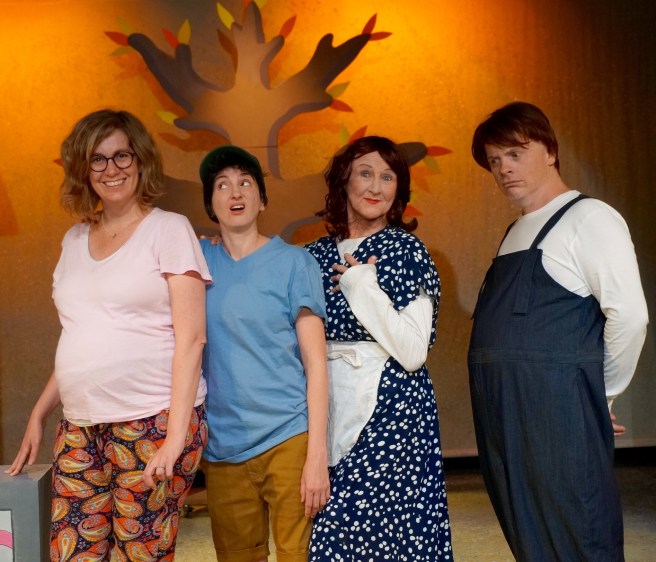
Boy director Jenine Collocott, Taryn Bennett, Toni Morkel and James Cairns

It’s not always easy to achieve and as one mother pointed out, it is the originality which also enhances the experience with too many predictable stories repeated year after year from more established companies.

That’s also understandable in a cash strapped profession with audiences always changing (as they grow out of children’s theatre), but they are there for a few years and this is a great stage to create and establish audiences for the future and really grab their attention while exploiting the pay-off of live performance.

Collocott has also chosen a great hook, a story that many children will know, and it is further charged with a Ninja as inspiration and a twist on the tale of a boy who cries wolf. This time there might be some truth in the saying that fact is often stranger than fiction.

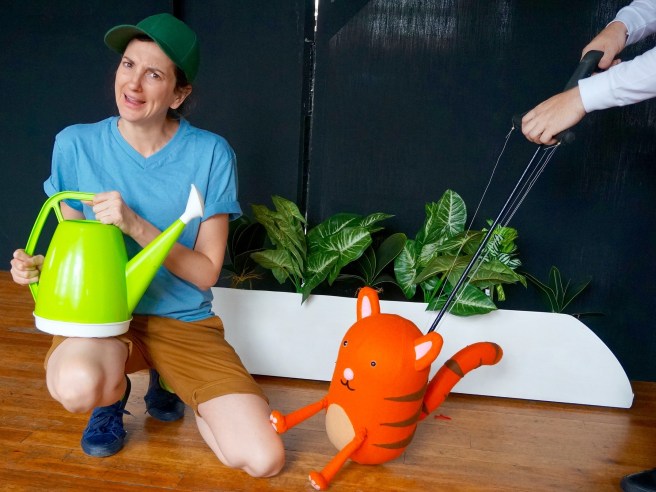
Boy Taryn Bennett with one of the puppets

She has further loaded the dice with a cast who we know can easily lead adults up the garden path – and that’s yet another bonus for adults, while children will be introduced to performance by real genius with Cairns, Morkel and Bennett all taking turns to go on the charm offensive and win young hearts or just give you a slightly silly scare.

It was lovely to listen and learn and to wallow in all that exuberance and enthusiasm as the young boy worked hard to engage and entertain his willing yet demanding participants. They were well rewarded with a production which was cleverly produced probably on a budget but with imaginative visual flair adding all the bells and whistles.

Holidays and children are all about juggling time purposely with enough escapism and entertainment to keep everyone happy. This one is a no-brainer. It’s not run of the mill and easily accessible with parking close by or perhaps even better, Gautrain in walking distance which further enhances the adventure.

Booking at Computicket where you can also confirm times.


African Adaptation of The Little Prince Creatively Engages Young Audiences

The Little Prince Stage Adaptation by guest writer Kgomotso Moncho – Maripane

Picture by Ettione Ferreira Cue Media


©Ettione Ferreira-CueMedia_IFAS_Market_TheLittlePrince_16
The Little Prince with Khanyisile Ngwabe in the title role 

Antoine de Saint-Exupery’s classic story, The Little Prince is written in such vivid imagery and magical surrealism that it lends itself to the playful theatrics of the stage. But the unconventional text may also be a challenge: Because the book already does a lot of the work with its powerful, provocative images, what else can performance do? What can live bodies add to that?

The Market Theatre Laboratory’s new company, Kwasha, headed by Clara Vaughan who co-directs the stage adaptation of The Little Prince with theatre practitioner and academic, Mwenya Kabwe, employs a physical language to the storytelling.

To prepare for the production, the company did circus training with a circus company called Art of Synergy, working specifically with acrobatics, tumbling, lifting, balancing and counter balancing.

“With the idea of magic being so deeply within the story, with a sense of other worldliness and a suspension of adult rules, the circus feels like a really appropriate form. With the theme of flight also being so strong in the story – flying and crashing, travelling through space – it felt always like the qualities of circus, both in its sense of the unexpected and its sense of magic and of defying gravity, really fit with the themes within the book. It was also very important to make the movement of the play as beautiful and poetic as the language in the book,” says Vaughan.

The play achieves this in its moments of beauty where the movement poetically articulates Saint-Exupery’s moral and philosophical ideas which lean more towards the value of life rather than its meaning. However, in some places, the physicality in the show could be more cohesive for the magic of the book to shine through.

The Little Prince is a European text set in the Sahara desert, whose universal themes resonate worldwide. It is the most translated text outside of religious books, with 300 translations including English, Zulu, Afrikaans and Xhosa.

During the early days of rehearsal for this production, co-director, Kabwe questioned how African languages were used in the show. The importance of this showed how careful thought went into giving this adaptation an African context, but without overthinking it.

“The African adaption of anything is a contentious question to grapple with. There are easy surface ways to do that. I feel like we’re trying to ask other questions about what it means to be staging a European text of this nature here. And how just by working with it, it can be localized. In a way, not taking an overt approach to African adaptation, but letting the work, as we discover what it is, what the ideas are that we’re dealing with speak for themselves. Just the fact that it’s this company, and it’s us and we’re here, already feels like an African adaptation,” Kabwe said.

It is by being authentic to its mechanisms and allowing the individual sensibilities of the cast to come together that this production excels. Its African-ness then comes through inherently.  It’s in the subtle music and the organic flow of the languages.

The open and rustic staging speaks to the bareness of the Sahara. It is also evocative of plays like Mncedisi Shabangu’s Thirteen and Prince Lamla’s Coal Yard whose imaginative exploitation of a minimalist stage are innovative. This feeds into the playfulness of the show that stays with you together with its strong messages. The Little Prince directly confronts the conflict between adult and child relationships and the execution of this production engages the perceived notions of what it means to create for young audiences in this country.

For Vaughan, this extends into her own ideas on creating.

“There are ideas that I really care about in terms of creativity and making – the ways that the world instructs what is good creating – which resonates with ways of theatre making. The ways that people lose their desire to make, or their playfulness around making – losing that internal pleasure that children have. That matters to me. It’s something I have been interested in. As an adult, the story around grown up expectations and expectations of being a grown up, really resonate with my internal tensions about what you choose to take on,” she says.

The Little Prince finishes its nationwide tour in Johannesburg, which started at the National Arts Festival and went to Bloemfontein, Sasolburg and Durban. It runs at the Market Theatre Laboratory until November 25.

Marthinus Basson in Conversation with Pieter-Dirk Uys with the Accent on Artists

PDU and Basson
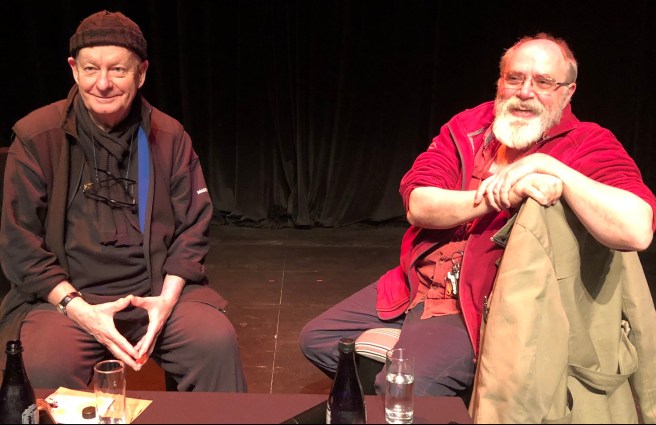
Pieter-Dirk Uys and Marthinus Basson in conversation at the Teksmark. Photographer: Fahiem Stellenboom

At the recent Kunste Onbeperk text market (Teksmark) held in Cape Town, legendary artists (both flying solo with multiple skills) director/designer Marthinus Basson spoke to playwright/performer Pieter-Dirk Uys about his career, with the accent on being an artist and how to make it – in his case – to the top, here and internationally. DIANE DE BEER tuned in:


Many will be familiar with the prolific Pieter-Dirk Uys’s career, his initial relationship with the ground-breaking Space Theatre after his return from studies and playwriting in London, followed by his mainly solo career with some cast-rich plays interspersed, but when listening to him chat with friend and colleague Marthinus Basson, it is his chutzpah, his dedication and determination, the people who taught him (sometimes unknowingly) that is a rich source of knowledge for young artists trying to make a living and a career.

He sees himself as typical with his adoration for stars like Elizabeth Taylor, Marlene Dietrich and the one he probably formed the deepest relationship with, Sophia Loren. When Dietrich was brought to Cape Town by a very young Pieter Toerien, the equally young Uys knew this was his time. And it was. Having bought tickets for opening night, he was spotted by Toerien and commandeered to be in the front row every night to present her with a bouquet, which meant he saw every performance. He also slipped into the theatre during the day to see what this performer was up to and caught her scrubbing the stage – every single day. “It was a lesson learnt. That’s what we don’t do anymore and why we’re in trouble,” he says. It’s her stage and she would make sure that it’s pristine – for her and her audience.

When he left drama school to study further in London, similar tactics applied. Early on, he sat in the Old Vic Theatre and heard the greats from Gielgud to Olivier and realised he couldn’t compete with their English. Instead he studied at the London Film School, who accepted his application because he had the money and that’s where he began slowly to create a career that is still flying fast and furiously. He wrote his first play, Faces in the Wall. And then the problem solving started. Where and how to put it on?

“The old Vic is full, but I can put the play on in the cinema during the holidays,” is how he planned. Once the theatre was secured, he got writing again, 32 letters, to ask famous people for help. The Duchess of Bedford and Elizabeth Taylor replied, and both sent him 100 pounds, a lot of money at that time with which he bought some old cinema seats to furnish his theatre space.

He invited everyone he knew who had influence for opening night but forgot to ask the critics. The next night no one came, except for two people. He offered them their money back, but they wanted to stay. “We played and at the end, a woman came to me, an agent Patricia MacNaughton, who is still my agent today. Never cancel a performance because you never know who is in the audience,” he stressed.

“My instinct drove me and I’m a terminal optimist which we have to be as artists because what we do is total madness.” But this is what he wanted to do and where he wanted to be – on stage amongst people with passion and people with humour.

PDU_ECHO_TOTB_019
Pieter-Dirk Uys in performance with Echo of a Noise.

Speaking at the Teksmark and giving a nod to his recent 2018 Hertzog Prize for drama (“they were all my enemies in the past,” he says of his benefactors), he advises playwrights never to be precious about their words. But when you cut, put it in that box under the bed. “It might not work in the current play, but it will be good for one down the line. Recycle, recycle, recycle. A  good idea is always a good idea.”

Of the 30 plays he wrote, four were not good, he believes. “They are the ones that still worry me,” he says. “Failure is a terrible word. If it’s unsuccessful, just keep trying.” He ascribes their downfall to the fact that he listened to other people and not his gut. “Failure is the cement for the wall on which you will eventually put your statue; you’ve got to have failures to have success, but it only happens in someone else’s eyes. Don’t believe them.”

Text, he believes, is unimportant. It’s about the story, a joke is a small story, a prayer slightly larger and the text is just the map. It has to be adapted and changed during the work process. “That’s why I always direct the first runs of any of my scripts,” he says. “It’s a very private thing, that new script. Keep it close to the chest and don ‘t show it around too freely. That’s when the advice starts influencing you.

“And when writing, don’t be scared for moments of silence, play with the cat, watch a movie, the ideas will come when they’re ready. And once finished writing, cut what you have written by half and then you lose 50 percent. That’s what I learnt at film school and I still do that today. It’s scary but it works. Those first 10 pages can usually go…”

Paying tribute to the festivals, he acknowledges that artists need that space to sharpen their pencils but perhaps a more structured circuit can emerge. In a dream world, that would be a festival a month which would keep the artists going all year round.

He describes his solo venture as a risky business. But he knew instinctively then, that in the long run, he could make it work. With today’s overheads, the cost of theatres and advertising alone, is prohibitive for dramas with a large cast. With only himself as the beneficiary, he is lucky if he walks away with 33 percent of the earnings.

How he describes humour, what he works with, is to laugh at the things that people fear.  Or perhaps as Basson describes this particular brand: “Don’t do the obvious which make people feel good; do the opposite that make them question and they feel good because they’ve taken a step in the right direction.”

“I have been unemployed since 1975,” says Uys. “I had to become myself, do everything myself, survival being not stand up but working with a personal chorus line of characters.” All this is also going to change in the future. He is tired of politics which isn’t everyone’s cup of tea, it’s an acquired bad taste. “I want to tell stories about people, children, youth, love and loss, the reality of breathing, to smell the roses and focus on something that matters. For 40 years I have had my head stuck in a political toilet and my sense of smell is gone.  I want to smell the flowers again. That’s why I live in Darling where I can perform live in a world where everything is canned.”

And as an aside, he lets rip about the new hate speech laws. “I’m proud of our young democracy. We don’t need laws, we have a society who stands up and says NO – loudly. The moment something is illegal, you will find a minefield of hate speech and hashtags. We have to find a way of surviving – with humour.”

And finally, to the artists: “You have to be a unique talent. Don’t be a copy, we have enough of those. Be original. Don’t specialise, do everything. You must learn the alphabet of the theatre – everything. Read, watch documentaries by people who do what you want to achieve. Don’t be afraid to adore talent.”

Listening to him speak about his life, that’s where he learnt the most. He was led by the example of the best. And now he follows suit giving great advice, but even better, showing how it is done.

All you have to do is watch and pay attention.