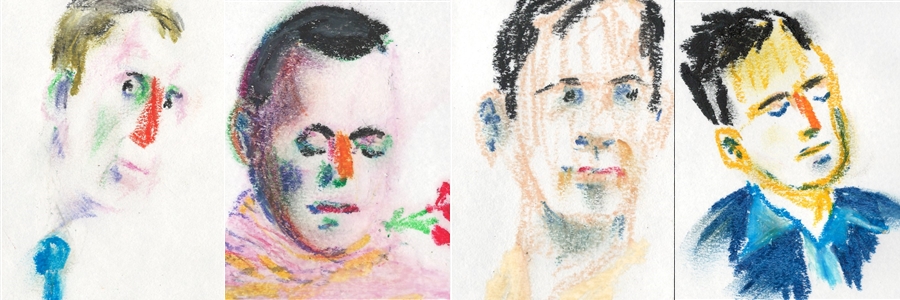
THE EUROPEAN FILM FESTIVAL 2021 VIRTUAL AND FREE OF CHARGE FOLLOWING THEIR 2020 SUCCESS

European Film Festival 2021: virtual and free of charge

We are deep into our second year of confronting the threat of Covid-19, both in terms of our lives and our livelihoods. It has been difficult … everyone is affected. This year’s European Film Festival has been inspired by overcoming difficulty and challenge. Its theme, Healing Journeys, seems rather appropriate for our times. I take this opportunity to invite you – irrespective of whether you are a repeat or a first-time viewer –to join us on this year’s exciting cinematic, and healing, journey,” says                                                            EU Ambassador Riina Kionka.

Quo Vadis deals in one of the most important issues of this century – refugees.

DIANE DE BEER

European films have become quite a rarity locally, so when the European Film Festival 2021 announced that this year’s festival would again be virtual and free of charge following the success of last year’s first virtual outing, I was elated. It will be happening from 14 to 24 October, so make sure and tune in.

It was obvious from the first film I watched that, as always, the European film sensibility is very different from that of the rest of the world. Not only is their’s a very distinct identity, but each contribution comes from a different country with a very distinct flavour.

For some of us, certain countries will be more familiar than others and some of the films I selected to watch were determined by my curiosity about the unknown, while others had a familiar actor (Gerard Depardieu) or perhaps an issue which I have a particular interest in.

That’s one of the points of interest of European movies  ̶  the stories they decide to tell. It deals with a contemporary world and the things that might be going right or wrong. That in itself is already fascinating. Which stories would feature strongly in this year’s festival?

A selection of 18 films, 13 of which have been directed by women, will be screened free of charge, providing a window onto what is fresh and new in the film industries of the respective countries, states the organisers.

 Four new participants – the Czech Republic, Denmark, Switzerland and Ukraine – will complement those from last year: Austria, Belgium, France, Germany, Ireland, Italy, Lithuania, the Netherlands, Poland, Spain, Sweden, and the United Kingdom, along with the return of Portugal.

Healing Journeys is this year’s theme, which runs through many of the films in fascinating fashion. And if there is something we need more now than perhaps in any other time in our lives, it is exactly that. That is perhaps also why women feature so strongly. Not only are they more in touch with their emotions (generally speaking), but as mothers and usually the more available parent in most families, they would be the ones who are most in touch and familiar with healing in society.

Because of the pandemic I suspect, the emphasis on mental health, for example, from a variety of sources has been more visible than previously. It is as if the  severity of  Covid 19 has given people permission to speak their minds about their personal circumstances. Think Naomi Osaka and Simone Biles.

Healing – be it mental, physical, spiritual or societal – is vital to the human condition, to our humanity, to our existence, according to the organisers.  This applies both in South Africa and in Europe, they believe, where despite our different contexts and histories, there exists common experience and a mutual need for healing.

They explain that the films on show will present, through the lenses of European filmmakers, a snapshot of experiences of re-establishing oneself after sometimes traumatic and possibly cathartic experiences. They deal with journeys that include organic growth, transition, and processes of self-discovery.  Many include a healthy dose of humour, bringing some possibly much-needed laughter into our lives. Much of the humour is of a more cerebral nature … films that make you smile and think at the same time. 

In conclusion they note that these films present stories of hope, humanity and thought-provoking intrigue, showcasing new work by some of Europe’s most accomplished filmmakers alongside exciting new talent.

The Films:

Here are a few of my picks, as well as some links to more details on the viewing process and the full programme. Nearly all of the films have won awards, with the newer films also certain to do so:

France (Robust):

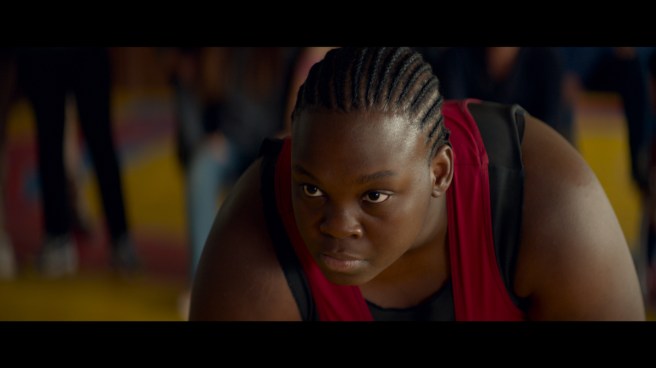
I couldn’t resist picking this one starring Gérard Depardieu, paired with the little known Déborah Lukumuena. Robust is the debut feature by Constance Meyer and it deals with an aging film star and a young security guard who has been tasked with taking care of him. 

He is old and white with a huge ego (it seems), while she is young and black and busy training for a wrestling championship. They couldn’t be more different, but as these things work, despite their differences, they form an unlikely friendship.

With the inequality of their positions not only because of age but also because of the society they live in and the colour of their skin coming into play, it’s an intriguing watch. It’s subtle yet caring with a great sense of humour and humanity and the best from Depardieu in quite a while.

Germany (Mr Bachmann and His Class):
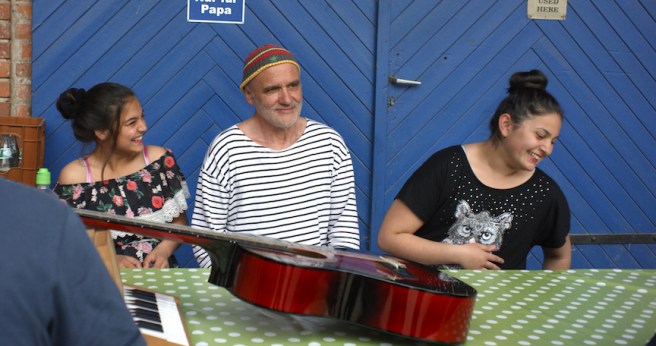
Mr Bachman and his Class is a life-affirming documentary

Citizens-in-the-making was the clause that caught my eye. That and the fact that it was a documentary. I didn’t realize that it was more than four hours long and that is quite a commitment, but I found it totally gripping for many reasons.

Mr Bachman is the teacher we all hoped for and wish our children could have. This ever-patient individual uses unconventional methods to inspire young students, all in the process of preparing for tuition in their next phase of learning, the equivalent of our high school.

They are all immigrants, in other words outsiders, and he is determined to give them an identity and a sense of belonging. And the way he tries to give these young students a healthy outlook on the people around them and in the process, wipe out prejudice, is quite extraordinary. What he is doing is giving his young charges life, showing the possibilities and the way we should treat everyone around us. It’s a good one to watch with the whole family and I’m sure you can probably watch it in bits. It is described as Maria Speth’s life-affirming documentary and I fully agree.

.  

Ireland (The Bright Side):

Gemma-Leah Devereux fighting for her life in The Bright Side

Breast cancer and stand-up comedian is probably not two phrases that fit easily together. What makes it a perfect fit here though is one knows that most stand-ups use their platforms to talk about their lives. Whether they say it or not, or it’s as explicit as that doesn’t matter, but they are used to speaking their minds.

And if one knows anything about cancer and its treatment, it is that the mind plays an important part.

Ruth Meehan’s The Bright Side is a moving and surprisingly uplifting story especially because of the mindset of the lead character.

She’s not into this cancer cure stuff and while she is persuaded by her family to go for the treatment, the thing she didn’t expect was the people who would be doing chemo with her and thus play a huge role in her life.

We all know that the pandemic has had a massive impact on our lives and, perhaps more than anything for some, it’s about not taking anything for granted. In the past, probably the big C was the thing most of us feared most – but now we know there’s much more out there which could harm us. Looking at films that might impact on how you face life, dealing in blackly comic jokes and exit strategies, can be more entertaining than you thought.

Switzerland (My Little Sister):
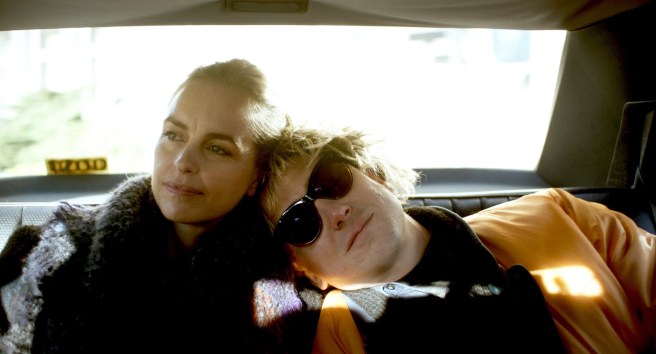
Siblings battle life in My Little Sister

This one is perhaps a harder sell. Not because it isn’t well made, but it is harsher and more disturbing, which is perhaps more than most of us can deal with now.

Writer-director duo Stéphanie Chuat and Véronique Reymond’s My Little Sister is an intimate, personal tale about sibling love in which a sister gives her all to support her ailing twin brother, and inspires herself at the same time.

It looks at how a family copes when one individual turns her full attention to the person who might be losing their life. And what that does to the rest of the family.

Ukraine (Stop-Zemlia):

This was the film I was most drawn to, especially because of its country of origin. Apart from the Russians’ intimidating presence in that part of the world, it’s not really familiar to me – and especially with a story about young people, who are always quite a fascinating barometer of a country, I find.

Reading some theatre scripts recently, a young voice said she was writing the play because it was what she wanted to see. And this film feels similar. Kateryna Gornostai’s Stop-Zemlia deals with young adults on the cusp of making that leap. At the centre is an introverted schoolgirl and her classmates and how she navigates what she feels is becoming quite a fraught world. But I really liked the young lass and how she was dealing with everything around her – and in the end, I realised, people are people are people wherever they come from. A nice one for a family with teenagers. Should make for some interesting discussions.

United Kingdom (After Love):

Joanna Scanlan in After Love

In Aleem Khan’s ground-breaking feature debut After Love, Joanna Scanlan is quite extraordinary as a white, English Muslim convert uncovering secrets after the death of her husband. It’s something completely different as she discovers that he had another family.

How do you deal with a life once the person you have dedicated yours to, has left and you discover he is not who you thought he was?

Special Co-Production Presentation (Quo Vadis Aida):

Trapped in the middle in Quo Vadis Aida

It was the extraordinary collaboration that drew me to this co-production between nine European countries. That and the topic they were dealing with – refugees. And with the recent disastrous US flight from Afghanistan, the story is particularly relevant.

Also we’re dealing with an atrocious war which is seared into our memory because it was one of the first following the establishment of 24-hour news channels.

Oscar nominee Jasmila Žbanić’s Quo Vadis Aida? hones in on a UN translator is caught between doing her job and trying to help local inhabitants and her own family when the Serbian army takes over the small town of Srebrenica.  

If your country collapses and you can’t stay, what does your life turn into. If we had asked this question a few decades ago, it would have felt like something that could never happen. No more, the number of refugees who have still not found permanent homes and who are constantly shunted from one border to another is ongoing all over the world. It’s terrifying and this film captures that horrific moment in people’s lives.

Please note that the films are geo-blocked for viewing in South Africa only.  For film synopses, trailers and how to watch, please visit www.eurofilmfest.co.za
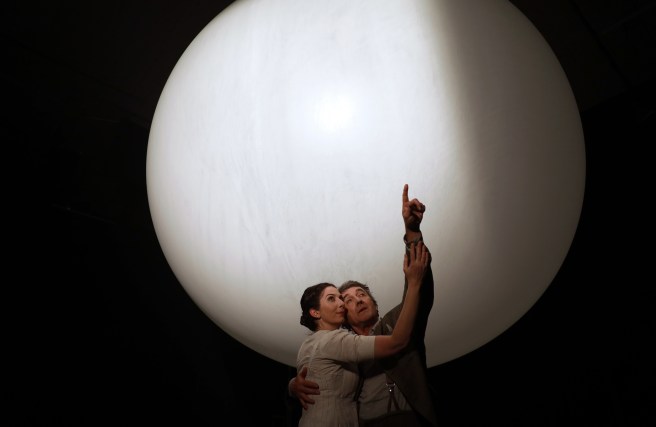
TOYOTA US WOORDFEES TURNS TO DStv TO SHOWCASE AND EXPLORE A DIFFERENT WAY FOR LIVE PERFORMANCES IN EXTRAORDINARY TIMES

It’s the beginning of spring and the arts are taking a leap of faith as three of our Afrikaans festivals launch theatrical and cultural fests which offer a smorgasbord of theatre, art, books, dance, music and conversations –  as light or intense as you could wish for. DIANE DE BEER gives you a roadmap of the Toyota US WOORDFEES:

For a few years now, Saartjie Botha and the Woordfees team have tried to deliver on as many different artistic desires as possible.

And this time, the viewing has also been looked at seriously. From  October 1 to 7, Toyota US Woordfees will be broadcasting on DStv channel 150. If you are a subscriber, you can view all day and week if you wish (although they are still pleading that you pay for tickets to help the artists in these dire times, and those who can afford it, should make the gesture).

And if you don’t, the channel has the option of subscribing for a month, which might just allow you to check out their regular programming too and see whether it is something that might be worth buying into in the future – especially with the change of viewing habits currently.

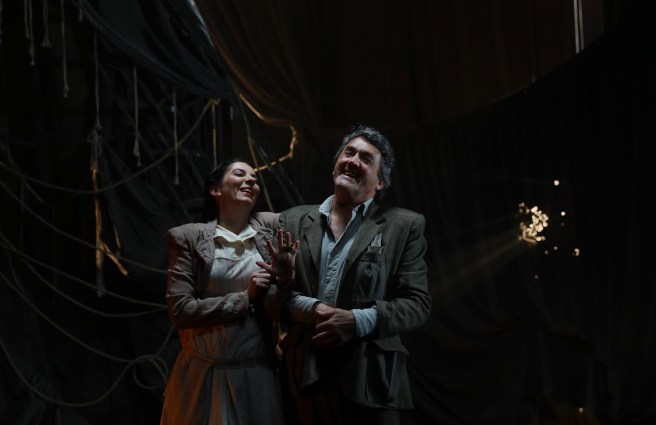
Ferine and Ferase with Andrew Buckland and Sylvaine Strike. Foto: Nardus Engelbrecht

With theatre my absolute passion, it’s the first place I go to and I’m immediately excited about the second coming together of the sublime Sylvaine Strike and Andrew Buckland. This time, they’re acting together with Toni Morkel, who was part of their first pairing (then director Strike and actors Buckland and Morkel) taking the directorial reins. You’d seriously be mad not to watch – with the added bonus of Jaco Bouwer capturing it on film.

Strike says that the names Ferine and Ferase derive from two chemical components luciferin and luciferase which exist in a firefly’s bum and make it glow. “So one without the other can’t make light, they have to be together to glow. Lots of fireflies in this show,” she adds.

The play was first created on commission by head of the Woordfees Saartjie Botha in September 2020, three-quarters of the way through the first tough lockdown and the idea was to create something that would show audiences why theatre is unique and exciting. Botha didn’t want a big set, she didn’t want audio-visuals, no multi-media, only pure theatre. “We want body and craft and what the actor is,” was the instruction.

They started writing remotely through October, November, December and in mid-January came into a rehearsal room with Morkel as director. With Bentel at the piano, they began to develop the story on their feet and to find a common language between her and Buckland, who both have very specific styles, but it was wonderful for her to perform again.

They discovered and developed a mutual style, which is largely based on clowning duos. Think Laurel and Hardy for example, that kind of world, very much a nostalgic, romantic story where they play three different characters each, with the narrators the main characters called … Ferine and Ferase who have a backstory of their own, and they tell a story as travelling players of Bucket’s End.

Ferine and Ferase with the magical moves of Sylvaine Strike and Andrew Buckland. Picture: Nardus Engelbrecht

“It’s beautiful, it’s very physical, it’s gorgeously costumed with each a standard clowning costume that transforms into a couple of things,” she embroiders.

Of course, they were meant to play it on stage and they had a short trial run with a 45-minute version. For the current digital festival, the full play has been turned into a film, with Strike enchanted with Bouwer’s extraordinary transformation from stage into film, shot in studio, all in black and white, inspired by old movies.

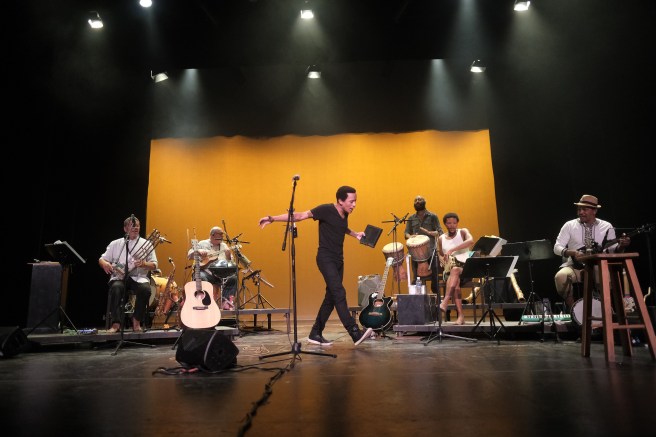
Die poet, wie’s hy with Dean Balie. Picture: Lindsey Appolis

Another production I would urge everyone to see is the 2020 Fiësta Award winner for Best Production: Die poet, wie’s hy?, a celebration of poet Adam Small’s work, starring Dean Balie with theatre direction by Frieda van den Heever, and film direction by Christiaan Olwagen. I had the advantage of seeing it live, but this is about words and music and it will translate well.

It was as perfect a production as anyone could wish for. At the time I hoped it could tour the country, and this will do brilliantly.

If you haven’t see the magnificent Jefferson Tshabalala, check in at Off the Record. He is a performance maverick and gives a take on life and the world which might shake you up a little and add some wisdom and perspective to what you viewed as life. You will be screaming with joy at the smartness of his moves. It’s structured as a satirical gameshow with guests.

There’s also the adaptation of Dominique Botha’s Valsrivier, which first played at the last live Afrikaans festival in 2020 before it was set to travel but with time and yet another chance to find its feet and settle in. With a cast headed by Anna-Mart van der Merwe, Tinarie Van Wyk Loots, Stian Bam, Wiseman Sithole, and Peggy Tunyiswa, as well as an award-winning turn by Robert Hindley and theatre direction by Janice Honeyman (filmed by Christiaan Olwagen), it should hit all the right spots.

Jefferson Tshabalala: Off the Record. Picture: Nardus Engelbrecht

Two new productions include Reza de Wet’s Mis with Nicole Holm, Martelize Kolver, Jane de Wet and Laudo Liebenberg directed by Wolfie Britz and filmed by Bouwer, as well as Adam Small’s  Krismis van Map Jacobs with June van Merch, Ilse Klink, Dann-Jacques Mouton and Elton Landrew, theatre direction by Jason Jacobs, and film direction by Bouwer. The names involved in both productions say it all.

The Woordfees started as a festival of books and authors and this will always form a strong component, with the latest books by Nataniël, Lien Botha, Rudi van Rensburg, and Jeremy Veary  part of the strong lineup, as well as a series of probing actuality discussions presented by the University of Stellenbosch.

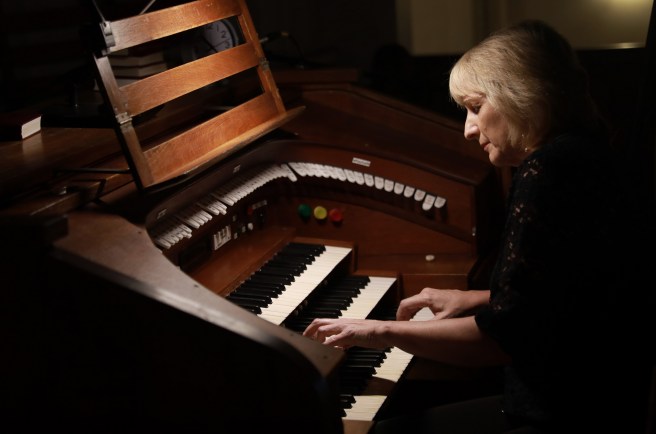
With the university the backbone of the festival, classical music includes students and alumni with Zorada Temmingh on organ, Megan-Geoffrey Prins and the Amici String Quartet, the celebrated University Choir with the contemporary side showcasing David Kramer, Karen Zoid with the Cape Town Philharmonic Orchestra, Deon Meyer and Coenie de Villiers in their Karoo salute, Amanda Strydom with Stadig oor die Klippers, as well as Spoegwolf and Die Heuwels Fantasties.

Celebrated chef Bertus Basson will introduce Stellenbosch delicacies with a few well-known Stellenbosch luminaries, while the wine route turns 50 this year and will be celebrating.

Churchil Naude in Die Ongetemde Stem

Movies spotlight Locked Doors, Behind Doors; Mike van Graan’s Some Mother’s Sons, Churchil Naudé in Die Ongtemde Stem and Ontluister – Die Geknoei met die Klank van Afrikaanse Musiek while stand-up comedy will feature Marc Lottering, Schalk Bezuidenhout, Nik Rabinowitz, Shimmy Isaacs, Alan Committie, Bennie Fourie, Alfred Adriaan, Melt Sieberhagen, Kagiso Mokgadi, Joey Rasdien, Hannes Brümmer, Conrad Koch and Wayne McKay.

Woordfees TV will broadcast predominantly in Afrikaans but will also include English and multi-lingual works. All Afrikaans narrative works produced by the Woordfees festival, such as plays and discussion, will have English subtitles. Fees TV will be available in South Africa on DStv Channel 150 from 1 to 7 October 2021, 24 hours a day, to all DStv Premium and Compact Plus subscribers. In Namibia, it will air on GOtv channel 15, with access for all GOtv Max subscribers. The Fees TV pop-up channel will also be available on DStv Now, and a selection of content on DStv Catch Up.

There’s so much more than I could capture in this particular roadmap. Make your own discoveries at https://www.woordfees.co.za/eng/ or https://www.facebook.com/woordfees/.

THE AARDKLOP OPWIPFEES KICKSTARTS A TIME OF THEATRE, MUSIC AND SERIOUS TALK WITH MUCH FUN AND LAUGHTER IN PRETORIA ON TUESDAY

It’s the beginning of Spring and the arts are taking a leap of faith as three of our Afrikaans festivals launch theatrical and cultural fests which offer a smorgasbord of theatre, art, books, dance, music and conversations as light or intense as you could wish for. DIANE DE BEER gives you a roadmap (in three sections) beginning with AARDKLOP:

Head of Aardklop Alexa Strachan

It’s time to catch some theatre with the Aardklop gang as they gather their artists with plays and music to entertain the Gauteng crowd deprived of regular live theatre and song.

There’s something old, something new, something for the young – and even something for those of us who too often feel blue.

Running from September 28 to October 3, it will be presented at  Atterbury Theatre, the Voortrekker Monument and Afrikaanse Hoër Seunskool.

Theatre is chosen with care to appeal to a wide range of expectations, with Sandra Prinsloo, Marion Holm, and Dawid Minnaar all returning with old favourites.

Sandra Prinsloo in Oskar en die pienk tannie (Picture: Pieter Lombaard)

Prinsloo tells the heart-wrenching story of Oskar en die pienk tannie, which showcases the relationship between a carer and her young ward who is dealing with his own trauma.

It is magically written and performed.

Dawid Minnaar in Monsieur Ibrahim en die blomme van die koran directed by Philip Rademeyer

Minnaar also takes a look at an unusual friendship in Monsieur Ibrahim en die blomme van die koran directed by Philip Rademeyer. Crossing cultural, religious and age barriers, it’s a story that is gently balanced between sentiment and sensitivity. And how we have to be open at all times to receive lessons life wants to throw at us.

Marion Holm isn’t exactly doing an old show, but she has gone scratching around and taken another look at stories she told long long ago – which might be reworked and return in dark times while shining a light on our blessings. But more than anything I know, this performer, even in these times, doesn’t know how to stop the laughter. She’s funny when she starts talking.

Frank Opperman in Ek Wens, Ek Wens (Pic: Pieter Lombard)

Frank Opperman knows how to perform solo and hold the attention. He’s back and this time he’s performing in an adaptation of Zirk van den Berg’s award-winning adult fairytale Ek Wens, Ek Wens. It could have been written with him in mind. Seb is a grey little man with a rather sad life. He’s an undertaker. Until one day when he meets an angelic child, Gawie. This magical meeting raises the question about his life and what he would wish for if he had only one chance. The book on which this solo performance is based won the WA Hofmeyer Prize as well as the kykNET-Rapport prize. And then for those double pairs:

Deon Lotz and Brendon Daniels in Kamp

First there’s Brendon Daniels and Deon Lotz in Kamp, which is perfect festival fare as they go camping and discover on their first night that they’re not quite as prepared as they should have been. No matches? And that’s only where it starts. It’s all about bonding in nature when you find yourself outside of your comfort zone. The acting combo is stunning and as the boys bond in this buddy genre, it’s much more about the fun and games than wilderness weirdness.

Brendon steps in again and this time he is partnered by the talented Tinarie van Wyk Loots in Opdrifsel, written and directed by Philip Rademeyer. A married couple is dealing with the heartache of losing a child and hope to focus on reclaiming their lives and recover from such an overwhelming tragedy.

Brendon Daniels and Tinarie van Wyk Loots in Opdrifsel

In conclusion, Nataniël will be performing as part of the Aubade series at Afrikaans Hoër Seunskool on October 3 at 11am and 3pm as the narrator with Charl du Plessis and Megan-Geoffrey Prins (both on piano) and a chamber orchestra presewnting Karanaval van die Diere (Saint-Saëns) and Pieter en die Wolf (Prokofiev).

Both of the texts have been rewritten by Nataniël (in Afrikaans, one translated from a previous English text also written by the artist) and he underlines that while these were originally created with children in mind, neither he, his texts nor his clothes will appeal to children in any form. “No one under 15 should even consider attending,” he warns.

Spirare (meaning to breathe) is the talk show series of the festival. Here are some of the highlights:

First off, there’s an invitation to write a long WhatsApp about the Voortrekker Monument, which will be followed by a discussion lead by Kabous Meiring with guests Gielie Hoffmann, Fransjohan Pretorius and Henk van der Schyf about this still-dominant Pretoria historical site.

Meiring will also take the topic in a more general direction by looking at all monuments, statues, town, city and street names. Joining her are Prof. Anton van Vollenhoven, Lindie Koorts, Lyntjie Jaars and Danie Langner 

The head honcho of Aardklop, Alexa Strachan, with guests Christo Davids, Chris van Niekerk, Deon Lotz and Brendon Daniels will focus on Festivals and discuss the accusation that they are freak shows.

Supper met die Sotte gathers some of our country’s top comedians (Schalk Bezuidenhout, Shimmy Isaacs, Rasdien and TJ Strydom) to attack everyone and anything with humour and satire.

Funny woman Shimmy Isaacs

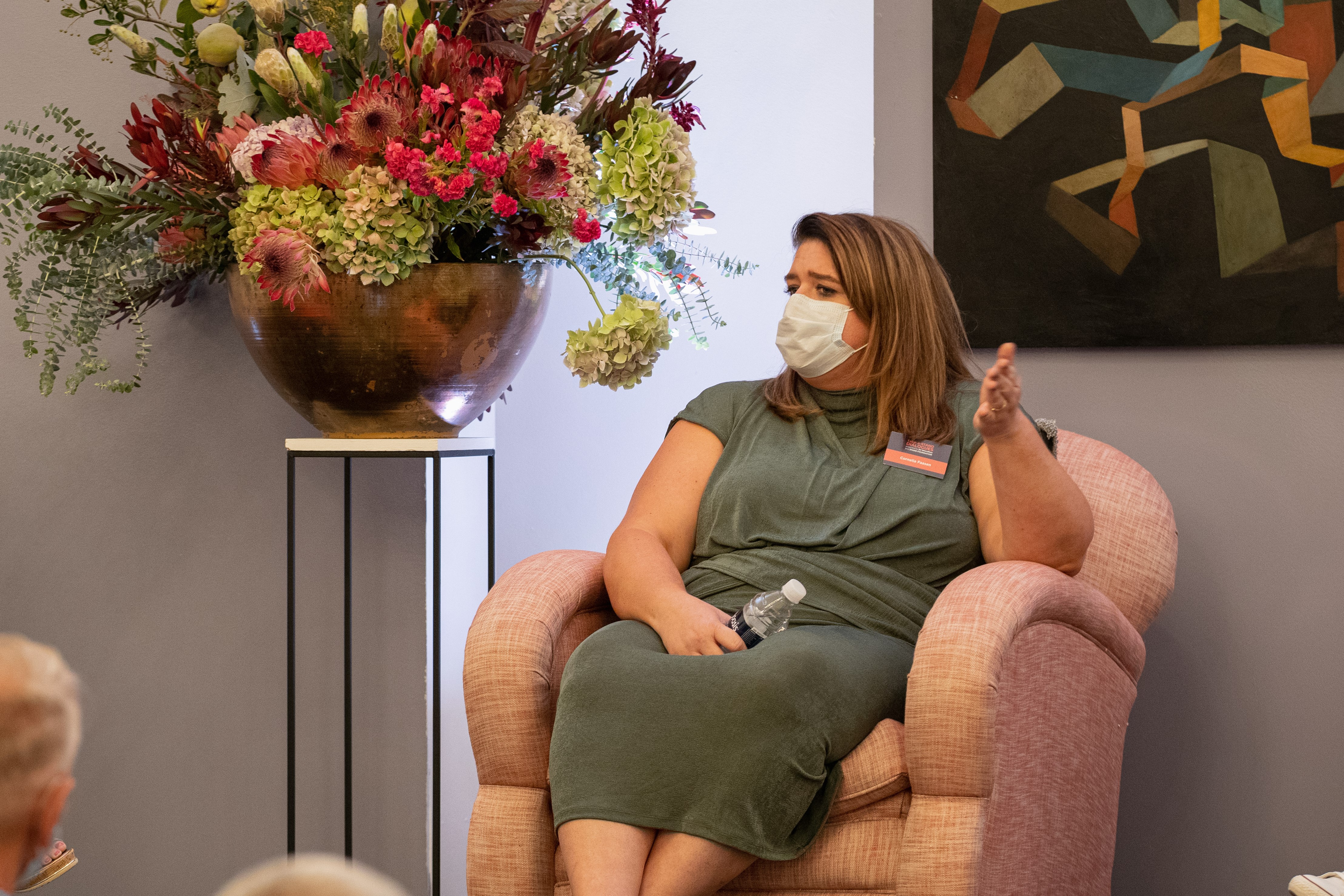
Cornelia Faasen and her guests Dr Theuns Eloff, Lizz Meiring, and Dr Ismail Mahomed are given the title Wie Stook Watter Kool en Wie Blus die Brand. They will be looking at the responsibility of artists to stoke, stir or stroke the populace.

Municipalities are caught in the headlights with Lourensa Eckard and guests Theo Venter and Theuns Eloff talking about local government and the solutions to the current breakdown all around the country. Is it the turn of the citizenry to take control of their lives?

Political and social commentator Heindrich Wyngaard asks whether South Africans get angry about the right things? Why do they get so angry about certain topics and others they simply ignore? Should we pay attention to everything and shift our focus around? Or are we getting what we want and need?

And perhaps now is the best time to talk about swotting and whether drama is still an option. Many careers have been hard hit during the pandemic and the arts, because it is so reliant on audiences, more than most. And often artists are so busy trying to survive, they don’t have time to sharpen skills, which could see them through tough times. Tinarie Van Wyk Loots, Christo Davids and Sandra Prinsloo speak their minds.

For more detail, bookings and shows not mentioned here, check out the website on https://aardklop.co.za/category/nuus/opwipfees/ or go to their facebook page https://www.facebook.com/aardklop.

IN FULL CREATIVE SWING WITH STORIES, SONGS AND MAGICAL SHOWS, A BOOK AND TV SERIES, NATANIЁL CELEBRATES LIFE IN FULL COLOUR

It’s almost like experiencing a command performance when speaking to Nataniël about his momentous week at the beginning of October. DIANE DE BEER explains:

Being who he is with all his talents on display, it’s a busy time, even though Nataniël complains that none of his hard work is paying dividends at the moment. But we know it will. If there’s one thing he knows how to do without thinking about it, it’s being creative.

Hardly a thought crosses this uber-active mind without its generating some future event. Most people would collapse just listening…

It starts with two concerts which conclude the Aardklop Opwipfees as part of the Aubade series at Afrikaans Hoër Seunskool on October 3 at 11am and 3pm with Nataniël as the narrator and and Charl du Plessis and Megan-Geoffrey Prins (both on piano) with a chamber orchestra for Karanaval van die Diere (Saint-Saëns) and Pieter en die Wolf (Prokofiev).

Both of the texts have been rewritten by Nataniël (in Afrikaans, one translated from a previous English text also written by the artist) and he underlines that while these were originally created with children in mind, neither he, his texts nor his clothes will appeal to children in any form. “No one under 15 should even consider attending,” he warns.

He also points out that while he isn’t allowed to interfere with the music, he will. “It is deceptively difficult and I’m sure I will have something to say at rehearsal!”

People should book because tickets are limited to 250 – and you don’t want to  miss this one!

“And” says Nataniël, “if you’re an adult and you’re not fond of the classics, there are always rusks.”

Or, perhaps you might want to pop in just to see how he solved the problem of reading the text on stage. “No one knows about my reading glasses and I’m not going to buck that trend,” he says.

Bookings at ticketpros.co.za.

Nataniël takes us to another world in his latest series – and it’s not too far away

The following day is the launch of his latest television series Terwyl Ek Wag, which for him is the logical follow-up to his Nantes series in which he travelled to this historical university and cultural city to investigate and explore his roots.

This time he plays inventively and imaginatively, as he does, with the arrival of the Huguenots. The stage is set on the original farm of one of the four Le Roux families (from Normandy and not his own). It is a place he discovered many moons ago and at the time wished he could do something there. Now’s the time.

 “It’s a farm that looks like a farm, not a shopping mall,” he says pointedly, referring to the over-developed wine farms he loves to hate.

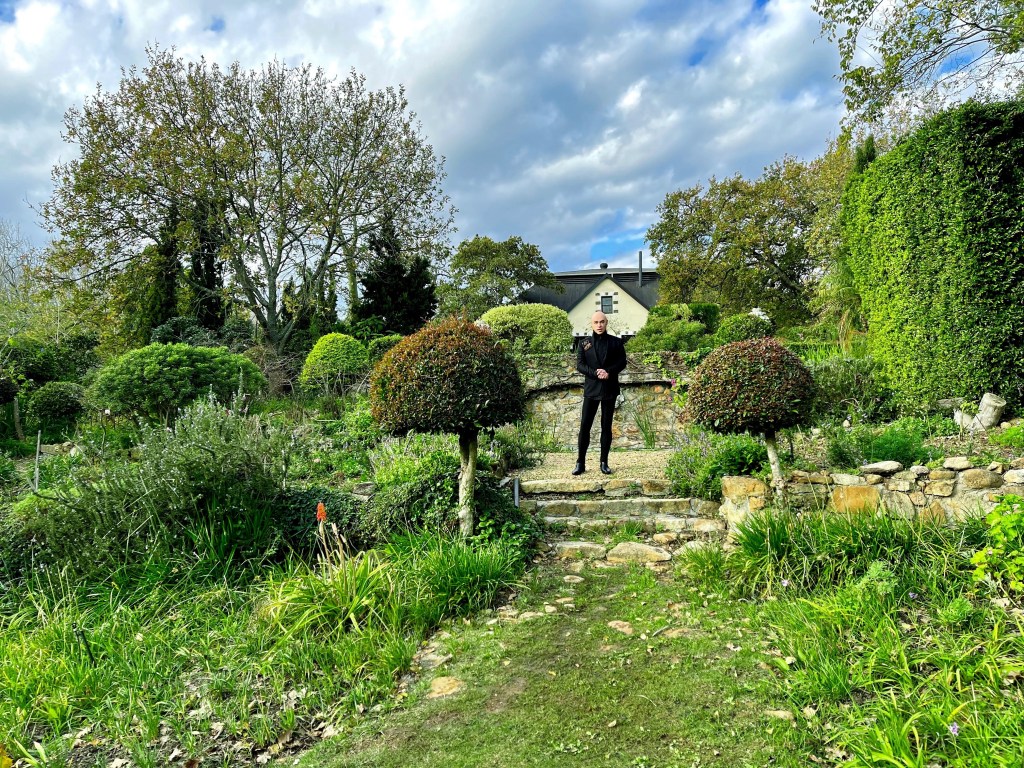
What they do in the series is to explore the skills of the time, like soap-making but also appreciate the artistic tendencies of the current family who returned to their ancestral farm some time ago. “They’ve tried to respect the past and, for example, maintained and restored some of the old buildings and pursue things like gardening,” he says. You might even find fairies if you look carefully.

And for Nataniël there is something about starting a second life. “If I had to do that now, I want a bed, a  gas flame and table for cooking, and an art gallery,” he says. He rejects all the frippery and trappings in this new life and names it antique minimalism.

Focussing on the food for the series, he hoped to create dishes that look as though they had their origins in a painting. “I like food that appears to be quite rough and ready.” Anything from the garden with lots of flour and which resembles pictures from children’s books, appeals to him.

It’s not historically researched as such, but what he made had to come from an old-fashioned farm – that’s the feel. The crew (of which his sister Madri was a part) ate everything he made.

As always, he emphasizes that he isn’t a chef. “I have zero technique,” he says, but lots of inspiration from chefs like Topsi Venter and Rachel Botes. (The recipes will appear on  his blog in English after the broadcast of each programme.)

 The series, which is broadcast on kykNET (144), is 13 episodes long and they also have an astonishing documentary, which will be screened at the end of the year about the making of the soundtrack.

In past seasons he could find appropriate music for his French series but this time he decided to compose everything himself – and this is what the documentary spotlights. “The music is as dramatic as the series,” says the drama genius.

“Everything in my series is curated,” he says and anyone who has seen this producer at work knows that what he says is what he means – EVERYTHING. And you can see that from the costumes to the cuisine.

We’re speaking French Huguenots; think collars and creativity. Fashion looms large, from the signature opening scenes to the final curtain.

And for those who are waiting for his annual stage show, even with the harshest of Covid restrictions, he is determined to step on stage with all the pomp and splendour his audiences love. “I don’t care how many see this one.”

One gets the feeling, indulgent or not, this one is for him. And if he is the audience, I want to be there – even if he feels that as actors they have been denied audiences – stupidly. “Our audiences are intelligent, don’t scream or chat, they’re silent, socially distanced as required and masked.” But to make a living, 50-strong audiences didn’t even cover the costs. Fortunately this has changed to 250, hopefully in time.

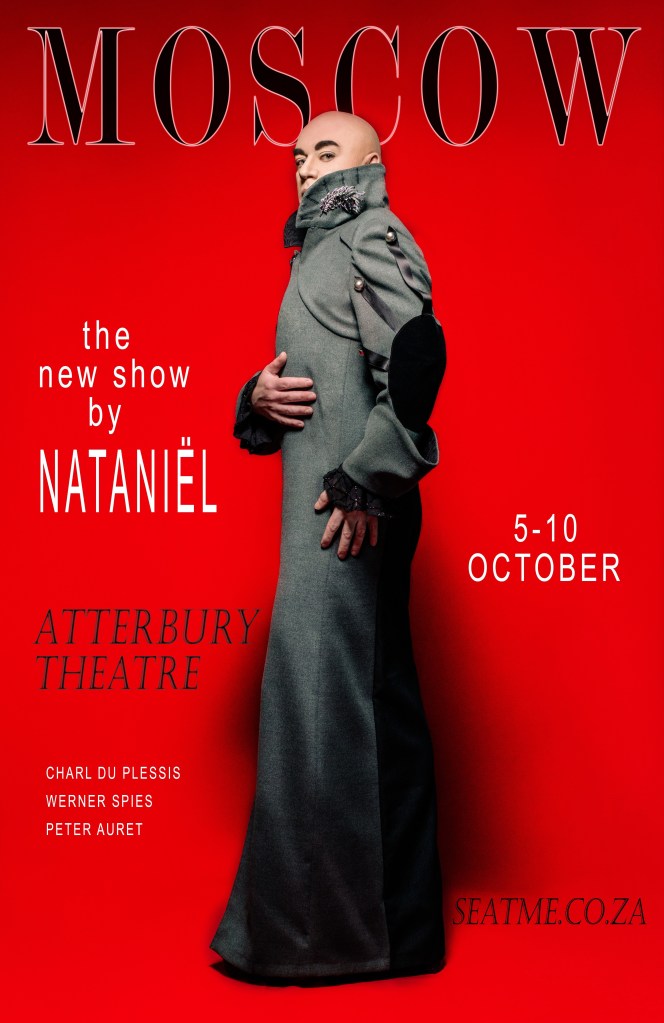
Titled Moscow and, luckily for Pretoria, staged at the Atterbury Theatre from October 5 to 10, the show will feature full costumes, full band and full lighting. But more than anything as always, it will be about the content and the chanson.

He feels this isn’t a time of laughter and frivolity but rather an exploration of chaos and order, insight and inspiration and, of course, a celebration of the most beautiful month of the year  ̶  October.

But even in his most philosophical mood, this storyteller is someone who views the world in a way that few can match   ̶  and whether he tries to make you laugh or even when it’s not that funny, the way he describes even a disaster will have you in stitches.

And there’s the music, original compositions and selections from old songbooks with the music of Dusty Springfield and the Mills Brothers, for example.

And even if you don’t like dramatic music or costumes … “there will be rusks”. That’s a promise.

Bookings at www.seatme.co.za

One of Floris Louw’s designs in 107 Kaalkoppe. .

Also on display, before and after the show, will be the collection of his unpublished Kaalkop columns, 107 Kaalkoppe, which he advises you to buy and read, one story a day. “There’s a specific rhythm involved in a book like this. Like a column, you shouldn’t read three or four at a time! Savour each one and do one a day   ̶  or even a week.”
He promises loads of fun and bookends the collection with an introductory and concluding story. And for those who want to hear him chat about his Kaalkop journey, he will be part of the Woordfees festivities on Channel 150 (DStv) from 1 to 7 October (see details on website later). Or check it out at Woordfees link, supplied below.

What more could you possibly want.

Possibly rusks?

https://www.facebook.com/woordfees/

CAPITAL CRAFT’S FOUR MUSKETEERS PLANT SOME HOPS TO COME UP WITH THEIR OWN PALE ALE

DIANE DE BEER

Pictures: Hennie Fisher and supplied

Devil’s Peak Brewery’s Wouter Rothman writes:
The Capital Craft team had a dream,
To one day brew beer together as a team.
In 2014 a little hop made its way from George to P-Town,
Wishing to one day be in a glass and hearing people say: “Down”!
7 years later that dream came true,
After a journey whereby a couple of gentlemen got on a plane, and to Cape Town they flew.
In quite a dodgy looking suitcase these amazing African Queen hops travelled,
Other people at the airport looked at us and they were quite bedazzled.
Brewer JC Steyn at Devil’s Peak Brewery had one look at the hops,
And he said, these hops are mighty fine, yes they are tops!
The brewing process of this amazing pale ale started,
We celebrated the occasion in Cape Town that evening, and the next day it felt as if we were darted…
The Hop On Hop Off was kegged and transported from Devil’s Peak Brewery to Capital Craft in P-town,
And these hops dream will tonight come true, after hearing: “DOWN”!
Tonight beers will be had, and more friendships will be formed,
All because of Capital Craft Hop On Hop Off the Pale Ale that was born!

It’s always been about the narrative for the Capital Craft gang of four as they move from one venture to the next, some big, some small and others just a whole lot of fun for the boys (brothers Henk and Willie van der Schyf, Johan Auriacombe and Niel Groenewald) and their customers.

It was all about brewing their own beer  ̶  something they were at first determined not to do, because Capital Craft was aimed at supporting independent craft beer brewers across the country, explained MC Auriacombe, one of the many delights of the night.

But they couldn’t resist. Once they had secured some plants from George, the heart of hops planting in South Africa, they decided to start their very own green gardens at their Capital Craft home in (aptly named) Greenlyn in Pretoria.

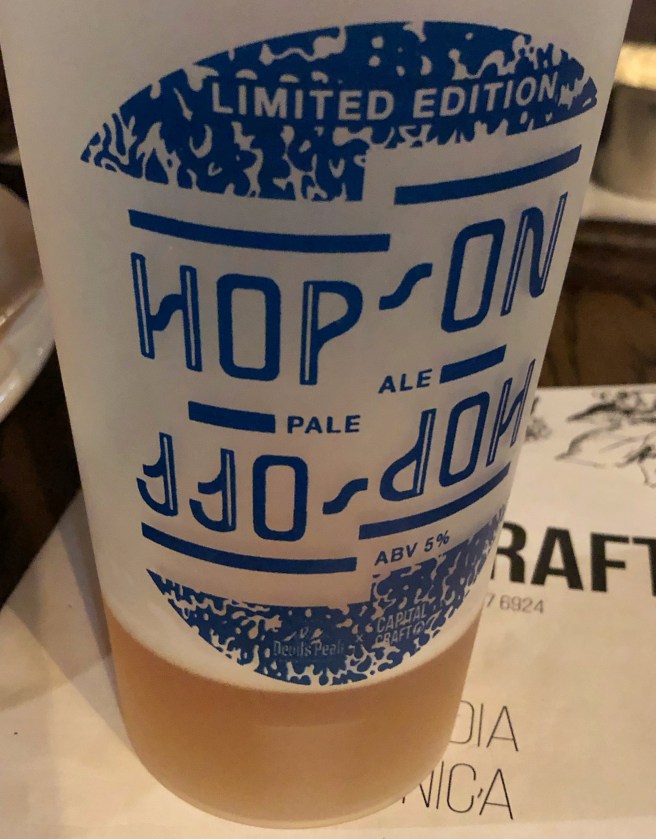
Once that was up and running, they aimed for a collaboration with Cape Town’s Devil’s Peak Brewery, which would prepare their limited edition Pale Ale dubbed Hop On Hop Off.

It is described as a “lovely array of fruit dominating hop aromas ranging from citrus to tropical fruits with a mild malt backbone”, and while I am no beer connoisseur, I can attest to something really refreshing  ̶  even for a non-beer drinker, I could go for a second round.

From the green gardens of the beer legends of Pretoria, to the heart of the beer masters of Cape Town: Capital Craft in collaboration with Devil’s Peak Brewery made the perfect team.

According to the brewers, hops are primarily used in the beer brewing process as a bittering, flavouring and stability agent, to which, in addition to bitterness, they impart floral, fruity, or citrus flavours and aromas.

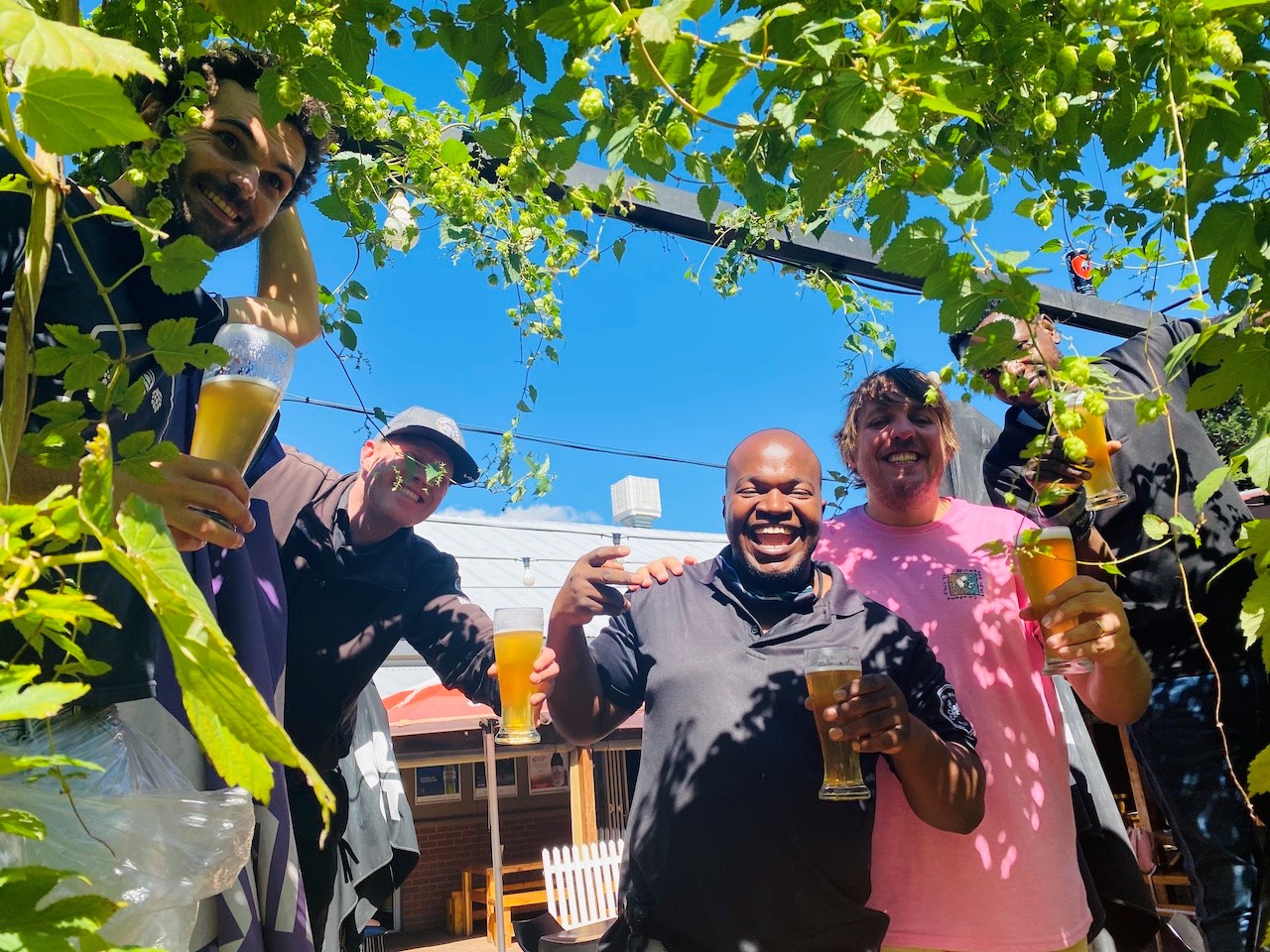
But to begin at the genesis of this adventure. It really started when Groenewald (from Capital Craft) paid a visit to some hop farms in George, returning home with a sample of the African Queen hops. These are not supposed to grow in Pretoria, but after years and years of trying at, the hops they say, in florally terms, “finally took flame and grew into a lush forest surrounding their outside deck”  ̶  hence the picture.

Capital Craft Hops

After harvesting, the Pretoria team dried the hops and packaged them into a very suspicious-looking parcel for the trip to Cape Town, where they went straight to the brewery to start brewing their very own beer. Head brewer at Devil’s Peak JC Steyn was very happy with their samples and decided to use a base IPA and whole cone dry-hopped it with their hops (and hopefully beer afficionados will know what I’m talking about here), and thus Hop On Hop Off Pale Ale was born.

If you want to try it and need some fun food to have with it, make sure to talk to the manager, PJ Waugh, for some suggestions.

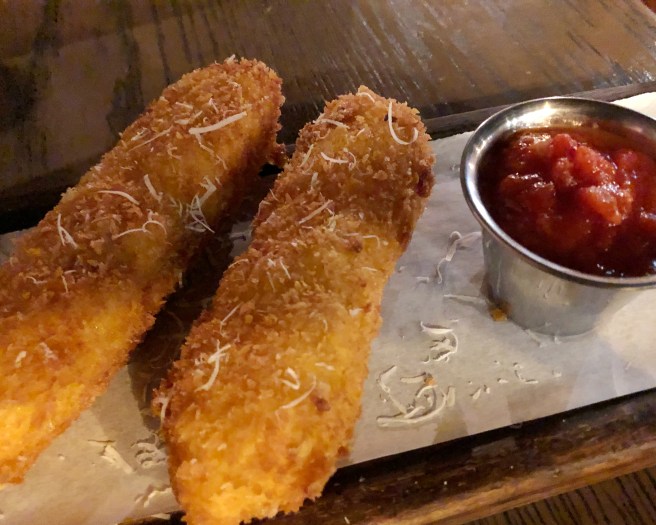
On the night, he made fabulous suggestions for our table of four and we shared the following: a helping of meat candy, which is BBQ inspired brisket burnt ends served with a ranch-type sauce (from the US) that was interesting; cheesy fried sticks  ̶  two panko-crusted mozarella wedges deep fried with Parmesan shavings, which was good after we added some salt; two hamburgers, including the Oklahoma Big M** burger with beef patty smashed and grilled with white onions with melted cheddar topped with Oklahoma inspired pickle and onion relish and the extremely hot Nashville chicken burger which was a great share between four, not sure I would have managed on my own. Their burgers are really good with buns baked on the premises, always a requirement!

We also had BBQ’d chicken wings, and to break the deep fry even if the alcohol helps, a lovely Poke bowl with black rice as a crunchy base and the salmon sashimi as our protein. I might opt for the falafel balls next time.

And as if all of that (even shared between four) wasn’t enough, we had to dip into their always retro-inspired desserts and couldn’t resist the strawberry cheesecake waffle topped by a delicious cappuccino.

This has always been a great hangout with friends. The ambience, the fun of the menu, the variety of beers, gin, wine and so much more…

And always a huge smile that comes with service.

From planting a simple seed to collaborating on a fantastic beer and ultimately entrenching dreams and friendships … One hop at a time!” noted the man who loves playing with words, Devil’s Peak brewery’s Wouter Rothman.

And concluding on the night, Auriacombe paid homage to their hopes and dreams: “It’s all about the little hops and the little shop that could…

They have made 700 Liters of Hop On Hop Off Pale Ale was made, and is available at Capital Craft. Go and hang…

Shop No. 20
Greenlyn Village Centre
Cnr Thomas Edison & 12th Street East
Menlo Park, Pretoria

Trading hours: Monday to Thursdays 10.30 to 10pm; Fridays and Saturdays 10.30 am to 10.30pm and Sundays 10.30am to 7.30pm

PACK YOUR BAGS AND YOUR CULINARY CHUMS AND THE FEASTS WILL ALWAYS BE PRETTY FESTIVE

DIANE DE BEER
PICTURES: HENNIE FISHER AND AB HEYNS
Padkos hamburgers on the way in Graaff Reinet

Blessed with a couple of chefs in my close circle of friends or otherwise passionate foodies, I didn’t pay that much attention when a holiday at the coast was planned with a favourite chef in tow.

Spoilt is probably the word that comes up when thinking back and because he warned us that he wasn’t going to be cooking much, I probably didn’t pay much heed. Who does when on a self-catering holiday?

But this was Covid, no swimming allowed even though the beach and those blue waters were beckoning but we had made certain provisions.

Seascape: from left: Hennie Fisher, AB Heyns and me…

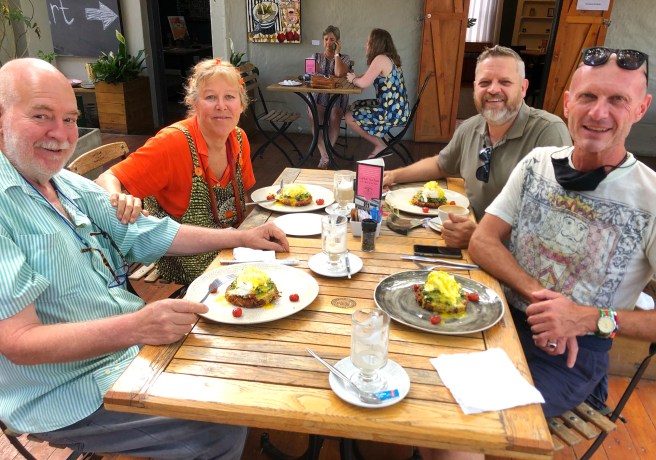
Swimming is my form of therapy and without breaking any laws, I was determined to be allowed in the water. We decided foraging would be the best way and purchased a few mussel licences. And before I knew it, I was dangling with my chef companion Hennie Fisher from a few rocks and collecting mussels for the pot.

There’s no way you can do this without catching a few waves to get to the best place to forage mussels, so some obstacles were crossed in one go.

That’s where all the food fun began. Growing up in a seaside town (Mossel Bay of all places) one would have thought I would know everything about foraging and yet, it isn’t  something that we ever did. The sea was a large part of my childhood, but that meant swimming and fish meals. Probably living in a fishing town, all those things one could forage were freely available in those times when the sea seemed to offer everything in abundance.

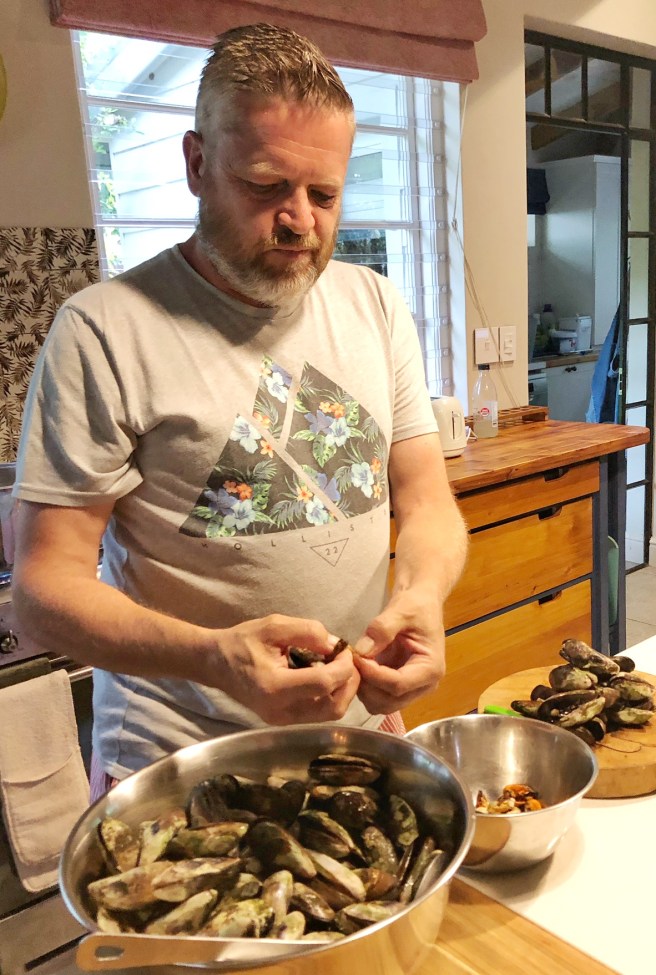
That’s my excuse anyway. What I discovered though was how much I enjoyed this collecting of the mussels, bringing the harvest  home, being taught to clean and preparing the cook and then watching the chef create magic.

Mussels ready for cleaning

We all know that when you know the rules, you can break them and probably that’s the biggest difference between those of us who have to cook every day as opposed to those who have made it their calling – and for Hennie it is just that. He loves feeding people especially those who enjoy his food, and with me he has a disciple.

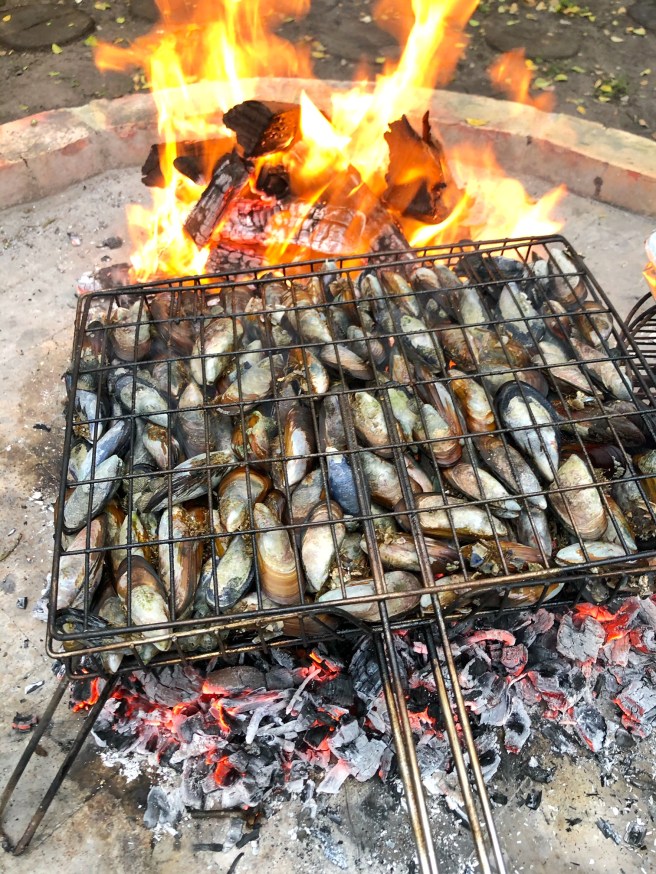
We knew that with our biggest harvest, a whole bucketful, which we decided to braai over an open fire, and eat as is. It’s quite amazing, as Hennie pointed out, it was even perfectly seasoned and didn’t need anything – not even salt. Hello, it comes from the sea!

Hennie busy with our first forage riches

The first mussel effort was not planned so it was a relatively humble harvest, which my ingenious chef quickly turned into a chopped and steamed mussel vinaigrette served on his sourdough loaves, freshly baked. It appeared so easy to make something so completely unforgettable. It’s the kind of food I can’t get enough of. It’s fresh so all the flavours are heightened and yet it is so simple. And especially food from the sea is best to keep simple because when it is fresh you don’t need much embellishment. It will dull rather than enhance the flavours.

Heavenly! On the fire with only nature’s seasoning.

But what could be better than an abundance of mussels, freshly gathered and cleaned, cooked on the braai. It’s simple, under the beautiful starry skies with all your senses on full alert. It’s the best taste of the sea, which is exactly what you crave when you’re there.

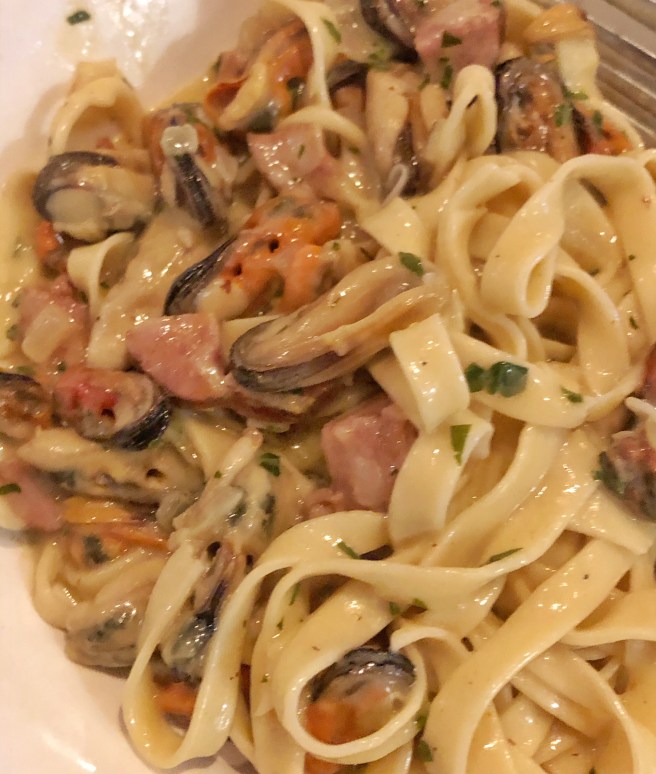
And then there was a final collection which was in-between the smallest and biggest forage which Hennie turned into creamy mussel and chorizo linguine with fresh, home-made pasta which our stylist AB Heyns quickly proceeded to make.

When making fantastic food is made to look so easy – and it is – that’s when your meals are the best especially on holiday when no one wants to spend too much time in the kitchen. But also when it’s all hands on deck, cooking is turned into a party – and the results the payoff!

AB’s homemade pasta with our foraged mussels and bacon turned into something spectacular by Hennie

Even my partner who is usually happy to have a sandwich and needs meat to be involved – was in ecstasy about our holiday fare.

But foraging didn’t only compensate hungry tummies, when planned it also becomes a feast for the eye. AB is someone who knows how to put a room together and even on holiday, he needs to do exactly that.

Foraging flowers

 So when in the seaside town out for a walk, we would pick all kinds of natural foliage along the way and because those exquisite blue hydrangeas were in full bloom in many gardens, he popped into the first one where he spotted people, told a tall tale about celebrating a birthday, and pronto we had our foliage and flowers for the rest of our stay.

Breakfasts were also a family affair, but mostly this is where the freshly baked bread did hard duty as we consumed copious cups of freshly brewed coffee and planned our day. When to eat, sleep and walk – the perfect cure for Covid blues.

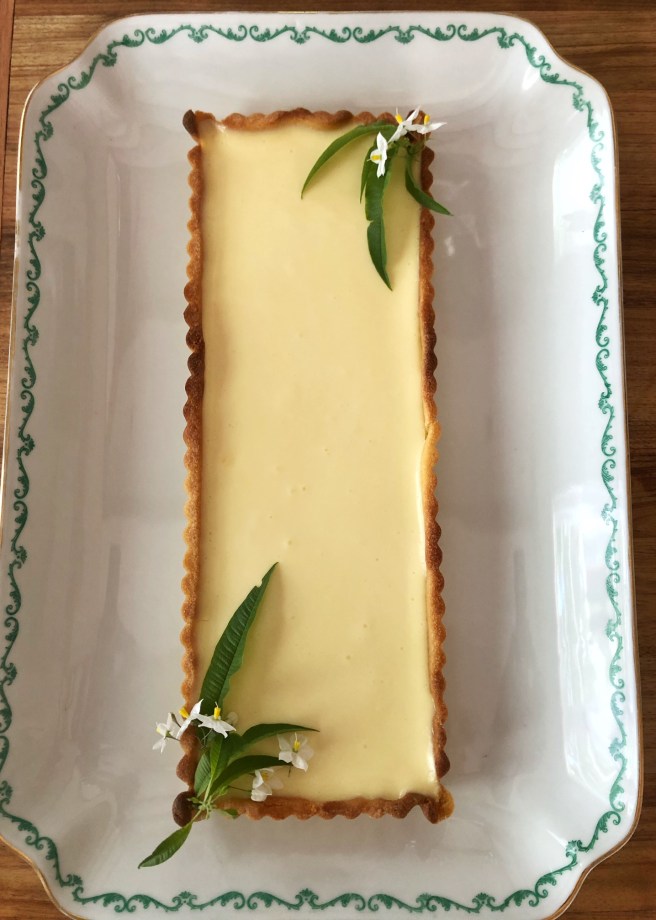
The other bonus is that the stylist also has a sweet tooth. And that doesn’t mean picking up the odd pastry from Ile de Pain, it’s making your own yogurt and condensed milk tart which looks and tastes as if a pastry chef was involved!

AB’s fingerlickin’ yogurt and condensed milk tart

Thinking about living and lifestyle, because that’s what it is, I suddenly remembered an earlier trip to Istanbul where a group of us (these two creatives included) filled up a small apartment block. On Christmas eve, Hennie and AB were in charge of proceedings which of course turned out to be quite spectacular even with simple means.

But what stood out for me most was Hennie popping out to go and forage some rosemary he had spotted on one of our walks to the Hagia Sofia.

AB making pasta – chop chop

So actually, I should have known. My mother always said that I knew how to pick my friends, all of whom are accomplished in so many ways. There always was method to my madness but it obviously helps to find these rare birds if you are a veteran arts journalists living in a creative world.

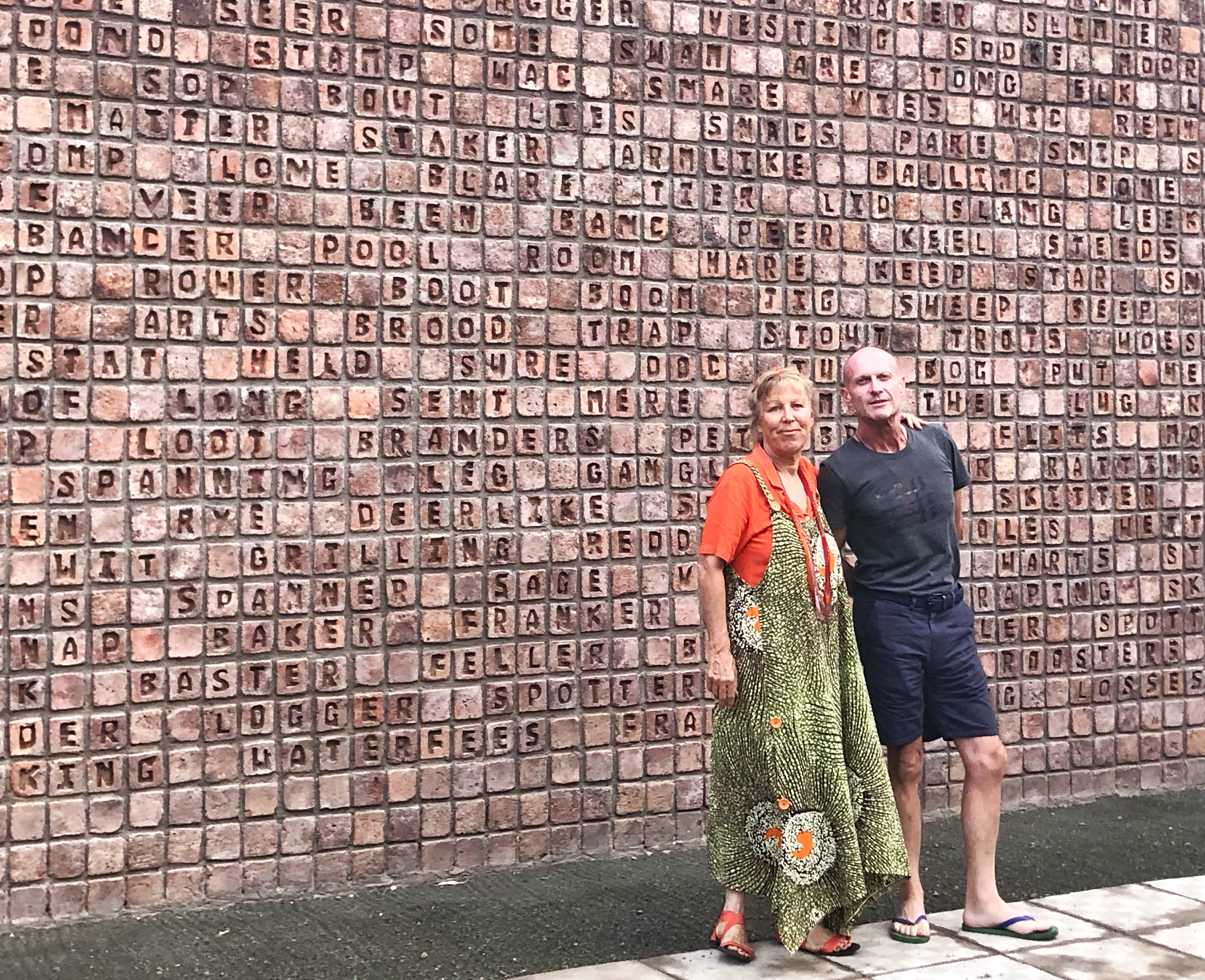
In front of the word wizardry of artist Willem Boshoff at MAP

And to make sure we kicked off on the best cultural note, we slept over at Harrie Siertsema’s MAPSA (Modern Art Projects South Africa) in Richmond for the most rewarding art experience with their smartly and generously stocked gallery on site.

And now we can let our minds wander and dream … for next time.

ARTISTS REMAIN CREATIVE AND INNOVATIVE TELLING STORIES IN TIMES OF CRISIS AND COVID19

PICTURES: Jeremeo Le Cordeur

Professional theatre makers and dancers were hard hit by the Covid pandemic, which cost them not only income but also sense of community. The Take-a-STAND Dialogues presented in Stellenbosch from February 19 to 21 aimed to reinvigorate this community with panel discussions featuring a diversity of voices from dance and theatre on challenges in the performing arts. The event was presented by the SU Woordfees and STAND (Sustaining Theatre and Dance) Foundation with the generous support of the Embassy of Netherlands and NATi. DIANE DE BEER reports:

The instigators: Gregory Maqoma, Conelia Faasen, Saartjie Botha, Mike van Graan:

“I believe our job is to be human because from the bottom (of our hearts), we hold deep faith, we’re resilient and passionate about bringing change to the world and we see the human spirit as more important than just building wealth – the true spirit of an artist.”

This was the starting premise of keynote speaker dancer/choreographer Gregory Maqoma addressing the topic  Theatre for whom? Dance for what? Towards a rationale for theatre and dance in our contemporary world.

 Making a link between the migrant workers who lived in hostels next to his childhood Soweto home whose dance (on weekends) he knew was a “deliberate psychic survival tool, a deliberate silencing of the harrowing voices of those they left behind and those they might never see again” and his own creativity and compulsion to dance, he says: “Every performance becomes a memory and when the lights go off and the curtain falls, a new history is written.”

And elaborating: “As an artist living in the binary of what is real and denied, I question the existence of living in this chaos, with realities so unbearable, I choose to override and escape by dancing, my body being one with itself, a moment where I care less about my country – at least the portion that doesn’t care about me, so yes I do ask, dance for what?

Dutch Ambassador Han Peters

Yet the ambassador of The Netherlands, Han Peters, underlined: “Culture gives us a lens to look at reality, perhaps even transform, and this is how we cope.”

Which is something Maqoma has always understood; presenting powerful work and establishing an international presence.

And throughout the weekend, moving from one panel discussion to the next with changing panellists, artists from both theatre and dance reviewed and tried to revise their changed worlds with the aim of constructing a stronger community with cohesive future plans.

 “This is a time of crisis,” said a speaker.  “It’s a situation that had to happen and has been a huge wake-up call,” noted Maqoma, who has often spoken out about the precarious world of artists in this country. This is highlighted by the fact that even his successful Vuyani Dance Company rehearses and works in an uncomfortable environment rather than accommodating rehearsal spaces of their own.

He emphasised that in circumstances where there was no opportunity to earn a living, the fragility of the industry was again at the forefront. “It feels as if a hurricane flooded our space,” he said. And this in a milieu where the arts is an escape from poverty for many youngsters entering this world. Often their only way out.

And yet as another panellist pointed out, “We have a wealth of resources. We should keep on engaging government but also dip into and recognise our own resources,” which was a welcome turning of the gaze to new frontiers away from tired tropes that bring no benefits. If things didn’t change in good times, it is hopeless to imagine a sudden about-turn in times as dire as the unfamiliar and unknown pandemic.

Again  and again the power of the arts was underlined. It’s not something that is ever going away. It’s not something out there,” said a participant. “It’s part of everyone and everything.”

Exploring different avenues, problems and solutions, one of the biggest roadblocks identified is access on different levels. And as pointed out by many panellists, it is something that could easily be fixed.

One artist who is changing the lives of many youngsters told how rehearsal space at Artscape was offered to her at R400 a day. She retorted that she could afford to pay perhaps R400 a month. And in the end, that was conceded.

Think how often around the country theatres are empty in-between performances and how many rehearsal spaces could become available to artists with nowhere to turn.

Accessing conversation and in that way mentorship is another easily fixed yet major stumbling block for many entry-level artists. One acclaimed young artist pointed out how filing tax returns became a nightmare in a life that is stretched simply trying to survive. Or writing proposals for funding, a lifeline which keeps many artists employed and creating.

Many prospective life-changing questions arose when someone pointed out that the arts were already broken before the crisis of Covid19. “How do we build something new from below? We need to invent new currencies,” said another. “How do we integrate?” asked yet another.

Dance, for example, said one panellist is a healing tool for those who are broken, something that can be said for all creativity. “There is a calling involved.”

As another artist reminded everyone, theirs is not simply a career. “There’s a propellor pushing you forward.” But in all of this, there has to be an engagement with the economy and a confrontation of the many challenges artists face – but together is where the strength lies.

Panellists Wessel Pretorius, Nwabisa Plaatjie, Jefferson Tshabalala and Sbonakaliso Ndaba

As theatre maker Jefferson Tshabalala explained, he has long ago discovered where his economy lies. “We are not always fully utilising the periphery. My foyer is my domain,” he elaborated. “(With every production, for example) artists need to build an echo system for your evening.”

All of this came about when he realised as a theatre maker he is predominantly dealing with a public who is not interested in plays. Merchandising is where he makes his money and this then goes towards funding his next project. Through the merchandising and his success, he is also building a brand and a future theatre audience – thus fully engaging every space he claims at any specific time.

He had actor/playwright/director Wessel Pretorius very excited as he noted that he had never given merchandise a second thought. What Tshabalala was doing is showing a different way. For example, if Pretorius could have found a way of also translating his first hugely successful play Ont (later translated into English as Undone) into Xhosa, just think of the audiences opening up to him. “The way in is theatre,” said Nwabisa Plaatjie, “but the outcome not always theatrical.”

“We have to think how we can multiply and stretch one production,” Tshabalala explained.

This points to both currency and sustainability. Business plays an important part and artists have to understand that currency is not the enemy. “With autonomy, you are able to curate your own art,” agreed another panellist.

The exciting thing about the coming together of these particular communities was the recognition that with the devastation of the pandemic, new avenues and thinking needed to be explored.

Why bank on something that wasn’t there in the first place? Instead turn to the many strengths and resources available in the broader arts community and in that way strengthen the precarious pathways sometimes followed in the past because there simply weren’t any options.

While veterans in the business could show newbies the way in both practical and artistic terms, the youngsters who are familiar living in a digital world can show those less comfortable new ways of operating. “We have to see the internet as a benefit,”  said one young participant. And in these times, that has become obvious. In  a profession that often teeters on the brink, it has to embrace every available resource and everyone should be available to give a helping hand.

Theatres can be more embracing of the wider community by opening up their facilities to creatives, who in the long run will then become contributing artists as they are given some protection to operate and not always having to focus on simply surviving.

Those of us working with the arts all know the problems – starting with funding. But focusing purely on solving issues that seem to have a mind of their own instead of exploring new avenues makes no sense.

And that is what felt different listening to the artists speaking. It was as though many of them understood that this is a time without any fallback options. Sink or swim – and fortunately for those of us watching, artists have no choice – they are creative and will come up with a vision that hopefully is more sustainable than in the past.

It also felt as if many of those in attendance grabbed this opportunity as a chance to navigate a much more cohesive path.

In this way many found an opportunity to re-evaluate and fix the foundation of their lives. Reskilling and exploring new avenues that haven’t been tried before was another suggestion.

Nancy Sekhokoane

Access is something that has to be evaluated and managed. We all know that in this country with its past, it is still an obstacle for too many. “Let’s develop the places that need developing,” said panellist Nancy Sekhokoane. “If you give an artist a platform, he/she will be creative.”

It’s about access to knowledge and institutions. Who opens those doors and who decides who is allowed to enter?

One of the topics that I found quite frustrating was the one exploring African aesthetic in dance and theatre. For anyone watching performances around the country – dance and theatre – it’s who we are and what we create.

Long gone are the days where colour is a determining factor. Language might still be a hindrance, but in a country with 11 official languages we still have to find that particular solution.

Just don’t tell me that you can’t see this continent in almost every production on local stages. Even when we do the classics, a local sensibility, even if it happens simply in the casting will determine the outcome and that is what we need to recognise and celebrate. We don’t always see it, because we’re spoilt.

“We come from here and our stories are from here.”  And that’s it!

The excitement of local performance is because of the riches the diversity of our art landscape holds. For too long, art was created by too few for too few. Fortunately our stages changed dramatically bringing with it a kaleidoscope that benefits who we are and who we hope to become.

“Does is make my art less African if I wear a ballgown and dance to Bach?” asked Maqoma. What it does, is make it uniquely African. And that’s what we love and should cherish.

So let’s support and share and we all win.

BRILLIANT BOOK CELEBRATING STUDENT ARCHITECTS PREDICTS FINE FUTURE

Architect/academic ‘Ora Joubert is adamant that her book celebrating young South African architectural students calls for a wider audience. She tells DIANE DE BEER why she feels the acknowledgement is important – and she’s absolutely right:

As a former head of two architecture schools in the country and an outspoken critic of poorly considered architecture, Professor ‘Ora Joubert is often remembered for the public outcry that ensued following the publication in a national newspaper of her inaugural address at the University of Pretoria.

Her critical stance against the South African obsession with faux Tuscan (or “Boere-Toskaans” as it was dubbed derogatorily) coupled with the incessant questioning of what then qualifies as authentic, contemporary South African architecture, compelled her to compile an anthology of meritorious work.

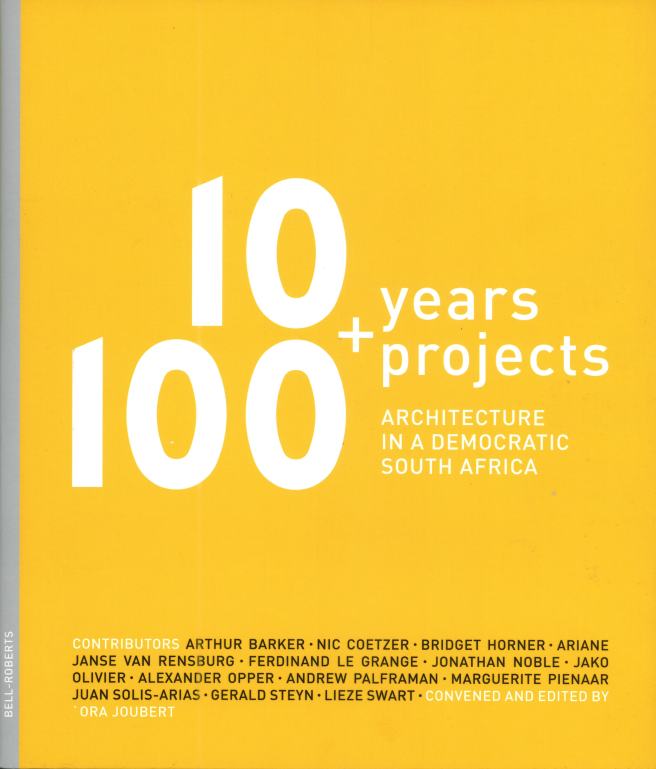
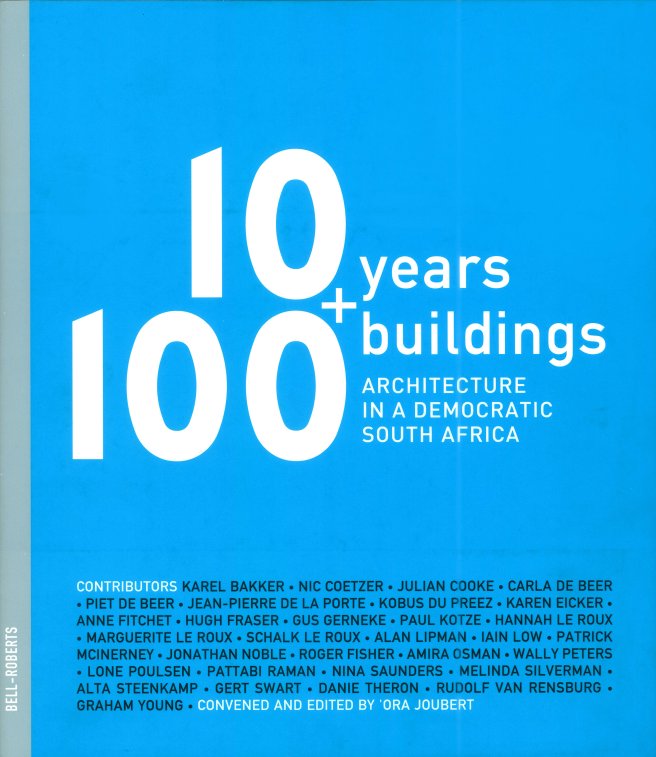
The publication in 2009 of 10+years 100+buildings – architecture in a democratic South Africa (Cape Town: Bell-Roberts Publishing) was well acclaimed and received an Award of Excellence from the South African Institute of Architecture.

The “blue book” (as referred to by students) was followed a couple of years back by a yellow version: another 480-page tome titled 10+years 100 projects – architecture in a democratic South Africa (Cape Town: Bell-Roberts Publishing) though, this time, celebrating the creative endeavours of South African students of architecture which receives hardly any recognition outside the colloquial confines of the architectural fraternity.

Per chapter, the book features exceptional final-year design projects by future architects from the respective South African universities offering tuition in architecture. Although the projects are intrinsically visionary, I was nevertheless astounded by the work ethic, the responsible design ethos and the remarkable aesthetic sensibilities on display.

Joubert describes 10+years 100 projects as an impressive record of the theoretical discourse within our particular socio-economic and political circumstances. The book is also a barometer to gauge how radically our design priorities have shifted in recent years and is both a reminder – if not reprimand – of where our architectural output should be situated.

“The making of meaningful place with limited and sustainable resource in a biosphere as remarkably diverse as ours, remains as fundamental to the architectural discourse as it was centuries ago – albeit far less unselfconscious and far more self-referential; inevitably, of more considered social, urban and environmental consequences,” she says.

 Reflecting on the themes adopted by the different schools of architecture, Joubert points out that architecture is by definition a reflection of a particular zeitgeist: “The collection of projects is clearly situated in South Africa’s socio-political paradigm, with students acutely aware of the country’s social discrepancies, spatial distortions and economic disparities. This is compounded by the calamities of negligent environmental practices and their impact on the built fabric.”

Presumed differently to anywhere else in the world, the themes explored by South African students are noticeably ‘serious’ with candidates positively ‘burdened’ by a sense of historic accountability, as well as a pronounced societal and environmental responsiveness. Yet, with our current and ongoing economic catastrophe, especially amongst the young, it is encouraging that future professionals are devising innovative built alternatives.

The reader is exposed to a journey through a South African cultural kaleidoscope where an extraordinary narrative unfolds.

In broad brush strokes, students from the University of KwaZulu-Natal are in the forefront of addressing the plight of the indigent in urban areas through the fostering of skills-development programmes.

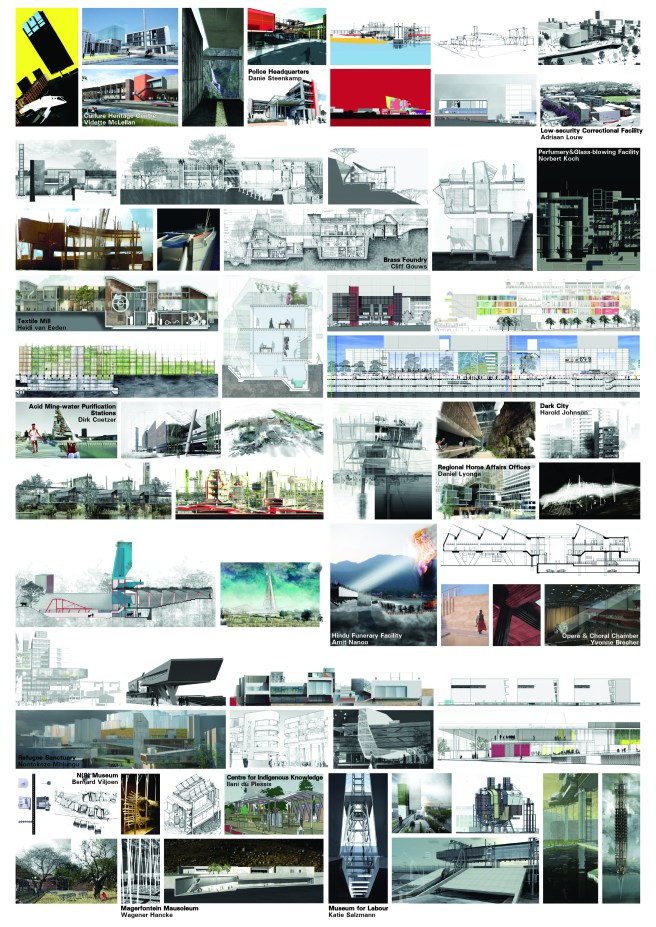
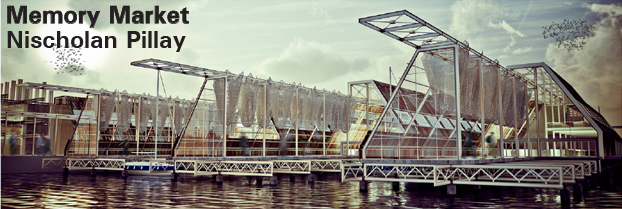
Cameron Finnie’s Skills Development Centre, revives the arts and crafts discourse of the early 20th century in a contemporary and appropriately South African context, whereas Dennis-Lee Stols’ Cardboard Recycling Facility addresses the needs of the informal recyclers that have become a permanent feature of our cities. In turn, Memory Market by Nischolan Pillay, celebrates the achievements of South Africa’s Indian community and pertinently adopts an architectural regionalist approach rather than a somewhat-passè, culturally-driven stylism.

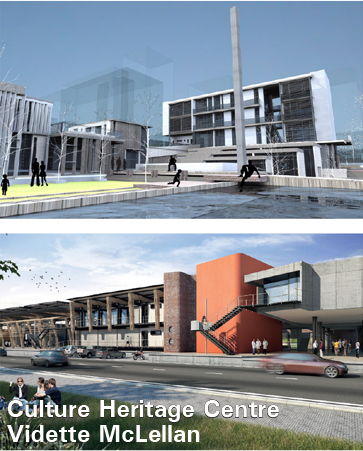
Students from the University of Tshwane engage in the humanising of the institutional facilities, as well as imbuing rudimentary public amenities with civic dignity. One such example is Adriaan Louw’s Low-security Correctional Facility which recognises the potency of architecture in aiding human rehabilitation, for not only the inmates but in the long term the whole society. Another is the community responsive Pretoria Police Headquarters by Danie Steenkamp and a deliberate attempt to alter societal preconceptions through built form. The Culture Heritage Centre by Vidette McLellan transforms the Old Synagogue in Pretoria (where the Rivonia Trial was held) into a centre of preservation of endangered languages and cultures, which could well contribute significantly to both our capital and capitol collective. 

The Nelson Mandela University can be singled out –in our current health crisis – for their proposals of much-needed healthcare and educational facilities in especially township environments, with distinct urban and community intent. These objectives are vividly demonstrated in Nikhil Tricam’s proposed Mother and Child Centre for Kwazakhele in the Eastern Cape, as well as the generic Community School Cluster developed by Ruan Marsh. The Port Elizabeth Railway Intermodal Interchange by Mofulatsi Rampou draws attention to vital role that well-designed transport infrastructure plays in the economic mobility of any country’s inhabitants and glaringly absent locally.

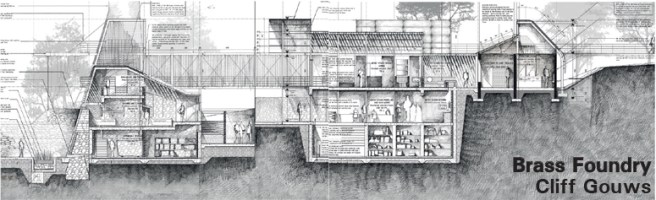
For the students from the University of Pretoria, the so-called productive landscape calls for enquiry, promoting an eco-systemic integration of recycled buildings, innovative economic production and community profiting. Proposals range from a Perfumery & Glass-blowing Facility (Norbert Koch) situated in a former flourmill, a sewage plant converted into a Textile Mill (Heidi van Eeden) to a Brass Foundry (Cliff Gouws) in a former military installation. The rejuvenation and contemporary use of the number of forts on the periphery of Pretoria and dating from the Anglo-Boer/South African Wars also came under scrutiny.

Identity and memory are at the heart of the University of the Free State design projects with explosive results. Wagener Hancke’s Magerfontein Mausoleum heeds the oversimplification of the trauma that has cast a long shadow across the country’s subsequent history, while Bernard Viljoen’s N(9) Museum explores – in abstract terms – the abundance of nothingness on a stretch of road between Aberdeen and Willowmore in the Karoo. Ilani du Plessis’s Centre for Indigenous Knowledge is imagined at the entrance of Pretoria’s Freedom Park with the site interpreted according to ancient African practices of divination. The Museum for Labour designed by Katie Salzmann reminds us of the immeasurable price of sweat equity and is theatrically (and not without irony) situated on the edge of Kimberley’s Big Hole.

The University of the Witwatersrand challenges everything from corporate thresholds, mining monopolies to funerary practices through alternative architectural appropriations. Nontokozo Mhlungu’s Refugee Sanctuary for Hillbrow explores the restorative and therapeutic role of architecture in a sadly xenophobic-riddled environment, whereas Amit Nanoo’s Hindu Funerary Facility (appropriately titled an “existential theatre”) conceptualises a reincarnated form of architectural expression. And in an environment where mining still exerts considerable influence, Yvonne Brecher proposes an Opera & Choral Chamber in a former mineshaft – described as a portal to an underworld inaccessible to the public, whilst drawing attention to the fact that our mining landmarks are fast becoming relics of a burdened past.

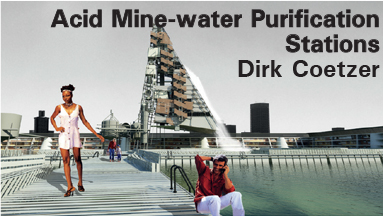
From the University of Johannesburg, the topics range from Dirk Coetzer’s uncanny Acid Mine-water Purification Stations, envisaging multivalent, self-sustaining habitable environments, to Daniel Lyonga’s Regional Home Affairs Offices, which spatially interrogates how ‘public’ our public services really are. In Dark City – an illicit occupation of vertical settlements in the heart of Johannesburg – Harold Johnson introduces crucial acupunctural interventions to alleviate an acute housing shortage.

The students from the University of Cape Town reach across time and space with Maria Gabriella Aragão’s District Six Memorial which explores the capacity of architecture to capture the memory of the loss as a result of forced removals, while Danielle Reimers designed multi-facetted Playgrounds for Change to improve fundamental infrastructural integration between the Mother City and its satellite outskirts. Michael Lewis proposes a ‘violent’ Exhibition Facility for the second-oldest colonial building in the country, the Slave Lodge built in 1679, manifesting as an intricate geometric-inspired architectural contortion.

This is cherry picking from the 100 projects of which many more capture the imagination. What ‘Ora Joubert hoped to achieve is to give substance to these projects described as “fantasy” and to create a platform where the work of our young design talent in architecture could be captured.

What encourage Joubert was that the students took from a negative past and turned it into a positive by designing responsibly, taking their world into consideration and trying to fuse that past with the future by not making the same mistakes.

And dealing – hopefully – architecturally, with our apartheid legacy in a responsible but also hugely creative manner.

 Now we have to hold thumbs that some of these student dream projects will some day be turned into reality. In the meantime, page through this tome if you have the chance and admire what could be our future. The book is packed with imaginations running wild but wonderfully so. And with their eye on the future, students were intent on making a difference – something this country needs to embrace.

AUTHOR SIPHIWE GLORIA NDLOVU IS A FORCE OF NATURE IN LITERARY WORLD

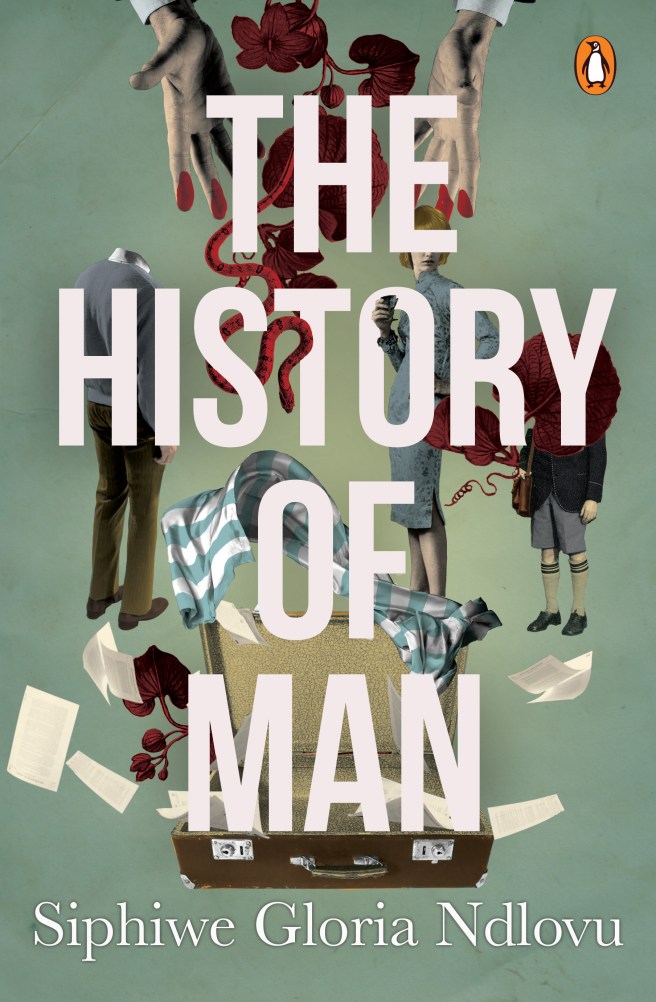
In a world flooded with new books  daily, it is difficult to find a voice as unique as that of Siphiwe Gloria Ndlovu. With much acclaim and a big prize for her first novel, one could have expected some hesitancy with her second attempt. But this writer outsmarted us all by completing this latest novel even before all the accolades for the first started pouring in. DIANE DE BEER revels in her story and The History of Man:\

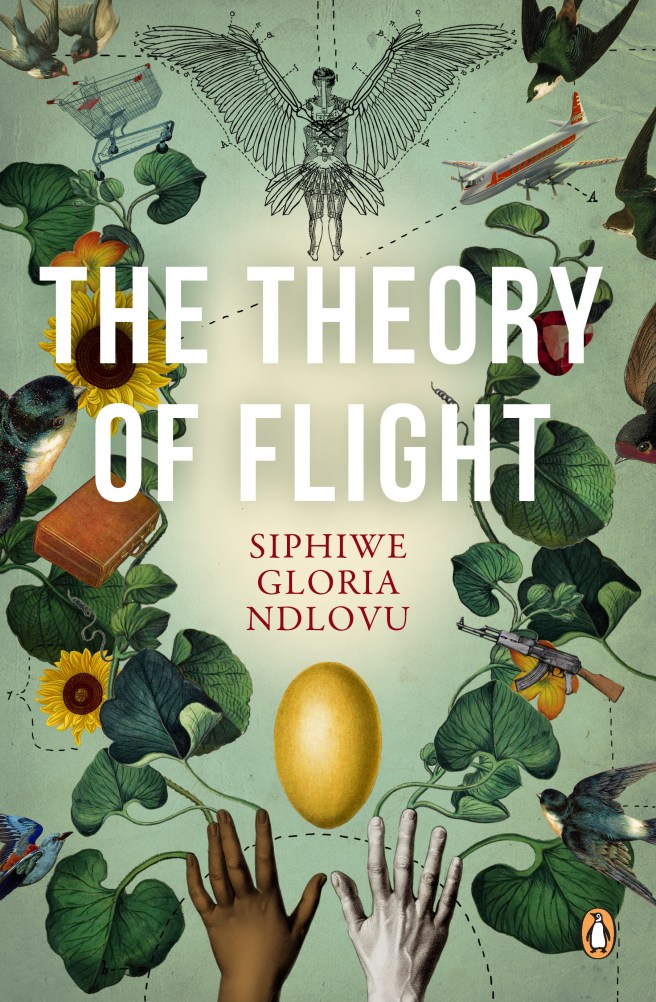
If you have read last year’s winner of the Sunday Times Fiction Prize, Siphiwe Gloria Ndlovu’s The Theory of Flight, you would have recognised a unique voice.

Her latest, The History of Man, is further evidence of that. In fact, it’s hardly recognisable as the same writer and took me completely by surprise – fortunately in the best possible sense.

These past few years, reading as much as I did, I realised that what I loved best was for writers to overwhelm me with their originality. Siphiwe does that and so much more. After all, originality alone won’t make it. But she has already shared her abundant writing skills.

Often a second novel after the success of a debut can be a bit of a downer –from the writing or reading point of view, but this writer outsmarted us all. The second was already written when she won acclaim for the first!

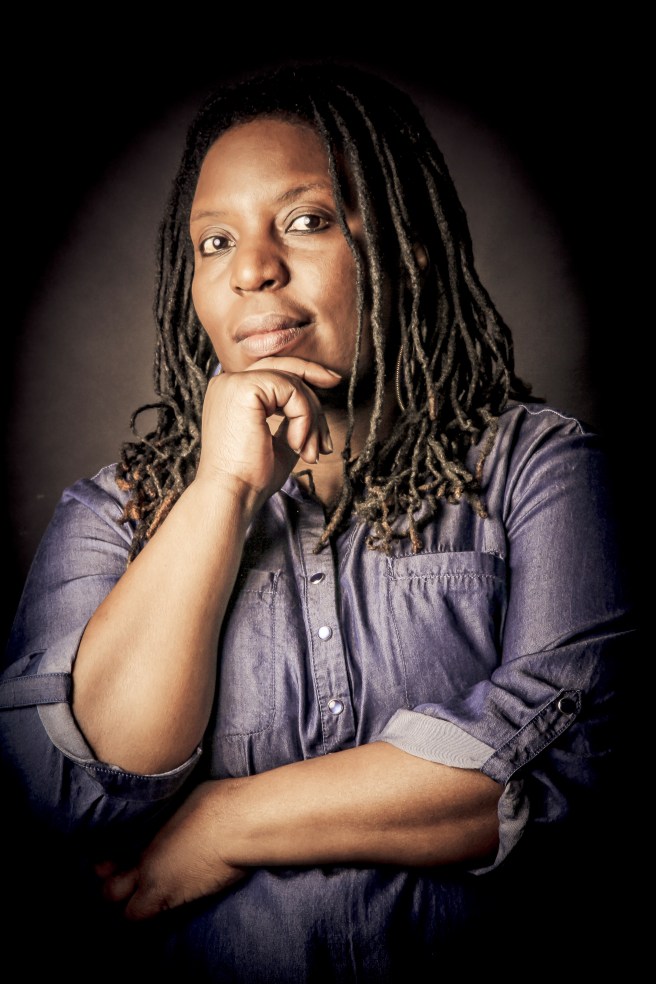
Author Siphiwe Gloria Ndlovu.

Asking about her choice of follow-up story, she responded with the explanation that the question assumes she has any say in the matter. “For me the wonderful thing about writing is that it is something that happens to me. The character, Emil Coetzee, first came to me in 2007 or 2008 – I remember jotting down a few things about him then. He plays a role in The Theory of Flight, albeit a small one. That said, I had no idea that I would write The History of Man as a follow-up to The Theory of Flight.”

She notes that as her first novel was a critique of the post-colonial moment, it made sense to her, given her love of history, that she would want to explore and critique the colonial moment.

Given what I wanted to explore about the colonial moment and the narrative it creates – its effects on the coloniser and the colonised; its particular kind of masculinity; its dependence on the idea of progress; its insularity and superficiality; its many inventions and dichotomies (white superiority/supremacy, black/other inferiority, active men/passive women etc.); and, most importantly for me, its privileging of certain voices (white/male) over others and the many silences that that creates – it just made sense to have a white, male protagonist through whom the story would be focalised. And that is how Emil Coetzee’s story became the follow-up to Imogen Zula Nyoni’s story.”

What fascinated me in the reading was how seemingly comfortably this black female author crawled under the skin of a white supremacist male. I can see some conjuring up all kinds of dilemmas, the way we appropriate voices etc. but especially in Siphiwe’s case, didn’t it make her skin crawl? For me when reading,  my mind kept going to specific South African characters dubbed Prime Evil and Dr Death in the press.

That’s why we need fresh voices telling specific stories. What she set out to do was write a character that was multi-dimensional, complicated and believable, she says. She ticks all the boxes.

In fact, what I loved about the character was that he wasn’t stereotypical – the kind of person one would imagine could commit the worst atrocities against his fellow human beings. If anything, he almost disappears into the background, or as a man apart.

“When Emil Coetzee’s character first came to me I admit that he was not a particularly sympathetic character. He was a stereotype and a caricature – a womanising, racist and sexist white man with power – and, quite frankly, offended many of my black feminist ideals and sensibilities.

“At the time, I think I thought that that was a strong enough character to build a story on, so I am very happy that I did not write it then because that is not a novel that even I want to read. The saving grace came when I moved beyond the what – womanising, racist and sexist white man with power – to the how (how does someone get to be this way) and most importantly the why (why does someone get to be this way).”

And that she achieves brilliantly. While I was still trying to work out what she was trying to do because the writing and telling of this particular story was so different from her first outing – with The Theory of Flight in my mind – I was drawn into the intriguing life of a man whose actions seemed to be determined by things outside of him rather than an inner driving force.

“I was writing a character whose experience, for the most part, is different from my own. However, I found entry points, similarities in our experiences that allowed me to empathise with the character and begin to understand his inner world on a deeper level. These are a few of the entry points that I used – the boarding school experience, growing up in the City of Kings, falling in love with the savanna.

“Once I could empathise with Emil Coetzee, I understood his character fully and knew what kind of narrative he would like to exist in – in terms of plot, tone, imagery etc. For instance, I knew Emil Coetzee would only be fully comfortable in a realist novel with a linear plot because that is what makes sense to and of him. I also knew that he could not be surrounded by language that seemed too poetic because he would be deeply suspicious of that kind of language and very uncomfortable in it.”

And that’s why she says the style of a book is determined by the characters. “I have to be true to the characters in my story,” she notes. “I know this is a (frustratingly) writerly thing to say, but I listen to the characters and let them guide me. I am also guided by what the story is ultimately trying to achieve.”

And while she says she worries about how the realism of her second book will received after The Theory of Flight, which many read as magic realism, she needn’t worry.

As a writer, she is a creative force. Even though I lost my heart to her first book, this second one stayed with me for the longest time. South Africa had its own Emil Coetzees and perhaps that is what I found so disturbing on meeting this man who seemed uncomfortable in his own skin and seemingly almost thoughtlessly allowed outside forces to determine his life.

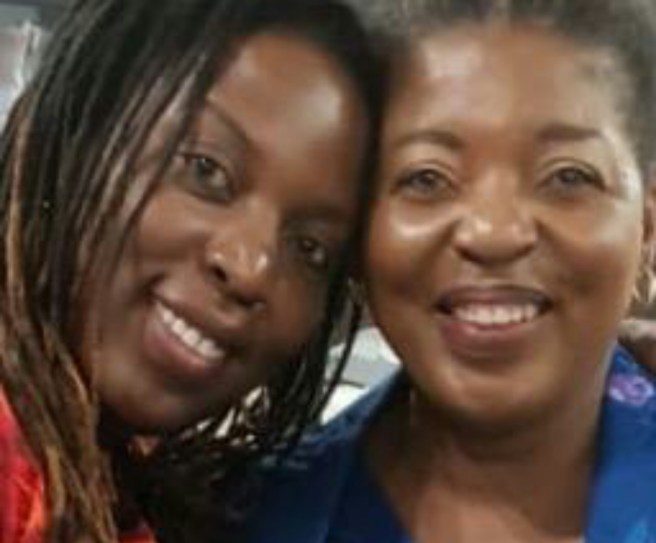
The author Siphiwe Gloria Ndlovu with her biggest fan, her mom Sarah.

With lockdown in full swing by the time The History of Man appeared on bookshelves, Siphiwe describes herself as being in the best place to have a productive lockdown. She was lucky enough to be on a writing fellowship. “In February I arrived in Johannesburg as part of an international cohort for a four-month-long fellowship at the Johannesburg Institute for Advanced Study (JIAS). My plan was to work on the first draft of my fourth manuscript, which I did. Then lockdown happened and JIAS kindly extended their fellowship until all of us could safely return to our home countries and so I had time to polish up and finalise my third manuscript, which I wrote last year.”

And if you are wondering how these stories just keep tumbling out, she’s ready with an answer: “There is a fifth book in my head. I think it definitely helps that I am writing a series of interconnected novels because until the series is done there will always be the next book.”

So get onto the second one now. If her record holds fast, you will be just in time for the third one to drop.

And this reader certainly feels blessed to have discovered this author who not only writes about a world that is sadly familiar, but also masterfully achieves making sense of it.

FEEDING FAMILY AND FRIENDS MUCH MORE THAN SPICE AND ALL THINGS NICE

Cookery books, some brand new and others not so much, but all with recipes that will send you racing to the kitchen – an enjoyable escape in a time of Covid. DIANE DE BEER grabs an apron:

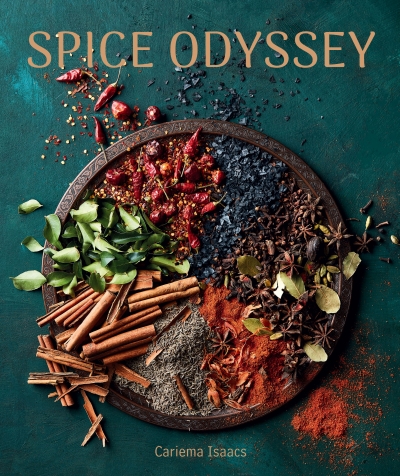
Spice Odyssey by Cariema Isaacs (Struik):

Isaacs affinity for spices reflects her Cape Malay heritage and the time spent cooking and baking in her grandmother’s kitchen in the Bo-Kaap, Cape Town’s Cape Malay Quarter.

Cumin and coriander, cloves and star anise as well as cayenne pepper and masala blends are all very familiar to her and part of her cooking vocabulary.

But going even further, her travels to India, Turkey, Malaysia, Sri Lanka and the Middle East have further enhanced her spice palate and add rich flavours to her recipes.

Just paging through, it is easy to pick many recipes that could become staples with vegetables, meat and fish all playing a starring role. She says that if she had to stop eating meat she could easily survive on cauliflower and what follows is a recipe titled My Beloved Gobi Masala (Cauliflower Spiced Curry). Then there’s also a leg of lamb, a bunny chow and a Bengali fish curry.

Or that wonderful Middle Eastern breakfast/brunch dish that pops up in slightly different versions from Morocco to Turkey, a Shakshuka, which in this instance is a combo of YouTube versions from a friend!

More than anything, you should be guided by the title. If you want to expand and add more spice to your food, this is it.

Anatoli Authentic Turkish Cuisine by Tayfun Aras (Human & Rousseau):

It is quite eerie in these times to write about restaurants because you first have to check whether they have made it.

I had many meals at Anatoli but that was more than 20 years ago for no other reason than I don’t visit the Cape that often and when I do, there are so many new places to try and usually the friends who live there are the ones who decide.

But following a visit to Istanbul a few years back, I fell in love with Turkish food and who better to introduce you to the magic of their cuisine than someone who is also familiar with this country. In fact he has been the owner of this iconic Cape restaurant since 2003 and this book is a way of sharing his recipes and kitchen secrets so that his native food can be celebrated in his adopted land.

He introduces himself, offers some background and also pays homage to the original owners of Anatoli, whom he credits for the longevity of the establishment. He is only the second owner and while he inherited their menu and used it to find his feet in the first few years, he then began to put together a meaner and leaner menu, which according to statistics consists of the items most favoured by customers.

It’s a glorious book with many familiar recipes (kebabs to brinjal in many different forms) as well as their most delicious and famous rice pudding. That will be first on my list to see if I can replicate anything close to the heavenly desserts we tasted in Turkey.

 I lost my heart.

Set A Table by Karen Dudley  (Jacana):

I was so upset when I first heard that Karen Dudley’s amazing deli The Kitchen was closing that I had to recheck and confirm when reviewing this beautiful book.

Yet another reminder of her remarkable cuisine skills, which reach much further than food.

I also remember that when I read that Michelle Obama was having lunch there during a visit to Cape Town, I felty it was such a magnificent choice and would give her a real flavour of our country’s food.

With this particular book, Dudley’s latest, she focusses on entertaining – hosting a dinner party, something that might again become popular once the worst of Covid-19 has abated and we feel safer with at-home dining. In the meantime, the book allows you to dream.

“When we set a table, we reveal ourselves in an intimate way,” writes Karen, and she would know. Like her sense of style from dressing herself to her deli, she immediately speaks volumes about who she is. Every  time I was privileged to interview her on one of her two earlier cookery book tours, she made a dramatic impact – of the best kind.

For her inviting people to dine is all about friendship and sharing stories and conversation and for the sheer joy of eating something delicious!

And while there are many pictures capturing her style as well as much information on entertaining, in the end, it also holds marvellous recipes specifically for entertaining as well as a reminder of the kind of food you could find at her memorable deli.

Thank goodness she left us with recipes to keep us going.

Google Karen Dudley or check on Facebook because I know in the future she will simply reinvent herself – and that will be something to watch.

Ottolenghi FLAVOUR by Yotam Ottolenghi and Ixta Belfrage (Ebury Press):

This is the only cookbook not from our shores but Ottolenghi is an old friend and many followers will know that with his focus on vegetables in this one, it’s not a new trend: “I have never been shy about my love for vegetables. I have been singing the praises of cauliflowers, tomatoes, lemons and my old friend the mighty aubergine for over a decade.”

FLAVOUR is the third in a series and as the chef says it best: it’s about understanding what makes vegetables distinct and, accordingly, devising ways in which their flavours can be ramped up and tasted afresh; it’s about creating flavour bombs, especially designed for veg.

Here especially, he was challenged to ramp up flavour in vegetables and take it to new heights. “For me,” he confesses, “ this includes ingredients such as anchovies, fish sauce and Parmesan which are not, of course, often used in recipe books in which vegetables play the starring role.”

He understands this and the growing trend of defining as either vegetarian or vegan, but he decided to appeal to the widest group of vegetable lovers possible. However, when he uses an animal product (“we are not talking prime cuts of meat here, or a bluefin tuna steak!”), he will offer a vegetable alternative for the sticklers so that everyone can join in.

But he also introduces a secret weapon and about her, he has this to say specifically: “If you managed to spot a lime or two in places where lemons would appear in previous Ottolenghi books, or noticed a range of Mexican and other chillies peppered all over these pages, or if you came across quick pickles and infused oils used to give dishes a finishing touch – you have identified the fingerprints of Ixta Belfrage, who’s had those same fingers on the vegetable pulse for the last couple of years and helped shape the recipes in this book in particular ways.” Enough said! If you haven’t yet discovered the Ottolenghi magnificence, perhaps it’s time . His books like his food are sheer genius.