Renata Coetzee Honoured with Relaunch of Feast from Nature and UP Food Feast

DR Renata Coetzee, a pioneer in research and awareness of the various food cultures in South Africa over five decades, passed away in Stellenbosch at the end of last month at the age of 88. DIANE DE BEER honours a woman, always a warrior, who attended the relaunch of her latest book only last month:


Through her lifetime of research and books, Renata Coetzee has built both national and international awareness of the culinary heritage of various cultural groups in South Africa. It is apt that her latest book, Food Culture of the First Humans on Planet Earth – A Feast From Nature, is currently being relaunched with a 2nd impression to bring it to the attention of a wider public.

One of these celebrations will be a dinner in Tshwane on Mandela Day to celebrate the impact of the culinary and cultural history of our first people on contemporary South African cuisine and another a launch presented at the Market Theatre the day before, July 17.

In collaboration with the DST-NRF Centre of Excellence in Food Security, the editor Truida Prekel and African Sun Media, the University of Pretoria Department of Consumer and Food Sciences will present a four-course dinner with recipes inspired by Coetzee’s decades of research on indigenous food cultures in celebration of her book.
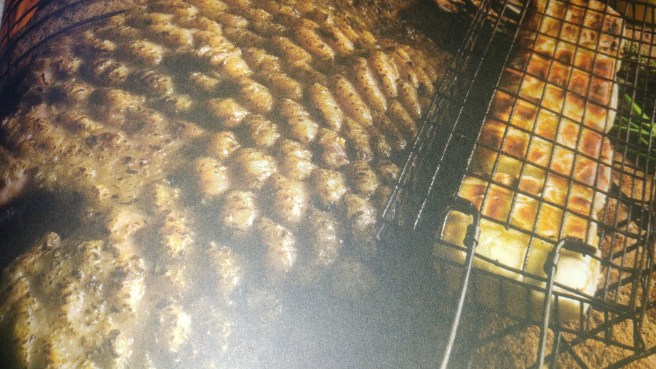
Renata's porcupine skin braai
Renata’s porcupine skin braai

The menu which will honour her research is the following: Sundowner is a honeybush and aloe cooler; First course, Nature’s Salad consists of morogo puree, spekboom gel, pelargonium sand, lemon foam, pickled papkuil shoots, compressed aloe buds, and an array of flowers; Second Course, Forager’s Pride is a dune spinach soup with deep fried warthog biltong; Third course,  Rocky Waters, includes Tilapia, buttered ice leaf, sea fennel and oyster leaf puree and bokkoms dust ; main course, Exploring Burrows presents porcupine and waterblommetjies served with “ystervark-se-mielie”, roast uintjies, crickets rice and glace de viande; and thre meal is concluded on a sweet note with  a Sunset tea party  of buchu panna cotta served with pickled t’samma, rooibos and gooseberry syrup, arum lily crumble and acacia sweets.

Many will remember this remarkable woman as someone who was obsessed with and specifically studied our roots in many different forms with the food culture of different groups as her resource. Her aim was to promote “nutritional authentic cultural cuisine” which she believed could play a huge role in our growing tourist industry – and should do even more so in the future. Her major contribution is probably scientific, but she has always tried to engage ordinary people interested in food heritage with creative and stimulating documentation of various aspects of the South African – and particularly the Cape’s – culinary culture and lifestyles.

renata's veld food
Renata Coetzee’s veld food

Her most important books in this field include South African Culinary Tradition/Spys en Drank – the food and food habits at the Cape between 1652 and 1800, featuring influences of the Malay slaves, French, Dutch and German settlers (Struik, 1977) (Afrikaans and English both out of print); Funa – Food from Africa – the food and food habits of the different African ethnic groups (Butterworths, 1982) (which should be reprinted); Cost-conscious Creative Catering and recently KukumakrankaKhoiKhoin-Culture, customs and creative cooking which was a translation of the 2009 Afrikaans version dealing with food cultures in the early days; and this present relaunched book is based on research of 15 years which aimed to preserve the culinary heritage of the earliest humans and their descendants.

She always believed that she had to understand local foods to promote healthy nutrition. At one point in her career, she was catering for Anglo American Gold Mines providing 250 000 meals a day for five years with the accent on cultural preference. That is why she was always intrigued by the palates of especially the San and the Khoi people who presented the oldest DNA. She felt she was dealt this amazing hand which would just be silly to ignore.

By going back into the past, the way brains progressed and patterns developed, all of these, she argued, influenced the way people selected food. When the San and the Khoi people split, for example, their food choices developed differently. She realised that many of these choices were made for practical reasons. Some wouldn’t let go of traditions, but sometimes the changing environment determined new dining habits. The San, for example, became hunter gatherers and the Khoi turned to smaller animals while also learning more about the veld and the plant life around them. This was all determined by the way their lifestyles changed, something which still influences and determines our eating patterns and choices today.

Renata Verjaa r 2
Foodies Renata Coetzee, Cass Abrahams and Topsi Venter celebrate in style

Because of the way she studied, researched and publicised her hard-earned knowledge through her writings and TV programmes, and formal training, she empowered thousands of women over the years, by training them in the finer skills of entertaining guests and tourists with her cultural cuisine.

This latest version of this unique collector’s book on original food cultures, A Feast From Nature (R650 is a combination of the many decades of her knowledge as a nutritionist and food culture expert with multidisciplinary research of over 15 years – bringing together aspects of archaeology, palaeontology, botany, genetics, history, languages and culture in a unique way. While scientifically sound, it is also beautifully illustrated and a true collector’s piece.

In 2015 she self-published the book, through Penstock Publishing. The first print-run of 500 copies was soon sold out – mostly to friends, family and fans. The book was reprinted shortly before her death to make her unique work available to a wider audience. Academics, researchers and food experts can also benefit and build further on her research.

According to Prekel, “Communities will benefit from further work to build understanding among various cultures and on the history of our ‘First Peoples’. Indigenous plants with culinary and agricultural potential can be further developed for food production.”
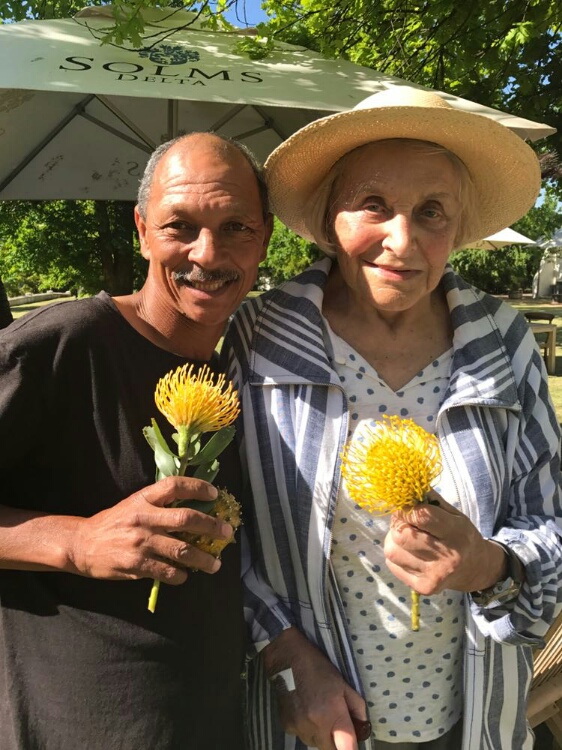
Renata en Johan by S-Delta

“Her research included interviews with many elderly Khoi-Khoin women and men in various regions, about the details of their food sources and uses. A special feature in the book is that wherever possible, the Khoi and Afrikaans names of plants and animals are given, with English and scientific names. About 250 fine photographs and over 80 illustrations of edible indigenous plants – as well as maps and Khoi traditions – make the book a journey of discovery, bringing to life the linkages between evolution and culinary history over millennia.

“The book also offers valuable lessons in terms of the nutritional value of many indigenous foods, food security and sustainability. The DST/NRF Centre of Excellence: Food Security, hosted by UWC and the University of Pretoria, has supported the reprint of the book. They, together with the Agricultural Research Council, intend doing further research on indigenous food products identified in Coetzee’s extensive work on the various food cultures in South Africa.”

Her legacy will be legendary especially as it impacts on all of our lives, not only now – but especially in the future.

The book can be ordered from orders@africansunmedia.co.za or online at http://www.sun-e-shop.co.za

feast of nature1

  • The book will be relaunched on July 17 with speakers Prof Himla Soodyall, 50:50 presenter Bertus Louw and Prof Julian May on Tuesday 17 July at 6pm at the Market Photo Workshop Auditorium, Market Theatre. Contact: zamab@markettheatre.co.za.
  • The four-course dinner will be held at EAT@UP, Old Agricultural Building 2.9.1, University of Pretoria, Hatfield Campus. For more info contact kyla.balcou@gmail.com Tickets are R300 per person.


Mad Nomad Reflects the Owner’s Passion

Nomad front
Mad Nomad

DIANE DE BEER

Mad Nomad, Shop 2001, Level 5, Mall of Africa, Magwa Crescent, MIDRAND

Open seven days a week.  Phone010 786 0250


The new Turkish restaurant Mad Nomad in the Mall of Africa is a passion project.

It’s been the dream of the Turkish-born, German-raised Tufan Yerebakan, now South African restaurateur, for as long as he can remember. And while he grew up on the Turkish street food so popular in Germany, he has always had his head and heart set on the real deal.

If there’s one word that slips into the conversation regularly, it’s authenticity.

Nomad Interiors with art1
Mad Nomad with its artistic interiors reflecting its owner’s passion.

Mad Nomad is a response to his roots and is completely different to his two smart family restaurants, Kream, in Brooklyn and in the restaurant square of the Mall of Africa.

Now in his mid-40s, for Yerebakan, restaurants have been his business since he came to this country in the early 90s. Kream has a very specific feel and philosophy which Pretoria will recognise as part of the smart, traditional dining experience so loved in the capital city.

But Mad Nomad is something completely different. The name points to his journey across the world and the interiors – for which Yerebakan brought in a young designer who would push the boundaries – say what he wants to achieve with what he views as his special place. He wanted something that would make a splash – and it does.

With an open kitchen, as you enter the restaurant to your right, you’re immediately engaged with the food as chefs are busy baking and braaiing behind a counter that runs the length of the restaurant.

Nomad Interiors with art
Mad Nomad interiors

The seating space is divided into two areas differentiated slightly by look and, as with all Yerebakan’s restaurants, art plays an important role and is introduced when he spots something he wants to live with.

“I spend most of my time in my restaurants, so that’s where I show my art,” he says, and it’s wonderful to see how he displays local art in such a magnificent way. “I don’t really care what others think because this is a huge part of my life.” That’s who he is and what he wants to show the world – in full colour.

When you get to the food in Mad Nomad and that’s after all why you’re there, it’s the real deal. If anything, this was the most important thing for this restaurateur. He went to Istanbul to check the food at source and to find chefs who could help him establish a strong kitchen while training local chefs in the art of Turkish food.

Stuart Basaran Nomad
Suat Basaran, chef in charge at Mad Nomad

It’s an on-going process with a full kitchen of chefs to get things started. “I have to keep at least one here because you need someone to check on the authenticity,” he says.

Only a few months into the life of Mad Nomad and they’re still experimenting and distilling the menu. It’s impressive as it stands now yet while there’s no watering down of textures and flavours, they are still adding some new ones and removing recipes that aren’t quite pulling their weight.

It’s important that South Africans experience a truly Turkish feast and that’s exactly what you’re in for.

On the night, we were a table of five and served extravagantly from a menu that’s as wide in its approach as it is in narrowing down the Turkish flavours. As you tuck in, you cannot help but wonder about the dearth of Turkish restaurants in this country.

Nomad shawarma wrapped
Shawarma Wrapped: Thinly Sliced Beef and Lamb with Lettuce, Onion and Tomato, Hummus and Tahini with Tzatziki Sauce

Many people visit that part of the world and the Middle Eastern palate is one that’s familiar to us. It’s perhaps the most fun to approach this one as a group, which means you can order more and a greater variety which is really what this food is all about. Once you get to know the dishes better, ordering will be simpler but, in the meantime, ask the staff for guidance. They should be able to help.

Starters can be done meze style and these will include all the usual suspects including hummus, tzatziki, aubergine with yogurt or with tomatoes depending on the style you prefer, roasted red pepper, vegetarian vine stuffed leaves (dolma) with rice, onion, tomato, currants and olive oil, and Icli kofte (deep fried meatballs with walnut and spices covered in potato and bulgur wheat crust), falafel with hummus and flat bread, Urfe kebab (starter version of minced lamb served with bread) and the list goes on.

But you could also, as we did on the night, go for a selection of pide, the Turkish version of a pizza which comes in many different versions. It’s a thin crust: with mozzarella cheese, beef mince and diced onion, tomatoes and peppers, or fillet cubes and mozzarella cheese or sucuk, a cured sausage made with lamb or beef and flavoured with garlic, cumin and red pepper flakes. There’s also a vegetarian option with mixed vegetables or with spinach and feta. Nomad Doner, which some might recognise, is another option with thinly sliced beef and lamb, onion, parsley and mozzarella. But keep the portions small or the mains won’t be an option and you want to try some of their finger licking meat. You won’t resist.

Nomad pide
Mince & Mozzarella Flat Bread/ Folded Option World Famous Turkish Pizza with Beef Mince, Diced Onions, Tomatoes and Peppers

The shawarma options aside for the moment, their kebab selection is excellent and again, it’s best to check the various kinds ranging from the Iskender (the name of the original creator), Adana, Urfa or the Beyti Sarma. There are also fillet cubes on a skewer, chicken chops that are quite spectacular, lamb sis kebab or a Turkish-style filled pasta called Manti. A mixed platter on the first visit (R200) is perhaps the best way to go because of the riches the menu offers. It can be overwhelming.

The wine list is also something that has been given special care with many other liquor choices.

What this expansive selection on all fronts means is that there’s something for everyone and for us, the flavours of the Middle East were what lingered the longest. That and the superior quality of everything on the plate. We did get to dessert, but I must be honest, by that stage, my palate took some time out. I do remember that even though the rice pudding and kazandibi (famous Turkish milk pudding) were both there, Tufan spoke about their sweet selection and that they were still experimenting.

It’s a sweet spot and even though the Mall of Africa seems vast, once you’ve checked your bearings, it’s easy to find. Because this is this restaurateur’s dream child, it’s going to keep evolving as he keeps shaping and streamlining.

Already this is a huge plus on the Gauteng cuisine landscape and beckoning to be explored.


A Family Play on Generations of Women

DIANE DE BEER


It’s not often that Cape Town comes to Gauteng but when they do, it is worth taking note as this production was the 2016 Standard Bank Ovation GOLD award winner and it’s easy to see why:


IvanBlazic
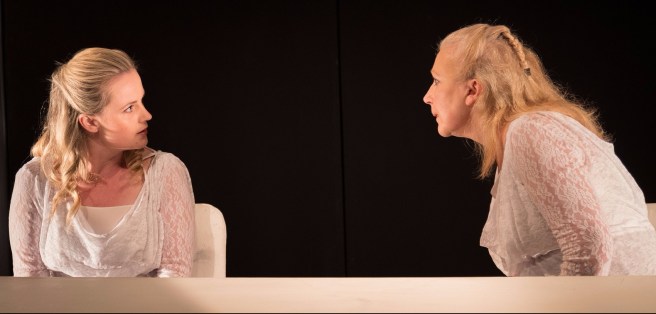
Rebecca Makin-Taylor (daughter) and Michele Belknap (mother) Picture: Ivan Blazic

SILLAGE

DIRECTOR/WRITER: Penny Youngleson

CAST: Rebeccas Makin-Taylor, Michele Belknap

VENUE: POPArt, 286 Fox Street, Maboneng Precinct

DATES: Tonight, Thu and Fri at 8pm at 8pm; Sat at 3.30 and 8pm; Sun at 12 and 3.30pm

Don’t worry about the name, it is explained and scents the play throughout as the story unfolds as if in a set piece that has been part of the mother/daughter relationship for millennia.

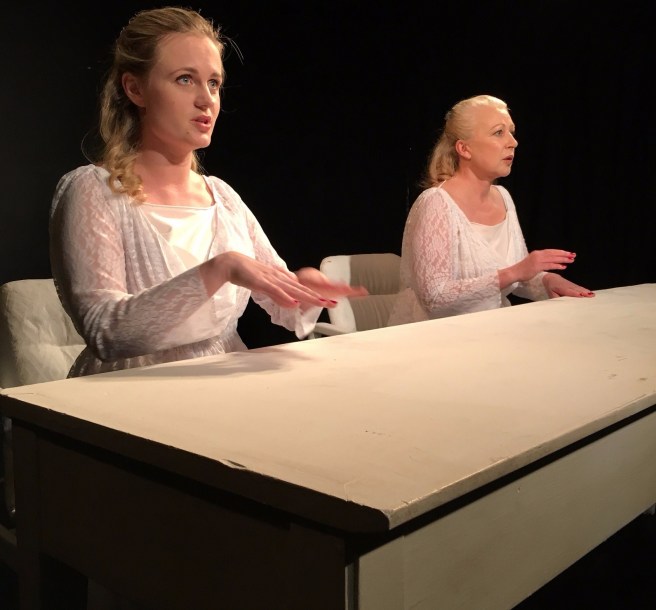
In this instance, recognisable and toxic, the younger and older generation square up as if starting off on the same foot but gradually the dance becomes more disheveled, the tone more confrontational and two individuals though bound by blood, antagonistic and attacking rather than supportive and sympathetic.

If they were on the same side, that sharply unravels as each one stands their ground in what seems like a fight in which both have something to lose and little to gain.

Youngleson has again tapped into family mores which in this instance might be mother and daughter but could be played on any scale and in different settings – even the country, as she points out.

Sillage_2
Rebecca Makin-Taylor (daughter) and Michele Belknap (mother) Picture: Ivan Blazic

We live in a world that stands on its head with a world power considering a vote for a sexually accused candidate to secure a political victory. Why would the rest of us remain unscathed? If ever these smaller battles are important and worth rescuing, it’s now.

Everything on Sillage’s playing field is fraught. Even on a generational level, how we do things, when we cannot concede that time might play a part and what was right then, might not be the best approach now and vice versa.

But rational thought isn’t what rules in these instances. It’s the battle, its the wound that has been opened and is festering, and there’s no reaching out as the two women come together to unpack a life that touches and tears at their relationship in tortuous fashion.

It’s an hour-long hugely entertaining lament from two perspectives with two women who when you sit them down, would probably want the same thing but they have long stopped caring about themselves and the other. They’re trapped as they tear each other down at the cost of what could have been.

It is a play best seen with little foreknowledge as it unfolds delicately in front of your eyes with two actors who are intertwined in their thought processes and how they want to impart the story.

Not only has Youngleson written a tone poem that reaches to the heart of this sadly familiar relationship, she has also painted a picture that best displays and allows the characters to detail this daily dance magnificently.

Everything about the production folds into one another with this one as we witness something that is as familiar as it is fatal. It is as funny as it is horrific because the inevitability is what lingers.

And that really makes you think…

Tickets available at : www.popartcentre.co.za

Running time: 60mins


With Robert Whitehead’s wisdom and Lebo Toko’s tenacity, it’s a powerful theatrical cocktail

An intriguing play titled The Man Jesus, coupled  with a dynamic duo, director Robert Whitehead and actor Lebo Toko, and you have a potent theatrical mix. DIANE DE BEER speaks to the director and actor pair during rehearsals of the play now running at Joburg’s Market Theatre:

The Man Jesus photographer Brett Rubin
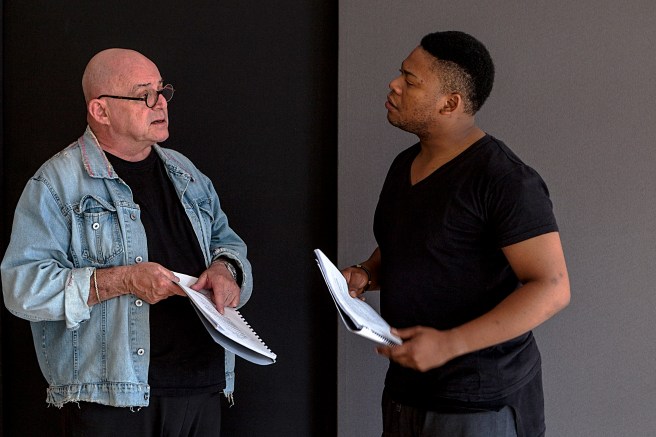
Robert Whitehead (director) and Lebo Toko (actor) discussing The Man Jesus

“It’s a story of possibility,” says Robert Whitehead, about the playThe Man Jesus written by Matthew Hurt, a South African born Irish playwright.

The playwright, the son of a friend of his, asked Whitehead whether he would like to do the play – as an actor. He felt that this was not the part for him to play – and knew he wanted a black actor to tell the story – but he wanted to direct.

And when he talks about the play, he has very specific ideas, understanding that with 12 different characters involved, you didn’t need much more than the story to play out.

He also needed a very special actor to commit to the role. A solo play with Lebo Toko as his pick (last seen in James Ngcobo’s Raisin in the Sun), Whitehead acknowledges that as a trained actor/singer/dancer, (what is commonly known as the triple threat), he wouldneed all those skills to get through this one.

But Toko is up for the challenge. Speaking to them during the early days of rehearsal, there was still a sense of nervousness – but also excitement at pulling this one off.

It’s the first time back at The Market for Whitehead in 12 years and quite a while since he has directed.

Yet with a clear head, he knows that he won’t make use of any electronics or even props. “It’s going to be the actor and a set,” he says simply. It’s all about the text, which was nominated for the Irish Times Best New Play in 2013, and looks back 2 000 years to witness key moments in the life of ‘the man Jesus’, through the eyes of the people who knew him.

“It’s conjecture,” says Whitehead about the thought provoking and challenging script dealing with the man who had an enormous and profound impact on the history of mankind. The Man Jesus traces his life from before his birth to after his death through some dozen characters, both male and female, with whom he came into contact.

Was he a man with magical powers?  Was he a prophet with miraculous skill sets? Or did a few Jews start to realise something else? “That, of course, is entirely up to you.  People should understand that in spite of the title, or because of it, this is a work of imagination.  There was no ‘The New Testament’, ‘The Gospels’, ‘The Early Church’ or any such thing which makes what eventually came into being, so fascinating,” says Whitehead as he points to Christianity.

The Man Jesus starring Lebo Toko directed by Robert Whitehead photographer Brett Rubin (002).jpg

He is intrigued by the times when all of this was playing out specifically because of what followed – and that’s what the play deals with. Everyone was running around trying to figure out what was happening in this “cruelly conquered land”, he notes. And they had to try to make sense of this man called Jesus – and make it work politically.

And for the director and actor the challenge is to latch onto the immediacy of the story and not get stuck in the “sacredness”. “That only came later,” explains Whitehead. This deals with the now of then.

The man they explore was a guy who did weird and freaky things. “How much is mythology? We are telling a story that is expressing the inexpressible.”

For Toko accepting this part is the bravest thing he has ever done in his young life as an actor. “I know I can act, but this is something else,” he says with a shake of his head. And already, as the solo performer, he understands that this is a very lonely world.

But he also gets that what he is experiencing in this rehearsal period is a great learning experience. “I know that the day I leave this classroom, I will leave with something bigger than I understood when starting out.”

Talking about the writing, Whitehead remarks that the text is quite formal and very English. “We have left everyone who they are and where they are, but have changed some words that work better here where we are.”

And, he points out, the obvious and yet … “ours is not a blond Jesus!”

I leave them working the process, still finding their way into the play but also knowing that with Whitehead’s wisdom and Toko’s tenacity, their combined talent will pull this one off.

“It’s all about baby steps,” says Whitehead as he turns to his actor. That’s the exciting thing about this one – and they know that.

It’s not an easy story to tell, but for this theatrical duo, that’s not what they were looking for. They want people to listen and learn, and leave the theatre with something.

That’s what they plan to do.

PICTURES: Brett Rubin

The Man Jesus plays at the Market Theatre’s Barney Simon until Sunday 5 November.


Artist Margaret Nel shares Stories with Provocative Paintings at Retrospective

The Pretoria Art Museum, in conjunction with the Association of Arts Pretoria, is presenting a major retrospective exhibition by South African artist Margaret Nel at the Pretoria Art Museum until January 28, featuring a selection of over 70 paintings, spanning a career of over four decades.

Due to popular demand, the Pretoria Art Museum will be hosting a final walkabout of the exhibition A Retrospective: 1970 – 2017 on Saturday,  January 20 as the artist Margaret Nel discusses selected key works from the show.

Entry to the museum is free for those attending the walkabout. Light refreshments will be served before the walkabout commences at 11. Book your spot at info@margaretnel.com by Thursday, January 18 .

For those unable to attend the walkabout, but who still wish to view the exhibition, the show closes on Sunday, January 28.


DIANE DE BEER spoke to the artist just before the opening:

Artist Margaret Nel’s world reflects her artistic mien, from her art to her home and her personal style.

She lives in Pretoria’s famous round house on Tom Jenkins drive and upon entering the space, the way she has fashioned her interiors – from the paintings on the wall (her own work and others) to the interiors – the way she presents herself, all has a specific artistic ambience. It’s almost as if one is moving with and walking into an evolving artwork.

In the process of finalising her exhibition, we chat about a career that stretches from the 70s and is ongoing. “I am always painting,” says Nel. “There’s not a year that goes by without having produced something.” She is already working on an exhibition to be presented at the Oliewenhuis Art Museum in Bloemfontein next year.

Apart from a period in the 80s, when she stepped away from her art because of a young family and life in general, it is what occupies her heart and her mind and what she surrounds herself with. And when perusing the information available on the current exhibition, everything she does is done with a fine eye for planning, not leaving anything to chance.

She has even thought about the criticism ahead of this retrospective. But she’s excited and keen to hear what people think, especially the knowledgeable ones. As someone who shows her work, she knows viewers feel and have the right to criticise. While as a young artist, she might have struggled with that, now it is something she embraces.

She wonders how others will view her progress, something she is quite happy with. “I am confident about my work,” she says softly. And that steely demeanour might have something to do with the fact that while studying and starting her career, female artists always found themselves attached to part of a boy’s club. “We had to deal with that, always in the minority.”

1998_Waiting-for-the-Renaissance
Barren Land: 1998: Waiting for the Renaissance

Now, regarding her work in a retrospective, she is interested to see how it holds up in a solo exhibition. “Usually it is juxtaposed with the work of other artists and then it becomes difficult to judge,” she admits. She realises that certain periods like what she refers to as her Post Modern period could be perceived as out of step but believes the themes are even more relevant. “I touched on subject matter, such as xenophobia and diminishing and compromised natural resources, at a time when these issues were not as relevant as they are currently.”

The original title of the exhibition was Loss as it felt that as a concept, loss was the overarching theme, connecting the five distinct periods that her work falls into, over 40 years.

1970-Tea-time-I
The Outsider: 1970 Tea-time

“Loss of identity and control and loss of mental acuity are covered in the early period titled The Outsider as well as in the second titled Barren Land, where loss of culture and heritage as well as the potential loss of a sustainable future are also explored. The third section titled Incident talks about loss of security and a place of safety, specifically in the South African context but also in the global context.

“The fourth section titled Exposed deals with loss of protection from outside elements. And finally, the fifth, deals almost exclusively with universal feminist issues such as loss of identity, and loss of youth, loss of a voice in a male dominated society. I also obliquely speak about domestic abuse in the latest work, a subject very close to my heart and very difficult to comment on in a subtle way. Cuts of meat, enclosed in a fragile skin of plastic which is often shown ripped open is used as a metaphor.”

2013_Isolate_I
Exposed: 2013: Isolate

“I use models, myself included, not to paint portraits but to try to get across an idea. The double portrait of myself where I used a cell phone to capture a ‘selfie’ is titled Isolate and speaks about old age, loss of youth etc etc.” She shows herself as she really is – warts, ageing et all. There’s no fooling about here. Art is a release, therapy, autobiographical if obliquely so and you must face it head-on.

“Ultimately I explore aspects of the human condition that have directly touched me.”

Nel strikes one as someone who makes very specific choices in life. She might seem the introvert when one first meets her, but easily opens up and shares her feelings when she feels comfortable – her choice.

Her reason for showing her work in this large retrospective is also specifically driven. She admits, as artists should, that she wants people to see her work. “And hopefully educate and make people more aware of the issues that I find important.”

2015_Custard-bun-6s
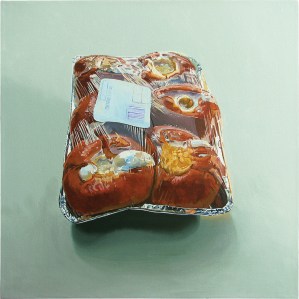
2015: Custard buns

All her paintings have very specific titles, offering the viewer a key to unlock the work and she has detailed descriptions that might further the understanding of the artist’s point of view. But she is as thrilled if other layers or meanings are uncovered and explored by viewers.

“The work can be interpreted on many levels though, even quite superficially, and ultimately it must be left up to the viewer,” she says firmly.


Her art is eye-catching, intriguing, draws you in, challenges and encourages you to engage with many different emotions. This might be her chosen landscape, but with individual interpretations and varied life experiences, different people will react and embrace the work individually.

And that’s how it should be and how it is intended.


Pretoria Art Museum
Cnr Schoeman and Wessels Str
Arcadia Park
Arcadia

Pretoria

Open: Tuesdays to Sundays 10am to 5pm


The Theatrical Side of Season 2 of The Centre For The Less Good Idea

Pics by Stella Olivier

Kgomotso Moncho-Maripane

Guest Writer


Gerard_portrait credit Stella Olivier
Gerard Bester

Gerard Bester describes his role as Associate Director for Season2 of The Centre for the Less Good Idea as dealing with one’s own ego and insecurities.

“It goes in waves, sometimes one feels useless and awful, other times one feels charged and creative,” he says.

It would be forgivable for a theatre enthusiast to romanticise the process in their minds because Bester, together with Nhlanhla Mahlangu and Mwenya Kabwe are theatre geniuses. The three of them drive the theatrical elements for the centre’s second season happening in Maboneng from tomorrow until Saturday.

Launched in March, the Centre is very much about process and exploring secondary ideas that come up when cracks and fissures occur in the initial big idea. It nurtures artists in finding the less good idea, and creates and supports experimental, collaborative and cross-disciplinary arts projects, over two seasons every year.

Founded by William Kentridge in November 2016, it provides a space for short form work whose life does not necessarily belong in a theatre or a gallery.

The first season, curated by performance poet, Lebo Mashile, choreographer/dancer, Gregory Maqoma and young director and playwright, Khayelihle Dom Gumede, pushed the boundaries of alternative spaces and language.

The second season is heavily nuanced by the collision of art and technology as brought in by co-curators, Tegan Bristow; Nhlanhla Mahlangu and urban culture entrepreneur, Jamal Nxedlana.

Bristow is an interactive media artist, lecturer at the Digital Arts Division of the Wits School of the Arts and co-founder of the Fak’ugesi African Digital Innovation Festival. She curated the Post African Futures exhibition for the Goodman Gallery in 2015 out of her research into technology, art and culture in Africa. She’s a supporter and an active player in the futurist movement that is characterising the African arts landscape right now, where science fiction and African futurism are not only themes but the approach, and technology is a medium for creating art. It is art that interrogates the present and shows history’s intrinsic link to the future.

Mwenya_portrait credit Stella Olivier
Mwenya Kabwe

Bristow invited inventive theatre maker and academic, Mwenya Kabwe as part of over 40 Johannesburg based multi-disciplinary practitioners involved in this season.  What they came up with laid the foundation for the sprouting of ideas that came after.

“One of the first conversations that Tegan and I had was about a series of short descriptive futuristic African worlds that I had written for a research project. She liked how they dealt with time and space and for their visual quality. These got called on quite early in the first brainstorming session for Season 2, as points of inspiration to launch from,” Kabwe explains.

She also collaborates with Bristow and musician Cameron Louis Harris, on an interactive performance piece called Jacaranda Time, performed by dancer/choreographer Sonia Radebe and actor Namatshego Khutsoane.

But her shorts are linked to the bigger story of Edward Nkoloso, a Zambian grade school science teacher in the 1960s, who around Zambia’s independence, established a space academy with the objectives of space travel. His story was made popular in urban culture by photographer Cristina de Middel and Ghanaian filmmaker Frances Bodomo’s short film, Afronauts. It’s a story that resonates deeply with Kabwe (who is Zambian herself) which she presents in a production of A Zambian Space Odyssey.

“Edward Nkoloso is presented in the world as a parody in slightly foolish ways of space travel, but he is also being reclaimed as a revolutionary whose metaphor for Zambia’s independence meant literally soaring to new heights and reaching the moon.  A Zambian Space Odyssey is a live proposal in reading him in these two different ways,” says Kabwe.

Known for her experimental, workshopped and directed theatre and performance work, it is her form of writing that she is experimenting with here.

Nhlanhla Mahlangu credit Stella Olivier
Nhlanhla Mahlangu

In addition to curating, Mahlangu, who worked on the first season as one of the musical directors, gets to showcase his seminal solo work, Chant, directed by Bester.

Mahlangu’s ingenuity as a musician sets him apart as a dancer/choreographer and performer. Bester, a performer who’s been called a “Post Modern Anti Hero Character” due to his innate connection to movement and ability to break the fourth wall when engaging an audience, comes also with his arts administration experience.

The two met 20 years ago when Bester was managing a programme Mahlangu was part of as a student and they have worked together ever since. They now revisit Chant, which premiered at the Julidans Festival in Amsterdam where it was commissioned in 2011.

The work is Mahlangu’s ode to the women who raised him.

“Nhlanhla has this extraordinary, rich memory and connection to his own history that speaks beyond the personal. What was an important realization when revisiting the work, was how to really honour the skills that Nhlanhla has and to distill each of those. There’s a new emotional intensity to the piece and the idea is to connect and to hold on to that,” Bester says.

The word Chant and the force behind it is a constant motif in Mahlangu’s work with other titles including The Worker’s Chant and Gqisha! The Chant That Calls, a collaboration with Dom Gumede.

“For me the chant is the literal and the metaphor of the constant endlessness of blackness and struggle. A chant is an endless song that you sing until your body goes into an altered state of consciousness. My work is driven by music and a chant is how I look at black lives, history and future,” Mahlangu explains.

He’s also created a piece inspired by Kabwe’s series of shorts with the music and score based on children’s games that black kids grow up reciting at school and playing in the streets.

“There are deep-seated political connotations to these children’s games and I’m highlighting those,” says Mahlangu.

For more info on the programme and bookings for Season 2 of the Centre for the Less Good Idea (October 11 – 14) visit www.lessgoodidea.com


PS: Afterthought …

DIANE DE BEER


Nataniel costume


Nataniël has just finished his annual season at Emperor’s celebrating his 30 years as a solo artist with a season of 30 Years, 90 Minutes: Nataniël Celebrates 3 Decades On Stage.

One of my treats during these 30 years, has been revisiting a production towards the end of a run.

Because his shows have always been dense both visually and in content, review nights were particularly tense for me. This second time round, without stress, is my particular penchant.

I am not just inhaling and observing a one-off season, but one that has been 30 years in the making, was particularly informative and revealing about his creativity, his innovation and imagination.

That’s the way to do it! “I don’t want to bore people with one thing after another of the past,” he said. This was not going to be a best of…

What it was however was an insight into his mind, his personal favourites and a showcase of what he does best starting with his songs and his stories and then everything that he builds and layers around that.

The arrangements of the cover songs he sang, You’re My World by Cilla Black and Lately by Stevie Wonder ( a song he wished he had written, so perfectly it suits his voice) among others, were completely delicious as was some of his own music like Fall which he described as his personal favourite of what he titles his no-hit wonders!

Nats1

His voice has matured magnificently and he is completely comfortable and confident and  enhances his distinctive voice with the additional sounds of Dihan Slabber and Nicolaas Swart. And he is joined by a spectacular band led by Charl du Plessis (keyboards) and completed by Jean Oosthuizen (guitars), Hugo Radyn (drums) and Werner Spies (bass) who have worked with him for a very long time which means they can push the boundaries- and they do.

It’s a complete package that holds the rest of the show in a soundscape that runs through all the emotional hefts of a Nataniël story. And this was a show of single stories, each one a showcase of this master at spinning a yarn that has you screaming with laughter yet leaves you with a moment of melancholy that runs deep.

He tells a tale of a vision that he was holding on to while making  a truck-load of paper flowers. The repetition of the task was offset by what they were hoping to achieve – only to fail disastrously. Then comes the question. “What happens to you when the most beautiful thing you have ever seen is only real in your imagination? You go mad…”

And then it all becomes clear. The set that has been constructed on stage from the start of the show, is this particular image and with Nataniël’s extraordinary lighting abilities (he changes his costumes instantly with the colour and angle of the lights), he achieves exactly that. Not only for himself though, it’s also a vision for his audience. And it starts with what might seem a silly story about student escapades!

He speaks about extraordinary people doing ordinary things. But he constantly presents us with what seems ordinary – only to surprise us with wonderful stage wizardry.

That is the wonderment of his craft. And why it has been such bliss to watch the growth and explosive evolvement of this artist and his shows. It is a completely immersive adventure as you step into this fantasy landscape once that first note comes at you, usually from a darkened stage which reveals itself.

His shows are always that – a slow reveal.

Yet nothing is slow about his costumes (designed by Floris Louw) that glitter and dazzle, not in the expected fashion though and more Louis IV than Liberace.

This was his final curtain – for now – after 15 years at this venue, and he wanted to leave in style – which of course he did, powerfully.

He also wanted, in typical Nataniël style, to easily segue into his next venture, a smashing book on his costumes called Closet, to be released on October 9. His latest TV series also starts this week on Wednesday, Edik van Nantes 3 on DStv’s kykNET (144) at 8pm with repeats following.

So while he’s stepping off the big stage for just a moment, he leaves you with marvelous memories.

Thirty years of uniquely Nataniël performances have done that. He truly is a national theatrical treasure.

There’s still a chance to catch the show for some: Opera House, Port Elizabeth: 20 and 21 October; and Sand du Plessis, Bloemfontein; 26 to 28 October:

Theatre students from the UK and SA are saying it for themselves – on stage

DIANE DE BEER


It’s time to update this story which is moving into its immediate end phase. There will be more lasting benefits that linger. I first did this interview approximately a month ago in time for the local performances which I witnessed and now the South African students are on their way to Britain for the performance with ODDMANOUT theatre company, in Darlington, UK. I’ve added current details with impressions of the show as well as kept the relevant info on this amazing showcase for a group of young local storytellers. To hitch a ride with this savvy group, know that the theme focusing on young women and their particular problems and potential was chosen long before this current worldwide focus on #me too in the wake of the Weinstein scandal with others tumbling out at the rate of knots:

Picture: Craig Chitima

SONY DSC
Darlington Khoza, Boikobo Masibi, Sinenhlanhla Mgeyi, Ncumisa Ndimeni and Mathews Rantsoma

Walking into one of the Market Theatre’s new-ish rehearsal spaces in Newtown (more than a month ago), I’m confronted with one of the rehearsals for the latest Market Lab collaboration, Encountering the Other, with ODDMANOUT theatre company, in Darlington, UK.

Twelve young people, six from South Africa and six from North East England,  were in the process of coming together in a few days to create a production exploring the realities and possibilities of young women in the current moment in a global context.

But before they got there, the two groups worked separately in their respective countries  creating as much work as they could through their specific processes which in the Lab’s case was mostly improv. “I think where our processes are very much movement based, the UK works much more from a text based space,” explains The Head of the Market Theatre Laboratory, who is also a director on the project, Clara Vaughan. And she confirmed this once the two groups started working together to shape the final product.

Supported by British Council Connect ZA, it is a creative partnership involving both live and digital performance and a coming together of young actors from different countries who can learn from each other both socially and artistically.

And having watched a bit of what the South African Lab students were doing while rehearsing, I know that their enthusiasm, their particular skill sets and their improv abilities would bring extraordinary energy to the project. I did in fact have to check whether this really was improv while watching.

And in the final production, the two groups coming together is so fascinating because of their different approaches and where they come from. The universality of these youngsters’ world is what they worked with most strongly as they played off each others particular energy.

This project came from a strong sense of the shared values of the two organisations: The Market Theatre Lab describes themselves as a creative hub supporting the development and emergence of talented young theatre-makers and contemporary, socially engaged, experimental performing arts.  And having witnessed their work through the years and the graduates moving on to further enrich our theatre landscape, what they’re doing works brilliantly.
ODDMANOUT was established by North East England theatre-makers, Scott Young and Katy Weir to create work with a strong focus on stories of social change and theatre with story-telling at its heart.

And so the twain met.

In the selection of actors who auditioned, the South African contingent split into an equal gender mix, three men and three women: Ncumisa Ndimeni, Mathews Rantsoma, Sinenhlanhla Mgeyi, Darlington Khoza, Tumeka Matintela and Boikobo Masibi.

lab-gender-roles-e1506432235192.jpg
Ncumisa Ndimeni, Sinenhlanhla Mgeyi, Mathews Rantsoma , Boikobo Masibi, Darlington Khoza and Tumeka Matintela

“We simply selected them according to the best auditions,” notes Vaughan. But what that particular mix meant in the rehearsal context, is that both the women and the men benefited in particular ways while exploring issues. “The women for example were surprised that the men had as many body issues as they did,” she says. It also meant that the men were much more aware of sounding sexist. “But we’ve tried to create the safety of a playful environment which will encourage everyone to participate and learn,” explains Vaughan as she includes her fellow director Jacques De Silva.

Because the British contingent were all women it also meant that the three South African men added a distinct flavour to the piece representing both genders while focusing on female issues.

Following two performances of Encountering the Other locally last month, the South African team fly to the UK on Friday (November 17), to host a series of workshops on specifically South African theatre-making techniques with the budding actors from the North East of England. This will be followed by a one-off performance of Encountering the Other at the newly restored Darlington Hippodrome on 27 November.

And they should knock their audience’s socks off. They did ours!

And says Clara Vaughan, the shows with mainly young audiences went fantastically and the Q&A sessions afterwards were vibrant and exploratory.

When last we spoke, she was hoping to make a detour to London for these first-time travelers but she had to find funding. Contact her urgently at clara@marketlab.co.za if you can help.


Aardklop pumping with innovation, imagination and creative possibilities

DIANE DE BEER

With arts festivals still being the surest thing for many actors in this country, many of our best plays are premiered at these events before they start touring to mainstream theatres.

This year’s Aardklop (Potchefstroom’s annual festival from 2 to 8 October) while Afrikaans-driven, has many options for everyone simply interested in the arts and tehatre. An understanding of the language helps with a wider choice of course, but here are a few options worth checking.

Innovation is always part of a festival, and one of the most exciting is a one-on-one theatre experience that opens up all kinds of possibilities.

DEURnis is a one-on-one site-specific theatrical production with a very intimate yet cutting-edge and experimental approach. It involves a single audience member  who views three separate dramatic pieces per package (there are four different ones to choose from), with each of these having one performer and one audience member.

Each piece is is approximately 20 minutes long and written for a particular room/space in a house, so as a viewer, you move from one room to the next to see your three chosen plays.

It is the social issues that permeate the different works that affect individuals in different ways depending who you are. And for those who aren’t interested in gimmicky theatre, that’s exactly the trap they have avoided by aiming for excellence and substance in the texts.

“We have been inundated by people interested in writing for this venture,” says Johan van der Merwe, who with Rudi Sadler has started a production company Theatrerocket responsible for this exciting and well-executed concept.

They understand that the control has to be constant to see that everything works superbly. And as they had many plays to choose from, they have managed to execute their strict code.

It’s a fascinating experience, being the only one in the room in situations with a stranger telling a story that is often inclusive (never intrusive) but affects you as the viewer in very specific ways.

This is not a financial venture for the company. With only single actors and audience members, the numbers don’t add up. But because of the way it has been done, the performance experience the actors (at this stage mostly young) accumulate can’t be calculated. And chatting to a few of them in-between performances, they are equally thrilled by how much they are learning in the process. “Each performance is different because of the reaction of the individual viewing,” says one performer.

Having sat through a day of all of the plays (even a cabaret included), it doesn’t matter which package you choose. They’re all extremely well crafted and in sometimes scary ways, fun to experience. I loved it and more than anything, it is a concept with great potential. Personally I can’t wait to see how Theatrerocket is going to grow and expand this novel experiment.

One of their current quests is to find some older actors who want to participate. “It’s been a problem because most of them have families and the money isn’t the motivating factor here,” explains Van der Merwe.

Among the other shows and events to check out, including their searing production of Reuk van Appels, are the following:

  • The visual arts always feature strongly at this festival. With the title Saamklop (roughly translated as togetherness), it deals with South Africa’s rich history of collaboration, community engagement and artistic freedom. The focus is on artistic collaborations and community art projects exhibited together in a curated exhibition that spans many venues. Participants include the Bag Factory, Keleketla Library, The Found Collective, The Dead Bunny Society, NIROX Foundation Trust, The Artist Proof Studios and the Centre for the Less Good Idea, a William Kentridge initiative. A broad range of artworks, including paintings, drawings, videos, live performances, workshops, poetry and experimental new media projects will be on show. It’s worth traveling for. Curator (from Pretoria) Dr Johan Thom highlights the vital, creative role of community projects and artistic collaborations in contemporary South Africa’s art scene.
  • If you haven’t yet seen Pieter-Dirk Uys do either an Afrikaans or English version of his (in essence) life’s story, The Echo of a Noise, tick that box.  “I allowed myself to investigate the story behind the stories,” he explains.
  • A mover and shaker on the musical front, Charl du Plessis has two noteworthy productions. Stemme vir Môre (Voices of Tomorrow) combines the voices of Noluvuyiso Mpofu (soprano) and Bongani Kubheka (bass baritone) with Du Plessis on piano and features opera highlights. With Veertig Vingers (pictured) which points to four sets of hands, he creates a musical storm. Joining him on keyboards are Elna van der Merwe, Albie van Schalkwyk and Pieter Grobler as they perform favourite tunes from the classical, pop, jazz and rock genres.
  • For those who are au fait with the language, some theatre highlights include the Marthinus Basson directed Asem and Melk en Vleis; Dawid Minnaar in Monsieur Ibrahim en die blomme van die Koran; Weerkaats starring Milan Murray; Klara Maas se Hart is Gebreek, ensomeer: Die Vloeistoftrilogie with Wessel Pretorius, David Viviers; Nêrens, Noord-Kaap starring Albert Pretorius, De Klerk Oelofse and Geon Nel; and Elize Cawood and Wilson Dunster in Mike en Mavis (pictured).

There are more details about the festival or shows available at http://www.aardklop.co.za. Tickets at Computicket.

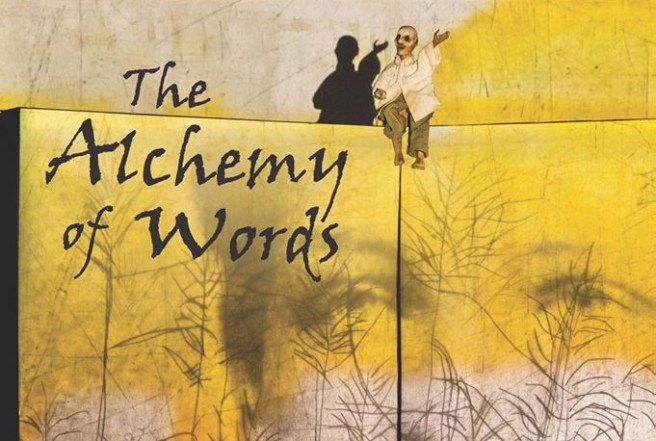
“The Alchemy of Words” plays with different disciplines creatively

DIANE DE BEER

alchemy of words

Photographer: Dee-Ann Kaaijk

After premiering with a sold-out run at the National Arts Festival in Grahamstown, Naomi van Niekerk’s The Alchemy of Words will be touring Southern Africa: landing in Johannesburg at the Market Lab’s Ramolao Makhene theatre from Thursday to 1 October, on 5 and 6 October at Cape Town’s Theatre Arts Admin Collective, 11 October at CCFM in Maputo and on October 14 and 15 at the Etienne Rousseau Theatre in Sasolburg.

Arthur Rimbaud, says Van Niekerk, for those who don’t know, is regarded as the ‘enfant terrible’ of French poetry who published his first immortal poem at the age of 16 only to completely abandon writing poetry at the age of 21! During this short period he managed to create a body of work that has had a profound impact on the poetry of his own time and on that of the 20th Century. André Breton, Dylan Thomas, Jack Kerouac, Bob Dylan, Patti Smith and Jim Morrison are some of the artists and musicians that have been influenced by his writing.

Who is this literary pioneer and creative genius who continues to receive letters from fans all over the world even 123 years after his death?

I am now making myself as scummy as I can. Why? I want to be a poet, and I am working at turning myself into a seer… The idea is to reach the unknown by the derangement of all the senses. It involves enormous suffering but one must be strong and be born a poet… – Arthur Rimbaud, 1871.

In The Alchemy of Words, three artists from different disciplines –puppetry, film and music – search to capture the enigma of this French poet and what it means to be a pioneer. It aims to be an immersive experience that combines artistic projections, puppetry and live music inspired by the diverse imagery from Rimbaud’s poems – smoke filled battlefields, the lush countryside of the French Ardennes, colourful vowels, crimson seas and more.

Naomi van Niekerk

Van Niekerk’s personal affinity to Rimbaud started when she studied for three years in a small town in northern France, Charleville-Mézières which also happens to be the birth town of Rimbaud. His face is everywhere and all the shops are named after him. “I discovered his poetry and started translating it from French with a dictionary (as part of learning the  language) and was intrigued though I never really got into it, it was too complex!”

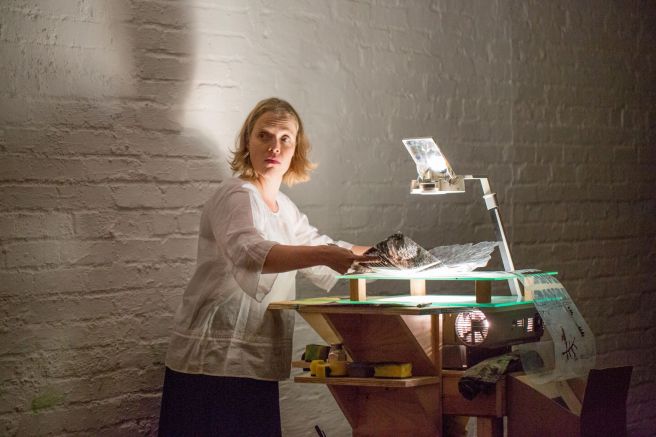
If you have seen any of Van Niekerk’s collaborations, you will know that she works in a unique way. “I don’t describe or see myself as a theatre-maker. I’m an artist and performance is one of the mediums I work with,” she explains.  “I’ve always been working in many mediums such as scenography, puppetry, filmmaking and most recently printmaking. I was always drawn to shadow puppetry because it fits into a frame like a graphic novel and within that frame anything is possible. My light box gives me the same freedom – to create a world in a frame without needing too much. In my case some sand, cardboard and scissors… I also love to draw, its an obsession that started when I studied in France and could not speak French, it was a way of communicating ideas and absorbing new experiences.”

Experiencing her work on stage is like seeing many different artworks appear and disappear as you watch them being made.

partners at play

With The Alchemy of Words, she collaborates with two artists, composer Arnaud van Vliet (a regular collaborator) and puppeteer Yoann Pencolé, someone she studied with in France. It wasn’t an easy process because of living on different continents, but Van Vliet who is also the dramaturge of the piece, selected a series of Rimbaud poetry and set it to music. During a short time together in June (just before the National Arts Festival where the piece premiered) Pencolé and Van Niekerk would work out scenes which Van Vliet would see in the evenings and critique. “The music existed before we started and so did many of the projected imagery. Our challenge was to create a narrative thread,” explains Van Niekerk.

While she is currently hooked on film, she enjoys working in different mediums and the one feeds off the other. “With theatre it feels like I’m taking my prints/drawings off the gallery walls and into the street, making it accessible to a broader public than the elite Fine Art community. Theatre is a shared experience that happens once, within a specific framework of time. The performance then continues to exist in the memory of the audience.”

She believes that The Alchemy of Words has wide appeal. “Some people connect with the words of Rimbaud’s poetry, others enjoy the visuals and the music and we’ve had some fantastic responses from children as well. Anyone who would like to engage with imagery and poetry on both emotional and intellectual level, should see it.”

“This is one of my goals – giving the public a memory that they can linger on.”

  • This collaboration between South African and French artists was made possible by the generous support of the French Institute of South Africa (IFAS)