Coming home seemed to have started the healing process. No longer vivid and garish, the memories seemed to be covered in gossamer, fading behind a curtain of time and forgiveness.
― Karen Fowler, Memories For Sale
DIANE DE BEER
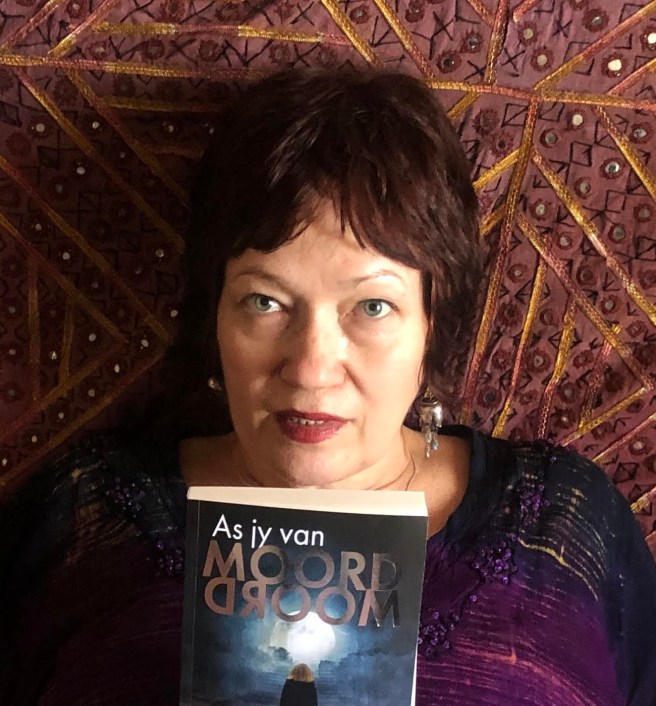
As Jy Van Moord Droom by Deborah Steinmair (Lapa Publishers):
I only review Afrikaans books in very specific circumstances, either because of the writer or perhaps the story that captures my imagination.
Deborah Steinmair is one of my favourite writers and if Afrikaans is one of your languages, check her weekly Vrye Weekblad columns online. I can read them for the vocab, the turn of phrase and the way she plays with the language in very unique fashion.
And then there’s the topic. It might be deadly serious but she will have you screaming with laughter – and also because this contemporary Afrikaans newspaper, being online and of its time, is much more relaxed with the language.
This novel is Steinmair’s first venture into what is dubbed domestic noir and being the contemporary woman she is, she goes to the heart of things – a daughter who has been kidnapped as a sex slave returns after 20 years, a stranger.
But there are forces out there who do not want this story unravelled, while mother and daughter have to find their truth.
We are familiar with these stories, daughters changed at birth or families being tortured by a demonic father. What happens in the aftermath? What happens in a mother’s head when a young daughter only 6 years old disappears? Some might wish them when not found, to be dead rather than living an unimaginable torture.
And then Maryna is suddenly on her doorstep – 26 years old. She arrives on a stormy night, huge, shielded in size and uncommunicative, which makes the coming back together that much tougher.
The rest of the tale is both an adrenalin-rushing story and a mother trying to reach into her daughter’s hidden soul. She knows that this is really going to be the toughest task of them all. But after 20 years of living without, she is determined – like most mother would be – to fight for the full return of the person she lost.
In the process you also get to know about the marriage that disintegrated, which is so often the case when couples go through traumatic events – some come together, but often it rips them apart. It’s often about the cracks that existed before the trauma as well as the different ways people deal with crises or in this instance, loss, that make staying together problematic.
But because Erin needs someone to talk to, she has imaginary conversations with former husband Bert, who in the meantime has immigrated to the US and started a new family. But these conversations are what keeps her sane and probably more real than the ones they would have had if staying together.
Erin is all about her lost daughter. For her it is tough to move on without closure as she tries to make sense of her world until the day her daughter arrives on her doorstep.
It’s not a tough ask to look for familiar bogeymen in the South African context, but typical is not Steinmair’s way. She never opts for the obvious. Her mind and manner is much too maverick to go there. And that is what makes this such a gripping read.
Has she stumbled into a genre, which for many years has been the best escape? Of course, but what makes this one stand out is her breakaway storytelling. There’s no formula here and instead of looking for the action on the outside, the author has turned inward as she explores the mind of a woman who has to navigate some of the toughest emotional terrain on her own.
Couched in the thrilling context of the return of a lost daughter – for more than 20 years – she has found a way of exploring all kinds of issues in today’s world. And that’s the kind of thriller I want to read. It gives all the spills and thrills but there’s some realism there that gets me thinking.
With the current tensions and peaceful resistance in the US (and now worldwide) following yet another police killing of an innocent black man, the insensitivity amidst all of this for example of a white sportsman trying to tell his black teammate why he should not dishonour the flag or his country by taking the knee, Bradley Steyn’s own battle with his privileged whiteness could not be more relevant
Bradley Steyn was still a teenager when he crossed Strijdom Square (at the time) to visit his mom at the State Theatre. His life exploded into the sharpest of tiny shards as he found himself centre of the horrific Barend Strydom massacre (with 8 black victims murdered and 16 injured) yet wasn’t targeted because of the colour of his skin. He tells DIANE DE BEER about the decades of trying to recover his splintered life:
Two journalists capture much of why Bradley Steyn’s book Undercover With Mandela Spies – The Story of the Boy Who Crossed The Square (Jacana) is such a mesmerising read if like me, you aren’t immediately drawn to yet another story about our past as told by a white man.
The first is Daily Maverick’s Marianne Thamm who writes about Bradley Steyn and his book: “Bradley Steyn’s book is not just a rollicking read full of testosterone-driven skop, skiet and donner, treachery and treason, it is also about a young white man’s gradual attainment of wisdom, of understanding how psychologically, emotionally and spiritually corrosive the idea of unreconstructed whiteness is.” (And I implore you to find this article at Daily Maverick and read it, as further proof that this is an illuminating read, as she does a wonderful piece, putting it all into its political context of the time – 1988).
And this concluding paragraph in journalist Ranjeni Munusamy’s column in a past Sunday Times:
“Ours is an impossible story: It began 25 years ago with the triumph over a system that forced us to hate ourselves and each other.We are and will always be a deeply damaged people. On our journey we lost our humanity and our values were eroded. We lost our national pride.Now begins a new era. Broken or conquered, we must find our way.”
These, in different ways, encapsulate Bradley Steyn’s story Undercover with Mandela’s Spies: The Story of the Boy who crossed the Square and the title is perhaps so much more vivid if you live in Pretoria where it all began.
And then, to further intrigue, there’s yet another catch phrase on the cover: Four sworn enemies. The MK ANC Spy team that infiltrated the heart of the apartheid regime.
And the preface begins with: “It’s been 30 years. It’s time I got over it.”
He is, of course, talking about that horrific day that impacted the rest of his life. “There was a court case,” he writes. “A killer got the gallows and was sent to Death Row. I saw what he did, saw him murder those people, but I survived. I got a job. I married. I had a child.” Survivor’s guilt is often what really survives – in these kinds of situations.
Bradley Steyn, who was only 17 years old at the time, was no different. In fact, nothing in his personal circumstances helped either – not because people are bad, but because they don’t know how to react, how best to help. That includes everyone from parents, to teachers, to friends.
He explains his own circumstances best: “But then like a cassette tape unraveling, everything suddenly snarled into a noise I didn’t recognise, and that life I had before just screeched to a halt. “The story of his world following the shooting on the square is how his life took on a life of its own.
“I had escaped physically unscathed, but the real damage lay within. I have never recovered emotionally.” He acknowledges that the post-trauma he suffered was hard on his parents, as his stress disorder intensified in the weeks that followed the slaughter.
“The desolation of not having the school principal or my teachers or the other children – except a couple of close friends – even acknowledge what had happened has remained with me to this day.” It’s a chilling sentence which captures the terror this young boy must have felt following the killing spree he was witness to – allowed to escape simply because of the whiteness of his skin.
That has been his battle and what propelled him into a life dictated mostly by the use of force as he found his life spinning into a routine of violence, seemingly the only thing he understood at the time.
“A child today would be given a time to heal, to be filled with fury, and then to dip and rise – whatever was needed,” he notes.
But there was nothing like that, not for any of the victims. His mind was left to rage with bedtime becoming hellish. It’s so typical of how white people in this country reacted to horror at the time, they turned away, brushed it aside and those directly affected, just had to cope. No one did.
And as he explains, the devastating after-shocks didn’t stop there. That was just the beginning. In desperation, his parents decided that the military might help to bring order to his chaotic life and it did, on the surface – but also honed all his skills for a way of life that led to him announcing the following resumé: Thug for hire. Highly qualified.
As he passed from being a bouncer at nightclubs to a life much darker and dangerous, he writes: “I was just a humble thug, a 19-year-old taken in by the lure of an undercover life where I could blow off the terrors inside my head without having to answer to anyone…the people I came across were often brutish, unafraid of blood and even death. That was the criminal underworld, and I guess I had been shifting more and more into that zone of absolute indifference because it fulfilled a need in me to shut off all emotion.”
From there he followed a short route into doing dirty work for the apartheid regime and at some point, was flipped to the other side, eventually fronting as a far-right fanatic to infiltrate an even scarier world which eventually led to him fleeing the country for his life.
And finally my first reservations when handed the book, and I will again explain this courtesy of Marianne Thamm and journalist/author Janet Smith who was instrumental in the writing of this book:
Smith wrote about her first impressions: “If I was wary of supremacists – who didn’t hesitate to DM me with threats of slitting me open from top to bottom and rejoicing if I was gang-raped – I was cautious of Bradley at the get-go. I was affected by his experience as the boy who crossed the square, but I was immediately suspicious of everything else, especially the depth of his relationship with the ANC.”
She explained that while she was “moved by his having witnessed Strydom’s massacre, I felt he had to be that white male stereotype of a special kind that my generation of South Africans knows only too well. He would want to be ‘protected’ and treated as special in some way because he had always been told he was.”
Thamm in turn writes: “Smith’s sentiments echoed my own when I first picked up this remarkable book. Do we really need another damaged white person who finds redemption through black suffering and pain?”
And when reading the book, these are issues the author battles with himself and which makes this such an intriguing read. He had to come to terms with his demons. And the serious position he takes is underlined by the space of time elapsed since his life was turned on its head.
I love the way Steyn ended the book by giving the details of all the victims of that horrific Strydom Square nightmare, fortunately now with a powerful new name and that of a woman, Lilian Ngoyi; but also the details of the people who played a large part in his life.
It is a book that captures the devastation on so many levels of people living in this country during apartheid, but it also tells a story of reclaiming a life and making a difference, something which this country is also renowned for.
It’s a time to dip into books that you might not always get time for as one of the few good things of lockdown has been the gift of time. DIANE DE BEER reviews one such example:
As I don’t have children, schools have never loomed large in my adult life and, having had my own dose of prestigious same-sex schools in my youth, the traditions etc. don’t factor into my thinking.
But (full disclosure), as Bill Schroder is a family friend and I had listened to him speaking in general and more specifically about schools – also being a Pretoria inhabitant for the past 40 plus years – I was tempted to see what he had to say following his retirement (not that he has ever given up fundraising for his final alma mater).
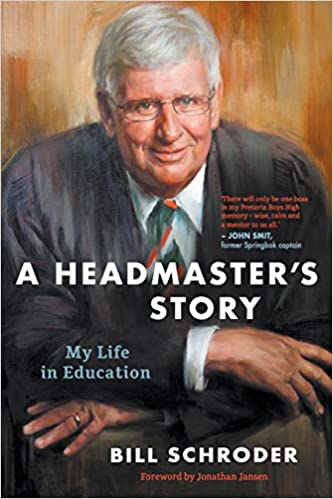
And thus when starting with A Headmaster’s Story: My Life in Education by Bill Schroder (Jonathan Ball Publishers), it took a few chapters for me to fully engage. But once he grabbed hold of me, it was a fascinating read.
With the current pandemic, most people will have realised how vital frontline or essential workers are to all of our lives. These are the people who are taken for granted, held in little regard and paid extremely badly. With money being power in the world we live in, no wonder the teaching profession is not taken seriously.
And yet all of us go to school and we all know the impact those special teachers in our lives have on our future. They are the people who speak truth to power, who are intent on showing their pupils the things that count and who often steer us in a direction that we never thought was possible.
What we should never forget with these essential workers (and this is exactly what teachers and educators are) is that they are often driven by an overwhelming desire to do the best they can. It is a calling rather than a career and that’s why the good ones always rise to the top.
Once the young Schroder realises that what he wants to do is be a headmaster, to lead, and to do it his way, there’s no stopping him. He paid his dues and proved his mettle at schools that were write-offs in the community but he also learnt valuable lessons right through his teaching career from the day he started.
He is someone who knows and acknowledges when he could possibly have done better (a rare trait) in the competitive world of top schools where it is dog eats dog (as in any of these mini societies that are understood only by those who are part of them). To survive all the in-fighting and the struggle of getting it right is a feat in itself, especially if you are an outsider, which in many instances is what he was.
But this is not where this headmaster lingers. He is much more intent on dealing with the way he did things and why he believes they work.
For the reader, it is clear that he had some blessings – his wife Cherry the most important one. Both of them are their own people but Schroder is very clear on why he could deliver his ideals – his wife supported him in everything he did as a headmaster. When they had to move even in the worst of circumstances, she simply got packing. And often his teaching duties included that of serving as house master at one of the boarding homes, which included the co-operation of the whole family. Irt was never an issue And allows you to focus where it’s necessary.
There are many stories and lessons he imparts but often it is best just to hear what he has to say.
As the book progresses, in his own words, he offers the perfect example of his leadership with this example:
“…I feel strongly that when a principal is involved in major (and not so major) disciplinary and behavioural issues, he or she can frequently defuse them and prevent long, drawn-out disciplinary issues that then end up in the hands of people who are not necessarily skilled or experienced enough to deal with the problem. It is vital their parents to know that the head finds these issues important enough to get involved.
“I know there are procedures that are prescribed for dealing with various disciplinary issues, but in my opinion, these should be a last resort. I am sure that when serious disciplinary issues arise in schools, there has not been visible leadership, getting to the source of the problem immediately and decisively.
“…this underlines the need to surround yourself with good and trustworthy people, and to let them pick up the issues at which you as leader might not be competent, and in so doing also to acknowledge your weaknesses.
“No matter how small or inconsequential a problem that a pupil brings to you may seem, if it is important to him or her, then as a leader you need to respect that importance. Theories of leadership and leadership styles abound; arguments about whether leaders are born or can be made have gone on for centuries; and of course your leadership style is a reflection of many things, and in particular your personality….
The next priority for me was support for my staff. …”
It is this kind of insight that makes this such a fascinating read. For those of us living in Pretoria, many stories swirl around about loved headmasters. There’s a reason for that; they make a difference to lives – more importantly young lives.
And Schroder didn’t only make a difference to the lives directly under his care. As the former headmaster of one of the country’s top schools, a few years after retirement he was approached to consider mentoring a secondary school in Soshanguwe.
He was persuaded by a former member of the governing body of Boys High to assist them. His brief was specifically to mentor the principal and his staff at this particular school. He describes it as a “most interesting, challenging and at times a depressing relationship,” but more importantly he goes on to say, “from which I have learned as much, if not more, than they have.”
Like much of his advice throughout the book, it is often relevant to ordinary lives. He was blessed with a great partner who stood by his side throughout his career and brought her own special magic as the headmaster’s wife. That allowed him to walk and talk his own truth which he imparts in this smart book.
And even for those who don’t have kids at school, it’s good to know that we still have these educators who are in it for all the right reasons. It has always been one of the noblest and most precious professions, but it gets tougher and tougher to make it a choice.
It’s time that we honour these noble warriors who still stand up to be counted. It’s a calling and they can’t help themselves.
A Good Neighbourhood by Therese Anne Fowler (Headline Review):
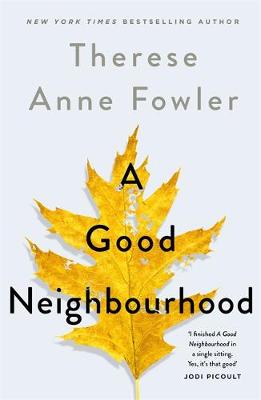
A perfect on-the-surface family moves into a new neighbourhood – a good American neighbourhood. The family next door is represented by an African-American mother with her mixed-race son.
The mother, whose fields are forestry and ecology, regards those who destroy trees as “raping the landscape”.
But not only had Brad Whitman cut down ALL the trees in the garden to build his brand new house next door, he had also circumvented all the rules with the help of officials charmed by his celebrity status. Because of unethical drilling practices in the back garden to build a patio and pool, it has damaged an ancient oak tree in Valerie Alston-Holt’s garden – the reason she has never left this home even though it held dark memories because of her husband’s death.
The scene is set for some explosive business with race, underhand dealings and an unwavering moral compass, all coming into play.
Adding to the already combustible mix are two young adults – the mixed-race Xavier Alston Holt (who in this time on face value is regarded as a young black male) and the lily-white Juniper Whitman – who fall in love even though the young man has been told by his mother that “those kinds of people are all about keeping their girls and their bloodlines ‘pure’. Forty, fifty years ago his kind would lynch you just for looking at her. Maybe they’re not stringing up boys anymore, but the attitudes haven’t changed.”
And watching what Americans get up to during lockdown – and before – this is not hard to imagine.
Juniper, on the other hand, took a purity vow at the age of 14 on the insistence of her stepfather Brad and her mom, Julia, who wants to protect her daughter from facing the same kind of dilemma she was faced with when pregnant and still just a teen. Brad often refers to her as a rescue bride because that’s what he did when marrying her with a young daughter, he believes. Scratch a little under the surface of any of these smiling families and the skeletons come tumbling out, is what the author implies.
But she’s set up the perfect scenario with which to tackle many different issues and she has also chosen a specific style in which to tell this story, with someone from the good neighbourhood as the narrator. Yet, while she/he/they address the reader directly, we don’t know who she/he/they are.
And it is especially with the narrator that I had problems. It’s a cunningly clever story as it brings together so many different strands and issues that criss–cross one another, in a very contemporary and accessible kind of way.
Take, for example, the Brad character. He is a self-made man but as soon as he starts making REAL money, a certain entitlement starts emerging as he cuts corners with anything he wants changed in his life. He feels that he has earned that and that he doesn’t have to consider anyone else in these dealings. It’s simply to satisfy his own needs.
As for his needs that emerge more clearly about his budding and beautiful stepdaughter, Juniper, he justifies those because he has assured himself that this inexperienced, naive young girl returns his feelings. He should be the first to show her the way.
It’s heady stuff as we dive into so many different dilemmas which families have to deal with in a world that is becoming more and more complicated to navigate. And because as a society we seem to hop, skip and jump from one story to the next due to a short attention span, one that seems to diminish daily, some people do terrible things with the knowledge that the information will only be out there for a blink of an eye. And they’re right. With scandals coming at you from across the world via a myriad of social media, how can you keep count? Some stick, others seemingly disappear without much attention, either good or bad.
So all these things play into a fascinating story of a good neighbourhood (and we know those, there’s a wonderful Afrikaans saying, Stil waters, diepe grond, onder draai die duiwels rond loosely translated as still waters run deep and that’s where the devil roams).
I could hardly put the book down because the story is so compelling, but throughout I was thinking of particularly two friends, both writers, who would kill this one. What was a thrilling story and one very relevant to our times, could also be a brilliant novel with some smarter writing and editing.
Take this following rumination:
“Two people are in each other’s company and feel the pull of attraction: We call that pull chemistry, but what is the actual substance? (Really?)
And it goes on…: What’s the biology of sexual attraction, and is that biology the same as romantic love, and did this pair of teenagers have it, whatever it is?
This rambling goes on for one and a half pages and the two teens who are sketched with much wisdom, would be far more interesting on this topic than the narrator(s).
So while this is a gripping novel to read and hugely enjoyable, it seems once you are a New York Times Bestselling Author, you can get away with almost anything.
There’s a reason good editors get such high praise. They are often the ones who keep authors honest, who can see when there’s something special but also when something needs some smart cleaning up.
It’s not the device that is the problem here, it’s the way it is applied that doesn’t quite work and as the story and the characters’ goings on get momentum, the irritation levels also rise…
But check it out for yourself. It is a damn good story.
The library is inhabited by spirits that come out of the pages at night.
– Isabel Allende
Diane de Beer
The Mirror and The Light by Hilary Mantel (4th Estate):
When the third in Hilary Mantel’s Tudor trilogy landed at home (thanks to the publishers), Covid19 had already surfaced across the world, I had an arts festival to attend and I thought it would be the perfect read for my husband who was staying at home, alone, for 10 days.
On my return, the lockdown hadn’t yet been announced, the book was waiting – and lockdown happened.
Unintentionally, I had in my hands what I think might just be the perfect lockdown read. It’s not every day that you’re excited about starting an 875-page book. For one thing they’re heavy to hold in bed, but Mantel being the writer she is, the topic – an extraordinary one and this third in the trilogy – as had been proven with the first two Booker-winning books, will take you to another world completely.
One which also has plagues it must be said, but then it’s reassuring to know that the world made it through those too – and they don’t play a large role in the story while adding to the overwhelmingly precarious circumstances of everyone except those serving the king – and they have the threat of possible death hanging over their heads all the time.
“But now there are rumours of plague and sweating sickness. It is not wise to allow crowds in the street, or pack bodies into indoor spaces.” Sound familiar?
Hilary Mantel is in a league of her own when it comes to historical writing. The layers of every sentence are mind-boggling, her language pure poetry and her storytelling abilities backed by research that is painstaking.
It is difficult to explain the full magnitude of her storytelling without it sounding tough to read, too much hard work or simply too much of a drag to even tackle. And I won’t lie, it isn’t easy reading in the sense of just picking up the book and diving into the story. Dealing with Henry VIII and his constantly changing court, depending mostly on his whims, you have to keep your wits about you to know who is who.
But Mantel knows that and she reaches out a helping hand with a very strong listing at the start of the book including all the main players. To give an indication what we’re dealing with, it starts with the heading The Recently Dead with the main topic of the previous book, Anne Boleyn, Queen of England, first on the list.
If you have read the previous two, Wolf Hall and Bring Up The Bodies, you will know that the trilogy while dealing with the reign of Henry VIII, centres on the machinations of Thomas Cromwell, later Lord Cromwell, Secretary to the king, Lord Privy Seal and Vicegerent in Spirituals; that is, the king’s deputy in the English church.
What his job(s) is really about is being constantly on call and responding to the king’s every whim. This is about a ruler and a time when his word and every wish was what everything was about. “Once Henry says, ‘This is my wish,’ it becomes so dear and familiar a wish that he thinks he has always had it. He names his need, and he wants it supplied.” And “He (Cromwell) thinks, I want to be able to locate the knave at a moment’s notice. The king spits at the name of Becket, but give him a year or two and he may change his mind, and make him a saint again. Sad, but those are the times.”
The complete disparity between the king and his immediate circle and the rest of the people reminds strongly of the world we live in today, so glaringly visible during Covid19 where the treatment in so many instances is dependent on good health services. Obamacare is beginning to make sense and when you see the statistics in the US of the disparity in communities worst hit by Covid19 nothing more has to be said. Similarly, the squalid circumstances of our squatter camps. Many people don’t even consider space a luxury.
More than anything though, because you have to pay attention when reading the dense writing of Mantel, it transports you into another world far removed from the one we live in because it is so far back in time (1536 – 1540). In a recent interview with Mantel when the interviewer wanted to know something about the world we find ourselves in now (this was before Covid19), her response was quick as she reminded her audience that she had been living in the 1500s for quite some time. With research, the book took 7 years to write and is described by the author as the “greatest challenge of her writing life”.
But just breathe in some of her writing:
Hilary Mantel
“After supper, as a hush falls and the long midsummer day folds itself and disposes to dusk…”
When talking about the latest choice of wife for the king: “Which one will he take? They say the one has brown hair and the one blonde.
“Go for the blonde, is my advice.” …
“His tastes may have changed.” She looks at him as if he is simple. “I do not think blondes go out of style.”
That could be part of any contemporary story.
And this extraordinary thinking by Cromwell on plums: “He used to think that the plums in this country weren’t good enough, and so he has reformed them, grafting scion to rootstock. Now his houses have plums ripening from July to late October, fruits the size of a walnut or a baby’s heart, plums mottled and streaked, stippled and flecked, marbled and rayed, their skins lemon to mustard, russet to scarlet, azure to black, some smooth and some furred like little animals with lilac or white ash; round amber fruits like crimson eggs in a silver net, their flesh firm or melting, honeyed or vinous; his favoured kind the perdrigon and it black , the palest having a yellow skin dotted white, sprinkled red where the sun touches it, its perfumed flesh ripe in late August; then the perdrigon violet and its black sister, favouring east-facing walls, yielding September fruits solid in the hand, their flesh yellow-green and rich, separating easily from the stone…” and it goes on.
The richness of the description says as much about Cromwell’s need to have diversions as about his attention to detail, whether it is the king’s needs or his longing for the riches he was starved of in his rotten and abusive childhood.
And that’s what is so extraordinary about her writing. Mantel tells a story of the time as much about the people as the way they lived. One dithers constantly between caring deeply for or discarding Cromwell for his dastardly deeds. He was doing the kind of dance someone like Dr Fauchi or Governor Cuomo has to do around Donald Trump. It’s not that they want his favour, they need it to serve the nation.
For Cromwell it was about survival. While he accumulated much wealth and an enviable lifestyle at the time, his family savoured his successes after his death rather than him ever having the time. He was simply treading water and even though the reader knows the end of the story and the death of Cromwell from the beginning, it’s with huge sadness that you follow his downfall in the final chapters of a book that masterfully concludes a long sojourn with Thomas Cromwell and the king he served with everything he had.
Perhaps too well, but he never had any choice. And even the outcome was destined. If you have read the first two, this isn’t even an option. And if you haven’t, this is the perfect time to tackle all three. You won’t be sorry – almost guaranteed.
I can’t wait to see where Mantel goes next. Wherever it may be, I will follow.
I am fascinated by the idea that the greatest architecture in the city has happened by accident
Thomas Chapman.
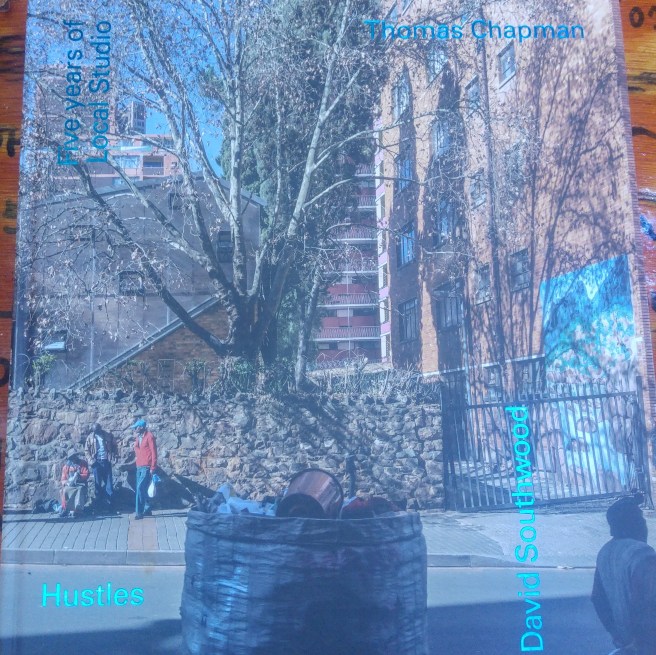
Hustles – Five Years Of Local Studio by architect Thomas Chapman with photographer Dave Southwood:
Because of the time I’m writing in, I couldn’t speak to the author(s) face to face, but really didn’t need to, because they state their purpose so clearly in the book Hustle – Five years of Local Studio by Thomas Chapman (Photographer: David Southwood).
The title, explains the architect Thomas Chapman, refers to the “opportunistic process of becoming local – of using design to solve urban problems amidst immense financial and time constraints – and throughout this process, trying to hustle an architectural product that is present, engaged, hopeful and ultimately, never boring”.
Knowing a few of their buildings but also having read this book, they can never be accused of that – boring! No sir!
Trevor Huddleston Memorial Centre.
With this book then, Thomas wanted to capture the spirit of the five past years of his practice, which consisted entirely of projects that required hustling of some form or another to get the project done.
In the meantime, he states, while compiling the book, they have embarked on a new phase for the practice with “more trusting clients, (slightly) bigger project budgets and hence a greater refinement in design and construction.
He admits to it being tempting to include some of these projects to extract value from what was becoming a very expensive book, but he resolved to draw the line at 99 Juta, at the time their most recently completed project in Braamfontein, which he thought still captured the spirit of Local Studio as a start-up.
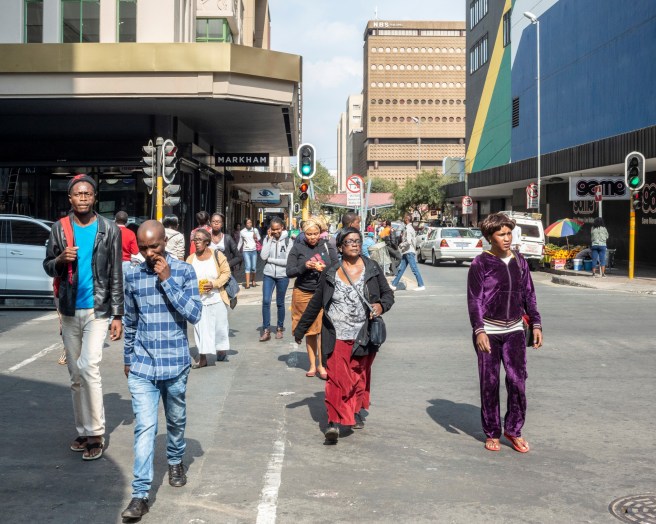
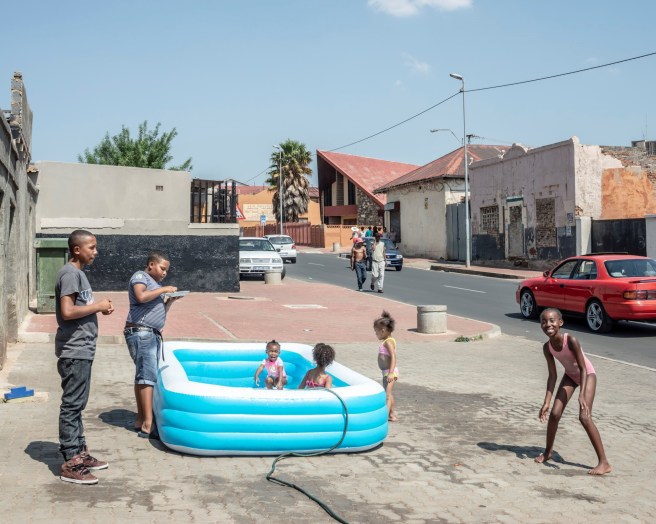
Their choice of photographer, David Southwood, a self-proclaimed human rights photographer, is someone whose pictures of their work made them change the way they saw and contextualised their work so that they started thinking differently about people in cities.
Urban landscapes
David recalls their first meeting in the book and quotes something he said on their drive: “I like photographing architecture, but I much prefer photographing scenes which embed the built form into the street and render the structure as a continuum of its context, if in fact they are at all connected. In fact the photos of architecture that I have done which I like the most obscure the structure almost entirely.” As it turned out, the architect and the photographer were a perfect match.
Urban landscapes
He remarked further on in this introduction: “The only way a practice can include as many street photographs as this in a monograph is if they are genuinely concerned with the street. Local Studio is obsessed with the street. The street is the immediate material context in Johannesburg if you are building, where the urban fabric is rough and unkempt.”
Outreach Foundation Community Centre in Hillbrow.
Familiar with the following project, the Outreach Foundation in Hillbrow, because of the Hillbrow Theatre where Gerard Bester is involved, this is also one of the projects I want to focus on here.
Gerard explains in a piece about this complex that the theatre provides a space for inner-city children and youth. It serves the neighbourhood and after-school programmes are held. The theatre was there, but in 2009 they raised some money for a homework centre. After workshops and discussions were held with Thomas, what emerged was a building that now houses the computer centre, dance studio, boardroom and offices of the youth centre.
He explains further that though Hillbrow has negative connotations for outsiders, “I think the people that actually live in Hillbrow, have made it their own.”
Hillbrow Trauma Counselling Centre
Even though it is one of the city’s toughest neighbourhoods, he believes that we have to keep “engaging an exercise in imagining what Hillbrow can be, and not oppose that; to absolutely engage with the people that reside in the neighbourhood, and not gentrify it but to create meaningful, authentic change.”
Which is exactly what has been happening with the project he is engaged with – creating a safe space that is also open and accessible.
Hill Street Café
Pretty close by is (was) the Hill Street Café, a steel restaurant pavilion built as a temporary structure on the foundations of a demolished lunatic asylum in Jozi’s historical Old Fort (just above the Constitutional Court) which was designed to last 2 years but eventually stood for four.
I can remember doing an interview with Gerard there about the Hillbrow Theatre and it’s a pity that the structure, which was erected there specifically to commemorate the space where the Asylum stood, has been removed. It was a warm and embracing space with great coffee and I remember cool service.
Fullham Heights which now houses Breezeblock Café and Whippet Cycle Company on the ground floor, Local Studio on the first floor and two residential units on the top floor.
The other building which I am familiar with is the one that also houses the brilliant Breezeblock Café in Brixton. Called Fullham Heights, Thomas notes that it is one of the first projects to demonstrate the principals and guidelines of the Johannesburg Corridors of Freedom policy. It looks to promote mixed-use development and residential densification in neighbourhoods adjacent to the recently completed BRT (Bus Rapid Transit) network.
He explains that the building is a conversion of an old corner shop, which had been a Chinese restaurant and subsequently rented by Local Studio as office space prior to its purchase for redevelopment.
The Local Studio offices, a part of Fullham Heights in Brixton.
Now the building houses the funky Café and Whippet Cycle Company on the ground floor, Local Studio on the first floor and two residential units on the top floor. The new structure contrasts with the original concrete facade and pavement colonnade, which were restored as part of the project.
These are simply two projects selected because I am familiar with them, but there is so much more to this book. One needs to see the full scope to understand the ethos. Even if the firm is bigger and reaching higher, I can hardly believe that with this kind of creative compass, their work doesn’t still remain in this kind of contemporary African city mind space.
Westbury Pedestrian Bridge and Park, an effort to influence the choice of architecture in the city.
And what would be even better would be to buy the book and do your own guided tours to discover a city you probably weren’t even aware exists.
Anyone who knows artist/chef/stylist/entrepreneur Lientjie Wessels will remember her for her imagination and individuality. It is exactly those two elements that she exhibits so joyfully in her new recipe book titled Geure (flavours by Annake Müller Publishing). DIANE DE BEER spoke to the author:
As Lientjie tells it, she has for a long time been thinking of writing a cookery book. “My love of strong flavours and tastes came to the fore when I participated in kykNET’s Kokkedoor 3,” she says. And those of us who know her were quite surprised by her participation. But no one more so than Lientjie herself. That’s just who she is.
The first time I bumped into the extraordinary imagination of the larger-than-life Lientjie was with her Brooklyn Mall shop Lemon Lounge. You knew immediately if this was your kind of place or not and if it was, you were hooked on the Lientjie sensibility and style, which is all her own and has a charm that is completely unique. Her food and her fine art are interlinked and -twined – similarly in this book, which makes this one such a feast for the eyes with the food further enhanced by her paintings.
Lemon and vanilla cake
Lientjie’s painting
Her spectacular flair and flights of imagination flourished during her years in magazine styling and also in her much-loved restaurant Li-bel in Sunnyside and later Albizia in Cullinan and for a while on a family farm in that neighbourhood.
There has always been something of a gypsy about Lientjie, the way she embraces life and everything it offers. For those of us who favoured her food tables, there was always the knowledge that it might all be gone tomorrow, but also that it would appear in some other form – as it always does.
That’s why this book, which encapsulates it all, is such a treasure – so if your Afrikaans language skills are on par, this is one worth checking out.
Roasted marrow bone on green salad with pickled onion salsa
Salted snoek cakes
Because flavours, which were introduced to Lientjie by her mother (to whom the book is dedicated), have played such an important role in her food journey, this is the focus: vinegar, citrus, ginger, olives and olive oil, flowers, chilly and mustard, honey, saffron and vanilla, garlic, herbs, spices and salt, sumac and tamarind, nuts, sesame seeds and tahini.
Yum!
Soulmates: Lientjie Wessels and the late Robert Denton
She was helped by her late husband Robert (who sadly died suddenly last year) with the writing and, like with everything these two life travellers tackled, it is quirky and simply a joy to experience. Each chapter starts with a description of the flavour showcased and in many of them, Lientjie’s mother’s influence surfaces. “My first memories of vinegar,” she writes, “is absolutely the rows and rows of pickled onions that my mom made each year.”
Greek style leg of lamb with hasselback potatoes, anchovies, chimichurri and nasturtium chips
Roasted marrow bone on green salad with pickled onion salsa
And then the recipes follow and in this instance it stretches from pickled walnuts on toast with goat’s milk cheese and fast fridge pickle. Citrus is included in recipes of lemon mousse, lemon curd, soup with lamb shanks, rice and lemon, pork fillet with a lime sauce, fruit salad and more.
Lientjie’s food has always been rooted in South Africa but with a strong dose of Middle Eastern and Asian flavours. Her mother was her first and strongest influence and, according to Lientjie, started to cook because hér mother could not. “My grandmother taught me everything else, but not about making food.”
Spinach and ricotta gnocchi
From the first time we talked about food, she has talked about her boredom threshold, and she believes that her restaurant days were always doomed, because she couldn’t be bothered to make a dish more than three times. By then she had achieved everything she wanted. Also probably influenced by her mother, who had such an unusual palate and constantly introduced her family to new flavours and textures. “She always wanted to make something new,” notes Lientjie.
But of course, that’s also what made her dining experiences so unique and unusual. She has a very distinct signature and the menu would always be a surprise. Similarly she has achieved that individuality in this absorbing book.
Salted snoek cakes
Dark chocolate ice cream with cardamom and pomegranate
The colours are vibrant and welcoming, the food – apart from being grouped according to flavour – is a lovely mix of starters, mains and desserts with sauces, snacks, breakfasts and more.
There’s never anything conventional or contrived about this artist. She is probably the last one I would have expected to appear on Kokkedoor and yet, in the end, it resulted in this fantastic book and when you listen to her, she also discovered a newfound confidence in her cooking during the show.
She also realised that she really likes food. Anyone who has had a restaurant will know that it must be one of the most challenging endeavours to attempt . She did it twice and then created a very niche way of dining. It was spectacular and appealed to a select and very loyal group of diners. Local chefs will tell you that South Africans are tough to feed and Pretoria, I have often been informed, is an especially difficult market at best.
But some of my best experiences were either at a pavement table at Li-bel with Lientjie and Robert’s dogs lying around, drinking a coffee after a delicious meal and never feeling I had to rush anything; or checking in for a Sunday meal at Albizia with Robert, a storyteller extraordinaire, entertaining us with his fables of life on the fast side.
Lientjie paintings
Lientjie painting
Lientjie’s paintings
And then there’s Lientjie’s art. It has been incorporated into the book in simply the best way and introduces even more of the way her mind and creativity works. For her, when she makes food or paints, the same principles come into play. “I can taste things in my head,” she says. It’s all conceptual, exactly like her art. “It’s about balance, colour and texture.”
Lientjie Wessels
Looking at the future, she wants to find a way to make people and cultures touch one another. “We have so many connections through food,” she explains.
And then she shares her delights in the best way she knows how – with her recipes and through her art.
For more detail on buying the book, contact Annake Müller Publishing: annakem@mweb.co.za. After lockdown they will be sending those books via courier.
Cody Mountain as Kev and Joel Rosenblatt as Mike in Cut-Out Girls
These are tough times and yet for those of us privileged enough to stream and have other entertainment options like DStv, the options of how to pass the time with reading, movies, theatre, documentaries in-between work, are endless.
DIANE DE BEER reviews three of her current favourites:
We have to start with local and I was thrilled to see when Nicola Hanekom’s debut movie Cut-Out Girls appeared on Box-Office (currently at a mere R25 a movie).
Hanekom is one of our most exciting theatre director/writers who has recently also moved into television and now film, with this, her first feature film. In interviews she explains that she first wrote it as a play, specifically for young actors she was working with at the time.
The audience reaction was so unexpected (it’s a story about date rape), that she decided it needed a wider audience, and in this instance a film. These are debut film roles for all the youngsters. That’s amazing! And they had to do crowdfunding to make it all happen.
Kev (Cody Mountain) and Jenna (Kesiah Gabriel) in Cut-Out Girls.
Clea (Ashleigh van der Hoven) in Cut-Out Girls
Clea (Ashleigh van der Hoven) in Cut-Out Girls
Anni (Atlanta Johnson) in Cut-Out Girls
Rape is such a scourge in this country that we are all duty bound to talk about it. Even with this pandemic, around the world, abuse is a huge problem because so many people cannot deal with this kind of pressure and violence is their own release.
And with the young, the world we live in now, it’s not that everyone has to live scared, but they have to live smart. We have to know the dangers out there and how to keep ourselves safe – women and especially young women, who don’t yet have their cynicism radars working fulltime, have to be vigilant.
I remember Redi Thlabi in her book Endings and Beginnings writing about being scared when walking to school at the age of 11, highlighting the parallel universes we live in. Nevertheless, we’re all vulnerable and what Hanekom’s exposé uncovers so smartly, are the monsters within.
It is sometimes the boy next door, the tennis star, the popular personality at school who feels entitled. Because danger is something we live with in this world, we sometimes forget when we have to be on our guard. And this is the aspect Hanekom spotlights.
Being both writer and director and informed by an intimate knowledge of the cast, she could work smartly with a small budget. You certainly don’t feel short-changed and the performances are beautifully balanced.
It’s a film of our time, speaks to both young and old and extends the reach of one of our most innovative artists.
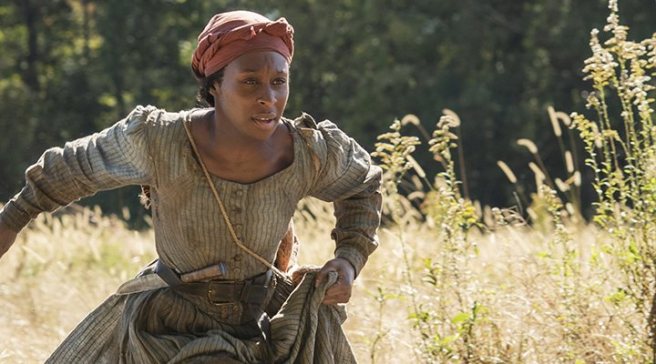
Harriet starring a powerful Cynthia Erivo
Another film I was keen to see, is also part of the Box-Office collection. Cynthia Erivo stars as Harriet Tubman in Harriet, the woman who not only escapes from slavery herself, but also freed many slaves as part of the underground railroad, a perilous freedom endeavour of that time.
At some point, Harriet says people should not be owned by other people, a sentence that is so obvious yet so ignored – even today – still. That’s why these stories are so important. This is also the time when the people affected (still today) by these abominations are the ones telling the stories. That makes a huge difference in both tone and authenticity.
And for this one specifically, Cynthia Erivo’s performance is epic. She was rewarded with the ONLY Oscar nomination for an actor of colour and also for the best original song, which she both co-wrote and performed. She’s a remarkable talent both as actor and singer. She has a strength of character and a powerful presence, which served the character well and her voice has a quality that stops you in your tracks.
Her rewards have been well deserved and this following huge controversy because she was a British actor playing an American character – but she proved them wrong and hopefully people were big enough to concede and witness her prowess.
The story is a great one but there are problems with the way the story was told – just clumsy and sometimes with too little subtlety and sensitivity. One would think it is a story that almost tells itself especially with Erivo as your talisman.
But it remains a story worthy of your time and money.
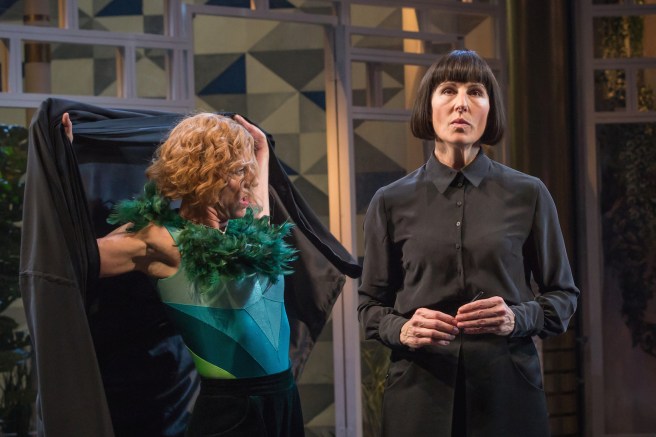
Doon Mackichan (Feste) and Tamsin Greig (Malvolia). Picture Marc Brenner
Last on the list is the latest NT Live streaming of 12th Night with Tamsin Greig as the main attraction. But she says herself, this is an ensemble cast as anyone familiar with this Shakespeare comedy will recognise. And while this is a matter of confusingly mistaken and hidden identity throughout, with director Simon Godwin’s gender-fluid production, you really have to keep your wits about you.
Greig is cast as Malvolio (or in this case Malvolia) and hers is the performance on which the play hangs. Not only is the gender switch in these times fun to watch and navigate but with a play that is a dialogue between order and disorder, puritanism and revelry, and finally, control and fear with terror the driver of control, another contemporary evil.
That is how the director viewed it says Greig in an interview which is useful to watch (even with a few spoilers) before getting into the play itself. It’s also part of the NT Live stable on YouTube and easy to find.
We have had our own innovative 12th Night (a Clare Stopford production in 1998 with amongst others Langley Kirkwood, Isadora Verwey, David Dennis and Bo Peterson) and it is a play that lends itself to interpretation as you heighten both the comic and tragic effects at will.
Phoebe Fox as Olivia second from the right with her entourage. Picture Marc Brenner
This being a first class British cast with some exceptional performances, a set that enhances the fast flow of the story, some excellent songs with a brilliant burlesque interlude stuck in between, Shakespeare can hardly be more contemporary. Just check a striking ensemble stepping out in their 21st Century ubiquitous veils.
It’s sassy and smart with as much laughter as there’s food for thought in a time when gender fluidity and identity could not be more centre stage. It’s exactly where we are now as Shakespeare in his constantly shows us: the more it changes, the more it stays the same.
Catch it on NT Live on YouTube until Thursday at 8pm when Frankenstein starring Benedict Cumberbatch follows. Don’t miss that either.
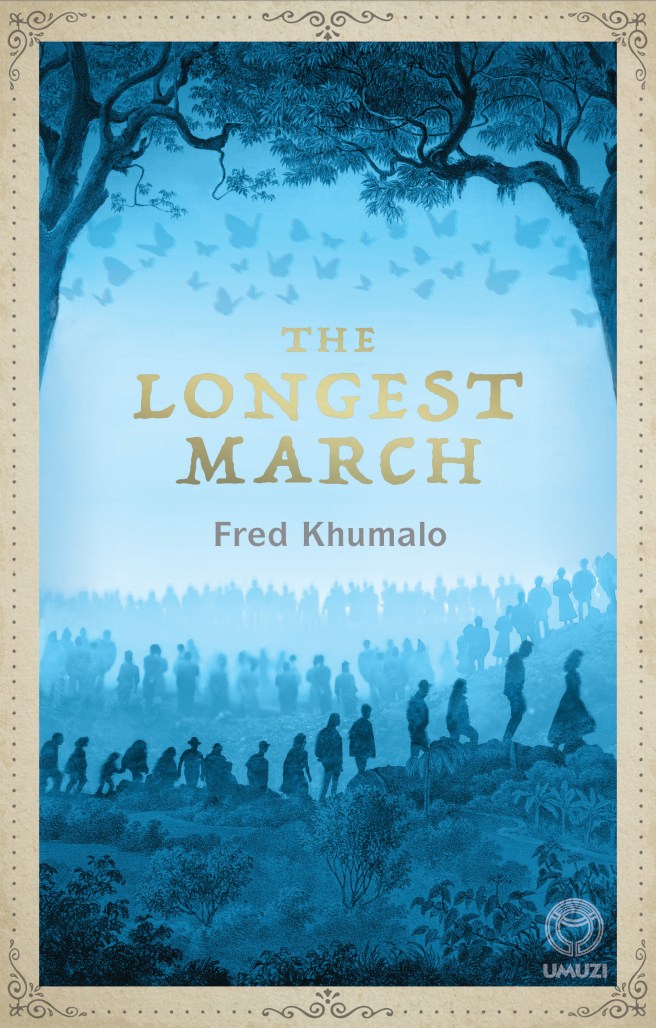
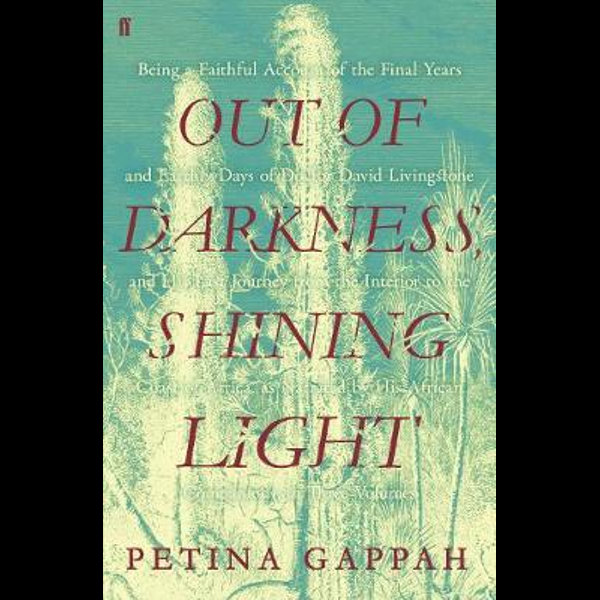
It’s a peculiar thing, synchronicity, but when it happens, it feels as if it was meant to be. Like reading two books, Fred Khumalo’s The Longest March (Umuzi) and Petina Gappah’s Out of the Darkness, Shining Light (Faber&Faber) in close succession.
Both of these are novels that focus on marches in the past, both retell the stories from another point of view, and both are based on fact with a fictionalised retelling which reimagines what might have happened in much more detail.
It is a time for many to relook at their histories which have always been told from the conqueror’s point of view, and on this continent that means told from a white perspective, often downplaying or more often disregarding any other point of view even when it was their story to tell or there was participation which shouldn’t have been avoided.
Like so many of these stories from our past, depending on the colour of your skin, they come as a complete surprise.
Fred Khumalo
I start with Khumalo, because his story is closer to home. The facts weren’t familiar to me, giving the novel a fascinating backdrop. Approximately 120 years ago, 7 000 Zulu mineworkers walked from the gold mines in Jozi to Natal, covering a distance of 500 km over 10 days.
It wasn’t as if these men had a choice. When war is declared between the South African Republic and the British Empire, the mines are shut down and migrant workers are ordered to leave. But, there’s a problem. There are no trains running so the only way to get back home and away from danger is on foot.
Khumalo decides to tell a story with this as a backdrop as one of the miners, Nduku, decides to take his woman back home with him. Again, there’s a problem – she’s white. The only way to achieve this is to make her a mineworker’s wife and all this in spite of the couple having broken off their engagement.
There’s more than enough drama to go around – the physical and emotional journey for both Nduku and Philippa – who have to survive many mostly physical obstacles but also a handful of unseen and unexpected dangers.
It won’t be a South African story if someone doesn’t take advantage of those already in trouble. On the sidelines yet part of the journey is a group who are hoping to cash in on the salaries of these migrant workers on the long march home.
It’s gripping stuff and Khumalo is a supreme storyteller, but more than anything it was the march that really intrigued me. Of course it’s not something that was part of our school history during the apartheid years, and I would be joyous and surprised if it has become part of the curriculum even now.
But to discover and learn about this extraordinary sidebar during one of our many wars at the turn of the century is exhilarating. This is what is supposed to happen in a more enlightened time in a country.
Histories should be re-written and retold to reflect the role of everyone who was part of the story. For far too long the world has listened to too few voices simply because they weren’t there or drowned out by those who held the power.
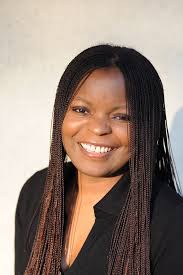
In similar vein, Zimbabwean author Pettina Gappa tells the story of a very different march but with many similarities. Most importantly it is about bringing the main players in this drama from the shadows into the sunlight as the title implies.
Most of us will be familiar with the name Dr David Livingstone but unless you are a history buff, few people will know the story of the body of “Bwana Daudi – the Doctor”.
This is the story of the 69 men and women who carried his remains over 1 500 miles (imagine that!), so that he could be taken back to his homeland across the sea and thus buried in his own country. The heroics of even contemplating that deed make it extraordinary that this wasn’t part of our history.
But of course, never during apartheid and I again, I’m sure it still isn’t taught at schools or university as a general historical lesson. I’m not holding my breath that someone proves me wrong either – perhaps in some specialised field…even that would be good.
Gappah is a fascinating writer, not only in the way she tells stories but also in the stories she decides to tell. This one, as you can imagine, is above everything else set in a time of slavery, which brings yet another dimension to the tale. The fact that Dr Livingstone gave his slaves their freedom didn’t mean automatically that that would happen. Sometimes it was also a better life to keep toiling as if you were still in the same circumstances as before.
But also the people’s dedication, that they would even want to carry a white man’s bones so that they could be sent for burial in his homeland – at that time, is astonishing. In her acknowledgements the author notes that she spent 10 years on historical research. “But,” she writes, “I am under no illusion that this work is in any sense historically accurate. While rooted in historical fact, this novel is above all imaginative fiction.”
She points to a few historians but above all Thomas Pakenham, whose first chapter of The Scramble for Africa sparked the idea for this book as long ago as 1999. She adds that he was also both generous and kind when she consulted him on the project.
She believes she also had the privilege of consulting original letters, photographs, and other documents related to David Livingstone that are collected in all kinds of institutions, including the National Library of Scotland; the Peace Memorial Museum, Zanzibar; the David Livingstone Centre in Blantyre; and the National Archives of Zimbabwe in Harare.
“I especially want to mention the youngest Livingstone enthusiast of them all, dear Tayani Mhizha, who wrote a brilliant International Baccalaureate analytical essay on him at the age of seventeen,” she adds.
She also consulted many different letters and documents that are collected by different institutions around the world and pays homage to Livingstone Online, a programme initiated by all the institutions that are repositories for documents related to his life and travels.
Thanks goodness for technology – again! She concludes by saying: “The historians gave me facts, and my imagination supplied the rest.”
She also illuminates her writing with an introductory quote from The Last Journals of David Livingstone:
I trust in Providence still to help me. I know the four rivers Zambesi, Kafué, Luapula, and Lomamé, their fountains must exist in one region … I pray the good Lord of all to favor me so as to allow me to discover the ancient fountains of Herodotus, and if there is anything in the underground excavations to confirm the precious old documents, the Scriptures of truth, may He permit me to bring it to light, and give me wisdom to make proper use of it.
And then follows a most intriguing tale beginning with the death of Livingstone and those around him, how they made the decision to carry the body and everything else that happened during that final journey to the coast.
It illuminates much about the continent, the people, the period, how certain parts of history have simply been ignored as part of any narrative and the dangers waiting along the way for these intrepid warriors who were determined to do right by a man they felt deserved a final resting place in peace.
If only we would take the time to listen to Africa and its people more closely. It’s one of the reasons I love living on the continent – that people don’t speak with one voice but give us the chance to look at things from different perspectives. And then we can start living with some wisdom.
Giving voice to silenced perspectives has given a whole new way of experiencing the world.
The artistry of theatre: Marthinus Basson’s Huppelkind with Andrico Goosen and René Cloete. Picture: Nanette Evenhuis.
Woordfees 2020 was the last public event which made it safely through before our current lockdown – and only by the skin of its teeth.
But the blessing for those of us who were privileged enough to be there for the full festival from March 5 to 15 was huge. The prize-giving event was planned for that final Sunday night – the only festivity which didn’t sail through because at that stage the full extent of the tragedy of Covid19 had landed.
Following the lockdown, all the judging panels swung into action and on April 7, the results were announced in a live event on Facebook (see below), I didn’t even know that was possible.
But it also gave me the chance to reflect on my highlights:
As part of the oversight panel convened by Gillian Mitchell and including Paul Boekkooi, we were responsible for the categories Best Upcoming Artists(s) and Best Festival Production. It meant that for the first time in ages I was fortunate enough to see productions across genres – and what a delight that was.
Dean Balie (centre front) with the spectacular Khoisan Gypsy Band with Frieda van den Heever as director and Charl Johan Lingenfelder as musical director. Picture: Natalie Gabriels.
As best production, Die Poet, Wie’s Hy became an early benchmark that was never surpassed. It’s as close as you can get to perfection on a live stage.
Produced by De Klerk Oelofse with writer Adam Small’s poems at the heart of the performance, this was a Dean Balie passion product – and so much more. It’s theatre at its richest when all the elements fit seamlessly.
It was the sensibility, the music, the poetry, the setting and the performances but more than that, it was the magnificence of Balie’s performance throughout. He understands every word of Small’s poetry and made it sing – whether in anger, poignancy or exaltation.
He has done beautiful work in the past but this has elevated him to another level. It was the kind of performance which will make people view him in a completely different light – and he has always been rated.
Watch out for this one down the line. It should tour the country. It was also justly rewarded with the Best Performance: Contemporary Music – Music-driven Production.
Stian Bam, René Cloete and Andrico Goosen with Huppelkind. Picture: Retha Ferguson.
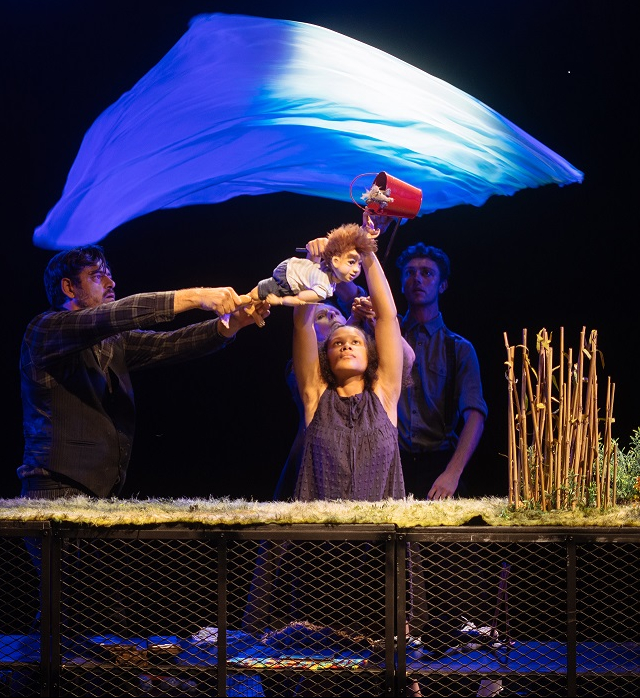
The other category in which I was involved was the Best Upcoming Artist, which was awarded to René Cloete (Huppelkind). It is a Marthinus Basson children’s production which stole the hearts of many because of the way it was presented and performed, showing that you can make theatre for even the very young with enough artistry, imagination and enchantment to truly capture the compulsive nature of good theatre.
And with a cast including Joannie Combrink and Stian Bam, the young Cloete announced herself as someone to watch in the future. Not only is she a compelling performer, she also lights up a room with her enthusiasm and energy and promises to be an exciting future prospect.
Other highlights on the theatrical side included Nicole Holm (Best Actress) in Tweespoor, who again showed her acting chops; Robert Hindley (Best Actor), who plays the troubled son in Janice Honeyman’s Valsrivier, a production that showed promise but wasn’t quite where it should be at the early performance I saw. (The awards reflect that it grew during the festival run). It’s one I would like to see again with some necessary running time.
Tinarie Van Wyk Loots, Robert Hindley and Stian Bam in Valsrivier. Picture: Greteli Fincham
But the youngster had his character pat, perhaps because his is the receptor for everything that was wrong in those apartheid years. He climbed in boots and all, nailed it and was rewarded.
It’s quite a busy play both in storytelling and design and it needed some time for the ensemble to mesh, the spaces to be claimed and the story to truly infiltrate the stage. It made an impression, but it is one that should overwhelm.
Rehane Abrahams in Brandbaar. Picture Natalie Gabriels.
Henriëtta Gryfenberg gave a brave performance in the Lara Foot (translated) play Die Vermoeienis van Vlerke, and Woordfees should be honoured for bringing the astonishing and unique (translated) Brandbaar with Rehane Abrahams back for another viewing; also Sandra Prinsloo who goes from strength to strength in Kamphoer.
On the art side, Gerhard Marx tickled the mind with his Vehicle: Sounding and Fathoms. I had seen a much earlier version, but this was a sleek and more substance-heavy return with the art performance including wordsmith Toast Coetzer and genius musos Kyle Shepherd and Shane Cooper. Included was also an exhibition of Marx’s earlier mapping work and he did daily walkabouts which put everything imaginatively into context. There were also a few interview sessions which further enhanced the overall exhibition.
At the performance, one could sit back, experience the effect of the living exhibition on your psyche and emotional being. This is an artist who always plays with your head yet never underestimates the impact on your heart – an explosive combination.
Camerata Tinta Barocca with Erik Dippenaar as director/pianist and soloist Lynelle Kenned. Picture: Mark Cloete.
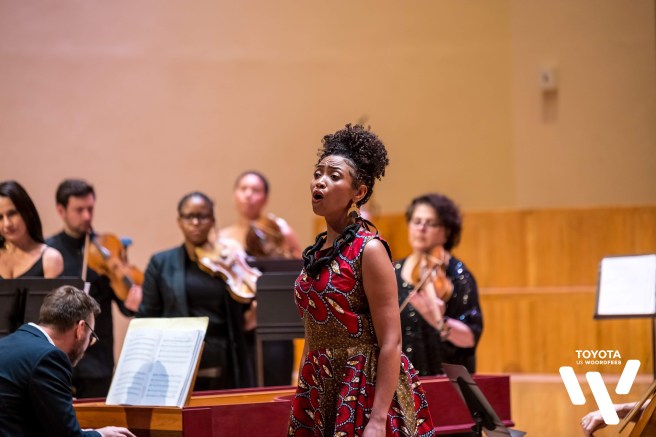
On the music side, the classical programme was quite fantastic with local productions like the Baroque Opera Gala Concert led by Erik Dippenaar, one of the top exponents of early music, and soloists Lynelle Kenned and Brittany Smith. I have only witnessed Kenned do popular music and didn’t know Smith, but everyone on that stage was impressive and provided joyous music to listen to.
Fynbosfeëtjies wasn’t strictly speaking classical music but with Antjie Krog’s verses being read masterfully by acting couple Petru Wessels and Carel Trichardt with soprano Renette Bouwer delightfully interpreting the songs composed by (from the writing) Katrien Holm, sensitively accompanied by the string quartet Evolution, it turned into a festival gift. Drawings from the book by Fiona Moodie set the mood for a surprisingly unexpected heart-warming concert.
With the international artists, Miriam Batsashvili’s piano recital and the LGT Young Soloists were overwhelming and a privilege to experience.
Slightly off the musical charts, the contemporary sounds that made me feel weak in the knees was the musical biography of Paul Simon – ‘n Lewe with music buffs Danie Marais, Kerneels Breytenbach and Desmond Painter talking about the New York composer/performer’s music while Andries Bezuidenhout, Lise Swart and Riku Lätti interpreted the Simon songs with flair.
And Nataniël worked his charm with Hoekom Hulle Swing with his fantastical stories and a musical genre that he does smartly as he is as much a master at re-jigging songs as he is at writing and telling stories. There are those costumes as well – and that at a rare festival appearance!
J Bobs – Off The Record with Pule Welch, Jefferson Tshabalala and Philip Dikotla. Picture Lindsey Appolis.
And in conclusion, which was the best choice to finish such an extraordinary festival: J Bobs Live – Off The Record. I have long been a fan of both Jefferson Tshablala (also this year’s Young Artist at the National Festival) and Philip Dikotla, joined here by Pule Welch who was new to me and I was delighted that the south had discovered one of Gauteng’s most precious artistic entities. Tshabala has a creative mind that moves in a miraculous way and bringing this particular franchise to the Woordfees with the example of the clashing of FW de Klerk and the EFF in parliament, was a stroke of genius.
It’s deals with nothing more – or less – than racism, but in a way that has everyone in the audience engaged, never enraged. That’s quite something. It’s also a production that underlines how laughter can heal, and yet with arrows plunging the depth of what truly troubles the world.
While there was much I didn’t see, good, bad and ugly, this is just a snapshot of one individual’s experience – and it was enough to keep me smiling even in lockdown!
May the artists bounce back with brilliance as they battle the worst possible odds.
The winners are:
WOW Teacher of the Year Rollan Andrews
WOW School of the Year Klein Nederburg Sekondêr
Best Production: Fringe
Moord, op die 8ste gat
Best Performance: Dance
Wag / Waiting
Best Achievement: Visual Art
The Shape of Things to Come – Olaf Bisschoff
Best Technical Achievement
Johan Griesel and Revil Baselga – Sound mix: Karen Zoid 20 jaar pops
Best Achievement in Arts Journalism
Marina Griebenow
Best restaurant in Die Burgeroorlog [The Burger Wars]:
RocoMamas
CONTEMPORARY MUSIC
Best Production: Contemporary Music – Podium Production
Amanda Strydom: Stadig oor die klippers
Best performance: Contemporary Music – Open-air Production
Early B
Best Performance: Contemporary Music – Music-driven Production
Die poet, wie’s hy? CLASSICAL MUSIC
Best Performance: Classical Music – Vocal
Stellenbosch University Choir conducted by André van der Merwe
Best Performance: Classical Music – Instrumental
Miclen LaiPang (violin) for Beethoven’s “Kreutzer” sonata with the LGT Young Soloists
DRAMA
Best Supporting Actor (Male)
Stian Bam – Valsrivier
Best Supporting Actor (Female)
Anna-Mart van der Merwe – Valsrivier
Best Actor (Male)
Robert Hindley – Valsrivier
Best Actor (Female)
Nicole Holm – Tweespoor
Best Ensemble
Die sonkamer
Best Director
Janice Honeyman – Valsrivier
Best Production
Valsrivier
THE BOOK PRIZE WINNERS IN FOUR CATEGORIES ARE:
Bestseller: Non-fiction
Yusuf Daniels – Living Coloured (Because Black and White Were Already Taken)
Bestseller: Lifestyle Marinda Engelbrecht (Maklik met Marinda) and Herman Lensing (Dit proe soos huis)
Bestseller: Poetry Jeanne Goosen – Het jy geweet ek kan toor? Bestseller: Fiction Woordfeeskortverhaalbundel 2020: Aanhou beweeg en geraas maak (Selected by: Suzette Kotzé-Myburgh, Valda Jansen and Madri Victor)
SPECIAL AWARDS
Best Upcoming Artist
René Cloete – Huppelkind
Toyota Top Order
Karen Zoid: 20 jaar pops
This new prize will henceforth be awarded to an excellent musician or production that falls outside the traditional boundaries of contemporary music.
The award goes to Karen Zoid 20 jaar pops. It was not only the topselling show at the festival this year, but it also succeeded in blending contemporary and classical music seamlessly. This production inspired and entertained – a fitting celebration of her 20 years in the music industry.
Groundbreaking Production J. Bobs Live – Off the Record (Jefferson Tshabalala)
In Solidarity Prize (Distell) Amelda Brand
The In Solidarity Prize is awarded to roleplayers in the arts who tirelessly work, often for little or no compensation, towards greater social cohesion. Brand receives this recognition for her work with communities and students as well as her excellent professional work in the performing arts.
Die poet, wie’s hy? Given the extensive range of the festival programme, several panel members served on the Woordtrofees panel across the various genres. Panel members were invited to the panel on the basis of their expertise and experience across the genres. Given the scope of the programme, some panels were assigned convenors. These were: Haddad Viljoen (Drama), Heinrich van der Mescht (Classical Music) and Rafiek Mammon (Contemporary Music). The panels made recommendations to the oversight panel which was responsible for the categories Best Upcoming Artists(s) and Best Festival Production. Gillian Mitchell convened this panel which included Paul Boekkooi and Diane de Beer.


 DIANE DE BEER
















 DIANE DE BEER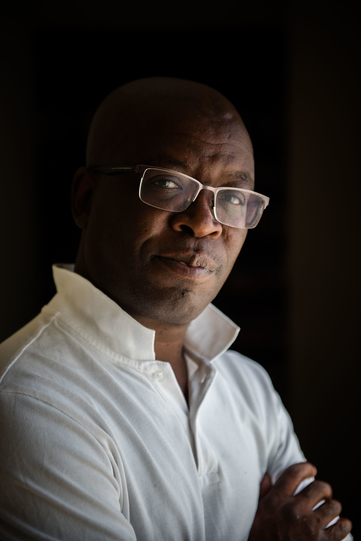




 De Beer Necessities