Sasol’s New Signatures 2018 is about Mapping Time and Personal Stories

SNS 214
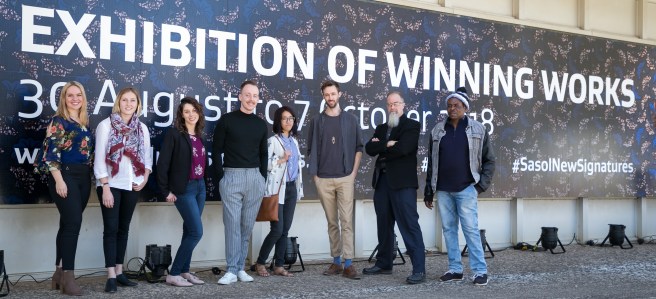
From left: Megan Serfontein, Jessica Kapp, Kelly Crouse, Pierre le Riche, Debbie Fan, Peter Campbell, Sasol New Signatures Chairperson, Prof Pieter Binsbergen, and Mulatedzi Simon Moshapo.

DIANE DE BEER

The way people use art to share their personal stories and speak their mind is what makes it such a rare and valuable commodity. Each year when the New Signature winners are announced, and the exhibition opens at the Pretoria Art Museum in Arcadia, the work captures a specific zeitgeist.

Stellenbosch-based artist, Jessica Storm Kapp, 22, the winner of the 2018 Sasol New Signatures Art Competition won the coveted award for her rammed earth columns and embedded object installation piece titled Mapping Time.

Pierre le Riche with Ap(peal) 1 & Ap(peal) 11
Winner Jessica Kapp with Mapping Time.

Personal stories with a universal message was this year’s focus with Kapp’s work following and thus the result of the disastrous Knysna fires. Currently she is studying in Stellenbosch and with the disaster she felt cut off from her home. But on her return, she knew she had to do something with the emotional impact and the effect of the disaster on her personally. “I knew I had to capture the presence of time,” she says as she started collecting soil, charred objects and other traces of the fire which all found their way into the winning work.

The artwork investigates whether fine art can evoke multisensory experiences of home using retrieved objects and materials. These have value both because of the site from which they were taken as well as their intrinsic value as traces of a destroyed dwelling. “It’s only a year on and already there’s hardly a trace of the fire left,” she says. This was her attempt to illustrate concepts such as loss, trace, place attachment and reflection.

She is currently completing her undergraduate degree in Fine Art at Stellenbosch University. Through various print making techniques, photography, sculpture and installation, she aims to create immersive moments in which viewers can experience the essence of a place through their multiple senses.

As the winner of Sasol New Signatures, she received a cash prize of R100 000 and the opportunity to have a solo exhibition at the Pretoria Art Museum in 2019, which will mark Sasol’s 30th year sponsoring South Africa’s longest running art competition.

Contextualising the winning work, the Sasol New Signatures Chairperson, Prof Pieter Binsbergen, said: “Regarding the pressing issues of land, including pre-, post-, and de-colonial struggles, the work’s ability to ambiguously navigate through and around these sensitive issues makes it worthy of being the winning artwork”.
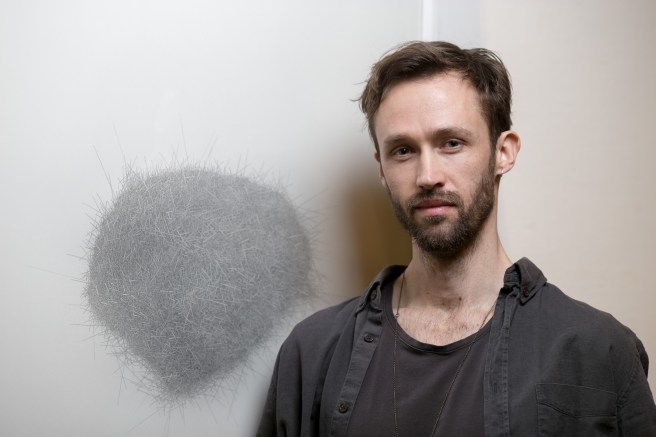
Peter Campbell with Kaisen in 2nd place

In second place, Cape Town artist Peter Mikael Campbell’s work in pencil titled, Kaisen, which means, “change for better” in Japanese, won him R25 000. “It’s about creating beauty,” he says about his art arguing that if you create and make people aware of something beautiful, it will make them more aware of the world around them – and thus the people. “It’s a belief in the value of art,” he explains with a belief that it can contribute to a better world.

For the five merit winners, the personal all came into play in their work.
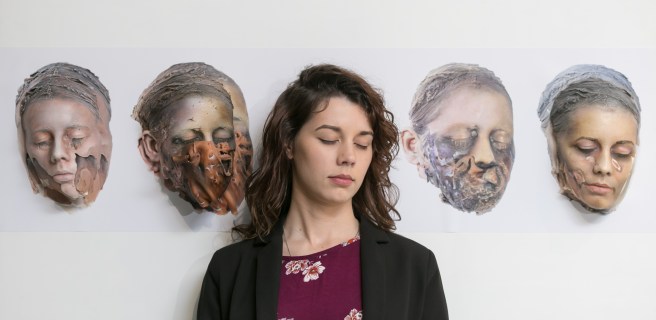
Kelly Crouse with Medication
Kelly Crouse with Medication : C₂₃H₂₇N₃O₇.

For Port Elizabeth’s Kelly Crouse with Medication: C₂₃H₂₇N₃O₇, it is about a skin disorder she had as a child and the crippling effects it had on her life. “We all have our own personal flaws,” she explains, and because hers is something that she won’t ever be free of because it is part of her DNA, she wanted to investigate how it shaped her life.
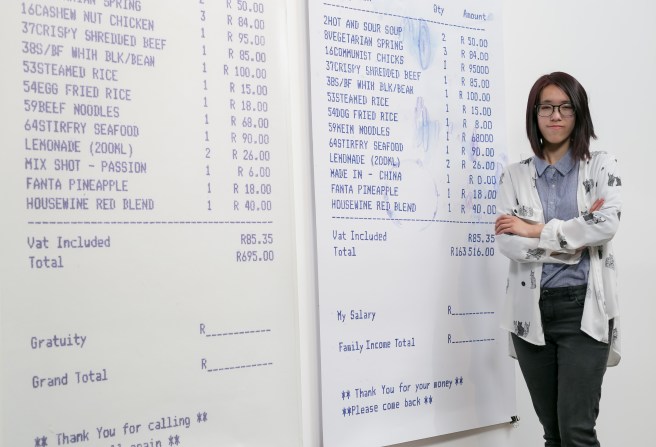
Debbie Fan with Cheque or Savings
Debbie Fan with Cheque or Savings?

Also from Port Elizabeth, Debbie Fann used their family business to explore her identity. Her parents own a Chinese restaurant where she waitressed for a while. In her work Cheque or Savings?

She uses something that is easily discarded, a restaurant bill, to tell her story. On the one side of the work is a simple picture of an actual bill and on the other, there’s one she plays with in quite light-hearted fashion. “I use parody for example and change certain dishes like deepfried rice to dogfried or that oft used phrase, Made in China. But she’s also commenting on the customers, our throwaway society, commercialism and simply being Chinese and how she is perceived in this country.

Megan Serfontein with Untitled
Megan Serfontein with Untitled, a work that deals with technology.

Sticking to our current world and the way it operates, Megan Serfontein, another University of Stellenbosch student uses technology to make a point. She wrote a programme to illustrate how we all react differently when we know we’re being watched or filmed for example. Her work which is untitled is a monitor which changes as people stand in front of it. In effect you as the viewer becomes the art. It’s fun but also clever and especially in our technological world, to use something that changes what the camera sees, sharply makes her point.
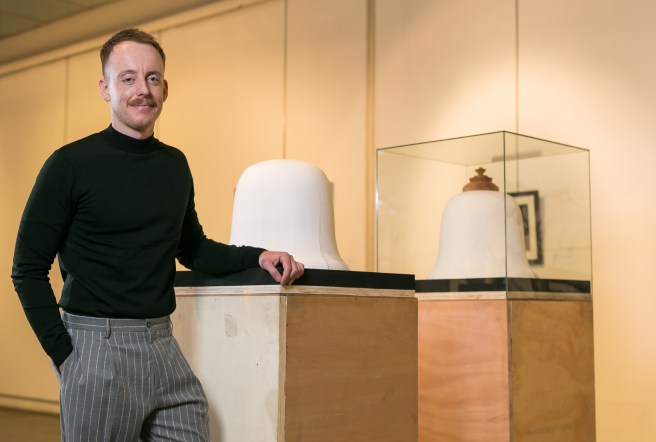
Pierre le Riche with Ap(peal) 1 & Ap(peal) 11
Pierre le Riche with Ap(peal) 1 & Ap(peal) 11.

Cape Town’s Pierre Henri Le Riche’s porcelain slave bells titled Ap(peal) I & Ap(peal) II can be viewed as museum relics with a play on history, stories that are told by the victors and thus shaping a particular story telling it as it desires to be told.
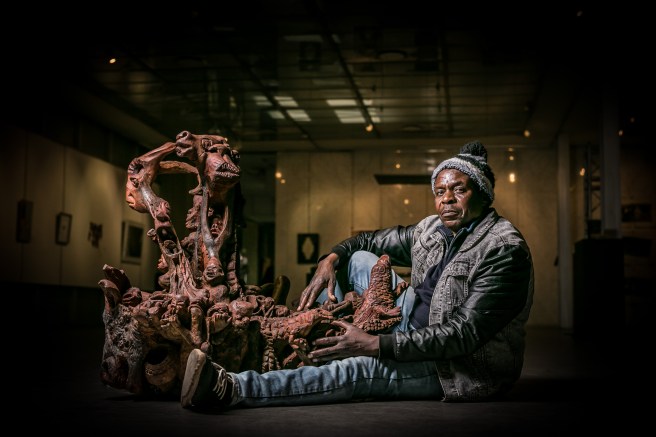
Mulatedzi Moshapo with The leader shall govern
Mulatedzi Moshapo with The leader shall govern.

With his striking wood sculpture titled The leader shall govern, Mulatedzi Moshapo from Polokwane explains that every work has its own story to tell and his medium isn’t the only determining factor, the people he features are also showing their world and their unhappiness.

Each Merit Award winner received a R10 000 cash prize.
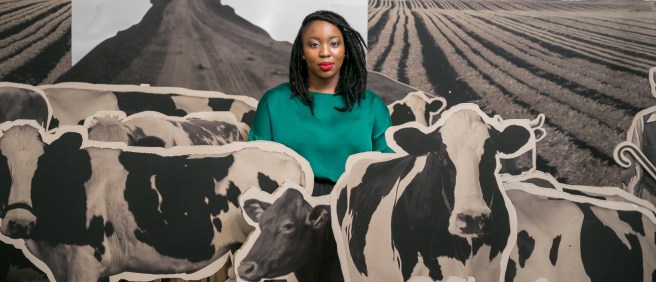
2017 Winner Lebohang Kganye with Lighthouse Keeper
2017 Winner Lebohang Kganye with Mohlokomedi wa Tora (Lighthouse Keeper).

Finally, this is also where the previous year’s winner is given a chance to show their progress of the past year. Winner of 2017, Lebohang Kganye’s first solo exhibition, Mohlokomedi wa Tora (Lighthouse Keeper), runs in conjunction with the 2018 Sasol New Signatures exhibition until October 7 at the Pretoria Art Museum. “It’s an ongoing conversation with my grandmother,” she notes as she keeps on talking in a way that is evolving but all about her family and their stories. It is cramped in its current space, not quite allowing the work to breathe as expansively as it should.

The rest of the exhibition features the 2018 winner, runner up and five merit award winners as well as 87 finalists, all of whom are included in the acclaimed competition catalogue available at the museum.

Charlotte Mokoena, Sasol Executive Vice President for Human Resources and Corporate Affairs urged the artists to continue being fearless in their artistry, challenging society to evaluate the lenses through which it views the world. “It is by doing so that you unconsciously give others the permission to be boundless in their pursuit of their happiness and purpose. Be limitless,” she urged.


Pretoria Art Museum times:

Tuesday to Sunday:  10:00 to 17:00 (Closed on Mondays and Public Holidays)

Pretoria Art Museum: Corner Francis Baard and Wessels St, Arcadia Park
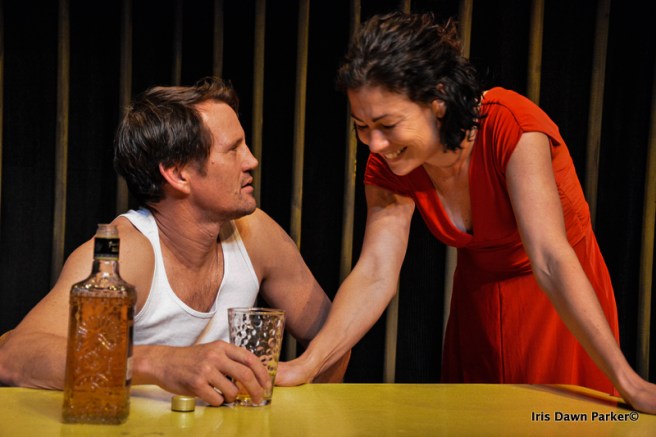
 

Brilliance at Work in Sam Shepard’s Fool for Love at Jozi’s Market Theatre

DIANE DE BEER

Fool13
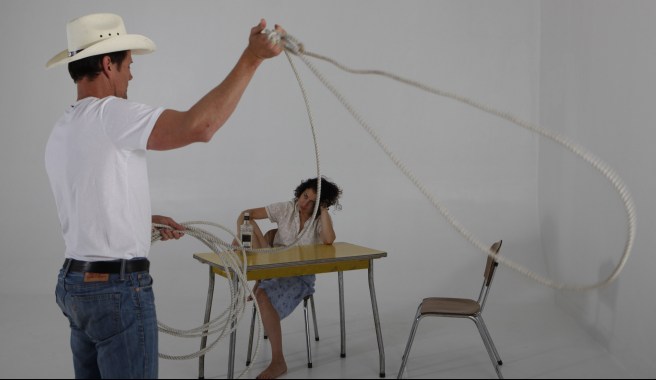
Langley Kirkwood (Eddie) and Kate Liquorish (May).

FOOL FOR LOVE

PLAYWRIGHT: Sam Shepard

DIRECTOR: Janice Honeyman

CAST: Kate Liquorish, Langley Kirkwood, Zane Meas, Paka Zwedala

SET DESIGNER: Stan Knight

LIGHTING DESIGNER: Mannie Manim

COSTUME DESIGNER: Margo Snyman

VENUE: Mannie Manim Theatre at the Market

DATES: Until 9 September

With his untimely death last year, it’s been a welcome return to our stages for playwright Sam Shepard with this second production, following Sylvaine Strike’s glorious Curse of the Starving Class at the US Woordfees earlier.

This one features quite a few returns, with Honeyman back at The Market directing after an absence of many years and actors Kirkwood and Meas performing on The Market stage again in quite a while. And they make it work – magnificently.

On no level is this an easy encounter. Even for the two main protagonists, Kirkwood and Liquorish, while these are meaty roles and their performances mesmerising, it’s a tough tale to navigate night after night. Yet, one can hardly blink, so compelling is Shepard’s heart-wrenching story. It deals with failed love yet familial bonds so potent they’re unbreakable, even if they tear the emotions of the two people at the centre to shreds.

It is what makes this so watchable. May (Liquorish) is unexpectedly surprised by a visitor, her old beau Eddie (Kirkwood) in a desolate hotel room somewhere on the edge of life. And what becomes clear lightning fast is that these two lost souls share a history. This is not the first time round for these lovers, even if May declares she has moved on and is waiting for someone to call. Eddie, it turns out, is repeating old family patterns with a woman somewhere in the background hot on his trail.

Fool2
Kate Liquorish (May), Langley Kirkwood (Eddie) and Zane Meas (Old Man).

On the periphery, only intruding on occasion, is a character referred to as Old Man (Meas), who steps in and out of our consciousness, commenting on the tragedy that is seemingly playing itself out. He doesn’t fully participate in their lives yet seems desperately to be seeking absolution.

Hovering in the room, is the knowledge of the arrival of someone that seems to determine the erratic mood swings between May and Eddie. Theirs is no idle chat. It’s explosive and deals with a history that is rough to unravel as they turn towards and from one another with alarming alacrity. Star-crossed lovers perhaps, or is there more to what seems to be a battle between two people who cannot live with – or without – each other?

Honeyman’s probing staging is enhanced by cohorts Knight, whose set contributes to the bleakness and the claustrophobic atmosphere and Manim’s lighting which adds yet another dimension to the upheaval in the room.

Fool3
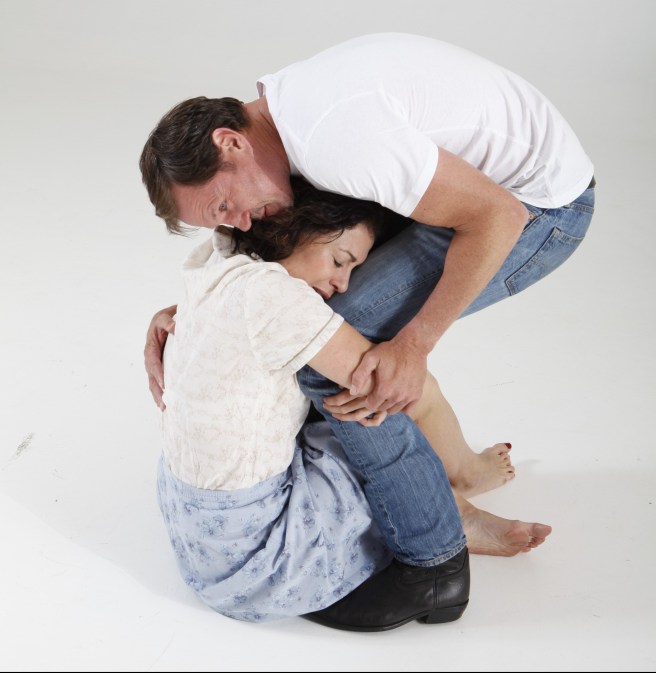
Kate Liquorish (May) and Langlley Kirkwood (Eddie).

More than anything though, it  lies in the text and the performances – relentless – between especially Kirkwood and Liquorish – as they wear each other down in their coming together for what seems yet another showdown.

Denial runs through this family’s dealings and determines every move they make as they embrace scarily tight before sharply turning away and then suddenly falling to the floor in a rough tumble of harsh words scratching at old wounds.

It is their nuanced performances as they try to still the storm that draws you into the room with no way out. These are two lost souls trying to find solace which they both know is not available in this encounter and yet, they can’t walk away. It’s about going back and finding a life with few options and if there were any to begin with, those are long gone.

Both May and Eddie have been here before and know exactly how their emotional rollercoaster will land while on the side, Old Man (Meas making his mark with a few pivotal scenes), is glaring at the children he declares he can’t recognise. This isn’t his legacy, nothing is familiar.

But this is tour de force Sam Shepard territory – a desolate, bleak landscape, both physically and psychologically, a father figure dominating any dalliance, and two people embroiled in an emotional dance that has no beginning or end.

And then the outsider steps in as a catalyst, with Zedwala giving a fine performance as the baffled prospective suitor who is kept hanging as everyone leaves.

Once again, no one is left standing as this brilliant team (on and off stage) persists.


Honeyman Directs Sam Shepard’s Fool for Love with Stunning Cast at the Market

PICTURES: Brett Rubin

fool-with-kate-liquorish-and-langley-kirkwood.jpg
Fool for Love with Kate Liquorish and Langley Kirkwood.


Sam Shepard’s Fool for Love with Janice Honeyman as director and a cast including Kate Liquorish, Langley Kirkwood, Zane Meas and Paka Zedwala opens this weekend at the Market’s Mannie Manim Theatre for a short run until September 9. DIANE DE BEER spoke to the director and some of the cast about this explosive play by a playwright not featured much locally yet has so much to say about the lives we all struggle to lead:


For Janice Honeyman, it’s all about the text, the Sam Shepard words and the meaning in every little detail.

Sitting through an early rehearsal, it’s clear that this is where the focus lies as the actors slip into this world hardly noticing when someone enters the room or the passing parade at the large windows of the rehearsal room.

While juggling at that time, the second season of The Color Purple which has opened in the meantime, and these rehearsals for a new play, Honeyman, the seasoned director she is, takes things in her stride. But she’s also working with a seasoned cast and one that has taken this grueling play by the scruff of the neck.

Described in the publicity notes as a “relentless emotional conflict”, this is tough yet exhilarating work – both from a performance and viewing point of view. But it has huge rewards – for all involved.

fool-with-langley-kirkwood-and-kate-liquorish.jpg

Liquorish in the role of May opposite Kirkwood’s Eddie, is pleased that they at least knew one another. “It makes it easier to get to feel comfortable from the start with this intimate performance,” she says. And Kirkwood is thrilled to be back on the Market stage for the first time in 20 years. He moved to Cape Town a few years back where in recent years he has spent most of his time performing in film, for obvious monetary reasons. But this is one he relishes.

It’s about exploring Shepard’s masculinised landscape while dealing with a clash of male and female qualities in a play of heightened realism yet with a dash of theatricality as the father figure steps in and out of the story, says the director. And with her own brand of storytelling, she’s not only in love with the Shepard words but also with this mix of reality and fantasy inherent in this play. “It’s about making sense of the play and then turning it on its head,” she says.

For her it is all about detail, the rawness, the visceral quality of the work and the layering which is already visible especially with the two main protagonists, this early in rehearsals. “The stage is really where we all want to be,” says Kirkwood as he talks about the gift they have been handed by being invited to participate in this particular production.Fool Kate Liquorish, Zane Meas and Langley Kirkwood

It’s easy to see why. It is a play that asks much from its cast but with the mastery of the Shepard language and what he plays with, there’s so much to work with. This is storytelling that dives right into the eye of the storm and demands that you deal with everything it throws at you. “Even though I haven’t been on stage for a while, I felt physically fit but perhaps the emotional side was something tougher,” explains Kirkwood.

With Shepard, that’s a huge ask. “It’s real and it’s raw,” agrees Liquorish who has just spent an hour rolling on the floor and tackling her lover in a way we don’t see too often on stage. This is about digging deep as you scratch around family lies and secrets which impact not only on the people directly involved, but also those who move around on the border of these lives. It is about how we affect others with what is happening in our lives and how we navigate our childhood into adulthood and the often-devastating impact.

Fool for Love with Kate Liquorish, Paka Zedwala and Langley Kirkwood

Shepard wrote much about family life, especially the way the men obliterated anyone who dared enter their space, and in the process themselves, as Sylvaine Strike so masterfully illustrated in her Woordfees production of Shepard’s Curse of the Starving Class earlier this year which will hopefully still be performed in Gauteng. And again, it is this never-ending cycle of abuse that clutches with maniacal strength that is again observed here with such power and insight.

“It’s one of those where we have to let it all hang out,” says Liquorish but one suspects, it is the harshness of the emotions that allows the actors to lose themselves in this hellish world they have entered for just a moment in time.

And yet, even if this sounds relentless, it is the Shepard script which is often as funny as it is harsh, and the performance by the actors at the centre of the action as well as the two, Shepard’s obligatory and iconic father (Meas) and a prospective yet unsuspecting lover (Zedwala), on the sidelines, that makes this such compelling viewing. There’s no pussyfooting around. Everyone jumps in and tears this story to shreds. “It’s obviously not for chilkdren,” says Liquorish and Kirkwood is delighted that his two children are old enough to see this one now – and their first experience of him on stage.

fool-kate-liquorish-and-langley-kirkwood.jpg
Kate Liquorish and Langley Kirkwood in Fool for Love as May and Eddie.

And it’s a play where audience can jump right in emotionally and get their hands dirty.

It might seem extreme but as families go, it will also be familiar. “It’s about confronting issues,” says Liquorish who has lost her heart to Shepard’s haunting words. For Kirkwood raised by a single mother and more recently divorced from his wife, this family and their lives also resonates deeply – and it shows.

For those of us watching, it will be a coming together of all of the above – the performances and the production – all aimed at telling this Shepard story in a way that will resonate with as much force and as strongly, as it did when it was first written and performed more than three decades ago. It is a universal story though and there’s no chance of it ever losing its potency – now or in the future. That’s what Shepard is all about.

*Fool for Love opens this weekend (August 18) with a few preview performances, the official opening on August 22 until September 2 at the Mannie Manim Theatre at the Market in Newtown.

Brilliantly Bold Color Purple Soars Beautifully a Second Time Round

Pictures: @enroCpics 

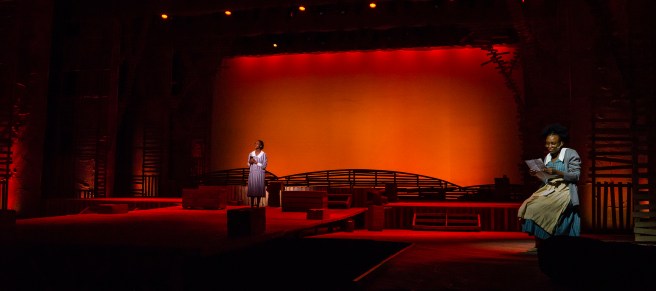
Sisters Celie and Nettie
Sisters Celie (right) and Nettie at opposite sides of the world on different continents.


DIANE DE BEER


THE COLOR PURPLE

DIRECTOR: Janice Honeyman

CAST: Didintle Khunou (Celie), Lelo Ramasimong (Shug Avery), Aubrey Poo (Mister), Neo Motaung (Sofia), Sebe Leotlela (Nettie), Yamikani Mahaka-Phiri (Harpo) and the rest of the 20-strong ensemble

EXECUTIVE PRODUCER: Bernard Jay

PRODUCTION DESIGNER: Sarah Roberts

LIGHTING DESIGNER: Mannie Manim

SOUND DESIGNER: Richard Smith

MUSICAL DIRECTOR: Rowan Bakker (with an orchestra of 8)

CHOREOGRAPHER: Oscar Buthelezi

VENUE: Nelson Mandela at the Joburg Theatre

DATES: Until September 2

Celie and the women in celebration

It’s rare in this country that big musicals like this one get a second season but so popular was The Color Purple first time round, it has returned with huge fanfare in Woman’s Month. And that’s a good thing.

This is quite a show and with one major change, Lelo Ramasimong as the sassy Shug Avery, (previously one of a trio of church ladies who has been replaced by Masego Mothibakgomo, who slips seamlessly into this powerful threesome) the rest of the cast has been given the chance to finetune their performances and even though, first time round, it was already spectacular, Khunou as Celie, for example, has grown magnificently in what was the first time round, a debut performance in such a huge and iconic role.

It feels as if she has slipped into Celie’s shoes more comfortably than then with a confidence that allows her to soar and in the quieter songs, it’s as if she trusts the moment and just is who she should be.

But so are the rest of the cast, from the much more experienced Poo who revels in his portrayal of Mister because of the arc he travels in every show as the one who probably has the most extreme turnaround – from the abuser to one who finally sees the value of the one he never cherished and lost.

Seeing a musical again that the first time round had so much impact is always a time to reflect and reassess but if anything, the effect is even more dramatic because this time round, there are no surprises, it’s just the show and the performers.

One must remember the genre and how much it allows. The story is grave and as much of its time as it is of now. That’s the horror, that so little has changed for women, the lack of power they often have over their own lives and the abuse they face on a daily basis. It sounds as familiar now as it did then and the murmuring and cheering from the audience affirms that. They know and understand these women and their circumstances and are also rooting for change.

Aubrey Poo as Mister
Mister (Aubrey Poo), Shug Avery (Lelo Ramasimon) and her beau and Celie (Didintle Khunou)

Celie is a woman who as a child is abused by her father who rapes her resulting in two children who he gives away. She is then passed on to another abusive man who does with her as he pleases while she cares for his children and his home with no say in the matter. It’s heavy stuff and without delving too deeply, it is the performances and the songs that tell as much of this tragic story as possible. The emotions run high and while abuse tops the list, many other issues are dealt with in this story of redemption.

The music is quite extraordinary and there are many showstoppers, some because of their emotional message like Celie’s Somebody Gonna Love You, Sofia and the women’s Hell, No and Celie’s I’m Here with the titles almost the only explanation necessary but then there’s also Celie and the women’s triumphant Miss Celie’s Pants and the show stopping Any Little Thing by Sofia (Motaung) and Harpo (Mahaka-Phiri).

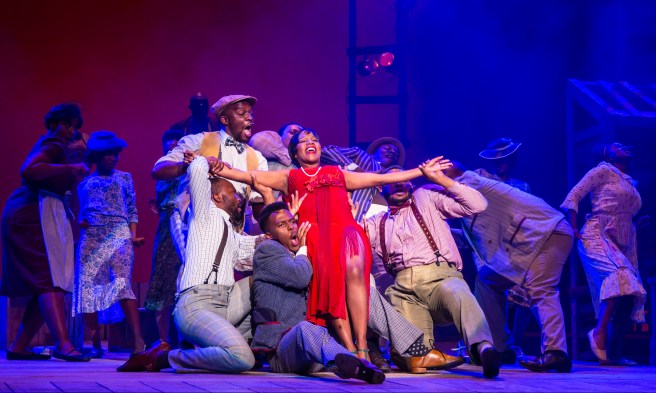
Shug Avery and her admirers
Shug Avery (Lelo Ramasimong) and her admirers

Ramasimong brings the house down and her sexy Shug to life with her show number and Nettie (Leotlela) lets the tears roll with African Homeland.

It’s a musical where all the elements hold together starting with an imaginative set that is enhanced by luminous lighting while Honeyman has picked and honed her performers – each one of them – to perfection, to tell a story both powerful and poignant.

Once and for all, this glorious cast has made their point. It is all about storytelling. You have to engage, listen to the lyrics and allow the performers to come alive with their emotions in full flow. Like the first time round, it’s high notes and low in song and understanding, and the story is delivered with heaps of humanity first trampled on and then celebrated.

That’s life as we know it but sometimes deny and this is yet another way we can grapple with it and come to grips with the horror of abuse.

And it sounded as if the row of Singaporeans behind me with Bernard Jay in tow, were certainly planning to make this an extended traveling season. This is talent we want to export.

Florence is Theatre of our Time

Pictures: GREG HOMANN

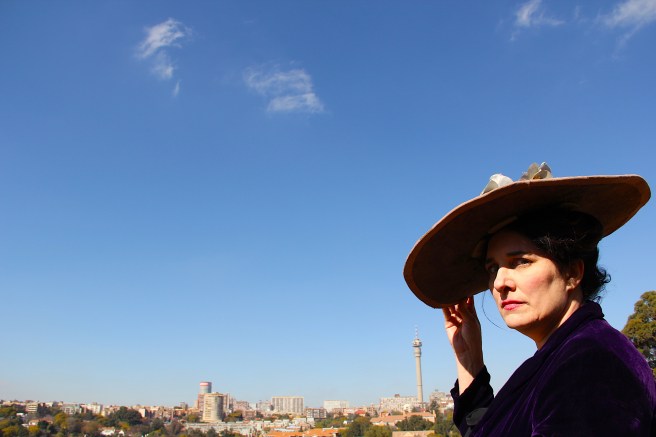
Leila Henriques with Jozi as backdrop

DIANE DE BEER

FLORENCE

PLAYWRIGHT: Myer Taub

DIRECTOR: Greg Homann

PERFORMER: Leila Henriques

LIGHTING DESIGN: Nomvula Molepo

COSTUME DESIGN: Karabo Legoabe and Nthabiseng Malaka

SET DESIGN: Richard Forbes

SOUND DESIGN: Ntuthuko Mbuyazi

VENUE: Barney Simon at the Market Theatre in Newtown

DATES: Until August 26


It is the eccentricity of the script, the execution and the performance that all come together in almost explosive manner and holds you (gently) by the throat throughout.

It’s not an easy one, so concentration and focus is necessary but once you slip into this world, it’s an intriguing and intense encounter. First off, the playwright had an obsession and used this (over a few years) cunningly, to create a play that taps into a zeitgeist of many. He deals with everything from colonialism (not easy for a white male to do smartly) to gender especially that of women (another stumbling block he navigates), and the way art was dealt with then – but perhaps more importantly – now. He moves from the safety issues, fences only the physical barriers, to a more problematic area of engaging and appreciating the energy and enlightenment art holds.

Then the director stepped in and working with Taub on the final draft found a way to unfold the Florence story on stage most enticingly while engaging with a set designer who best explored the visual key to this extraordinary work.

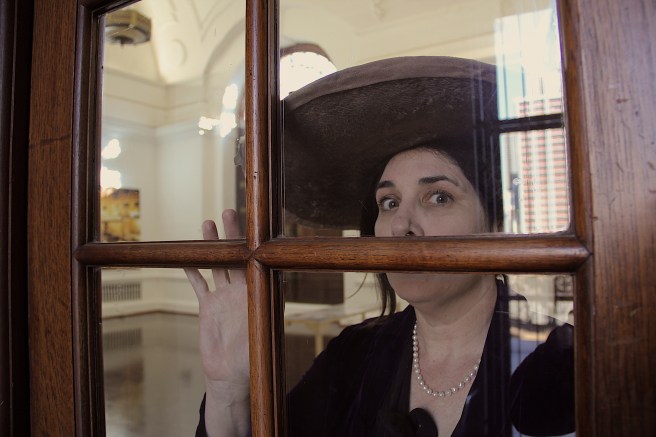
Leila Henriques as the actress

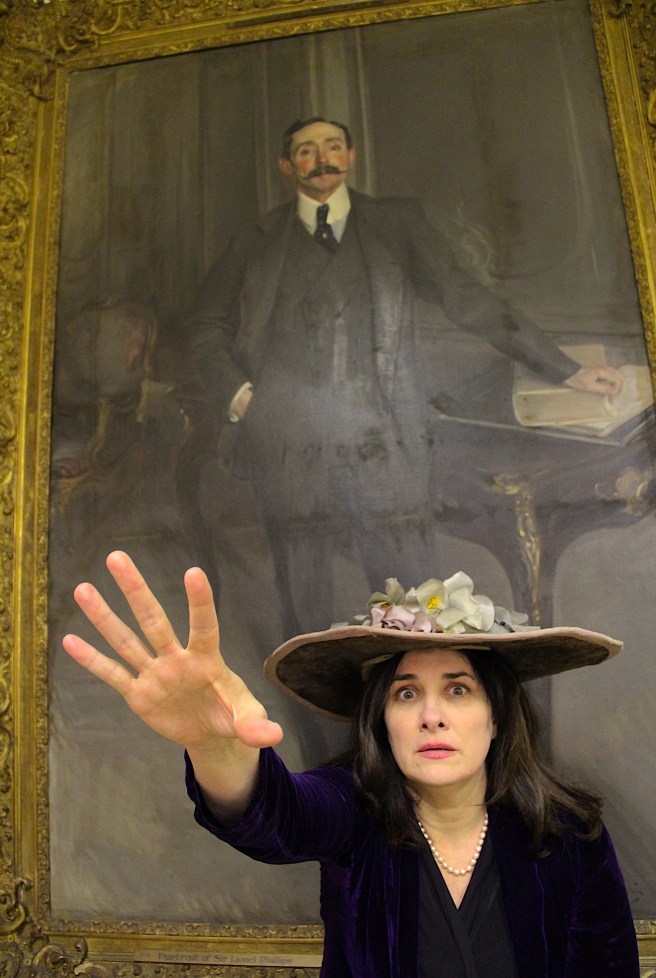
Henriques who has been testing the waters these past few years under the guidance of smart theatre makers including Sue Pam Grant and Sylvaine Strike, blossoms and bullies in this double role of Florence Phillips, the woman who founded the Johannesburg Art Gallery (while also raising a few children, setting up a handful of homes for her mining magnate husband and on the side, introducing jersey cows to the Cape!) as well as an actress who is unwilling but considering a portrayal of Florence. Her test is to navigate these two landscapes as if they are linear – the one at the turn of the last century while the other stands strong in the chaotic contemporary era.

It’s heady stuff which has been cleverly complicated by a brilliant set that both leads you into the story but also obscures the actress as she tries to fight her way through her characters and the story she is untangling. It can be described as a messy yet magnificent web, this world and the play that tries to capture different timelines, fragmented and fragile, yet allowing us to grab on and follow the guidance of the performer. All of that contributes to a compelling theatrical experience.

It doesn’t really matter where and when you access what they have to say as long as you participate in the work. Listen carefully and especially cling on to the Henriques performance as she steps in and out of characters, doesn’t really matter who or what she is, but how she is expressing herself about a world that in all respects is often closed to her. Even when she thinks she finds love, it isn’t meant to be. But she battles on because that is what is required to get her way. Softly-softly doesn’t make it here.

Leila Henriques as Florence

That’s probably why Florence, achieving what she did, is described as a formidable and fierce character. She was determined to fight her way through and in the play, she grabs that fence, sticks her head through to catch the light and speaks her mind. That’s just who she was and who you had to be in a world that wanted to decide who and what you should be. But just the list of what she achieved and how she travelled in a time of turmoil, is evidence of her power.

Henriques has similar physical presence and power. She will not be dwarfed by either the physical fence or any barriers thrown at her. She stands strong – both as actress and in performance. It’s glorious to behold. And when it all comes together, from the stunning lighting and atmospheric sound to the vision of the three artists involved, it’s truly theatre of our time – uniquely original.

The Impact of Hannelie Coetzee’s Art Resonates in Jozi Buildings and Skylines

Nzunza people
First sight of the Ndzundza/Nzunza Portrait by Hannelie Coetzee On Woman’s Day. Picture City Property

DIANE DE BEER

To have two major artworks unveiled in a week in a world city is quite extraordinary and contemporary African artist Hannelie Coetzee is excited that her adopted and much-loved city Johannesburg is recognising the value of public art.

And she likes to make her mark – spectacularly.

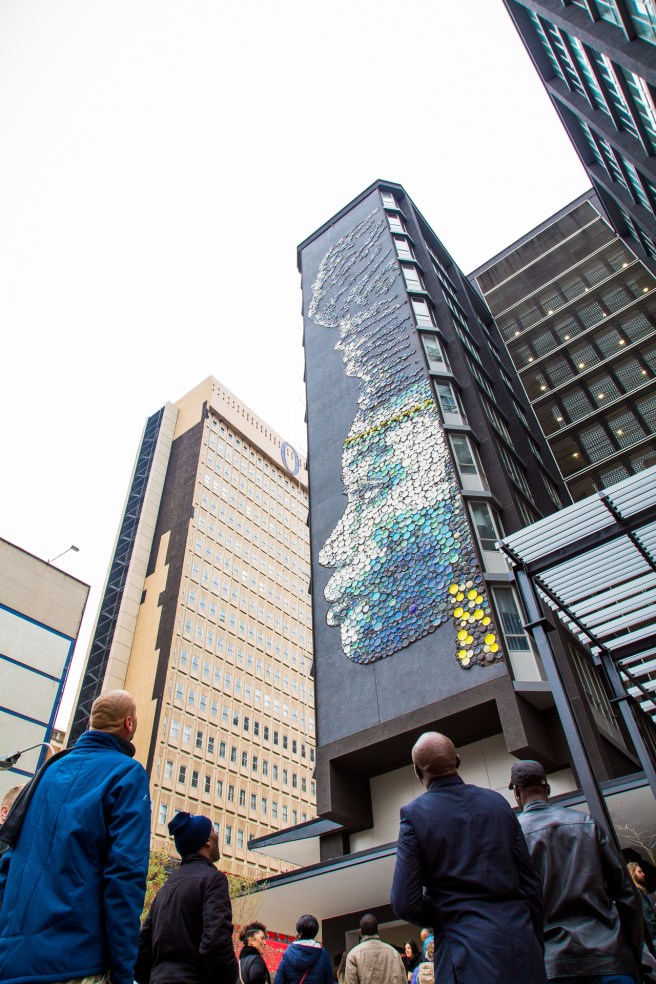
The most visible is the recently unveiled (on Woman’s Day on Thursday August 9) The Ndzundza/Nzunza Portrait (the alternative spelling is inclusive of differing views from the community) commissioned by City Property bringing her historic hair-inspired 10-storey South African artwork to 28 Melle Street in Braamfontein. “I’m grateful to people in the property market who have become patrons of the arts,” she says.

All her projects start with research and she was thrilled that this one came at a time at the end of the year when the building world comes to a standstill, giving her some time to play around with what she wanted to do on such a huge scale. She started scratching around in the area and wider to discover what had happened in this neck of the woods in the past, her richest vein of source material.

When reading what she says about herself on her website, Coetzee explains that she questions the purpose of art as a mere commentary on societal ills and prefers using art to participate in life, solving problems, connecting people and igniting dialogues.

When you talk to her, she describes her modus operandi as partnership orientated as she teams up with either scientists or architects or anyone in a specific field that might help with her enquiries, but then her own personal narrative also filters through the artworks on a specific level.

Having scratched around in her own family history a while back to find her own place in the world and where she was heading, she realised that the Ndzundza/Nzunza Ndebele that she was featuring in this work lived in the Highveld at the same time that the first Coetzee arrived in the Cape – navigating origins and cultures along the way.

But to get to the heart and soul of creating the work, she discovered a young architect, Ndzundza/Nzunza Portrait, who thinks and works differently especially with cities and her ideas around that. “It’s all about making cities healthier,” she notes and that is a big priority for this artist who taps into the historical ecology of the city to find possible solutions for some of the problems of today. She actively creates her partnerships to enhance the insight into eco-systems and hopefully resulting changes will follow. Or at least an awareness. But she also finds people who answers her questions in a way that to her makes sense and dovetails with what might be a specific mission.

Two things happened around Coetzee’s research. The architect had done a master thesis that dealt with hair salon designs in the Joburg CBD and informed her how they would impact the environment. At the same time, Coetzee’s wife Réney Warrington (a curator, novelist and film critic amongst other things), gave her a book Forgotten World by Alex Schoeman et al, because she knew where Coetzee’s head was at.

Nzunza.Ndzundza portrait 2018 by Hannelie Coetzee b
The Ndzundza/Nzunza Portrait at dusk. Picture Hannelie Coetzee

The reason for the use of ceramics in this work is the historical traces discovered on pottery that dated from that time, hence the astonishing use of the colourful ceramic plates to create a picture that will be seen from a distance as well as speak to the community who live there.

What she discovered in Forgotten World was that Swazi and Basotho patterns were found in the Ndzundza/Nzunza pottery patterns. Schoeman and his co-authors had found that in pottery remnants and through oral history which all points to the Ndzundza/Nzunza embrace of a cultural diversity which included other ethnic groups. “Much like Johannesburg today,” she says and one of the reasons she has found her place and lost her heart to Jozi.

Mavhunga also brought a group of Instagrammers to her attention. Their influence on trendy hairstyles inspired her to research old and new hairstyles resulting in a collage of many different styles to show how the old inspires the new. It’s the way she works, to underline how history influences modern trends.

Samantha at Rosebank Firestation Artist Hannelie Coetzee 2018
Samantha at Rosebank Fire Station, artist and photographer Hannelie Coetzee

In similar vein Samantha who was originally exhibited at the 2017 Joburg Art Fair has now been positioned in the foyer of the new Rosebank Fire Station in Baker Street at the behest of ARC architects. Coetzee first encountered Samantha (Mamiled) during walkabouts to the Ferndale stream in Johannesburg as part of her investigation of the city’s water structure then and now. “I study and explore the old ecology on which the city is built and in the process, amongst other things, I discover not only the beauty of nature but interesting people.”

Engaging with her, she discovered that Mamiled frequently visits the stream, on her own and with friends and she would sometimes wash here. That specifically reconnected her with her grandmother who used to take her to a stream as a child. “It’s about memories and moments,” says the artist who also finds pleasure that this work should find a home in a fire station.

Some of the wood used in the artwork comes from the old Rissik Street Post Office that burnt down and the desk that functions as a plinth was part of a castoffs found in an old building she was working in at the time in the Maboneng district. “I often work in these neglected buildings just before they are flipped because of what I find there,” she explains, and it all becomes part of her regenerating mindset.

Samantha made from parquet tiles, shelves and the desk, all salvaged by Coetzee, is 3.2m high and was especially insightful at the Art Fair because one has to stand at some distance to recognise her features. But what she represents and the fact that this fire station had to be built around and in context of the original station which is the second oldest building in Rosebank, all ties into the Coetzee ethos, including that she often works with natural industry waste such as wood and mining core.

With these two insightful Hannelie Coetzee artworks happening quite by chance simultaneously, the visual impact will resonate with vigour and eloquence sharing impactful stories.

Jozi and its Art Gallery shine in Florence at Market’s Barney Simon Theatre

Pictures: GREG HOMANN

Florence with Joburg backdrop

DIANE DE BEER


Have you heard of Florence Phillips?

She was the woman who was instrumental in establishing the Johannesburg Art Museum (JAG) and the subject of the play Florence, currently running at The Market’s Barney Simon Theatre in Newtown until August 26.

It is the world-premiere of Florence, a solo play directed by Greg Homann, written by Myer Taub and performed by Leila Henriques in her first solo show. “It’s not an easy premise,” says Homann but as someone who lectures and writes about theatre, how to give a play the best chance to land with an audience, is what he understands best.

It’s also the first solo season for Henriques who has a spirited take on what she describes as an “ambitious piece”.

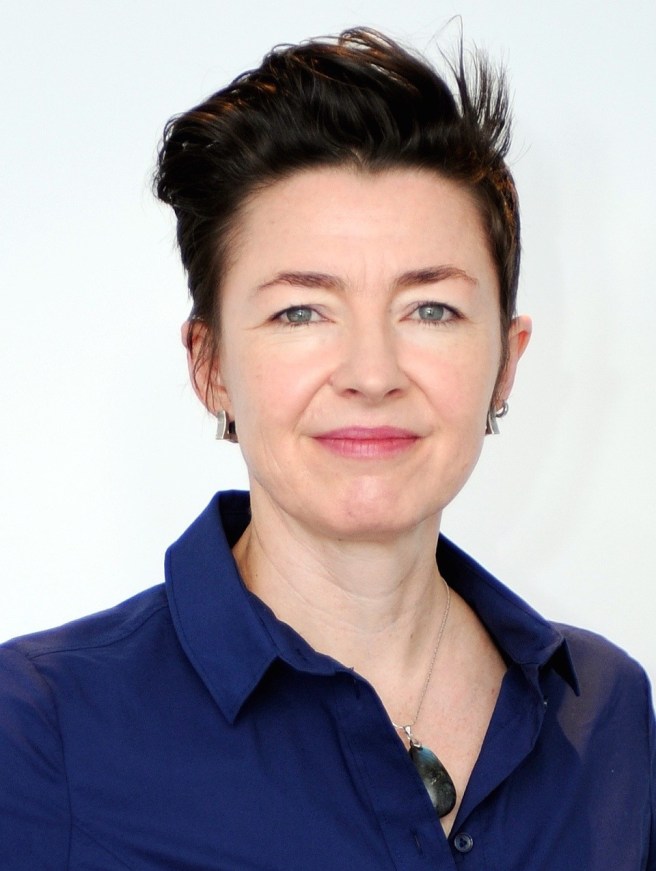
Leila Henriques
Leila Henriques in Florence

“I clearly have to focus and following performances, I feel I have to lie down in a darkened room.” And when you see Florence you will understand why.

It’s a bold choice by artistic director James Ngcobo but he also understands that engaging with the city and its most iconic art structure could start interesting conversations. No, says Homann, he suspects, the art cognoscenti, heritage aficionados and people working for Hollard Life are the ones who will know who Florence is. “The Hollard Life offices are built around the original Philips house which is still in use.”

What Taub has done following different interventions around the art gallery, one including a skateboard performance art piece which is also referenced in the play, is engage with different questions featuring JAG as a centre piece. But this time (helped by Homann in the final draft) the story is told playfully while experimenting with time, place, language, and form to explore our contemporary moment.

Instead of the monologue the playwright had started with, it has evolved into a disgruntled actress who over lunch in a fancy restaurant meets with a playwright about the new work he has written that places Florence Phillips as a ghost at the Joubert Park fence outside the Johannesburg Art Gallery. While considering whether she will play the role, the actress imagines what it would mean to portray a dead white colonial figure today whose legacy and value is both contested and forgotten.

Leila as Florence photographer Greg Homann
Leila as Florence

And placing Florence in the theatre in Women’s Month underlines the contributions and impact that Florence Phillips had in building a greater understanding of art with early-Johannesburg and its contemporary society.

But it is also this melange of issues almost tripping one over the other that turns this into a fascinating piece of theatre.

Being a woman, it makes sense that Florence is perhaps less celebrated than one would expect, yet it was her philanthropic nature which endeared her to both the world of artists and public alike. She was fiercely formidable, notes Henriques who plays her with great bravado and dexterity as she switches between the fiery Florence and the demanding actress.

In its present form, it also allowed the playwright to play with the meaning of art, its relevance in the world today with special focus on the fence which dominates the essence of the play and divorces the art gallery from its immediate surrounds and the people living there. “We play with the fences in our lives and how we think about our identity,” explains Homann who with his set designer, sculptor Richard Ford, used this metaphor with great impact.

Florence was a woman of exceptional strength, passion, and character to have been able to promote and celebrate local and international artists and to persevere in building them a home at the Johannesburg Art Gallery (JAG). Then as now, this was not the easiest of avenues to pursue. She fortunately had the money to follow her dreams – to the benefit of the city even today. Is that still true? That’s arguably one of the issues addressed amongst many.

And filling the extraordinary Florence’s shoes, Henriques returns to The Market in a role that gives her a chance to explore all her strengths as a performer. And she does exactly that. Taub and Homann have thrown the challenges at her but she’s up for it in what according to her director has been a joyous collaboration – and it shows.

Too often women like Florence are unsung heroes and sometimes their contributions went – and go- unnoticed. But they shouldn’t. The courage they harnessed created indispensable heritage and what happens now is something the play engages with especially dealing with JAG’s colonial past. Perhaps, the playwright argues, the story of our early pioneers can be used in a creative way to engage and inspire the public, including the next generation of woman pioneers but could also point to a more future for JAG.Florence Opening Night Invitation Homann describes the play as a brave choice and on the edge of experimental theatre, but he was at pains to showcase the playfulness in both the writing and the character of Florence. “I wanted to give the audience anchors,” he explains. And here he places emphasis on the love story as well as the gallery. “I didn’t want it to feel too fragmented.” And he has an adept accomplice in Henriques who exploits and explores her different characters magnificently.
The director is also excited to once again give life to a new play, one of his favourite things to do. “It’s about finding and determining the access for the audience.” With something this complicated, the production doesn’t even have to be completely successful, he argues, but the trio most invested in this play are giving their best to make it happen.

He feels blessed that the play allows them to be playful with history because of the inherent absurdity and the humour and here again Henriques and her performance is the perfect foil. She captures the power of this extraordinary woman who stepped out of her comfort zone at a time when it was unheard of to follow her dream while opening a world for everyone around her – then and hopefully now and in the future.

It is that loop of time – then and now – that is intriguing, and it lies in both fragmentation and fluidity. “That’s the key,” according to Homann who describes the play as contradictory, complex and messy. But that’s life especially when living in a city like Johannesburg which he views as the second character in the play. “We’re dealing with memory and how we think of time – moving forward and backwards,” he explains.

It certainly is different to anything else we’ve seen in a long time and that’s what makes theatre exciting. It opens vistas in unexpected ways and takes our minds to places we weren’t intending to go.

It’s an exciting and embracing way to understand the world – especially the confrontational one we find ourselves in today.


.


Capital Craft Beer Academy Ticks All The Best Boxes With Beer As The Big Boss

Diane de Beer

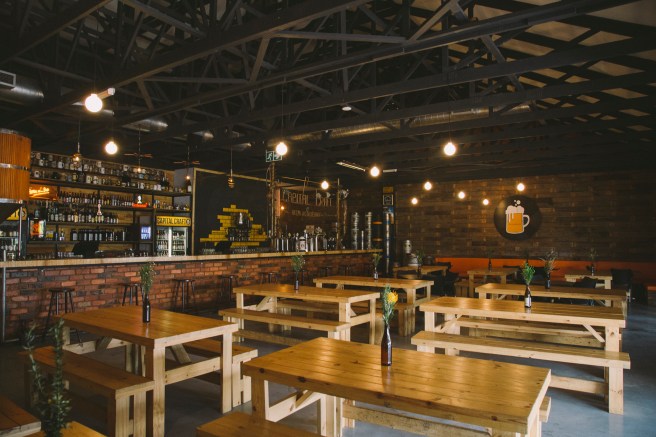
Capital Craft interior

Pictures: Nelis Botha


CAPITAL CRAFT BEER ACADEMY


Address: Greenlyn Village Centre, SHOP NO. 20 Cnr Thomas Edison & 12TH Street East, Pretoria

Phone:012 424 8601

Hours: Monday & Tuesdays from 12pm to 9.30pm (kitchen); Wednesdays & Thursday opens at 10.30am; Friday & Saturday 10.30am to 11.30pm and Sundays from 10.30am to 6.30pm (kitchen)


If like me you’re not really a beer drinker, arguably the Capital Craft Beer Academy doesn’t make sense.

But from the start, the sensibilities of the four guys who came up and developed the original concept, hit all the right spots.

The obvious attraction of the dining/drinking experience is the 210 beers on their menu. Brothers Henk and Willie van der Schyf, Johan Auriacombe and Niel Groenewald, started with a craft beer festival in the shade of the Voortrekker Monument in Tshwane. It has since moved to the Pretoria Botanical Gardens.

The success of that was overwhelming but it also encouraged the quartet of entrepreneurs to start their own restaurant Capital Craft Beer Academy in the Greenlyn area with another opening a few years ago in Centurion which has a strong family slant – and they’re both swinging.

Mean Green 2
The Mean Green Hamburger

What captivated me from the start was the food menu, with new additions a few months back, that offers cuisine I wouldn’t have associated with a beer venue. From vegetarian platters with roast veg and haloumi skewers, grilled corn on the cob, falafel balls, crudité salad, jalapeno poppers (with a bite!), served with Tzaziki and guacamole (R80) to one of their new menu items, A Green Goddess consisting of green salad with sugar snap peas, cucumber, baby marrow slivers, spring onions, green olives, avo and crumbed feta on a bed of coz lettuce with a green goddess dressing (R70).

The variety is huge though. From a brunch section (Big Boy with cut waffle, three rashers of honey-glazed bacon, grilled tomato, seasoned corn medallions, smoked Bockwurst and two eggs to top – R75 to crafty omelettes with two items of choice R65), salads (above), snacks (deep-fried biltong, Mac Mac balls with homemade macaroni balls covered in panko crumbs deep fried and served with Jalapeno cheese sauce, pretzels and crunchy chicken livers) to sandwiches (party in the club, stolen goods, Fat Frankie) to the last word in dining huge: Puff, Puff, Pass, a blazing selection of boerewors, smoked chicken pops, 200 g smoked pork ribs and in-house smoked brisket all tied together with chips and their legendary onion rings as one of their select platters.

Green Goddess 2
Green Goddess

And for the serious carnivores there’s a great selection of burgers such as the Chakalaka Burger (R79), new on the menu, with a 200g patty topped with traditional South African spicy vegetable relish on a fresh bun with mayo and baby spinach, or the Mean Green, the usual patty with sundried tomato pesto with cut jalapenos and lashings of basil aioli (R85). Or you could opt for the ribs, which they promise benefit from time and effort invested to bring you the best.

Keeping to their smart theme, desserts include a classic waffle served with chocolate ice cream and chocolate-pistachio truffles or a rock&road ice cream coffee, both seem to fit the venue so sweetly.

Pretzel
Pretzel

Other new items on the menu include a Philly Steak Roll, haloumi fries, pulled pork poppers, their own home-made pretzels, pork wing, a Fat Frankie and Uncle Porkie, both wrapped in bacon, grilled parmesan corn and marrow or for the seriously health conscious a Pumpkin Patch which is a clever combo of salads and veggies.

If you’re not a serious or regular craft beer drinker, this will be a sharp learning curve. They currently list more than 200 and this number keeps growing. As newbies, start off with a tasting kit guided by an informative manager who will show you the way to go and you could ask for a viewing of their on-tap beers as well as their storing facilities. It’s impressive.

There’s no better place to start if you wish to polish up on your understanding of ale.

Pulled Pork Poppers
Pulled Pork Poppers

If you want wine, they have a small but crafty selection as well as an extremely good whisky and gin collections. Shooters include house blends like a melktertjie or a beavis and butthead, craft bombs sport combos like Soweto Bomb or Dawson’s Kriek with some serious gin tasting platters also on offer.

Beer is the big boss but by no means the only one talking.

Depending on your age and how you enjoy your meals, you will pick a time to visit. At the start of the week things are gentle but it can get packed with a serious party vibe on weekends. Sundays usually have a strong family feel.

The service is attentive and helpful and because they warn that preparation time is around 45 minutes to deliver on their promise, they keep you informed about the state of the food. Questions are smartly answered, and a general well-being is constantly monitored.

Capital Craft interior2

They’re big on ambience and their contemporary beer hall style is superb. Tables can be shared easily, and with a look of canteen chic, well designed, it all works smoothly. Even when they’re busy, there’s more than enough space to select a quieter spot.

What has really impressed me every time I have visited is the way they have ticked every box. It’s extremely difficult to please all the people, all of the time. Yet they seemed to have managed just that and with a menu update, those who like their style of food have fun new dishes to try.

You will feel as if you’ve landed in heaven if craft beer is your thing and if you don’t know much, this is the place to learn. You will find your poison and so much more.

Because they’re part of the Greenlyn complex, parking is easily available and safe and check out the competition while you’re there, because this is another of Pretoria’s food havens with Zest and Eisbein and Co all part of this cuisine carnival.


Liezie Mulder of the Iconic île de pain Makes Every Recipe Her Own – Anytime

Ile de Pain Wild oats loaf_4599
Wild oats loaf

Liezie Mulder and her family’s restaurant île de pain in Knysna are legendary. Her second cook book île de pain ANYTIME (Quivertree) has recently been published. If you love food, playing around in the kitchen, take note. She tells DIANE DE BEER about her way with food and how best to replicate her passion:

ile de pain cover muckup (002)


If you have been to Knysna’s famous île de païn, buying into Liezie Mulder’s latest (2nd) cookbook will be easy.

She says it herself in the introduction: As a chef I borrow, share and am inspired by the works of others and I absorb what is happening around me, at home and on my travels, and then make it my own.  …what is important is to use my own voice, to be honest, to be unique and true to myself.”

She wants to make it better using different techniques or using ingredients in a way that’s different or by introducing unique flavour combinations. Sometimes she simplifies it to express her style and philosophy more emphatically.

Travel is a huge source of inspiration for her. It gives her a chance to breathe far from her immediate surroundings, to experience, listen and be immersed and influenced by different cultures. She scribbles notes while watching cooking shows and collects food memories when she travels- here or abroad.

The restaurant menu is constantly evolving but for her the important ingredients are simplicity, uncomplicated and wholesome. And then she adds: “There has to be a party in your mouth with every bite!”

Ile de Pain Liezie
Liezie Mulder’s île de païn

The past 15 years at île de païn with much heartache and joy has taught her to have more fun and not to take work and food too seriously. It shows and comes across especially in her philosophy. Asked about her recipes, she says they should be fresh, simple, uncomplicated and fun. “I like to keep flavours in a recipe clean, working within the flavour palette of one region or country. I like to combine unexpected flavours and present it in a way using few components on a plate, so as not to confuse the palate.”

It’s about celebrating her favourite food memories … and food! “I wanted to create something lasting, beautiful but also useful. Something that captures the essence of what we do, and at the same time inspires others.”

If you’re interested in the food world, watch food programmes or speak to foodies, you will already know that sourcing ingredients is hugely important. “It is vital to use quality, healthy, fresh produce that offers high value in terms of both vitality and beauty.” All of this will contribute to the quality of your food in a way that saves both money and time in the long run.

The restaurant is a family affair with Mulder and her partner and master baker Markus Färbinger at the helm. What they initially set out to do was a village bakery which has now turned into a fully-fledged restaurant that works around the clock. She gives insight into the running of that as well: “It was only after five years that systems began to flow. Better-qualified chefs joined the team, we changed our working hours, took a step back, and grew as a result of becoming more aware of what needed focus.”

Because this was their family’s life, they had to adapt the running of their restaurant to suit their lifestyle. Everything was going well at the 10-year mark and then something dramatic happened – a fire in 2015 and everything burnt down.

But this gave them time to rethink their lives and their restaurant – and whether they wanted to start again – from scratch. The answer was yes but this time they could take a deep breath and design a new île de païn which she describes as “confident, lighter, happier, sophisticated but not perfect”.

This time it’s all about quality and not quantity – in their food and their lives. The recipes included in the book are the most popular from the restaurant menu, her own personal favourites and those of her family. Each one tells a story from where the inspiration comes from and how it became part of their menu. It could be cooking with her mother-in-law or sharing a meal with a Vietnamese farmer or even something as exotic as being invited to cook with the chef of the King of Bhutan.

Ile de Pain1
île de païn

Before she gets into the real recipes, Mulder has some advice:

Basics, basics, basics, she stresses. Only when you have mastered the basics can you start playing around. That’s the rule with most creative endeavours.

One of this chef’s strengths is organisational skills. She advises cooks to work with checks and balances. Take the time to read through a recipe, weigh out all the ingredients, organise your work area, get all your equipment ready – and clean as you go.

Quality ingredients has already been highlighted and with equal importance, she stresses detail and consistency in everything she does in the kitchen.

Speaking as a professional chef, she believes passion about food, people, creativity and a need to be of service are what you need to make it in the hospitality industry.

There’s much to like about the book but with bread and baking a strength of this restaurant whose name translates as island of bread, pay attention. And when she notes that the concluding chapter – Prep Time – is her favourite, also take note.

She loves sauces, relishes and dips, almost all of which can be made ahead of time and are jampacked with flavour as well as guaranteed to deliver a punch at every meal, she assures. So perhaps that’s the right place to start. She believes the great start to any successful meal, menu or dinner party is in the planning and preparation.

Ile de Pain L and M
Liezie Mulder and and her partner and master baker Markus Färbinger

Especially if you cook and entertain mainly on your own, here’s heartfelt advice and if you listen to what she says and how to go about it, your kitchen can become a great source of joy.

What makes this such a special book is the fact that Mulder spends most of her life thinking about and working with food. It’s not just the recipes that are precious, it’s also everything she has to say about the recipe and how best to prepare a certain dish or bake a brilliant loaf of bread.

Get thee into the kitchen!

Is Sitting Pretty a Case of White Afrikaans Woman Sitting Pretty Uncomfortably?

Sitting Pretty Cover Oct- hi res

Sitting Pretty – White Afrikaans Women in Postapartheid South Africa – the title is enough to stop you in your tracks. DIANE DE BEER speaks to author Christi van der Westhuizen about the issues that encouraged her to write this book:


I first heard author/social and political commentator/associate professor in Sociology at University of Pretoria Christi van der Westhuizen chat to Radio 702 host Eusebius McKaiser about her latest book Sitting Pretty – White Afrikaans Women in Postapartheid South Africa (University of KwaZulu-Natal Press) and I was intrigued.

How can I not be, as one of that species whom she describes as both the oppressor (as white) yet also oppressed (woman)? Chatting to her about this academic treatise, she explains that book’s intro, which is the toughest of the lot because she wanted to get all the theoretical stuff out of the way at the start. And if you read it slowly – and again once you’ve read the book, even if like me, you are not au fait with academic speak – you will get there.

Van der Westhuizen has a mind that grapples with life and she had enough given to her to make sure that it will be worth grappling for. She grew up in a female-headed household in 1980s Boksburg when the city council was taken over by the Verwoerdian Conservative Party, and the Afrikaner-Weerstandsbeweging was on the rise. “My experience of alienation as a young woman and a lesbian within a patriarchal and racist context made me ask hard questions. People should know,” she says, “that I’m investigating my own life when writing on these kinds of subjects.”

Christi - pic - FLF
Christi van der Westhuizen

She took her premise from Nelson Mandela who in his inaugural State of the Nation address extended an invitation to South Africans who identify as ‘Afrikaner women’. She starts with that invitation as Mandela re-remembers Afrikaans Poet Ingrid Jonker “and poignantly proffered her ‘glorious vision’ of possibilities of identification:

“She was both a poet and a South African, he said. “She was both an Afrikaner and an African. She was both artist and a human being. In the midst of despair, she celebrated hope. Confronted by death, she asserted the beauty of life. (…) She instructs our endeavours must be about liberation of the woman, the emancipation of the man and the liberty of the child.” He then quoted Jonker’s best known poem, The Child Who Was Shot Dead by Soldiers in Nyanga.

She argues rigorously that Mandela’s invitation to Afrikaner women was “an invocation of the democratic potentialities … amid the ruins of apartheid”. That’s what she wants you to think about, says Van der Westhuizen as she asks whether Jonker’s contemporary counterparts (at least in terms of structural classifications of gender, sexuality, class and race) step into the positions that democratic discourses have prepared for them?

We all know how big an ask the country was given and up to now, how dismally we’ve failed. But Van der Westhuizen believes that the global context hasn’t helped. Because of the neoliberal kind of capitalism that exists today, with its high level of destabilisation and inequality, people feel under attack, which has meant that they have fled into specific enclaves of recognisable identity. It’s a very complex situation.

“Because of all these forces at play, people tend to organise their lives to re-entrench hierarchies and keep oppressive power relations intact.” Previously, she says, the state enforced gender, sexism and racism for us. “Now people are doing it for themselves.”

She is happy that greater diversity exists among white Afrikaans women in the democratic era. For some it is still true that if they don’t adhere to the strict rules laid down mainly by family structures headed by the husband/father, they will be ostracised and banned. But there are those who battle the forces stacked up against them.

Van der Westhuizen points to identity as the main culprit, in those instances where old habits recur, the way the instability and precariousness associated with the current phase of capitalism make people feel threatened and turn inward rather than embracing the diversity that’s out there. There’s no arguing that. Sadly though for those white Afrikaans women given an invitation at the beginning of our democracy to forge different lives. The pressures are many (from family, church, school and society at large) because if you don’t conform. However, that might also plant the seed of resistance.

The book also deals with the fact that this country is unusual as it has two distinct settler groups. “That doesn’t often happen and has its own set of problems, as both groups vie for the spoils of whiteness, with a particular model of heterofemininity attached,” she argues. It’s all fascinating stuff and in a complicated country as ours, with its past, with its diverse cultural groups trying to work together even though all the odds seem stacked against us, it is important to get as much understanding about the issues that confront us.

Van der Westhuizen makes it clear that her study is a qualitative one, which shows what the dominant discourses are that form white Afrikaans women. “If you throw these women together in focus groups, what comes through? It’s about throwing light on what is the mainstream,” she says. “The study also uses dissident voices to do that.”

This was a relief to know, because it was one of my issues when reading this gripping dissertation. I know all over the world conservatism seems to be a dominant force and while locally, amongst both Afrikaans and English speakers, racism seems to be everywhere, it isn’t all pervasive.

But is this where we should be throwing the light? Yes, says Van der Westhuizen and I agree, because white Afrikaans women are the least studied group in the country.

“That isn’t the case for the earlier part of the last century when the Nasionale Manne Party and the Nasionale Vroue Partye (men and women’s parties) folded into one another to form the National Party in the 30s, but after that Afrikaner women seem to disappear from public view and into the home where they were expected to be wives and mothers. But they were homemakers with an edge, as most instilled apartheid’s racism, sexism and homophobia in their children through socialisation in the family,” she concludes.

In a world where the Other is perceived as all-invasive, and many negative ‘isms’ are deployed to subvert challenges from groups with less power, an investigation of a previously dominant group that still holds significant relative power, and the contestations within this group, is fascinating reading.

With its academic slant, it is a tough yet compelling read.