Predict and Pick the Films that Might Win the Awards on Oscar Night February 9

1917 poster

It’s time once again to try your hand at predicting the 2020 Academy Award winners and heighten the Oscar Buzz!

Ster-Kinekor’s annual Oscar Buzz started with a red-carpet screening last week, featuring the Golden Globe winning war film 1917, directed, co-written and produced by Sam Mendes reviewed by DIANE DE BEER.


This is just one of the Oscar-nominated films currently on Ster-Kinekor screens along with finalist for Best Foreign Film, Les Miserables. There’s Renee Zellweger’s much rewarded turn in Judy, which has earned her another shot at Best Actress.


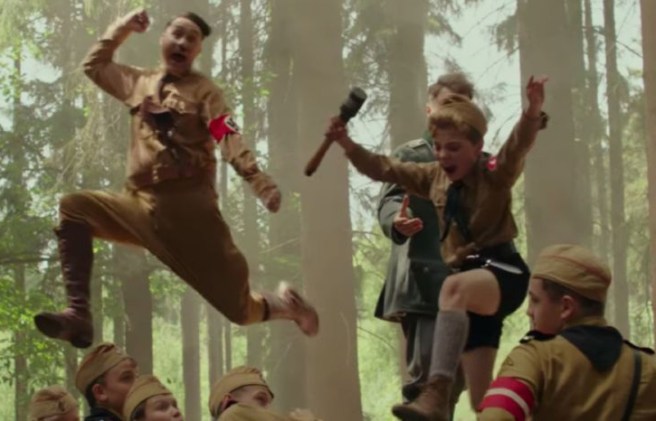
Jojo Rabbit, Ford vs. Ferrari, Little Women, Joker, Once Upon a Time in Hollywood, Parasite and The Irishman are all vying for the top honour of Best Film.


1917

DIRECTOR: Sam Mendes

CAST: Dean-Charles Chapman, George MacKay

SCRIPT: Sam Mendes, Krysty Wilson-Cairns

CINEMATOGRAPHER: Roger Deakins

MUSIC: Thomas Newman


The reason we know so much more about World War 2 than World War 1 has much to do with movies. When the second one came round, movies were part of the equation. That’s a huge marketing tool and we’re still watching different versions today.

Another stumbling block was the static nature of World War 1. It was basically fought from the trenches, a much more difficult story to tell visually.

According to Mendes, this one had been with him a long time and had been waiting for the technology to catch up before it could be told. With the movie dedicated to his grandfather, Alfred H. Mendes, whom he describes in interviews as a “great storyteller”, he grew up listening to the stories of a soldier who was a messenger for the British on the Western Front. In the meantime he was involved on a large scale with two Bond films, which prepared him for a work of this magnitude.

But then he made it even more difficult for himself. As a theatre maker first, he knows he has to engage his audience. This is done by bringing his two protagonists up close and personal to the action. In fact, the focus is constantly on the two young soldiers, Blake (Chapman) and Schofield (MacKay), two little- known actors who wouldn’t detract from, yet be the story.

In this one, the bit parts are played by star actors like Mark Strong, Colin Firth and Benedict Cumberbatch. And it works magnificently as you buy into this hair-raising task being given to the young lads  with the additional impetus of the one’s emotional attachment with a brother being part of the bargain.

They have to warn a British commander that the retreat of the German army is a trap to draw them into what would be a massacre. There are no radios or any other way of getting this message to the troops, who will die in their thousands if the advancement isn’t stopped.

The drama is set and the action starts almost immediately with enough drama to keep everyone pinned to their seats. As the two young men travel as fast as they can on foot, we see the devastation they find along the way. There’s no missing the rats scuttling for food as seriously as the soldiers, and small details like  flies circling a dead horse become part of the grim picture.

But these are minor. We might not have seen as many movies, but the casualty count of that war, about 40 million, rank it as one of the deadliest. Bodies become part of the visual journey as they appear absolutely everywhere.

This might not be a fighting movie as such, but war is always the narrative as the two soldiers are determined to do their duty for their fellow countrymen. It’s a story about the horror of war whether fought in the trenches or by drones, but it’s also about valour, making the right choices and not even considering the weight of the task if it means saving lives – even those of the enemy, on occasion.

Depending on which way you watch this, more than the movie itself, the making is quite astounding. But that has always been a Mendes trademark, think American Beauty but in this fighting landscape, perhaps Road to Perdition is more telling. It’s played like a theatre piece.

And in 1917, because of the way the story unfolds, the choices made, you are cast in the centre of the drama every step of the way.

There’s no glance across the hills on the other side to show the enemy lurking. If they can’t see it, neither can you. And that’s the real drama of the story which is constantly in a state of high tension as the two men make their way beyond enemy lines wherever this may be. It’s also the way it is shot, walking each step together.

The narrative sometimes runs away with itself trying to impose all the emotions found in waging a war. That’s impossible and it cannot but become mawkish where one wonders whether some of  it really needed to be part of the story. The sentiment is understood, but the telling of it stumbles and falls.

There are a few such incidents, none of which was necessary. Sam Mendes is an extraordinary storyteller. His recent Lehman Trilogy on NT Live bristled with imagination and every decision he made contributed to the masterpiece.

Similarly here with the way the story unfolds and the many decisions he had to make about crucial elements in the dramatisation of this war-time epic. It is the story that is sometimes burdened with incidents added on to make a specific point which is already part of the narrative and the character.

The valour of these two men can never be questioned, even when they do it themselves. That they portray the best there is when it comes to sacrifice and serving your fellow human beings – even the enemy – is evident. A more stripped down version without some of the embellishment would have served the film better.

And yet, because of the way Mendes made the film, there are these two strands that run side by side and pique your interest throughout: on the one hand there is the story as it is told and on the other, the marvellous movie-making which is what earns him the accolades and statuettes I believe.

He holds you in the palm of his hand throughout. That’s a gift not many can claim. Sam Mendes has it in abundance and even when he doesn’t achieve it all, it’s still pretty spectacular.


Former Independent Editors Fight the good Fight for Facts in Time of Fake News

Bk Paper TigerIt’s a sad and worrying time for print media worldwide highlighted here in Paper Tiger: Iqbal Survé and the downfall of Independent Newspapers by Alide Dasnois and Chris Whitfield (Tafelberg). They capture the devastation of a country in  trouble and how that impacts on almost every aspect when it starts to unravel. DIANE DE BEER, a former Independent journalist, celebrates the few journalists who are willing to fight for the facts in a time of fake news:

Print media is in trouble and has been for a while, but quite a few have found a way to counteract the negatives.

The NY Times, for example, returned to the basics, hiring  the best journalists they could find, and after the initial slump, their numbers have been climbing with a strong online presence. It’s tough to beat good journalism. Think of the Gupta Leaks and everything that followed in this country.

Good journalism is probably what editors/journalists Alide Dasnois and Chris Whitfield thought when they heard they had been bought by Iqbal Survé’s Sekunjalo Independent Media Consortium for R2 billion.

But the joy was short-lived because the day after Nelson Mandela died, Survé fired Cape Times editor Dasnois, seemingly because she disrespected Mandela by honouring the great man with a wraparound because of the dire deadlines. Yet many believed it really turned on a negative story used in her paper about one of Survé’s companies.

“In the dramatic days that followed, Independent’s newsrooms across the country were torn apart by suspicion, recriminations and what many of the journalists believed was a witch hunt to expel those not prepared to toady to Survé.”

That’s how the blurb on the back of Paper Tiger reads. As an Independent journalist at the time, I remember clearly the feelings of things flying apart. I was in my final four years after 30 years with the group and knew Dasnois, who had been an editor at the Pretoria News for a short time before she was appointed to the Cape Times.

I found her to be someone of unquestionable integrity, so I knew we were in trouble. I lasted a few more years, no choice really, but when we were offered retrenchments a year before my retirement date, I was grateful for the opportunity.

Shortly after I left, a half-page column by Des van Rooyen (often referred to derogatorily as Weekend Special because of his short stint as one of Zuma’s disastrous Minister of Finance appointees) appeared in the Independent Papers and I knew I had dodged a bullet.

Even when you’re not directly affected (in your writing, for example, because you’re in the arts), there are certain signs that are tough to ignore – even at the end of your official working years without any other options.

I never met Survé, even though all staff were sometimes summoned for a meeting in Joburg. I was the only arts journalist in Pretoria, which meant I had the excuse of work. It’s a sad state of affairs, knowing what the group represented and what they were before they were first plundered by the Irish, a situation also thoroughly discussed in the book.

According to Mwasa (Media Workers’ Association of South Africa), some 18 years after the initial investment by the Irish Independent Media (Sir Anthony O’ Reilly was the CEO), few of the contributions expected from foreign direct investment had been made. In fact there was an outflow of much of the local operation’s profits.

For those of us working there, the dramatic changes were quickly visible. During the period, for example, from 1999 to 2010, the operating margins were increased from 12,5% to 21,1%. Far from boosting employment numbers however, there was a significant reduction in employee numbers. These dropped from 5 223 at the time of the initial transaction to 1 500 at the end of the Irish run.

I remember that on my 40th birthday in 1992, we were 10 journalists in the Pretoria News arts section. That’s the number of signatures I counted on my birthday card. By the time I left at the end of 2016, I was the only one left, even though with the new democracy, the arts in this country expanded generously as it would have because of the improved circumstances in South Africa.

Instead of investing the money generated locally was used to pay off the Irish company’s debt. The consequences were evident everywhere as anything that could be cut was cut and the editors were pressured to run a financial rather than a newspaper concern.

On June 2 2009, in response to a message from Tony Howard to staff about “tough trading conditions”, Dasnois wrote to him summarising the situation at the Cape Times: she noted that she had worked on five of the company’s newspapers, three of them as editor, and had “witnessed the relentless stripping away of the capacity of those papers to offer the quality journalism which our readers demand and deserve”.

Something had to give and in the end, that’s why the South African Independent Media was sold and a different can of worms emerged, one that appeared to promise much at the start, especially as the circumstances at the newspaper group were so dire.

The rest reads like yet another of those fantastical stories that seem to have become a trademark of business in our desperate country. Good people are the ones who appear to pay the price, while those already bloated rise to the top.

It’s a sad state of affairs, and one we can only hope makes a sharp U-turn in 2020. The signs are there that the game is up for those who believed they could get away by making the rest of us pay.

In the final chapter, aptly titled A Sad Day For Journalism, the opening paragraph reads: By 31 December 2016, Sekunjalo Independent Media (SIM) had accumulated losses of  R617 million, and liabilities exceeded assets by R393,8 million. By 30 June 2017, accumulated losses had grown to R752 million, and liabilities exceeded assets by R547 million. SIM owed R909, 459,000 to the China Development Fund, R662,722,000 to the Government Employees Pension Fund (through the Public Investment Corporation) and R243,987,000 to the Southern African Clothing and Textile Workers’ Union. Half of this was payable in August 2018, and the rest in August 2020. In addition, the Government Employees Pension Fund held preference shares to the value of R433,180,000, which had to be serviced at the prime interest rate.

The rest is still playing out and those who worked at Independent, those who still read the papers, and those still working there, are watching and waiting…

It’s not as if newspapers needed any further debilitating and destructive forces to hasten their demise. There were many good people who worked hard to tell the real stories of a country in flux. That was not to be. But you can only fool some of the people some of the time…fortunately.

It’s a fascinating read as I knew it would be, given the authors. Working with one of them for just a short time was a high point in my newspaper career. I knew Dasnois would finally see her day.

The final sentence in the book shows her firing for the farce it was. And that at least makes you smile.

In the meantime, even though the full story has been told repeatedly, nothing yet has changed. But we’re hoping…

Retief Scholtz’s Dop is a Moment in Time with the Actors Participating in the Dance

Dop poster

DIANE DE BEER

PALY: Dop

PLAYWRIGHT: Retief Scholtz

DIRECTOR: Sylvaine Strike

CAST: André Odendaal, Wilhelm van der Walt

VENUE: Market Theatre

UNTIL January 19

“Skink nog ‘n dop,” (pour another drink) is the constant refrain between the older customer and a young barman. And in this context, dop means both drink and to fail – both of which dominate the interaction between the two.

Because the requests never stop, what starts as bravura conversation dominated by the man who introduces himself as Frank Venter (Odendaal), soon becomes maudlin.

It’s his birthday and as a leap-year baby, born on 29 February 1960, his father made sure that his birthday was only celebrated every 4 years. Tonight is his 60th and Frank is determined to celebrate with as many toasts as he can muster and might have missed out on through the years.

DOP - Foto kosie Smit (002)
In contem-plation, André O)dendaal (front) and Wilhelm van der Walt in the Sylvaine Strike-directed Dop. Picture: Kosie Smit

The youngster serving, Tim, is South African but spent most of his teen years in Australia. He was kept in touch with his birth country and language, which he now speaks with a heavy Aussie accent, through a loving granny who wrote him regular letters. But his absence from his homeland, all his parents’ doing, was a painful one and he has returned in search of something lost.

And suddenly the link becomes clear. Coming from different perspectives, these two drifting souls understand loss and the pain that comes with that.

They might differ in age and seemingly have little in common but as their conversation twists and turns they discover some truths that hit the mark for both of them. Frank seems to be drinking to forget rather than celebrate and Tim is determined to mine him for some wisdom on a declaration of love.

Dop 3 (002)
André Odendaal and Wilhelm van der Walt in Retief Scholtz’s Dop. Picture: Kosie Smit

It’s about random conversations between strangers that quickly become quite intimate because of the free flowing liquor and a compulsion to scratch underneath the surface. Both find themselves at crossroads with parallels but more importantly understanding and insight for the other’s dilemma.

As part of the growing melancholy that becomes part of the night, memories are interwoven as the music of Johannes Kerkorrel (late ‘80s and early ‘90s) becomes an emotional soundtrack.

It is the setting, the movie-go-round set which suggests amongst others the physical but also the mental effects of too much liquor and also the superb performances as the two men work at cross-purposes to pull as much as they can from one another.

Odendaal walks a fine line as the drinking starts having an effect and he swings between boisterous and belligerent. He also introduces some fine gymnastics whether to show off a youthful passion or simply stretching for his car keys.

But it is his detailed work of an ageing man still dealing with resentment towards a neglectful father as well as a more recent loss, the thin veneer of a man who doesn’t care and yet can show insight towards other mournful souls.

Van der Walt as the counterpoint plays with a youthful enthusiasm but also an eagerness to have his own needs met. He is trying hard to keep his customer happy while hanging  loose, pouring drinks with some panache and keeping the banter light.

For the director, apart from her first foray into Afrikaans writing, the play is also different to anything else she has done, a challenge she relishes and pursues. There’s always the Strike trademarks but she always stretches herself, the actors and her audience.

This is Strike heaven: two brilliant actors, a strong text which she could play with and steer, and a set that allows her actors and the stories to dance.

It’s a moment in time and while there’s a sadness that lingers, it also captures the magic of two strangers reaching out, trying to make sense and finding some understanding. That’s life – and often richer than one can imagine.

Nataniël’s Antidote to a World in Pain is to Make Us Scream With Laughter – Please Don’t Refuse to Listen

DIANE DE BEER

Nataniel in red
Nataniël in classic red.


Nataniël’s  LILY REFUSES TO LISTEN

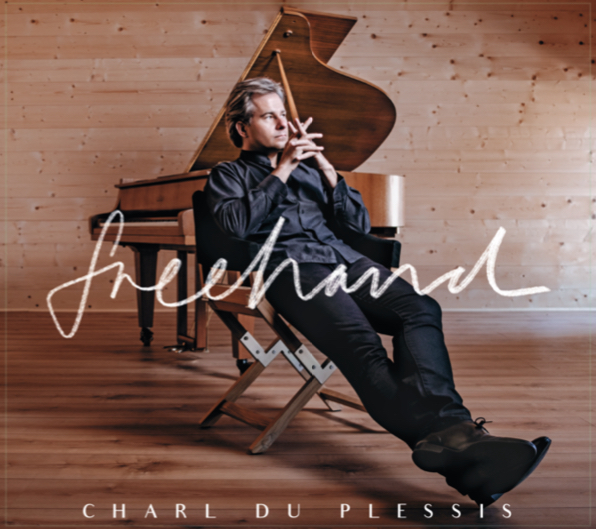
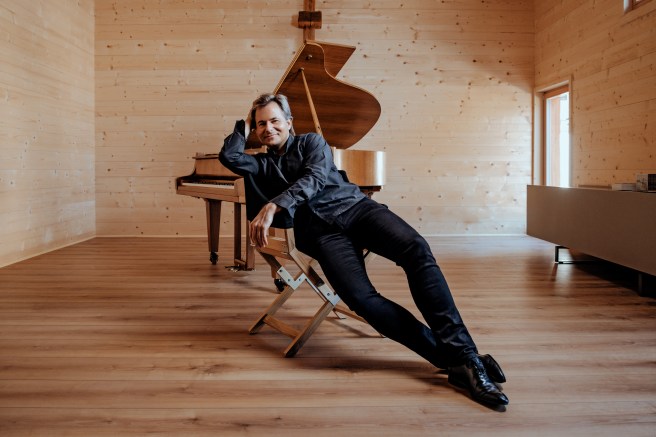
With musician Charl du Plessis (piano), Werner Spies (bass) and Peter Auret (drums)

Costumes by Floris Louw

VENUE: Atterbury Theatre, Lynnwood

DATES: January 21 to 25

Book at iTickets


Nataniël starts his year exactly as he ended it – on stage with the laughter and merriment of his latest show, Lily Refuses to Listen.

This short run is specially for those who missed it first time round – or those who want to see it again. It is that good – and funny!

As always, he pitches perfectly, not only with the music but also with the mood that he creates in both stories and song.

Whether we are ending or starting a new year, nobody wants to hear any bad news. This is a time of reflection, of course, but rather than focus on all the sadness and misery in our troubled world, he finetunes his music and words sharply with both sweetness and hilarity, something no one does better.

From the moment he starts singing My Sweet Song, the  music sets the tone with a slow swing, but as he slips into his first story, all of that changes dramatically.

The stories, all stand-alone, show Nataniël at his best as he lets rips with language and laughter, the perfect antidote for this time of year as we want to kickstart it, preferably raucously.

He gathers his usual wacky characters, all visualised with detailed descriptions, all determined to take your breath away.

It’s the way he conjures up a world we all recognise but in spectacular colours and with an exaggeration that’s tough to resist.

And with one of the show’s aims (New Year resolution perhaps) to get people to think about their lives and take courage to say no rather than too easily agree to something they really don’t want to do, he’s also quick to jump on anyone playing with cell phones, the bane of performers as the lights are clearly visible and especially distracting for those on stage.

That and people who keep chatting during the performance who are as much a disturbance to the performer as those in proximity of the culprit.

It’s about the performance, staying in the moment and giving a show that embraces everything this showman admires. And for him it is time to call them out. So pay attention, it’s the entertainment you’re there for, you and those around you.

The music is all about nostalgia with classics like Sweet Georgia Brown,  a beautiful  if perhaps not so familiar Beatles song, Golden Slumber, Ain’t no Sunshine, Many Rivers to Cross and more, a few original numbers elaborated with stories about some of the songs and their composers.

One of this singer’s many attributes is his amazing arrangement of classics to suit his voice but also to make it his own. It adds to a familiar tune and sometimes completely changes the meaning of a song because of the way we listen.

And finally, the costumes. It’s where all his shows begin, the design and  creativity of the couture to lead into the stories and songs. Again, it is spectacular in all the colours of the rainbow with shapes that make your head spin and a desire to copy some of his detail.

If you’re not quite in the right place yet to begin the year, this is the perfect place to start. It will put your head in the clouds where it can stay for a while as you get into the rhythm of the new year and all it will hopefully stack up to be.


Peter Pan on Ice is Fun Festive Entertainment for the Family

DIANE DE BEER

Poster 2 Teatrosmall (002)

PETER PAN ON ICE

COMPANY: The Imperial Ice Stars who collectively hold more than 250compdetition medals and include 23 former World, European and National Championship-level skaters

PRODUCER and ARTISTIC DIRECTOR/CHOREOGRAPHER: Tony Mercer

VENUE: Teatro at Montecasino

DATES: Until January 11; Tuesday to Friday at 7.30pm; Saturdays 3pm and 7.30pm; Sundays 2pm and 5.30pm

It is the time of year when entertainment takes on different proportions. For many the end of 2019 means sheer exhaustion and what we need is some rollicking fun and whoopee, ESCAPISM in capital letters.

That’s exactly what this one is with accent on family, which is perfect for this time of year. This is when you want to pack the kids into the car and take them for a magical evening to a show that creates a magical wonderland.

PANimage1
It’s fun and games for the cast of Peter Pan on Ice

It’s not easy to capture the amazement of young and old in one show but the sheer splendour of skillful skating will do it every time. And then to scale it down to fit onto a theatre stage while not diminishing any of the spectacle, is quite something.

The previous shows by this company include Swan Lake on Ice, Sleeping Beauty on Ice and Cinderella on Ice, all of them spectacular in their own right and expect nothing less from this one. Their reputation is firmly established.

Peter Pan is perhaps a more complicated story to tell in this fashion but the company made full use of the inspiring and inspired extras including flight, something that Peter Pan and Tinker Bell do with grace. It’s huge fun including some unexpected innovative figures like a dancing crocodile who is arguably the most popular character on stage – even though he frightened a few of the young ones at first sight.

Perhaps that’s why Captain Hook didn’t seem as ferocious as his reputation predicts and one expected him to be. After all he is the leader of the fearsome pirates!

PANimage2 (002)
It’s a show packed with athletic acrobatics.

But this is a great yarn and while perhaps it’s not for the very young, there’s enough action to keep everyone happy. From the astounding and non-stop acrobatics of the full cast, the balletic aerial gymnastics and exquisite flight sequences, which are always fun to watch, the balance between the spectacular and skillful skating and the action sequences with even a fire-on-ice scene for breath-taking dramatic effect are all part of a theatrical presentation.

As the story unfolds, Wendy and her brothers are whisked off by the boy who never grows old and his accomplice, Tinker Bell to Neverland where they meet the Lost Boys, Tiger Lily and some swimming mermaids on the way to a showdown between the good guys (Peter and the gang) and Captain Hook and his pirates.

Towards the end, everyone was in the mood as the champion croc gets them rocking and the magic of Peter Pan and his girl, once again, captured the imagination.

It’s a smart invention, an ice spectacular in a theatre. It keeps it intimate, turns the choreography into something more balletic and up close, while audiences in a sweltering Africa are transported to a completely different world.

Take the leap with them. It’s a way to send of the old and welcome the new!

Books are Telling the Impactful Stories of the #MeToo Movement With Great Vigour

Book The TestamentsMany are wondering what the impact of the #MeToo movement has had on the lives of women. Has the serial stalking subsided or is it business as usual. The backlash as well as the reinvention of some of the accused might be an indication and yet, like in #BlackLivesMatter, it’s as if voices have been given a freedom to tell stories and more people are listening. DIANE DE BEER highlights some of the good news:


There’s no doubt that The Handmaid’s Tale in 1984 was ahead of its time (some would say at the right time) but now, looking back, it’s almost as if the world has caught up with Atwood’s dystopian tale.

Women’s reproductive functions became their only value in a world where a previously free-wheeling democracy turned into a totalitarian dictatorship in which specific men made all the decisions with no attempt at embracing the needs of the female populace.

Some would say that’s the lives women were living anyway, but with more subtlety in the execution, but perhaps the fact that little has changed for women since, is more of an indictment. Even the new millennium didn’t offer many new horizons.

But there has been a mind shift even if it still only finds its power in the “voices” of those creative women who write or tell stories through film or theatre or other writing of course.

And while Atwood never wanted to write a sequel to her most iconic novel, she might have been pushed by the success of the television series based on her book, which had to its advantage the timing as well as the excellence of the production on all levels.

Some have said enough already, but personally having witnessed a third generation of girls entering exactly the same world I did midway through the last century, that’s where I want to say enough already!

So well done Ms Atwood for both novels, and while The Testaments (Chatto & Windus) has to my mind an easy (yet hopeful) ending (no wonder art historian Mary Beard described her as a “optimistic dystopian”), I was thrilled that the author’s prescience kicked in both times – in 1984 and again in 2019 and that she was thus rewarded with the 2019 Booker Prize (shared as it was).

BK Girl (002)Perhaps on a different timeline but Edna O’Brien’s Girl (Faber & Faber), speaks to similar themes.  While this is a work of fiction, there’s enough fact around for her to tell a story based on reality – and it’s horrific. That 276 female students could be kidnapped by an extremist terrorist group in the Northern province of Nigeria and disappear overnight with all our sophisticated surveillance techniques is astounding.

And yet, while 57 were rescued a few months after the capture, and a few stragglers have managed to escape, more than 200 women (no longer girls, all these years later) are still missing. Hopefully this book by one of the world’s leading writers, described by some as her masterpiece – understandably – will shine a searing spotlight on those still missing.

Had they been on another continent and perhaps not black, more effort would have been made and yet, the same group is still terrorising African people in that part of the world and the women must surely by now be fully integrated into their way of life. It’s been almost six years and they were at a very vulnerable age when first captured.

What O’Brien has done so cleverly is write a story of a young girl, now with a baby, who escapes the tyranny to journey back home through nightmarish terrain. But she is courageous and by now crafty and by sheer force of will, she makes it home.

Many would imagine that would be the end of her hellish life’s journey. But as is so often the case with female victims even someone who has discovered her own voice – she is silently blamed for everything that has happened to her, including the kidnapping and the pregnancy.

It’s tough to imagine how you deal with one tragedy after another and yet, it’s almost as if life keeps throwing those challenges at those who don’t buckle. It is about the strength of a woman fighting for her life and fighting back, in spite of a world which has turned its back on her. It’s full of heartache but finally, also hope for each woman survivor.

bk she saidJodi Kantor and Megan Twohey, winners of the Pulitzer Prize, have written a book about their article on “breaking the sexual harassment story that helped ignite a movement”.

She SaidBreaking The Sexual Harassment Story That Helped Ignite The Movement (Bloomsbury) is an extraordinary read as they go into great detail to tell the story of their travails to get to a story that had to be watertight, so that it wouldn’t simply be dismissed and disappear into thin air – as was so often the case in the past.


What has been happening is that the entitlement of some powerful men turns them into monsters, who believe they can simply take women whenever and wherever they want.

And in the case of perhaps now the most visible alleged sexual molester, Harvey Weinstein, he had an army of enablers around him to make this predator’s sex life run smoothly. Some who didn’t care to confront him, some who went out of their way to help, because it would benefit their careers and others, like his brother, who kept fixing the problem, yet never making it go away. Somewhere in all of this, women’s lives and dreams were being destroyed. No one seemed to care and the women were too scared to talk.

Even the most famous ones. If women like Angelina Jolie, Gwyneth Paltrow and Ashley Judd couldn’t stand up to Weinstein, what chance did a young assistant or secretary have?

If you never pay for any wrongdoing and you are perceived to be all-powerful, you will believe and write  your own press. And while they tell Weinstein’s story and his efforts to kill the story and to deny any wrongdoing (to this day), they also turn to one of the other high-profile rape cases, that of Christine Blasey Ford’s accusation against Donald Trump’s Supreme Court nominee, Brett Kavanaugh.

We all know what happened there in spite of amazing testimony by a woman of such impeccable character and dignity. And yet like the Anita Hill case in 1991, where her accusation against another Supreme Court nominee, Clarence Thomas was roughly brushed aside at great personal cost to the accuser, all these years later, the results were the same.

The only impact of the #MeToo movement was more publicity. As a result, it was more delicately handled by the members of congress because of the media scrutiny. But still, the US now have two men accused of sexual crimes, sitting on the highest court in the land.

Fortunately, the #MeToo movement has gained immeasurably as women got the courage to step forward and many mighty men who have been paying cash for their sins in the past decades, yet never punished publicly, have had to leave their high-paying, high-profile jobs as the women stood up and together made their voices heard – too loudly to be ignored.

And because the media was so often part of the story, like in the Fox News case with Roger Ailes and Bill O’Reilly, both mighty powerful and then brought to their knees, the details were given to the world in full colour. There was no more escaping these sins that had been perpetrated for decades on naive young women with dreams – all shattered.

BKcatch & killThe second book covering the Weinstein sexual abuse allegations comes from a different angle – yet making many of the same points. It seems investigative journalist Ronan Farrow’s Catch and Kill – Lies, Spies and a Conspiracy to Protect Predators (Fleet) was ahead of the pack but the closer he got to the nub of the story, the harsher the degree of resistance from even his own network that would finally have to screen the story.

It meant that he had to switch from a release on NBC News to a print story in The New Yorker, which the magazine was happy to publish after fact-checking extraordinaire. This book tells how this investigative reporter had to battle violence and even espionage to expose this celebrity serial abuser while focusing on the powerful people surrounding him at his own workplace as well as the coverups from Washington to Hollywood.

Weinstein had learnt and perfected the ways of wielding power and he used that liberally to obtain support for his evil lifestyle with full consent of people – both men and women – who should have known better. It’s an astonishing read, more of a thriller than a news report, which is more the style of She Said.

And while it seems to go on and on, especially towards the conclusion, he wanted to emphasize the lengths he had to go to  get this story told. The amazing thing is that everyone knew. Yet no one was speaking – even the women were too scared to share the horror of their experiences.

It is this silent conspiracy that has turned rape into an epidemic worldwide. When the powerful think they can get away with something, many of them would do just that, as those being accused attest too.

And if anything, what all these public revelations have done is to show why women were so scared to tell their stories. No one was listening and when they did, they simply refused to believe the accusations. Think of Strauss-Kahn, former IMF boss who was accused by the hotel worker cleaning his room.

Finally those doors have been opened. Now we have to make sure that those who have to make decisions are representative of the whole community not only the perpetrators.

Perhaps then, some of the outcomes will make more sense


Marguerite Poland Suffers No Sins of Omission in her Awesome New Book

Book Sin of Omission

In these sensitive times where much is said about who can tell whose story, Marguerite Poland has tackled a topic that many might have stepped away from – black missionaries who had to confront not only the prejudices of the their colonial benefactors but also the horrific practices in the Church itself. DIANE DE BEER lost her heart to this extraordinary writing and Poland’s storytelling- and so did others as she was awarded the 2021 Sunday Times Literary Award for fiction:

CONGRATULATIONS!

Author Marguerite Poland was very clear about telling this story. “My great uncle was very dear to me. He had been largely brought up on St Matthew’s Mission in the Eastern Cape by his grandparents who were the Anglican missionaries.”

Although she was only fourteen at the time, she found his stories of life on the mission fascinating. As an added bonus, he always encouraged her to learn Xhosa, believing that most of our problems stemmed from miscommunication.

“He told me the story of a talented young Xhosa boy whom his grandfather had sent away for higher education and what happened to him when he left school. The story stuck in my mind,” she explains.

Many years later when she was writing a history of an Eastern Cape school, she came across a piece of information that struck a chord of recognition and being the kind of writer she is, she followed the lead. It led her in a circuitous and often obscure fashion to the real person about whom her great uncle had spoken.

She had to do in-depth research and then travel to Canterbury in England where the inspiration for her main character (“whom I named Stephen Mzamane”) had been educated. This she followed with a trip to the isolated mission station where Mzamane had been a priest. “These journeys were informed by the material found for me by a wonderful friend in England who unearthed the relevant missionary letters in the English archives.” And she thanks all those sources generously in her book.

“I was cautious about writing the story of Stephen Mzamane – very aware of the sensitivities which exist in ‘appropriating’ the lives of others. Is it respectful? Is it justified? I was aware of the immense responsibility in taking on the task and knew that preparation for it had to be meticulous. I also knew that if I didn’t write it, a story which I think still resonates today, it might never be told and a young man of great courage and faith, forgotten.”

Marguerite-by Melissa Mitchell8 (1)
Marguerite Poland. Picture: Melissa Mitchell

As in her writing, Poland speaks as sensitively about the  challenges she faced in telling this particular story. Challenged for writing both outside her gender and her culture (in consideration of the particular sensitivities of all who live in South Africa), she was acutely aware of the responsibility expected of her both in adapting the historical event and in attempting to recreate events as authentically as possible.

“I was fortunate to have access to a vast number of letters written between 1860-1885 from various missionaries to their parent organization in England, which were hugely instructive in understanding the history of the era and its concerns  as well as the personalities I had come to know from years of research into Anglican Church history.”

And probably, it is this authenticity, the confidence with which the story is told, that takes hold of the reader right from the start.

She explains that the ‘real’ Stephen Mzamane’s own letters were among them and from this  emerged a character whose life she could start to imagine with some confidence. That is evident in the writing.

“The ‘real’ Stephen Mzamane had also been my great-great grandfather’s assistant at the mission for a number of years and my relation wrote very warmly of him,” she says. Naturally she felt a personal connection with the story because of the family links, but that also made it a greater responsibility while also giving her a sense of it being appropriate for her to write it.

She also believes that the writing of any story, history or biography, is a form of appropriation – that’s the nature of the job. “This story is based on important and significant facts. It is written as a novel which means I have used my novelist’s imagination based on those facts to the best of my ability.”

When reading the novel, right from the start, there’s a sense of sadness that grips you around the character of Mzamane and the life he is expected to lead. It’s not that he doesn’t grab hold of it. In his life, what is being offered is real hope that his circumstances can change and that he make a difference to the circumstances of his long suffering people when returning home.

First educated at the Native College in Grahamstown, he is sent to England in 1869 for training at the Missionary College in Canterbury. He returns back home full of hope and expectation, but instead of the life he thinks will follow, he is relegated to a dilapidated mission near Fort Beaufort while the Church all but turns its back on him.

This might sound like a bleak story but Poland tells it in such a way that you want to witness the story of a young man of such promise whose hopes are dashed by people who could have made a spectacular difference.

Poland argues that writers choose subjects for a hugely diverse range of reasons. “Writing a book takes time, commitment and, on the downside, exacts much frustration and self-doubt, boredom, stress and a whole range of other emotions. It is also a very great joy attempting to bring characters to life,” she says. “There are transcendent moments, synchronous happenings which give one a sense of purpose and inspiration and make one see it through.”

“One can’t just stop and leave a character in limbo – especially if it is based on a real person. That would be very cowardly! I write about things that move me and that I really care about. It is very personal and I am fortunate to be able to take on projects that I truly choose. Stephen’s story came to me as a youngster, it stayed with me in all my research for other books and projects, it kept intruding, slipping into my consciousness, being insistent – like a gift that must be appreciated and accepted with good grace!”

By the end of the novel I was in tears because of investing wholeheartedly in Stephen. And while this isn’t something I do often when I read even truly sad books, I was puzzled. As is her wont, Poland gives the perfect explanation:

“I think that the obstacles and hurts that my character faced in the 1870s and 1880s still exist. Sins of omission are not so difficult to identify and be addressed or punished. They are committed by everyone daily through the small slights, neglects, prejudices and lack of empathy that are ingredients of the human character particularly in societies where prejudice and gross economic inequalities exist.

“ Most such sins are committed out of fear, of ‘becoming involved’, apathy or simply lack of sensitivity to the feelings or needs of others. Other ‘sins’ are greater and underscore the dictum that evil will flourish if just men do nothing.

“We still live in a very unequal society in South Africa.”

And that is the real sadness.

Hard Hitting Message Movies at European Film Festival at SK Cinema Nouveau in Pretoria, Johannesburg and Cape Town

Les Miserables Still 1
A shot from the opening scenes of Les Miserables setting the scene of young protesters.

The European Film Festival is strongly issue-driven this year which takes us into the eye of the storm of what people are struggling with around the world: from immigration to homelessness, the scourge of survival at any cost and even ageing with the baby boomers all hitting their final stride. DIANE DE BEER reviews:

While we’re complaining about the heat, a film like Rosie reminds you about lives battling with real problems.

Rosie 7I9A0004
Short solace in the back of a car in Rosie

This Irish family of six, Rosie, her husband John Paul and four kids, three of them still only tots, are out house hunting. The thing is, they’re only searching for the night, every night, and because it’s such a struggle to find one room a night before the kids go back to school, there’s no time to look for anything more permanent.

While her husband is at work at a restaurant, a tough slog, the kids are dropped off at school and Rosie can get to phoning the hotels for a family room for the night – with one toddler in tow. “I never knew there were so many hotels in Dublin,” she tells her brother-in-law who is trying to tell her that they can’t look after the family dog any longer, one of the few emotional lifts they have left with which to give the kids a bit of joy.

Rosie 7I9A0457_1
Capturing a moment of happiness in the sorrow of Rosie.

It’s heart wrenching as the family is left destitute and yet there’s a warmth amongst the adult couple as they try holding it together for the children who are struggling with these dire circumstances. Life is tough enough without any of these circumstances added to the daily burdens. Keep that in mind as you think of the unemployment numbers in this country and the people who are represented by those numbers.

It’s brilliantly made, and even if bleak, it’s a story of our time and has to be told. And we have to pay attention.

If you’re thinking Les Misérables the musical, think again. It reminded of a recent television interview by a young Limpopo student leader who was speaking in protest at a fellow student’s murder, which included rape and 52 stabbings with a knife. Her anger was palpable as she told of students reporting rape to their local police station only to be told, it was their boyfriend.

With a similar disregard for young lives, the police, who claim to have worked this particular banlieue for 10 years, are looking for a lion cub that was stolen from the circus. One kid in particular is targeted and in a scuffle with the youngsters who are becoming quite menacing, one of the policemen fires his gun and harms this particular boy.

Les Miserables Still 3 (8)
Five young lads from Les Miserables

The rest of the film is about trying to destroy the footage shot of this incident but also trying to keep the young wounded warrior from actually dying and bringing the incident to light in a way the police don’t want it spotlighted.

This is a time when the voiceless in different areas of life are starting to speak up and they’re doing it loudly. The one gives the other courage perhaps, but even more likely is the disgust experienced by different groupings in society at the complete disregard for their lives. They have finally hit urgency levels which needs addressing.

It’s gritty, hard-hitting but these stories need to be told and taken seriously. What makes this one so incisive is the fact that this debut director, Ladj Ly, and many of the cast are telling the story of their suburb. They know these streets and these people. It is their lives.

It deservedly won the Jury Prize at the Cannes Film Festival in 2019, received the Best International Feature Film at the Durban International Film Festival in July, and has been selected as the French entry for the Best Foreign Film for the 2020 Oscars. It will be distributed locally by Videovision next year.

The_Vice_Of_Hope7
Delivering the innocents in Vice of Hope.

In similar fashion, the aptly named Vice of Hope hones in on the women, both heroes and villains, who live on the edges of the towns surrounding Naples.

It deals with poverty, African immigration, human trafficking and the surrogacy business that follows as a result. It’s almost impossible to escape this nightmarish life as the young girls have babies who are then sold on the market before the cycle repeats itself again and again.

Those not making babies are pulled in to keep the others in line and, life being what it is on the edge of these waters, it doesn’t take long for them to fall into the same trap.

Like so many of the other films, it’s a bleak picture of what it takes to survive but it also shows the strength of those who are determined to survive and hold the hands of others to drag them out of these dastardly circumstances.

The_Vice_Of_Hope5
Protagonist Maria with her only faithful friend.

Life deals different cards to different communities, which is why phrases like first world problems are much darker than they may seem. Most of the time, survival means choosing between life and death, with neither choice being an easy one.

We live in a world where the problems seem insurmountable and we think we would do better to simply turn away. But in today’s world, that’s not an option any longer as filmmakers not only stories of fantasy, but also show us the real world in all its horror.

We need to know.

painandglory
Antonio Almodovar as Salvador in Pain and Glory

Who can resist a Pedro Almodóvar movie and with his latest Pain and Glory, described by many as his finest in many years, it’s a rare treat. The ageing director hitting his 70s is in a reflective mood as he casts a wary eye towards the future while looking back with lingering love at especially life with his mother, always a force in his films.

With two of his favourite actors, Antonio Banderas as Salvador, the weary director who is more at ease doing nothing and obsessing about his ailing body and mind, and the exquisite Penelope Cruz playing his adored mother, a time he reflects on when he was still a young boy, this is Almodóvar baring his soul – even if it isn’t, strictly speaking, all his life.

Penelope Cruz in Pain and Glory
Penelope Cruz in Pain and Glory.

There’s enough to tempt you into thinking so, which adds to the oft melodramatic meanderings of a director who feels he still has enough to say and yet, has neither the energy nor the spirit to do so.

But even as he seems to step out of his life, he finds a way to make his own mindful meanderings cinematic in a blast of colour that all those passionate about Pedro’s artistic bent will appreciate.

It’s like poetry as he walks you through the different moods with people of his past and present, all of them impacted by his artistic talent and the way he told his stories and lived his life. Even when someone’s life looks like something to be desired, that’s never true. We are all trying to navigate the best we can, with all our neuroses and passions, the best life we can possibly live.

This one predictably has been earmarked as Spain’s 2020 Oscar nomination and watch out for a few general nominations as well.

See http://www.eurofilmfest.co.za/ for detailed synopses, trailers and links to the screening schedule and ticket bookings.


Movies Make the World Go Round

Pain and Glory 11
Penelope Cruz in Pedro Almodóvar’s 21st film, Pain and Glory, described as his best in years.

Movies screened locally don’t seem to be what they used to be, but perhaps we’re just spoilt for choice with better television and streaming possibilities. DIANE DE BEER spotlights an exceptional European Film Festival:

For those who miss the Almodóvars, haven’t seen the latest Gavin Hood, Official Secret, and simply want to get a handle on some of the issues truly rocking the world today, a ten-day feast of award-winning films are up for grabs as the European Film Festival celebrates its 6th edition in South Africa.

The festival will be held simultaneously at Cinema Nouveau theatres in Johannesburg, Pretoria and Cape Town from Friday November 29 to December 8.

Issues seem to be the driving force and it is fascinating to see how an overwhelming crisis like refugees is being dealt with by filmmakers, for example.

Representing Austria, Styx tells the story of the transformation of a woman sailor when she becomes the only person to come to the aid of a group of refugees shipwrecked on the high seas.

She is in fact on her way to fulfilling a longtime dream to sail alone to Ascension Island to experience a Darwinian experiment of natural plant and animal life.

Things don’t go as expected and she is  caught in a refugee crisis as she finds herself in the proximity of a boat with 100 people about to drown.

Naturally she would save them but the odds on a yacht made for one is certain death, for herself included. The next best thing is of course to alert the authorities or boats in the vicinity to the crisis.

It’s hair-raising stuff but beautifully crafted as it captures the crisis of one caring individual who hopes to make a difference – but on a larger scale, it also encapsulates the world we live in right now.

The carefully curated festival is packed with Oscar-nominated and multi-award-winning films from twelve countries including Austria, Belgium, France, Germany, Ireland, Italy, Netherlands, Poland, Portugal, Spain, Sweden and the United Kingdom.

System Crasher is Germany’s choice for next year’s Oscars. It is a debut film for the director and the title refers to a child who breaks all the rules. Benni (a fantastic performance by Helena Zengel) is an angelic-looking nine-year-old who swings wildly from an innocent waif to a violent wild child that has everyone around her perplexed and unable to reach her.

It is the story of one child so  severely traumatised by rejection that anything sets her off in a way that not only harms herself but also those around her. It’s tough to watch yet beautifully told and acted, not giving any easy solutions yet pointing to the dangers of neglect and how that can impact not only the life of one child but a whole community.

COLD WAR zimna_wojna_fotosy207
Director’s muse Joanna Kulig (with Tomasz Koz blurred and to the side) in Cold War Picture: Zimna Wojna

Cold War, a passionate love story between a music director and a young singer, is perhaps an antidote  to some of the harsh yet compelling issues some of the other films represent. But as the title suggests, this is no walk in  the park – perhaps a doomed love affair (or not) exquisitely presented.

After all, Pawel Pawlikowski’s extraordinary black and white masterpiece (following the success of Ida, which won the Oscar for Best Foreign Film in 2015) grabbed the Best Director prize at Cannes before earning three Oscar nominations at the Academy Awards in 2019, and another five European Film Awards before that.

This is a couple who struggle to stay together but simply can’t leave one another alone. It is the director’s love letter to his parents, a love affair that was less enchanting to be a part of, and he has cast two astonishing actors, Joanna Kulig (also starring in Ida) and Tomasz Kot to star in this personal tale.

The highly awarded Girl, from Flanders in Belgium, tells the story of 15-year-old Lara who dreams of becoming a ballerina. More importantly, this is a transgender story with Lara who was born into the body of a boy, undergoing treatment in preparation for gender reassignment surgery. Her ambitions are heady taking into consideration everything she has to deal with.

Added to that, she is being raised by her father with a four-year-old brother who falls mostly under her care. The film illustrates some of the tough challenges she faces with a changing body and in addition, one that hasn’t been built for the challenges of being a ballerina.

There has been some controversy about the film because neither the director, writer or actor are transgender, which has been criticised. I think this is going to be a personal decision, but for me, the film took pains to be informative, to show the tough transition for Lara and usually, because of the people around her.

Her choices make it difficult because while her doctor advises her not to focus on her body during this part of the transition, more than anything that’s what dancers do and have to do. They are surrounded by mirrors and beautiful bodies all day long. Even though she is living in a time where transgender is more accepted, that doesn’t do diminish the deliberate daily cruelty by others.

This is not a world where the “other” is accepted. Why should transgender be different? As if it isn’t tough enough. But that’s who we are as a society and that won’t change soon.

Push - LeilaniFarhaSM
The Swedish documentary about housing with Lehani Farha.

Again stepping into a completely different world, Push is a Swedish-made documentary that is all about the world we live in today and harrowing is the best way to describe it. But I wouldn’t have missed it for the world.

It follows Leilani Farha, the UN Special Rapporteur on Adequate Housing, as she travels the globe, trying to understand who’s being pushed out of cities and why. What she discovers is how global finance is fuelling the worldwide housing crisis while making cities unaffordable to live in: “There’s a huge difference between housing as a commodity and gold as a commodity. Gold is not a human right, housing is.”

And that truly says it all. But what she finds is that the largest real estate equity firm in the world, Blackstone, is behind many of the disastrous housing projects she is investigating. “It’s like a world where you are fishing for fools,” is how the dilemma of taking advantage of the powerless is described by a participant.

What has happened in this past decade is that housing, especially for the poor, has been viewed as a commodity rather than a home. Sweden, for example, which has always been viewed as having housing systems to be proud of, falls in the same trap because someone is making money. Sound familiar? It’s not that one wants to wallow in someone else’s misery, but it does help to understand what is happening in the rest of the world. We’re not the only citizens who found ourselves living in a fool’s paradise. Check it out, it’s compulsive viewing.

These five above are the only ones I have personally watched but there are quite a few I will be adding to my viewing list:

The_Vice_Of_Hope2
Young and old women are the heroes, villains and victims in The Vice of Hope

*Les Misérables, which won the Jury Prize at the Cannes Film Festival in 2019 and then picked up Best International Feature Film at the Durban International Film Festival in July, is inspired by the Paris riots of 2005. Witnessed first-hand by director Ladj Ly, the film revolves around three members of an anti-crime brigade who are overrun while trying to make an arrest.  It has been selected as the French entry for the Best Foreign Film for the 2020 Oscars.

*Set against a housing crisis in Dublin, the Irish film Rosie is a riveting account of a remarkable woman trying to protect her loved ones and maintain their dignity when they lose their home.

*Women are the heroes, villains and victims in The Vice of Hope, a social drama about poverty, African immigration, human trafficking and the surrogacy business in towns around Naples (Italy).

*One would be silly to miss Oscar-winner Pedro Almodóvar’s 21st film described as his best in years. Pain and Glory won two awards at Cannes 2019 and features two of his favourite stars -Antonio Banderas and Penelope Cruz – in this semi-autobiographical narrative that tells of a series of re-encounters experienced by a film director in physical decline, and his need to recover meaning and hope. Pain and Glory is Spain’s entry for next year’s Academy Awards.

00407-Official Secrets-Photo Nick Wall.RAF
Keira Knightly in Official Secrets.  Picture: Nick Wall

*The UK’s participant in this year’s festival is Official Secrets, directed by South African Gavin Hood, who won an Oscar with Tsotsi  in 2005. Based on true events, Official Secrets tells the story of Katharine Gun (Keira Knightley), a British intelligence specialist who leaks a memo in which the US enlists Britain’s help in collecting compromising information on United Nations Security Council members in order to blackmail them into voting in favour of an invasion of Iraq.

See http://www.eurofilmfest.co.za/ for detailed synopses, trailers and links to the screening schedule and ticket bookings.

Music and Magic at Market@theSheds

DIANE DE BEER

best of sheds 19 square (002)

Pretoria has some of the best markets in the country and one of those, Market@theShedsis probably still one of the best kept secrets in town.

Part of the reason is because it happens in the city at 012central, the trendy arts precinct in Pretoria CBD.

And importantly, first things first, there’s safe parking. Find free parking at 216 Sisulu Street which provides direct access to the market. Overflow parking is available at the State Theatre, 140m away from the main entrance at 381 Helen Joseph street.

Morayks
Morayks in concert

This coming market on Saturday is really one for music lovers. Best of the Sheds Music Festival is the grand finalé for 2019 and the emphasis is on local. Throughout the year, more than 60 talented local bands and musicians perform on stage at the monthly Market@TheSheds.

Once a year, people get the chance to see the year’s favourite bands and musicians with this action-packed Best of the Sheds Music Festival. It truly is Tshwane’s best showcase of the finest local artists and bands.

If music is your thing, this is a fantastic venue to catch the vibe. Join the festivities on Saturday (November 30) and see more than 10 live bands in action. What is described as the ultimate line-up includes The Muffinz, Brian Temba, Morayks, Pedro Barbosa, Gina Mabasa, 1520, The Tshwane School of Music, Lehlohonolo Ntsoko, Chievosky and Zebra.

What makes Best of The Sheds different from their usual market experience? It’s more than just a vibe-driven art, fashion, food and a designer show. Complimenting the music festival, there is a festive market with over 40 designer stalls stocked with colourful, locally produced products. It’s a perfect opportunity to shop the market streets and find quirky gifts while having a great time with family and friends.

Market@theSheds has always meant different things to different people. Personally it’s people watching and fantastic food for me although music is a big part of the market’s success. But if you want less noise and more kuier, it’s best to go earlier in the day rather than later, when the party really gets going.

Kudzaishe Gumbo (5)
Dancing in style at Market@theSheds Picture: Kudzaishe Gumbo

Pretoria’s hip inner-city market is where you will find delicious gourmet street food, craft beer, gin and cocktail stalls and the open-air courtyard with a jumping castle makes it fun for the whole family. But it’s also a place where those with true Tshwane style hang out – both the parents and their kids.

If you’re checking for classy street vibes or high-end individual style that seems ready to vogue, this is where you’ll find it.

Tickets can be bought on-line at Quicket. Online tickets are R120 pp and entrance at the gate will be R 150 pp. Kids under 12 come in free.

Gerrit Wassenaar
Picture: Gerrit Wassenaar

It’s time to shop, play, dance, be merry and have fun with family and friends.

Market@theSheds is the place to start the discovery of a city you think you know. It is a project of the Capital Collective, a non-profit organisation promoting rejuvenation efforts in the inner-city. And it’s working. Don’t miss out being part of this hidden jewel of the inner city. It’s a blast, every last Saturday of the month.

And this one will be happening with a music line-up of note.